
You probably don’t know how per‑stall max kW and cable ampacity at [Location] shift by connector standard and firmware revision. You’ll compare NACS, CCS, and CHAdeMO compatibility, live availability, and heatmap‑based queuing risk, then factor pricing models, idle fees, and Tap‑to‑Pay vs. RFID vs. Plug & Charge. We’ll also benchmark uptime SLAs, site access rules, and accessibility—so you pick the fastest, cheapest, standards‑compliant option right now.
Key Takeaways
- Live map with sub-minute connector availability; filter by connector type, max kW, tariff, uptime, and access hours.
- Shows NACS, CCS, CHAdeMO stall counts with max kW and cable rating; trend toward NACS; certified adapters supported.
- Typical speeds: Level 2 3–19 kW; DC fast 50–350 kW; rates vary by vehicle, SOC, temperature, and station derating.
- Pricing shown per kWh or minute, idle fees after grace; pay via app, RFID, EMV tap-to-pay, or ISO 15118 Plug & Charge.
- Trusted telemetry, signed meter values, and alerts; view site access rules, ADA paths, amenities, and historical uptime/faults.
Live Station Map and Real-Time Availability
How do you verify a charger is available before you arrive? Use a live station map that aggregates OCPP 1.6/2.0.1 status events, CDRs, and heartbeat pings to expose connector states (Available, Preparing, Charging, Faulted) with sub-minute latency. You can filter by kilowatt rating, tariff, uptime SLA, and access hours. A heatmap visualization summarizes dwell times and session concurrency so you can predict queuing risk at specific intervals.
Rely on platforms that implement ISO 15118-2/-20 and OCPI 2.2.1 for trusted, timestamped availability, with signed meter values and clear provenance. Verify data privacy practices: differential privacy on session counts, TLS 1.3, OAuth 2.0 with PKCE, and minimal data retention. Cross-check uptime against IEC 61851 service levels and operator-reported monthly availability KPIs. Enable alerts via OpenTelemetry streams.
Connector Types and Vehicle Compatibility (NACS, CCS, CHAdeMO)
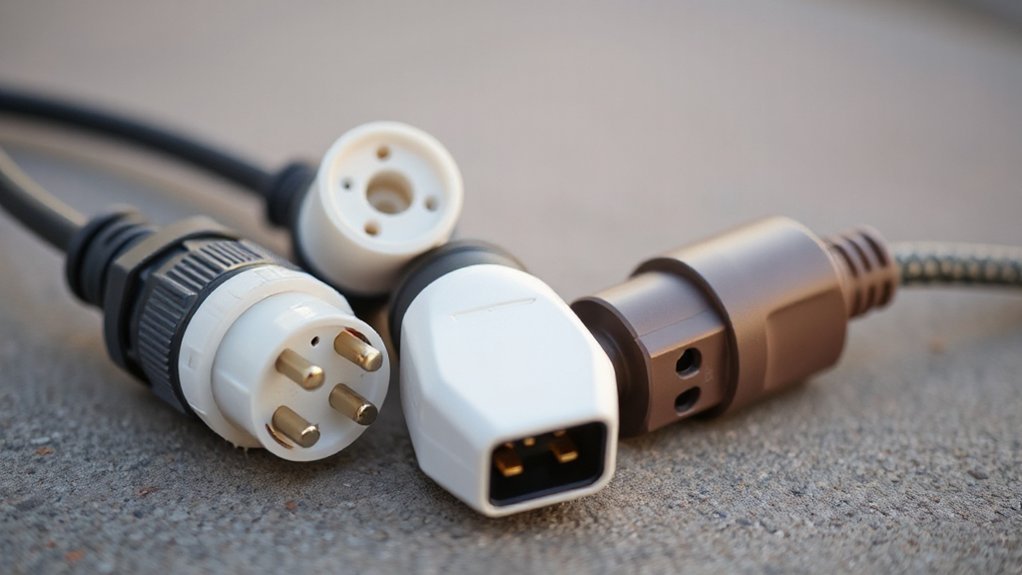
You should confirm your vehicle’s plug support—NACS (SAE J3400), CCS Combo (SAE J1772 Combo), or CHAdeMO—and match it to the on-site ports. Expect NACS/CCS DC fast charging at ~150–350 kW (500–1000 V), while CHAdeMO is typically 50 kW (some sites up to 100 kW), which affects your session duration. If you’re crossing standards, use certified adapters (e.g., CCS-to-NACS per UL 2251/SAE J3400), noting most new North American models are shifting to NACS and CHAdeMO compatibility is increasingly limited.
NACS Vs CCS
While North American EVs historically split across three fast-charging interfaces, the market’s converging on NACS (SAE J3400) versus CCS1 (SAE J1772 Combo), with CHAdeMO in decline. Standardization politics and Market forecasts now favor J3400: most 2025–2026 models pledge native NACS inlets, and NEVI rules accept J3400 alongside CCS. You should expect both connectors on-site.
Technically, NACS/J3400 delivers up to ~500 A at 1,000 V (liquid-cooled), compact latch, and a single AC/DC port. CCS1 supports up to ~500 A at 1,000 V, with separate AC J1772. Both use ISO 15118/DIN 70121 for DC charging, enabling Plug&Charge.
For cross-compatibility, you’ll rely on certified adapters and firmware enabling J3400-CCS signaling translation. Map filters should show stall counts by connector, max kW, and cable rating for each site.
CHADEMO Compatibility
Although CHAdeMO remains functional at many legacy sites, it’s a sunset DC interface in North America, used chiefly by Nissan Leaf and a handful of older models (e.g., 2014–2019 Kia Soul EV, 2012–2017 Mitsubishi i‑MiEV, 2018–2020 Outlander PHEV).
You’ll typically find 50–62.5 kW units using CHAdeMO v1.0–1.2 (CAN). Networks are retiring ports as sites shift to CCS1 and SAE J3400 (NACS). If you drive a Leaf, check port count and uptime; throttling often starts near 60% SOC. CHAdeMO-to-CCS or NACS adapters are niche; confirm adapter longevity and thermal limits. For regulatory compliance, U.S. NEVI funding prioritizes CCS/NACS; CHAdeMO doesn’t satisfy minimum-stall rules. Plan redundancy: map two alternates within range. Expect longer repair times as parts dwindle. Otherwise arrive with warm battery to sustain amperage.
Charging Speeds Explained: Level 2 vs. DC Fast
How quickly charging adds range depends on charger power, grid voltage, and your EV’s onboard limits. Level 2 (AC, 208–240V) delivers 3–19 kW, suiting your daily charging with Charging Efficiency and low Battery Wear. DC Fast (50–350 kW) bypasses the onboard charger, using CCS or NACS per SAE J1772/ISO 15118. Peak rates taper as the pack warms or nears high state-of-charge. Cold packs require preconditioning.
| Mode | Typical Power | Approx. mi/hr |
|---|---|---|
| Level 2 | 7.2 kW | 20–30 |
| Level 2 High | 11.5 kW | 30–44 |
| DC Fast | 50 kW | 120–180 |
| High-Power DC | 150–350 kW | 300–1,000 |
Actual speed depends on pack size, voltage architecture (400V vs 800V), cable cooling, and station derating. Most EVs cap continuous DC at 1–3C; older packs may throttle earlier to protect longevity and safety.
Pricing, Idle Fees, and Cost-Saving Strategies
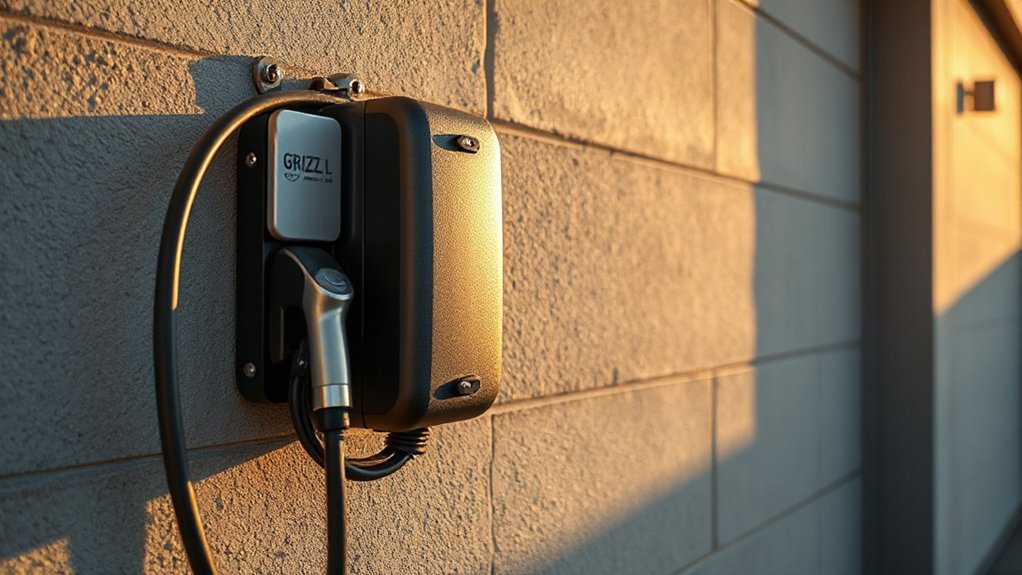

Charging speed directly affects what you pay, because networks price sessions by kWh, by minute, or via hybrids with session and idle fees. Per‑kWh billing is most accurate; expect $0.25–$0.59/kWh on DC fast, $0.12–$0.35/kWh on Level 2, varying by region and time-of-use. Where per‑kWh isn’t permitted, minute rates are tiered by power (e.g., 1–90 kW vs 90–350 kW) to align cost with delivered kW. Idle fees start after a grace period and accrue until you unplug; budget $0.30–$1.00/min. Reduce cost by: enrolling in membership benefits for lower energy and session fees; charging when TOU off-peak; stopping near 80% to avoid taper; preconditioning to shorten dwell; avoiding roaming markups; enabling Plug & Charge for billing transparency and authorizations; checking taxes and site surcharges before starting.
Hours, Parking Rules, and Site Access
While many sites run 24/7, actual access hinges on the host facility’s hours, gates, and parking controls.
You should verify posted operating windows, including building closing times, garage lockout schedules, and holiday exceptions. If the station sits behind a boom gate, confirm whether ticket validation or QR credentials are required for entry and egress. For overnight access, check curfews, security sweeps, and lighting levels per local code. Observe stall signage: EV-only, time-limited charging, or general parking after charge completion. Many campuses apply permit enforcement; expect citations or towing if you occupy restricted bays without the decal. Confirm ADA-compliant paths, height clearances, and stall dimensions against SAE J1772 reach and cable arc. Note pay-on-exit vs pay-on-entry policies, grace periods, and no-reentry rules affecting session continuity.
Network Reliability and Peak Times to Avoid
Although many networks advertise 97% uptime (e.g., NEVI minimums), verify site reliability using port-level metrics: connector uptime per OCPP 1.6/2.0.1 status, session success rate (target >95%), mean time to repair (<24–48 h), and derating incidence under load sharing.
Check telemetry history, not dashboards. Compare fault codes, unavailable states, and power limits per connector. You’ll reduce risk by avoiding commuting peaks and known seasonal outages. Prefer stations with redundant power modules, liquid-cooled cables, and preventive maintenance intervals. Review queue length, wait time, and stalls-per-site to gauge throughput. Favor dynamic load management that preserves full power for single sessions and degrades gracefully under concurrency. If charging at peak, precondition battery and plan a dwell. Track failures after rain, freeze-thaw cycles, or heat, and adjust arrival windows.
Payment Options and Roaming: Apps, RFID, Tap-to-Pay
You should verify supported charging apps and roaming via OCPI 2.2.1, ensuring your accounts (e.g., ChargePoint, EVgo, Hubject-partner networks) authenticate seamlessly and preserve contracted tariffs. Confirm RFID card compatibility with ISO/IEC 14443 (e.g., MIFARE DESFire) and whether the operator uses UID-based or token-mapped authorization. For tap-to-pay, look for EMV Contactless L1/L2 certification (Visa, Mastercard, Amex) and NFC wallets (Apple Pay, Google Pay), plus OCPP 1.6/2.0.1 support for cross-vendor interoperability and transparent pre-auth/pricing.
Supported Charging Apps
How do you pay and roam across networks here? [Location] supports app-based activation through major eMSPs via OCPI 2.2.1 (direct or via Hubject/Gireve), RFID cards/badges using ISO/IEC 14443 and 15693, EMV contactless tap-to-pay (Visa, Mastercard, Amex, plus Apple Pay/Google Pay), and—where available—ISO 15118 Plug & Charge. Use your preferred eMSP for discovery, pricing, start/stop, and receipts. OCPI roaming preserves account management, consolidated invoicing, and push notifications. EMV is a no-login fallback; Plug & Charge automates contract selection with PKI-backed security. Apps expose live availability, power levels, tariff components, and session controls. Interoperability aligns with OCPP 1.6/2.0.1 and CDRs.
| Capability | Standard | Outcome |
|---|---|---|
| Roaming | OCPI 2.2.1 | Cross-network authentication and billing |
| Automated charging | ISO 15118 | Contract certificate negotiation |
| Real-time status | OCPP + OCPI | Connector availability, power, pricing |
RFID Card Compatibility
Because many drivers prefer tap-to-authenticate, [Location] accepts RFID cards and fobs compliant with ISO/IEC 14443 (Type A/B, including MIFARE DESFire) and ISO/IEC 15693.
You can authenticate via OCPP-backed readers; the station validates card UID plus application keys and enforces mutual authentication.
We support DESFire EV2/EV3 with AES-128, sector-based keys, and diversified key derivation aligned to current Encryption Standards.
Legacy MIFARE Classic may read for ID only, but it won’t activate charging without elevated security profiles.
For roaming, we map your token to your CPO/EMSP account using OCPI eMSP tokens and whitelist synchronization.
- Lost Cards: suspend instantly via portal; on-site lists refresh every 5 minutes.
- Retry policy: 3 failed reads lock the reader for 30 seconds.
- Data: UIDs salted, logs retained 180 days, minimum retention.
Tap to Pay Options
Prefer quick, card-based checkout? [Location] supports open-loop contactless EMV payments with EMVCo L1/L2-certified kernels for major schemes (Visa, Mastercard, Amex, Discover, Interac) and NFC wallets (Apple Pay, Google Pay, Samsung Pay) with CDCVM. You’ll tap once, get online authorization in ~2–4 seconds, and charging starts. Readers support ISO/IEC 14443 Type A/B, NFC Forum Type 4, and 13.56 MHz at 106–424 kbps. For regulatory compliance, the system enforces PCI DSS v4.0, EMVCo Contactless v3.x, and PSD2 SCA via CDCVM. It also supports deferred/partial captures for session billing. If the tap fails, you’ll see clear decline codes and can retry or switch to app/RFID. Maintenance protocols include daily reader self-tests, firmware signing, routine tap-pad calibration, and tamper detection with automatic disablement. Uptime monthly targets exceed 99.5%.
On-Site Amenities, Accessibility, and Local Range Tips
Often, the most reliable EV stops pair standards-compliant hardware with quantified amenities and verified accessibility. You should verify restroom availability, food within 200 meters, lighting (≥20 lux), and CCTV uptime. Confirm wheelchair access per ADA: 96-inch access aisles, 1:12 ramps, tactile signage, and unobstructed 36-inch paths from charger to entrance. Note stall spacing, curb cuts, and plow zones to prevent cable strain. Optimize range by planning short top-ups at high-power stalls when the pack is warm. In cold or mountainous routes, add 10–20% buffer and precondition en route. Prefer sites with power redundancy (N+1) and uptime >97%.
Pick chargers with verified amenities, ADA access, strong lighting, redundancy, and plan warm-pack high‑power top‑ups.
- Amenity audit: hours, indoor seating, potable water, trash, Wi‑Fi RSSI ≥ -65 dBm.
- Accessibility checklist: slope ≤ 2%, door force ≤ 5 lbf, counters ≤ 34″.
- Winds.
Conclusion
You leave with a standards-first plan: map live stalls, verify NACS/CCS/CHAdeMO fit, match per-stall kW and cable ratings to your vehicle’s curve, and price by kWh or minute to minimize idle fees. Check uptime targets, heatmap queuing risk, and peak hours. Pay via PnC, EMV, or RFID, log CDRs, and roam securely. With this slide-rule-precise playbook, you’ll charge faster, cheaper, and compliantly, from Level 2 to high-power DC, meeting accessibility, safety, and interoperability requirements consistently.
