
You want to know where to charge, what it costs, and how to avoid penalties. At SJC, you’ll find EV stalls in the Terminal A and B garages and Economy Lot, with Level 2 and some DC fast. Fees stack: per‑kWh or per‑minute charging plus standard parking, with idle surcharges and time limits. You’ll often need ChargePoint, EVgo, or Tesla apps. Availability swings with flight banks—plan to avoid surprises.
Key Takeaways
- On-airport chargers: Terminal A adjacent garage, Terminal B garage, and Economy Lot; marked EV stalls near pedestrian routes to ticketing and baggage.
- Charging costs stack on airport parking; check app and signage for per‑kWh or per‑minute rates, session fees, idle fees, taxes, and surcharges.
- Typical speeds: Level 2 ~7 kW adds 20–35 miles/hour; DC fast 50–350 kW does 10–80% in 20–45 minutes, tapering above ~70%.
- Nearby off‑airport DC fast options within 3–8 miles: Tesla Superchargers, Electrify America, EVgo, ChargePoint on US‑101 and I‑880; typical energy $0.31–$0.59/kWh.
- Time limits enforced; set alerts, move at target SOC; ensure app access and log stall number to avoid idle fees or citations.
Where to Charge at SJC: Garages and Lots by Terminal
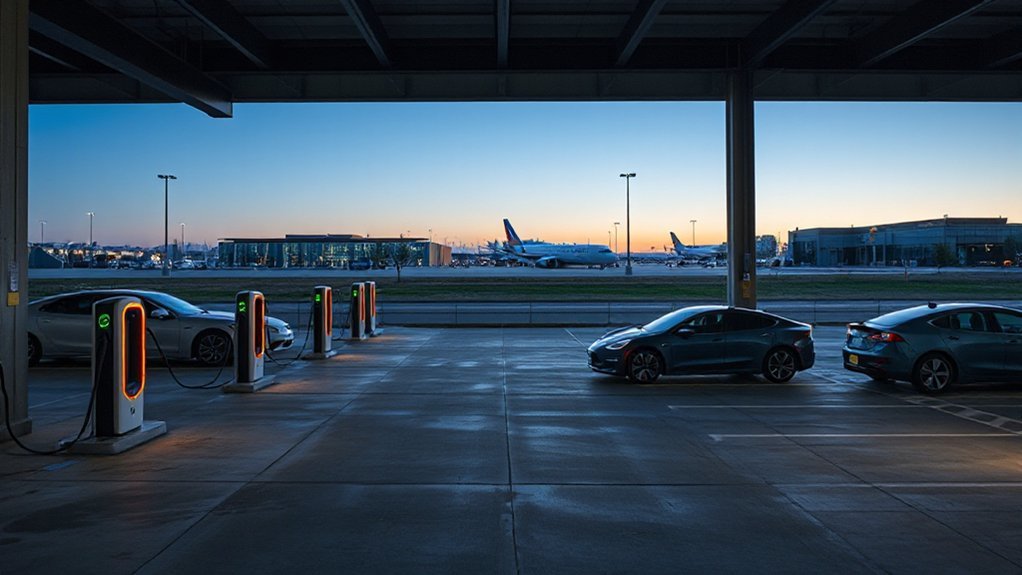
Terminal-by-terminal, SJC concentrates public EV charging in the garages adjacent to Terminals A and B and in the Economy Lot, letting you choose a charger aligned with your gate and parking cost. You’ll find marked EV stalls near pedestrian routes to ticketing and baggage. Follow airport wayfinding; signage clarity is high at garage entries and level lobbies.
Choose Terminal A Garage for shortest walk to Gates 1–16; choose Terminal B Garage for Gates 17–36 and the International Arrivals zone. Use the Economy Lot when you prioritize lower daily rates over walking time; shuttle service runs to both terminals. Obey posted dwell limits, stall markings, and idle-fee rules. Park head-in, display required permits, and keep cords inside striping. Document your stall number for return later.
Charging Types and Speeds: Level 2 vs. DC Fast
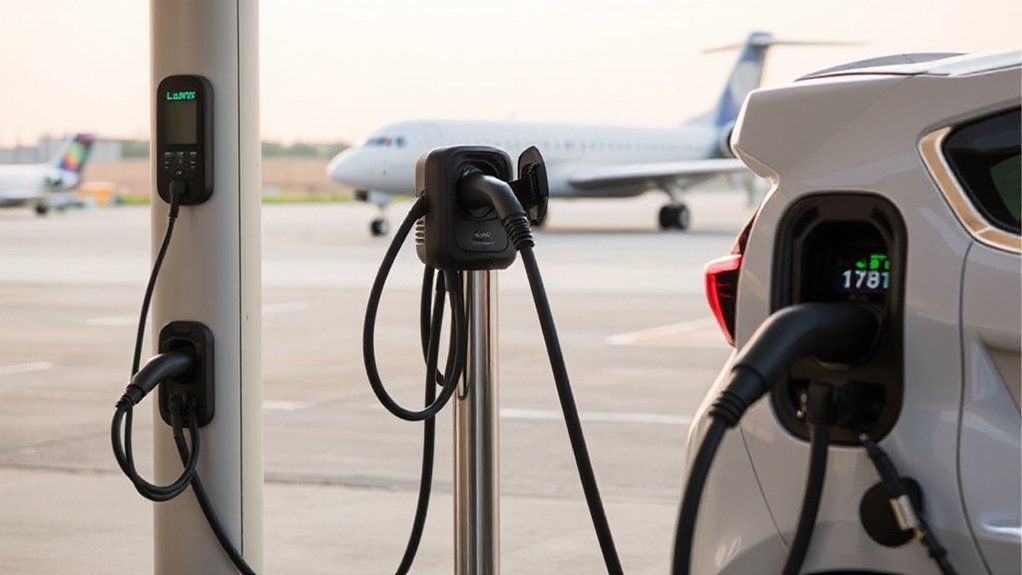
At SJC, you’ll choose between Level 2 (~6–19 kW) and DC fast charging (~50–350 kW), a power gap that directly drives your dwell-time plan. Expect Level 2 to add about 25–35 miles of range per hour (roughly 3–8 hours for a 60–80 kWh pack), while DC fast commonly delivers 10–80% in 20–45 minutes depending on charger rating and your vehicle’s charge curve. To comply with airport stall policies and maximize throughput, match charger type to your turnaround time and move your vehicle promptly at session end.
Power Output Differences
How fast you’ll recover range at SJC hinges on charger power: Level 2 supplies roughly 6–19 kW (typically ~7 kW), adding about 20–35 miles of range per hour, while DC fast charging (DCFC) delivers ~50–350 kW, adding about 3–12 miles per minute.
You’ll only realize those rates if three constraints align: vehicle limits, charger capability, and site power. Your onboard AC charger caps Level 2 intake; many EVs accept 6–11 kW. DCFC is governed by pack voltage, allowable current, battery chemistry, and thermal management. At SJC, some DCFC pedestals share cabinets; power may be load-balanced per stall. Expect output to vary by state-of-charge and temperature because charging profiles taper to protect cells. Cold or hot packs trigger reduced power until conditions normalize. Check derates.
Typical Charging Times
Typically, you’ll see 10–80% sessions take 20–35 minutes on 150 kW DC fast chargers, 45–70 minutes on 50 kW units, and 60–90 minutes on 200–250 kW gear if your car bottlenecks below site power; Level 2 at ~7 kW takes about 2–4 hours for a 20–60% top-up or 8–12 hours from low state-of-charge to near full. These times assume a warm battery, arrival near 10–30%, and no power sharing. Temperature effects and battery aging reduce charge acceptance, extending sessions, especially below 50°F or above 95°F. Precondition when approaching to DC fast stalls to meet the SJC dwell you planned. Expect slower rates above 60–70% due to taper. Verify your vehicle’s max AC and DC ratings. For compliance, monitor kW, SOC ramp, and stall allocation.
Networks, Apps, and Access Requirements

Because network access governs whether you can energize a port, confirm each station’s provider at San José Mineta International Airport (SJC) before you arrive and make sure you have an active account, payment method, and RFID/app credentials for that network or a supported roaming partner. Verify compatible roaming agreements in your app, then preload funds if required. Add the RFID to your wallet and test a remote start on a nearby charger before departure. At SJC, enable Bluetooth, location, and cellular data to pass app-based authorization quickly. For account security, use unique passwords, hardware-based MFA, and lock lost RFIDs promptly. Capture session IDs and kWh in your logs. If a reader fails, call the network, request remote start, and document the case for records.
Pricing, Parking Rates, and How Fees Stack

You should verify the station’s pricing model—per kWh, per minute, or session-based—and note any idle fees after charging completes. At SJC, charging costs accrue in addition to the posted parking rate, so your total equals charging fees + parking fees + any network or idle surcharges. To stay compliant and control costs, check the app for current tariffs, time-of-day rates, grace periods, and plan your dwell time accordingly.
Pricing Models Overview

At San José Mineta International Airport (SJC), EV charging costs layer on top of standard parking rates, and you’ll pay both. SJC and its network partners typically use three pricing models: per-kWh energy pricing, per-minute session pricing, and flat session fees. You may also see hybrid pricing, such as per-kWh with a per-minute component after a grace period. Rates reflect utility tariffs, demand charges, and station type: Level 2 tends to price per kWh, while DC fast chargers more often charge per minute due to throughput and idle risk. Expect differential pricing by garage and time-of-day. Idle fees may apply after charging completes. Verify posted rates in the app before you park, and confirm any airport surcharges attached to the charging session. Before entry.
Stacked Fees Explained
How do fees stack at SJC? You pay in layers: garage parking, then charging session costs, plus idle or overstay penalties. For example, daily parking accrues by calendar day, while charging bills per kWh or per minute based on station type. If you exceed the posted grace period after charging completes, an idle fee begins until you unplug or move.
Expect sales tax on electricity and network processing fees where applicable. SJC signage must disclose rates at plug-in to meet Regulatory Transparency standards and Consumer Protections. Verify: posted parking rate, charger energy price, session fee, idle fee, and any network access fee. Time your arrival to align with billing cutoffs, start sessions promptly, and set app alerts to avoid idle accrual and towing risk.
Time Limits, Idle Fees, and Enforcement
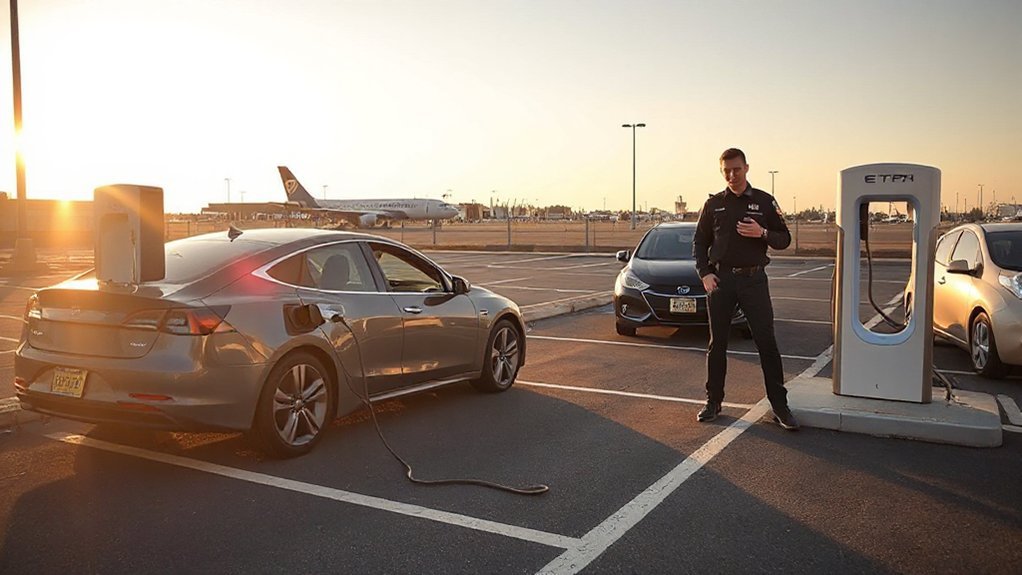
While chargers are a convenience, SJC treats them as turnover-controlled assets with strict time limits and active idle-fee enforcement. You must obey the posted session limits shown in-app and on signage; remaining plugged in after charging completes triggers per-minute idle fees and citations under parking rules. Start a timer, monitor the app, and move promptly when you hit full or the time cap. Enforcement Technology logs connector occupancy, charge state, and dwell time; officers validate events against payment records. If you believe an assessment’s wrong, file Penalty Appeals through the airport’s channel within the deadline and include screenshots and receipts.
- Posted time caps per port
- Idle-fee start: when kWh delivery stops
- Automated alerts and audits
- Citation escalation for repeat offenses
Availability Tips for Peak Travel Times

To improve your odds of finding a port during rush periods, use the network app’s live occupancy and plan around peak windows that align with flight banks (typically 5–9 a.m. and 5–9 p.m., plus holiday weekends).
Enable waitlist notifications and filter by connector type.
Apply buffer planning: arrive 20–30 minutes earlier than normal, and target a state-of-charge that covers contingencies so you can skip congested banks. Build flexible itineraries with primary and secondary facilities, including DC fast options, and navigate to the least-utilized level posted in the app. If the feed shows 95%+ utilization, redirect before entering a full garage. Set an SOC cap to shorten dwell, freeing ports sooner. Track historical occupancy charts, note airline push times, and align arrival outside those peaks.
Overnight Stays, Long-Term Parking, and Etiquette
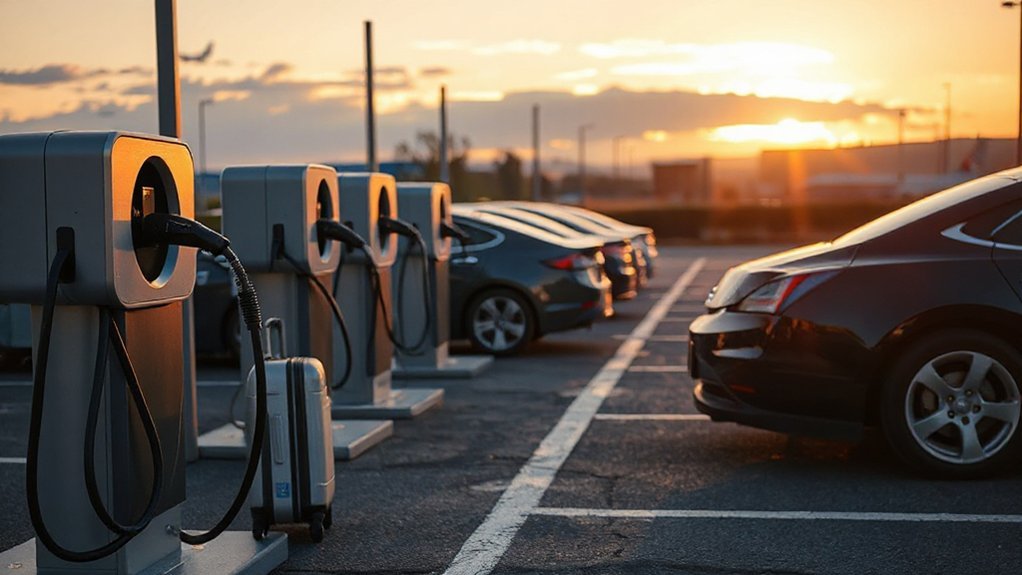
Because overnight trips often exceed a single charge session, plan your SJC approach around charger dwell limits, idle-fee triggers, and long-term stall rules: verify time caps on L2 (often 2–4 hours) and DC fast (typically 30–60 minutes) in the network app, and move your car to a regular space once you reach your target state-of-charge. For multi-day parking, treat chargers as shared resources, not storage; top up to trip buffer, then relocate. Set alerts for charge complete and idle fees. Follow signage; some rows prohibit overnight charging.
Plan SJC charging around time limits and idle fees; charge to buffer, then relocate for multi-day parking.
- Timebox sessions; target 80–90% SOC to improve turnover.
- Document stall ID, level, start/stop times, and observed kW.
- Courtesy tips: coil cables, report faults, free the bay promptly.
- Security measures: lock the port, hide valuables, enable charge notifications.
Rental EVs: What to Know Before You Return
How do you avoid return fees on a rental EV at SJC? Start 30–45 minutes early. Check your contract: most agencies require you to match the pickup state of charge (often 70–80%); otherwise they bill a per‑kWh premium plus administrative fees. Document everything. Use an inspection checklist: exterior, wheels, glass, interior, charging port, and accessories. Confirm the charging cable and adapters are present. Photograph the dash showing SOC, range, and odometer, with timestamps.
Before the key handoff, sync the car’s trip and charging logs, and keep any charging receipts. Note any warning lights. Turn off driver profiles and log out of apps. Return the fob, cable, and parking ticket together. Ask the agent to record SOC on the return slip and email it immediately.
Nearby Off-Airport Fast Chargers Along Us‑101 and I‑880
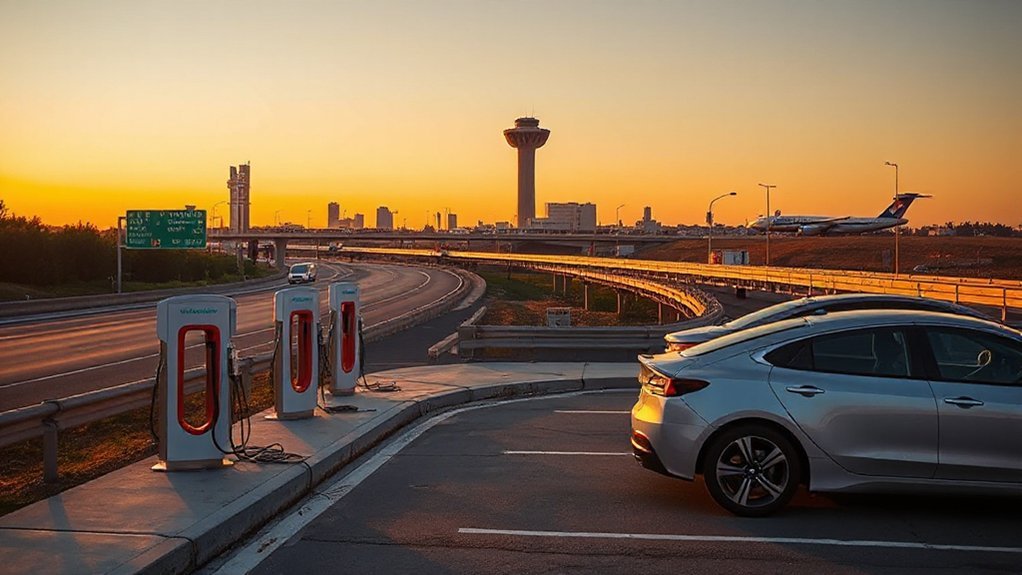
Need to match your pickup state of charge before returning? Use off-airport DC fast chargers along US‑101 and I‑880 to hit contract targets quickly. Within 3–8 miles of SJC, you’ll find Tesla Superchargers (V3 250 kW), Electrify America (up to 350 kW), EVgo, and ChargePoint sites. Typical peak rates: $0.31–$0.59/kWh; plan for 10–25 minutes from 20% to 80% depending on vehicle. Validate parking limits, idle fees, and network session caps. Prefer sites with restrooms, clear lighting, and restaurant proximity. Avoid scenic detours during peak traffic; stay corridor‑adjacent for predictable ETAs.
- US‑101: Coleman Ave Supercharger, 16 stalls, 250 kW.
- I‑880: Brokaw Road Electrify America, 350 kW, CCS/NACS.
- US‑101: EVgo at Target, 100–200 kW, restrooms, lighting.
- I‑880: ChargePoint near The Plant, verify pricing/idle fees and signage.
Conclusion
You’ve got the checklist to charge at SJC: pick Terminal A/B garages or Economy for Level 2, use off‑airport DC fast on 101/880 when time is tight. Confirm network, app, access, and posted rates; add parking, idle, and session fees to your math. Log SOC for rentals. Arrive early at peaks, obey time limits, and move promptly. Treat the charger like a runway: queue, fuel, depart. Document receipts and screenshots to stay audit-ready and compliant.