By coincidence, you plug in just as a cold snap arrives and your car alerts you to a chill. You’ll want a simple winter charging routine that keeps the battery warm and ready. Use timed charging, preconditioning, and a Level 2 charger when you can. Keep going—there’s a practical checklist that can save range and battery life.
Key Takeaways
- Plug your EV whenever parked to keep the battery warm and maintain usable range in cold weather.
- Precondition battery and cabin while still plugged in so the pack warms without draining stored charge.
- Schedule charging to finish just before departure and use off‑peak windows to combine preconditioning and faster charging.
- Prefer a Level 2 charger or garage/sheltered location to reduce exposure; cold slows charging and increases session time.
- Set daily charge limit around 70–80% for battery health; raise to 90–100% only for planned long trips.
Why Cold Weather Raises EV Charging Energy Use
Why does cold weather make your EV use more energy? You’ll notice reduced usable battery energy because low temperatures slow lithium-ion chemistry, lowering voltage and capacity so you can’t access full range. In very cold conditions many EVs experience significant range loss.
Your EV’s battery management system runs heaters to protect cells; those heaters draw battery power and increase consumption. Cabin heating requires significant electricity; resistive heaters use the most, while heat pumps are more efficient but still consume power.
Use seat and steering wheel heaters when practical, and precondition the cabin while plugged in to minimize on-battery load. Storing the vehicle in a heated garage reduces battery heating needs but raises facility energy use. For safety, allow extra range margin and monitor battery temperature and charge before driving in cold conditions each trip.
How Freezing Temperatures Slow Charging and What to Expect

In freezing temperatures, your EV’s battery accepts charge much more slowly because ions move sluggishly, internal resistance rises, and the BMS will limit charging to prevent damage like lithium plating. University researchers demonstrated that drilling anode channels and using protective coatings can dramatically improve cold charging performance. Expect longer sessions as the car often spends the first 30 to 45 minutes warming the pack before meaningful charge is added unless you precondition. The BMS and thermal system actively restrict charge rates until it’s safe.
In freezing temperatures, EVs charge much slower—BMS and thermal systems limit rates while the pack warms.
Take these safety-minded practical steps:
- Precondition while plugged in to enable faster charging on arrival.
- Schedule charge windows via the app to warm the battery.
- Use sheltered or garage charging to reduce cold exposure.
- Allow extra time and avoid high-rate charging until the BMS permits it.
Following these precautions protects battery health and keeps you safe, always.
Reductions in Driving Range and Battery Performance in Winter
Slower charging in cold weather often goes hand‑in‑hand with noticeably reduced driving range and performance: chemical reactions inside the battery slow and internal resistance rises, so the pack can’t deliver power as efficiently, and your EV also draws significant energy for cabin heating and to overcome heavier rolling and aerodynamic drag on snow‑covered, cold roads. Real‑world measurements show that Weather affects range.
You’ll see range drop as chemistry and resistance limit output; research shows usable range can fall roughly 20–50%, and in extreme northern cold median losses can exceed half the rated range. Electric cabin heating and higher rolling/aerodynamic drag on snow increase consumption.
Modern heat pumps and active thermal management reduce losses versus resistive systems, but expect shorter real‑world range during prolonged cold for safety planning and adjust trips accordingly.
Optimal Home Charging Routines for Cold-Climate Owners
When temperatures drop, plug your EV in whenever you can so the battery stays warm and ready. Use scheduled preconditioning while the car’s still plugged in to warm the battery and cabin without draining range. Remember that battery performance is reduced in cold weather, so keeping the car plugged in helps maintain usable range.
For daily driving in cold climates, set your home charger to stop at about 70–80% to balance usable range and long‑term battery health.
Plug In Whenever Possible
If you live where temperatures dip below freezing, plug your EV in whenever possible so the battery management system can keep cells warm and ready. Keeping your car plugged overnight prevents deep discharge and lets the vehicle use shore power to maintain battery temperature. Be aware that battery chemistry slows in cold temperatures, reducing charge acceptance and efficiency. Aim to keep state of charge above 20% to reduce degradation and slow cold charging. Prefer a Level 2 charger for quicker, more efficient top‑ups in cold weather.
Park in a sheltered spot when you can to lower thermal stress.
Follow these practical steps:
- Plug in overnight during cold spells.
- Use Level 2 charging when available.
- Don’t let charge fall below 20%.
- Park in a garage or carport.
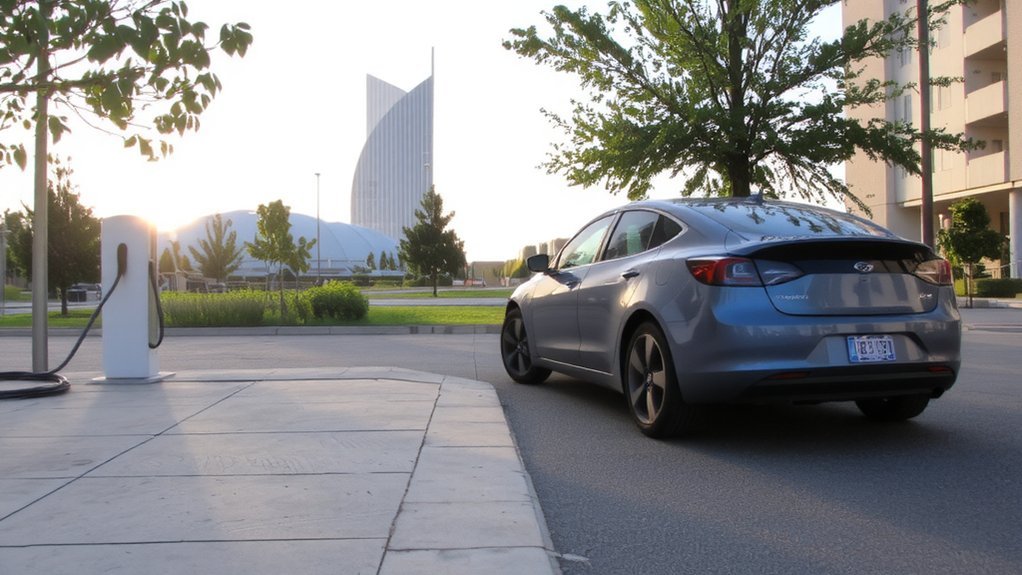
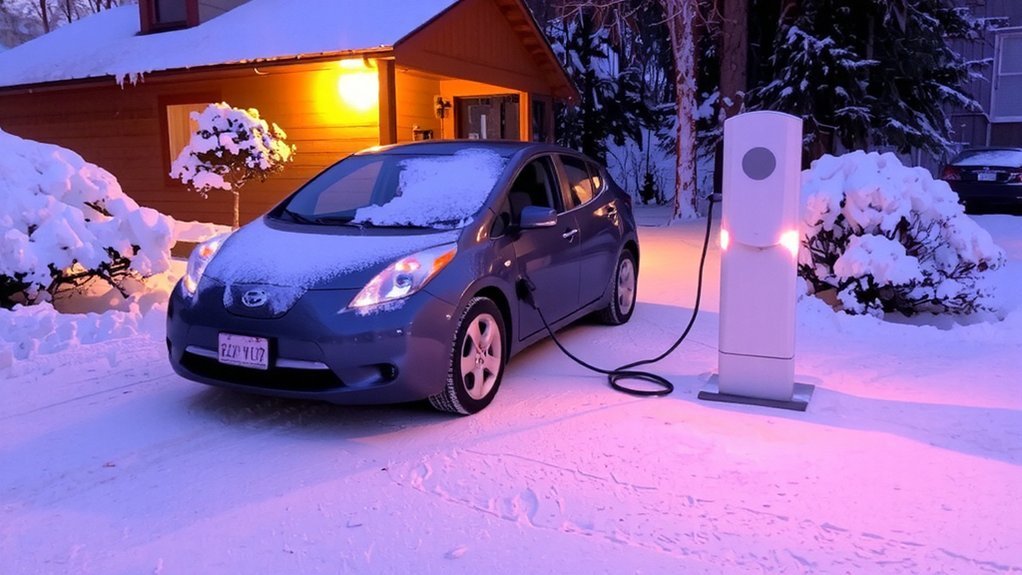
These steps’ll help guarantee safe winter starts.
Precondition While Plugged
Because you can use shore power to warm the pack, preconditioning while plugged preserves range, reduces charging time, and cuts battery stress in cold weather. Use your charger to heat the battery and cabin before departure so you don’t drain stored energy.
Schedule preconditioning in the vehicle app to start early enough to raise battery temperature above freezing, especially below 20°F (−6.7°C). Favor battery-first warming and use seat/steering heaters to limit cabin load; vehicles with heat pumps need far less energy.
Precondition while connected to a Level 2 charger to avoid lithium plating risk during fast charging and to shorten charging sessions. Maintain a reliable winter charging routine, monitor ambient temperature and state of charge, and never unplug just before departure without preconditioning again. When used strategically, preconditioning can reduce range loss by up to 50%.
Set 70–80% Limit
Why set your EV’s charge limit to 70–80% in winter? Charging above 80% slows dramatically, especially when batteries are cold, so keeping it lower reduces time plugged in and avoids the slow taper that stresses the cell. Keep in mind that charging slows dramatically past 80%. You’ll also reduce high-voltage wear that accelerates aging in cold climates.
- Set charge limit to 70–80% via vehicle app.
- Schedule Level 2 overnight charging to finish at the limit.
- Combine limit with preconditioning while plugged in.
- Avoid routine 100% fills except for long trips.
These steps keep charging efficient, minimize battery stress, and enhance safety by shortening cold charging sessions and preserving long-term capacity. Check settings regularly and adjust for extreme cold to protect range and battery health. Monitor, adjust, repeat.
Preconditioning, Scheduling, and App-Based Charging Strategies
You can use your EV app to precondition the cabin and battery while the car’s plugged in, saving onboard charge for driving. Set scheduled charging windows to finish just before you leave and to run during off‑peak hours so the battery’s warm and costs are lower. Keep in mind that cold temperatures can slow down charging because of battery chemistry, so plan for longer charge sessions and use preconditioning to help reduce cold slows charging.
App-Controlled Preconditioning
When it’s cold out, app-controlled preconditioning lets you warm the cabin and battery before you leave, using grid power while the car’s plugged in so range isn’t drained. Preconditioning uses grid power to avoid draining the battery and can reduce range loss in cold weather. You can remotely start preconditioning from your phone, bringing the battery to a safe temperature for driving or faster charging and ensuring clear windows and a comfortable cabin.
Apps show progress, warn if the car isn’t plugged in, and sometimes adjust intensity for extreme cold. Use these features to reduce risk from icy windows and low-range surprises.
Common safety steps:
- Verify the vehicle is plugged in before starting.
- Monitor preconditioning progress in the app.
- Heed alerts about faults or unplugged status.
- Use battery preconditioning before fast charging.
Keep settings updated via app.
Scheduled Charging Windows
Scheduling charging windows lets you sync battery warming and charge completion to your departure time so the car leaves with the warmest, freshest battery and a heated cabin without wasting energy overnight. Using a heat pump can improve winter range by 8–10% compared with resistance heating. Use built-in scheduling or your app to finish charging just before you leave, preventing overnight drain and keeping charge above 20% for emergency heat.
Enable preconditioning to warm the battery for faster charging, better range, and cabin comfort; manually warm while plugged in if needed. Align windows with off‑peak rates, set weekday/weekend patterns, and use departure-based or weather-triggered activation.
Monitor schedules regularly, raise winter targets (for example 70→80%), and be aware of throttled charging, temperature thresholds, power outages, and vehicle compatibility to keep operations safe and preserve long-term battery health.
Practical In-vehicle and Maintenance Tips to Maximize Winter Range
If you preheat the cabin while the car’s still plugged in and rely on seat and steering-wheel heaters instead of blasting the cabin, you’ll preserve more range for driving.
- Preheat via app while plugged in.
- Use seat and steering-wheel heaters, not full cabin heat.
- Keep tires properly inflated and consider winter tires.
- Remove roof racks, clear snow, and reduce excess weight.
Dress warmly and use a lap blanket when heated surfaces aren’t available. Keep the vehicle plugged during cold spells, park in a garage when possible, drive gently using ECO or winter modes, reduce speed, and anticipate stops to maximize regen. On icy roads, consider disabling regenerative braking because it can cause wheel slippage. Monitor charge closely and avoid frequent deep discharges to preserve battery health safely. Check lights and brakes before driving.
Vehicle Features, Upgrades, and Grid Considerations for Winter Charging
Preparation matters: equip your EV with an efficient heat pump or upgraded thermal-management package, use battery preconditioning (via app or scheduled departure) while plugged in, park indoors when you can, and set a moderate charge limit (around 70–80%) so the car can draw grid power to keep the battery warm—these choices speed charging, protect battery health, and reduce winter range loss compared with relying on resistive heat or cold starts.
Check whether your model offers a winter package or heat pump; manufacturers like Tesla, Hyundai, and Jaguar show better cold-weather range retention. Use navigation to route while preconditioning to shave charging time.
Prefer Level 2 charging at home, avoid Level 1 in cold, and keep the car plugged to let the grid maintain temperature. In very cold weather, expect overall range to drop to about 80% of ideal compared with temperate conditions.
Conclusion
You’ll find that thoughtful winter charging is like wrapping your EV in a warm blanket: plug in whenever you can, schedule preconditioning, and favor Level 2 home charging to keep the battery nimble. You’ll preserve range and battery health by capping charge around 70–80%, parking sheltered, and checking settings in extreme cold. With these routines, your EV will greet frosty mornings ready to go, turning winter’s bite into manageable, predictable mileage and worry free driving.