
You want quick, low‑cost charging; SJC enforces time limits and idle fees. You’ll find Level 2 and DC fast stalls in Terminal A and B garages with CCS and NACS, authenticated by contactless pay or network apps. Signage, floor decals, and QR-code maps guide you. Peak demand tracks flight banks and weekends, so plan off‑peak and rotate. Rates, rules, and real‑time availability could change how you stage your trip next.
Key Takeaways
- EV chargers are in Terminal A/B garages near elevator lobbies; A on lower levels by central core, B along terminal-side edges and ramp pods.
- Pricing appears on signage/apps; billed per kWh or hour; 2–4 hour limits with 10-minute grace; idle fees apply; active charging only.
- Mix of Level 2 (6–19 kW) and DC fast 150–350 kW; CCS and NACS dominate; limited CHAdeMO; pay via contactless, app, or RFID.
- Avoid crowds during flight banks 6–8 AM, 11 AM–1 PM, and 8–10 PM; off-peak after 9 PM aligns with lower costs.
- Use Tesla, ChargePoint, EVgo, and PlugShare for live availability, power, fees, and rules; scan garage QR codes or SJC map for exact locations.
Where to Find Chargers in Each SJC Terminal Garage

Where exactly can you plug in at SJC? Use airport garage maps to navigate to EV clusters in the Terminal A and Terminal B garages. You’ll find chargers sited near elevator lobbies, pedestrian exits, and accessible routes; follow floor decals and stall signage with the EV plug icon. Wayfinding placards at each entry list the level and aisle codes for the nearest charging banks, and overhead signs repeat those codes at decision points.
In Terminal A Garage, head to lower levels adjacent to the central core; in Terminal B Garage, look for bays along the terminal-side edges. If a deck is full, check the opposite core or ramp landings, where small pods are posted. Confirm locations via the SJC website map or QR codes.
Rates, Time Limits, and Parking Rules
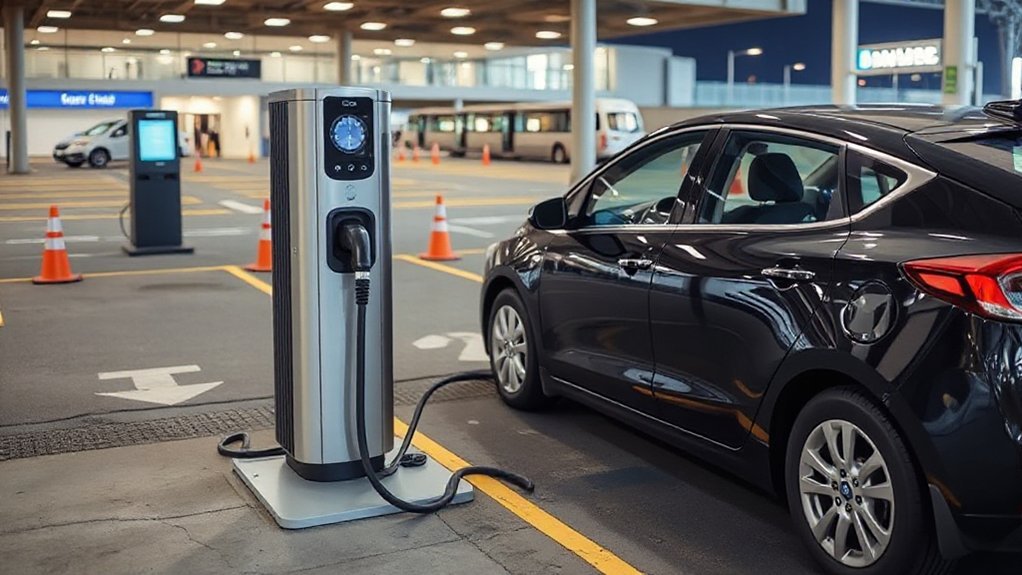
You’ll review charging cost elements—per‑kWh rates, any session/connection fees, and idle fees triggered after a posted grace period—using SJC’s fee schedule and the charger app. You must comply with charger-specific time limits (Level 2 vs. DC fast), with idle fees and overstay penalties starting at charge completion or the posted limit. Park only in marked EV stalls while actively charging; standard garage parking rules still apply, and enforcement can cite or tow for violations to guarantee turnover.
Charging Rates Overview
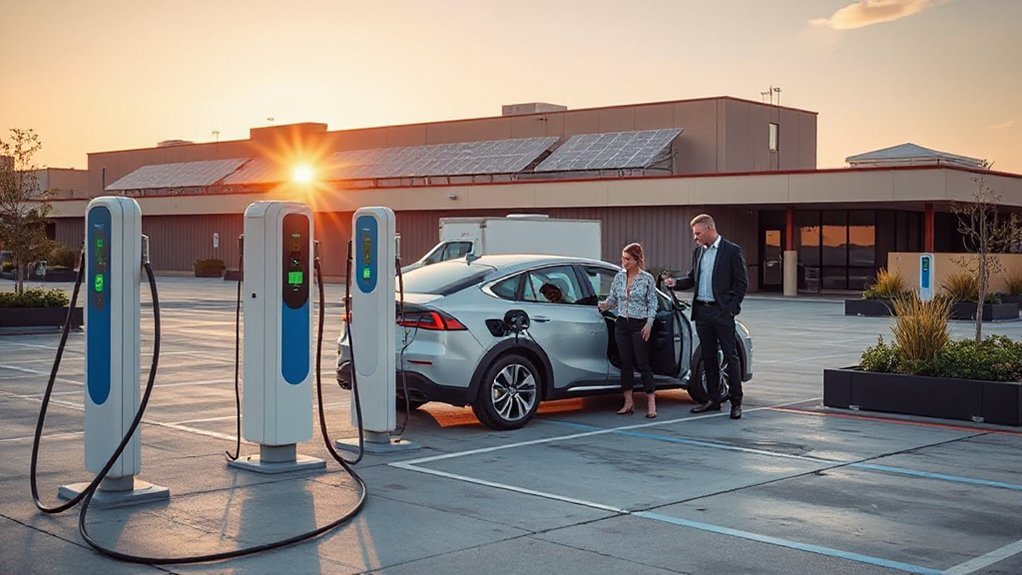
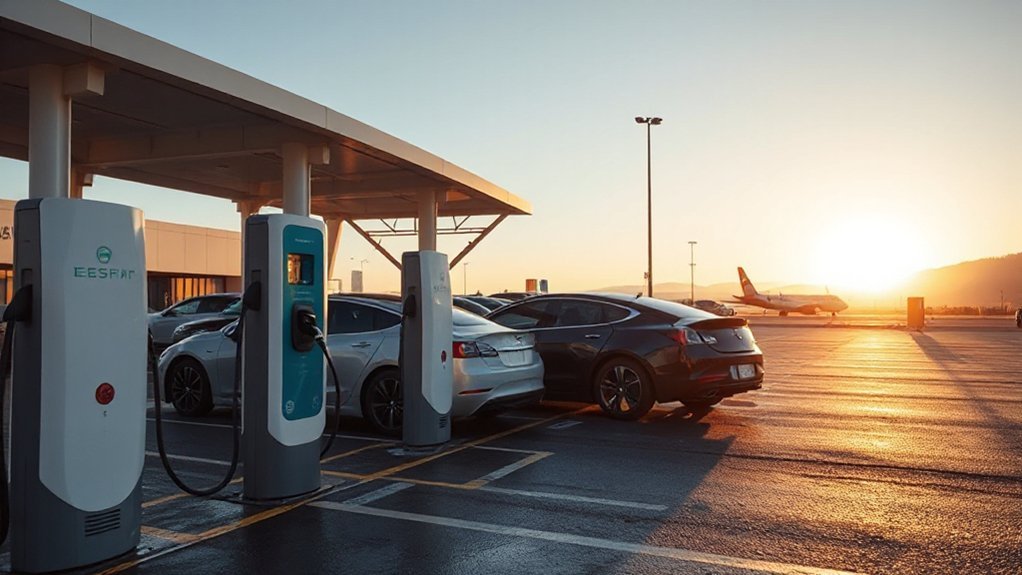
Most travelers want clear terms on cost, time, and enforcement: SJC posts EV charging prices on official signage and in the network app, bills either per kWh or per hour depending on hardware, and assesses these charges in addition to standard parking rates. You’ll see distinct pricing for Level 2 versus DC fast chargers, with rate schedules displayed before you start a session. When metering allows, the airport applies kWh-based charges aligned with energy actually delivered; where not feasible, it uses time-based fees that mirror typical consumption, following state measurement standards. Estimate your total by multiplying posted rates by your vehicle’s kWh needs. Transparent, predictable pricing supports environmental impact targets and advances equity implications by minimizing surprise costs for occasional users, staff, and travelers.
Time Limits and Parking
Beyond price disclosures, SJC sets enforceable time limits and parking rules to keep chargers available. You’ll see posted dwell limits—typically 2–4 hours—with a 10‑minute grace period; after that, idle fees apply per hour. You must move once charging completes. Enforcement runs 24/7 through citations and towing authority. For accessibility considerations, ADA-compliant EV stalls require visible placards and charging activity; noncompliance triggers enhanced penalties. Overnight charging is limited to prebooked long‑term parking; short‑term lots prohibit unattended vehicles beyond posted windows. In employee parking, expect separate chargers, priority queuing rules, and shift-based time caps. Rideshare and commercial fleets use designated zones with stricter rotations. You should follow signage, app alerts, and meter receipts to document compliance and avoid surcharges. Violations impact future access and fee eligibility.
Networks, Connectors, and Power Levels Available
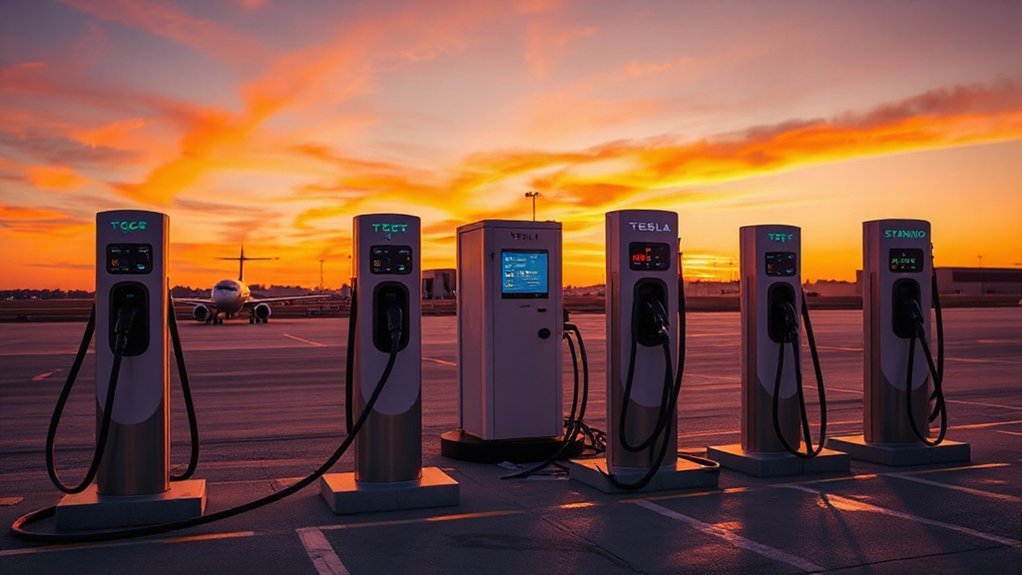
How do the charging networks, connector standards, and power classes at SJC align with California and federal requirements? You’ll find NEVI-aligned DC fast chargers (≥150 kW, 97% uptime targets) alongside Level 2 ports meeting CALGreen. Networks support open roaming, uptime reporting, and transparent pricing per SB 1000 and federal rulemaking. CCS and NACS connectors dominate; CHAdeMO is limited. You can authenticate via contactless payment, app, or RFID, per CEC guidance and NEVI rules. OCPI roaming is supported.
- Power classes: Level 2 (6–19 kW) for dwell, DCFC 150–350 kW for quick turns; load management minimizes Grid Impact.
- Compatibility Standards: CCS/NACS interoperability, ISO 15118-ready, ADA siting compliance.
- Network operations: 24/7 fault response, cybersecurity (NIST 800-53), and uptime SLAs protect stakeholders and grant eligibility.
Best Times to Plug In and Avoid Crowding
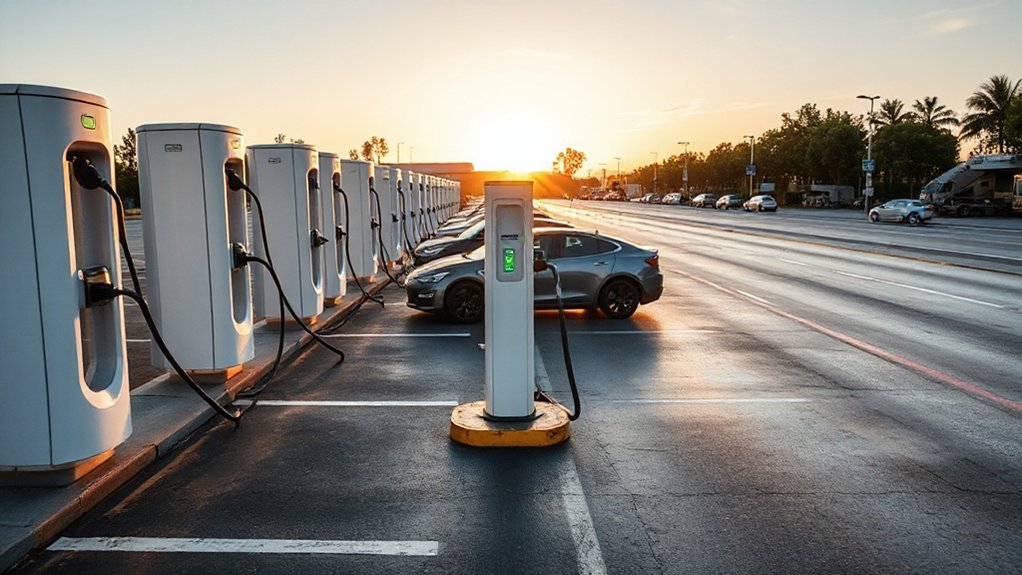
Typically, you’ll avoid queues at SJC by charging outside flight “bank” peaks and California’s 4–9 PM TOU peak window. Historical departure banks cluster 6–8 AM, 11 AM–1 PM, and 8–10 PM; align arrivals or pre/post-flight charging around those blocks. Weekdays show higher utilization aligned with business travel; weekends spike midday. Seasonal patterns matter: summer travel and holiday periods raise stall occupancy 10–25%, while shoulder months ease congestion. Event impacts are material—Sharks games, SAP Center concerts, and Apple/Google conferences can shift baywide traffic and demand by hour. For cost and grid alignment, target off-peak TOU (after 9 PM or before 4 PM) while respecting posted dwell limits and anti-idling rules. Rotate promptly to maintain throughput, optimize turnover, and maintain stakeholder goodwill, minimizing queuing externalities overall.
Tools and Tips for Real-Time Availability and Navigation
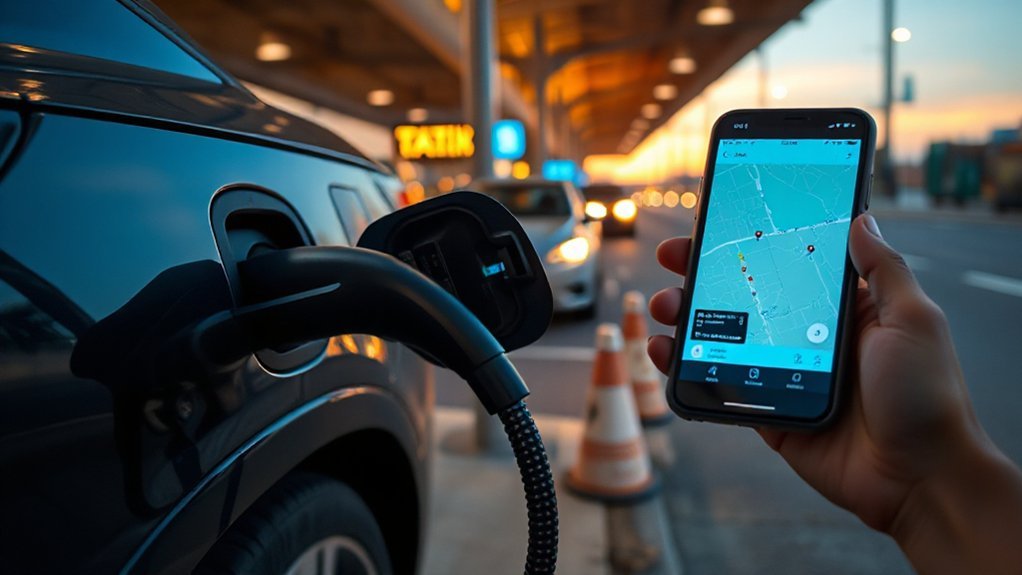
When planning a charge at SJC, use network apps with live telemetry (e.g., Tesla, ChargePoint, EVgo) and aggregators (PlugShare, A Better Routeplanner) to verify real-time stall counts, connector types, and kW ratings before you enter a garage.
Plan SJC charging with Tesla, ChargePoint, EVgo, and PlugShare/ABRP; verify live stalls, connectors, kW.
Enable wait-time overlays and session logs to assess utilization trends by terminal. Favor sites with uptime above 98% and redundant connectors. Download offline maps in case airport structures degrade GPS. Respect data privacy: limit location sharing and disable ad IDs in app settings. For wayfinding, follow posted airport signage and ADA access notes in app comments.
- Set charger power filters (≥150 kW) and CCS/NACS compatibility.
- Use turn-by-turn to specific garage levels; confirm fees and dwell limits.
- Log your session outcome to improve reliability metrics for all stakeholders.
Should You Charge Before Arrival or While You Travel?

Using live utilization data, decide whether to top up before SJC or charge while you’re away by comparing cost, time, and policy risk. If peak-hour queues exceed 20 minutes or occupancy runs above 80%, charge en route at cheaper highway sites. If airport rates exceed $0.45/kWh or idle fees apply after 30–60 minutes, you’ll minimize spend by arriving near 70% and leaving the car unplugged. Verify lot rules: some terminals restrict unattended charging or require moving within two hours; violations risk towing. For battery health, arrive with a warm pack; preconditioning benefits include faster, cheaper sessions and less degradation. If you’ll park more than 24 hours, avoid sitting at 100%. Instead, target 50–70% state of charge and top up upon return to depart efficiently.
Conclusion
You’ll optimize charging at SJC by aligning dwell time with posted limits, checking network apps for live CCS/NACS availability, and targeting off‑peak windows outside flight banks. For example, a weekly commuter on UA 184 timed a 50‑minute Level 2 top‑off in Terminal B, avoided idle fees, and vacated before citations—enforcement recorded zero violations. Use QR-code maps and contactless auth, rotate, and decide pre‑arrival fast charge vs. on‑site Level 2 based on session rates and slack.