
You need a listed EVSE on a dedicated circuit sized at 125% of the continuous load, with proper grounding/bonding, GFCI where required, and working clearances. Most Level 2 units use a 240 V, 30–50 A circuit and may trigger a panel or service upgrade. Budget for hardware, installation, permits, and inspections. To avoid red tags and nuisance trips, you’ll need a proper load calc—and a clear plan for each step.
Key Takeaways
- Install a listed EVSE on a dedicated circuit sized at 125% of load, with GFCI, required disconnect, grounding, and working clearances per NEC 625/110/250.
- Choose Level 1 (120 V, ~3–5 miles/hour) or Level 2 (240 V, ~25–35 miles/hour) based on daily miles and turnaround needs.
- Verify panel/service capacity with an NEC 220 load calculation; Level 2 typically needs a dedicated 40–60 A 240‑V circuit and proper conductor sizing.
- Typical Level 2 costs: equipment $350–$1,200; installation $500–$2,500, plus potential panel or service upgrade expenses.
- Process: site assessment, permit submission, wiring and EVSE install, rough/final inspections, functional testing, and documentation for compliance and incentives.
Code and Utility Requirements
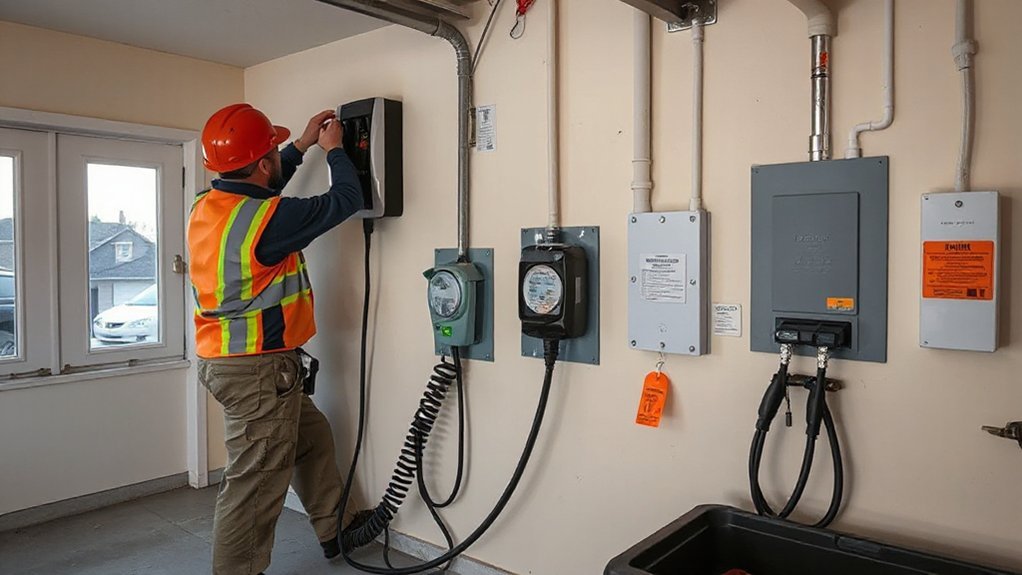
Because EV charging equipment is a continuous load, start by confirming service capacity and performing a dwelling load calculation (NEC 220) to determine if you need a service or panel upgrade. Verify the EVSE is listed (NEC 625.5), sized at 125% of continuous load (210.20(A), 215.3), and on a dedicated circuit with properly rated overcurrent protection (NEC 625.40, 625.41). Provide required working clearances (110.26), grounding and bonding (250), and GFCI protection where receptacles are used for EV charging (625.54). Coordinate permits with the AHJ and your utility; load additions can trigger a service upgrade, meter relocation, or service-lateral/conductor upsizing. Maintain conductor ampacity and temperature ratings (110.14, 310). Provide a readily accessible disconnect where applicable (625.43). Follow manufacturer instructions (110.3(B)). Obtain inspections before energizing safely.
Level 1 vs. Level 2: Choosing the Right Charger
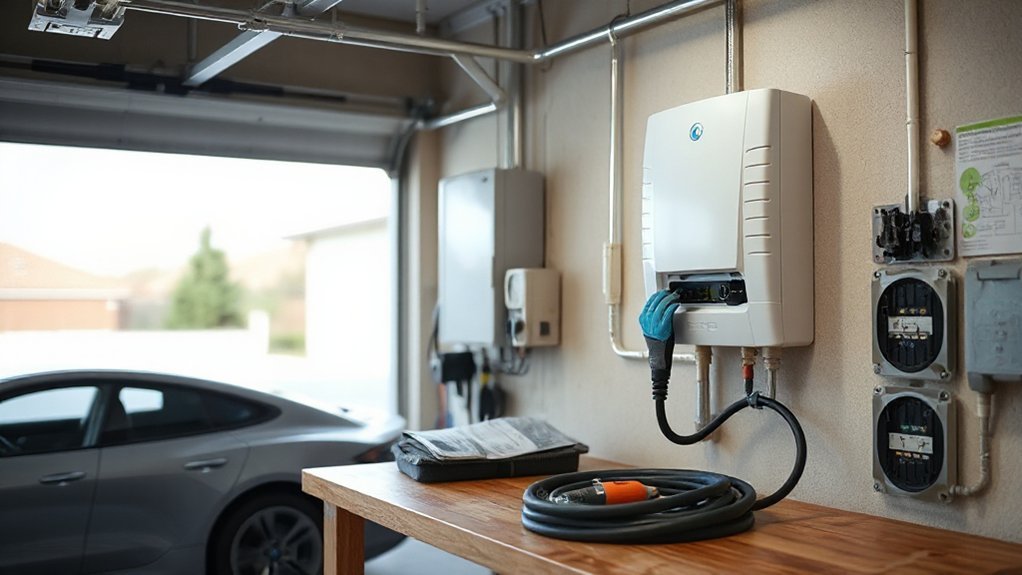
You’ll compare Level 1 and Level 2 charging rates—about 2–5 miles/hour on a 120V, 12–15A circuit versus roughly 20–40 miles/hour on a 240V, 30–50A circuit—so your daily range needs drive the choice. You’ll verify service capacity with an NEC Article 220 load calculation, install a dedicated circuit with correctly sized breaker and conductors, and apply required GFCI protection and obtain permits. You’ll weigh equipment, installation, and permitting costs against utility TOU rates and available federal/state rebates or tax credits to lower total cost of ownership.
Charging Speed Comparison
How quickly must you recover range between drives? Level 1 (120 V, ~12 A, 1.3 kW) adds about 3–5 miles per hour, yielding 30–50 miles overnight—adequate for short commutes if you plug in consistently. Level 2 (240 V, 32–40 A, 7.7–9.6 kW) delivers roughly 25–35 miles per hour, restoring large daily use in a few hours and supporting Trip Planning.
Match speed to usage. If you routinely arrive below 30% and need a full battery by morning, choose Level 2. If you use modest daily miles and can dwell longer, Level 1 suffices.
For safety and code compliance, use UL-listed EVSE, follow the manufacturer’s instructions, mount, and schedule charging to off‑peak. Practice Charging Etiquette: avoid needless 100% charges and move the car when done.
Home Electrical Requirements
Matching charging speed to your routine only works if your home can safely supply the load. For Level 1, a dedicated 120‑V, 15–20‑A receptacle on a GFCI‑protected circuit is adequate; limit EVSE to 12–16 A. For Level 2, NEC 625 requires a dedicated 240‑V branch circuit sized at 125% of continuous load (e.g., 40‑A breaker for a 32‑A EVSE). Verify panel capacity with a dwelling load calculation (NEC 220) or use an EV energy management system or Smart switches to cap current. Use copper conductors, correct wire gauge, and a properly rated disconnect if required. Choose NEMA 14‑50/6‑50 or hardwire per manufacturer. Maintain proper mounting height, wet‑location ratings, and clearances. Consider Outlet aesthetics, cord management, and labeling. Always pull permits and schedule inspection afterward.
Costs and Incentives
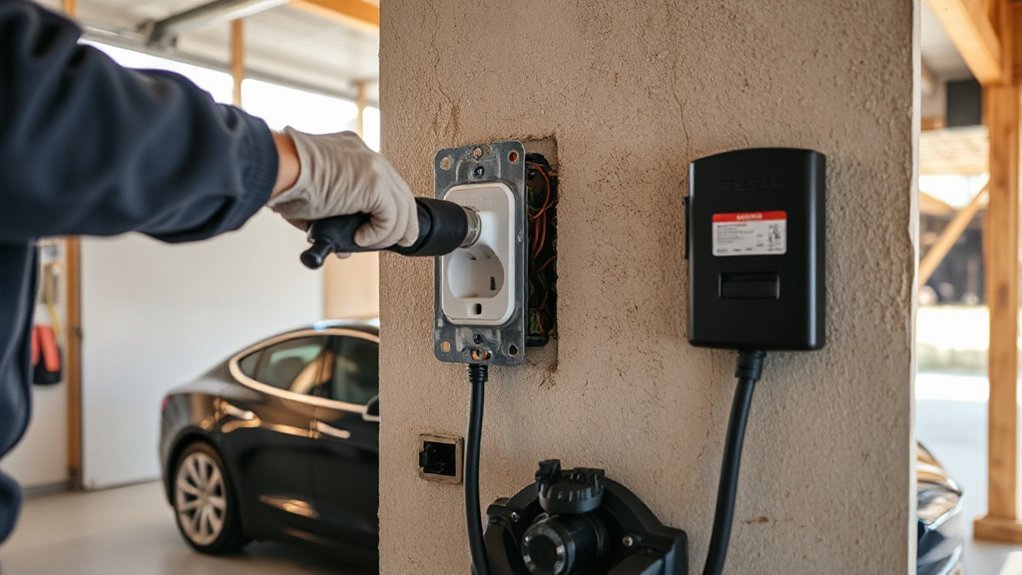
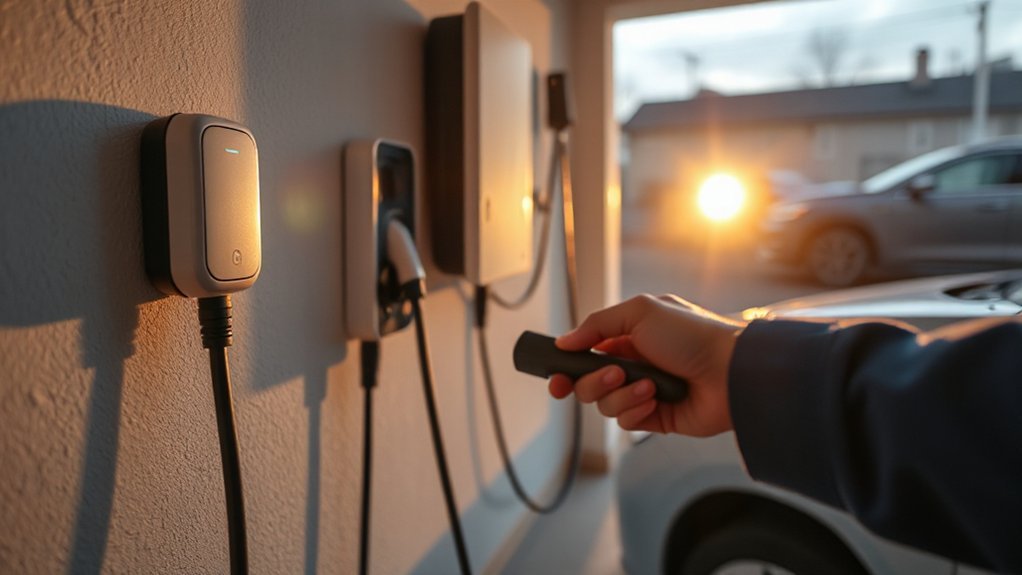


While Level 1 often has little upfront cost because many EVs include a 120‑V cordset, plan for a dedicated GFCI‑protected receptacle, a permit, and an electrician if a new circuit is needed. Level 2 costs more: a listed 240‑V EVSE, a 30–60 A circuit, load calculation, and possible panel upgrade. You’ll charge 4–6x faster, reducing off‑peak dwell time. Use rebates, tax credits, utility make‑ready programs, and financing options to offset installation. Verify NEC 625, GFCI, and labeling. Keep receipts for incentives and future resale value.
| Option | Typical Cost | Key Incentive |
|---|---|---|
| Level 1 | $0–$300 equipment | Time-of-use electricity rates |
| Level 1 install | $0–$800 electrical | Utility rebates and bill credits |
| Level 2 EVSE | $350–$1,200 unit | Federal EV tax credit |
| Level 2 install | $500–$2,500 labor/materials | Panel upgrade incentives |
Panel Capacity, Load Calculations, and Circuit Sizing
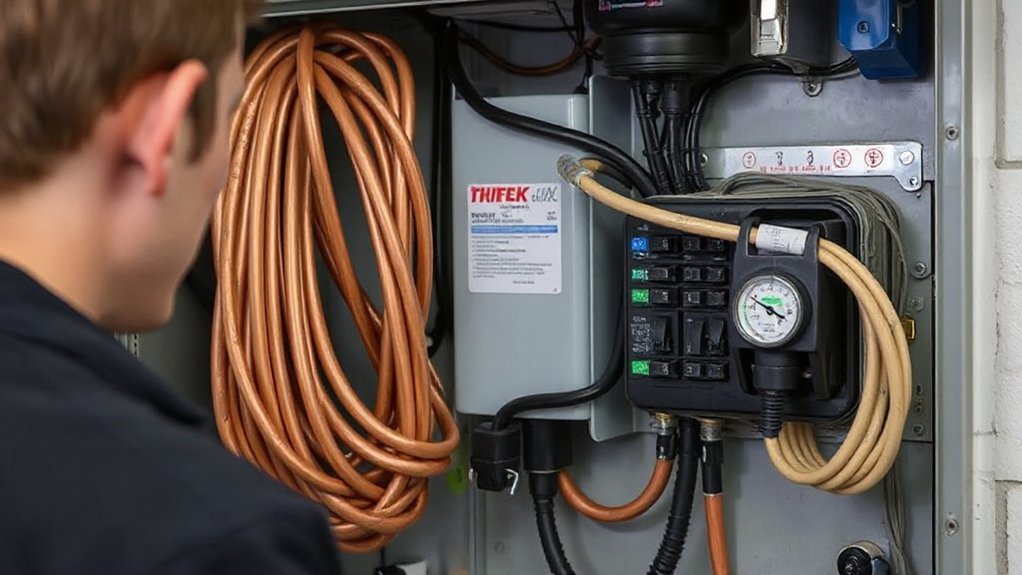
Because EV charging is a continuous load, you must verify service and panel capacity, perform NEC-compliant load calculations, and size the branch circuit correctly before installing an EVSE. Start by evaluating main service rating and spare breaker spaces. Use NEC 220 demand factors to calculate dwelling load, then add the EVSE at 125% per 210.20(A)/625, ensuring the service and feeder have margin. Size the branch circuit at 125% of the EVSE nameplate current; select an overcurrent device and conductors whose conductor ampacity meets that value after thermal derating for ambient temperature and bundling. Choose copper or aluminum per listing, account for voltage drop if runs are long, and match receptacle or hardwired configuration. Verify grounding, GFCI requirements, and labeling. enclosure rating and torque specs.
Permits, Inspections, and Safety Standards
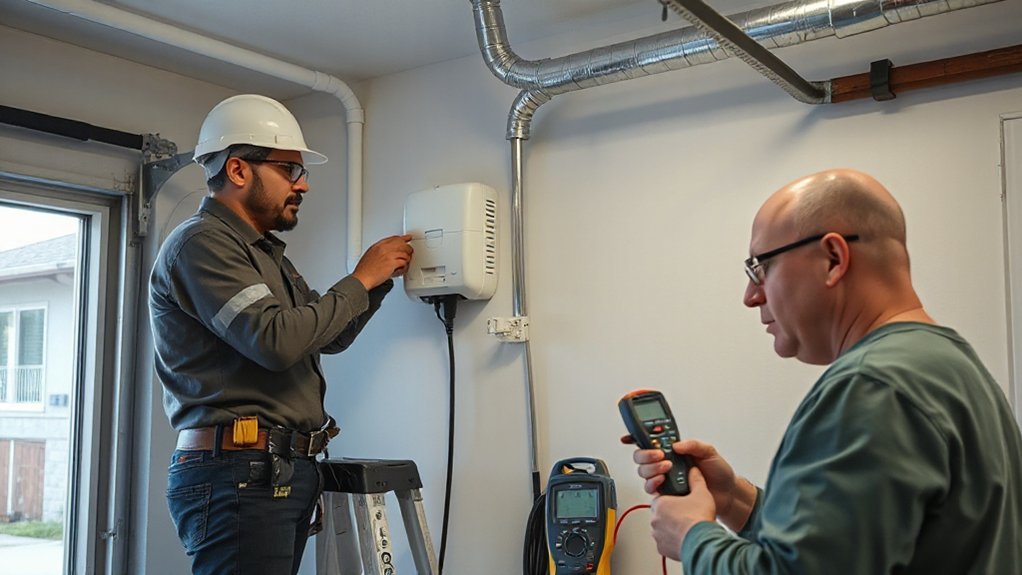
You secure required local permits before any work begins, following your authority having jurisdiction’s application, plan review, and fee schedule. You schedule inspections to match key milestones—rough-in, pre-energization, and final—and allow time for corrections if noted. You verify compliance with NEC Article 625, local amendments, manufacturer instructions, and any utility interconnection rules to maintain safety and code conformity.
Local Permit Requirements
Before any installation, confirm permit and inspection requirements with your local authority having jurisdiction (AHJ). Use permit portals or call municipal contacts to verify whether you need an electrical over-the-counter permit or full plan review. Typical applications require a one-line diagram, load calculation (NEC 220), EVSE specifications, and panel schedule. Many AHJs mandate permits for new 240V circuits, service upgrades, trenching, or wall penetrations. Confirm feeder size, conductor type, GFCI protection (NEC 210.8/215.9), disconnect means, and labeling. Ask about accessible working clearances (NEC 110.26), mounting heights, and seismic or anchorage details, if applicable. If your home’s in a condo or historic district, obtain HOA or preservation approvals before applying. Pull the permit in the licensed contractor’s name when required. Keep thorough records for compliance.
Inspection Process Timeline
With permits in hand, the inspection timeline typically proceeds in defined stages that match the work scope and keep the installation code-compliant. First, a rough-in inspection verifies conductor sizing, conduit routing, GFCI/AFCI requirements at the panel, bonding, and working clearances before any walls are closed. Next, a service or load-side inspection confirms breaker rating, labeling, torque values, and overcurrent coordination. Finally, a final inspection validates EVSE mounting, disconnect accessibility, cable management, and functional testing.
Timeline Expectations vary generally by jurisdiction, but you’ll plan 1–3 business days to schedule each visit and 15–30 minutes onsite. Common Delay Causes include failed rough-in due to undersized wire, missing load calculations, inaccessible panels, or utility coordination for service upgrades. Be present, provide plans, and correct punch-list items promptly.
Safety Standards and Codes
While jurisdictions vary, every garage EVSE installation must meet your AHJ’s permit and inspection requirements and conform to the NEC—anchored by Article 625 plus Articles 110, 210, 220, and 250. Obtain the permit, submit load calculations, and size feeders and breakers for continuous duty at 125% per 625.42. Use listed EVSE with clear Equipment Labeling, correct voltage, and overcurrent ratings. Provide GFCI protection where required, dedicated branch circuits, and proper working clearances per 110.26. Bond and ground equipment per 250; verify fault paths and grounding electrode continuity. Protect wiring with appropriate conduit, wet‑location conductors, and fittings. Follow manufacturer instructions as code. Confirm Worker Training addresses lockout/tagout, torqueing terminations, and test procedures. Schedule inspections and keep records. Document torque values and test GFCI functionality regularly.
Costs, Rebates, and Tax Credits
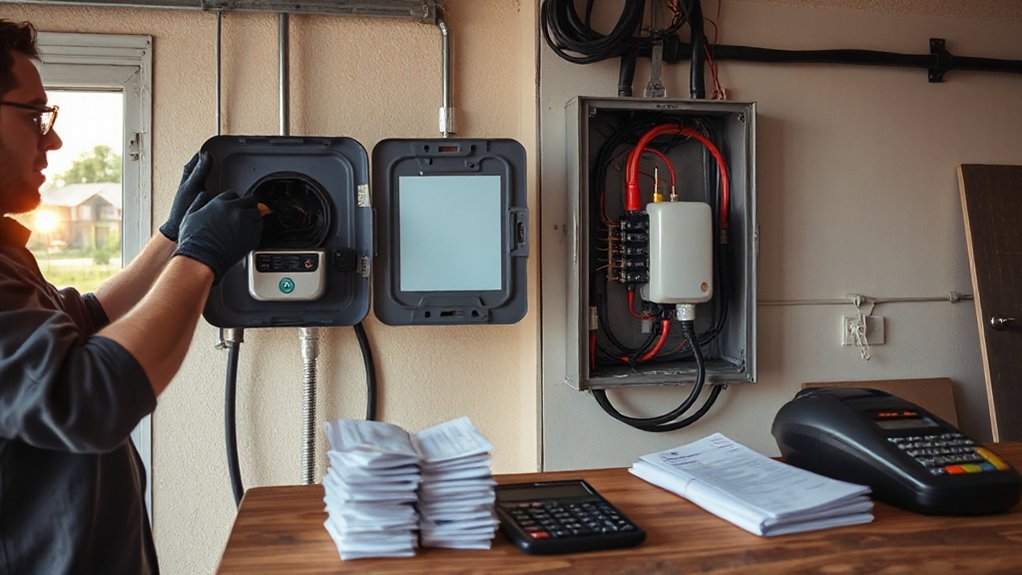
Although hardware prices have dropped, you should budget for both equipment and code‑compliant installation. Typical Level 2 chargers run $400–$900; expect $700–$2,500 for labor, permits, and materials, more if you need a panel upgrade, dedicated 40–60A circuit, GFCI protection, or trenching. Obtain an electrical permit and inspection; they help verify NEC compliance and safe operation.
Reduce net cost with incentives. The U.S. residential EVSE credit equals 30% of hardware and professional installation, up to $1,000, through 2032. Many utilities add $200–$1,500 rebates or off‑peak bill credits. Keep itemized invoices, permit receipts, photos, and claim documentation. If you charge a company vehicle at home, ask your tax advisor about business deductions or mileage reimbursement rules; requirements vary by jurisdiction and employer policy, and plan recordkeeping.
Step-by-Step Installation and Future-Proofing
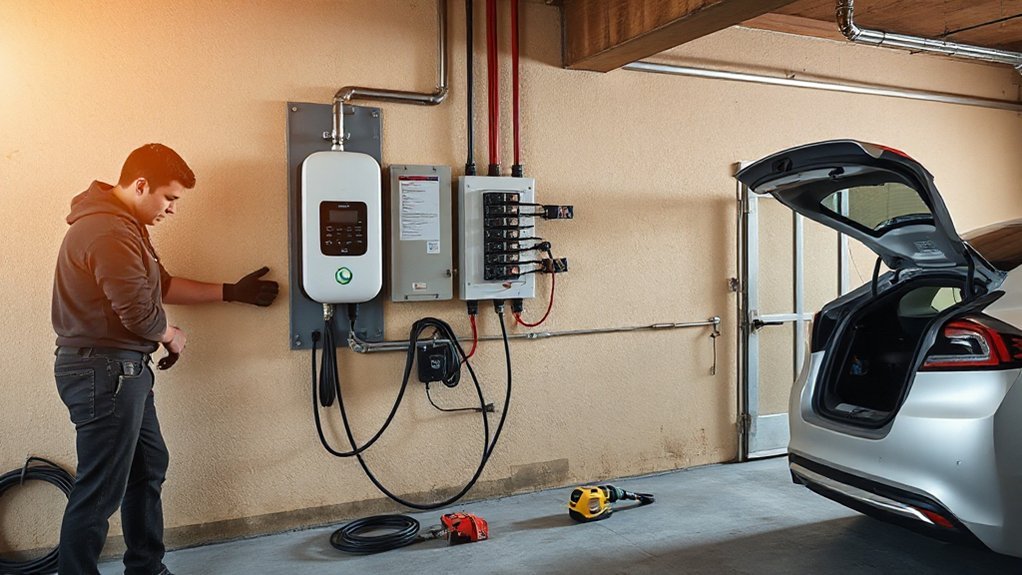
Planning your EVSE installation starts with a load calculation and layout that meet NEC Article 625 and local amendments, then moves to permits, equipment selection, and a code‑compliant wiring plan. Verify service capacity, conductor sizes, breaker ratings, GFCI requirements, disconnect means, and working clearances. Pull listed components; mount the EVSE at the manufacturer’s height; bond and label. Run conduit, torque terminals to spec, and test ground-fault and pilot signaling before energizing. Program current limits and schedules.
Future‑proof by installing a 60–100A feeder to a subpanel or junction point, oversizing conduit, and leaving pull strings. Add Ethernet or strong Wi‑Fi for Smart Connectivity and OCPP support. Choose swappable faceplates for Aesthetic Integration. Document as‑builts, panel directories, and torque logs. Schedule periodic inspections and firmware updates.
Conclusion
You want fast charging, but you need code compliance. Choose Level 1 for simplicity, or Level 2 for speed; either way, size the dedicated circuit at 125% of continuous load, install listed EVSE, bond/ground correctly, and add GFCI where required. Confirm panel capacity with a load calc, pull a permit, and schedule inspections. Pay now for proper wiring, save later with rebates. Future-proof conduit today, avoid service headaches tomorrow. Convenience meets safety—and your car charges.