
Worried an outdoor charger won’t last? You get a NEMA‑4 cast‑aluminum enclosure with gasketed seals, built for harsh weather and wide temperature swings. You charge up to 9.6 kW at 240 V with selectable 16/24/32/40 A output, using SAE J1772 for broad vehicle compatibility. You can hardwire or use NEMA 14‑50, and opt for Wi‑Fi/OCPP. You’ll want to see how installation choices and settings affect real‑world performance and cost.
Key Takeaways
- Rugged NEMA 4 cast‑aluminum, outdoor-rated enclosure with gasketed seals; operates from −30 °C to 50 °C.
- Level 2 up to 9.6 kW (40 A at 240 V), typically adds 25–40 miles per hour.
- SAE J1772 connector fits most EVs; Tesla compatible via NACS‑to‑J1772 adapter.
- Selectable 16/24/32/40 A output; follow NEC 125% rule for breaker and wire sizing.
- Available Classic or Smart (Wi‑Fi OCPP 1.6J) models; priced ~$350–$600 with about a three‑year warranty.
Build Quality and Weatherproof Design
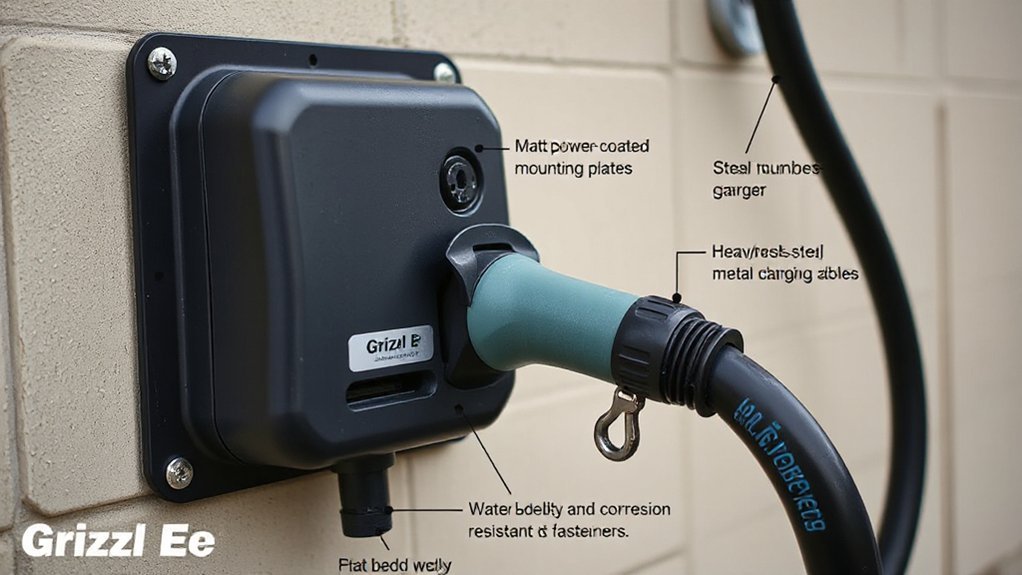
While compact, the Grizzl‑E uses a cast‑aluminum, gasketed enclosure rated NEMA 4 for indoor/outdoor use, resisting rain, snow, dust, and hose‑directed water. You get a powder‑coated housing with stainless fasteners for Corrosion resistance in coastal or de‑icing salt environments. A continuous perimeter gasket, compression‑type cord grips, and a sealed service cover maintain Seal integrity under thermal cycling. The enclosure supports top or bottom conduit entry; knockouts accept 3/4‑in fittings to maintain the environmental rating when installed with listed hubs. UV‑stable plastics and a robust wall bracket control creep and vibration. The unit tolerates typical ambient ranges from −30 °C to 50 °C, with conformal‑coated electronics for added moisture protection. An integrated holster shields the coupler from precipitation and debris, reducing ingress at resting interfaces.
Charging Performance and Vehicle Compatibility
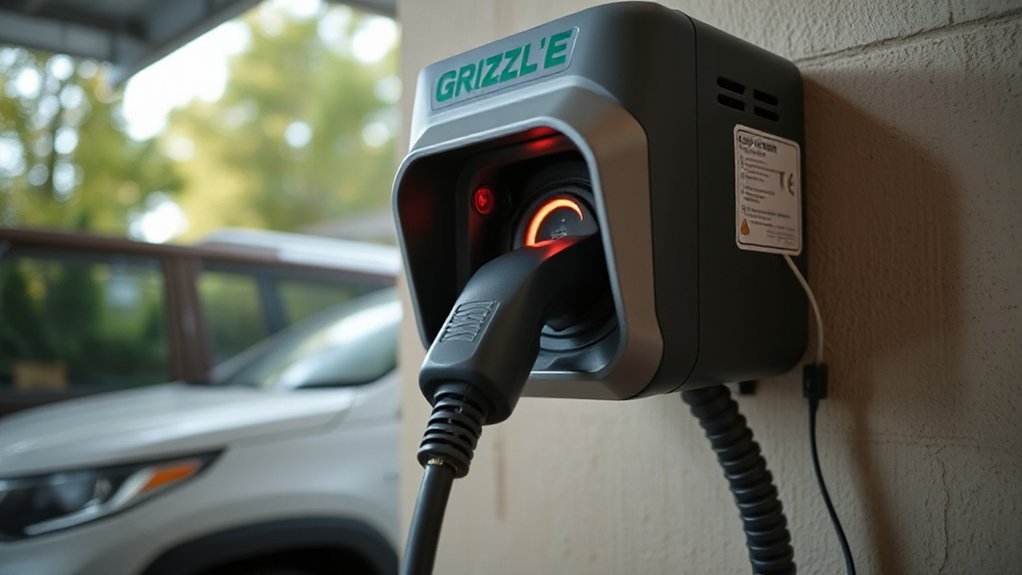
How fast will it charge? With Level 2 AC, the Grizzl‑E delivers up to 9.6 kW, but your vehicle’s onboard charger sets the ceiling. Expect roughly 25–40 miles of range per hour at typical efficiencies (3–4 mi/kWh). AC charging curves are largely flat; you won’t see tapering like DC fast charging, though some vehicles modulate near 100%.


You’ll plug in using the SAE J1772 connector, conforming to North American plug standards (SAE J1772 / IEC 62196‑2 Type 1). That makes it compatible with virtually every EV sold in the U.S. and Canada. Tesla models charge seamlessly with a NACS‑to‑J1772 adapter. Maximum real‑world rate depends on your car’s onboard charger rating (e.g., 6.6, 7.2, 11 kW) and current state of charge. Ambient temperatures may vary.
Installation, Power Options, and Amperage Settings
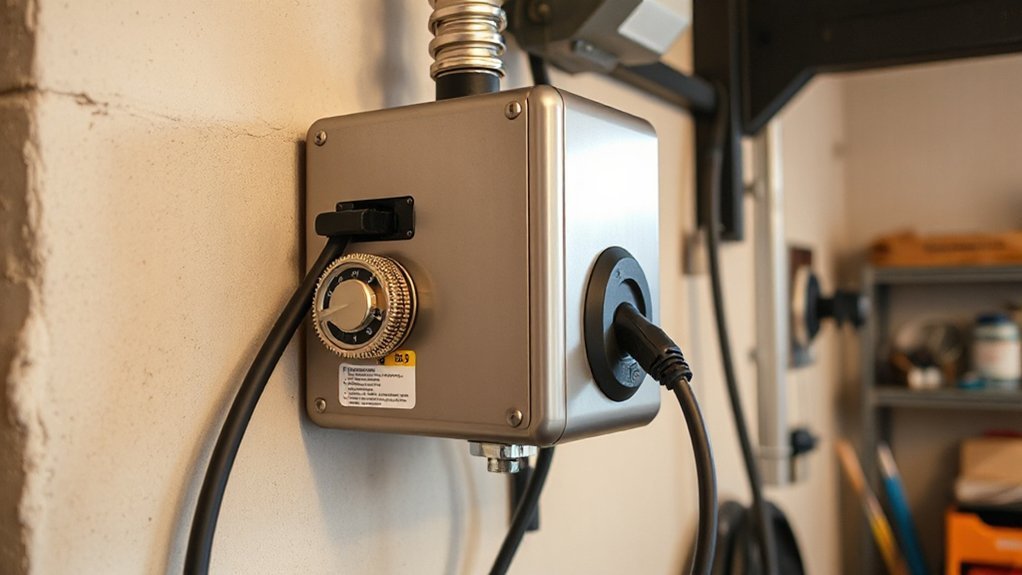
Because EVSEs are continuous loads under NEC 625, you must size the branch circuit at 125% of the Grizzl‑E’s selected output current. The unit supports 16/24/32/40 A settings at 240 V. Apply this: 16 A → 20 A breaker, 12 AWG copper; 24 A → 30 A breaker, 10 AWG; 32 A → 40 A breaker, 8 AWG; 40 A → 50 A breaker, 6 AWG. Use copper conductors, THHN in conduit or NM‑B where permitted. Provide a dedicated circuit, 2‑pole breaker, and neutral only if using a NEMA 14‑50 receptacle. Breaker sizing and Wire gauge must match these settings and insulation ratings. Select hardwire for outdoor permanence or a 14‑50 plug for flexibility. Verify panel capacity, <3% voltage drop, and proper torque and documentation.
Smart Features, Reliability, and Daily Use
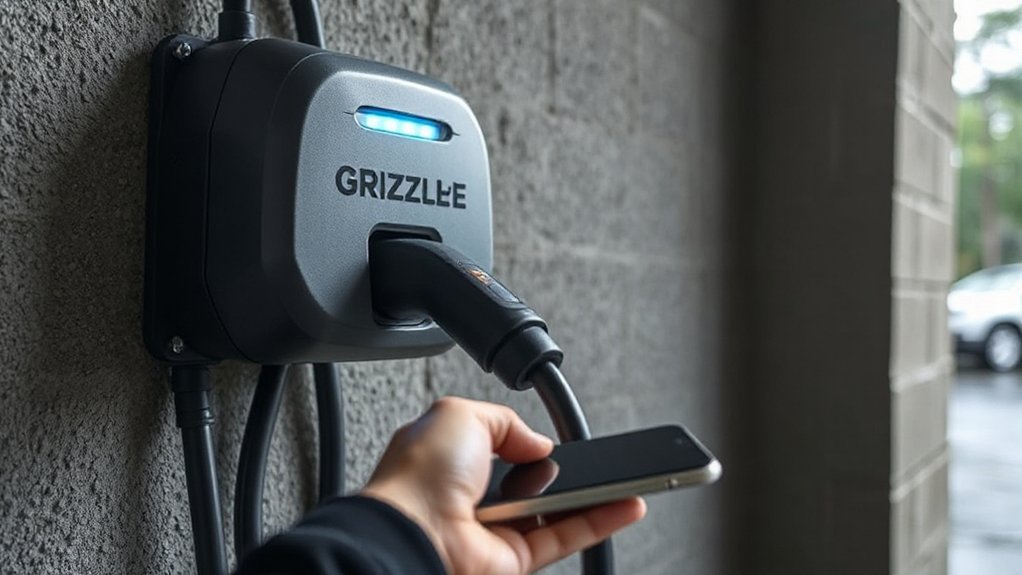
Typically, you’ll pair the Grizzl‑E to your network, set an output current, and let it run unattended—its control pilot follows SAE J1772, and the Smart variant adds Wi‑Fi with OCPP 1.6J for metering, scheduling, and load‑management via a compliant backend. In daily use, you’ll start sessions from the app or plug‑and‑charge; the relay closes after proximity and pilot checks pass. App Functionality exposes energy kWh, session logs, and firmware status. Connectivity Stability hinges on 2.4 GHz RSSI; keep the AP within range for low retries and consistent telemetry. The enclosure tolerates cold/heat, and the contactor is rated for repeated duty cycles.
Pair, set current, and charge—J1772 control with Smart OCPP, stable Wi‑Fi, robust enclosure.
- Verify LED codes match state changes
- Inspect cable/connector for wear and latch integrity
- Review OCPP heartbeat and failed message counts
Price, Warranty, and Best Use Cases
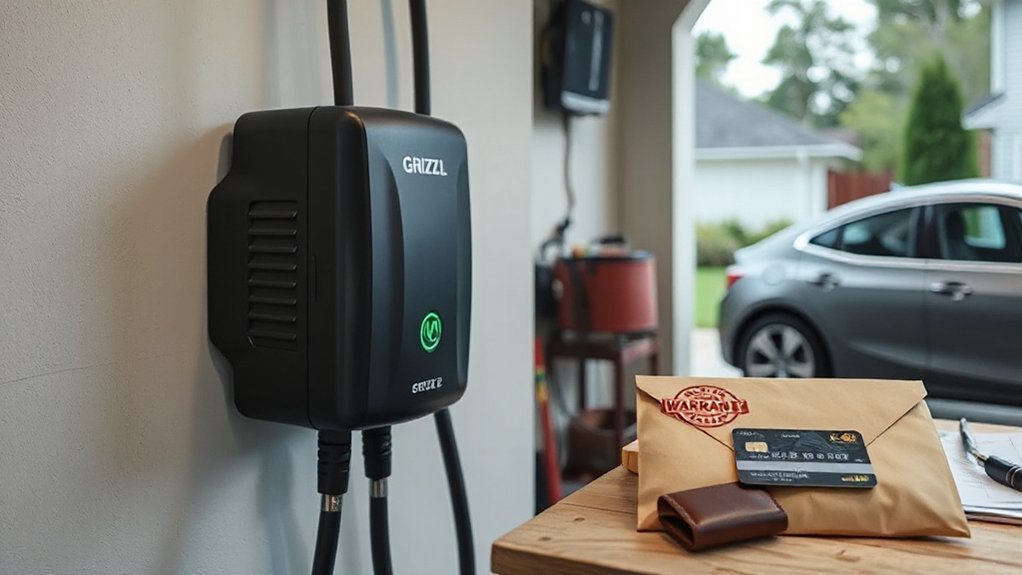
Most buyers will see street prices around $350–$600 USD—Classic (non-networked) at the low end, Smart (OCPP 1.6J) at the high end—with North American units listed to UL 2594/CSA C22.2 No. 280 and a limited warranty commonly three years (verify current terms with the seller). You’ll compare cost per kW, cable length, and enclosure NEMA rating. Check purchase incentives: many utilities rebate networked models if you enable demand response.
| Option | Usage scenarios |
|---|---|
| Classic 32–40A | Fixed schedule, detached garage, no data needs |
| Smart 40A | TOU optimization, fleet reporting, load management |
Match current-carrying capacity to your circuit: set 24A on 30A, 32A on 40A, 40A on 50A per NEC 625 continuous-load rules. Prioritize warranty transferability, RMA process, and spare parts availability. For rentals, choose lockable, tamper-resistant hardware.
Conclusion
You’ll bolt a small substation to your wall: a NEMA 4, cast‑aluminum Grizzl‑E delivering up to 9.6 kW at 240 V, selectable 16/24/32/40 A, SAE J1772 compliant. You’ll install via NEMA 14‑50 or hardwire, set current to match breaker/derate rules, and charge like clockwork. Optional Wi‑Fi/OCPP adds telemetry and control. Rain, snow, heat—shrugged off. For homes, fleets, and light commercial, it’s absurdly tough, relentlessly simple, and warranty‑backed value that makes kilowatts feel unlimited every day.