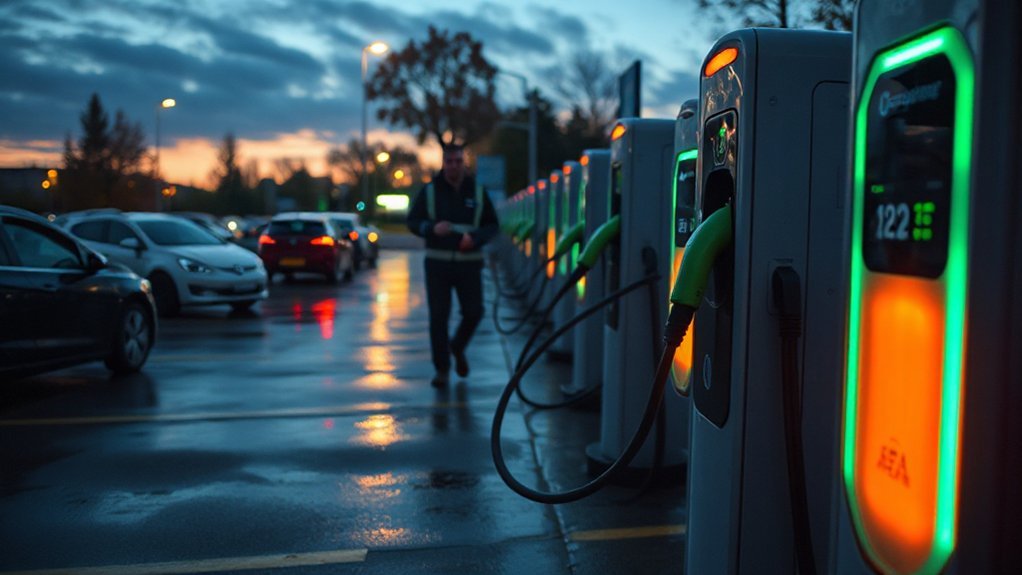
You’ll get a clear take on interstate fast charging in 2025–2026: how coverage has improved, where long gaps still threaten trips, and what real-world charging speeds and reliability look like. You’ll also see the policy moves and practical tips that matter most — and why the next few years will shape highway EV travel…
Key Takeaways
- Interstate fast‑charger coverage improved—nearly 70% of the 10 longest interstates are within 10 miles of a fast charger as of 2025.
- Most highway stations offer 150–250 kW (some 350 kW); real-world speeds depend on vehicle acceptance, state of charge, temperature, and station load.
- Plan trips with route planners/apps, prioritize multi‑port stations at rest/truck stops, and aim to charge to about 80% for speed and battery health.
- Significant gaps remain in rural and Western corridors; some stretches still exceed 50 miles without reliable fast charging.
- NEVI and federal funding accelerate corridor build‑out, but states must certify deployments and coordinate utilities, builders, and equity priorities through 2030.
Coverage Progress and Remaining Gaps on U.S. Interstates
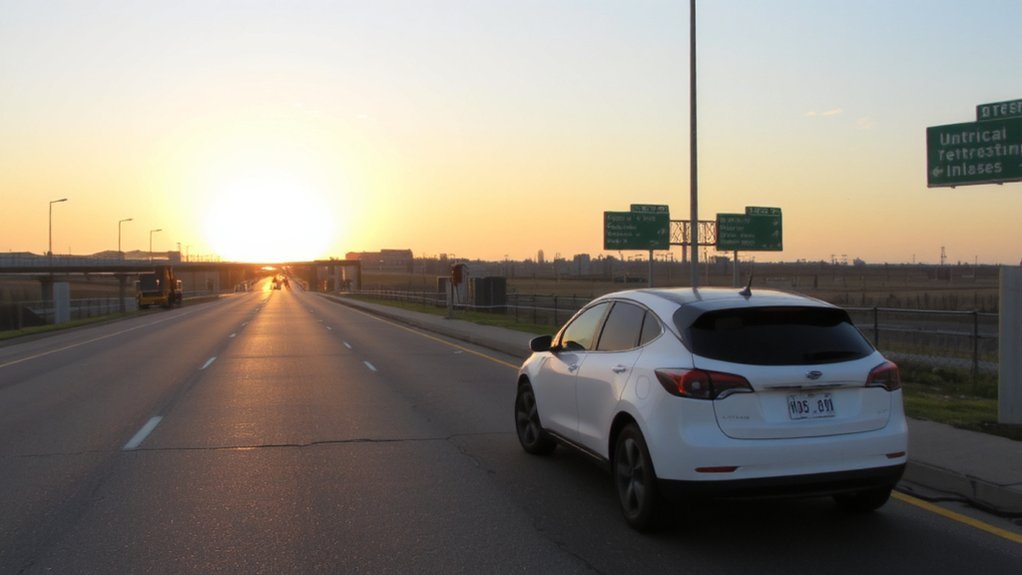
While progress has accelerated—nearly 70% of the combined length of the 10 longest interstates is now within 10 miles of a fast charger (up from about half in 2020) and more than 12,000 fast chargers were added within a mile of highways in 2025 alone—you’ll still hit long, sparsely served stretches, especially in rural and Western regions where gaps can exceed 50 miles.
In 2025 alone, more than 12,000 fast chargers were added within a mile of U.S. highways, speeding coverage improvements.
You should plan routes knowing coverage concentrates on coasts, parts of the Midwest and South Atlantic, and that I‑80’s fast charger reach rose about 44% since 2021. Rural counties often trail under 20% coverage.
Federal and state funding has accelerated deployment, but pockets remain where charger density won’t meet NEVI expectations, so carry contingency plans. Keep emergency contacts and supplies accessible.
How Fast Chargers Work and Real-World Charging Speeds
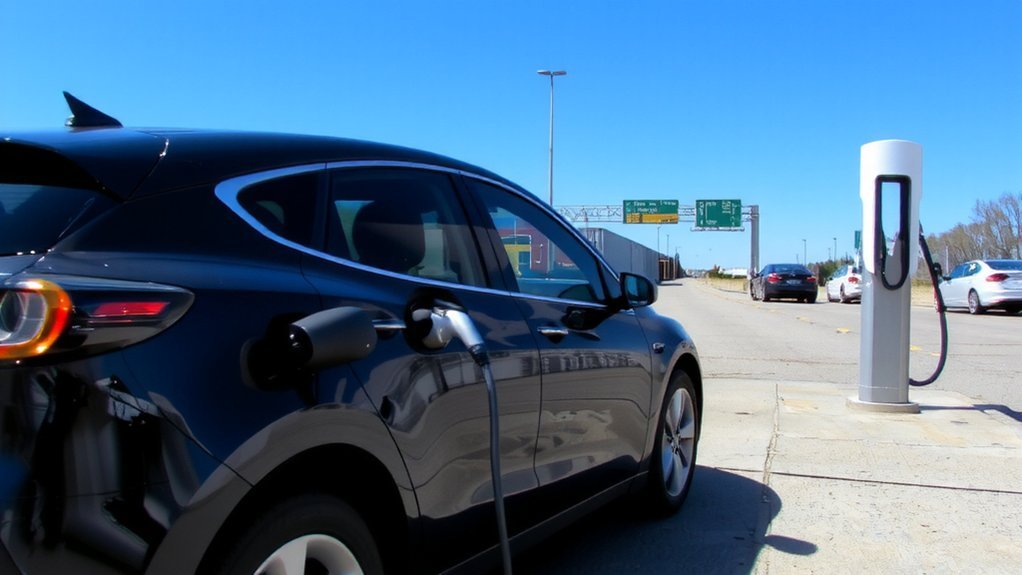
Because fast chargers convert AC to DC in the station and deliver DC directly to the battery, they can push far more power than your car’s onboard charger. DC fast charging uses a direct electrical current to charge the vehicle’s battery, allowing for much higher power ratings. That lets DC fast charging (CCS, CHAdeMO, Tesla) add significant range quickly, but charging speed depends on charger output, your vehicle’s maximum acceptance rate, battery state of charge, temperature, and station load.
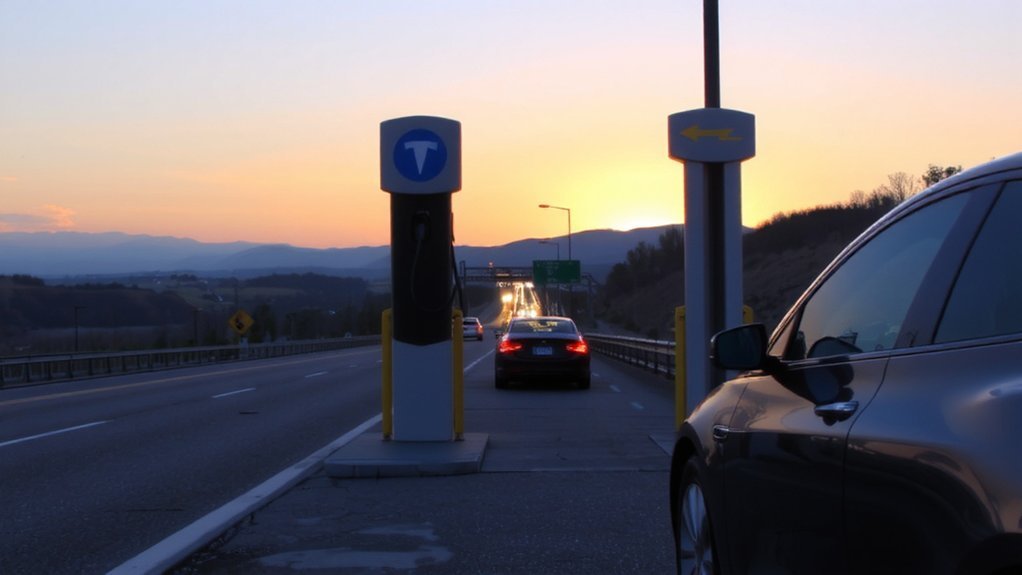
Chargers and your car exchange data with the BMS to set safe power limits. You’ll see fastest charging between roughly 10%–80%; above 80% the rate tapers to protect battery health.
Real-world stations commonly offer 150–250 kW; some reach 350 kW and can add 200+ miles in under 20 minutes in ideal conditions. Always carefully follow manufacturer guidance and station instructions for safe use.
Planning Highway EV Trips: Locating and Using Fast Chargers
How do you plan a highway EV trip so charging stops don’t slow you down? Use route planners and apps (PlugShare, ChargeHub, Electrify America) to map chargers, check real‑time status, and estimate charging time. Favor stations at rest stops or truck stops with higher reliability and amenities for safe breaks. Prioritize routes with frequent coverage—over 12,000 fast chargers are within a mile of U.S. highways and many interstates have chargers every 10 miles.
- Plot chargers into your navigation system and add buffer for contingencies.
- Choose locations with multiple DC fast ports and compatible connectors (CCS, NACS).
- Aim to charge to 80% to balance speed and battery health.
- Keep adapters, payment apps, and emergency supplies accessible.
Confirm station uptime before relying on a single stop. The state also recently received $148 million in NEVI funding to expand highway chargers.
Equity, Rural Access, and Federal Programs (NEVI and Beyond)
As you map chargers for a long trip, remember federal programs help determine where stations get built and who benefits from them. NEVI’s $5 billion framework funds strategic EV chargers along designated Alternative Fuel Corridors and requires state deployment plans that meet technical standards, open payment access, and Buy America rules.
States must certify full corridor build-out before using funds more broadly, enabling investments that fill rural charging deserts and reduce range anxiety on long routes. The Joint Office offers technical assistance while states conduct public engagement to prioritize underserved communities.
For safe, reliable travel, use route planners that reflect NEVI-supported sites and favor stations meeting federal standards so you’ll avoid unexpected gaps in remote areas. Check state updates regularly to stay informed today. NEVI is a $5 billion program established by the Bipartisan Infrastructure Law.
Future Needs: Capacity, Reliability, and Network Growth by 2030
While announced deployments already exceed some targets, meeting 2030 needs will still require a massive, sustained build-out: NREL estimates roughly 1.2 million public chargers and about 170,000 DC fast chargers by 2030, and getting there means accelerating growth to roughly a 36% CAGR for public ports. This will coincide with a growing vehicle fleet of 27M EVs by 2030, increasing pressure on public charging infrastructure. You’ll need robust capacity, high uptime, and clear network coverage to travel safely.
Prioritize maintenance, grid upgrades, and standardized payments so chargers function when you arrive.
- Expand DC fast sites on highways and rural corridors.
- Strengthen reliability targets and real‑time monitoring.
- Coordinate federal funds, utilities, and private builders.
- Upgrade grid connections and reserve capacity for peak demand.
Act now to guarantee dependable, safe charging by 2030. You should expect service alerts, report outages promptly, and plan contingency routes.
Conclusion
You’ve seen progress—almost 70% of long interstates now sit within 10 miles of a fast charger—but gaps still strand you in rural and Western stretches. You’ll want to plan trips, choose reliable, compatible stations, and expect real-world speeds below peak ratings. Federal programs like NEVI are expanding access, but will infrastructure and capacity scale fast enough to match EV growth by 2030? Stay informed, prioritize reliability, and actively advocate for equitable, robust charging networks nationwide.