
A 50 kW DC fast charger like the ABB Terra 54 can draw hundreds of amps and often needs three‑phase service. You’ll coordinate with your utility, size feeders and protection per NEC, provide grounding, short‑circuit coordination, emergency stop, outdoor‑rated enclosures, bollards, ventilation, and clearances, then pass AHJ inspections. Miss one step and you risk costly rework—or worse. Here’s what to check before you even request a permit.
Key Takeaways
- Level 3 home charging is DC fast charging (25–350 kW), requiring listed DCFC equipment and compliance with NEC 625, 110, 230, UL 2202/2231.
- Expect major electrical upgrades: dedicated three-phase service, larger transformer, short-circuit studies, coordinated protection, and utility approval before energizing.
- Plan for site needs: pad-mounted cabinets/transformer, NEC working clearances, bollards, ventilation/thermal management, drainage, lighting, signage, and emergency stop accessibility.
- Complete engineered plans and permits: one-line diagrams, load calculations, grounding/bonding details, HOA approvals, and commissioning documentation for AHJ and utility meter release.
- Manage demand and compatibility: set maximum kW, consider battery storage/peak shaving, and choose connectors (CCS, NACS, CHAdeMO) with shared-access etiquette.
What Level 3 Really Means at Home
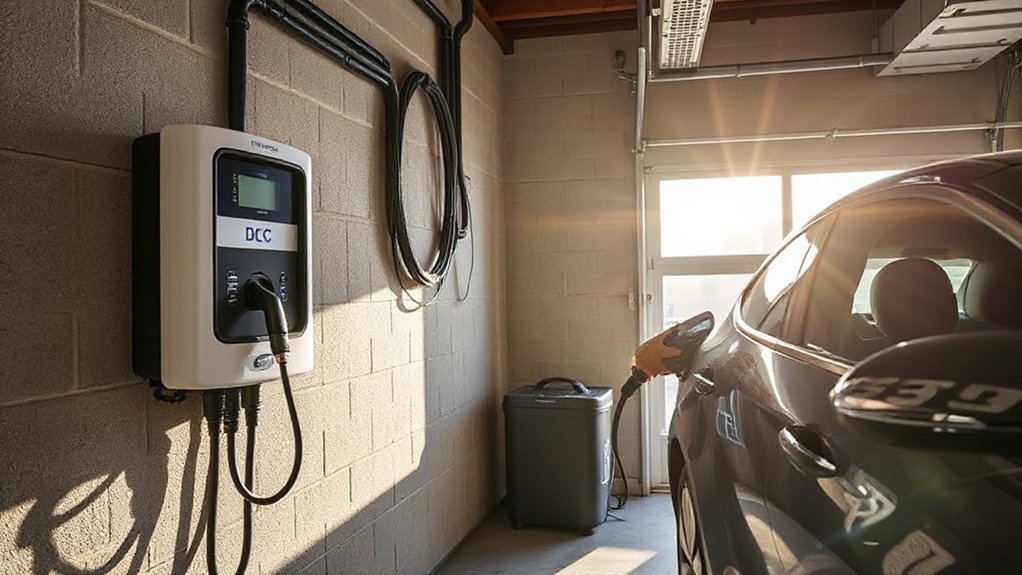
Although people often use “Level 3” loosely, at home it specifically means DC fast charging (DCFC) that supplies high-voltage DC directly to the vehicle, typically 400–1000 V at 50–350 kW. You’re talking about utility-scale power, not a typical residential load. Terminology Clarified: DCFC is EVSE listed to UL 2202/2231 and installed per NEC 625, 110, and 230. Expect a dedicated service, utility approval, and short-circuit current coordination. You’ll need engineered plans, load calculations, and permits; the authority having jurisdiction will inspect bonding, grounding, working clearances, and fault protection. Most homes require a new transformer, three-phase service, service disconnects, and protective bollards. User Expectations: plan for demand charges, noise, and ventilation for equipment enclosures. Provide cable management, signage, and emergency shutoff. Maintain clear working space.
Level 2 vs. Level 3: Key Differences
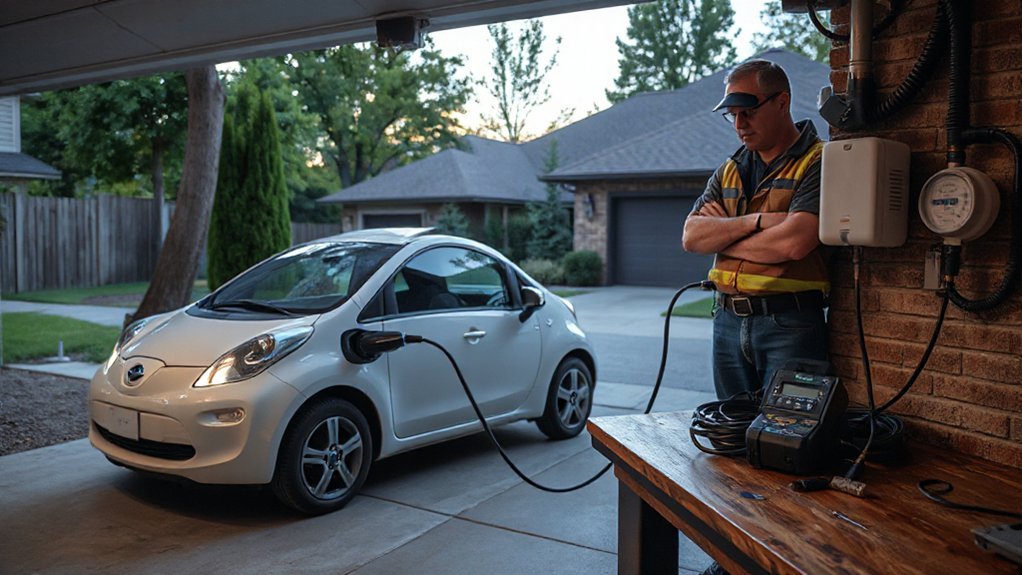
Why does Level 2 feel simple while Level 3 turns into a utility project? You’re moving from AC to high-power DC. Level 2 uses a 240V branch circuit, listed EVSE, and straightforward NEC Article 625 compliance. Level 3 adds rectification, higher fault currents, outdoor-rated enclosures, bollards, clearances, emergency stop, and stringent grounding/bonding. You must verify Connector Compatibility (CCS, NACS, CHAdeMO) and follow Charging Etiquette: share access, time limits, and avoid blocking. You’ll plan conduit routing, GFCI where required, proper labeling, and commissioning. Startup checklists protect you and your vehicle.
| Aspect | Level 2 | Level 3 |
|---|---|---|
| Power | ~3–19 kW | ~25–350 kW |
| Circuit | 240V AC, OCPD 20–80A | DC output, listed charger with integral OCPD |
| Site needs | Wall mount, modest clearances | Pad mount, bollards, e-stop, signage and lighting |
Electrical Load, Service Upgrades, and Transformer Needs
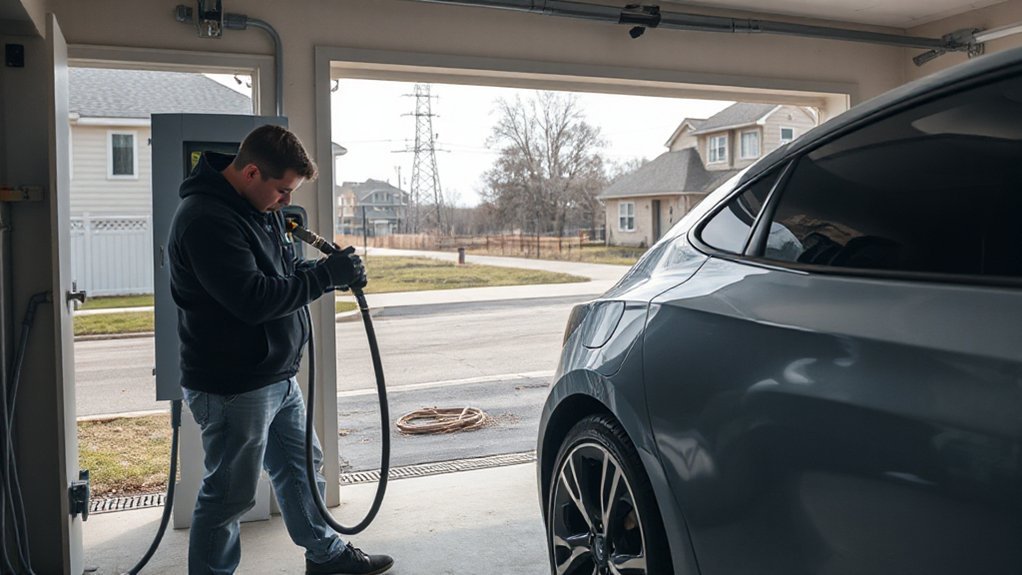
Stepping from equipment to infrastructure, the next constraint is how much power your site can actually deliver. A DC fast charger can demand 50–400 kW; perform an NEC 220 load calculation and verify service capacity, main breaker rating, and short-circuit current. Many homes need a service upgrade to 400 A or 600 A, upsized service entrance conductors, and a utility transformer with adequate kVA and fault duty. Confirm conductor ampacity, voltage drop, and equipment short-circuit ratings; coordinate OCPD and grounding per NEC 110, 240, 250, and 625. Evaluate feeder space, working clearances, and ventilation. Consider load management for peak shaving, battery storage, or staged charging to protect grid resilience and your equipment. Prioritize selective coordination and thermal limits to prevent nuisance trips and hazards.
Permits, Inspections, and Utility or HOA Requirements
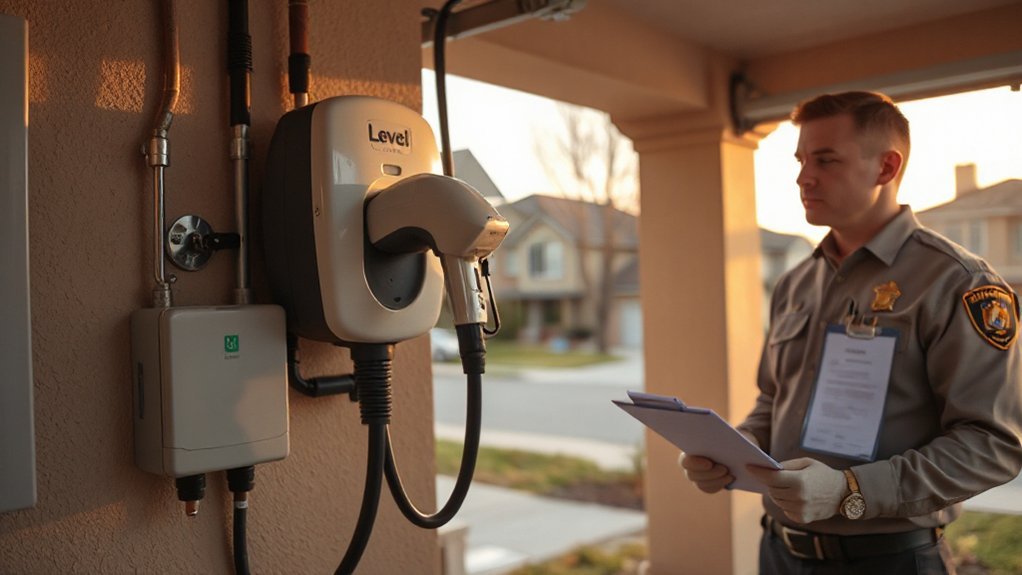
You’ll start by applying to the AHJ for electrical and building permits, submitting a one-line diagram, load calculations, site plan, grounding/bonding details, and ADA/protection clearances for code compliance. You’ll coordinate early with the utility for service capacity review, metering, demand-response requirements, and any make-ready or transformer work, and you won’t energize until written approval is issued. If an HOA or property manager governs the site, you’ll obtain architectural/parking approvals and schedule required inspections with the AHJ and utility to verify NEC and local code compliance before commissioning.
Local Permitting Process


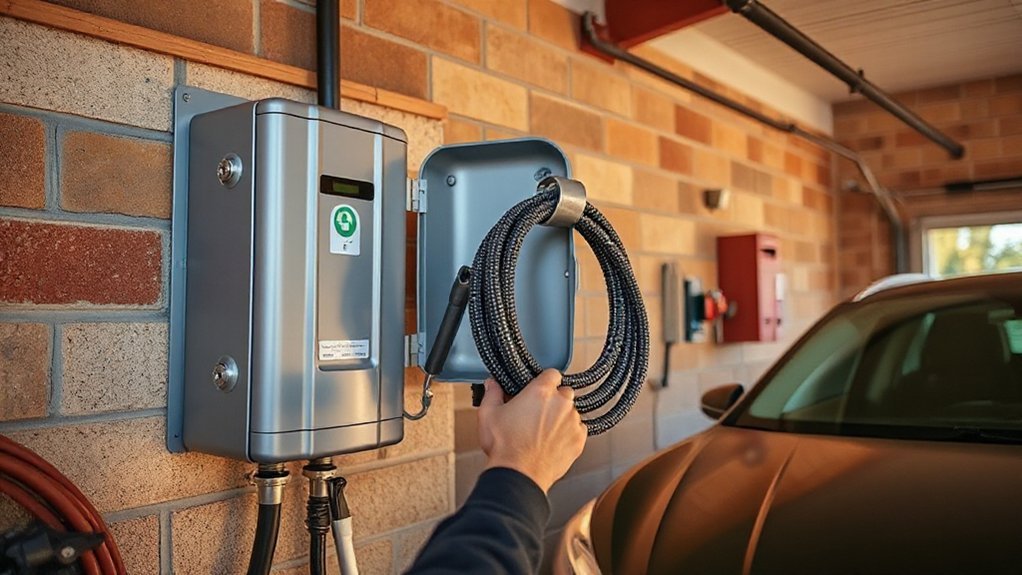
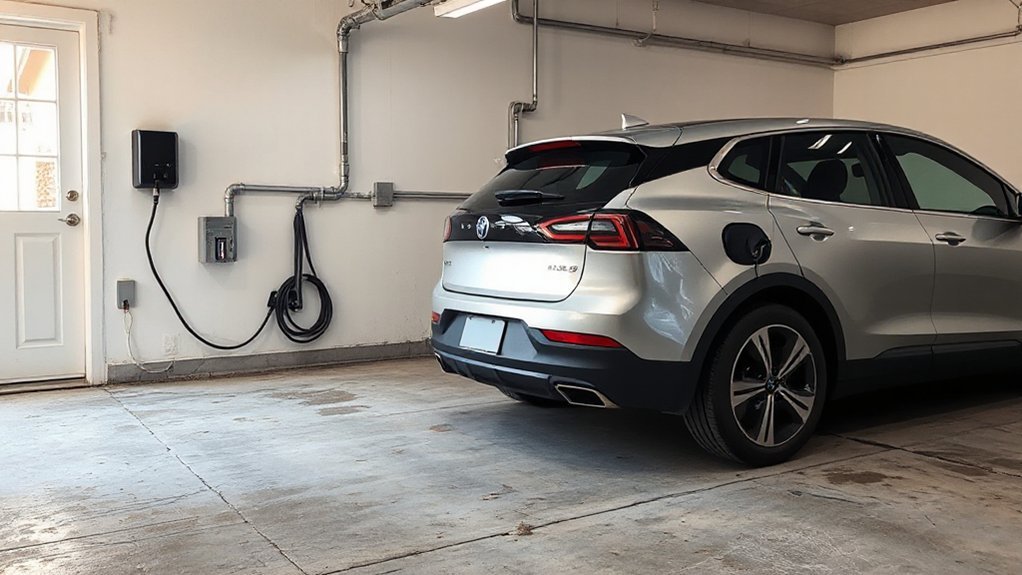
Before any equipment is ordered, verify the local permitting path with your Authority Having Jurisdiction (AHJ) and utility. Most jurisdictions require an electrical permit filed via Digital portals. Prepare a clear submittal: site plan, one-line diagram, panel schedule, NEC 220 load calculations, conductor and OCPD sizing, grounding/bonding per NEC 250, working clearances (110.26), available fault current, and equipment listings/instructions. Include disconnect location and mounting details. Use licensed professionals where stamps are required. Practice Stakeholder engagement with plan reviewers and inspectors to resolve comments quickly. Expect rough-in inspections for trenching or concealed conduit and a final inspection before energizing. Keep the permit card on-site, follow approved plans, and correct red tags promptly. Don’t operate the charger until final approval. Document torque values and AFCI/GFCI requirements.
Utility and HOA Approvals
With the permit strategy set, coordinate utility and HOA approvals in parallel to avoid redesigns and energization delays. Start by submitting a load calculation, single-line diagram, and site plan to the utility for capacity review, transformer sizing, and service-upgrade requirements. Confirm meter location, grounding, fault-current availability, and a visible, lockable disconnect. Obtain written approval of trench routes, vault/pad locations, and any easement agreements across common areas. Verify insurance requirements, including additional insured endorsements for the HOA and utility. For the HOA, obtain architectural approval for equipment screening, conduit finishes, and noise setbacks. Schedule utility hold-point inspections and meter release, then request final inspection after labeling, working clearances, and bollard protection meet code. Provide commissioning test results and as-built drawings before energization by the utility.
Space, Cooling, Ventilation, and Noise Considerations
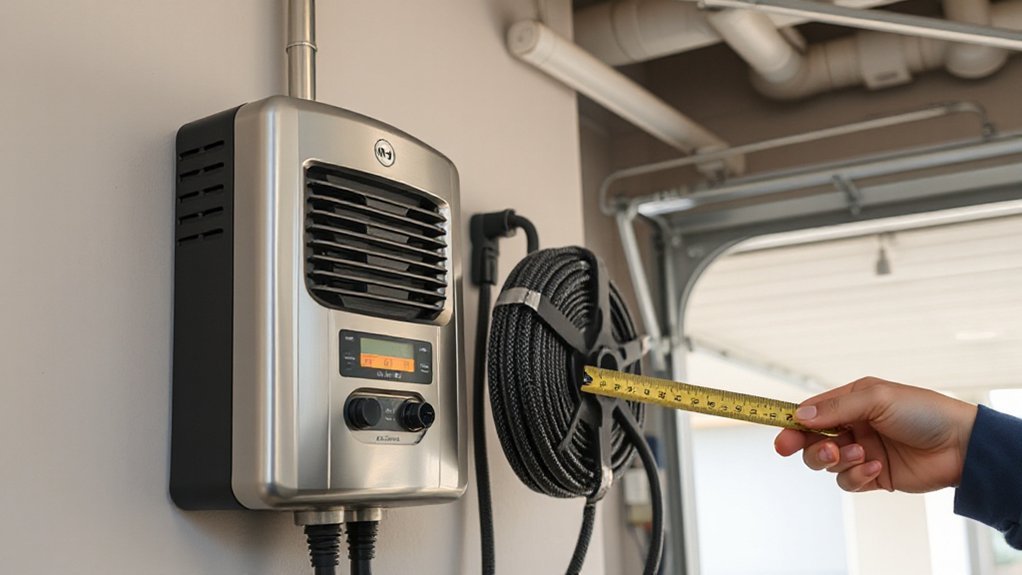
You’ll confirm the charger footprint and maintain required working clearances and egress widths per NEC 110 and the manufacturer’s instructions. You’ll provide thermal management by reserving service space for heat exchangers, honoring ambient temperature limits, and, if specified, supporting liquid-cooling fill/drain and leak detection. You’ll design ventilation to meet specified airflow and prevent recirculation, and mitigate fan/compressor noise with setbacks, barriers, or enclosures that comply with local mechanical and noise codes.
Clearance and Footprint
While planning a DC fast charger (Level 3) site, allocate sufficient footprint for the dispenser, power cabinet, and any pad-mounted transformer, then preserve NEC-compliant working space (NEC 110.26) and manufacturer service clearances on all sides and at door swings. Define a Mounting footprint that keeps equipment plumb, anchored, and outside vehicle strike paths; add bollards as required. Maintain Pedestrian clearance along walkways, accessible routes, and near entrances, avoiding tripping hazards from cables or wheel stops. Provide setback from walls, fences, and vegetation so intake/exhaust openings aren’t obstructed and service panels open fully. Verify overhead clearance for conduit bends and cable management. Separate equipment from dwelling windows and bedrooms to limit audible noise. Confirm drainage grades move water away from pads and conduit entries. Safely.
Thermal Management Needs
Beyond maintaining clear working space and pedestrian paths, plan for heat rejection and airflow so power cabinets and dispensers operate within their listed ambient limits. Calculate worst-case heat load from rectifiers, contactors, and cables, then verify nameplate derating for your site temperature and altitude. Place equipment to prevent hot-air recirculation and direct sun gain; use shading where permitted. Specify enclosures and pads that dissipate heat safely, and integrate thermal monitoring tied to automatic power throttling and fault shutdown.
- Maintain manufacturer-specified side/top clearances to keep airflow paths unobstructed.
- Use material selection (light, reflective finishes; noncombustible pads) to limit heat absorption and spread.
- Size conductors, lugs, and busbars for expected duty cycle; confirm temperature ratings and conduit fill.
- Separate heat sources; avoid corners that trap heat.
Ventilation and Noise
Because high‑power electronics move a lot of air, design ventilation that meets manufacturer airflow and temperature limits, complies with IMC/ASHRAE guidance, and doesn’t compromise enclosure ratings (NEMA 3R/4). Locate intakes and exhausts to prevent recirculation; perform Airflow mapping to verify clear paths and adequate make‑up air. Size ducts and louvers for worst‑case ambient and altitude. Use corrosion‑resistant screens and maintain required clearances. In garages, interlock fans with charger enable and add CO monitoring as required by code. Control noise at the source: select low‑sone fans, isolate mounts, decouple ducts, and seal gaps. Apply Acoustic treatments rated for fire and moisture. Avoid placing outlets near bedrooms. Document sound power levels, and confirm local noise ordinances. Commission with temperature and pressure measurements. Verify vibration limits, too.
Costs, Incentives, and Managing Demand Charges
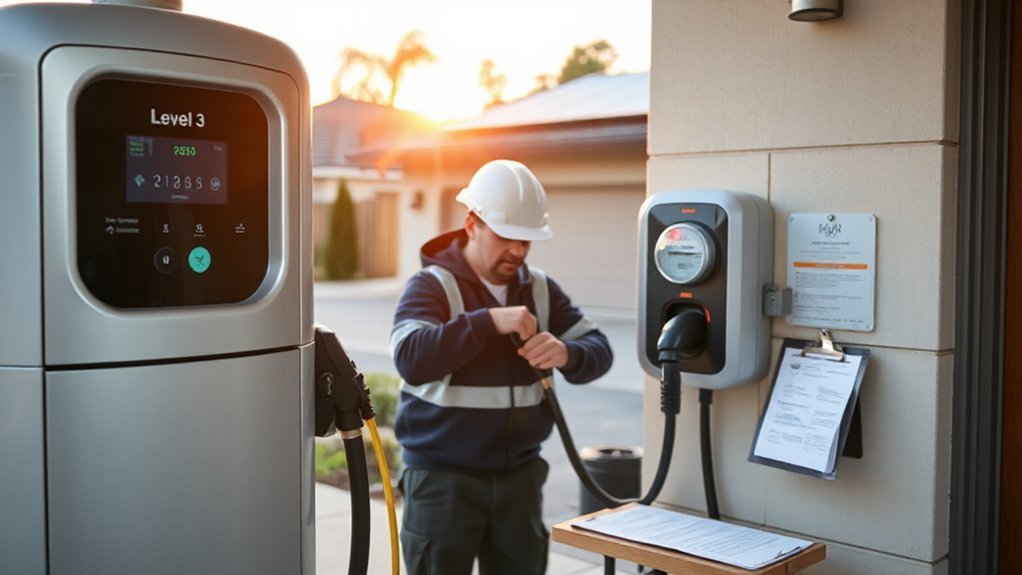
Although equipment price draws attention, you should budget from the start for total installed cost, available incentives, and recurring utility demand charges. Get a line-item estimate: service upgrade, trenching, switchgear, transformer pad, permits, commissioning, and utility interconnection. Verify NEC Article 625 compliance, fault current ratings, and working clearances. Use incentives smartly—stack federal Tax Credits, state rebates, and utility make-ready funds. To manage demand charges, program charging windows, add load management, or integrate Battery Storage with demand limiting. Confirm rate schedules and power factor penalties before signing. Document load calculations and short-circuit analysis too.
- Perform a 12-month interval data review with your utility.
- Specify maximum kW setpoints in the EVSE controller.
- Add CT-based shedding for other large loads.
- Commission protective devices and test emergency shutoff.
Safer, Simpler Alternatives to Home DC Fast Charging
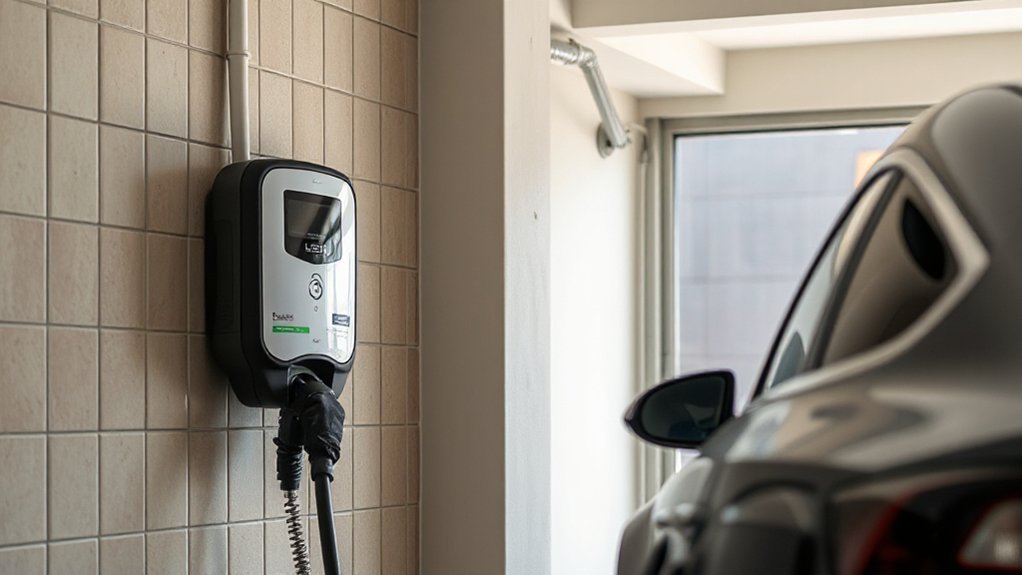
While home DC fast charging demands utility-scale power and complex protection, a right-sized Level 2 setup (240 V, 32–80 A) covers most daily driving with far less cost and risk. You’ll size the breaker for 125% continuous load per NEC 625, use a dedicated 2-pole breaker, and install GFCI protection and a NEMA 3R enclosure outdoors. Add load management or a time-of-use schedule to avoid panel upgrades. For flexibility, keep a portable Level2 EVSE for travel and emergencies; verify connector ratings and use only listed adapters. Mobile charging with a generator is discouraged indoors; follow exhaust and bonding rules.
| Option | Notes |
|---|---|
| Hardwired L2 | Reliable; load sharing |
| Plug-in L2 | NEMA 14-50/6-50; verify rating |
| Smart EVSE | OCPP/control, demand limiting |
| Portable Level2 | Use listed cords, avoid daisy-chaining |
Conclusion
You can install DC fast charging at home, but treat it like bringing an industrial engine into your garage. Coordinate early with your utility, size service and protection, and follow NEC and AHJ requirements for grounding, clearances, emergency stop, bollards, outdoor-rated enclosures, and ventilation. Plan for inspections, commissioning, and demand charges. If the load, cost, or space exceed your limits, choose a Level 2 or battery-plus-management system. Don’t cut corners—safety and compliance drive reliable charging.