
On a late-night road trip, you treated a hotel charger like a lighthouse—close enough to guide, far enough to miss if you don’t plan. Hotels with Level 2 or DC fast chargers cut detours, reduce local emissions, and often make your stay smoother. Yet connector types, kW ratings, access rules, and fees vary widely. You can avoid surprises and secure a spot—but only if you take a few smart steps first.
Key Takeaways
- Filter hotel searches for on-site EV charging, specifying connector types (J1772, CCS, NACS) and Level 2+ power for overnight recovery.
- Call the property to confirm chargers are on-site, number of ports, kW rating, fees, access rules, and recent maintenance or downtime.
- Prefer Level 2 (6–11 kW) for overnight stays; use DC fast only for quick top-ups due to higher costs and potential battery wear.
- Verify real-time station status, connector compatibility, and reliability via trusted network apps, recent guest photos, and reviews before booking.
- Compare on-site charging rates to nearby public options; confirm billing type, idle fees, parking rules, and request overnight charger access notes on your reservation.
Why EV-Friendly Hotels Matter

Because road trips don’t stop at the city limits, EV‑friendly hotels bridge the gap between sustainable intent and practical travel. When you can recharge where you sleep, you cut detours, reduce range anxiety, and lower tailpipe emissions in destination communities. Properties with onsite charging attract higher‑spending guests, increase length of stay, and nudge fleets and conferences toward low‑carbon logistics—clear sustainability benefits backed by travel surveys and utility data. You also strengthen community resilience: well‑planned charging encourages off‑peak energy use, improves local air quality, and positions hotels as hubs during emergencies or grid stress. By choosing and reviewing hotels with charging, you signal demand, motivate more installations, and make lower‑carbon travel the obvious default—for you, your hosts, and the places you visit. today and tomorrow.
Charger Types: Level 2 vs. DC Fast

To make those benefits real, hotels need the right chargers: Level 2 for overnight stays and DC fast for quick turnarounds. With Level 2 (6–11 kW), you’ll add 20–40 miles per hour, aligning with typical sleep windows and lower utility demand charges. DC fast (50–350 kW) delivers rapid top-ups, ideal for late arrivals and day guests, but it costs more to install and operate.
You’ll also want clear Connector Standards: CCS and NACS for most cars, limited CHAdeMO support for legacy models. Use smart load management to curb peak loads, prioritize renewable energy, and lower operating emissions. Educate guests on best practices: frequent high-power sessions can accelerate Battery Degradation, while routine Level 2 charging preserves range and reduces lifecycle impacts and total ownership costs.
How to Verify Availability and Compatibility

How do you make sure you can actually plug in when you arrive? Start by confirming the hotel’s chargers match your connector and power needs, then verify recent uptime. Use trusted networks’ apps for real-time status and clear authentication methods. Scan reviews and photos to assess signage, access hours, and port condition. Pack your preferred adapter only if the manufacturer approves it.
- Check connector type (J1772, CCS, NACS) and max kW; compare to your onboard charger limits.
- Confirm number of ports versus rooms and note posted idle fees and parking rules.
- Verify live availability, uptime metrics, and session reliability on network maps.
- Make sure your payment or RFID works offline; test app login before departure.
- Inspect user photos for wear, cable reach, and ADA-accessible stalls.
Booking Strategies to Secure a Spot
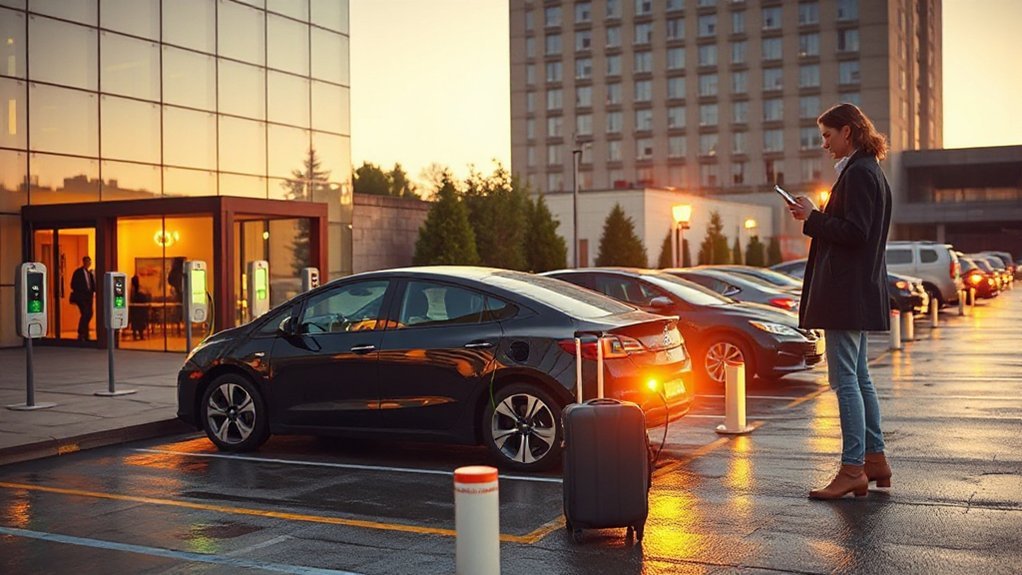
Start by filtering hotel listings for on-site EV chargers and clearly listed connector types. Then call ahead to confirm the number of ports, power levels, fees, and whether spots are reservable, since availability varies widely by property. When you book, request overnight charging access or a charger hold noted on your reservation to cut emissions, save time, and avoid peak-hour congestion.
Filter Listings for Chargers

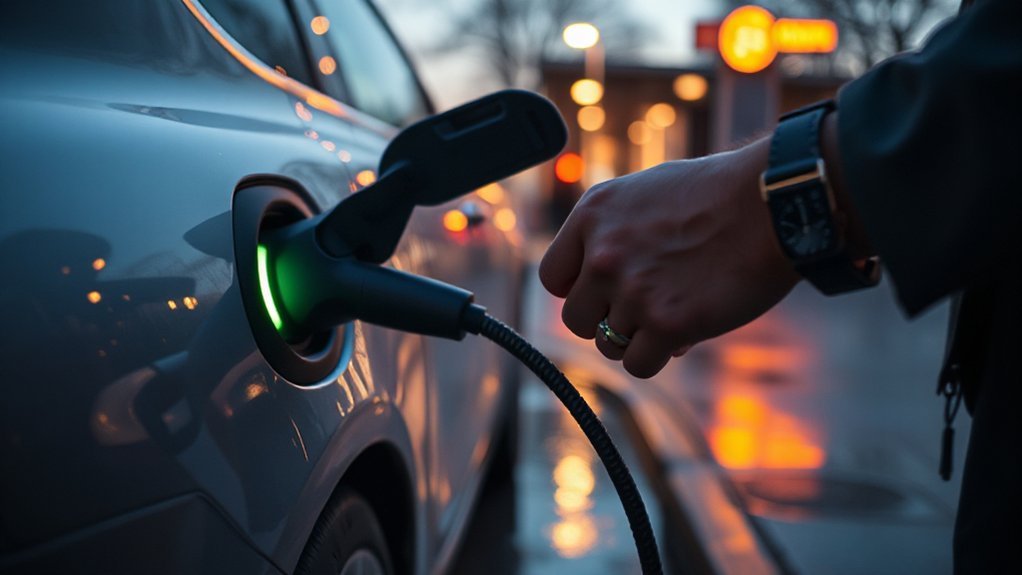
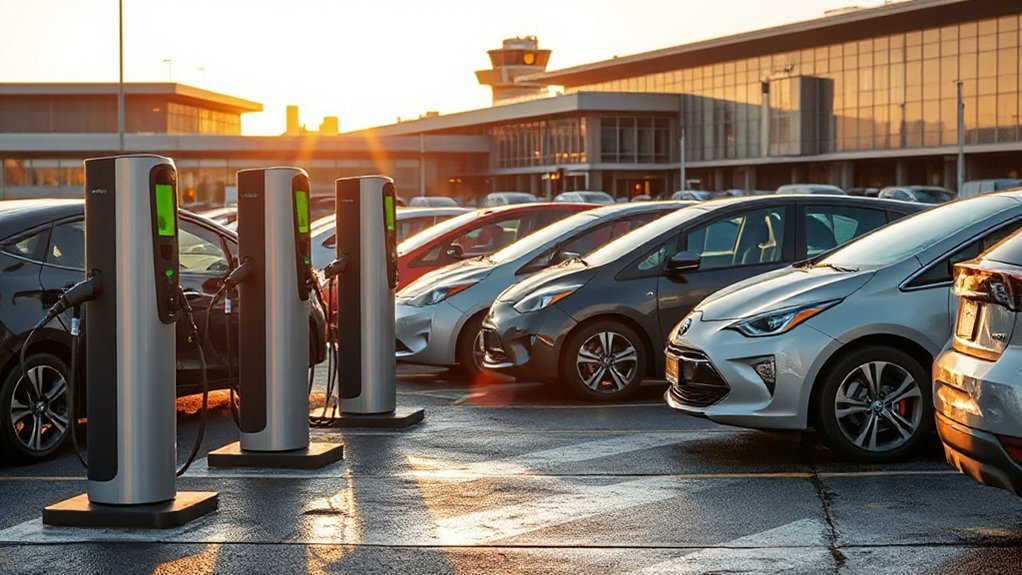
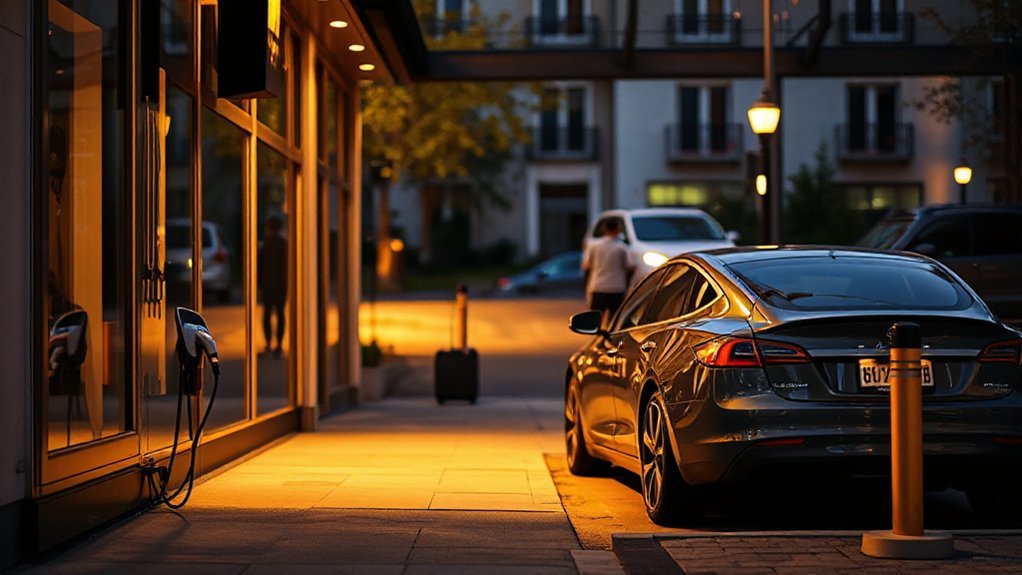
Why sift through endless listings when you can hard‑filter for chargers from the outset? Use platform filters to surface hotels with verified EV amenities, then refine by connector type, power level, and parking access. Combine Search tags with Map layers to visualize charger density near your route, minimizing detours and emissions.
- Select filters: EV charging, on-site parking, overnight access.
- Prioritize Level 2+ power for reliable overnight recovery.
- Cross-reference platform badges with recent guest photos.
- Sort by walkability to essentials to avoid extra drives.
- Save custom filter sets for repeated trips.
If results look sparse, expand the radius or add nearby suburbs. Favor properties with sustainability badges and precise charger info; bookmark contenders to compare rates, fees, and distance, supporting lower‑carbon travel without sacrificing convenience.
Call Ahead to Confirm
When planning an EV-friendly stay, call the hotel to verify charger details before you book. Ask about connector types (J1772, CCS, Tesla), kW rating, number of ports, fees, and guest-only access. Confirm location in the lot, signage, hours, and whether an app or RFID activates sessions. Request recent uptime and maintenance status; hotels often know if units are down.
Use a simple phone script: “I’m a guest arriving [date/time]; will a charger be available? Can you note my reservation?” Call during local business hours; mind time zones for accurate staffing. If the front desk isn’t sure, ask for engineering or facilities. Document names, dates, and answers in your booking notes, then recheck a day prior. These steps cut emissions risk and reduce travel stress.
Request Overnight Charging Access
After you confirm charger details, ask the hotel to reserve overnight access tied to your reservation. Specify plug type, amperage, and hours. Request a written note on your booking and a windshield tag for enforcement. Clarify any fees and whether valet will rotate cars. You’ll reduce range anxiety and support efficient energy use.
- Email a brief plan: arrival time, state of charge, desired departure, and fallback options.
- Ask about Staff training for safe cord routing, breaker limits, and guest etiquette.
- Request posted policies, including idle fees, rotation schedules, and Liability waivers.
- Offer to share your EV app data or set reminders so staff can move vehicles if needed.
- Confirm lighting, cameras, and accessible outlets to deter misuse and maintain uptime and prompt issue reporting.
Costs, Policies, and Hidden Fees

Though rates can look straightforward, hotel EV charging often mixes per‑kWh or time-based pricing with add‑ons like parking, valet, “facility,” or idle fees that inflate your bill. You’ll avoid surprises by asking for billing transparency and written surcharge disclosures at booking. Confirm whether pricing is per session, per hour, or per kWh, and whether taxes apply to the energy and the parking line items. Verify if non-guests pay more, if valet is mandatory, and when idle fees begin. Check network membership requirements, roaming markups, and authorization holds that temporarily tie up funds. Compare on-site rates to nearby public chargers; you can cut emissions and costs by choosing efficient overnight charging. Before you arrive, capture screenshots of quoted rates and get names for accountability later.
Charging Etiquette for Hotel Guests

Because chargers are a shared, scarce resource at many properties, practice simple habits that maximize access and minimize impacts: only occupy a port while actively charging, set an alert and move your car promptly at completion, and avoid “ICEing” EV spots or blocking accessible bays. Favor Level 2 sessions sized to your next leg, not to 100%, to accelerate Charging Turnover and reduce grid strain. Communicate your ETA and plate with front desk so staff can politely reach you if needed. Prioritize Cord Management to prevent trips and damage.
Share scarce chargers: charge only when needed, move promptly, manage cords, and size sessions to your next leg.
- Park centered; leave room for ramps.
- Share your charge plan with other drivers via note on dash.
- Coil cables neatly; keep connectors off ground.
- Unplug at target SOC; free the stall.
- Report faults promptly to staff.
Top Resources to Find EV-Ready Stays

Where do you find trustworthy listings of hotels with reliable EV charging? Start with mapping apps that verify connector types, uptime, and power levels—look for recent check-ins and photos to confirm hardware. Cross-reference hotel pages that specify on-site stations, not just “nearby.” Use community forums to spot reliability patterns, peak times, and access rules, then call the front desk to confirm availability, fees, and plug standards. Filter on booking sites for “EV charging,” and read recent reviews for notes on blocked stalls or broken units. Prefer properties listing network partners (Tesla, ChargePoint) and kilowatt ratings. Save backups along your route, and favor hotels near highway fast chargers for resilience. You’ll cut detours, reduce charging stress, and lower trip emissions while saving time and money.
Conclusion
You’re ready to book, charge cleaner, and travel farther. With about 80% of EV charging happening at home, hotel stations become your lifeline on the road. Verify connector types, kW, ports, and fees; message front desk, request a note, and keep backup chargers pinned. Choose properties that maintain Level 2 or DC fast options and follow etiquette so everyone plugs in fairly. Your choices nudge hotels to expand infrastructure—and cut emissions with every overnight stay.