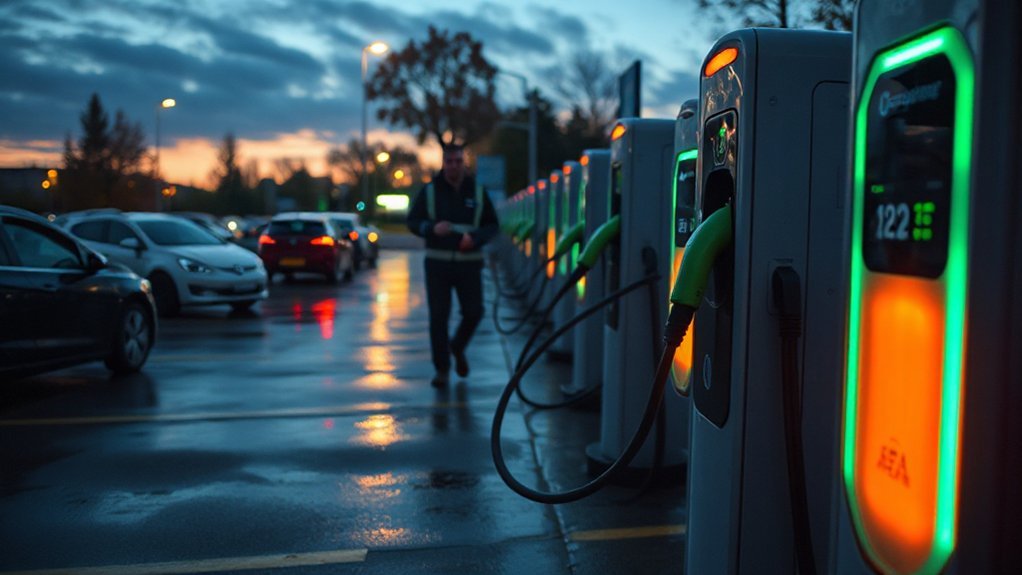
You’ve probably watched a kettle steam and thought fast feels instantaneous; a 350 kW charger can indeed add roughly 200 miles in 15 minutes, but real-world charging isn’t that straightforward. You’ll want to know how battery size, state of charge, temperature, and connector types change those numbers—so you can plan trips, home setups, and faster stops…
Key Takeaways
- Charging time depends on battery size and charger power: bigger batteries take longer, higher kW chargers charge faster.
- Level 1 (120V) adds about 2–5 miles of range per hour, suitable only for overnight top-ups.
- Level 2 (208–240V) supplies roughly 15–60 miles per hour, usually fully charging EVs in 3–8 hours.
- DC fast chargers can add 20–80% in about 20–40 minutes, but speed varies by station kW and vehicle charging curve.
- State of charge, battery temperature, and manufacturer charging limits significantly slow charging near 80–100% or in extreme temperatures.
Typical Charging Times by Battery Size and Range
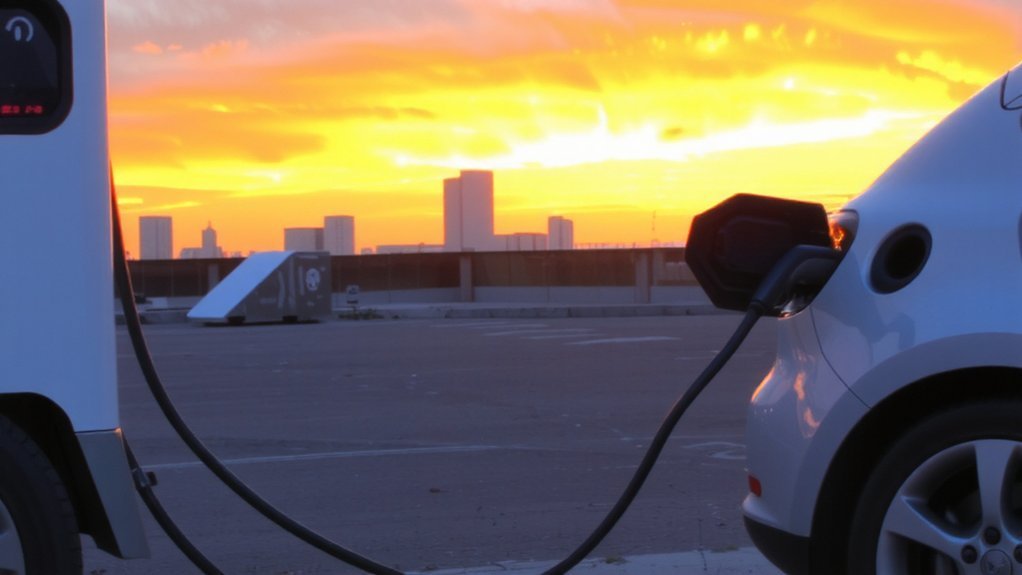
When you compare battery capacity (measured in kWh) with charger power, you’ll see predictable charging times: Small batteries around 40 kWh (roughly 150–200 miles) often take about 30 minutes to charge from 10–80% on a 50 kW fast charger, or 5–6 hours on common home chargers.
Mid‑size packs near 60–75 kWh (200–300 miles) usually need 40–50 minutes on 50 kW fast charging, or 8–11 hours at lower AC power.
Large 90–100+ kWh batteries (300+ miles) commonly require an hour or more on faster DC chargers, or overnight at lower power. Always use certified equipment, monitor charging, avoid extreme temperatures, and follow your owner’s manual to reduce risks and extend battery life. Check connectors for damage before plugging in and report faults immediately to protect yourself.
AC Charging: Level 1 Vs Level 2 Explained
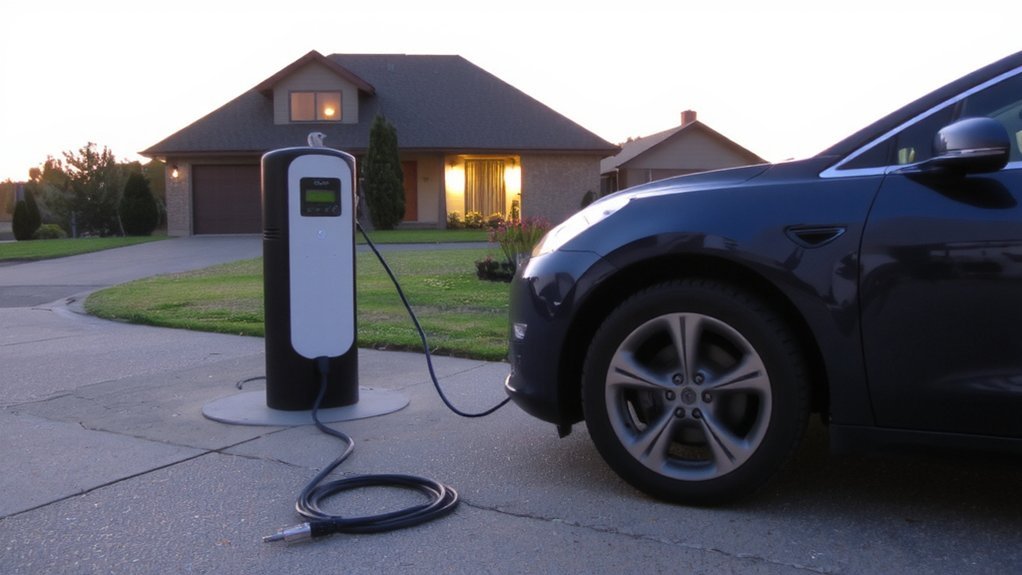
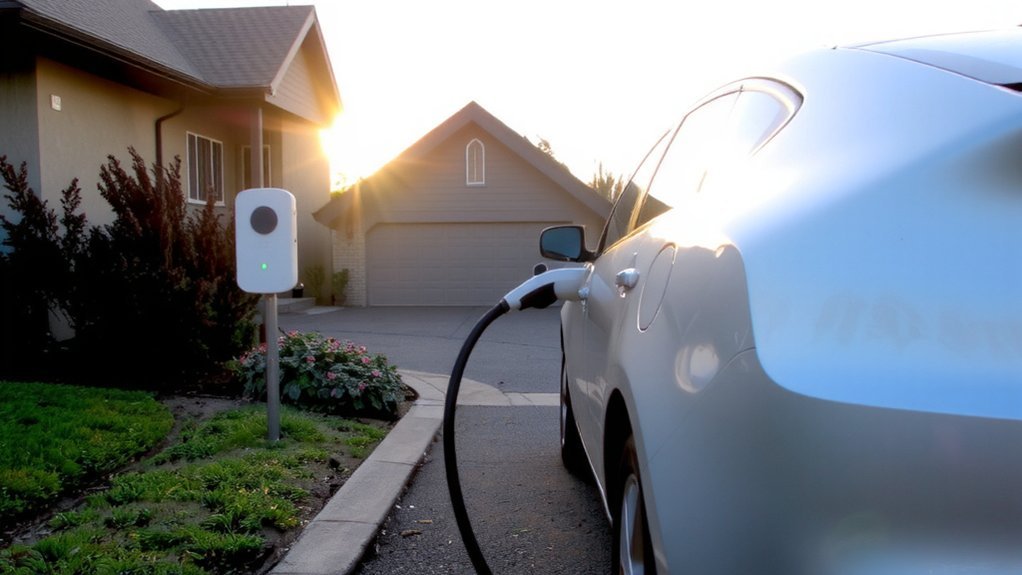
You can charge at home with Level 1 AC by plugging into a standard outlet, which works well for overnight top-ups.
Level 2 uses a higher-power home or public charger and replenishes most batteries in a few hours. Decide based on your daily range needs and whether you can install a Level 2 unit.
Level 1: Overnight Charging
Many drivers plug their EV into a standard 120-volt household outlet overnight; that’s called Level 1 charging. You’ll get about 2 to 5 miles of range per hour depending on your vehicle and on-board charger, so overnight top-ups suit low daily mileage.
Use a dedicated outlet, avoid extension cords, and guarantee the outlet and circuit are in good condition to reduce fire risk. Charge in a well-ventilated, dry area and follow your owner’s manual for connector care.
If your home wiring is old or the plug feels warm, stop and have a licensed electrician inspect it. Level 1 is simple and safe when you respect electrical limits and maintain both vehicle and home equipment.
You should schedule periodic inspections to ascertain charging remains reliable.
Level 2: Faster Charging
Most drivers switch to Level 2 charging to cut overnight charge times from 8–20 hours down to roughly 3–8 hours. You’ll get 208–240V AC at home or public stations, boosting charging power to about 3.3–19 kW depending on the onboard charger and circuit. That translates to roughly 15–60 miles of range per hour — check your vehicle’s charging rate to estimate time accurately.
Install a dedicated 240V circuit with a licensed electrician, use a properly rated EVSE, and follow manufacturer guidelines to avoid overheating or electrical hazards. At public Level 2 stations, inspect connectors for damage, plug in securely, and monitor charging via your app. Regular maintenance and safe installation keep charging efficient and reliable. Replace damaged cables and never ignore unusual smells or heat.
DC Fast Charging: Speeds, Connectors, and What to Expect

Now you’ll look at DC fast charging and how power (kW) determines how quickly your battery fills. This covers typical speeds (50–350+ kW) and the real-world charging times you can expect.
You’ll also learn common connector types—CCS, CHAdeMO, and Tesla/adapters—and which cars they’re compatible with.
Charging Speeds Explained
Several DC fast chargers can add hundreds of miles per hour, but actual speed depends on the station’s power, the connector type, and your car’s charging curve. You should expect the fastest rates when your battery is low and cool; charging slows sharply above about 80% to protect battery health.
Station output (kW) sets the ceiling, but your vehicle’s onboard systems manage power flow—don’t force higher rates. Monitor charge rate and battery temperature; if either spikes, pause charging and consult the manual or station help.
For trip planning, use conservative estimates: assume 20–80% in 20–40 minutes on high-power stations, longer on lower-power units. Always follow posted safety instructions and keep clear of moving vehicles while charging. Keep charging cables inspected and properly stowed safely.
Connector Types & Compatibility
1 thing to know: DC fast charging uses a few different connector standards, and your car must support the plug (or a compatible adapter) to get the high power it promises. You should confirm connector type before plugging in to avoid damage and delays.
Common DC plugs differ by region and car model; adapters can help but must be certified. Check maximum vehicle and station power to stay safe and efficient. Follow station instructions and wear protective gloves if conditions demand.
- CCS (Combo) — widely used, high power
- CHAdeMO — older, still common on some models
- Tesla Supercharger — proprietary; adapters available
- GB/T — standard in China
- Adapters — verify certification and limits
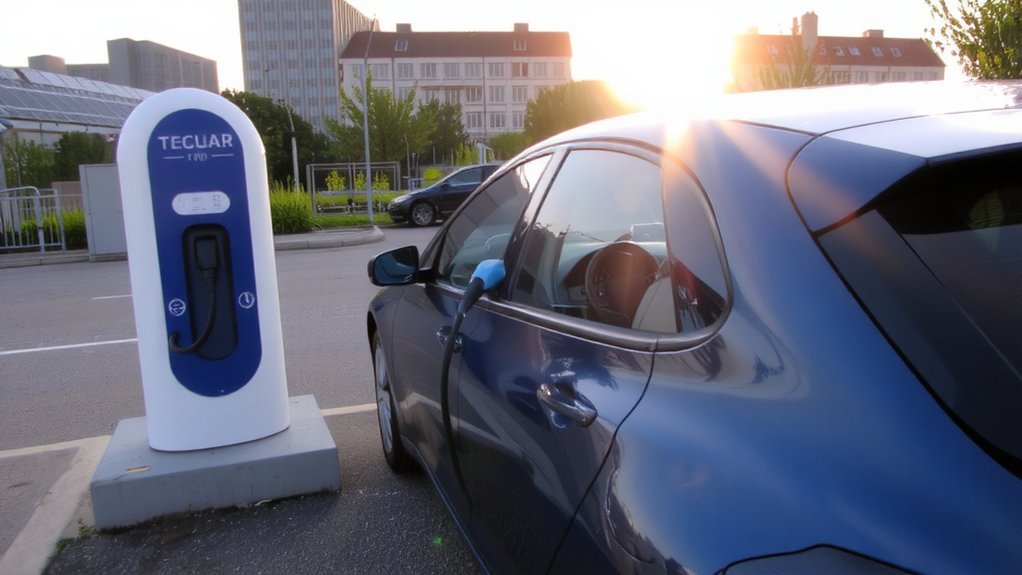
If unsure, call the station or check your owner’s manual.
Real-World Charge Time Examples for Popular EVs
While advertised charging rates give a baseline, real-world times vary by vehicle, charger, battery state, and conditions, so here are typical examples for popular EVs to help you set realistic expectations.
If you own a Tesla Model 3, expect a home Level 2 full overnight charge about eight to ten hours and a DC fast session that adds range in twenty to thirty minutes.
A Hyundai Ioniq 5 often charges on fast chargers in about eighteen to twenty five minutes, while a Nissan Leaf typically needs six to twelve hours on Level 2.
A Chevy Bolt or Ford Mustang Mach‑E will take seven to eleven hours and twenty five to forty minutes on rapid chargers.
Always use certified equipment and follow safety guidance carefully.
Key Factors That Affect Charging Speed (SOC, Temperature, Charging Curve)
Those real-world examples reflect more than charger power — the battery’s state of charge (SOC), temperature, and each car’s charging curve strongly shape how fast you’ll gain range. You should know SOC affects charging rate: charging slows above ~80% to protect cells.
Cold or hot batteries accept less power, so precondition when safe. Manufacturers set charging curves that limit peak power to preserve longevity. When you charge, monitor warnings and follow recommended limits for safety.
- SOC: faster charging at low-to-mid SOC, slower near full
- Temperature: reduced power when cold or very hot
- Charging curve: manufacturer-controlled power ramp and taper
- Battery conditioning: preheating/pre-cooling helps performance
- Safety systems: prevent charging if faulty or unsafe
Follow these practices to charge safely and predictably. Check your manual for specifics.
New Tech in 2025–2026: 800V Architectures, Solid-State Hopes, and Faster Chemistries
As automakers push charging times down, you’ll see more vehicles and stations adopt 800-volt architectures, experimental solid-state cells, and faster electrode chemistries in 2025–2026. You’ll benefit from shorter DC fast-charge sessions if your car and charger support 800V, which reduces heat and current for the same power; that improves safety margins and cable durability.
Solid-state batteries promise higher energy density and potentially faster safe charging, though widespread use remains experimental and will require rigorous validation. New cathode and anode formulations aim to allow quicker ion movement without compromising thermal stability.
Always follow manufacturer instructions, monitor temperature, and rely on certified charging networks and trained technicians as these technologies roll out to guarantee reliable, safe operation. Report anomalies immediately and avoid uncertified fast-charge adapters.
Home Charging Setup, Costs, and Installation Considerations
Most EV charging happens at home, so planning your setup matters: newer fast-charge architectures and emerging battery chemistries affect what level of charger and wiring you’ll want to install. You should assess electrical capacity, garage or driveway location, and budget before buying a Level 2 charger.
Hire a licensed electrician for permit, panel upgrade, and safe installation; don’t attempt DIY unless qualified. Consider smart chargers for scheduling and surge protection to protect batteries. Think about future-proofing for higher-voltage vehicles and installing a 240V outlet if feasible.
Confirm panel capacity and required breaker.
Choose UL-listed, weatherproof equipment.
Obtain permits and inspections.
Use GFCI/grounding and surge protection.
Plan cable routing to avoid tripping hazards.
Keep records of work and warranties regularly.
Public Charging Networks, Pricing Models, and Practical Tips for Faster Stops
When you head out, you’ll depend on public charging networks—each operator offers different charger speeds, payment systems, and access rules, so knowing which networks cover your routes and how they charge can save time and money. Use trusted apps to plan stops, compare real-time availability, charger power (kW), connector type, and idle fees.
Prefer high-power DC fast chargers for quick top-ups and scheduled destination chargers when parked longer. Carry a membership or have multiple payment methods to avoid delays, and keep your vehicle’s charging port clean and accessible. Monitor charge rate and temperature, and stop early if rates drop.
Follow site safety signage, stay aware of surroundings, and avoid blocking bays during cooldown or maintenance. Report hazards promptly and always respect other drivers’ safety.
Conclusion
You might worry that charging will slow your life, but it won’t. You’ll do most charging at home overnight, waking to a full battery, and you can rely on DC fast chargers for quick top‑ups when you’re traveling. Newer vehicles and higher‑power networks keep stop times short, and smart planning—like charging during low rates and avoiding extreme temperatures—lets you maximize speed and battery health. Charging is convenient; you’ll adapt faster than you think and enjoy.