You’ll want a clear, practical plan for overnight EV charging that keeps you safe, saves on electricity, and extends battery life. Use the right charger, set smart schedules, and follow temperature and maintenance tips. We’ll cover standards, install steps, and common pitfalls—starting with the single most impactful change…
Key Takeaways
- Schedule overnight charging during utility off-peak hours and enable smart scheduling to reduce cost and grid strain.
- Set a daily charge cap around 80% (keep battery between 20–80% for longevity), reserve 100% for long trips.
- Install a certified Level 2 charger (UL/IEC/NEC-compliant) with ground-fault, thermal monitoring, and secure locking connectors by a licensed electrician.
- Precondition the battery before charging in cold or hot weather to improve charging speed and reduce battery stress.
- Perform routine maintenance and annual inspections: firmware updates, cable checks, ground/insulation tests, and keep permit and compliance records.
Overnight Charging Safety and Standards (2025–2026)
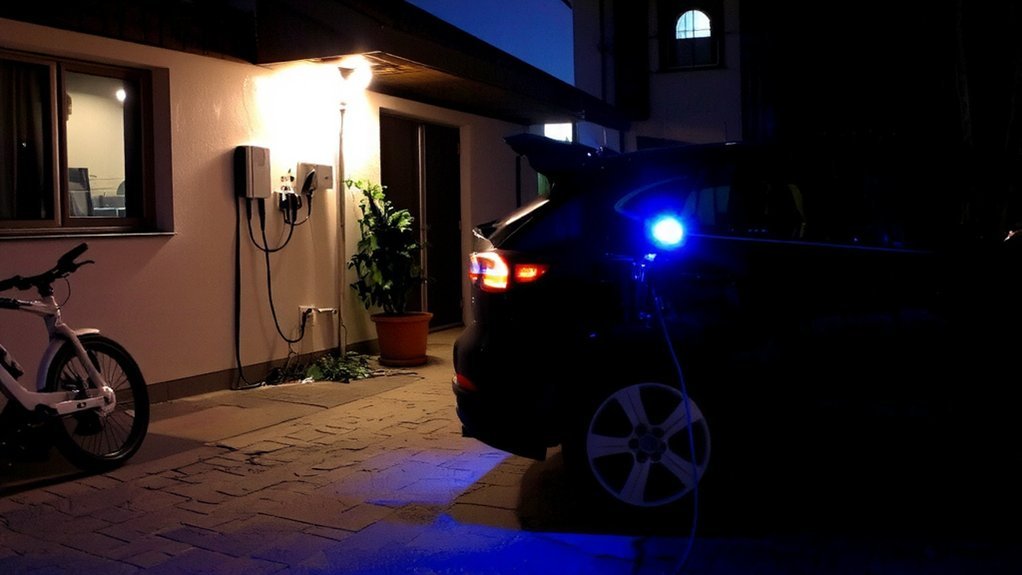
Because overnight charging usually happens unattended, certified chargers and installations in 2025–2026 follow strict electrical and mechanical standards (IEC 61851-1, UL 2202, NEC Article 625, SAE J1776) and include mandatory features like ground-fault protection, fail-safe control systems, insulation requirements, and automatic shutdowns that trigger on overcurrent, shorts, or temperature anomalies to prevent shock, fire, and equipment failure.
You’ll use certified equipment installed by a licensed electrician, rely on connectors compliant with CCS or NACS standards, and guarantee IP-rated enclosures protect against dust and water. Expect continuous thermal and voltage monitoring, secure locking connectors, clear site signage, and data alerts that notify operators of faults.
These measures let you charge overnight with predictable, regulated safety and rapid fault response and reduce property damage risks now. These standards ensure broad compatibility across vehicles, chargers and grids.
Optimal Battery Levels and Longevity Practices
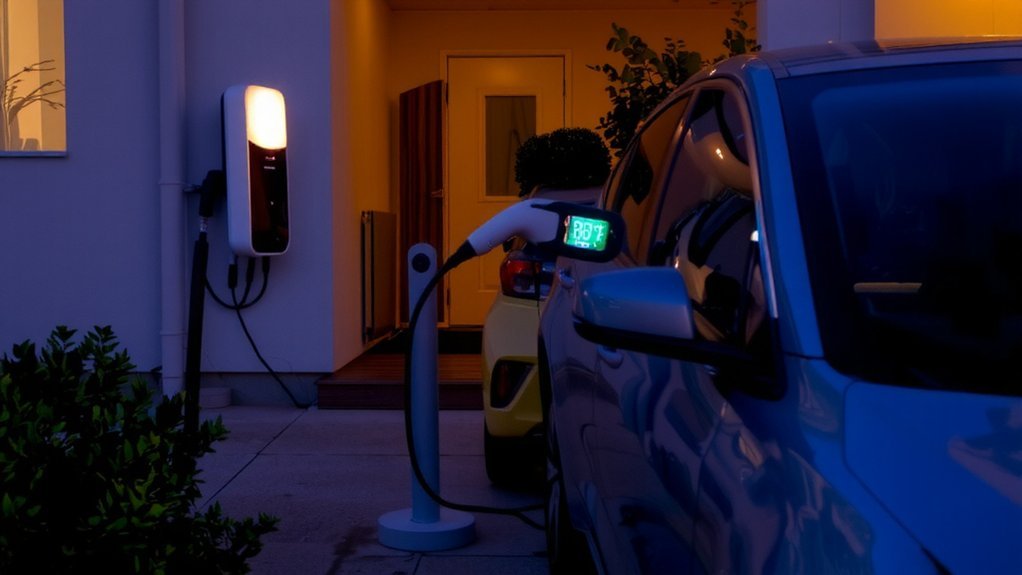
You should keep your battery between 20% and 80% for daily use to reduce voltage stress and slow degradation. Don’t charge to 100% routinely—reserve full charges for long trips when you need the range.
In cold weather, precondition the battery before charging to improve efficiency and protect the cells. For faster top-ups when needed, use DC Fast Charging.
Charge Between 20–80
Most drivers should keep daily charging between about 20–80% to balance everyday range with long-term battery health. You’ll reduce chemical and thermal stress by avoiding deep discharges below 20% and long stays above 80%, where charge acceptance slows and charging becomes less efficient. Keep in mind that slow down occurs past 80%, so charging from 80–100% takes much longer. Use scheduled overnight charging to hit that window reliably and follow your vehicle’s manufacturer guidance—chemistry matters: LFP cells tolerate full charge better than traditional lithium‑ion packs.
Park in a garage or shaded spot to help thermal management, since moderate battery temperatures improve efficiency and longevity. Save higher states of charge for occasional long trips, and limit frequent DC fast charging.
These habits keep you safe on the road while preserving battery capacity over years. Check software charge limits regularly and adjust.
Avoid Routine 100% Charges
Keeping your daily charge between 20–80% also means you shouldn’t routinely charge to 100%. Charging to full every day increases chemical stress and speeds degradation, reducing long-term capacity. Your car’s battery management system already keeps top and bottom buffers, so “100%” is often not truly full; you don’t need daily full cycles.
Reserve 100% only for necessary trips. Staying below about 80% limits time spent in high-stress states, minimizes internal resistance increases, and helps batteries last through more charge cycles. Avoid topping to 100% after a fast DC quick charge, since high-SOC fast charging compounds wear.
Let your EV slow-charge overnight within the recommended limit, follow manufacturer guidance, and you’ll maximize safety and battery longevity. Check your car’s charge limit settings and adjust accordingly. For many drivers, using a Level 2 charger overnight provides a good balance of speed and battery preservation.
Precondition Battery in Cold
When temperatures fall below about 60°F (15.5°C), precondition your battery while plugged in to preserve range, enable faster charging, and protect long-term capacity. Remember that battery chemistry slows in cold weather. Start preheating about 20–30 minutes before departure, or use your scheduled departure feature so conditioning finishes just as you’re leaving.
In extreme cold (-20°C to -35°C) set a higher target (around 15°C+) while plugged in; for DC fast charging the battery may be heated up toward ~60°C to speed charging. Warming the battery from the grid keeps usable range higher, improves regenerative braking, and reduces stress that accelerates degradation.
If your car lacks automation, manually run preconditioning before unplugging. Park in a garage or shield connectors from ice when charging outdoors to keep the system safer and more efficient. Check manufacturer guidance now.
Choosing the Right Home Charger: Level 1 Vs Level 2
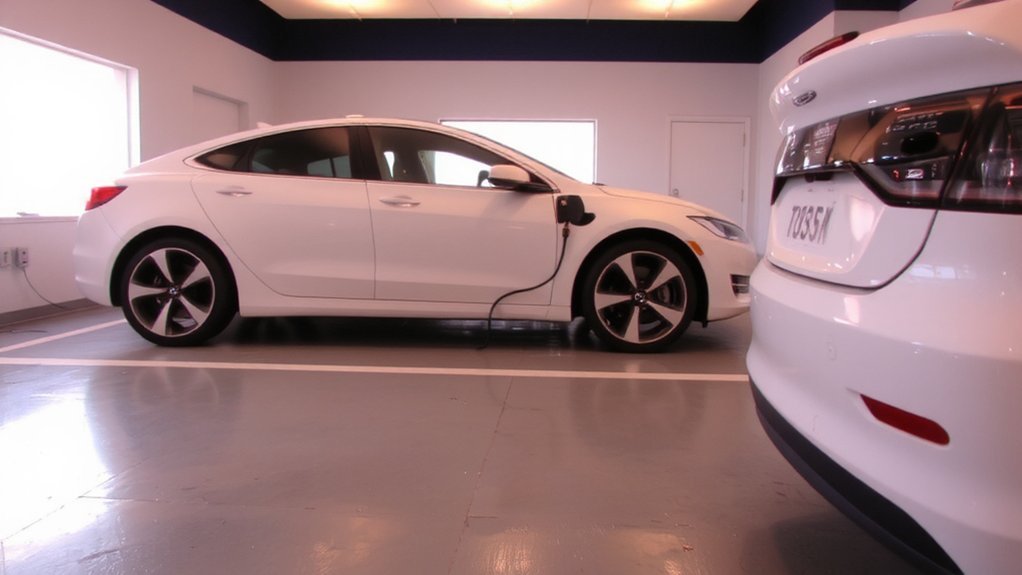
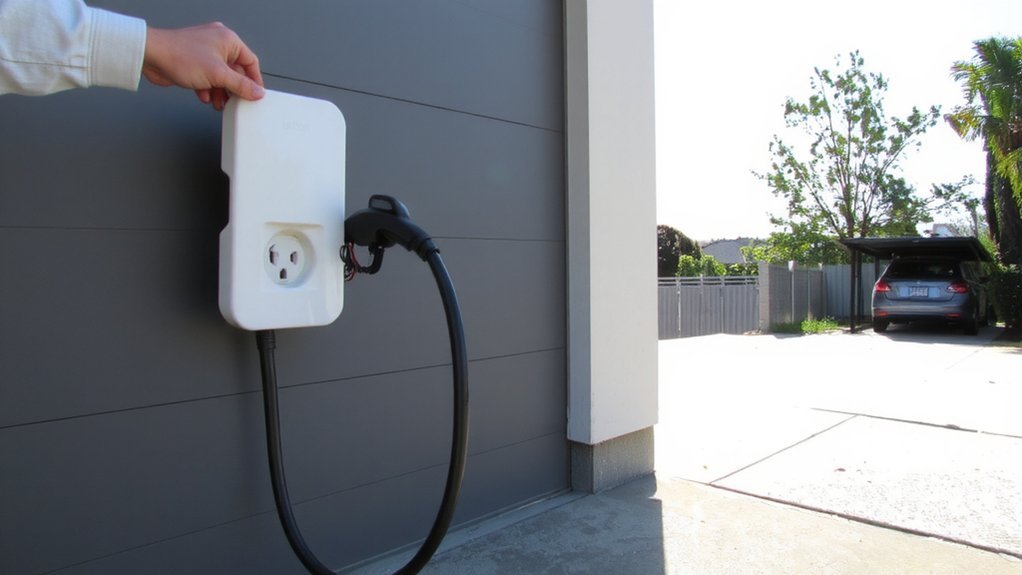
If you drive under about 40 miles a day, a Level 1 charger that plugs into a standard 120V outlet will usually cover your needs by adding roughly 2–5 miles of range per hour; it’s low-cost, requires no installation, and suits low-mileage drivers or plug-in hybrids.
If you need faster overnight top-ups or own a full EV, choose Level 2: 240V, 3–22 kW (commonly 7–11 kW), delivering 10–60 miles per hour and full charges in 3–8 hours. Level 2 needs professional, permitted installation, possible panel upgrades, and higher upfront cost but improves convenience and resale appeal.
Prioritize certified installers, dedicated circuits, and local code compliance to keep charging safe and reliable for daily use. You should balance cost, convenience, and your household’s long-term needs. Most EVs include a portable charger that plugs into a 120V outlet.
Smart Scheduling, Charge Capping, and Off‑Peak Savings
Why not schedule your EV to charge overnight when rates are lowest and batteries are happiest? You can program smart chargers or your car app to start late at night, pause or slow charging during peaks, and precondition the battery while plugged in so charging is efficient and safe.
Set a daily charge cap around 80% for routine use — charging from 20–30% to 80% preserves battery health and leaves room for regenerative braking. Following a 20–80% rule reduces voltage stress and slows chemical degradation. Use time‑of‑use plans and utility integrations to shift charging into off‑peak windows (typically 10 p.m.–6 a.m.) and take advantage of automated adjustments that trim costs and grid stress.
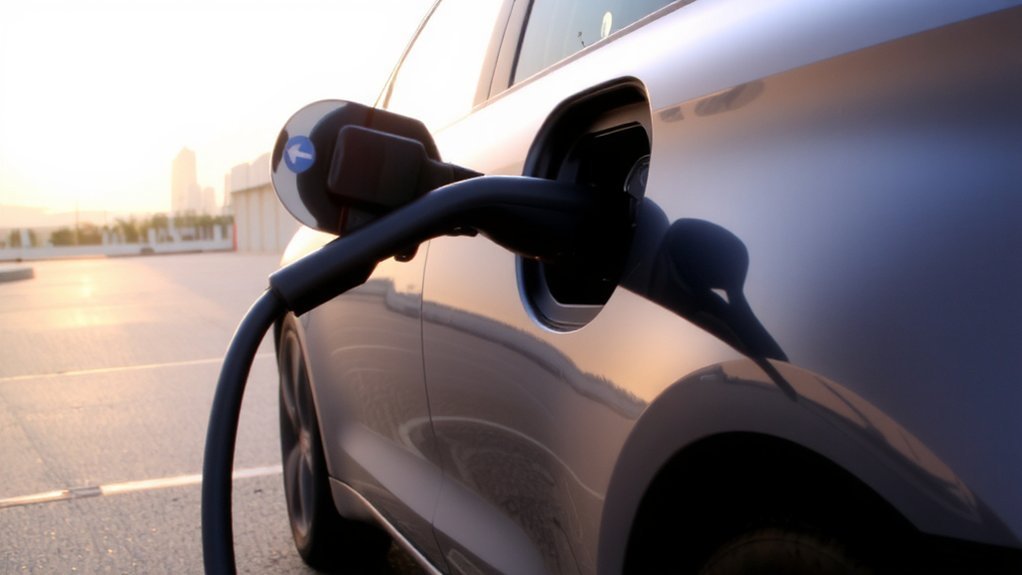
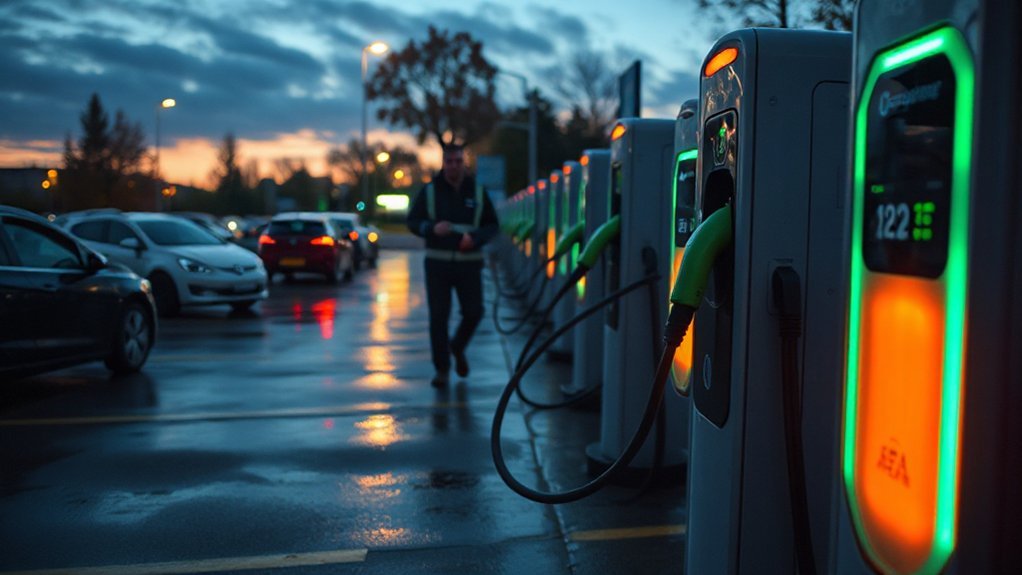
Reserve 100% charges only for long trips. Monitor battery management system alerts and let automatic capping protect against overcharge for safer, smarter charging.
Installation, Maintenance, and Compliance Checklist
You should begin with a site electrical assessment to confirm panel capacity, circuit routing, and cable length so the install is safe and cost-effective. Hire a certified electrician to handle permits, install the dedicated circuit or outlet, and complete the required municipal inspection. Then schedule routine maintenance and compliance checks—visual inspections, safety tests, and firmware updates—and keep records for warranty and code purposes. Consider installing a Level 2 charger for faster nightly charging and long-term practicality.
Site Electrical Assessment
How do you make sure a site is electrically ready for safe, compliant EV charging? Start by securing owner cooperation, legal access and lease clarity. Document existing power: circuit type, voltage, max load and access point locations.
Verify permits, local power regulations and whether capacity upgrades are needed; note impacts on rent or contracts and plan spare capacity for future demand. Check lighting, cameras, ADA access, drainage, bollards and flat layout to protect users and equipment.
Visually inspect pedestals, cables, retractors and user interfaces; report damages, blocked vents or missing seals. Perform dead and live electrical tests to local standards, complete certificates and notify the competent person scheme or DNO as required. Keep manuals and full records for ongoing maintenance and safety and readiness. Always identify and isolate all power sources per LOTO.
Certified Charger Installation
Because safe, compliant EV charging depends on qualified installers, always use licensed, EVITP‑certified electricians for Level 2 (and larger) installs; they’ll handle load calculations, conduit runs, emergency disconnects, and pull the permits and inspections you need. You should confirm certification and license before hiring, since many states—California included—require or strongly recommend EVITP for installs supplying 25 kW or more.
A certified pro will verify panel capacity, recommend service or transformer upgrades, size circuits and conduit to NEC and local codes, and coordinate with the utility for meter or service changes. They expedite permit approval and reduce code violations, ensuring your charger is installed safely, meets building and accessibility requirements, and’s ready for inspection and activation. Carry documentation of work and permits for future reference. New one- and two-unit single-family dwellings are required to have electrical conduit installed capable of supporting a Level 2 EV charger.
Maintenance and Compliance Checks
After installation, regular maintenance and compliance checks keep your charger safe and operational. You should perform visual inspections, update firmware, test electricals, maintain cables, and schedule professional inspections to meet codes and prevent hazards.
Inspect casing, connectors, indicator lights, and cable condition; clean sockets weekly or monthly.
Install firmware and app updates, monitor network connectivity, and address alerts promptly.
De-energize before testing; verify ground continuity (≤0.1Ω), insulation (≥1 MΩ), voltage and arc-fault systems.
Store cables correctly, replace damaged cords, test cables quarterly with full charge cycles.
Arrange annual inspections by licensed electricians, log results, and confirm compliance with local codes and IEC/UL standards.
Follow this checklist, keep records, and act on faults immediately to protect users, equipment, and your property from electrical risks now. Regular checks also help prevent downtime and liability by prioritizing user safety.
Temperature, Climate, and Preconditioning Tips
Cold and hot weather both hurt charging speed and long‑term battery health, so you should manage your EV’s temperature before and during overnight charging. In cold air, charging can be up to three times slower; a 30‑minute DC fast charge at 32°F yields about 36% less capacity than at 77°F, and range can drop 20–40% (at 5°F you may get ~54% of rated range). Heat above 85°F accelerates degradation; stations may limit output above ~45–50°C. Precondition your battery—many cars let you warm or cool remotely—which can cut charging time by ~30% and reduce stress. Park sheltered or in a garage, schedule charging for milder overnight hours, avoid 100% charge in extreme heat, and monitor temperature remotely for safety. Check manufacturer limits and follow warnings. Data from real‑world DC fast charging shows charging can be 3x slower in very cold conditions.
Charging Etiquette for Home and Public Stations
If you’re charging at home or in public, follow simple etiquette to keep chargers available, safe, and convenient for everyone. Unplug promptly when you reach the needed charge and move to non‑charging parking so others can use the station. Avoid staying above 80–85% SOC at public chargers and obey posted time limits. When topping off during errands, using Level 2 chargers is often most appropriate because they provide 20–25 miles of range per hour.
Don’t unplug someone else, don’t block access, and don’t use fast chargers if a Level 2 suits your needs. Keep cables tidy, dispose of trash, and report damaged equipment rather than trying risky repairs.
- Unplug promptly and move your vehicle.
- Observe posted time limits and SOC guidance.
- Park only while actively charging.
- Never disconnect another vehicle or obstruct cables.
- Leave the area clean; report faults to staff.
Safety and courtesy protect everyone.
Monitoring, Alerts, and Remote Management Tools
When your charger’s network is active, you’ll get real‑time visibility into sessions—status, energy use, speed, and duration—so you can spot problems and optimize operations quickly. Use centralized dashboards to monitor multiple chargers, review usage analytics, and confirm safe operation overnight. This supports load shifting to off‑peak periods. Set automated alerts for outages, interruptions, or hardware faults and choose SMS, email, or app notifications so you’re informed instantly. Configure thresholds for high energy draw or unexpected stoppage to reduce risk and response time.
Remotely adjust schedules, power limits, and user access to prevent overloads and prioritize essential vehicles. Apply adaptive load management to shift charging into low‑demand windows and integrate renewables when available.
Keep firmware updated remotely to maintain security and reliable performance. Document events and review logs regularly to guarantee safety.
Troubleshooting Common Overnight Charging Issues
While monitoring and remote controls help you spot problems early, you’ll still run into hardware, connection, software, payment, and grid issues that interrupt overnight charging. Data show that around 21% of sessions on public chargers report problems, underscoring the need for vigilance.
- Inspect charger and vehicle ports for damage, missing lights, or noises.
- Reseat cables; check for corrosion and loose contacts.
- Update firmware; confirm charger–vehicle compatibility; reboot if needed.
- Retry payment or use alternate method; report paid-but-no-charge events.
- Monitor grid status; avoid charging during outages or voltage instability.
Keep records and report recurring failures to your vendor or utility for safe resolution. If you detect signs of physical damage, persistent payment errors, or repeated software failures, stop charging immediately, document the issue with photos and timestamps, and contact qualified support, vendor, or your utility to prevent hazards and restore overnight charging.
Conclusion
You’ll keep your EV healthier and safer overnight by sticking to Level 2 charging, capping charge between 20–80%, scheduling off‑peak fills, and keeping equipment inspected. You’ll also precondition in extreme weather and monitor alerts remotely. One key stat: almost 70% of EV charging happens at home, so your habits directly affect range, costs, and battery life. Follow the checklist and you’ll wake to a ready, reliable EV every morning and reduce stress and save money.