
You probably don’t know your EV’s onboard charger—not the wall unit—sets your real AC charging speed. Start by matching max output to that rating, then size EVSE amperage and breaker using NEC’s 125% continuous-load rule. Confirm J1772 vs. NACS compatibility, electrical capacity, and whether plug-in or hardwired fits code and location. Prioritize NRTL listings, weather resistance, and adjustable current. Want fast, safe, future-proof charging without nuisance trips and wasted spend? Here’s what to check next.
Key Takeaways
- Match EVSE amperage to your car’s onboard charger; higher amperage won’t increase AC charging speed beyond that limit.
- Confirm panel capacity and size a dedicated 240 V circuit using the 125% continuous-load rule; e.g., 40 A EVSE needs a 50 A breaker.
- Pick the right connector (J1772 or NACS) and choose plug-in for portability or hardwired for higher, weatherproof loads.
- Prefer adjustable-current, UL-listed, outdoor-rated units with secure Wi‑Fi, signed updates, and load scheduling; provision a 60 A circuit for 48 A future-proofing.
- Plan mounting, cable length (18–25 ft), and conduit routing to reach your charge port safely; get permits, inspections, and leverage rebates.
Understand Your EV’s Onboard Charger and Real-World Charging Speed
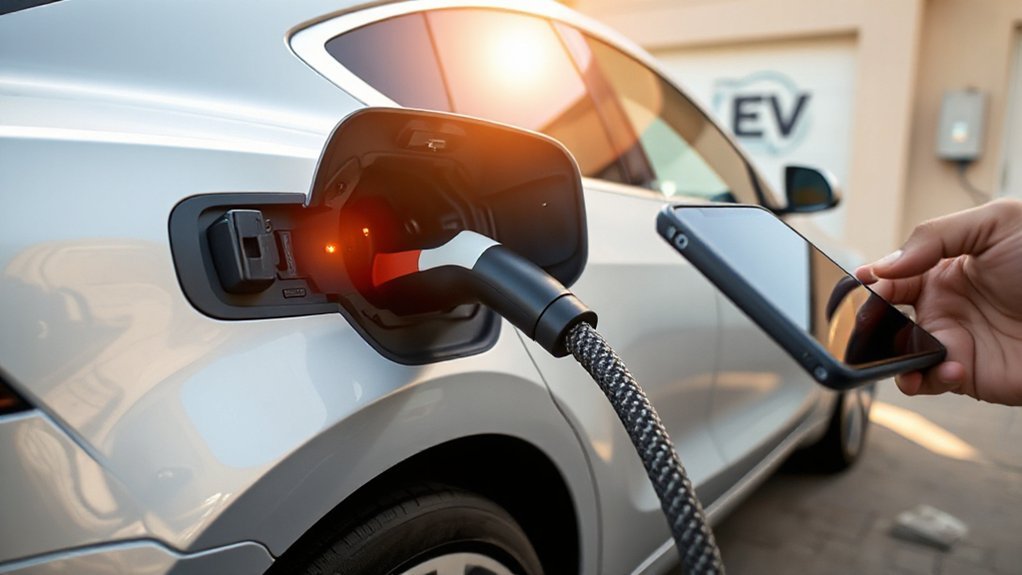
Although Level 2 equipment is often marketed by amperage, your EV’s onboard charger ultimately sets the maximum AC charge power. Check your vehicle’s onboard charger rating (kW); a 7.2 kW unit won’t use more than about 30 A at 240 V, even on a 48 A EVSE. Real-world speed depends on Battery Chemistry, Thermal Management, state of charge, and ambient temperature. Cold packs and aggressive heat can trigger power limits to protect cells, reducing miles per hour. Expect tapering as you approach high SOC to control voltage and temperature. To charge efficiently and safely, follow the manufacturer’s recommended charge windows, use a certified EVSE, and make sure the connector and cable are fully seated and undamaged. Monitor temperatures via the vehicle app during early sessions.
Evaluate Your Home’s Electrical Capacity and Breaker Requirements
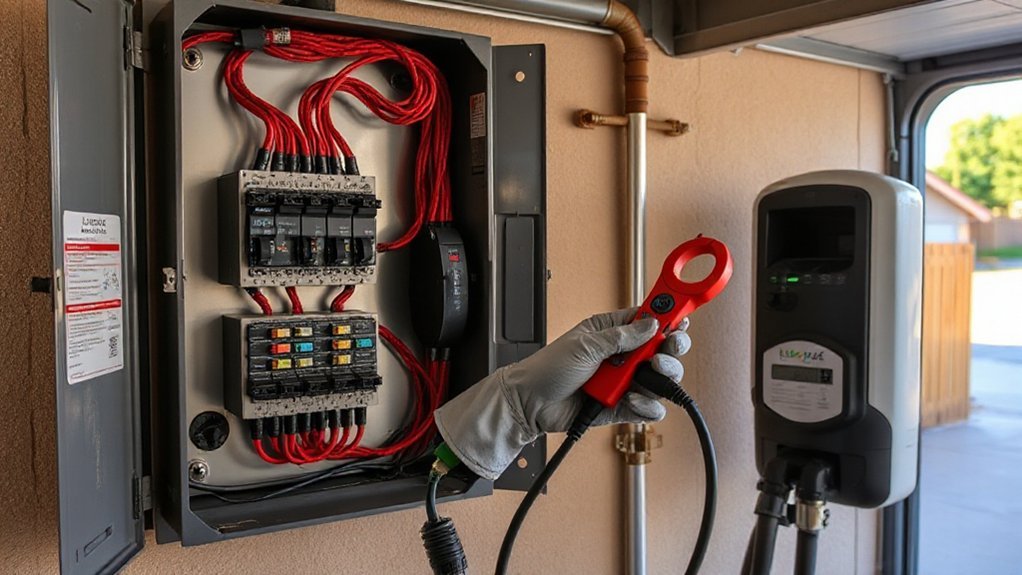
First, verify your service and panel amperage (100A, 150A, 200A, etc.) can accommodate the EVSE’s continuous load using NEC Article 220 load calculations. Then, size a dedicated 240V circuit and breaker to the EVSE nameplate current with the 125% continuous-load rule (NEC 625 and 210.20(A)); for example, a 40A EVSE pairs with a 50A breaker, with conductors selected per ampacity tables and temperature ratings. Finally, check local code amendments, permits, and inspections, and use a licensed electrician where required.
Panel Amperage Assessment
Before you pick a charger amperage, verify your service and panel capacity. Check the main breaker rating (e.g., 100A, 150A, 200A) and available spaces. Read panel labeling for bus rating, maximum breaker sizes, and restrictions. Confirm conductor sizes and enclosure condition; corrosion or heat damage warrants an electrician. Account for existing large loads to estimate spare capacity using NEC 220-style load calculations.
| Item | What to look for |
|---|---|
| Service disconnect | Main breaker amperage, intact lugs |
| Panel environment | Ventilation, ambient temperature limits |
Verify grounding and bonding, AFCI/GFCI requirements, and working clearances (110.26). Avoid double-lugging or tandem breakers where prohibited. If the panel is undersized or full, plan for an upgrade or subpanel before installing an EVSE. Document clear photos for permits and future maintenance reference logs.
Dedicated Circuit Sizing
With your service rating and panel space verified, size the dedicated EV charging circuit to meet NEC requirements. EV charging is a continuous load, so multiply the EVSE’s nameplate current by 125% to select the minimum breaker ampacity. Use a 2‑pole breaker at 240 V and a single, dedicated branch circuit. Match conductor ampacity (75°C column if terminals are rated 75°C) to the breaker after applying thermal derating for ambient temperature, conduit fill, and rooftop exposure. For runs over 50–75 feet, evaluate voltage drop; target ≤3% on the branch circuit and upsize conductors if needed. Choose copper or aluminum conductors listed for the terminals. Keep neutral only when required by the EVSE. Provide equipment grounding sized per breaker. Confirm torque values to manufacturer specs.
Code and Permit Checks
Although a Level 2 EVSE may seem simple to add, verify code and permit requirements with your AHJ and utility before buying hardware. Confirm service capacity, meter/main ratings, and grounding. Most jurisdictions adopt NEC 625; you’ll need a permit, load calculation (per NEC 220), and a properly sized OCPD and conductors for continuous load at 125%.
- Obtain written HOA approvals and any exterior mounting permissions.
- File an electrical permit; include load calc, site plan, EVSE specs, and one-line diagram.
- Schedule rough and final inspections; understand inspection timelines and utility coordination for meter upgrades.
Use a dedicated 2-pole breaker with GFCI where required; verify AFCI/GFCI provisions per local amendments. Bonding, clearances, and wet-location ratings must match the environment. Engage licensed electrician; don’t energize until approval.
Decide Between Plug-In and Hardwired Installations
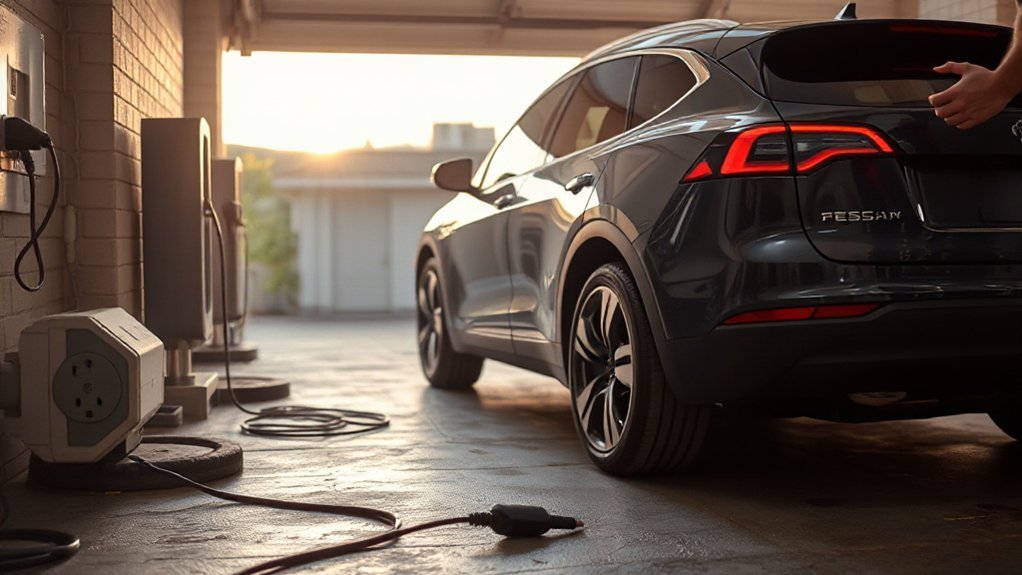
While both options deliver Level 2 charging, your choice between a plug-in EVSE (NEMA 14-50 or 6-50) and a hardwired unit hinges on amperage, location, and code compliance. A 50A receptacle supports about 40A continuous output (80% rule); hardwired models commonly deliver 48–80A when fed by appropriately sized breakers, conductors, and disconnects. In garages, receptacles need GFCI protection; outdoor installs require weatherproof, in-use covers and NEMA 3R/4 enclosures. Plug-in units offer portability and simpler replacement, but add receptacle contacts that can heat, loosen, or corrode. Hardwiring reduces failure points, improves sealing, and looks cleaner—benefiting aesthetic impact and resale value. In wet or high-load scenarios, prefer hardwired. Verify conductor type, bonding, torque, and working clearances, and pull permits before energizing. Schedule inspection after installation completion.
Choose the Right Connector: J1772, NACS, and Adapters
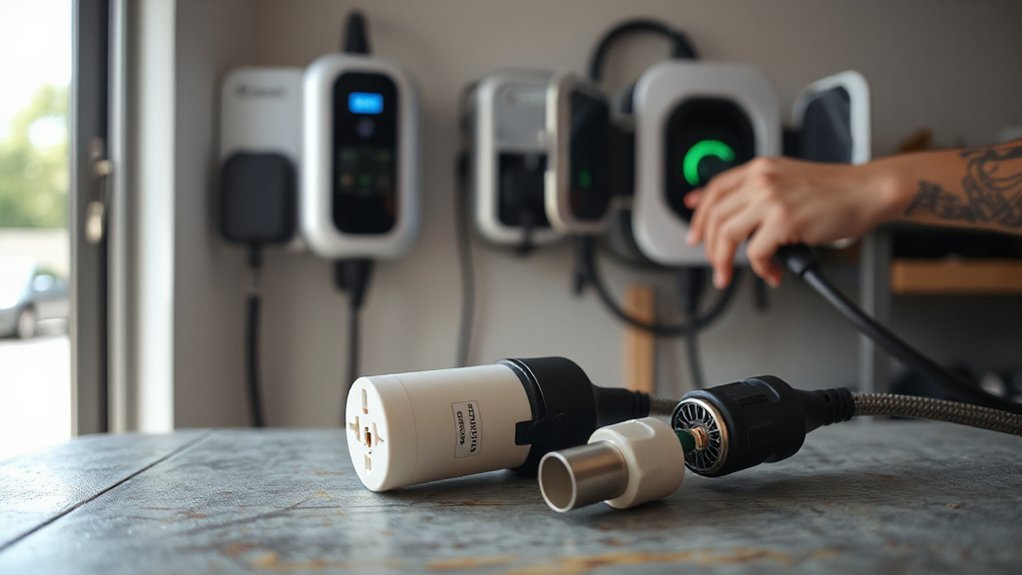
Confirm your vehicle’s inlet (J1772 or NACS) and choose a charger that matches it to avoid adapters and guarantee full functionality. If you must use an adapter, pick a UL-listed, OEM-approved unit rated for 240 V at your EV/circuit limit, and install/use it per manufacturer specs with proper weather protection and strain relief. Verify adapter availability, warranty impacts, and connector lockout features, and don’t exceed connector or cable ratings.
Vehicle Compatibility
Which connector does your EV use—J1772 or NACS? Verify the inlet matches the charger’s plug, then check port placement so the cable routes cleanly without straining the coupler or blocking trunk clearance. Confirm your vehicle’s onboard charger kW rating to size amperage correctly; overspec won’t charge faster, underspec wastes capacity.
- Electrical: 240 V circuit rating (40A, 48A), continuous-load derating (125%), GFCI, breaker type.
- Environmental: UL/cETL listing, NEMA enclosure (3R/4), operating temp, wet-location cord.
- Ergonomics: cable length, right-angle connector, wall vs pedestal to reach your port safely.
Ensure plug latch compatibility, weather cap fit, and strain relief. Mount the unit where the cable avoids wheel paths, sharp bends, and trip hazards. Confirm software wake behavior doesn’t conflict with your EV’s sleep settings and future updates.
Adapter Availability

Although adapters can bridge J1772 and NACS, use one only when necessary and verify it’s listed (UL/cETL), labeled for AC Level 2, and amperage-rated at or above your EVSE’s output. Favor native connectors; adapters add resistance, bulk, and failure points. If you must buy, choose short, rigid designs with 60 A or higher rating, IP54+ weather seals, -30–50°C range, and tamper-resistant housings. Validate pin plating (nickel), latch strength, and temperature derating curves.
| Use case | Do | Avoid |
|---|---|---|
| Daily home charging | Match amp rating; strain-relief cord | Daisy-chaining or extensions |
| Shared garages | Locking latch; serializable inventory | Unlabeled hardware |
| Travel backup | OEM-certified unit | Third party vendors with counterfeit risks |
Test fit unloaded, then under load: monitor plug temperature, look for arcing, and confirm pilot current matches EVSE settings.
Match Amperage, Adjustable Current, and Future-Proofing Needs
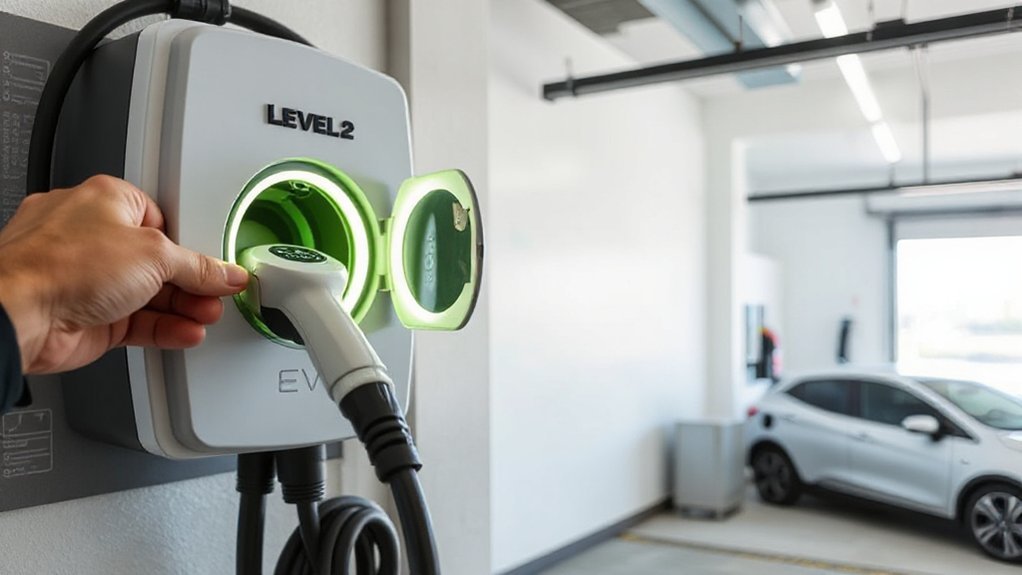
Before you choose a Level 2 EVSE, match its maximum output to your vehicle’s onboard charger, the circuit breaker, and the branch-circuit wiring. Size circuit per NEC continuous-load rules; a 40 A EVSE requires a 50 A breaker with rated conductors per code. EV charging is a 125% continuous load. Pick adjustable current to safely align with service capacity and future upgrades, and verify amperage scalability. Confirm copper conductors, correct insulation temperature rating, and thermal management to avoid derating.
- Choose 32–48 A now if your car limits AC intake; higher amperage won’t charge faster than the onboard charger.
- For future EVs, consider a 60 A circuit supporting a 48 A EVSE.
- Use a listed unit with integral GFCI and a properly sized, flexible cable.
Compare Smart Features: Wi‑Fi, Scheduling, Load Sharing, and Apps
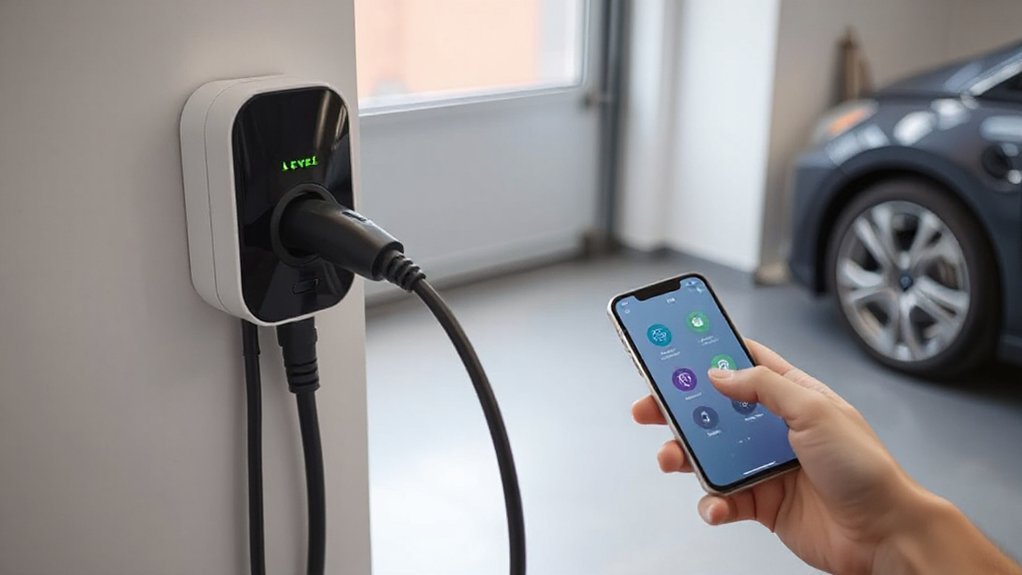
You should evaluate Wi‑Fi and app reliability: secure TLS, signed OTA updates, robust signal handling, and a local-control fallback if the cloud or phone app is unavailable. Make sure scheduling supports your utility’s TOU rates and demand-response, with on-device schedule retention and fail-safe start/stop behavior after power or network interruptions. For multiple EVs, require UL‑listed load sharing that dynamically limits current on a single circuit, supports multiple units or ports, and offers priority or rotation settings.
Wi‑Fi and App Reliability
While smart features add convenience, prioritize chargers with reliable Wi‑Fi and resilient app control that don’t compromise safety if connectivity drops. Evaluate radio strength (2.4 GHz preferred for range), WPA2/WPA3 support, and proven cloud uptime. Demand Offline Fallback so charging, ground‑fault protection, and overcurrent limits continue locally if the network or app fails. Verify that critical functions are hardware‑enforced, not cloud‑dependent.
- Look for signed, automatic Firmware Updates with rollback, release notes, and CSA/UL listings that remain valid after updates.
- Confirm local control options (Bluetooth, web UI) and PIN/lockout to prevent unauthorized sessions when offline.
- Test reconnection behavior: SSID changes, power cycles, and router failures shouldn’t erase settings or corrupt logs; error codes must be readable on the unit under all conditions.
Scheduling With TOU Rates
Because TOU electricity pricing can swing costs by 2–5x, pick a charger with a scheduler that reliably targets off‑peak windows without sacrificing safety. Verify the unit supports utility rate calendars, local time sync, and daylight‑saving adjustments. You should be able to set hard start/stop times, minimum charge levels, and departure targets, with fail‑safe override if the car’s SOC is low.
Choose models with firmware, UL listing, and GFCI protection; schedules must persist after power loss. Prefer on‑device scheduling as a fallback if Wi‑Fi drops. Look for Peak forecasting and price signals so the charger can adapt to dynamic rates and demand response Behavioral incentives. Review logs to confirm events executed as scheduled, and confirm the charger won’t energize a damaged cable or overheated connector.
Load Sharing, Multi‑Ev Support
After setting reliable schedules, prioritize chargers that coordinate load across multiple EVs without tripping breakers or exceeding service limits. Look for networked stations that implement dynamic load balancing, respect NEC 625 continuous-load rules, and let you cap aggregate amperage per circuit. The best systems share capacity based on Driver Profiles, battery state, and departure times, while honoring service constraints.
- Support multiple connectors or linked units with master/slave control; verify UL certification and OCPP interoperability.
- Enable per‑vehicle priorities, RFID access, and Occupancy Sensors to pause unused ports and reallocate current safely.
- Provide real‑time metering, fault detection, and audit logs in the app.
Confirm installers size wiring, breakers, and conduit for future ports. Test fail‑safe behavior: loss of Wi‑Fi shouldn’t disable charging or exceed current limits.
Prioritize Safety Certifications and Weather Resistance Ratings
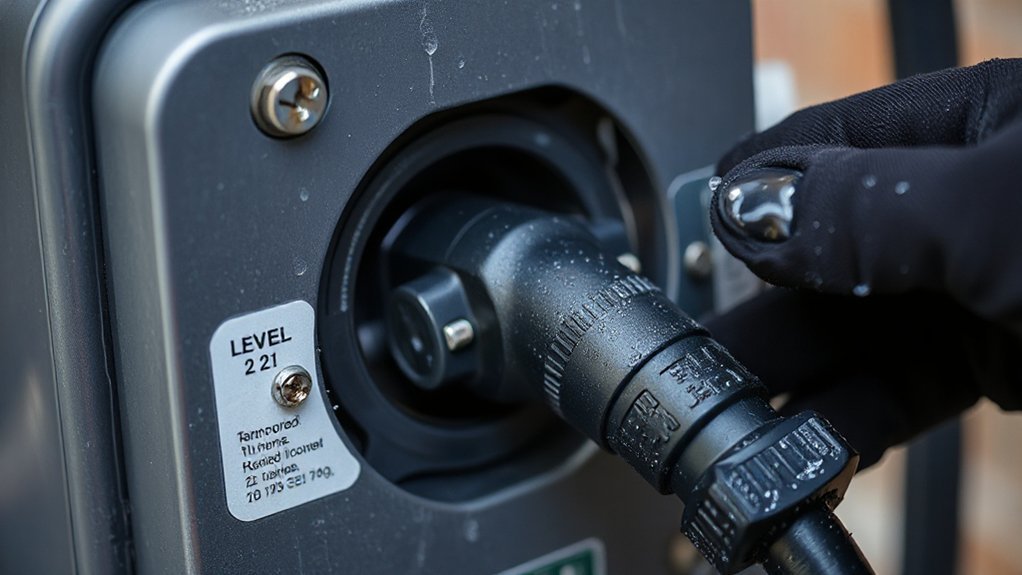
Before you choose a Level 2 EVSE, confirm it carries a Nationally Recognized Testing Laboratory (NRTL) mark—UL or ETL—certified to UL 2594 and UL 2231-1/-2, which verifies shock protection, ground-fault detection (CCID), and overcurrent/thermal safeguards. Review the Certification Breakdown on the data plate and manual; verify the listed model number, rated current, ambient limits, and CCID trip level (20–30 mA).
For outdoor durability, check Ingress Ratings and enclosure type. Prefer NEMA 4 or 4X (IP65) for rain and washdown; NEMA 3R or IP54 is acceptable under cover. Look for UV-stabilized housings, gasketed covers, corrosion-resistant hardware, and cable entries. Confirm -22°F to 122°F operating range, UL 94 V-0 plastics, and Type 2 SPD surge protection. Provide a grounded circuit, correct breaker sizing, and tamper-resistant controls.
Plan Cable Length, Holster Style, and Mounting Location
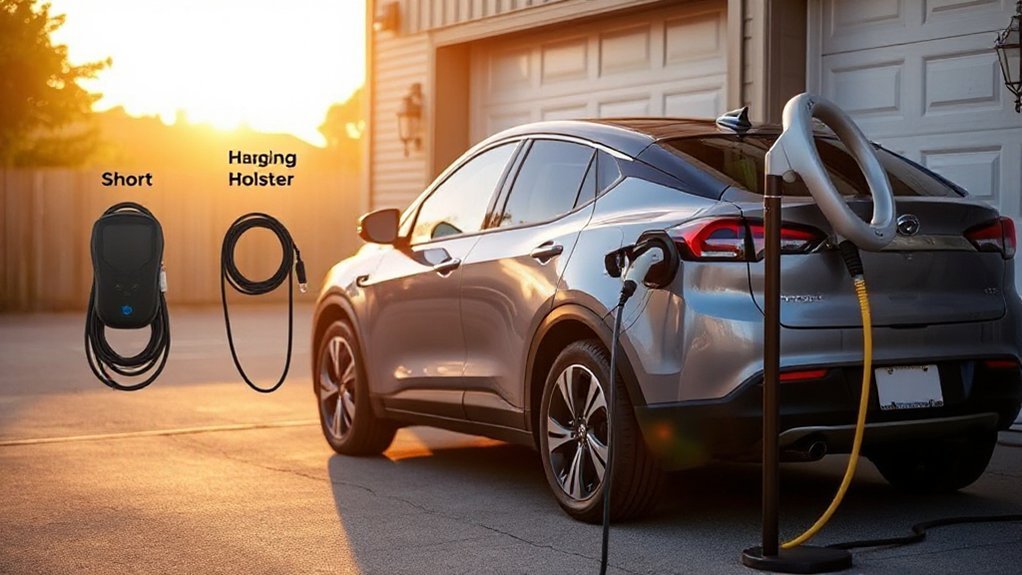
While specs can look similar on paper, you should plan cable length, holster style, and mounting location around your site so the EVSE operates safely and stays code-compliant. Measure the farthest charge port, route around vehicles, and choose a 18–25 ft cable that reaches without crossing walkways or creating strain. Select a holster that captures the connector, supports the cable, and shields contacts from moisture. Mount on a rigid surface with proper anchors, drip loop, and conduit support. Set access height so the handle and holster sit 24–48 inches above grade for ergonomics and aesthetic integration. Maintain snow-plow clearance, and keep cable off the floor.
- Plan reach, routing, and strain relief
- Choose open vs locking holster
- Confirm clearances, studs, conduit paths
Leverage Rebates, Incentives, and Utility Rate Programs

To cut total cost of ownership, leverage stackable rebates, tax incentives, and EV-specific utility rates—but verify eligibility rules before you buy. Start with eligibility checks: many programs require UL-listed, ENERGY STAR certified Level 2 EVSE, a licensed electrician, and closed permits from the local AHJ. Confirm pre-approval, purchase windows, and qualified equipment lists to enable stacking strategies across federal, state, utility, and air-quality districts. Ask your utility about time-of-use or EV-only meters, demand-response bill credits, and managed charging enrollments; some require Wi‑Fi connectivity and remote shed capability. Keep itemized invoices, permit numbers, photos, and serials for audits. Coordinate load calculations (NEC Article 220), GFCI protection, and rebate-compatible circuit sizing. Enroll before energizing; some programs won’t pay for retroactive installations. Check income caps and residency.
Weigh Warranty, Support, and Total Cost of Ownership
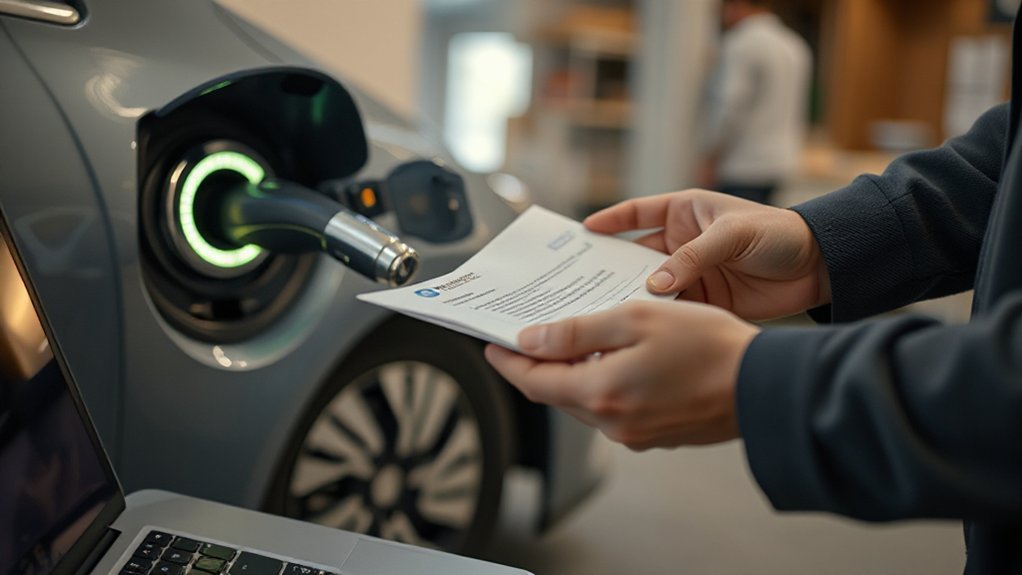
Although sticker price grabs attention, weigh warranty terms, support quality, and lifetime operating costs before you choose a Level 2 EVSE. Prioritize UL-listed hardware, NEMA ratings appropriate for your location, and clear service pathways. Compare baseline coverage length, exclusions, and whether an Extended Warranty meaningfully reduces lifetime risk. Evaluate parts availability, technician network, and average Repair Costs.
- Verify warranty includes contactor, relay, and cable; confirm labor coverage and turnaround times.
- Check 24/7 support, firmware update policy, and remote diagnostics that can safely de-energize on faults.
- Model total cost: purchase, permits, installation, load management, kWh losses, maintenance, and failure probability.
Ask for written terms and RMA procedures. Favor vendors with transparent spares pricing and field-replaceable components to minimize downtime and service continuity.
Conclusion
You’re the pilot, and your charger is the runway lights. Match the EVSE’s maximum AC output to your EV’s onboard charger, confirm J1772 or NACS, and size conductors and breaker per NEC 125% continuous-load rule. Prefer NRTL-listed units with adjustable current, local scheduling, signed OTA, strong Wi‑Fi, and offline fallback. For outdoors, pick weather-rated enclosures. Plan cable reach and holster. Pull permits, chase rebates, and choose solid warranty support. Land safely, charge efficiently every time.