You want an EV charger that fits your car, home, and budget, and you don’t want surprises during installation. You’ll need to weigh charging speed, electrical work, connector type, cable length, and smart features. Keep going — understand these trade-offs and you’ll pick the setup that actually works for you.
Key Takeaways
- Choose Level 1 for occasional use or Level 2 (240V) for overnight full charges and faster daily replenishment.
- Confirm your home’s electrical capacity and hire a licensed electrician for dedicated circuit installation and code-compliant wiring.
- Verify connector compatibility (SAE J1772 vs NACS) and whether adapters or dual-standard chargers are needed for your vehicle.
- Prefer certified smart chargers with Wi‑Fi scheduling, energy monitoring, and solar or vehicle-to-home integration if you want cost optimization.
- Select appropriate cable length and mounting location, compare amperage (charging speed), warranties, and available utility rebates or incentives.
Choosing the Right Home EV Charger
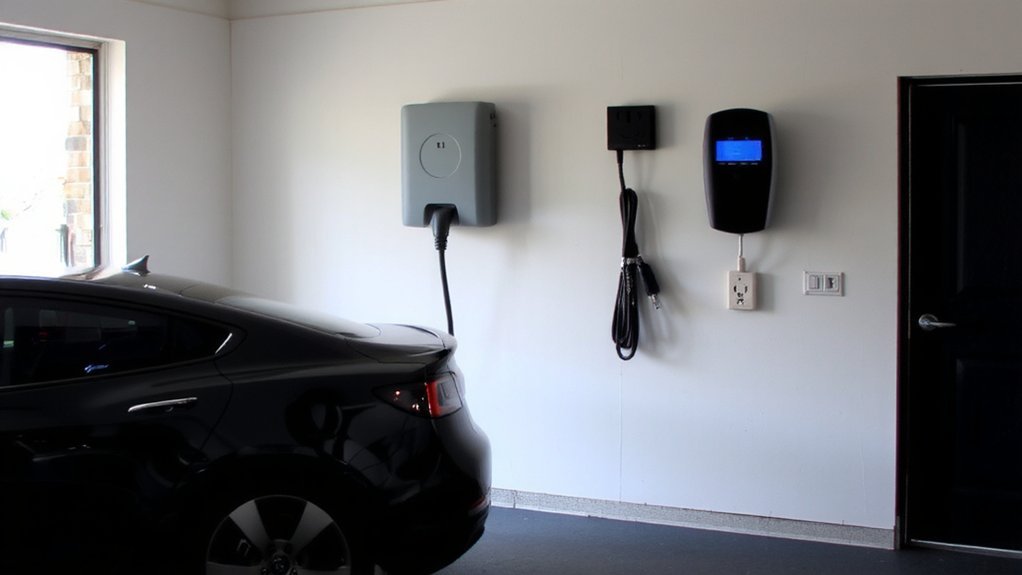
While public chargers are improving, having a reliable home EV charger makes daily driving simpler and cheaper. Also, remember that no single best charger exists—choices depend on your needs. You’ll first decide between Level 1 and Level 2 based on how many miles you drive, how quickly you need a full battery, and what your home electrical system supports. Level 1 uses a standard 120V outlet and gives about 3 to 5 miles of range per hour, so it’s suitable for occasional use or emergencies but won’t support regular long commutes. Level 2 needs a dedicated 240V circuit, delivers from roughly 12 to 80 amps, and can add 12 to 80 miles per hour; you can typically recharge most cars fully in four to ten hours overnight when you choose the right amperage.
A dependable home EV charger: Level 1 for occasional use; Level 2 (240V) for faster overnight charging.
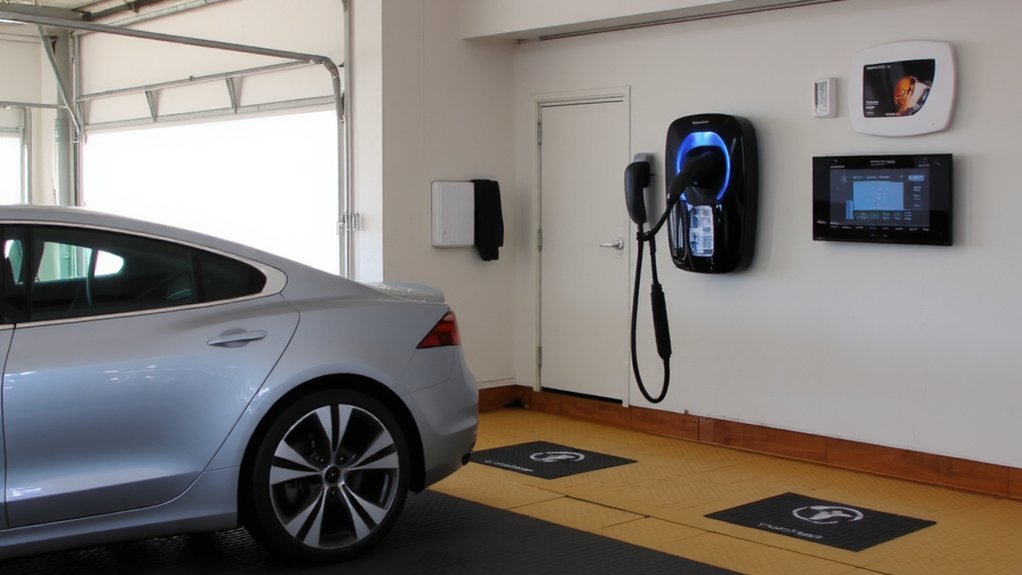
You should have a professional electrician evaluate your panel capacity and install any required 240V circuit to meet code and safety standards. Level 2 units come as hardwired installations or plug-in models using NEMA 14-50 or NEMA 6-50 plugs; either way, proper installation prevents fire hazards and guarantees reliable operation. Consider the charger’s rated current — chargers commonly range from about 16A up to 50A or more — because higher amps and power output, roughly between 3.8 kW and 12 kW, reduce charging time and help fill larger batteries overnight.
Check connector compatibility before buying. Most non-Tesla vehicles in North America use the SAE J1772 connector for AC charging, while Tesla uses NACS but provides adapters to J1772, and newer chargers may support both standards to future-proof your setup. For home charging you generally won’t use DC fast chargers (Level 3) because they require expensive infrastructure and deliver over 100 kW; focus your planning on Level 1 and Level 2 instead.
Think about cable length and placement; typical cables are 20 to 25 feet and should let you park safely without stretching cords. Decide whether smart features matter: Wi-Fi–connected chargers let you monitor, schedule, and shift charging to off-peak rates, integrate with solar or home energy systems, and provide logs for cost tracking. If you prioritize safety, pick certified units, insist on professional installation, and match charger output to your vehicle’s onboard charger capacity so you don’t overload systems while charging overnight.
Consult local utility incentives and rebates, and compare warranties and support from manufacturers. A well-chosen charger lowers operating costs, increases convenience, and protects your home and vehicle when installed and used according to manufacturer instructions and local electrical codes safely.
Conclusion
You’ve weighed charging speed, installation needs, connector fit, cable length and smart features — now pick the charger that fits your routine. Choose a certified Level 2 unit if you want faster daily range, and hire a pro for a 240V circuit. Match the connector, confirm cable reach, and opt for smart functions that save energy. Treat this decision like tuning an instrument: small adjustments make your charging sing and fit with your home’s power goals.