
The best EV-friendly apartments often don’t mention chargers in the headline. You’ll need smart filters, map checks, and a quick audit of charger types, fees, and access rules to separate true on-site power from marketing fluff. We’ll cover which portals to use, how to verify ports and uptime, what to ask managers, and how to protect your access in the lease—so you don’t sign first and discover the plug later.
Key Takeaways
- Start with major rental portals; use filters like “EV charger,” “garage with chargers,” save searches and alerts for target areas and budgets.
- Verify chargers by cross-checking property sites, Google Maps, EV apps, and request photos; call to confirm port count, Level, kW, and resident-only access.
- Confirm connector compatibility (J1772/Tesla adapter, CCS/NACS), real-world charging speeds, cable lengths, and panel labels before touring or applying.
- Ask about access hours, session limits, uptime history, maintenance SLAs, and billing structure; estimate monthly costs from commute kWh and posted rates.
- Negotiate lease clauses for dedicated spots, 24/7 access, uptime credits, clear enforcement, and remedies; map reliable public/workplace charging as backup.
Start With the Right Listing Sites and Filters

Where should you begin? Start on major listing portals that let you filter for EV charging, green amenities, or parking upgrades. Use precise filters for “EV charger on-site,” “garage with chargers,” and “assigned EV spots,” then save the search. Do quick platform comparisons: Zillow, Apartments.com, RentCafe, and MLS-powered sites often index different buildings and update at different speeds. Cross-check results with property websites and Google Maps to confirm on-the-ground availability and hours. Set an alert setup for your target neighborhoods, price range, and move-in date so new matches hit your inbox first. Refine by commute time, walkability, and utility policies, and don’t shortlist communities that only “plan to add” chargers. Document findings in a simple tracker to prioritize tours. Schedule verification calls before visiting.
Decode Charger Types: Level 1, Level 2, and DC Fast
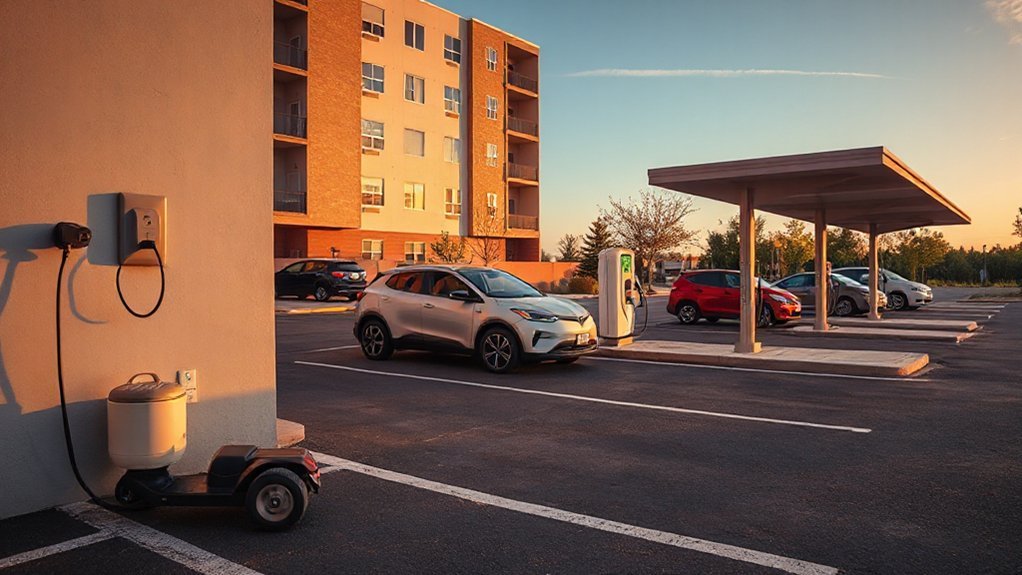
Before you sign a lease, know how Level 1, Level 2, and DC Fast compare on speed—overnight trickle, daily top-ups, or quick turnarounds. You’ll also want the right plug: most properties offer J1772 for Level 2, Tesla drivers use an adapter, and DC Fast varies by CCS or NACS. Ask the community which ports and kilowatt ratings they provide so your charging matches your commute.
Charging Speeds Compared
How fast will your EV actually charge at your apartment? Level 1 (120V) adds roughly 2–5 miles of range per hour—good for short commutes if you plug in nightly. Level 2 (240V) delivers about 25–45 miles overnight, typically 7–11 kW, giving most drivers a full workday refill. DC Fast runs 50–350 kW and can add 100–200 miles in 20–40 minutes, but it’s uncommon in residential garages and pricier.
Real-world speed varies with charge curves, shared circuits, and station load management. Expect faster rates from low state of charge, then taper near 80%. Cold batteries slow intake. Property-imposed session limits can cap kWh. Frequent DC fast use can accelerate battery degradation, so prioritize reliable Level 2 access for daily needs and reserve charging for trips.
Connector Compatibility Basics
Why does connector compatibility matter? You’ll save time, avoid surprises, and match your EV to the right amenity before you sign a lease. Level 1 and Level 2 ports typically use J1772 for most brands, while many Teslas use NACS; both deliver AC power, but Plug dimensions and latch styles differ. Most DC Fast options use CCS; some legacy stations offer CHAdeMO. Verify which connector your car supports, then confirm the property’s hardware.
If you drive a Tesla, ask about NACS access or on-site J1772 with Adapter interoperability. For road‑trip speed, make sure the building’s DC Fast uses CCS or NACS compatible gear. Request photos of ports, cable lengths, and panel labels. Clear specs in the listing reduce downtime, charge costs, and friction for you.
Read Between the Lines of “EV-Friendly” Listings
When a listing says “EV-friendly,” treat it as a headline, not a guarantee. Ask for specifics: number of ports, Level 2 vs 120V, kilowatt output, location, and access hours. Clarify whether spots are assigned or first-come and if there’s a waitlist. Probe fees: monthly access, per-kWh or session pricing, network memberships, and idle penalties—these hidden costs add up. Watch for ambiguous wording like “charging available” that could mean a single outlet in a corner. Confirm uptime, maintenance responsibility, and repair timelines. Verify guest policies, security cameras. Request a sample addendum showing pricing, enforcement, and terms. If they promise “coming soon,” demand dates, permits, and names. Ask about ADA access, fire-code compliance, and insurance requirements. Document answers by email so you can negotiate or walk.
Use Maps to Cross-Check On-Site and Nearby Charging
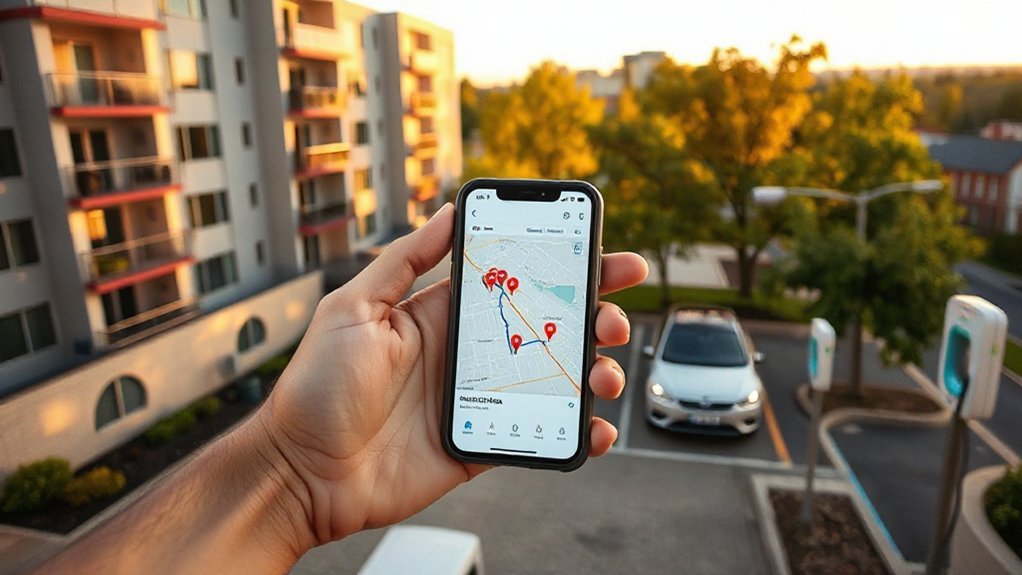
Don’t take “EV-friendly” at face value—verify it on a map. Pull up Google Maps and EV apps to confirm chargers on-site and within a practical radius. Use satellite verification to spot stalls in the parking lot, check signage, and differentiate resident-only spots from retail stations. Drop into Street View and review streetview timestamps to gauge recency; fresh imagery suggests the hardware still exists. Scan photos and user reviews for paid parking, hours, or access gates. Measure drive times at your typical charging windows—late evening and early morning—to assess congestion and convenience. Flag redundant options nearby: a fast charger and a backup Level 2 within a mile reduces risk. Save locations, create a list, and rank communities by real charging coverage for your daily needs.
Questions to Ask Property Managers About Access and Uptime

Ask exactly when you can use the chargers—access hours, guest use, reservations, and any caps. Request uptime metrics for the past 6–12 months, who’s monitoring outages, and the service levels they guarantee. Clarify maintenance schedules, repair response times, and whether onsite staff or a vendor stocks parts and handles fixes.
Access Hours and Limits

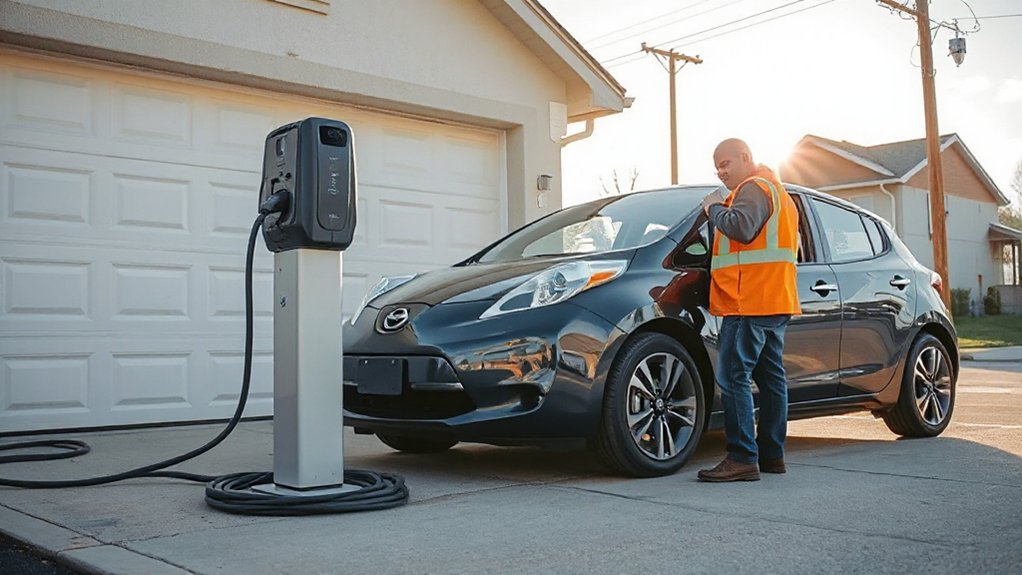
How reliable and accessible are the chargers day to day? Ask for the exact access window: 24/7, building hours, or garage schedule, and whether doors require fob access after hours. Confirm policies for holiday closures and nighttime curfews that could block late returns. Clarify guest access, weekend rules, and whether special events restrict entry.
Pin down session limits: maximum hours per plug-in, idle fees, grace periods, and peak-time reservations. Verify how priority works—first-come, permit-based, or assigned stalls—and whether there’s overflow capacity when all ports are occupied. Request the location specifics: floor, proximity to elevators, and ADA routes. Finally, confirm enforcement: who monitors compliance, ticketing or towing for overstays, and how the property communicates temporary restrictions so you’re never stranded. Ask for clear written terms.
Uptime, Maintenance, and Repairs
Verifying uptime and repair timelines protects your daily charging routine. Ask who monitors chargers, how outages are reported, and what SLA they commit to during peak hours. Confirm whether maintenance is onsite or third-party, and if replacement units are pre-staged to minimize downtime. Verify energy management software, cellular connectivity reliability, and backup plans during utility or internet outages too.
- Request documented uptime percentages for the past 12 months, plus alert methods when a port goes offline overnight.
- Clarify parts sourcing speed—stock on premises, distributor lead times, and escalation paths if shipments slip.
- Confirm warranty transfers on hardware when ownership changes, and who pays labor under warranty claims.
- Ask for a repair playbook: diagnostic windows, technician ETAs, loaner options, and temporary access to nearby networks.
Pricing, Billing, and Estimating Your Monthly Charging Costs
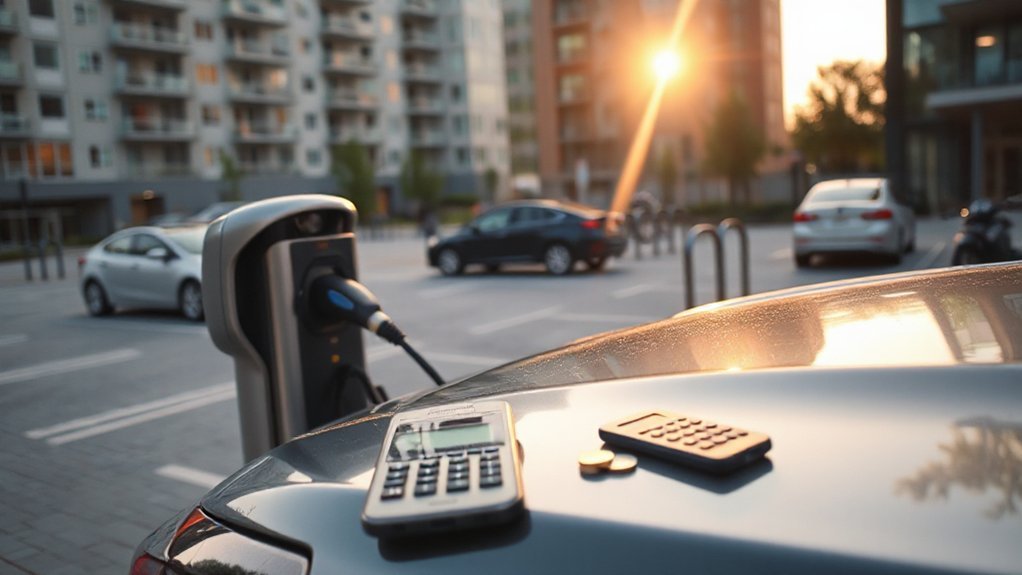
While rates vary by property, you can forecast your bill by breaking it into three parts: the energy price (cents per kWh), platform or session-based fees (including idle fees), and taxes or pass-throughs. Start with usage: estimate monthly kWh from your commute and typical efficiency. Multiply by posted kWh rates, noting billing tiers or time-of-use windows. Add per-session or subscription charges, then layer in sales tax and any utility surcharges.
Refine your cost modeling by comparing on-peak versus off-peak scenarios and Level 1/2 charging speeds. Ask whether demand-based pricing or minimums apply, and how fees appear in your resident ledger or a third-party app. To benchmark, compare your apartment’s effective cents/kWh to local public networks and your utility’s home rate. Adjust for seasonal changes.
Policies for Guests, Shared Use, and Parking Assignments

Because chargers are a scarce amenity, you need clear rules for guests, shared use, and stall assignments that balance access with turnover. You’ll charge smoothly when expectations, enforcement, and communication are explicit and visible to every driver.
Treat chargers as scarce: set clear rules, enforce them, and communicate visibly to keep charging smooth.
- Guest privileges: Set visiting hours, per-stay limits, and temporary app codes; require guests to move when full, while you remain responsible.
- Space allocation: Clarify assigned EV stalls versus a shared pool; ask about rotation rules, priority tiers (overnight workers, ADA), and overflow plans.
- Session management: Define max dwell times, idle fees after charge completion, and how the waitlist or booking app triggers notifications.
- Enforcement and signage: Expect painted stalls, charger labels, and routine checks; document tow procedures and backup options, including 120V outlets or nearby public chargers.
Lease Clauses to Protect Your Charging Access

House rules only stick when your lease backs them up. Secure explicit language granting you a dedicated charging spot, 24/7 access, and defined uptime standards. Tie parking fees to service levels, with credits for outages beyond a set window. Add a charging easement so access survives management changes or re-striping. Require notice before policy changes and the right to install or upgrade at landlord-approved specs. Clarify assignment rights and remedies if chargers move or rates spike. Spell out fair-use limits, guest charging rules, and ADA accommodations. Stipulate dispute resolution and attorney’s fees so enforcement doesn’t stall or get expensive. Include renewal rate caps.
| Clause | Why it matters |
|---|---|
| Service-level credits | Offsets downtime and incentivizes maintenance |
| Assignment rights | Transfers charging benefits during sublets or internal moves |
Strategies When a Building Lacks On-Site Charging

How do you run an EV when your building has no plugs? You create a flexible charging plan that prioritizes convenience, cost, and uptime. Start by mapping options along your routes, then negotiate access with management while you advocate for future installs.
- Bookmark reliable public fast chargers near groceries or gyms and top up while you shop, cutting dead time.
- Secure workplace charging; synchronize shifts with charging windows, and expense electricity when policy allows.
- Build a resident coalition for a Co op Purchase of Level 2 units, sharing installation and maintenance.
- Tap Community Grants, utility rebates, and municipal pilots to offset panel upgrades and add metered outlets.
Track costs, kWh, and wait times weekly. Adjust your mix to minimize detours and maximize battery health.
Tips for Urban vs. Suburban and New Builds vs. Retrofits
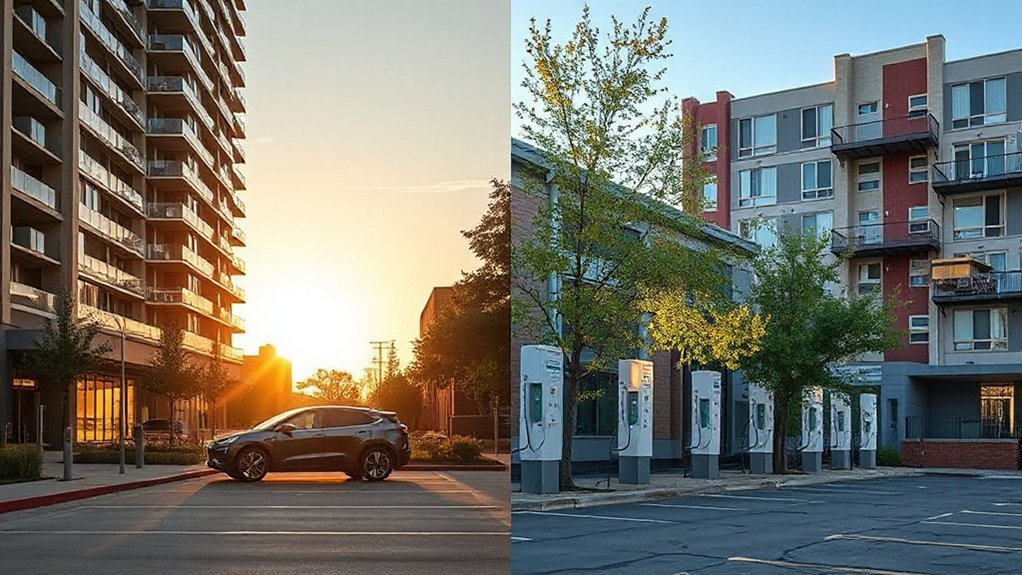
You’ll approach urban and suburban charging differently: in dense areas, prioritize buildings with shared garages and nearby fast chargers; in suburbs, look for assigned parking with dedicated Level 2 ports. For new builds, confirm conduit-ready infrastructure, load management, and scalable capacity; for retrofits, verify panel capacity, utility incentives, and phased installation plans. We’ll align these factors with your budget and timeline so you secure reliable, cost-efficient charging.
Urban Vs Suburban Access
Where you lease dictates your EV charging options—and your strategy. In dense urban cores, you’ll weigh garage ports, curbside networks, and shared chargers against higher demand. In suburbs, you’ll target on-site overnight charging and plentiful parking, aligned to longer commute patterns and greater space. Factor walkability differences: urban living may offset limited home charging with abundant public ports near errands; suburban life rewards plug-in-at-home convenience. Match amenities to your charging.
- Picture a basement garage: numbered stalls, key-fob access, and a Level 2 plug glowing green.
- See a tree-lined lot with roomy spaces and reserved EV bays near your building.
- Imagine a streetscape dotted with curbside chargers beside coffee, gyms, and transit.
- Visualize a weekly routine: top-up near work, full charge at home Sunday night.
New Builds Versus Retrofits
Whether you’re eyeing a downtown tower or a suburban mid-rise, the EV-charging story hinges on new-build readiness versus retrofit reality. In cities, projects pre-wire garages, scale power, and bundle stations as amenities. Suburban retrofits often succeed where parking is plentiful, but panel limits and trenching stretch timelines. Ask about Permitting Differences, load studies, and utility upgrade queues. Leverage Developer Incentives, green-building credits, and make-ready programs to lower costs. For retrofits, confirm conduit paths, dedicated EV meters, and software that fairly bills residents. For new builds, request future-proofing: extra capacity, EV-ready spaces, and flexible network options. Clarify who maintains hardware, uptime guarantees, and what happens when demand doubles. Plan for redundancy.
| Aspect | New | Retrofit |
|---|---|---|
| Cost | Lower | Variable |
| Speed | Predictable | Permitting-driven |
| Fit | Dense urban | Suburban lots |
Conclusion
You’ve now got a proven playbook to spot EV-ready apartments, cut through vague listings, and secure reliable charging. If it feels like extra work, remember: a few focused calls today can save hours of weekly detours and hundreds in charging costs. Use filters, verify on maps, press managers for uptime and terms, and lock protections into your lease. You’ll protect your time, your battery, and your budget—and drive home knowing your charger spot is waiting.