
Most EV charging franchisors can’t prove 98% uptime across roaming partners, and that gap will define your unit economics. You’ll need to vet networks for OCPP/ISO 15118 support, audited uptime, and NOC coverage; model fees, royalties, and TCO; secure sites with traffic data, permits, and utility make‑ready; and stack rebates, grants, and debt. Then negotiate SLAs, spare‑parts, and training. Miss one step, and your payback slips—so what actually works?
Key Takeaways
- Vet franchisors with 12‑month uptime >97%, session growth, OCPP/roaming/payment reliability, and software features like diagnostics, dynamic pricing, and load management.
- Model total cost: franchise fee $20k–$75k, 4%–8% royalties, insurance, lifecycle per‑kWh, stress-test margins at 90–98% uptime, target 24–36 month breakeven.
- Select grid‑ready locations: high‑traffic corridors, 45–90 minute anchors, within 250 feet three‑phase, aim >8 stalls/acre, make‑ready under $30k per port.
- Plan permits and utility upgrades: load study, transformer sizing, conduit routing, secure zoning/ADA/fire approvals, negotiate cost share and locked service date.
- Require robust operations: OCPP, ISO 15118, 98–99.5% SLAs, redundant power/networking, real‑time diagnostics, predictive maintenance, stocked spares, MTTR under four hours.
Evaluating EV Charging Franchise Models

How do you separate a promising EV charging franchise from a costly experiment? Start by interrogating evidence. Demand uptime data (rolling 12-month >97%), session growth, and utilization by power class. Validate grid-readiness and OCPP interoperability, roaming partnerships, and payment reliability. Assess software: real-time diagnostics, dynamic pricing, and load management that cuts demand spikes. Confirm Brand Alignment with your market: fleet, retail, or hospitality. Probe Competitive Differentiation: proprietary site selection models, exclusive host relationships, and driver acquisition channels. Review training, safety certifications, and permitting playbooks that compress launch timelines. Examine expansion roadmap, API openness, and analytics that surface location gaps. Finally, call franchisees; verify support response times, marketing lift, and NPS. Evidence beats pitch decks. Prioritize measurable traction, not promises, to mitigate execution risk early.
Fees, Royalties, and Total Cost of Ownership

Evidence is only half the picture; the other half is the bill. You’ll benchmark upfront fees, ongoing royalties, marketing levies, software subscriptions, maintenance, and Insurance Premiums. Use Lifecycle Costing to convert all cash flows into a per-kWh burden and a payback horizon.
| Cost Driver | Typical Range | Notes |
|---|---|---|
| Franchise fee | $20k–$75k | One-time; negotiate inclusions |
| Royalty | 4%–8% of gross | Check floor/minimums |
| Insurance | $2k–$8k/year | Liability and cyber |

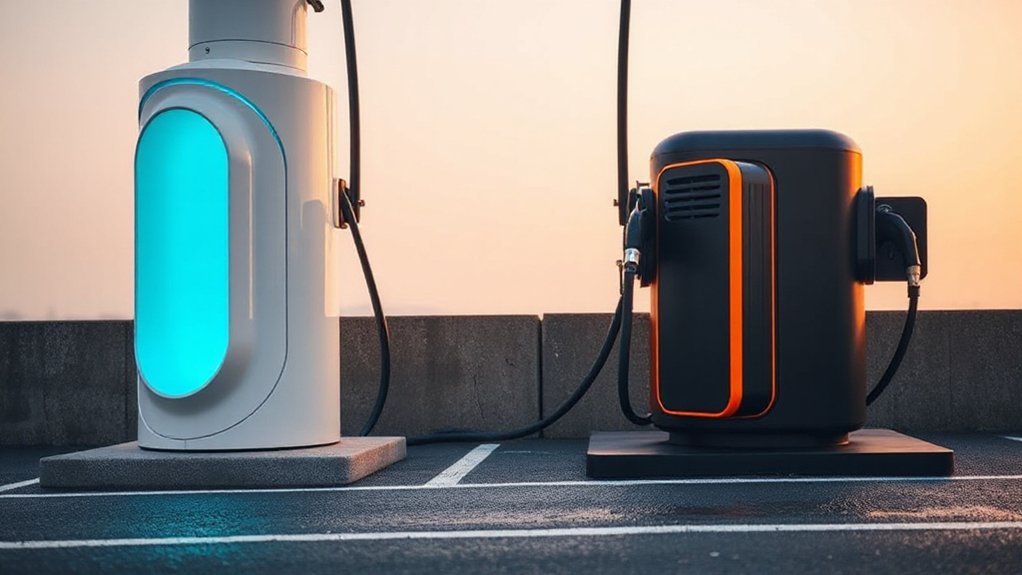

Model replacements, charger warranties, and electricity price pass-throughs. Audit royalty definitions: gross sales vs. net billing, exclusions for grants, and minimum guarantees. Stress-test margins under 90%, 95%, 98% uptime. Compare TCO to EBITDA targets; require breakeven within 24–36 months. Get clarity on termination, transfer, and equipment refresh obligations. Quantify financing costs and tax credits to sharpen real cash yield assumptions.
Location Strategy, Permits, and Utility Upgrades
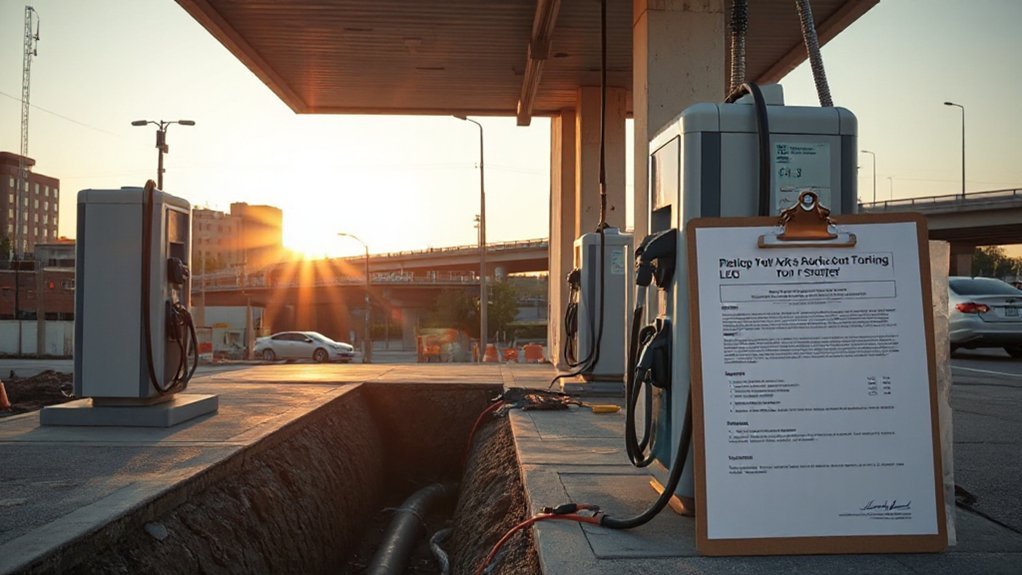
While brand matters, your unit economics hinge on siting where demand, dwell, and power converge. Prioritize corridors with 30k+ traffic, anchors with 45–90 minute dwell, and parcels within 250 feet of three‑phase service to minimize total make‑ready costs. Validate zoning compliance early; secure conditional use, fire marshal sign‑off, and ADA access before you sign an LOI. Design a frictionless parking layout with pull‑through, turning radii, and clearly marked EV‑only stalls.
- Permitting timeline: pre-application meeting (week 0), plan review (weeks 2–6), building/electrical permits (weeks 6–10); plan for hearings.
- Utility upgrades: load study, transformer sizing, conduit routing; negotiate cost share, queue position, lock service date in writing.
- Site economics: target >8 stalls/acre, >70% capture from co‑tenants’ traffic, and make‑ready under $30k per port to preserve payback.
Hardware, Software, and Network Uptime
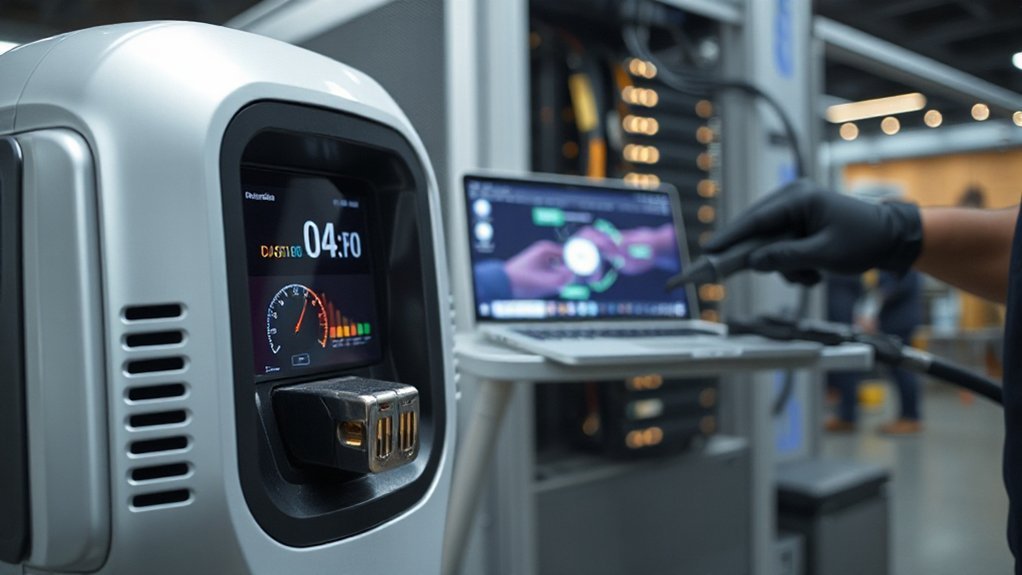
With utility capacity and permits in hand, performance now hinges on selecting interoperable hardware, a resilient software stack, and a backhaul that keeps ports online.
You’ll specify OCPP-compliant chargers, ISO 15118-ready for plug-and-charge, and metering accuracy (ANSI C12.20/Class 0.5). Target 98–99.5% uptime SLAs and instrument every port with telemetry and alerts. Build redundant architecture: dual power supplies, hot-swappable modules, and failover networking—fiber or cable primary, LTE/5G dual-SIM secondary with VPN. Choose a platform offering real-time diagnostics, remote reboot/firmware, and rules-based load management. Use predictive maintenance models on error codes, temperature, and contactor cycles to schedule service before failure, reducing truck rolls 20–40%. Secure with TLS, signed firmware, role-based access. Stock critical spares and define mean time to repair under 4 hours for high-traffic sites.
Financing, Incentives, Training, and Ongoing Support

Because capital outlay and operating discipline make or break margins, you should structure financing, incentives, workforce training, and support as a single, integrated plan. Start by stacking low-cost debt with utility rebates and tax credits; model payback under conservative kWh throughput and tariff scenarios. Build a Grant Navigation workflow to capture NEVI, state, and municipal funds on a rolling calendar. Negotiate franchise terms that earmark co-op marketing, 24/7 NOC, and spare-parts SLAs. Require Staff Certification for installers and site hosts, tied to uptime KPIs and safety audit scores.
Stack low-cost debt, capture grants, and mandate certifications—an integrated plan that protects margins, uptime, and safety.
- Cash flow: align loan amortization with seasonality, demand charges, and warranty cliffs.
- Incentives: pre-qualify sites, document load studies, and maintain compliance evidence.
- Support: codify incident response, RMA timelines, and refresher training cadences.
Measure results and iterate.
Conclusion
You’re not just buying chargers—you’re building a profit engine. Vet franchisors for 98%+ uptime, OCPP/ISO 15118 readiness, and roaming reach like your ROI depends on it—because it does. Model fees, royalties, and TCO to the penny. Lock permits, utility make‑ready, and site traffic that screams utilization. Stack rebates, grants, and debt to weaponize capital. Negotiate SLAs, spares, training, and NOC integration. Launch with load studies, certified installs, and ruthless monitoring—and watch kilowatts turn into cash.