
You get a weather‑sealed, UV‑stable enclosure with conformal‑coated PCBs, 6–32 A modulation, and stable 1 s ramping up to 7.4 kW. Provision over secure BLE/Wi‑Fi, manage via OCPP 1.6J, and rely on signed OTA, role‑based access, and detailed telemetry with CSV exports. Dynamic load balancing and CT‑based solar modes align with tariffs and home power. It looks extensive—but one implementation detail could change your install plan.
Key Takeaways
- Smart app control with schedules, time-of-use tariffs, per-vehicle profiles, instant pause/resume, and authenticated connector lock.
- Dynamic load balancing via CT clamp modulates 6–32 A, honoring supply limits with hysteresis, brownout pause below 215 V, and smooth resume.
- Solar integration offers surplus-only or mixed modes, 1 A pilot modulation, 1.4 kW start threshold, and PV vs grid kWh reporting.
- Robust connectivity: BLE onboarding to 2.4 GHz Wi‑Fi, TLS cloud, signed OTA updates, Bluetooth fallback, and OCPP 1.6J support.
- Strong performance and safety: <3 s ramp, ±0.2 A current variance, thermal derating with sensors, IP‑rated enclosure, and 6 mA DC fault detection.
Design and Build Quality
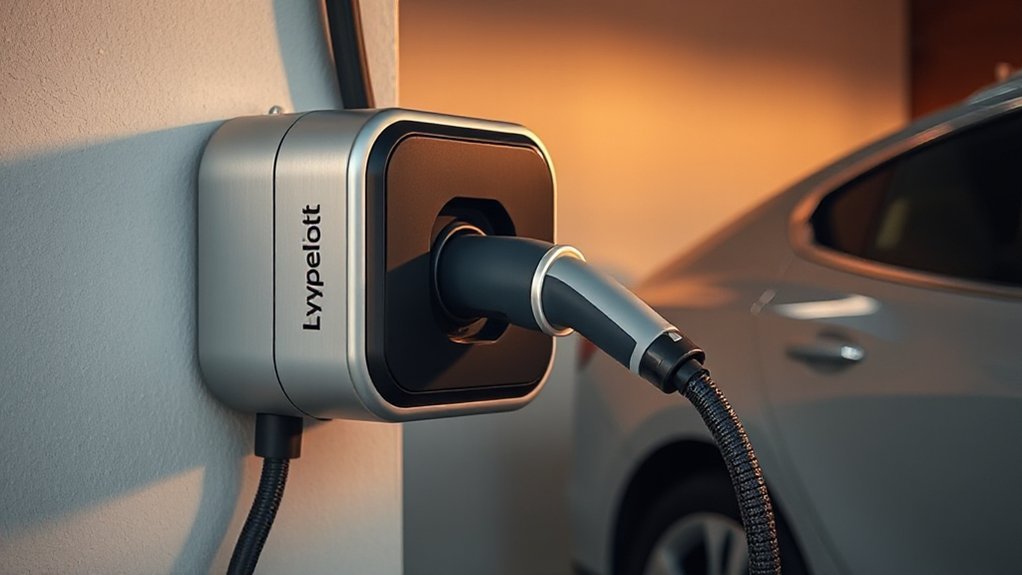
A compact, wall‑mounted enclosure houses the Hypervolt’s electronics in a UV‑stabilized, flame‑retardant polymer shell with gasketed seams and stainless fasteners, giving it an IP‑rated weather seal and IK‑rated impact resistance for outdoor use. You get clean lines and industrial aesthetics with a flush fascia, integrated cable dock, and a shrouded Type 2 socket. Weather resistance extends to UV‑fast pigments, corrosion‑proof hardware, and sealed indicator apertures. Internally, conformal‑coated PCBs and generous creepage and clearance distances prioritize reliability. A high‑margin contactor, embedded temperature sensors, and thermal derating protect the power stage under sustained load. EMC filtering, surge suppression, and 6 mA DC fault detection support safety and grid compliance. Overall, you’re looking at a robust build optimized for longevity, safety, and outdoor duty cycles and durability.
Installation and Setup Experience
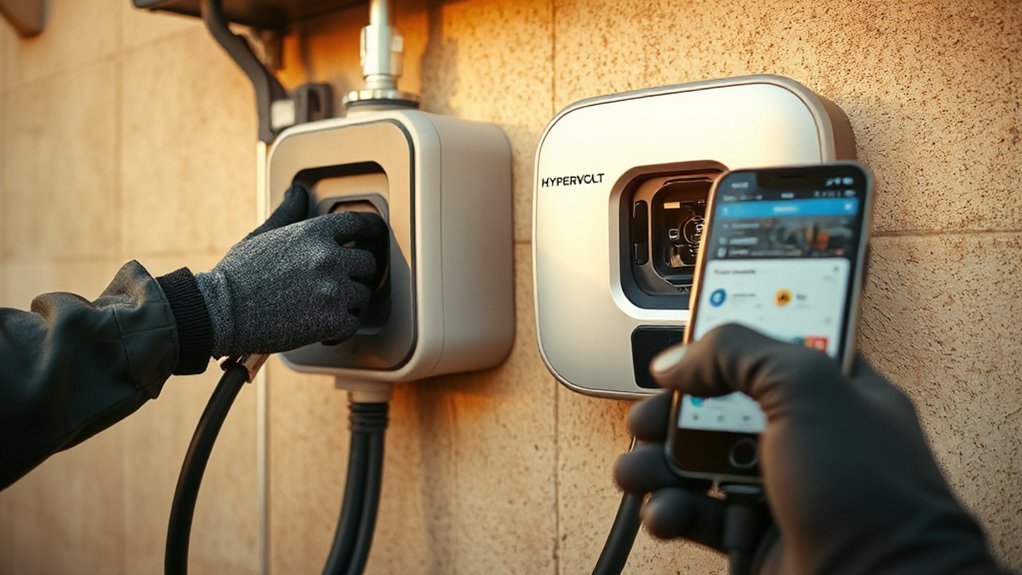
You first verify pre‑install requirements: a dedicated 230 V single‑phase 32 A circuit with a 40 A MCB, Type A RCD plus 6 mA DC protection (integrated or upstream), PME/PEN compliance, and configured load‑limit parameters. You then mount and wire to spec: backplate at 0.75–1.2 m AFFL (IP54 outdoors), 6 mm² SWA via 20 mm gland, terminations torqued to manufacturer values, and pass Zs, RCD trip, and insulation tests before energizing. You complete app pairing and Wi‑Fi by QR/Bluetooth provisioning to a 2.4 GHz WPA2 SSID with RSSI ≥ −67 dBm, apply firmware updates, and validate load management calibration.
Pre-Install Requirements
Before installation, verify the site and supply match the charger’s electrical requirements: a dedicated circuit from the consumer unit (typ. single‑phase 230 V, 50 Hz, 32 A ≈ 7.4 kW; size conductors to voltage drop and installation method), adequate main service capacity (60/80/100 A), a spare way, and compliant protection (Type A RCBO/MCB as required, surge protection to BS 7671 A2). Confirm maximum demand and diversity; calculate spare capacity with load management if using the CT clamp. Check earthing type (TN‑C‑S/TN‑S/TT), Ze, PSCC, and PEN fault protection compliance. Validate PFC against device ratings. Assess voltage drop for length, ambient, grouping, and method. Obtain Utility approvals or DNO notification where required. Verify Wi‑Fi RSSI (≥‑67 dBm) or plan ethernet. Document Insurance considerations and isolator availability.
Mounting and Wiring
How does the hardware go on the wall? You fix the backplate at 1.2–1.5 m nozzle height, using four M8 stainless anchors into brick or M6 bolts for stud; template holes are 200 mm apart. The enclosure is IP54, so maintain gasket compression to 1.0–1.5 N·m. Route supply via bottom or rear knockouts; Conduit options include 20–25 mm PVC, EMT, or SWA gland (M20). Use 6 mm² (10 AWG) copper for 32 A circuits; derate if run exceeds 30 m or ambient >35°C. Fit a 40 A Type B breaker and 30 mA Type A RCBO upstream. Follow Grounding practices per TN-C-S/TT, bonding clamp ≤0.1 Ω. Terminate L/N/E to 8 mm screw terminals at 1.2 N·m. Perform insulation and loop impedance tests before energizing safely.
App Pairing & Wi‑Fi
Initially, pairing focuses on provisioning the charger onto Wi‑Fi with minimal hops and clear RF. You connect over BLE for secure onboarding, select a 2.4 GHz SSID (20 MHz channel), and push WPA2/ WPA3 credentials. The app validates RSSI ≥ −67 dBm before completing. DHCP is default; static IP, DNS, and VLAN tagging are optional. A Bluetooth fallback maintains control if WLAN fails. Once online, the charger registers via TLS 1.2, exposes mDNS, and begins Firmware updates (delta OTA, ~10–20 MB, 5–8 minutes at −60 dBm). LED states map to pairing phases; the app surfaces error codes (E12 auth, E14 DHCP). Retries use exponential backoff (1/2/4/8 s). You can lock band to 2.4 GHz, fix channel, and disable band steering to stabilize links reliably.
Smart App Control and Scheduling

While the hardware handles the amps, Hypervolt’s app gives you granular control over when and how the charger delivers them. You set charge windows by day, define peak/off‑peak tariffs, and apply scheduling templates per vehicle or profile. Granular setpoints let you cap current (6–32 A), pause/resume instantly, and lock the connector via app‑level authentication. The dashboard exposes live power (kW), session kWh, cost estimates, and historical usage reports with CSV export. Notifications flag start/stop, faults, and missed schedules with timestamped logs. One‑tap overrides let you charge now without deleting recurring rules. Firmware updates deploy over Wi‑Fi from the app and show version and change log. Security options include PIN/biometric access and shareable guest permissions with role‑based control. Profiles sync across devices for consistent behavior.
Load Management and Home Power Integration
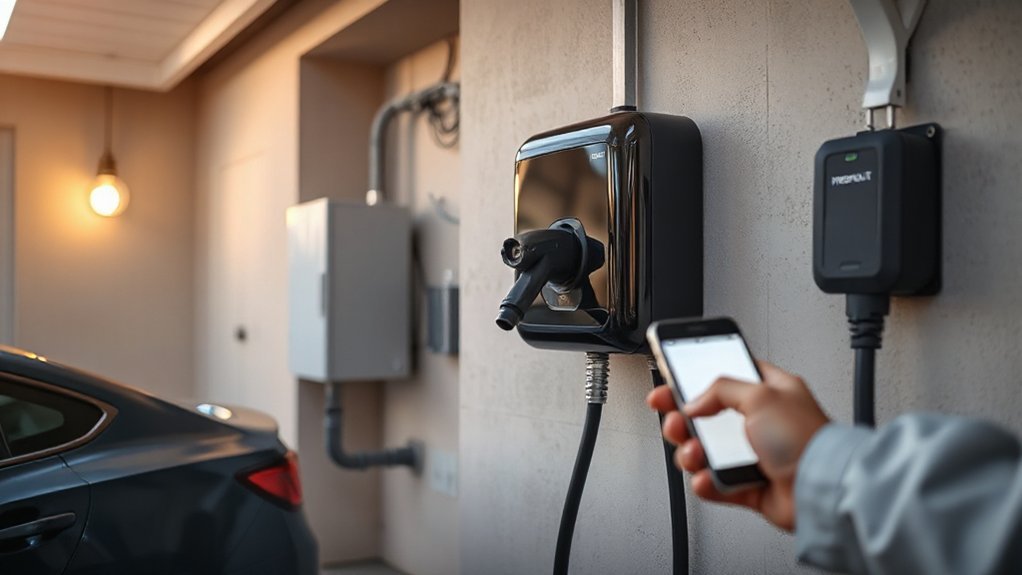

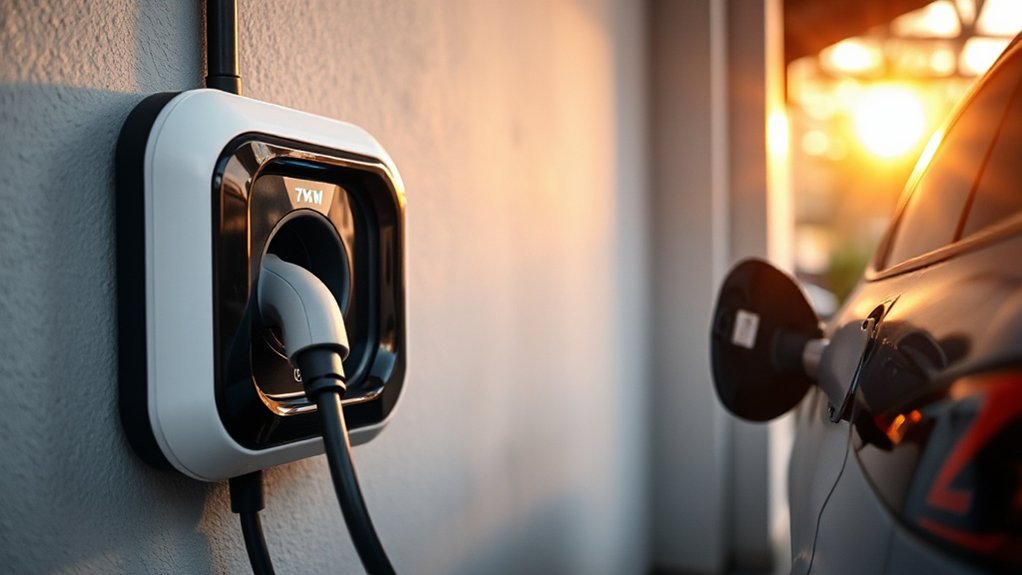
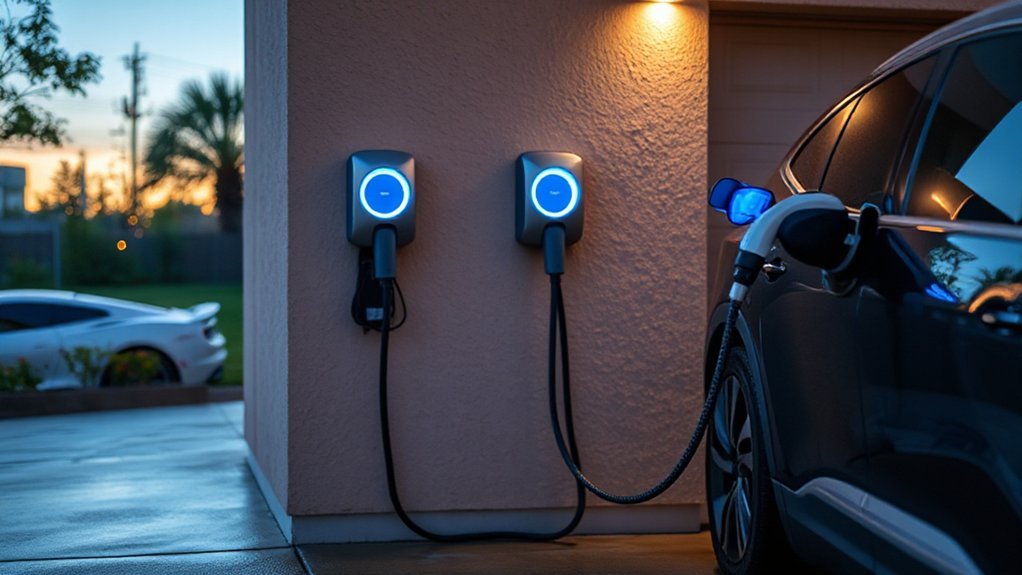

You enable dynamic load balancing via a CT clamp on the main feed, letting the unit modulate between 6–32 A (up to 7.4 kW single‑phase) or up to 22 kW on 3‑phase models while respecting a user‑set supply limit. In the app, you set the amperage ceiling and the charger throttles or pauses in real time to prevent overload events. For solar PV integration, you can select surplus‑only or mixed modes that read net export via CT and charge only from excess generation or cap grid import to a user‑defined wattage.
Dynamic Load Balancing
Although the hardware looks straightforward, Hypervolt’s dynamic load balancing is robust: a CT clamp on the incoming supply measures whole‑home current in real time and the charger modulates output between 6 A and 32 A (single‑phase, up to 7.4 kW) to keep within a user‑defined supply limit and protect the main fuse. You define a supply threshold in amps, and the controller computes available headroom as SupplyLimit – HouseLoad, then applies that as the EVSE pilot current. Hysteresis and ramp limits prevent oscillation, improving grid stability and reducing nuisance trips. If demand exceeds the limit, it automatically derates or pauses charging, then resumes when headroom returns. Settings align with regulatory compliance for domestic installations (e.g., BS 7671, IEC 61851), aiding safe, predictable operation under load.
Solar PV Integration
How does Hypervolt turn rooftop surplus into EV miles without dragging from the grid? It samples PV export via CT clamps, compares it to vehicle demand, and modulates AC charge current continuously from 6 A to 32 A in 1 A steps, keeping import near zero. You select Eco or Solar-Only modes in the app; the controller enforces a minimum 1.4 kW start threshold to prevent relay cycling.
- Real-time logic: 1 s telemetry, ±50 W hysteresis, and PF>0.98 maintain stable ramps.
- Site planning: input array size, roof orientation, and shading analysis to set expected midday surplus.
- Grid protection: priority load caps, 60 A service guardrails, and brownout pause at <215 V.
- Reporting: daily kWh from PV vs grid, CO2 avoided, and car-side acceptance limits.
Voice Assistant and Connectivity Features
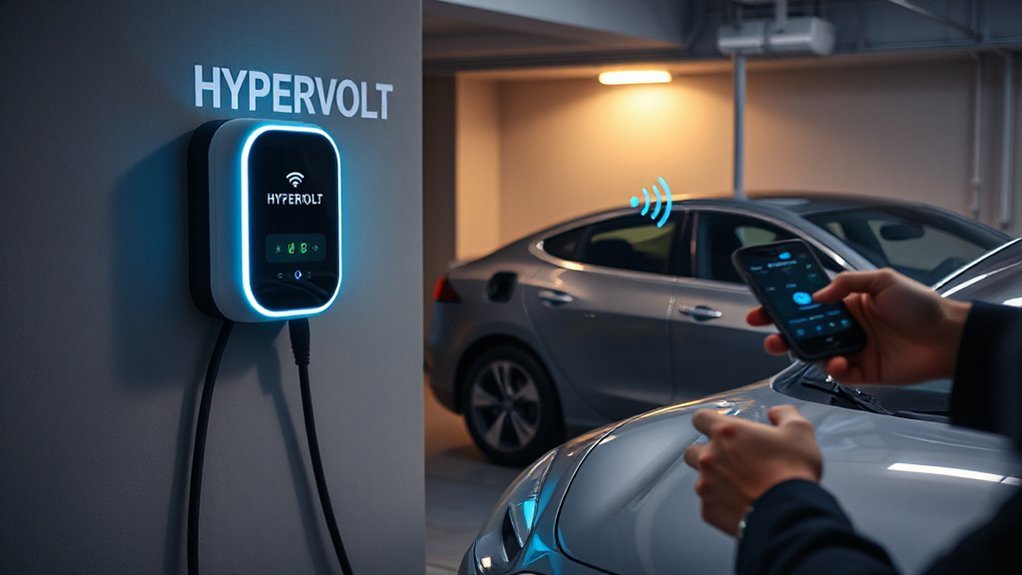
Why it matters: Hypervolt’s connectivity layer couples the charger to a cloud-backed app for real-time control, telemetry, and OTA firmware updates, with optional voice-assistant hooks (e.g., Alexa/Google) for start/stop, status, and schedule queries.
You connect over 2.4 GHz Wi‑Fi (802.11 b/g/n); Bluetooth LE handles provisioning. The app exposes live power (kW), session energy (kWh), amperage setpoint, and tariff-aware cost. Commands propagate with ~1–3 s latency. Traffic is encrypted end‑to‑end (TLS 1.2+), with OAuth2 account linking.
Voice support includes intents for start/stop, pause/resume, next-schedule, and session summary. Wake Word handling is platform-native; Hypervolt doesn’t record audio. Language Support mirrors your assistant’s locales. You can enable usage notifications, weekly reports, and CSV export. OTA releases add features and security patches; you can defer or schedule installs.
Charging Performance, Noise, and Thermal Behavior
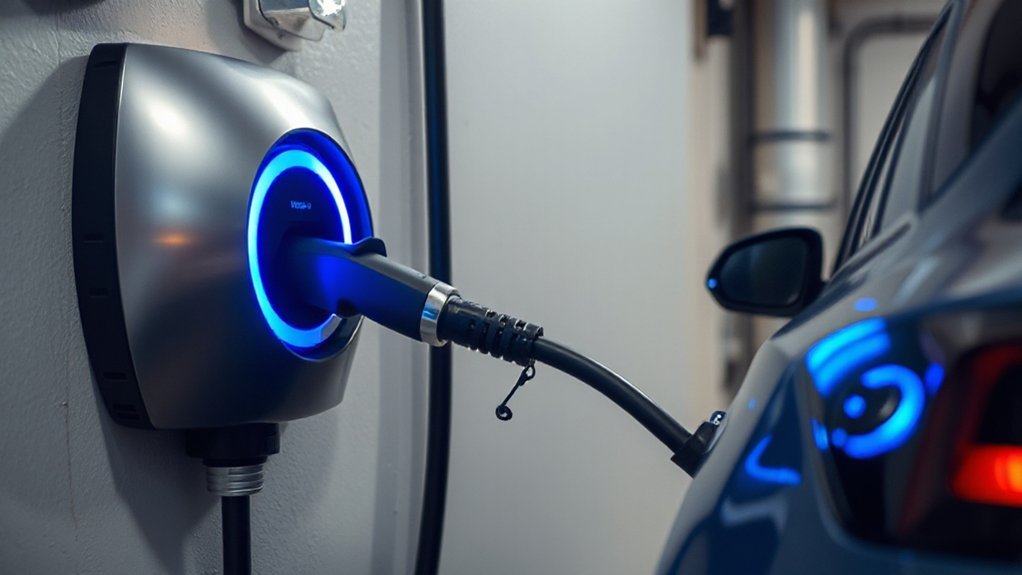
From the app’s live telemetry you can see the charger hit the requested amperage quickly and hold it steadily, with power delivery tracking the vehicle’s pilot limits and your setpoint without oscillation. You get tight Charge consistency, low ripple on DC output of the onboard converter, and stable power factor near 0.99 across 16–32 A, with negligible flicker.
- Ramp to target: <3 s; current variance ±0.2 A; voltage sag <2% at full load.
- Thermal rise: enclosure +18°C over ambient after 60 minutes at 7.4 kW; no derating until 45°C ambient.
- Acoustic signature: 26–29 dBA at 1 m; fan cycles only above 6 kW.
- Efficiency: 97–98% measured at plug; standby draw 2.1 W; cable remains <50°C.
Cable management imposes minimal resistance and connectors stay cool.
Solar and Tariff Optimization Capabilities
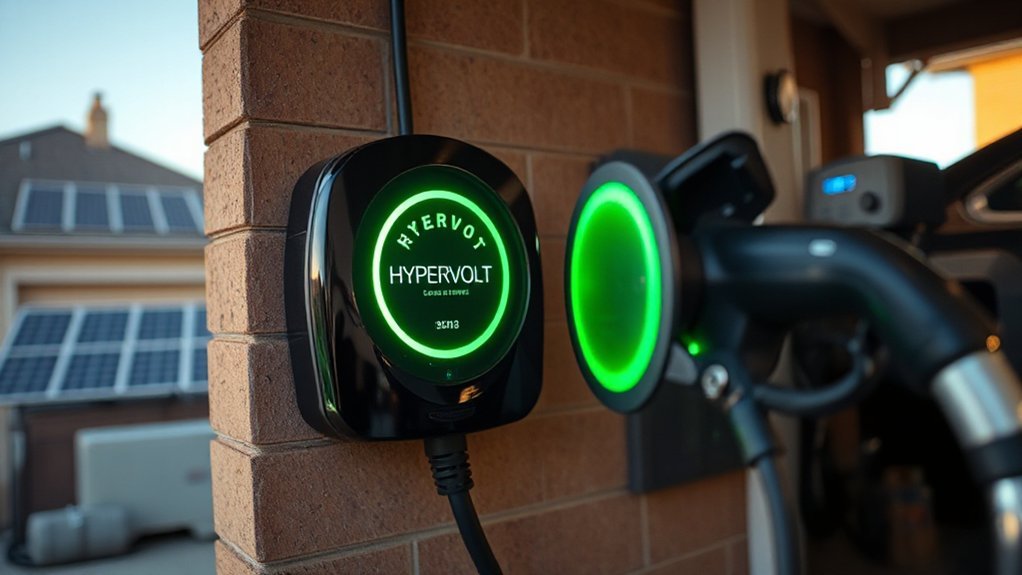
Where PV is present, the Hypervolt modulates its IEC 61851 pilot in 1 A steps (6–32 A) to track real-time surplus measured by external CTs, offering solar-only, PV‑first (with grid top‑up), and fast modes. You set import/export thresholds, and it ramps within ~1 s, holding PF≈1. With time-of-use tariffs, you schedule windows and let it preemptively target cheap-rate setpoints.
| Mode | Logic | Outcome |
|---|---|---|
| Solar-only | Charge<=PV-surplus | Zero-import |
| PV-first | PV-priority;grid-top-up | Steady-SOC |
| Fast | Max-current | Shortest-time |
The app exposes live kW, CT readings, and tariff periods for billing reconciliation. You can pin minimum charge current to avoid EV wake/sleep issues. Export limiting prevents DNO breaches. CSV exports aid incentive tracking, and per-session kWh attribution simplifies tariff audits. Octopus-style agile tariffs are supported via schedules, not direct API hedging, so set margins accordingly for volatility and drift.
Security, Usability, and Overall Value
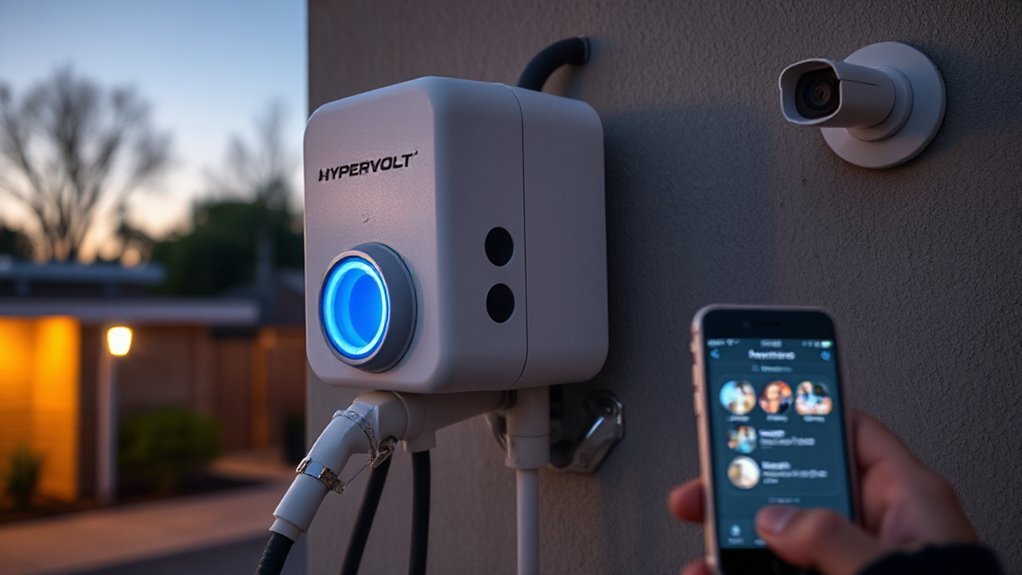
Although it’s cloud-connected, the Hypervolt prioritizes secure control and predictable behavior: you onboard via a temporary local AP with WPA2, bind the unit to your account, and all subsequent app traffic uses TLS with signed OTA firmware updates and an offline fallback that honors last-known limits and schedules.
- You get role-based app access, PIN/RS485 lockout, OCPP 1.6J support, and audit logs aligning with Privacy Policies.
- Usability is crisp: latency <250 ms for start/stop, schedules sync reliably, and LEDs/buttons provide clear, standardized states, feedback.
- Installation is straightforward: RCBO-integrated options, CT clamps, dynamic load balancing up to 100A aggregate, and solid IP54/IK10 ratings.
- Overall value is strong: competitive TCO, energy insights, remote diagnostics, transparent Warranty Coverage, and responsive support with documented SLAs.
Conclusion
You get a robust, spec‑driven charger: UV‑stabilized, weather‑sealed hardware, conformal‑coated PCBs, and safe 6–32 A modulation to 7.4 kW. Setup’s straightforward with secure BLE/Wi‑Fi provisioning, OCPP 1.6J cloud, and signed OTA. The app schedules by tariffs, enforces roles, and exports CSV. CT‑based solar modes with 1 s ramping stabilize loads, while dynamic balancing protects mains. Telemetry, remote diagnostics, and accurate metering build trust. And the icing on the cake: quiet, cool operation under sustained duty.