
Here’s the twist: the fastest home charge for your IONIQ or Kona isn’t just about amperage—it’s about code. You’ll size a 240‑V dedicated circuit at 125% continuous load per NEC 625, match the EVSE to your onboard charger, and use proper copper conductors and grounding. Expect $800–$2,500 installed, plus permits and inspection. Want the right breaker, wire gauge, and rebate strategy that actually pass?
Key Takeaways
- Match charger to Hyundai onboard limits: IONIQ 5/6 48A on 60A circuit; Kona 2019–23 32A on 40A; Kona 2024+ ~45A on 60A.
- NEC 625 requires a dedicated 240‑V branch circuit sized at 125% continuous load, integral GFCI, proper grounding/bonding, and permitted, inspected installation.
- Typical costs: EVSE $500–$900 for 40A, $900–$1,700 for 48A; installation $500–$2,500+, higher with long runs, trenching, or panel/service upgrades.
- Expected Level 2 speeds: IONIQ 5/6 about 30–34 miles per hour; early Kona 21–24 mph, with weather and battery temperature affecting rates.
- Choose UL‑listed, NEMA 3R/4, adjustable‑amp EVSE; prefer hardwired on high‑amp circuits; include app scheduling, load sharing, and cable management.
How Level 2 Charging Works for Hyundai EVs
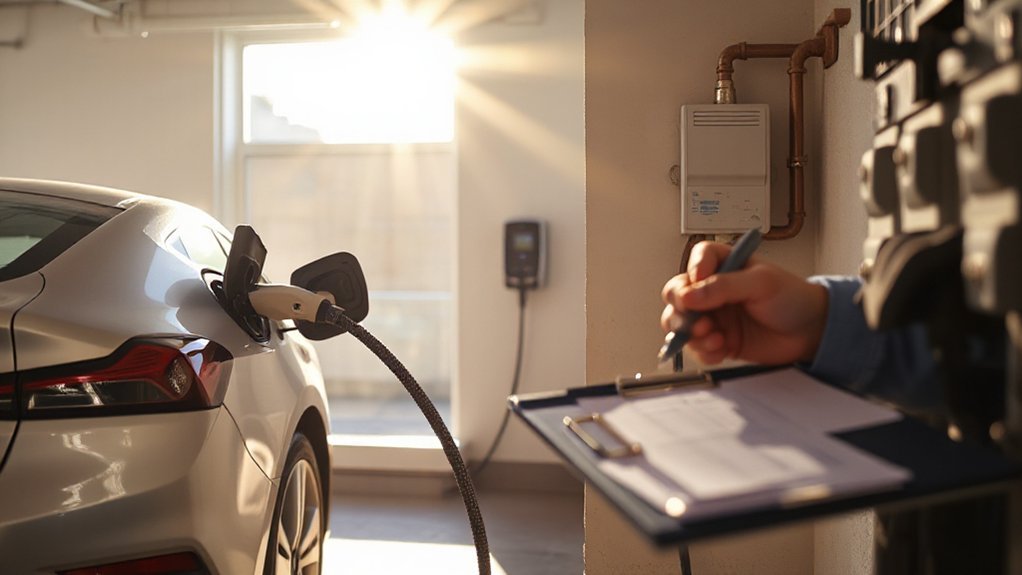
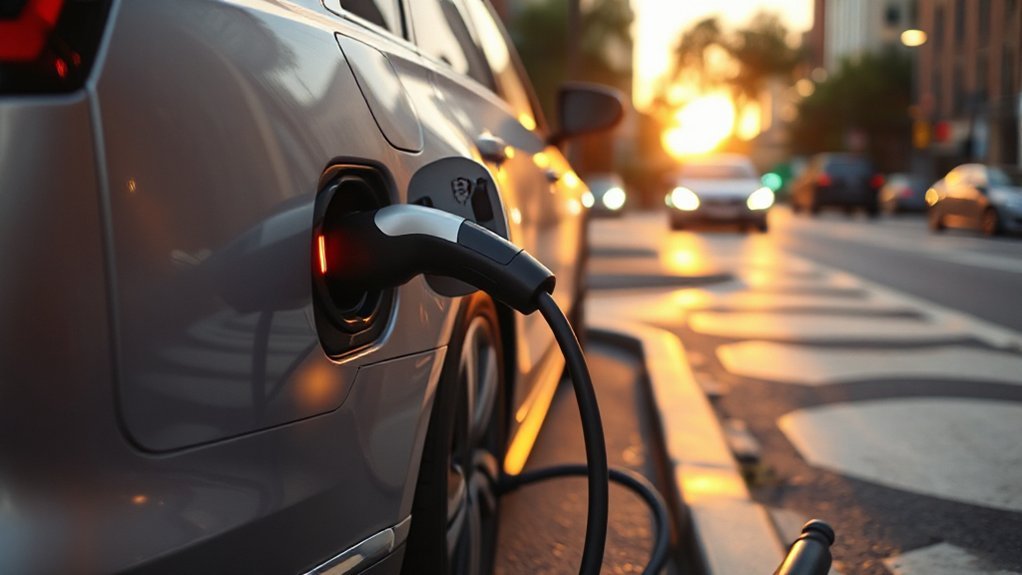
Delivering 240‑volt AC through an SAE J1772 coupler, a Level 2 EVSE communicates with your Hyundai via the control pilot to set a safe current before charging begins. After the charging handshake, the EVSE verifies equipment grounding, proximity detection, and GFCI readiness, then energizes the line. Your onboard charger rectifies AC to DC, while the BMS manages cell balancing, thermal limits, and battery conditioning. You monitor status via pilot states; if faults occur, the EVSE opens the contactor. Install to NEC 625 with a dedicated circuit, properly sized conductors, and a listed device. Use a 14‑50 receptacle or hardwire per manufacturer instructions. Confirm ventilation requirements, torque terminations, and label disconnects. Avoid extension cords. Periodically test GFCI and update firmware. Verify breaker sizing and clearances.
Charging Speeds for IONIQ 5/6 and Kona Electric

Because charge rate is capped by the lowest-rated component, match your EVSE to each Hyundai’s onboard charger and the branch circuit. IONIQ 5 and IONIQ 6 use ≈10.9 kW onboard chargers (maximum 48 A at 240 V). To supply a continuous 48 A, install a 60 A, 2‑pole breaker and appropriately sized conductors per NEC 625/210. Kona Electric: 2019–2023 models accept ≈7.2 kW (32 A); use a 40 A circuit. The 2024+ Kona supports ≈10.8 kW (≈45 A); a 60 A circuit enables full rate. Expect AC adds of about 3 mi/kWh. That’s 30–34 mi/hour for IONIQ 5/6 and 21–24 mi/hour for early Kona, weather dependent. Battery chemistry and thermal management can throttle current; hot or cold packs will limit amperage until temperatures normalize.
Choosing a Compatible Level 2 Charger and Features

Which Level 2 EVSE fits your Hyundai? Choose a J1772 unit matched to your onboard charger: IONIQ 5/6 and Kona support up to 10.9 kW. A 48A EVSE (requires a 60A circuit) maximizes AC speed; a 40A unit (needs 50A) runs cooler and fits more panels. Confirm UL listing, integral GFCI, and a NEMA 3R/4 enclosure for outdoor installs. Prefer hardwired units where code or continuous-load sizing warrants, and verify copper conductors and proper grounding per NEC 625.
Prioritize app integration for scheduled charging, load sharing, and utility rate alignment. Check OCPP or Wi‑Fi reliability. Evaluate cable management: 18–25 ft, flexible in cold, with a holster and strain relief. Look for adjustable amperage, pilot fault detection, temperature derating, and strong support and warranty coverage.
Full Cost Breakdown: Equipment, Labor, and Materials
You’ll map equipment cost ranges for a Hyundai-compatible Level 2 charger (amp rating, hardwired vs. plug-in, integrated load management) and required protective devices. You’ll quantify labor by a licensed electrician based on circuit length, panel capacity, permit and inspection scope, and NEC 625/210/250 compliance with local amendments. You’ll itemize materials—copper conductors, conduit and fittings, GFCI or dual-function breaker, and mounting hardware—using listed components installed per manufacturer specs for safety.
Equipment Cost Ranges
Most Hyundai drivers can expect Level 2 EVSE equipment to run $300–$1,700, depending on amperage, features, and form factor. Market trends and Retail markup drive variance across brands. Expect $300–$500 for basic 16–32A units, $500–$900 for 40A smart models, and $900–$1,700 for 48–80A, UL-listed, NEMA 4, Wi‑Fi enabled chargers with longer cables. Prioritize UL 2594/UL 2231 listing, integral 20–30 mA GFCI, and a NEMA 4 or 3R enclosure for outdoor safety. Smart features (Wi‑Fi, OCPP, load sharing), cable length (18–25 ft), connector holsters, displays, and 3–5 year warranties add cost. Choose a plug-in (NEMA 14‑50/6‑50) or hardwired model matching your breaker rating and Hyundai’s onboard charger. Avoid unlabeled imports; documented ratings and firmware support reduce risk. Prefer ENERGY STAR for efficiency and reliability.
Labor and Materials
While equipment sets the baseline, labor and materials drive the spread of a code-compliant Level 2 install. You’re paying for load calculations (NEC 220), permitting, panel work, and safe routing. Labor covers site assessment, dedicated 240‑V circuit installation, conductor pulls, EMT bends, mounting, labeling, and inspection coordination. Materials typically include a 2‑pole breaker (40–60 A), copper THHN/THWN‑2 or NM‑B, EMT and fittings, weatherproof boxes, supports, and a lockable disconnect where required by NEC 625. Distance, walls, trenching, and service upgrades move costs most.
Pro electricians leverage Supplier relationships to secure listed components, reduce lead times, and control pricing. They document torque values, breaker settings, and as‑builts for Warranty management. Expect lockout/tagout, arc‑rated PPE, GFCI/AFCI compliance, and clear labeling for long-term safety and code durability.
Electrical Panel, Circuit, and Wiring Requirements
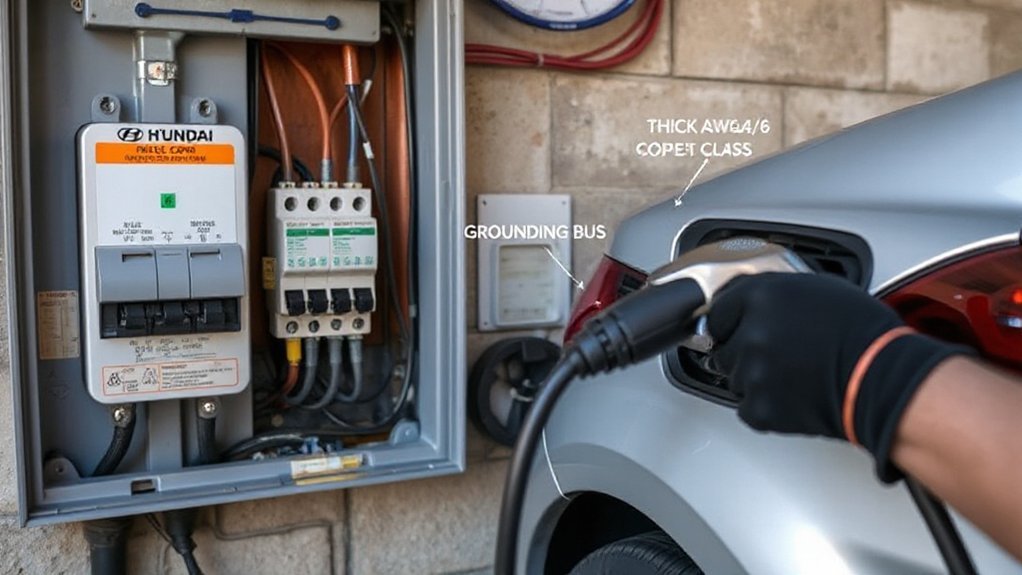
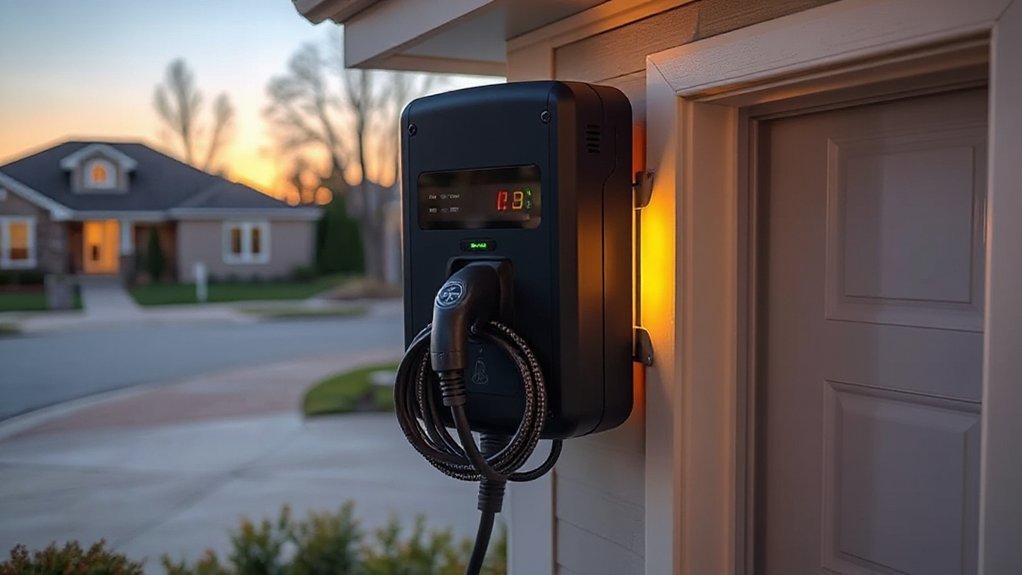
Start with a code check: NEC 625 requires a dedicated 240‑V branch circuit for the EVSE, sized at 125% of the continuous load (e.g., a 40‑A charger needs a 50‑A breaker). Assess panel capacity: confirm ampacity headroom and spaces for a 2‑pole breaker without compromising panel aesthetics or bus rating. Use 75°C‑rated terminations and conductors sized per 310.16; account for temperature, conduit fill, and voltage drop on long runs. Choose conductor metallurgy intentionally: copper for tighter bends and smaller gauges; aluminum only where lugs are listed and upsizing handles resistance. Hardwire where possible; if you use a receptacle, match NEMA configuration and GFCI requirements. Provide an equipment grounding conductor, no neutral for typical EVSE, and protect cable with appropriate conduit and proper strain relief.
Permits, Inspections, and Code Compliance
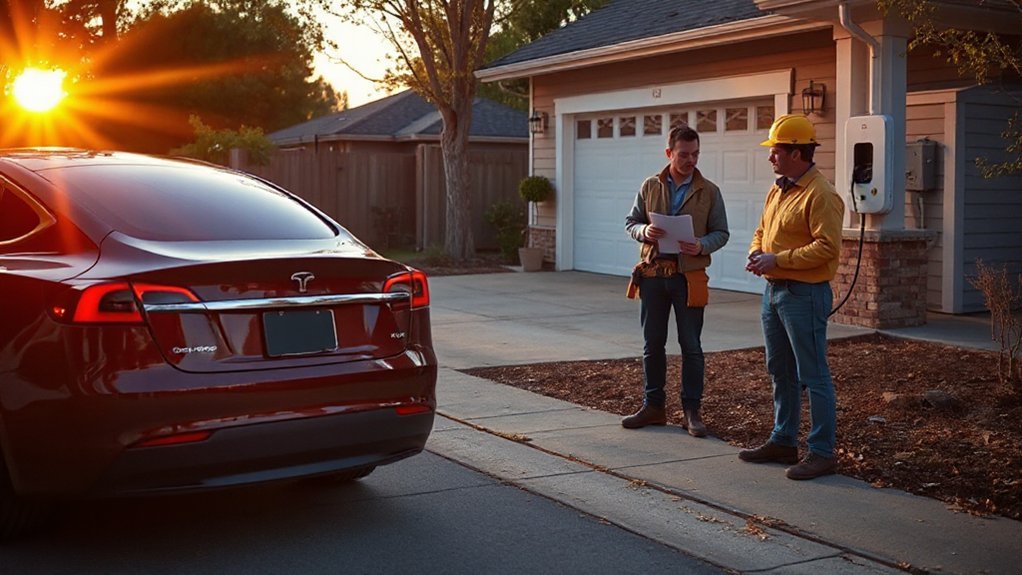
Before you pull wire, confirm permit and inspection requirements with your Authority Having Jurisdiction (AHJ). Most jurisdictions require an electrical permit for a 240‑V EVSE, load calculations (NEC 220), a dedicated OCPD (NEC 625.40), proper conductor sizing (NEC 310), GFCI protection where required, and labeling. Verify mounting clearances, working space (NEC 110.26), and disconnect requirements. If trenching, follow burial depths and conduit ratings (NEC 300). Check zoning restrictions for exterior equipment, pedestal locations, and driveway setbacks.
Schedule rough and final inspections; keep the permit on site and as‑built documents ready. Use listed equipment, torque to manufacturer specs, and bond/ground per NEC 250. Photograph concealed work. Maintain arc‑fault and surge requirements where applicable. Confirm utility notification rules and insurance impacts for unpermitted installations and penalties.
Installation Options: DIY vs. Licensed Electrician
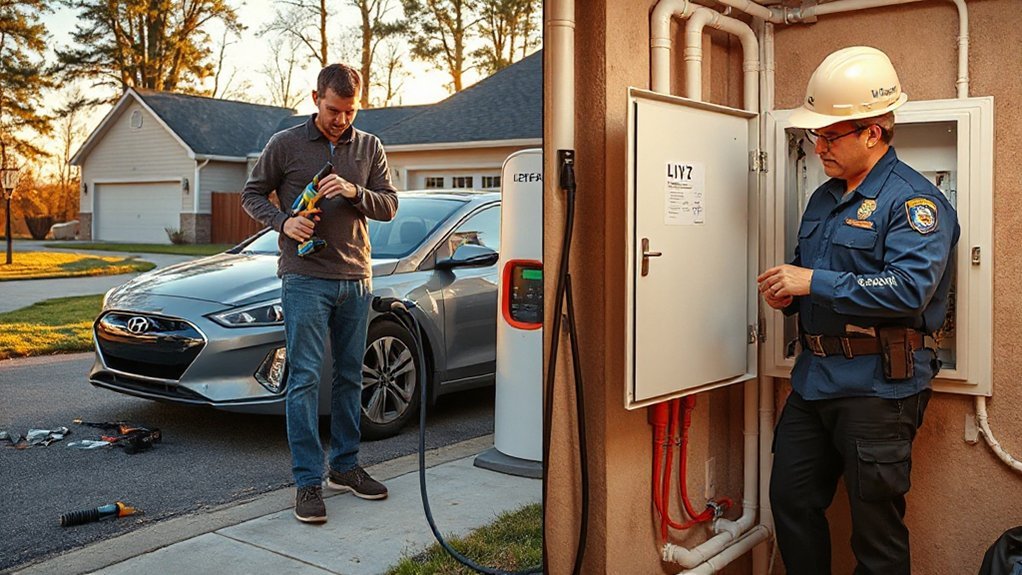
You must decide if DIY fits your tools, test gear, and competency with 240V circuits, load calculations, and panel work. If you don’t know NEC Article 625, GFCI/AFCI requirements, conductor sizing, and torque specs, hire a licensed electrician to protect safety and warranties. Either way, you obtain permits, schedule inspections, and document load calcs, conductor types, and breaker labeling to pass code and avoid liability.
Tools and Skill Level
Assess your tools and competency before choosing DIY or a licensed electrician for a Level 2 (240V) EVSE. You’ll need a calibrated multimeter, a torque screwdriver or wrench, wire strippers with Ergonomic grips, a conduit bender, fish tape, a knockout set, a hammer drill with masonry bits, and a stud finder. Stock proper PPE: insulated gloves, safety glasses, and hearing protection. You should confidently identify circuits, terminate conductors cleanly, land lugs to specified torque, and bend/secure conduit without kinks. If panel work, service disconnects, or new branch circuits feel unfamiliar, hire a pro. Maintain tool accuracy with documented Maintenance schedules, especially for torque tools and meters. Keep tidy labeling, measure twice, and verify polarity and continuity before energizing. Use quality fasteners and corrosion protection.
Safety and Code Compliance
While DIY can seem straightforward, NEC Article 625 and local amendments control how a Level 2 EVSE is supplied, protected, and mounted. You must size a dedicated branch circuit, apply 125% continuous-load calculations, and use copper conductors with correct temperature ratings. Grounding and bonding must be verifiable; GFCI protection and a readily accessible disconnect reduce arc and shock risk. Outdoor installs demand wet‑location fittings, in-use covers, and impact protection for the EVSE.
- Protect your family—proper overcurrent sizing prevents conductor overheating and thermal runaway.
- Guard your home—tight torque and listed enclosures stop arcing faults.
- Respect first responders—clear labeling and a visible disconnect aid rapid shutdown.
- Choose wisely—hire a licensed electrician when fault current, conduit fill, or service capacity exceed your comfort.
Permits and Inspections
Before pulling wire, secure the required electrical permit for a new 240 V EVSE branch circuit and any service upgrade, since most jurisdictions mandate plan review, load calculations (NEC 220), and NEC 625 compliance. Submit a one-line diagram, panel schedule, and site/parking layout. If you’re DIY, confirm owner‑builder eligibility; otherwise, have a licensed electrician pull the permit. Verify utility requirements for meter/main upgrades and any disconnect location. Pay fees and post the permit on site.
Schedule a rough‑in inspection before covering walls or backfilling trenches. The inspector will verify conductor sizing, breaker rating, GFCI/grounding, working clearances, labeling, and burial depth. Correct deficiencies promptly, then request final. Keep approval documents for record retention. If you disagree with a correction, use the jurisdiction’s appeal process formally.
Home Charging vs. Public Alternatives: Cost and Convenience
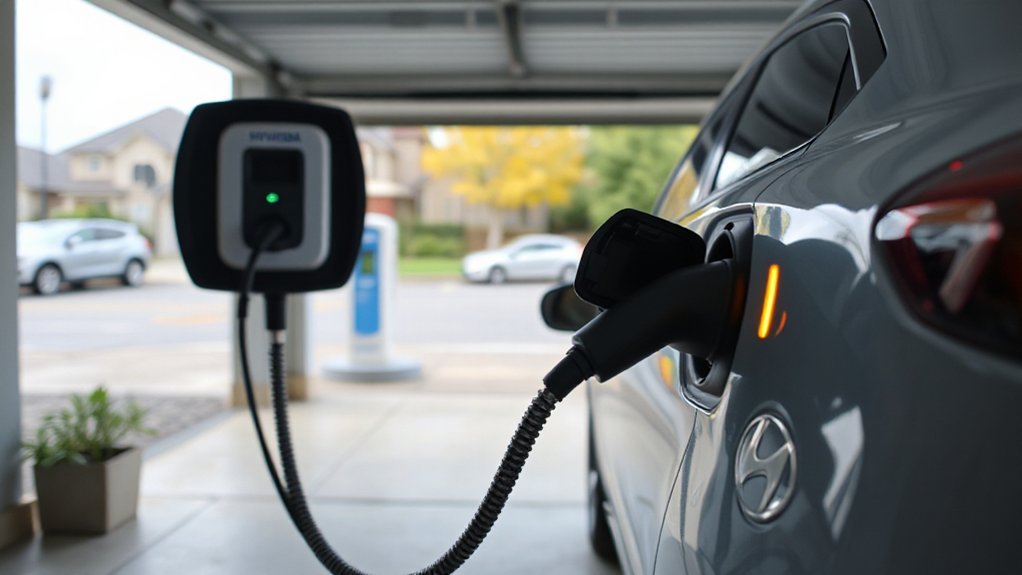
For most Hyundai EV owners, a code-compliant Level 2 home charger delivers the lowest lifetime cost and the most predictable convenience. You control charging windows, use off-peak rates, and avoid parking availability uncertainty. A dedicated, GFCI-protected circuit, correct wire gauge, and NEC-compliant mounting reduce hazards and wear on your onboard charger.
Public alternatives suit trips but cost more per kWh, add idle fees, and hinge on variable subscription models. Queues, down stations, and weather can disrupt plans; cords and connectors face abuse.
- Wake to a full battery—no detours.
- Cut fuel cost volatility with metered, at-home kWh.
- Improve safety via inspected hardware and labeled disconnects.
- Protect time: start/stop remotely, skip station roulette.
Use public DC fast sparingly to limit heat stress.
Timelines, Rebates, and Federal/State Tax Credits
How long will it take to go from quote to rebate check and a filed tax credit? Expect 1–3 weeks for permit review, 1 day for a NEC 625-compliant install, and 3–10 days to pass inspection. Utility rebates often require pre-approval; processing typically takes 4–12 weeks after inspection. You’ll claim the federal EVSE credit on IRS Form 8911 at tax time; state credits/rebates vary, with strict application deadlines and possible eligibility changes.
Use a licensed electrician to perform load calculations (NEC 220), size conductors (NEC 310), protect the branch circuit (NEC 210), and install GFCI protection where required. Obtain permits, label the disconnect, and maintain torque specs per manufacturer. Keep invoices, permits, photos, and inspection reports; submit complete packets to prevent rework and delays.
Conclusion
You’re ready to give your Hyundai EV a quiet place to refuel. Size the branch circuit at 125% continuous load (40–60 A), run proper copper conductors, bond grounding, and choose a listed J1772 EVSE that matches your onboard charger. Pull permits, pass inspection, and mind NEC 625 clearances. Expect $800–$2,500 for standard work, more if your panel needs a “spa day.” Prefer a licensed electrician; DIY belongs to calendars and punch lists—rebates soften the landing.