
You’ll charge faster and safer with a 240‑V Level 2 EVSE for your Hyundai, using the SAE J1772 connector at 32–48 A (about 7–11 kW). You must match the charger to your IONIQ 5/6 or Kona Electric’s onboard limits, size the breaker correctly, and follow NEC 625, GFCI, and permitting. Weather‑rated enclosures and smart scheduling help, but installation details decide reliability—starting with compatibility and circuit planning next.
Key Takeaways
- Level 2 is 240 V at 32–48 A (7–11.5 kW); choose NEMA 3R/4, IP66‑preferred outdoor units rated −30°C to 50°C.
- SAE J1772 Level 2 works with Hyundai IONIQ and Kona; vehicle draws up to its onboard limit (≈10.9–11 kW newer models).
- Expect about 25–40 miles per hour; a 77 kWh Hyundai charges 10–80% in ~5–6 hours at 9–11 kW.
- Install on a dedicated 240 V circuit per NEC 625: 48 A EVSE needs a 60 A breaker, GFCI, permits, and a licensed electrician.
- Look for smart scheduling, amperage controls, UL 2594/2231 listing; units cost ~$300–$800, installation $400–$2,500, with possible rebates and warranties.
What Is a Level 2 Charger for Hyundai EVs
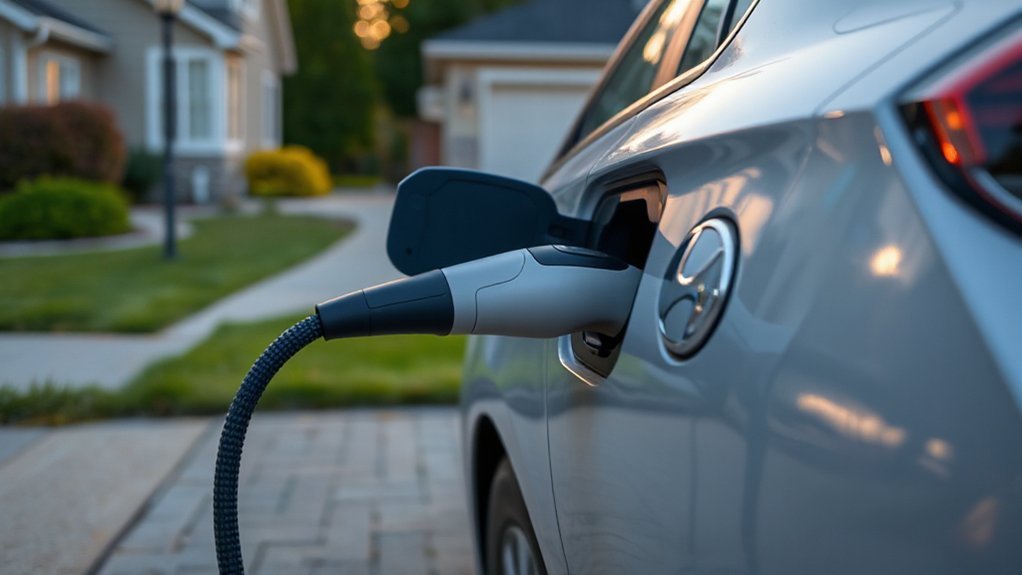
What exactly is a Level 2 charger for Hyundai EVs? It’s an AC EVSE that delivers 240-volt power through a dedicated circuit, typically 32–48 amps, enabling 7–11.5 kW charging at home or work. You install it per NEC, with a properly sized breaker, copper conductors, GFCI protection, and either a hardwired unit or a NEMA 14-50 receptacle. Perform load calculations, obtain permits, and use a licensed electrician. Choose outdoor-rated enclosures, secure cable management, and verify surge protection. Smart features reflect the historical evolution from simple trickle charging to networked, schedulable equipment. You’ll cut dwell time, reduce costs with time-of-use rates, and lower environmental impact by shifting load to cleaner grid hours. Follow manufacturer instructions, test ground integrity, and label the circuit for ongoing safety.
Compatibility With IONIQ 5, IONIQ 6, and Kona Electric
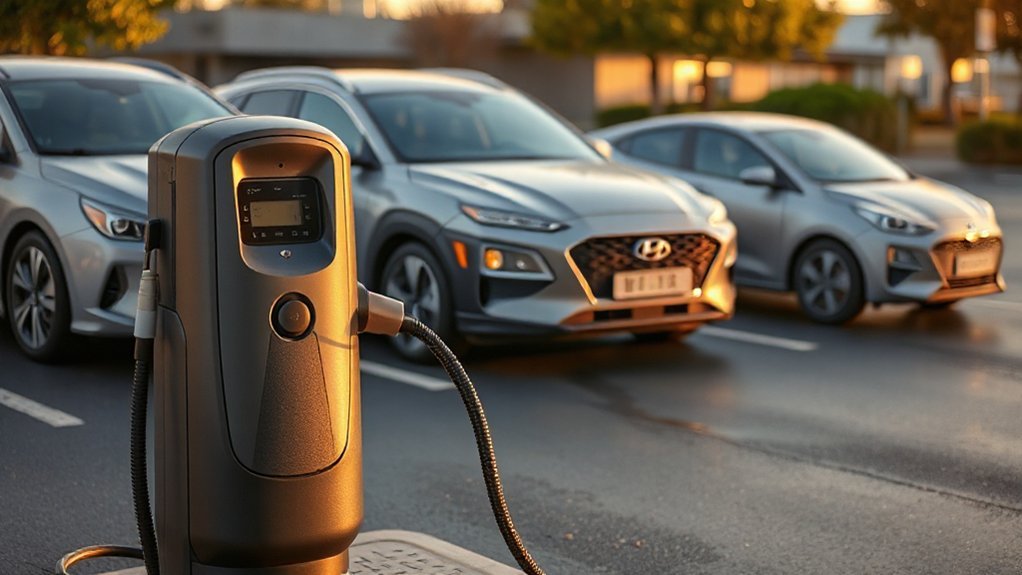
You can use any SAE J1772 Level 2 EVSE with the IONIQ 5, IONIQ 6, and Kona Electric; their CCS1 inlets accept the J1772 AC plug. Choose an EVSE amperage and circuit that match or exceed—but don’t try to force past—the car’s onboard charger limit, since the vehicle will cap AC charging power. For safety and code compliance, install on a dedicated 240 V circuit with correctly sized breakers, required GFCI protection, and a listed, properly grounded unit.
J1772 Plug Fit
For North American models, the SAE J1772 plug mates directly with the AC inlet on the IONIQ 5, IONIQ 6, and Kona Electric—the upper portion of their CCS Type 1 (Combo) charge port. You align the keyed plug, respect alignment tolerance, and insert straight until you feel positive socket retention and hear the latch click. The port interlock won’t energize until proximity and control pins verify a secure mate. Don’t twist or force; if resistance persists, stop and inspect for debris or ice. Support the handle to avoid inlet strain, and keep a gentle cable bend. Confirm the weather seal sits flush to exclude moisture. When finished, press release only after the vehicle releases the connector, withdraw straight, and cap the plug. Keep dry.
Onboard Charger Limits
After a proper J1772 mate, charging speed depends on the vehicle’s onboard AC charger and the circuit setting the EVSE advertises via the pilot signal.
IONIQ 5 and IONIQ 6 accept 10.9–11 kW on Level 2; they draw up to 48A at 240V when the EVSE is on a 60A breaker.
Kona Electric varies by model year: earlier cars take ~7.2 kW (32A), newer trims approach ~10.8–11 kW.
Size your branch circuit per NEC 625 and the 80% continuous-load rule.
Use copper conductors, correct wire gauge, and a GFCI breaker where required.
If the EVSE or vehicle warms, thermal throttling will limit current.
To reduce battery degradation, avoid repeated max-current sessions in hot conditions, enable charge scheduling, and prefer 20–80% targets for daily use.
Charging Speeds and Real‑World Time Estimates
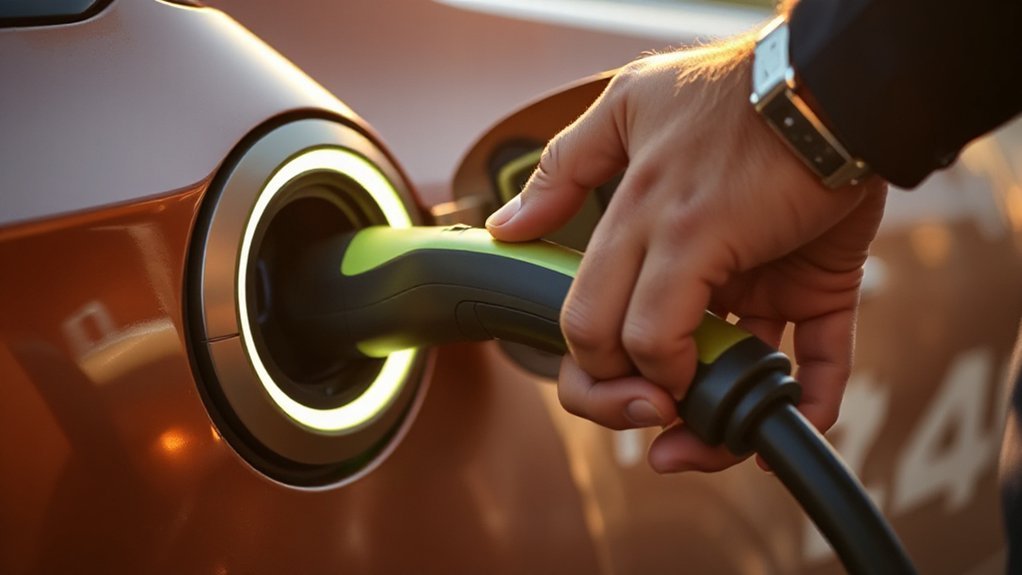
While a Hyundai Level 2 charger uses a 240 V circuit and can supply up to 48 A (~11.5 kW), actual speed is limited by the car’s onboard AC charger and installation constraints. Expect 7–11 kW to the pack, yielding 25–40 miles of range per hour. For a 77 kWh Hyundai, a 10–80% session takes 5–6 hours at 9–11 kW; topping from 20–100% can take 6–8 hours due to charge tapering and temperature effects. You’ll get results by starting near 20–40% and stopping near 80–90%.
Level 2 Hyundai charging: 7–11 kW, ~25–40 mi/hr; 10–80% in about 5–6 hours.
- Verify your vehicle’s max AC rate; time = usable kWh added ÷ kW.
- Precondition battery when possible to reduce taper.
- Use a schedule to avoid heat.
- Monitor current, connector temperature, and cable routing for safety.
Electrical Requirements and Installation Planning
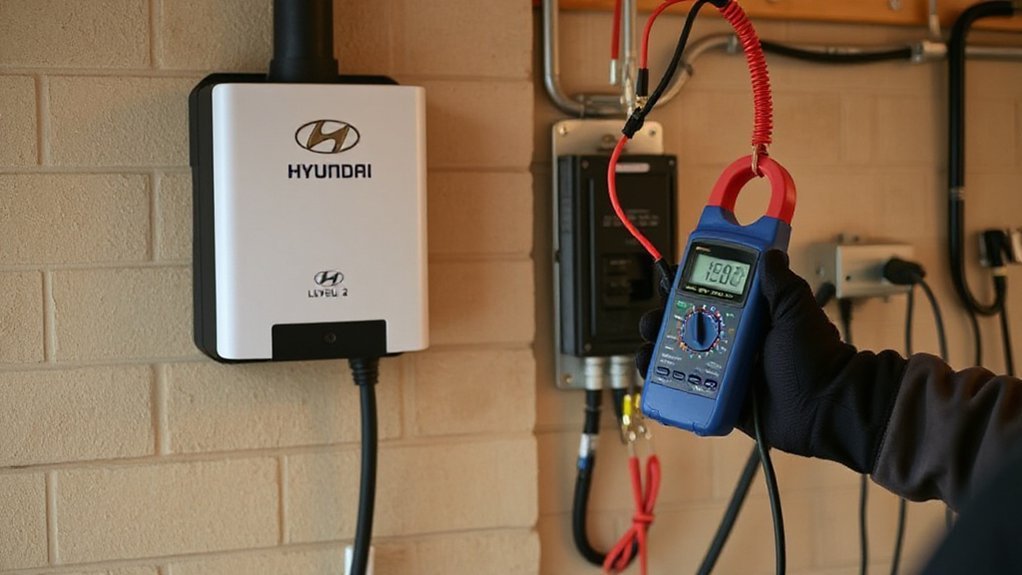

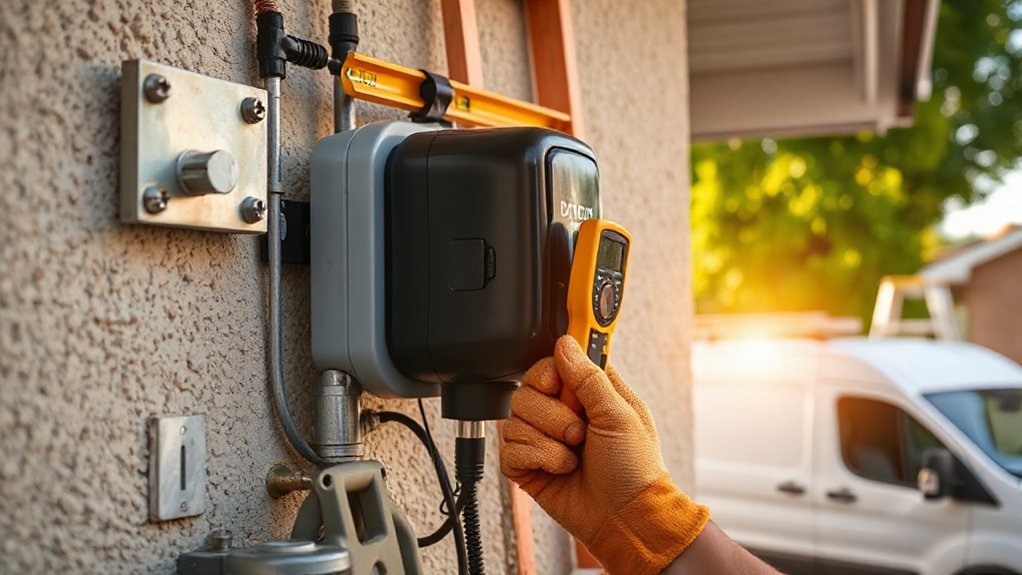

Planning a Hyundai Level 2 charger starts with a dedicated 240 V branch circuit sized for a continuous load at 125% per NEC (e.g., 48 A EVSE → 60 A breaker; 40 A → 50 A; 32 A → 40 A). Verify panel capacity, fault current, and available breaker spaces. Use copper conductors, THHN/THWN-2 in conduit or NM-B where permitted, with temperature ratings aligned to terminations. Calculate voltage drop; keep feeder drop under 3%.
Locate the EVSE on a GFCI-protected circuit if required by your jurisdiction. Provide a lockable disconnect if the unit isn’t within sight of the panel. Complete the permit process before work. Prioritize contractor vetting: license, insurance, EV experience, load calculations. Document torque values, labeling, and inspection dates. Keep clear working space.
Plug‑In vs. Hardwired: Choosing the Right Configuration
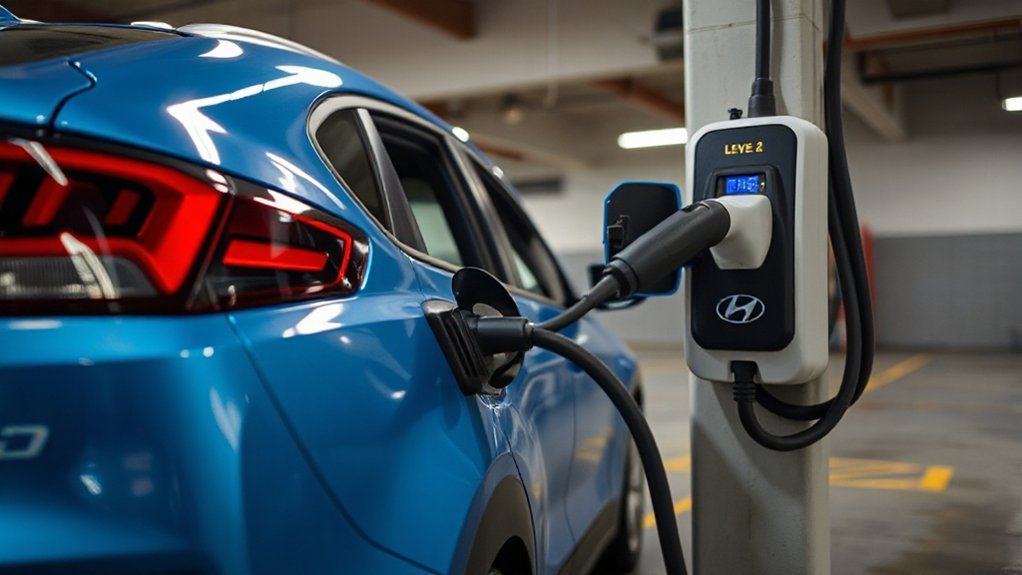
Which configuration fits your load, code, and site—plug‑in or hardwired? You’ll decide by evaluating amperage, circuit capacity, enclosure rating, and how you’ll use the charger. Plug‑in models suit temporary solutions, rentals, or when you need easy relocation; hardwired units excel for permanence, weather sealing, and higher continuous current.
Plug-in for flexibility; hardwired for permanence—choose by amperage, circuit, enclosure, and use.
- Circuit and rating: Verify breaker size, conductor gauge, and receptacle type (NEMA 14‑50 or 6‑50). Hardwired often allows 60A circuits; plug‑in typically limits to 40–50A continuous.
- Code and locality: Follow NEC 625, GFCI where required, and dedicated branch circuits. Outdoor use demands listed, weatherproof components.
- Site conditions: Consider cord routing, drip loops, clearance, and mounting height.
- Lifecycle factors: Maintenance access, warranty terms, and resale impact—plugs ease removal; hardwire signals professional installation quality.
Smart Features, Apps, and Energy Management
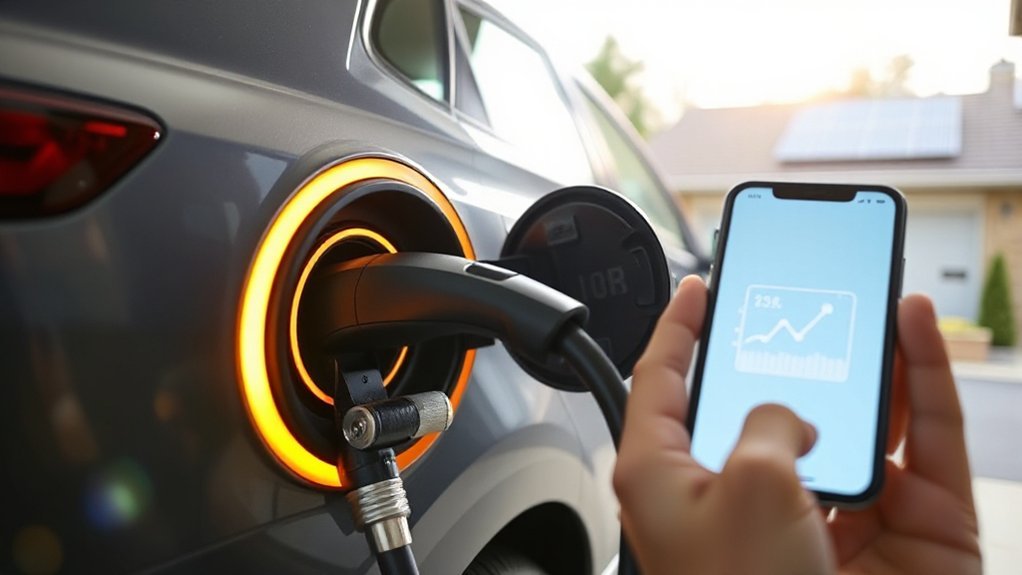
You use the Hyundai app to schedule Level 2 charging, set safe amperage limits that match your circuit, and lock the connector to prevent unauthorized use. You track real-time and historical kWh, session costs, and peak demand to align with time‑of‑use rates and manage load safely. Keep firmware updated, secure the Wi‑Fi connection, and verify utility or OCPP compatibility to meet local code and demand‑response requirements.
App-Based Charging Control
Using Hyundai’s app-enabled Level 2 charger, you control charging with schedules, limits, and real‑time data to optimize cost and safety. You set off-peak windows, cap amperage, and lock the connector to prevent unintended use. The app enforces code-aligned limits, pushes critical alerts, and logs events for traceability. You can enable multi-user roles while addressing Privacy Concerns and configuring Accessibility Options like voice control and high-contrast themes.
- Secure authentication: passkeys, biometric fallback, and per-session tokens; remote lockout if tamper detected.
- Grid-friendly scheduling: utility rate import, holiday overrides, and fail-safe start/stop if connectivity drops.
- Vehicle protection: battery preconditioning windows, maximum SOC caps, and automatic derating on high temperatures.
- Admin controls: role-based access, audit trails, and encrypted exports for service diagnostics reports.
Energy Monitoring Insights
From app-based control, the charger’s energy monitoring turns data into actionable insights: real-time power (kW), per-session energy (kWh), line voltage/current, connector and enclosure temperature, and TOU cost estimates. You view trends, compare sessions, and set thresholds; the app flags abnormal voltage sag, rising connector temps, and drift in usage patterns for early anomaly detection. Tie charging to TOU windows, cap amperage per circuit rating, and export logs for audits or rebate proof.
| Metric | Example Insight |
|---|---|
| Real-time power | 9.6 kW; taper begins at 80% SoC |
| Line voltage/current | 240 V at 38 A; voltage droop >5% triggers alert |
If the app spots deviations, it guides corrective actions—inspect wiring, tighten lugs to torque spec, or call a licensed electrician, promptly. Document maintenance actions for warranty and compliance.
Safety Standards, Weather Ratings, and Warranty Basics
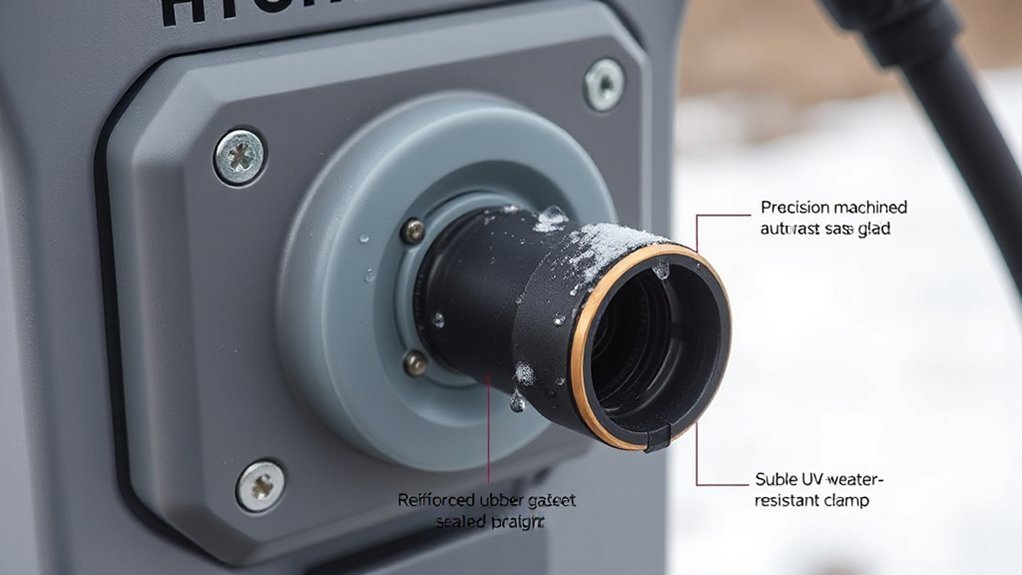
Standards-compliance sets the baseline for a Hyundai Level 2 charger: verify a UL/cUL or ETL listing to UL 2594 and UL 2231-1/-2, SAE J1772 conformity, NEC Article 625–compliant installation, and FCC Part 15 emissions control. Check Certification Marks on the unit and manual; they document tested safety and inform Liability Limits.
- Weather ratings: target NEMA 3R or 4 (outdoor); IP54 minimum, IP66 preferred; UV-resistant, -30°C to 50°C operating range.
- Electrical protection: 20–60 mA GFCI, integral ground monitoring, surge protection, and a dedicated 2-pole breaker sized per 125% rule.
- Installation: use copper conductors, proper torque, wet-location fittings, and strain relief; follow manufacturer clearances.
- Warranty basics: confirm term, parts/labor, cable coverage, exclusions for misuse, and installer certification requirements.
Document serial numbers and keep installation photos securely.
Costs, Rebates, and Utility Incentives
While hardware prices are straightforward, your total outlay hinges on installation scope and the incentives you capture. Expect $300–$800 for a UL‑listed Level 2 unit, plus $400–$2,500 for a code‑compliant 240‑V circuit, permits, and any panel upgrade. Get a load calculation, dedicated breaker, GFCI protection where required, and a permit pulled by a licensed electrician. Federal and state Tax credits can offset 30% of eligible costs; stack local Rebate programs for additional relief. Many utilities offer time‑of‑use rates, demand‑response bill credits, or make‑ready funding that covers wiring to the charger. Verify eligibility windows, pre‑approval steps, and required inspections before work starts. Keep itemized invoices, photos, and AHJ sign‑offs to substantiate claims. Incentives change; confirm amounts and caps before committing. Check income limits and residency.
Step‑by‑Step Setup and Daily Charging Tips
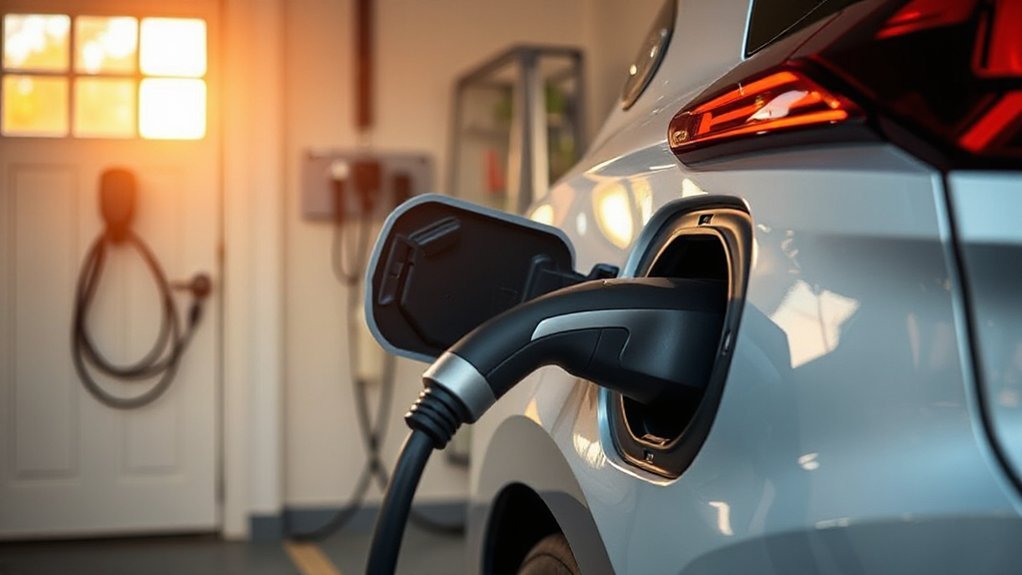
Typically, you’ll start by planning a dedicated 240‑V circuit that meets continuous‑load rules (EVSE at ≤80% of breaker rating), then select a mounting location with required clearances, proper height, and safe cord routing.
Plan a dedicated 240‑V circuit (EVSE ≤80% breaker), then choose compliant mounting and safe cord routing.
1) Mount EVSE on noncombustible surface, anchor to studs, maintain drip loop, label breaker, and verify voltage, ground, and polarity before energizing.
2) Commission with Hyundai app: set amperage to match circuit, enable schedule, and lock the connector; update firmware over secure Wi‑Fi.
3) Establish a Charging routine: charge to 80–90% for daily use, precondition while plugged in, and avoid repeated deep discharges to protect battery health.
4) Practice Cable storage and safety: de‑energize before cleaning, coil cord on holster, keep connector off the floor, inspect for heat, cracks, or moisture, and test GFCI monthly.
Conclusion
You’re ready to turn your driveway into a reliable fueling lane. Choose a J1772 Level 2 unit matched to your Hyundai’s onboard charger, size the 240‑V circuit and breaker correctly, and have a licensed electrician install per NEC 625 with GFCI, proper torque, grounding, and permits. Weather-rated enclosures, smart scheduling, and energy monitoring keep daily charging smooth. Verify rebates, register warranty, update firmware, and test shutoff—so your electrons march in formation, safely, every night reliably.