
A Level 2 charger can refill a Jeep 4xe’s 15–17 kWh usable pack in roughly 2–3 hours. To match the 7.2 kW onboard charger, you’ll spec a 240 V, 32 A EVSE on a 40 A breaker with 8 AWG copper, weatherproof placement, permits, and a licensed electrician. Expect $900–$3,500 installed, more with panel upgrades or trenching. But do you truly need a service upgrade—or just a right-sized circuit and careful load calculation?
Key Takeaways
- Level 2 at 7.2 kW refills 15–17 kWh in ~2–3 hours; ~30 minutes adds 8–9 electric miles.
- Select UL-listed 32A Level 2 EVSE with J1772, NEMA 3R/IP54 enclosure, 18–25 ft cable, Wi‑Fi scheduling and ground-fault/thermal protection.
- Install on a dedicated 240V circuit sized per NEC 125%: 32A EVSE → 40A breaker with 8 AWG copper; consider voltage drop on long runs.
- Typical professional install costs $700–$2,000 hardware plus $300–$1,500 labor, varying by panel distance, wall type, trenching, and permit fees.
- Pull permits, pass inspection, and save invoices for federal 30% EVSE tax credit and utility rebates; schedule charging to enable preconditioning, reduce engine starts.
Level 1 Vs Level 2: What Changes for a Jeep 4xe
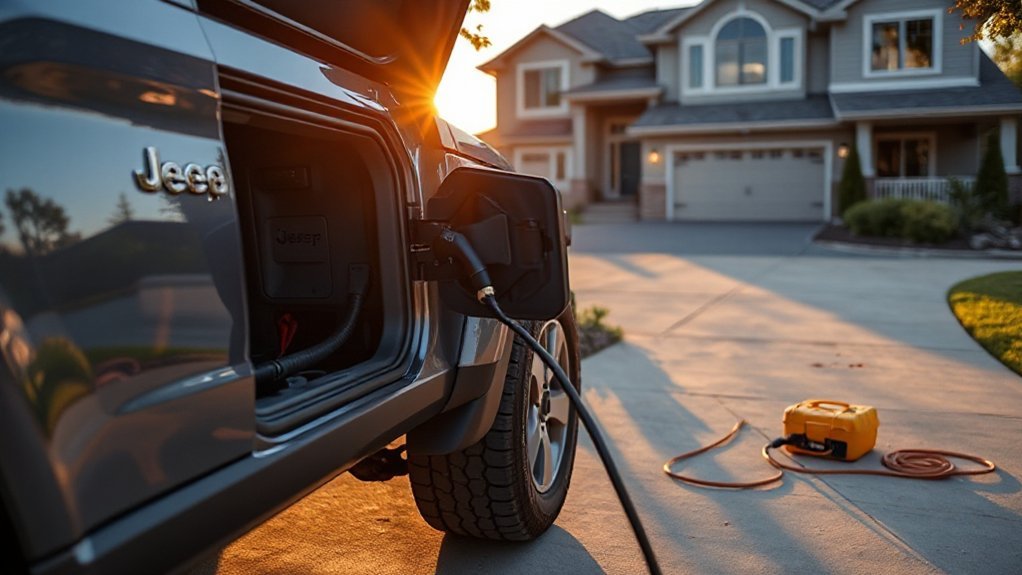
How do Level 1 and Level 2 charging actually change your Jeep 4xe experience? With Level 1, you treat charging like a slow, steady refill—ideal for overnight top‑offs that support a conservative Range Strategy and reduce thermal stress. Level 2 compresses the same work into fewer hours, enabling daytime turnarounds, reliable preconditioning, and more electric miles per trip. You’ll plan departures, schedule charge windows, and avoid unnecessary engine starts, all of which help Battery Longevity. Stay code‑compliant: use properly grounded, listed equipment, a dedicated circuit, and GFCI protection; keep cords uncoiled, off traffic paths, and away from moisture. Don’t use extension cords. Verify receptacle and mounting heights, labeling, and clearances. Document installation, set reminders to inspect connectors, and clean debris from vents as needed.
Charger Specs and Options for the 4xe
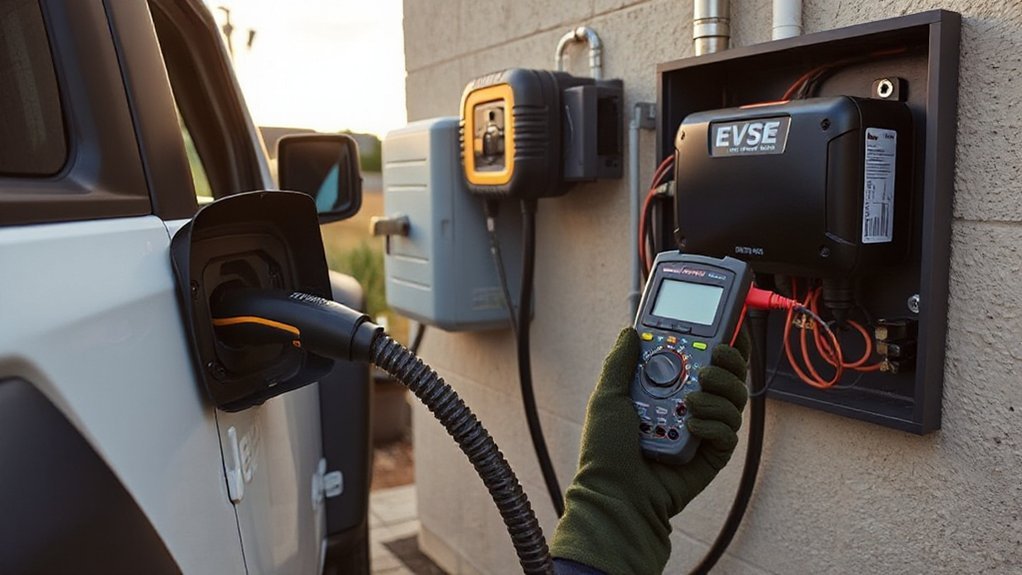
Why focus on charger specs for your 4xe? Because the Wrangler 4xe’s onboard charger accepts up to 7.2 kW, you’ll want a Level 2 unit rated to deliver that power safely. Prioritize UL 2594/2231 certification, integral ground-fault protection, and thermal monitoring at the plug. Weather-ready enclosures (NEMA 3R or IP54+) and 18–25 ft, flexible, UV-resistant cables improve durability and reach.
Choose a J1772 connector with a secure latch, status LEDs, and auto-restart after faults. App integration should provide scheduled charging, lockouts, user profiles, and firmware updates with WPA2-secured Wi‑Fi. Look for load-shedding and RFID options if access control matters. Consider Hardware aesthetics and mounting: compact housings, tamper-resistant hardware, and tidy holsters reduce trip hazards. Favor Energy Star models with at least a 3‑year warranty.
Power Requirements, Circuits, and Outlet Choices
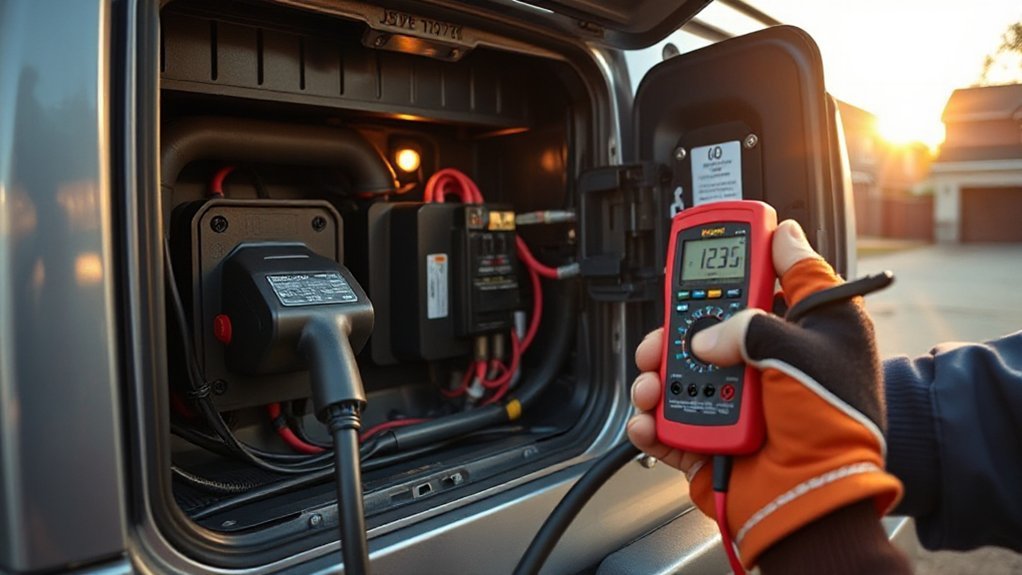
You’ll size a dedicated circuit to the EVSE’s continuous load using the 125% rule (EVSE draws no more than 80% of breaker rating) and confirm your panel can support it. Match outlet type and rating to the charger—120V NEMA 5-15/5-20 for Level 1, or 240V NEMA 6-20/14-50 for faster Level 2—and use conductors and receptacles listed for the amperage. Use a dedicated circuit with required GFCI, pull permits as needed, and don’t use adapters or shared circuits that can overheat.
Dedicated Circuit Amperage
Because EV charging is a continuous load, size the circuit for your 4xe’s EVSE at 125% of its maximum current per NEC 625, and place it on a dedicated branch circuit. Check the EVSE nameplate: a 32A unit needs a 40A breaker; a 40A unit needs a 50A breaker. Don’t share this circuit.
Plan conductors per NEC 310.16 and termination ratings. Typical: 40A uses 8 AWG copper THHN in conduit; 50A uses 6 AWG NM-B. Upsize for long runs to keep voltage drop near 3%. Provide GFCI protection where required, always.
- Calculate 125% from the nameplate current
- Select breaker and wire from ampacity tables
- Address safety myths and user perceptions with code references
- Label the disconnect and panel directory clearly
Outlet Types and Ratings
With the circuit sized, select the outlet type and rating to match your 4xe’s EVSE and code. For Level 2, most portable EVSEs use NEMA 14‑50 (125/250V) or 6‑50 (250V). Choose a receptacle equal to or above the EVSE plug type and a breaker sized per 125% continuous-load rule (NEC 625/210). Use copper conductors; size wire to ampacity and distance to limit voltage drop (<3%). In garages and outdoors, install GFCI protection, tamper-resistant receptacles, and an in-use, weatherproof cover if exposed. Match enclosure and socket materials to duty (industrial grade, brass contacts, robust terminations). Verify neutral requirement: 14‑50 needs neutral, 6‑50 does not. Consider outlet aesthetics only after safety. Label the circuit, torque lugs to spec, and test. Confirm mounting height per local code.
Permits, Code Compliance, and Hiring an Electrician
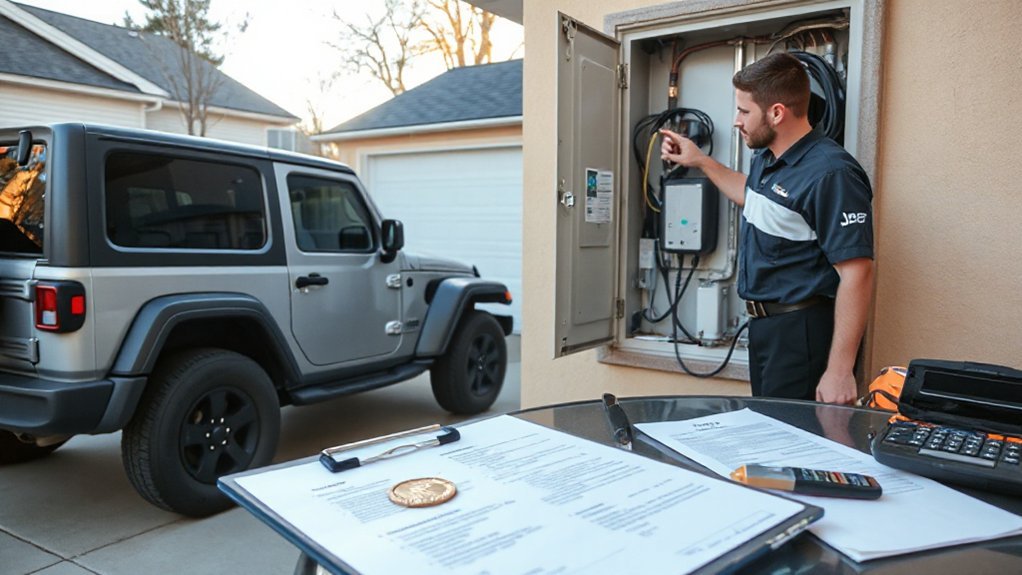
You check your local permitting requirements for an EVSE install—permit scope, service upgrades, trenching, fees, and inspection sequencing. You verify the plan meets NEC 625 and related articles (210/215/220/240/250), including load calculations, GFCI where required, correct conductor sizing, overcurrent protection, grounding/bonding, and wet-location ratings. You hire a licensed, insured electrician with EV experience who pulls permits, performs the load calc, and delivers inspection-ready documentation.
Local Permitting Requirements
Before installing a home charger for your Jeep 4xe, verify local permitting and code requirements with your Authority Having Jurisdiction (city/county). Ask whether a residential electrical permit, plan review, or inspection is required, and confirm load calculations, panel capacity, and site placement rules and safety. Identify zoning constraints, setbacks, and exterior alterations that trigger approvals, especially if you’re in a condo, face HOA conflicts, or live within Historic districts.
- Obtain a written permit scope, fees, and timelines; note separate permits for trenching or panel upgrades.
- Confirm inspection stages: rough-in, final, and any utility coordination for meter or service work.
- Hire a licensed, insured electrician; request license number and permit pull responsibility.
- Keep documentation: approved plans, inspection cards, and final sign-off for resale, records, or incentives.
NEC Code Considerations


Although NEC Article 625 governs EV charging equipment, your installation must also satisfy core wiring rules that protect people and property. Verify the adopted NEC edition and local Code Revisions, then design to the stricter requirement. Perform a dwelling load calculation (NEC 220) and treat the EVSE as a continuous load at 125% for conductor and breaker sizing. Use a dedicated branch circuit, correct wire gauge, and an OCPD matched to the EVSE rating. Provide GFCI protection for receptacle-fed units in garages; confirm grounding and bonding per 250. Maintain working clearances (110.26), proper conduit/wet-location ratings, and labeling. Where required, add a readily accessible disconnect and whole-home surge protection. Keep permit documents and inspection records; noncompliant work risks Insurance Implications and denied claims and coverage.
Choosing a Licensed Electrician
With NEC requirements in mind, hire a licensed electrician who pulls the permit, documents the load calculation, and builds to the adopted Code and local amendments. Ask for a detailed scope: conductor size, breaker rating, GFCI/AFCI needs, disconnect location, and labeling. Verify the contractor’s license status, bond, and workers’ comp; complete insurance verification before work starts. Require a written estimate that includes materials, trenching, inspection fees, and commissioning of your Level 2 EVSE. Evaluate communication skills and response time so change orders and inspection scheduling don’t slip. Confirm they’ll meet utility and AHJ requirements and provide as-builts.
- Load calculation and service/panel upgrade plan
- Specified wire, conduit, breaker, and EVSE rating
- Schedule, permits, and inspections coordinated with AHJ/utility
- Warranty, final test results, and as-built documentation
Installation Steps and Typical Timeline
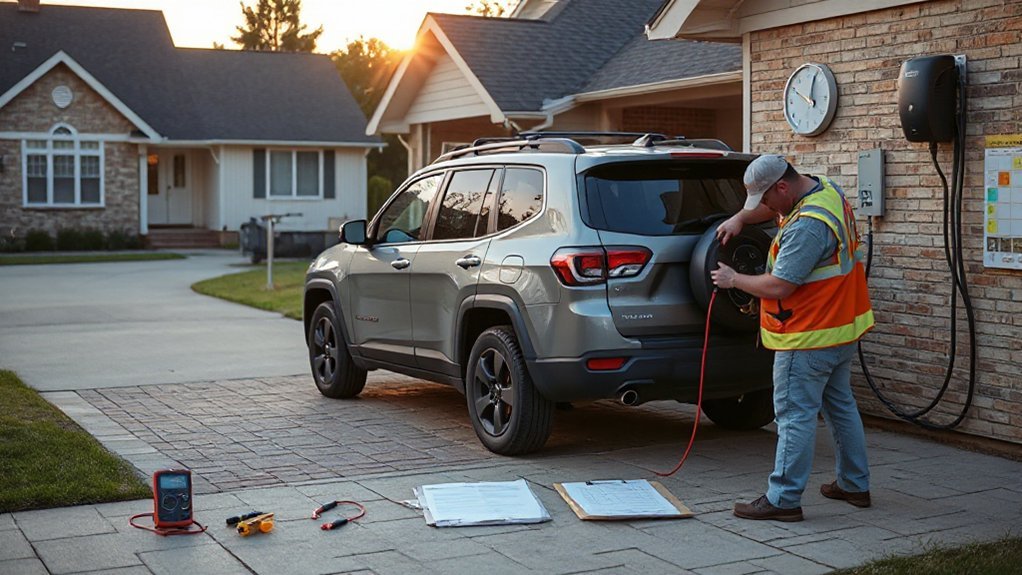
While site conditions and local code drive details, a safe, code-compliant Jeep 4xe Level 2 charger install follows a predictable path and timeline: start with a load calculation and site assessment (1–2 hours), secure permits and any utility approvals (typically 3–15 business days), then install a dedicated 240 V circuit (commonly 40 A for a 32 A EVSE) with appropriately sized conductors, a listed disconnect if required, and GFCI/AFCI per NEC and local amendments (3–6 hours).
Schedule around weather windows and site access; confirm parts on hand.
| Step | Typical duration | Key checks |
|---|---|---|
| Load calc/site walk | 1–2 hours | Service capacity, routing, hazards |
| Permitting/utility | 3–15 days | Scope, panel photos, plot/site plan |
| Install/commission | 3–6 hours | Conductor size, torque, labeling |
Final step: pass inspection and safely enable charging.
Charging Speeds and Real-World Time Estimates

Because Jeep 4xe models use an onboard charger capped around 7.2 kW (32 A at 240 V), your practical Level 2 rate is about 7 kW to the pack, yielding roughly 2–3 hours to refill the ~15–17 kWh usable battery from near empty in mild conditions; a 120 V Level 1 at 12 A (~1.3–1.4 kW) typically needs 12–14 hours. Expect variability from cold weather and battery aging. Use a dedicated, GFCI-protected circuit; verify conductor gauge, breaker size, and EVSE settings to respect the 32 A continuous limit.
Jeep 4xe Level 2: ~7 kW, 2–3 hours; Level 1: 12–14 hours; verify 32 A limits.
- Level 2: ~7 kW; 30 minutes adds 8–9 miles.
- Level 1: ~1.3 kW; plan overnight top-ups only.
- Precondition while plugged in to minimize HVAC impacts safely.
- Below 32°F, expect longer sessions; schedule charging windows.
Total Installed Cost Ranges and What Drives Price
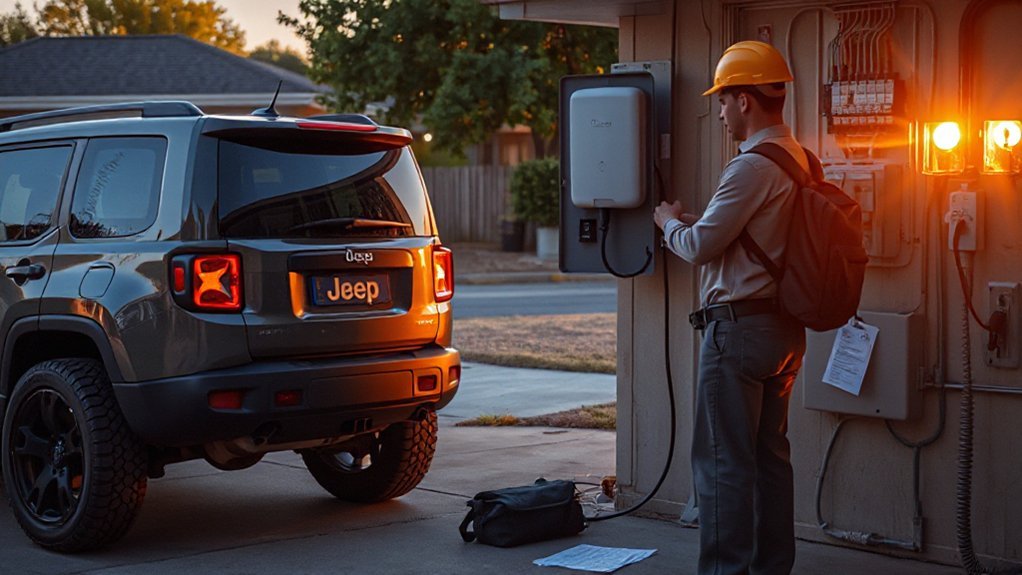
After confirming your 4xe’s 32 A Level 2 needs, you can budget the installation accordingly. Typical totals land around $900–$3,500: EVSE $400–$800, labor/materials $500–$2,700, permit/inspection $50–$300. High-complexity jobs run $4,000–$8,000 when panel upgrades, long wire runs, or trenching are required.
Price drivers include code-compliant design: a 40 A two-pole breaker, 125% continuous-load sizing, copper THHN/THWN conductors (often 8 AWG), GFCI where required, and listed fittings. Distance from the service panel, wall type (drywall vs masonry), attic/crawl access, and outdoor/weatherproof ratings add time and cost. Contractor rates vary by region, market fluctuations, and seasonal pricing. Material volatility (copper, breakers), supply constraints, and inspection schedules also shift bids. Always obtain permits and written load calculations. Request itemized scope, warranty terms, and clear change-order thresholds in writing.
Rebates, Tax Credits, and Utility Incentives
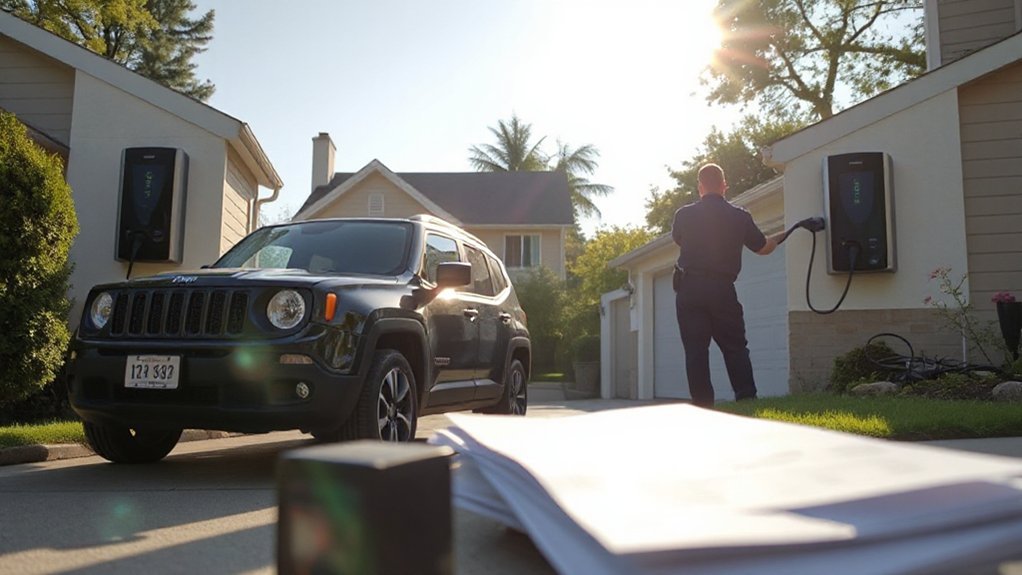
Although incentives vary by location, you can usually cut the net cost of a code-compliant Level 2 install with a mix of federal credits, state programs, and utility rebates. Verify Federal eligibility for the 30% EVSE tax credit, then confirm your charger and licensed electrician meet listing and permit requirements. Many utilities offer make-ready rebates, time-of-use bill credits, or demand-response bonuses if you enroll safely and use a dedicated circuit.
- Check IRS Form 8911 rules, project caps, and eligible hardware.
- Confirm Program stacking; sequence applications to avoid clawbacks.
- Get itemized invoices: permit, breaker, GFCI, conduit, labor, inspection.
- Save receipts and final inspection sign-off; keep records for five years.
Submit applications promptly; many rebates are limited or first-come and often expire.
When to Upgrade Your Panel Vs Keep It Simple
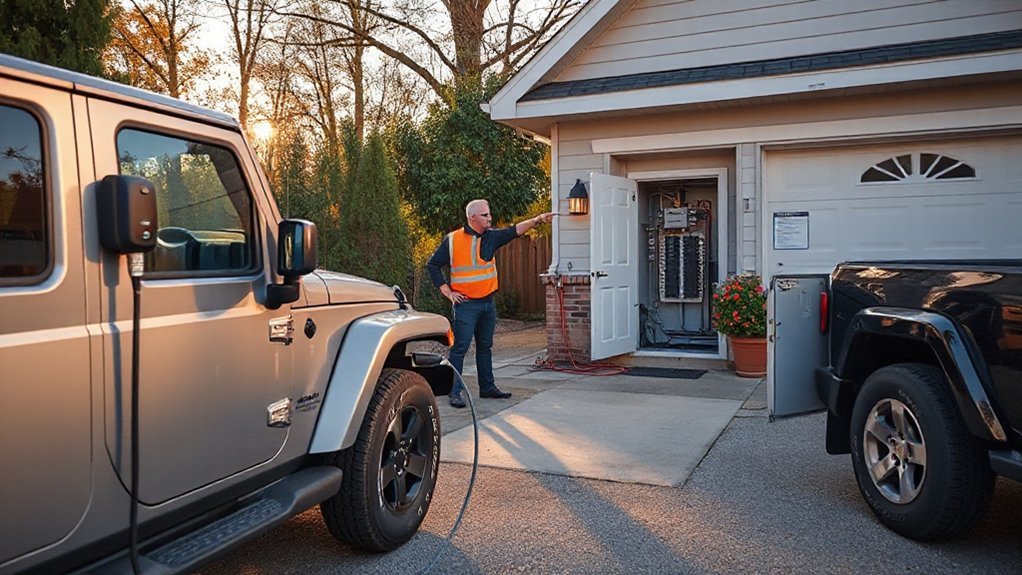
Before you order a charger, decide whether your existing service can safely support a dedicated Level 2 circuit by doing a NEC 220 load calculation and applying the 125% continuous-load rule in NEC 625. If your main has 200A service, at least two free spaces, and the calc shows 40A spare capacity, keep it simple: install a 40A breaker, 8 AWG copper, and a 32A EVSE with GFCI protection, properly labeled and torqued.
When the calc shows little headroom, or you have a crowded 100A panel, upgrade or add a subpanel; signs include nuisance trips, double-lugged breakers, or no space for AFCI/GFCI. A modern 200A panel with load-shedding improves safety, supports future loads, and can boost resale value while stabilizing insurance premiums over time. Temporary options: throttle charging, schedule off-peak, or add a listed load manager.
Conclusion
Wrap up: you’ll charge smarter with a 240 V Level 2 that matches the 4xe’s 7.2 kW onboard charger. Plan a dedicated 40 A breaker, 8 AWG copper to a 32 A EVSE, weatherproof hardware, and GFCI where required. Pull permits, schedule inspections, and hire a licensed electrician. Expect 2–3 hour full top‑ups and 30‑minute boosts. Budget $900–$3,500, more with panel upgrades. Measure twice, cut once, and document costs for rebates and credits and incentives.