
You’re choosing a 50 kW DC fast charger for fleets, so you’ll want hard numbers: 150–920 V DC ranges, up to ~125 A (some ~200 A at low V), 94–96% efficiency, PF ≥0.98, CCS/CHAdeMO, ISO 15118/DIN 70121, OCPP 1.6J, IP54–IP65, MID metering, Type B RCDs, and 24–36 month warranties. Across seven models, cable cooling, uptime SLAs, and grid harmonics vary—which unit best balances TCO, footprint, and interoperability?
Key Takeaways
- All seven deliver up to 50 kW DC; typical 400 V packs see 46–50 kW at 120–125 A.
- CCS1/CCS2 and CHAdeMO supported; single-port, sequential operation; ISO 15118/DIN 70121 interoperability common.
- Input requires 3‑phase 400/480 V, ~60–80 kVA; efficiencies 94–96% with PF ≥0.98–0.99.
- Enclosures IP54–IP65 or NEMA 3R, −30/−35 to +50 °C operation with derating near 45–50 °C; noise typically ≤65 dBA.
- OCPP 1.6J networking via Ethernet/LTE/Wi‑Fi; MID metering and Type B RCD frequently included; pedestal ~600×800×1900 mm, 350–400 kg.
ABB Terra 54

Steel-cabineted Terra 54 is ABB’s 50 kW multi-standard DC fast charger, delivering up to 50 kW via CCS (Combo 2/1) and CHAdeMO and, in CJG variants, up to 22 kW AC via Type 2 in parallel with one DC session. You’ll push 200–500 V packs at up to 120 A, with IEC 61851-23/-24 compliance and IEC 62196-3 connectors. It supports OCPP 1.6J for remote monitoring, billing, and software maintenance. Expect IP54, IK10 steel enclosure, -35 to +50°C operation, with thermal derating above 40°C and a variable-speed forced-air cooling system. Metering can be MID-compliant; AC side includes Type B RCD. Connectivity includes Ethernet, 4G, and GPS. You can wall-mount payment via RFID (ISO/IEC 14443) and enable ISO 15118 features where licensed. Footprint ~0.5 m².
Tritium RT50
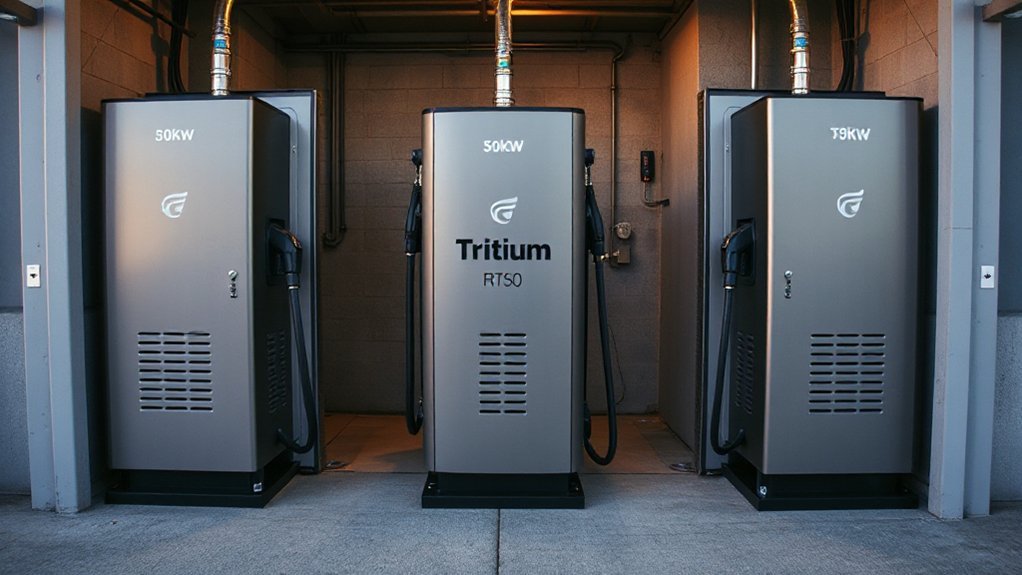
Where the Terra 54 uses an air‑cooled steel cabinet, Tritium’s RT50 adopts a sealed, liquid‑cooled pedestal that delivers 50 kW DC through CCS (Combo 1/2) and CHAdeMO, typically one vehicle at a time. You get up to 125 A across a 150–920 V DC range, 95% efficiency, and PF ≥0.99 from a 400/480 V three‑phase feed. The IP65, IK10 enclosure and -35 to +50 °C operating window support curbside installs. It speaks OCPP 1.6J, with IEC 61851‑23/-24 conformity and UL 2202/2231 certification variants. You’ll value warranty coverage starting at two years, extendable via SLAs. Serviceability features include front‑access panels, field‑replaceable cables, sealed power modules, and remote diagnostics. Cable options reach 3–5 m with liquid‑cooled leads for sustained 50 kW on high‑duty sites and depots.
ChargePoint Express 200 (CPE200)
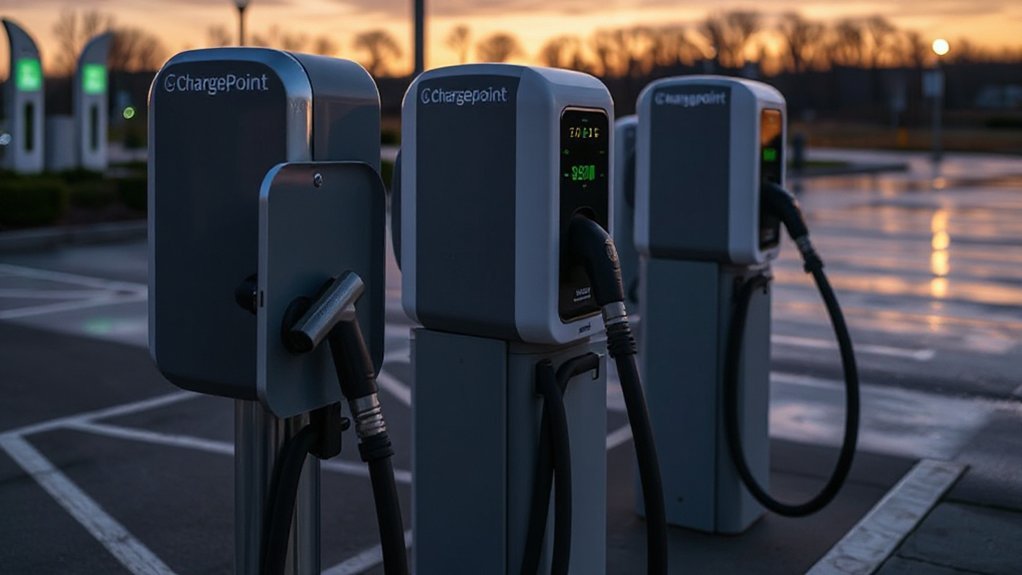
You get up to 50 kW DC (200–500 V, 125 A) with dual leads for CCS1 and CHAdeMO, conforming to SAE J1772 Combo and CHAdeMO 1.2 and aligned with IEC 61851-23/-24. You provision 3‑phase 480 VAC, 60 Hz service (~65–75 kVA), mount the pedestal, and commission per NEC 625 and local electrical codes. You network via Ethernet or LTE using OCPP 1.6‑J for backend control, enabling load management, RFID access (ISO/IEC 14443), OTA updates, and remote diagnostics.
Power Output and Connectors
How does the Express 200 (CPE200) deliver DC power and connector flexibility? It supplies up to 50 kW via a 200–500 V DC bus at up to 125 A, maintaining output through closed-loop thermal management and active cable temperature sensing. You can spec dual leads: CCS1 (SAE J1772 Combo, IEC 62196‑3) and CHAdeMO, enabling cross‑platform compatibility without adapters. Current limits and contactor interlocks comply with IEC 61851‑23/-24, UL 2202, UL 2231, and NEC 625 safety standards. The charger modulates current to meet vehicle requests per DIN 70121 and SAE J1772 DC handshake, with derating above 40 °C to protect conductors. Typical sessions reach 20–80% SOC in 30–45 minutes on 50–75 kWh packs, with taper behavior governed by BMS voltage ceilings and connector-specific current caps.
Installation and Networking
Beyond power delivery and connector choice, proper installation and networking determine how reliably a CPE200 operates in the field.
You’ll provision 400–480 V AC, 3‑phase, 60 Hz service sized for ~60 kVA, with breakers and conductors per NEC 625 and 310, plus a UL 1449 SPD and IEEE 80 grounding. Mount on a reinforced pad, maintain 1.2 m ADA clear floor, and plan 3 m cable reach. The Permitting process should include fault-current studies, load calcs (NEC 220), and utility coordination.


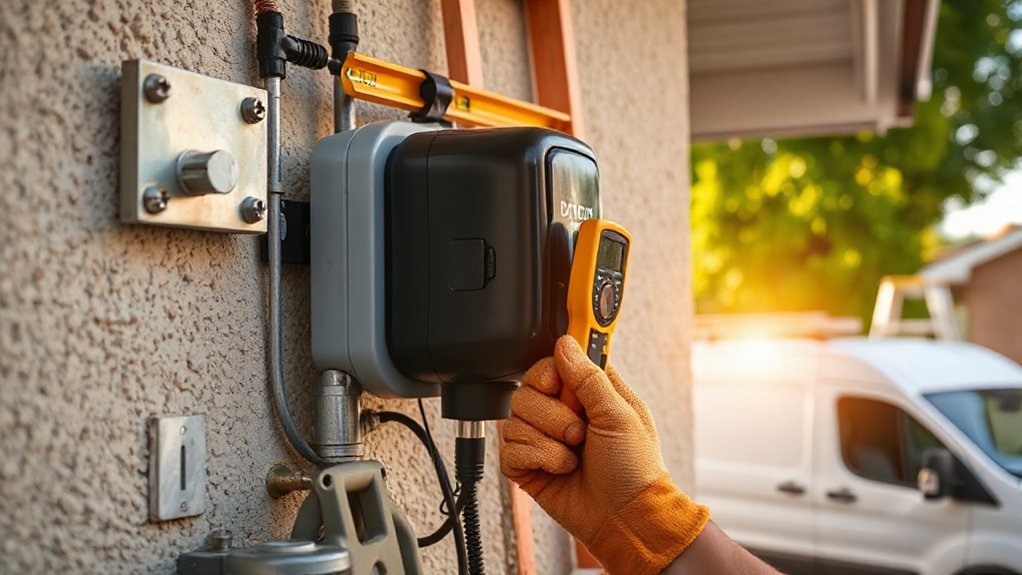

Backhaul via LTE or Ethernet with VPN and 802.1X; enforce Network security with TLS 1.2/1.3, certificate pinning, and PCI DSS for payments. Support OCPP 1.6J, remote firmware, SNMP monitoring, and IEC 61851/ISO 15118 interoperability. Temperature rating: −30 to +50 °C, NEMA 3R outdoor.
EVBox Troniq 50
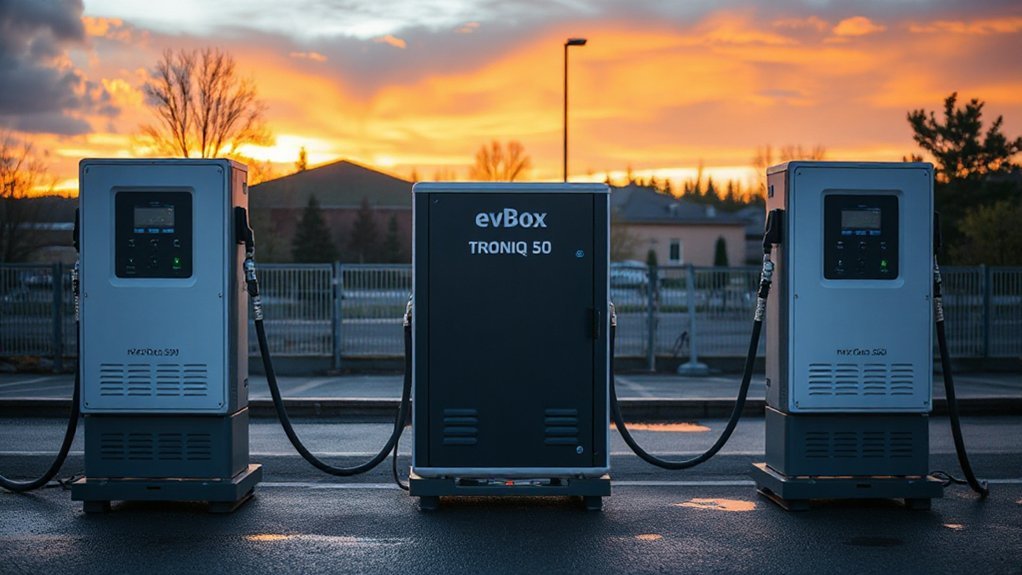
You get up to 50 kW DC (200–500 V, 125 A) from the EVBox Troniq 50 per IEC 61851-23, translating to roughly 10–80% in ~35–45 min for a 60 kWh pack. It offers CCS (Combo) and CHAdeMO per IEC 62196-3—typically CCS2 in the EU and CCS1 in North America—with an optional 22 kW AC Type 2. You should match your vehicle’s max pack voltage/current and connector standard to the unit’s limits to predict sustained power, taper behavior, and session times.
Charging Performance
Why the Troniq 50’s charging performance stands out is its ability to sustain a stable 50 kW DC output with a current cap around 120–125 A, giving 46–50 kW to most 400 V packs from low SOC until the vehicle’s taper point. You get predictable charging curves with tight voltage regulation (±1%) and DC ripple under 1% per IEC 61851-23. The power stage operates efficiently (94–96% at 30–50 kW) and maintains power factor ≥0.99 at ≥50% load. Forced-air thermal management minimizes thermal throttling; lab runs show no derate up to 45°C ambient, with gradual derating to ~42 kW near 50°C. Power negotiation follows DIN 70121/ISO 15118, enabling rapid current ramps (<2 s) and stable holds. Measured noise stays <65 dBA at 1 m distance.
Connector Compatibility
Connector options cover CCS2 (IEC 62196-3, configuration FF) and CHAdeMO (v1.2), with an optional Type 2 AC outlet (IEC 62196-2) to carry that stable 50 kW to most 400 V packs. You’ll deliver up to 125 A at 400 V DC on CCS2 and roughly 125 A at 400 V on CHAdeMO, within IEC 61851-23/24 control limits. Cables are typically 3.5–5.0 m, air‑cooled, with IP54 enclosures and locking latches per IEC. The Troniq 50 supports ISO 15118 and DIN 70121 on CCS, enabling plug‑and‑charge where backend allows. For regional standards, CCS2 serves EU/UK, CHAdeMO covers legacy fleets, while CCS1/NACS require site-side adapter ecosystems or variant hardware. You can specify dual cables, simultaneous DC+AC, and pedestal or wall feedthroughs. Labeling meets IEC 60417 symbols requirements.
Efacec QC45
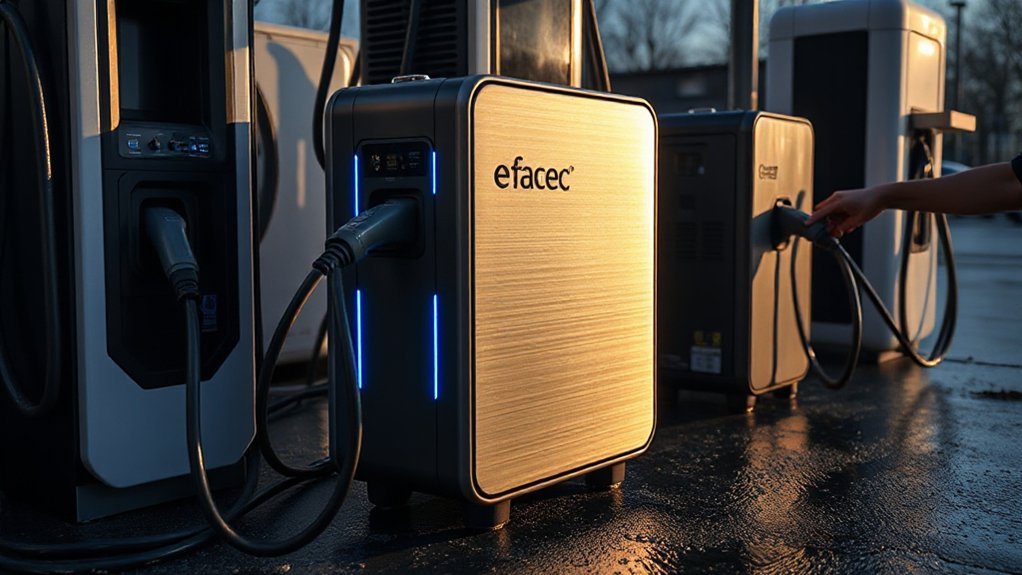
Efacec’s QC45 is a legacy 50 kW multi-standard DC fast charger delivering up to 125 A at up to 400–500 V DC, typically supporting CCS Combo 2 (IEC 61851-23/-24, IEC 62196-3) and CHAdeMO, with an optional 22 kW AC Type 2 output (IEC 61851-1). Built in Portugal, Portuguese heritage shows in rugged IP54/IK10 construction, air‑cooled design, and warranty terms (24 months).
You get 400 V ±10% three‑phase input at ~63 A, ≥94% efficiency, power factor >0.98, THD <5% (IEC 61000-3-12). It supports OCPP 1.5/1.6J, MID-compliant metering, and Type B RCD. Typical cables are 3–5 m. Operating range −25°C to +50°C, with altitude derating >1000 m. Dimensions ~1,800×600×350 mm, mass ~350 kg. Noise <65 dB(A). Ethernet/4G, RFID (ISO 14443), and remote diagnostics streamline uptime.
Delta DC Wallbox 50 Kw
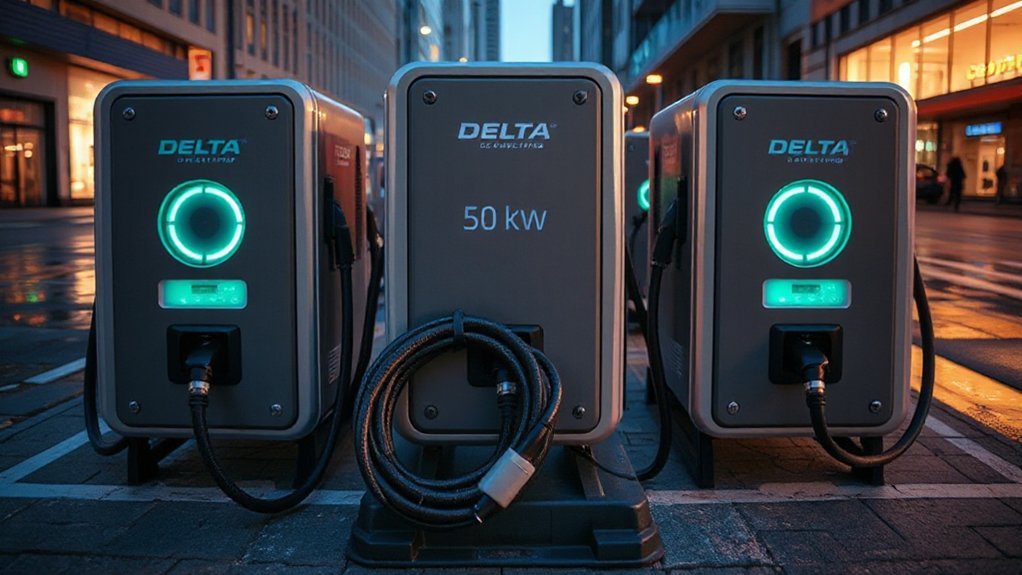
Compared with the QC45’s floor-standing unit, Delta’s DC Wallbox 50 kW packs the same output into a compact IP55/IK10 wall‑mount enclosure, delivering up to 50 kW across roughly 150–920 V DC (peak currents up to ~200 A at lower pack voltages) via CCS Combo 1/2 and/or CHAdeMO (IEC 61851‑23/‑24, IEC 62196‑3).
You get ~95% efficiency, >0.98 power factor, and forced‑air cooling under <65 dB(A). The user interface offers a bright display, RFID/NFC, and OCPP 1.6J via Ethernet/Wi‑Fi/LTE. Operating range −30 to +50 °C, with derating above 40 °C. Input: 400/480 V AC, 3‑phase, ~70–80 A. Protections include DC leakage, Type B RCD, surge (IEC 61000‑4‑5), and MID metering. Cables 3–5 m with holsters. Warranty terms typically 24–36 months, extendable with SLAs and remote diagnostics.
BTC Power 50 Kw DC Fast Charger
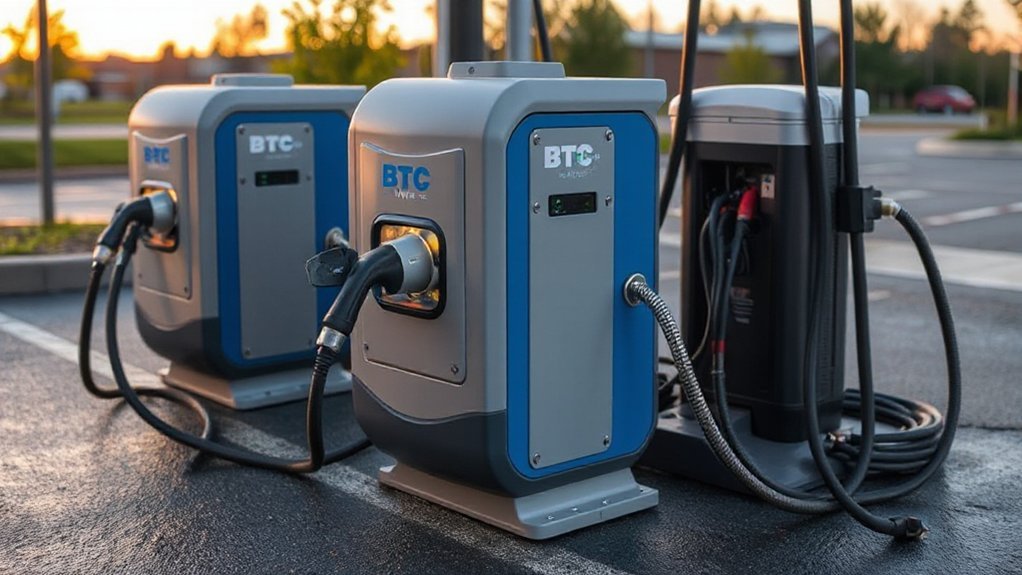
Workhorse of many North American sites, BTC Power’s 50 kW DC fast charger delivers up to 50 kW via CCS Combo 1 and CHAdeMO (SAE J1772/IEC 62196‑3; CHAdeMO 1.2), typically across ~200–500 V DC with peak currents up to ~125 A. You get 480 V AC three‑phase input, >94% efficiency, power factor ≥0.99, and UL 2202/2231 safety. It supports OCPP 1.6J, Ethernet/LTE backhaul, and RFID/EMV payments for fleet and public use.
BTC Power 50 kW DC fast charger with CCS/CHAdeMO, OCPP, RFID/EMV—efficient, UL-certified, fleet-ready
- IP54/NEMA 3R enclosure; −30 to +50 °C operation; 65 dBA.
- 3.5–4.5 m liquid‑ or air‑cooled cables; CSA/CEC compliant.
- Single‑port architecture; sequential CCS/CHAdeMO, not simultaneous.
- 600 × 800 × 1900 mm pedestal; ~350–400 kg.
- Manufacturer background: U.S. assembler with support; Warranty coverage: 1–2 years, extendable to 5 with SLAs.
Conclusion
You’ll pick a 50 kW DC fast charger by matching your fleet’s duty cycle to hard specs: 150–920 V DC, up to ~125 A (≈200 A at low voltages), 94–96% efficiency, PF ≥0.98, and CCS/CHAdeMO with ISO 15118/DIN 70121. Validate OCPP 1.6J, MID metering, Type B RCDs, IP54–IP65, and forced‑air or liquid‑cooled cables. Compare 24–36‑month warranties and SLAs. Remember, measure twice, cut once—right-sizing today prevents stranded kW and idle hours tomorrow, and costly service penalties.