
You want 22 kW “fast” AC, but real delivery hinges on your car’s onboard charger, three‑phase supply, breaker sizing, wiring, and thermal limits. To stay code‑compliant, you’ll size conductors at 125% for continuous load, specify the right RCD, verify service capacity, and secure permits. Smart load management and connector choice matter too. You’ll learn what to confirm—and what to skip—before committing hardware and budget.
Key Takeaways
- 22 kW AC typically delivers 50–80 km range per hour, but many sites see 11–17 kW due to vehicle, supply, software, and thermal limits.
- Full 22 kW requires three‑phase supply at 3×32 A (~400 V) and a vehicle with a three‑phase onboard AC charger.
- Confirm Type 2 or J1772 connector, cable length, and ratings; matched plugs and tethers must handle negotiated current with appropriate thermal protection.
- Before installation, perform load calculations, verify service capacity, obtain permits, and size breakers/conductors as 125% continuous load with suitable RCD/GFCI protection.
- Target ≤3% voltage drop, monitor cable temperatures and terminations, enable smart load management and scheduling, and consider 7–11 kW if overnight dwell suffices.
What 22kW AC Charging Really Delivers in the Real World

Often, a “22 kW” AC charger won’t deliver 22 kW to your EV because the car’s onboard charger, supply phases, and site wiring set the ceiling. In practice, you’ll see power capped by breaker ratings, voltage at the panel, load‑management settings, and thermal limits. Expect 11–17 kW in many homes and small sites, with current limited to protect conductors and terminations. Monitor cable temperature and confirm all terminations are torque‑checked per manufacturer specs. Verify RCD/GFCI operation and periodic testing. Energy delivered translates to range gains of roughly 50–80 km per hour at 12–18 kW, depending on vehicle efficiency. Seasonal performance matters: cold batteries accept less power and HVAC loads increase demand. Plan sessions to finish near departure, maintaining safe charge rates and code compliance.
Compatibility: Vehicle Onboard Chargers, Single Vs Three‑Phase, and Connectors

Confirm your vehicle’s onboard charger rating before specifying a 22 kW AC unit, because it dictates the maximum AC power you can actually accept. You’ll only achieve 22 kW with a three‑phase onboard charger and a three‑phase supply; single‑phase‑only vehicles will be limited to their single‑phase rating (often about 7.4 kW at 32 A). Verify phase availability, conductor sizing, and overcurrent protection per local electrical code to guarantee safe, compliant operation.
Onboard Charger Limits
While a 22 kW AC charger sounds universal, your EV’s onboard charger sets the ceiling: the station can only supply what the vehicle can accept. The onboard charger converts AC to DC at a rated kW; if yours is 7.4 kW or 11 kW, the EVSE will negotiate to that limit via the control pilot. Beyond nameplate ratings, software limits and thermal throttling protect the pack and power electronics, reducing current when temperatures rise or conditions aren’t met.
Check your vehicle’s charging spec, connector type (Type 2 or J1772), and maximum AC current in amps. A matched cable and plug rated for the current is required by code. Don’t force higher settings; set the EVSE to the vehicle’s current to prevent overheating and trips.
Single Vs Three-Phase
Because “22 kW AC” assumes three-phase power, you’ll only see that rate if both the supply and your car’s onboard charger support 3×32 A at ~400 V; a single‑phase car will cap at its 1‑phase rating (commonly 7.4 kW at 32 A or 11 kW only on 3‑phase‑capable vehicles). In practice, you must match your vehicle’s charger topology to the site’s phase availability. Europe’s Regional adoption of three‑phase (and its Industrial legacy) favors 22 kW via Type 2 connectors under IEC 61851. North America is mostly single‑phase; J1772 and Tesla AC typically peak at 11.5 kW. Verify grid phase, breaker capacity, and earthing before installation. Specify load balancing, RCD Type A+6 mA DC or Type B, and correctly sized cables, per local electrical code.
Home and Workplace Power Requirements: Capacity, Breakers, and Wiring
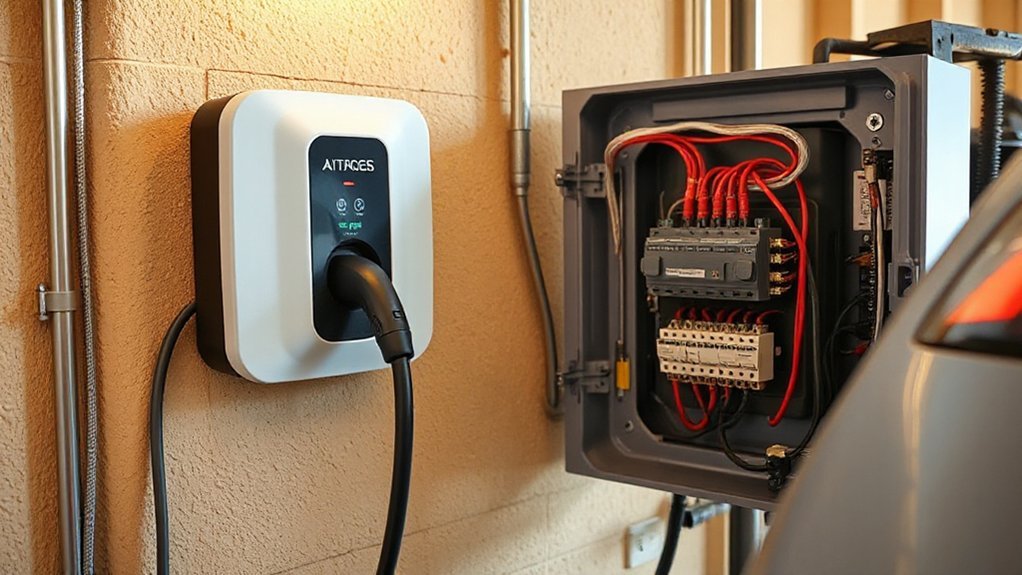
You first confirm your service panel can support a 22 kW charger by performing a code-compliant load calculation and planning a service upgrade if needed. Size the breaker for the charger’s continuous load at 125%, using the correct 2‑pole/3‑pole device and required RCD/RCBO protection. Select conductor gauge and insulation to meet ampacity, temperature, grouping, and voltage-drop limits, and have a licensed electrician pull permits and verify compliance.
Service Panel Capacity
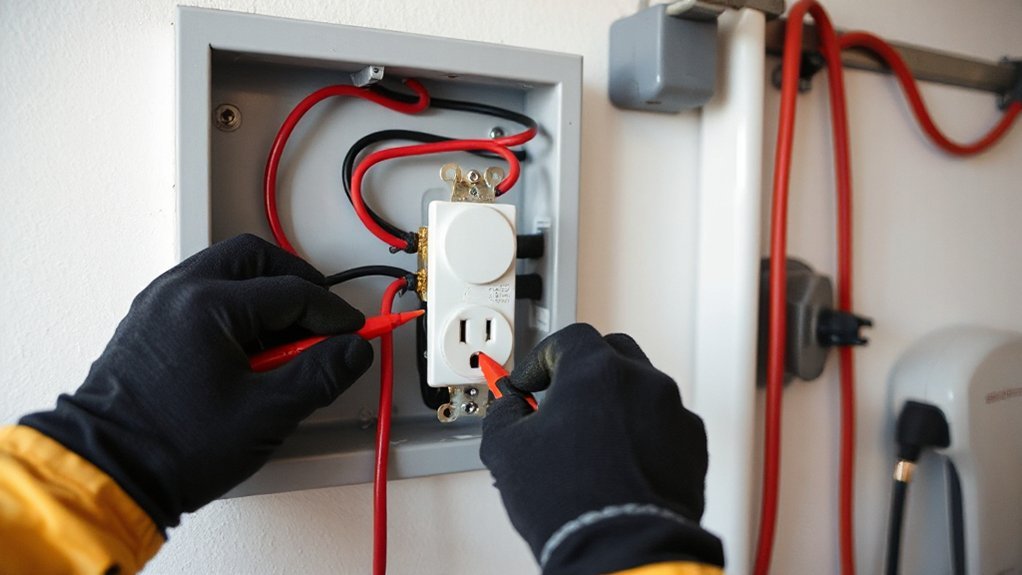


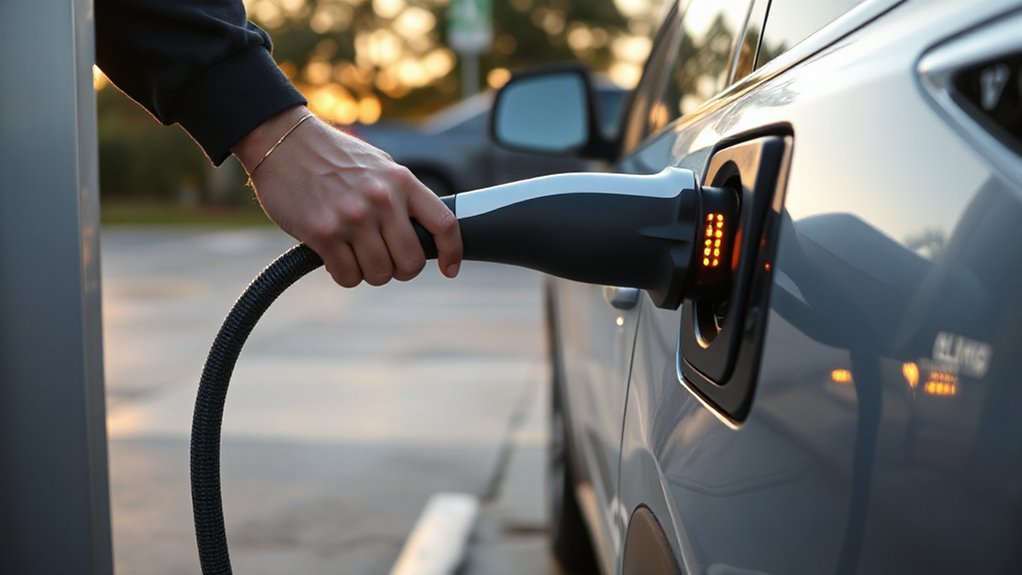
Before installing a 22 kW EV charger, verify your service panel can support the added continuous load and that the installation method complies with local code. Perform a load calculation (NEC Article 220 or local equivalent) to determine capacity under demand factors. Confirm service rating, meter base, main disconnect, and feeder conductors can carry the added load without exceeding nameplate or code limits.
Ensure the panel has physical space, clear labeling, proper grounding and bonding, and clearances. If capacity is tight, plan future expansion with a service upgrade or subpanel placement near the parking area to minimize feeder length and voltage drop. Coordinate with the utility for service-entrance capacity and transformer limits, and document calculations. Hire a licensed electrician and obtain permits and inspections.
Breaker Sizing Guidelines
While models and voltages vary, treat EV supply equipment as a continuous load and size the branch circuit at not less than 125% of the EVSE’s nameplate current per code and the manufacturer’s instructions. Determine the EVSE’s rated input current from its datasheet, then select the next standard breaker size at or above the 125% value. Apply ambient derating for high temperatures, enclosure grouping, and conductor count; if derated ampacity falls below demand, step up the breaker rating and associated equipment accordingly. Coordinate the breaker’s trip curve with upstream overcurrent devices to achieve selective coordination and prevent nuisance outages. Provide ground-fault protection as required by code and the EVSE listing. Verify short-circuit current rating and available fault current compatibility. Document settings on the panel.
Wiring Gauge Selection
As EV charging equipment is a continuous load, select conductor gauge so its corrected ampacity is at least 125% of the EVSE’s nameplate input current and not less than the branch‑circuit overcurrent device. Use copper THHN/THWN‑2 conductors, sized from the 75°C column to match terminal ratings. Apply ambient and adjustment factors for more than three current‑carrying conductors in a raceway, and verify conduit fill. Account for stranding effects and actual cable construction; not all “4 AWG” cables deliver identical ampacity. Check voltage drop: target less than 3% branch‑circuit drop at full load, upsizing when runs are long. Size equipment grounding conductors per code table. For three‑phase 22 kW, size per phase current; for single‑phase, consider 240 V loads near 100 A. Use listed fittings.
Installation Steps, Permits, and Safety Standards

Because a 22 kW EV charger draws high current, you must plan, permit, and install it to code. Start by verifying service capacity, fault current, and panel space, then select a listed charger and a properly rated breaker, disconnect, and wiring method.
Apply for permits early; ask your authority about Permit timelines and required drawings. Schedule utility coordination if a service upgrade is needed. After rough-in, use an Inspection checklist to verify bonding, grounding, GFCI where required, conductor ampacity, torque, labeling, and working clearances.
Follow this sequence:
- Site assessment, load calc, and design.
- Permit submission, utility review, procurement.
- Rough-in: conduit, conductors, disconnect, bonding.
- Final: terminations, labeling, functional tests, AHJ sign-off.
Test, document, and post operating and emergency shutoff instructions clearly.
Smart Features, Load Management, and Cable Options

With permits closed and tests passed, configure the charger’s smart and load-management functions to protect the service and meet code. Set maximum current per NEC/IEC limits, enable dynamic load sharing across multiple EVSEs, and lock enclosure. Use App Integration to schedule off-peak charging, authorize users, and view metering. Keep Firmware Updates automatic to maintain cybersecurity and interoperability. Specify Type 2 hardware; select tethered or socketed based on site policy, reach, and tamper-resistance. Choose 5–8 m cables only if routing and strain relief are compliant.
| Option | Best when |
|---|---|
| Tethered 5 m | Single-vehicle, daily use |
| Tethered 7.5 m | Longer reach; cable management |
| Socketed (Type 2) | Multi-user, public, or theft-prone sites |
| Coiled tether | Tight spaces; trip-hazard reduction |
Verify residual-current protection, thermal derating, and holstering to keep safe.
Costs, Common Pitfalls, and When 7–11kW Is the Better Choice

Though 22 kW looks compelling on paper, you’ll often spend more on thicker conductors, longer runs, larger breakers, and potential service upgrades than the EV or site can use. Many cars max at 7–11 kW AC, so you pay for capacity you can’t utilize. Factor lifecycle costs: copper, trenching, switchgear, inspections, and demand charges can eclipse hardware. Right-size to code, and prioritize safe clearances, RCD/GFCI protection, and load calculations.
- Choose 7–11 kW if overnight dwell times meet your needs and multiple vehicles share capacity.
- Avoid undersized feeders; voltage drop targets ≤3% on branch circuits.
- Verify panel headroom and utility limits before committing to 22 kW.
- Future-proof conduit paths; higher resale value comes from scalable design, not oversizing today for safety.
Conclusion
You want 22 kW speed, but—by coincidence—your car, wiring, and software often converge to deliver 11–17 kW. Verify three‑phase Type 2/J1772 support, size conductors and breakers at 125% for continuous load, and install required RCDs. Confirm service capacity, permits, and inspections. Choose tethered or socketed, add load management, and run spare conduit. When capacity or OBC limits collide, it’s safer and cheaper to spec 7–11 kW. Do it once, code‑compliant, and you’ll charge confidently, daily.