
You’re considering a 7 kW home charger: a single‑phase 230–240 V EVSE delivering ~32 A continuous (typically on a 40 A breaker). It restores most 50–70 kWh packs overnight, but only if the circuit, grounding, and RCD/GFCI protection meet code. Smart scheduling, OCPP/Wi‑Fi, and utility rebates can cut costs and manage load. Before you pick hardware or schedule installation, you’ll want to confirm a few critical details.
Key Takeaways
- A 7 kW home charger delivers ~7 kWh per hour on single‑phase 230–240 V, 32 A nominal continuous output.
- Typical charging times: 20–80% in 6–8 hours; 0–100% for ~70 kWh pack takes 10–12 hours; tapering above 80%.
- Electrical requirements: dedicated 240 V circuit, 40 A breaker for 32 A continuous load, proper grounding, GFCI/RCD, and commissioning tests.
- Installed cost ranges $1,300–$4,700 including hardware and labor; check utility rebates, tax credits, and TOU rates to reduce total cost.
- Smart features enable scheduling, current limits, load management with household usage, Wi‑Fi/Ethernet connectivity, and integration with solar and demand‑response.
What 7kW Means and Real‑World Charging Times
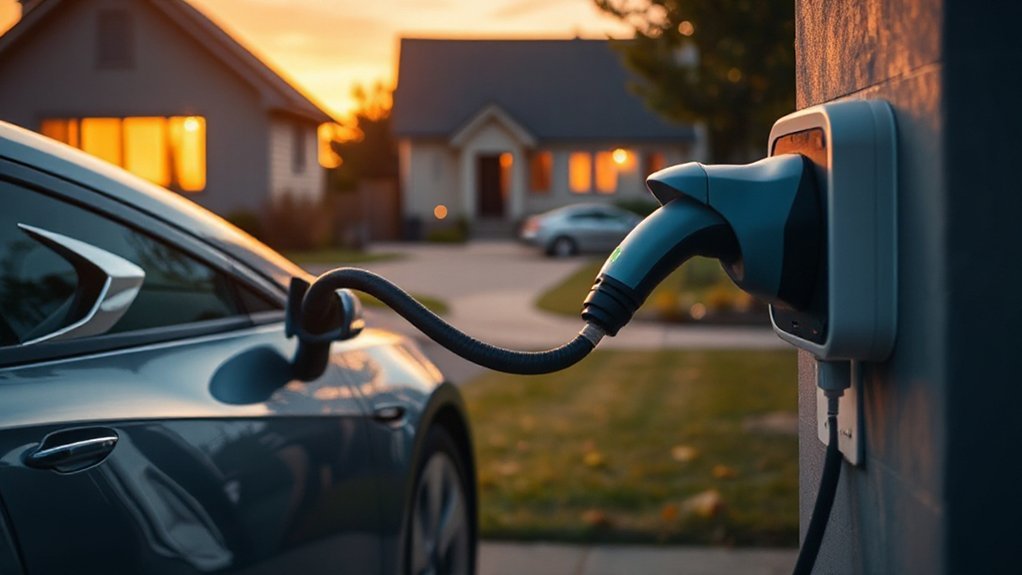
Definition first: 7 kW is the charger’s nominal continuous AC output power, typically delivered on a single phase (about 230 V at up to 32 A in EU/UK or 240 V at 30–32 A in North America), subject to the vehicle’s onboard charger limit. In kW definition terms, power equals energy per hour, so you add roughly 7 kWh to the pack each hour before losses. Real-world time estimates depend on usable battery size, onboard charger rating, state of charge, and temperature. Expect around 10–12 hours for 70 kWh from 0–100%, 6–8 hours from 20–80%, and 30–45 minutes per 10 kWh. Charging tapers above ~80%, extending final hours. Use listed EVSE, intact cables, proper ventilation, and follow manufacturer instructions for safe, code-compliant operation. Always.
Power Requirements and Single‑Phase Capacity
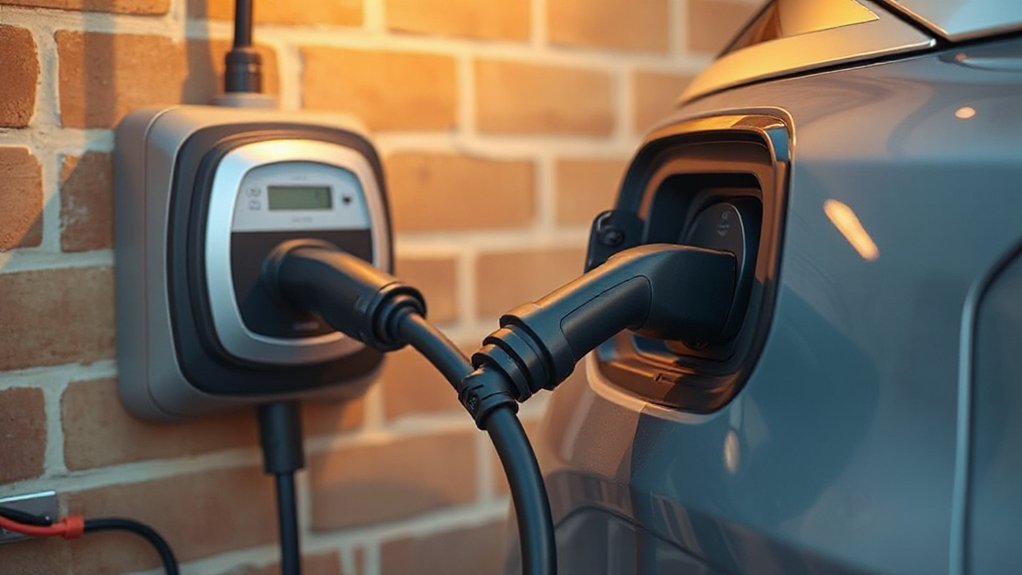
Although a 7 kW EVSE seems modest, it still requires a dedicated single‑phase supply sized and protected for continuous duty: about 230–240 V at up to 32 A. You should place it on its own 40 A branch circuit (32 A continuous at 125%), with conductors sized for voltage drop, ambient, and run length. Verify your service capacity and perform a whole‑home load calculation before adding the charger.
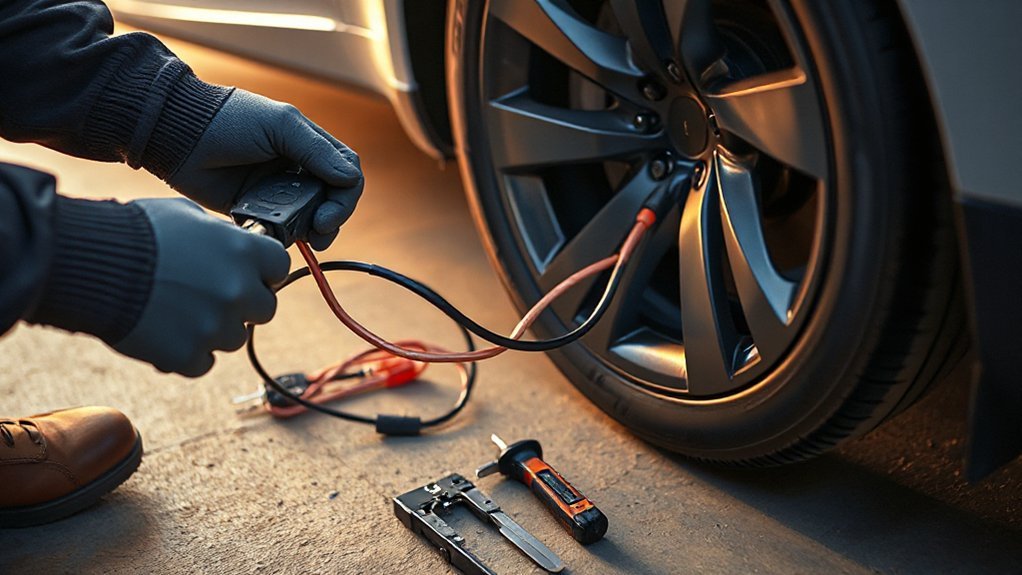
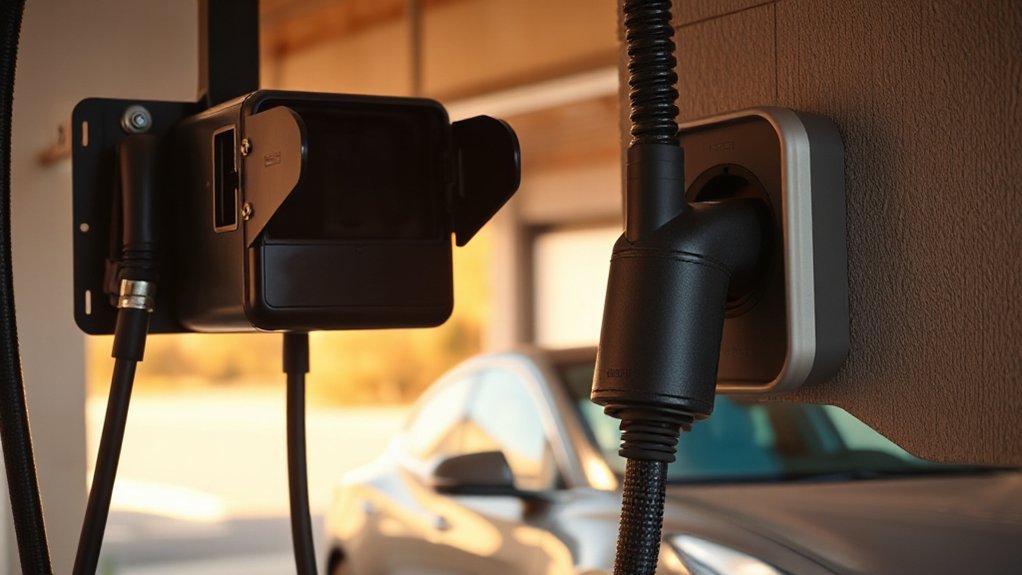
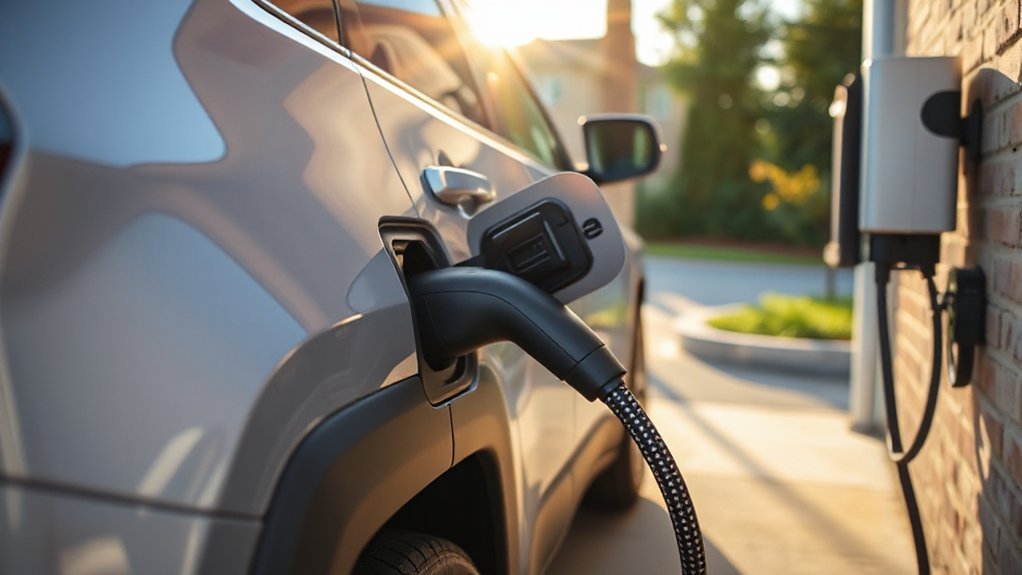

Use a listed unit with ground‑fault protection, an appropriate RCD/GFCI, and a disconnect where required. Bond the enclosure, follow manufacturer torque specs, and provide surge protection per local code. On split‑phase or three‑phase services, land the EVSE on a single leg and manage phase imbalance within utility limits. Commission by measuring current, voltage, and earth continuity.
Costs, Incentives, and Total Cost of Ownership
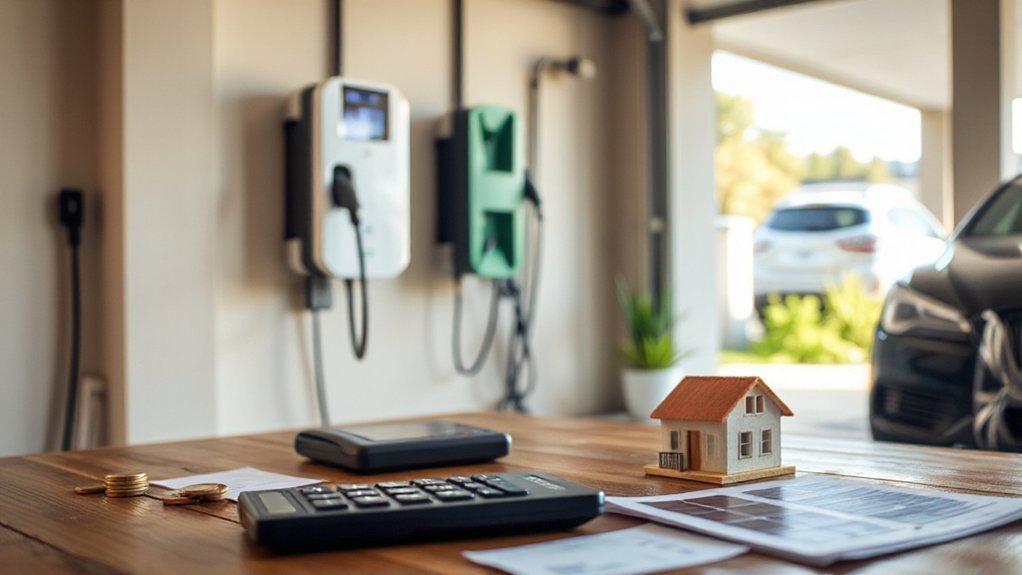
After sizing the circuit and verifying service capacity, you should budget the 7 kW charger as a project with equipment, installation, and operating costs.
Itemize EVSE, mounting hardware, conduit, GFCI protection, permits, and inspection fees. Obtain quotes from licensed electricians; require accurate load calculations and NEC-compliant labeling. Include trenching, panel upgrades, AFCI/GFCI, and surge protection. Estimate operating cost from kWh rates and charging patterns. Apply tax incentives, utility rebates, and, for businesses, depreciation schedules; keep serials and invoices for audits. Model 10‑year total cost, including warranty, maintenance, and replacement of wear items like cords.
| Cost component | Typical range | Compliance notes |
|---|---|---|
| EVSE + hardware | $500–$1,200 | UL listed, 125% continuous load sizing |
| Installation | $800–$3,500 | Permit, inspection, AFCI/GFCI, labeling |
| Operating (annual) | Varies by kWh | TOU rates, load calculations |
Smart Features, Connectivity, and Load Management
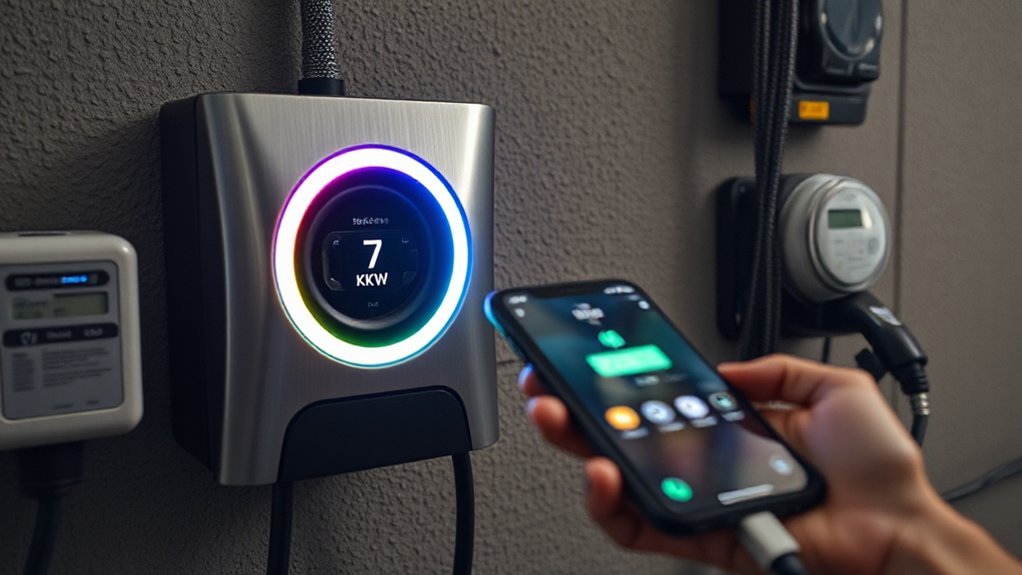
How can smart features make a 7 kW home charger safer, cheaper to run, and code compliant? Smart controls let you set current limits, schedule off‑peak sessions, and enforce ground‑fault and overcurrent protections per NEC/IEC requirements. Through app integration, you can authenticate users, lock the connector, and view real‑time power, voltage, and temperature. Connectivity (Wi‑Fi, Ethernet, OCPP) enables secure firmware updates that patch security issues and maintain metering accuracy. Dynamic load management balances the charger with household loads, calculating available amperage from main service measurements and throttling output to prevent nuisance trips. With energy optimization, you can align charging with solar export or dynamic tariffs, apply demand‑response signals, and set kWh budgets. Audit logs, alerts, and encrypted sessions preserve safety, privacy, and regulatory traceability.
Installation, Safety, and Vehicle Compatibility
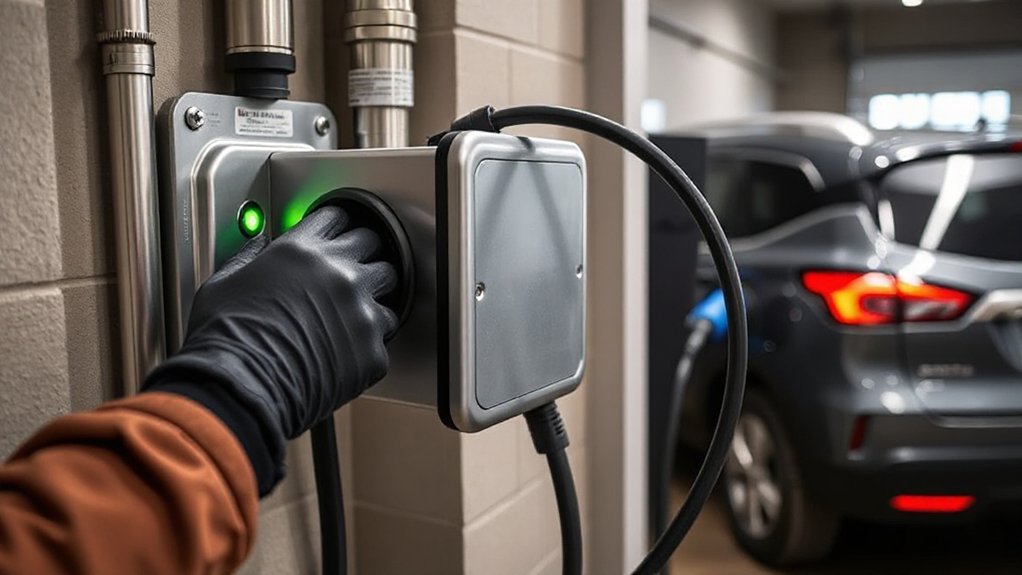
Before you bolt a 7 kW EVSE to the wall, verify your service capacity and plan a code‑compliant circuit. Use a dedicated 240 V, 40 A breaker for a 32 A continuous load (80% rule). Size conductors for temperature and run length; use copper THHN in conduit where required. Mount within listed height, clearances, and weather rating.
Implement Grounding procedures: bond the enclosure, land equipment grounding conductor on the EVSE, and test fault paths. Protect with GFCI/RCD and surge protection. Follow Connector standards: SAE J1772 (Type 1) in North America, Type 2/IEC 62196 in EU; confirm CCS compatibility. Verify vehicle limits; onboard chargers accept 7 kW single‑phase. Tesla uses J1772/Type 2 adapters. Commission by torqueing lugs, labeling, and performing insulation, continuity, and function tests.
Conclusion
You choose a 7 kW home charger to refill overnight and stay within single‑phase limits. Size a dedicated 32 A continuous circuit on a 40 A breaker, verify grounding, and follow local and national codes. Use smart scheduling and load management to cut costs and protect service capacity. Confirm rebates, OCPP/Wi‑Fi features, and your vehicle’s onboard AC limit. Hire a licensed electrician, get permits, and commission testing—belt‑and‑suspenders safety that keeps you charging like clockwork daily.