
You’re weighing Level 3 options for fleet sites: ABB Terra 360, ChargePoint Express Plus, Tritium PKM150, Siemens SICHARGE D, and Kempower Power Unit + Satellite. Compare 150–360 kW blocks, 300–500 A liquid‑cooled leads, ISO 15118/CCS, OCPP 1.6/2.0.1, revenue‑grade metering, IP54–65/NEMA enclosures, and N+1 hot‑swap modules with dynamic load sharing. The differences in power granularity, uptime strategy, and fleet software integration can change your total cost and queuing model—
Key Takeaways
- ABB Terra 360: 360 kW with up to four outputs, 500 A liquid-cooled CCS, >95% efficiency, IP54, ISO 15118 Plug & Charge, OCPP 1.6/2.0.1.
- ChargePoint Express Plus: depot-scale cabinets to 500 kW per dispenser, 10 kW granularity, 920 V/500 A, ISO 15118-20, cloud load management and OpenADR demand response.
- Tritium PKM150: 150 kW modular, dynamic dual-port sharing, 200–920 V up to 375 A, hot-swappable 30 kW modules, IP65 enclosure, >99% uptime.
- Siemens SICHARGE D: up to 300 kW, 150–1000 V, 500 A liquid-cooled CCS, 97% efficiency, OCPP 2.0.1, robust UL/NEC compliance for U.S. installations.
- Kempower Power Unit and Satellites: scalable 50–400 kW cabinets powering up to eight dispensers, dynamic routing, 200–1000 V, 300–500 A cables, hot-swappable modules.
ABB Terra 360


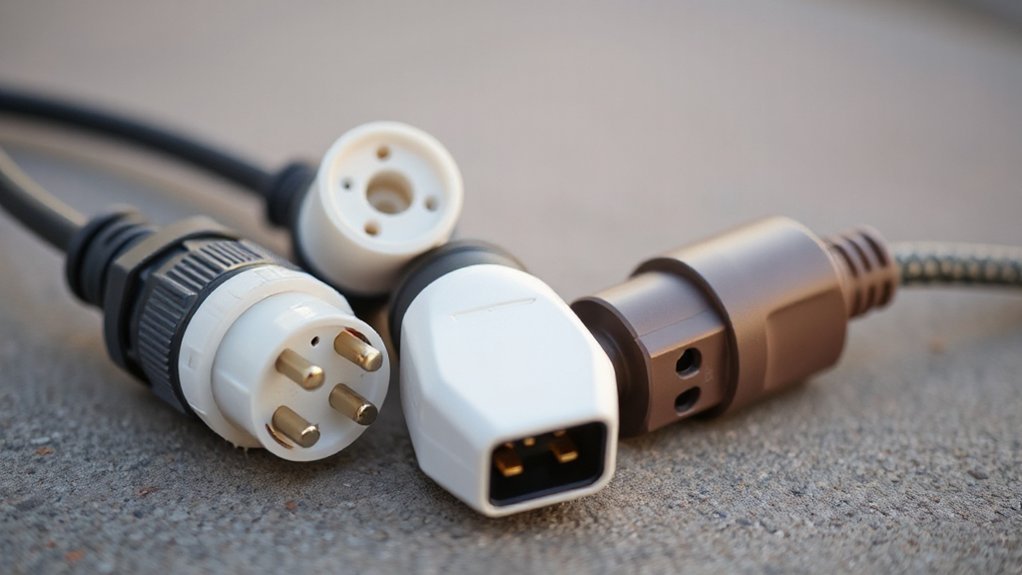


Picture a 360 kW DC fast-charging cabinet that dynamically splits power across multiple outlets: ABB’s Terra 360 delivers up to 360 kW total, with liquid‑cooled leads supporting up to ~500 A per CCS connector and pack voltages to ~1000 V (variant-dependent). You can allocate power across up to four outputs via modular 30 kW blocks, maintaining >95% efficiency, PF >0.99, and THDi <5%. It supports CCS1/CCS2, ISO 15118 Plug & Charge, DIN 70121, OCPP 1.6/2.0.1 for software integration, and IEC 61851-23/-24. Input: 400–480 Vac, 3Φ, 50/60 Hz. Enclosure ratings reach IP54/IK10; operating range typically −35 to +50 °C. Plan maintenance scheduling through remote diagnostics, field-replaceable power modules, and scheduled filter checks. You’ll meet utility interconnect, ADA, and metering requirements. Site layouts remain compact, scalable.
ChargePoint Express Plus Platform

Depot-scale, modular DC fast‑charging architecture, ChargePoint’s Express Plus Platform aggregates swappable power modules into site cabinets and liquid‑cooled dispensers to deliver high‑power CCS charging with dynamic, multi‑port power sharing. You can configure from 200 kW to 500 kW per dispenser, in 10 kW module granularity, with up to 920 V output and 500 A continuous via liquid‑cooled cables. ISO 15118-2/-20, OCPP 1.6/2.0.1, and UL 2202/2231 compliance supports secure, standards-based operation. Through Cloud integration, you orchestrate load management, while Fleet management tools schedule charging by SOC, dwell time, and constraints. NEC Article 625 alignment, integrated galvanic isolation, and <1% THD protect your facility. Redundant modules enable N+1 reliability and hot-swap serviceability, minimizing MTTR. You’ll capture utility incentives with MID‑compliant metering and demand-response via OpenADR 2.0b.
Tritium PKM150 Modular DC Fast Charger

After exploring ChargePoint’s high‑power, cabinet‑based architecture, you can evaluate Tritium’s PKM150, a 150 kW modular DC fast charger designed for distributed, sealed, liquid‑cooled operation with dynamic, multi‑port power allocation. It delivers up to 150 kW at 200–920 Vdc and 0–375 A, with dynamic allocation across two ports. Liquid cooling enhances thermal stability and lighter cables, sustaining 500 A peaks under ISO 17409 protections. The sealed IP65, IK10 enclosure operates from −35 to +50 °C. Hot swapping 30 kW power modules minimizes MTTR and supports >99% uptime. You get CCS1/CCS2, optional CHAdeMO, ISO 15118 Plug & Charge, and OCPP 1.6J/2.0.1. NEC/UL conformity enables NEVI-ready deployments with revenue-grade MID/ANSI C12.20 metering. Expect >95% efficiency, 4–5 m cable reach, and Ethernet/LTE with RFID for access and billing.
Siemens SICHARGE D

Precision defines Siemens’ SICHARGE D: a modular DC fast charger delivering up to 300 kW across a 150–1,000 Vdc window with dynamic, multi‑port power sharing to balance load and maximize site throughput. You get up to 97% efficiency, liquid‑cooled CCS connectors to 500 A, and ISO 15118/DIN 70121 interoperability via IEC 61851‑23/-24 power control. OCPP 1.6J/2.0.1 enables backend roaming, smart charging, and revenue metering. Specify UL 2202/2231 and NEC 625 compliance for U.S. sites. Plan installation considerations: 480 Vac three‑phase service, transformer capacity, pad footprint, conduit routing, clearances, and IP54 outdoor exposure. Support cable management and ADA reach. Schedule maintenance scheduling proactively: quarterly visual checks, fan/filter service, annual firmware, contactor inspection, torque verification, calibration, and test‑charge validation to sustain uptime SLAs and warranties.
Kempower Power Unit + Satellite System

Power-distribution architecture pairs Kempower Power Units with Satellite dispensers to deliver modular DC fast charging in 50 kW increments, dynamically routed per outlet for high utilization. You deploy 1–8 Power Modules per cabinet (50–400 kW) and feed up to 8 Satellites, each with dynamic load sharing across CCS1/CCS2 at 200–1000 VDC. Cables with liquid cooling sustain 300–500 A. You meet ISO 15118-2, DIN SPEC 70121, OCPP 1.6/2.0.1, and NEC Article 625. Satellite scalability lets you expand bays without re-permitting the backend. Firmware orchestration coordinates rectifiers, contactors, and thermal loops, optimizing uptime and MTTR with hot-swappable modules. You’ll manage energy via site-level EMS and utility demand response.
- Glowing LED rings guiding vehicles to ports
- Compact pedestals flanking drive aisles in rows
- Session telemetry
- Cable gantries
Conclusion
It’s no coincidence you gravitate to platforms that converge on CCS, ISO 15118, and OCPP; you’re optimizing uptime and ROI. Each delivers liquid‑cooled cables, hot‑swappable power modules, dynamic multi‑port allocation, and revenue‑grade metering. You’ll differentiate on quantitative levers: 300–500 A limits, 150–360 kW granularity, IP/NEMA enclosures, N+1 redundancy, and fleet cloud orchestration. Choose the architecture that scales: modular cabinets plus satellites, depot‑ready layouts, and standards compliance so firmware, billing, and load management remain interoperable long‑term.