You probably don’t know the 1912 water‑main map still dictates your block’s drainage and tree canopy. You’ll trace it alongside Sanborn fire insurance sheets, tax rolls, and building permits to see why one facade survives and another peels. Oral histories and microclimate logs from the ferry slip corroborate the zoning edge you feel at dusk. If you want transit, reuse, and culture to align here, start with those archives—then watch what they contradict next.
Key Takeaways
- District boundaries per Ordinance No. 312: Court Street to Market Square, 118 Main cast iron to 244 Court Art Deco infill.
- Sanborn Fire Insurance Maps (Vol. 2 sheets 14–21; 1908, 1911, 1912) document footprints, heights, and materials for corner stores, mills, depots, and churches.
- Boathouse ledgers at 9 Wharf Lane and Map Case 7, Drawer C tide charts guide skiff rentals and safe kayak timing.
- 1978 Sanborn maps show a warehouse belt south of the rail viaduct; 1983 minutes start pilot live-work on Water and 6th.
- Transit context: 1912 BERy timetable aligns with today’s Green and Orange lines; use CharlieCard, yield on cobbles, and ring early on narrow streets.
Past and Present: How History Shapes Today
Because Tremé’s present soundscape grew from paper trails as much as porches, you can track today’s second lines through the city’s own records: baptismal registers at St. Augustine, procession permits, and municipal code dockets. You hold photocopies; you read marginal notes naming captains, routes, and fines. Policy legacies echo: a curfew ordinance squeezed tempos; a noise citation shifted drum breaks to Sunday afternoons.
You consult minutes from the Police Jury, WPA song transcriptions, and 1890s newspapers. You hear refrains recur because clerks fixed them in ink. Collective memory isn’t hazy romance here; it’s ledger-backed rhythm. When you step into the parade, you don’t just dance; you verify. Feet follow filings, horns quote filings, and today’s chorus stamps yesterday’s seal. Archives pace you between beats.
Neighborhoods and Districts
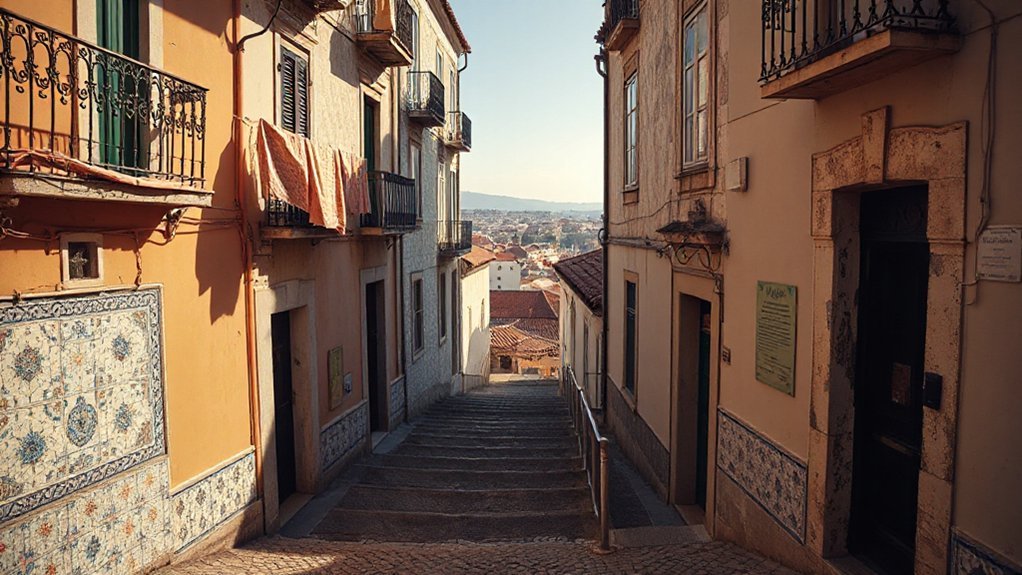
You start in the historic quarter, tracing the 1870s street grid with Sanborn fire insurance maps, city directories, and tax assessment rolls to frame an overview of mills, markets, and rowhouses. You compare those records with present parcel files and preservation ordinances to see which facades survived, which lots consolidated, and how streetcar lines redirected foot traffic. Then you cross into the arts district, reading building permits, gallery announcements, and warehouse adaptive-reuse filings to chart the rise of studios, murals, and late-night venues.
Historic Quarters Overview
This overview maps the city’s historic quarters through primary records—Sanborn Fire Insurance Maps (1880s–1950s), county plat books, city directories, deed and tax rolls, WPA inventories, and local preservation survey files—to define district boundaries, eras of build-out, and land-use patterns.
You trace grids to plats and read notes on materials, hearths, and storefront widths. You identify Architectural styles from map shading and permit dates, then flag Preservation challenges where alterations, vacancy, or fire loss cluster. Cross-reference corner stores, mills, depots, and churches to reconstruct function.
- Brick cornices shadow trolley-cut curbs.
- Shotgun cottages climb; porch posts numbered.
- Silos moor rail spurs; soot on 1912 sheets.
- Corner synagogues, lodges; occupancy codes penciled.
Use this archive-first map to set boundaries, target surveys, and brief stakeholders before policy decisions.
Trendy Arts Districts
How did the warehouse belt south of the rail viaduct become the “arts district” on brochures? You trace it in leases, permits, and photographs. Start with the 1978 Sanborn maps marking cold-storage and machine shops. Then read the 1983 redevelopment minutes: “pilot live-work,” three blocks on Water and 6th. Gallery postcards from 1991 list Friday walks; the city’s 1994 fire inspection ledger flags exposed wiring, prompting sprinkler retrofits and shared Emergency Preparedness drills. Studio co-ops filed bylaws in 1998 requiring Insurance Coverage after a kiln flare. In 2005, the BID plan rebranded dock doors as murals and loading bays as plazas. You confirm the shift in utility records—demand after 6 p.m.—and in rent escalations that replaced welders with curators. Keep the receipts; stories persist.
Signature Landmarks and Can’t-Miss Sights

You anchor your route at the iconic monuments verified by plaque inscriptions, city council minutes, and WPA photographs. You read the fabric of the historic districts through 1912 Sanborn Fire Insurance maps, National Register nomination forms, and tax appraisal rolls, then walk the blocks they describe. For panoramic viewpoints, you climb the overlooks marked on the 1898 USGS quadrangle and match the horizon line to early postcard panoramas in the local archive.
Iconic Monuments
Stone and bronze fix the city’s memory in place, and you can trace its can’t-miss landmarks through the record: council minutes noting appropriations and dedications, Sanborn Fire Insurance Maps pinning footprints and heights, and National Register nomination forms detailing architects and alterations. You read plaques against budget lines, cornerstones against ledger ink, and see Material Innovation documented alongside Structural Engineering calculations in plan sets. The equestrian at the square, the obelisk by the river, the cenotaph at the courthouse—each has a file, a drawing number, a contractor’s affidavit.
- Dawn light catching chisel marks on a weathered base
- River mist beading on patinated bronze
- A datum bolt glinting at the monument’s plinth
- Archival stamps bleeding purple on linen sheets
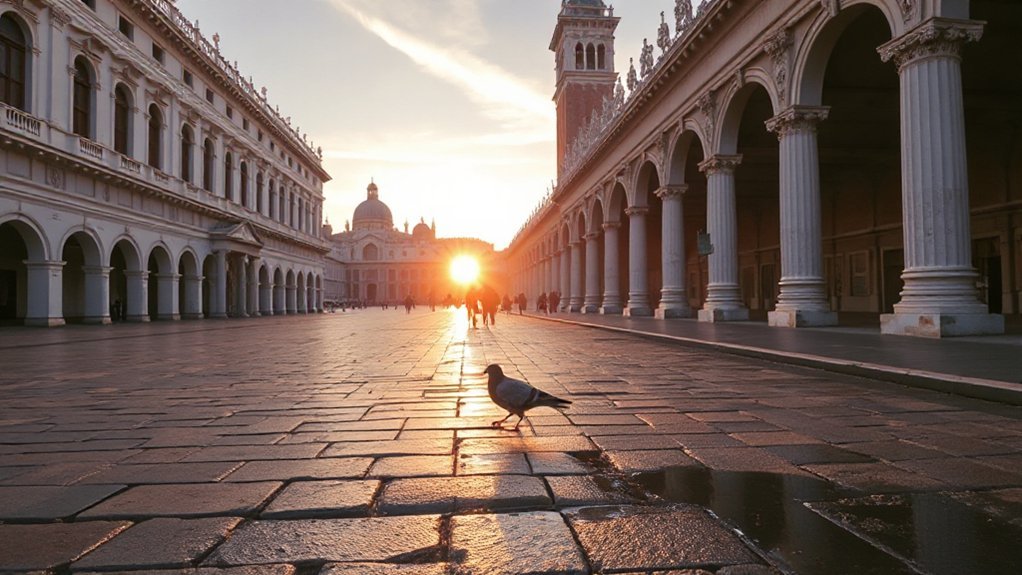
You map memory to measured linework.
Historic Districts
Although monuments fix single points, the historic districts braid whole blocks into the record: Ordinance No. 312 establishes boundaries from Court Street to Market Square; the National Register district form (NRHP #78-00456) sets a 1870–1935 period of significance and tallies 146 contributing resources; Sanborn Vol. 2 (1911, sheets 14–21) traces brick cornices, party walls, and the streetcar’s turn at Main.
Walk blockfronts with the 1923 assessor’s ledger in hand; you’ll read uses, owners, and alterations penciled in margins. Compare storefront mullions and cornice lines to notes in the 1908 city atlas to parse Architectural Styles. Consult Preservation Ordinances 312 and 417 before altering a facade; you’ll need drawings, paint analysis, and sash profiles. Start at 118 Main—cast iron; end at 244 Court—Art Deco infill.
Panoramic Viewpoints
Where best to take in the whole town? Climb Court Hill’s cupola stairs, as mapped on the 1908 Sanborn sheet, and you’ll read the grid like a ledger. Check the Weather Dynamics log at the depot; on north winds, Air Clarity snaps, river bends shine, and mill smoke stands still.
- Dawn glazing slate roofs from Bell Tower Walk.
- Noon shadows stitching Main to Depot, seen from Granite Overlook.
- Storm fronts marching, flagged by the lighthouse anemometer.
- Twilight trains threading sodium light along the viaduct.
From the waterworks embankment, the 1932 postcard vantage still holds; align the steeples to sight the old streetcar line. Hike Switchback Trail to Mile 2.1—the survey cairn—where the panorama matches the 1897 plat, proof in iron pins set flush today.
Eating, Drinking, and Nightlife

Because the neighborhood’s appetite is documented as much as tasted, you can trace its tables and taps through permits, ledgers, and late editions: city directories that swap “saloon” for “soft drink parlor” during Prohibition, Sanborn maps labeling “restaurant,” “lunch room,” and “cabaret,” liquor-license dockets that spike after repeal, and health department cards noting oyster counters, chop houses, and all-night cafés. On Cedar at 3rd, the 1911 directory lists Bohm’s Buffet; by 1930, the same address pours sodas. You follow the trail to 427 Harbor, where a 1954 beer license hangs beside a menu stamped “smelt fry Fridays.” Bar guides from 1978 pencil in happy hour rules; you refine today’s Happy hour etiquette. Baptize dry nights with Mocktail mixology cribbed from a 1940s soda-fountain manual.
Arts, Culture, and Community Life
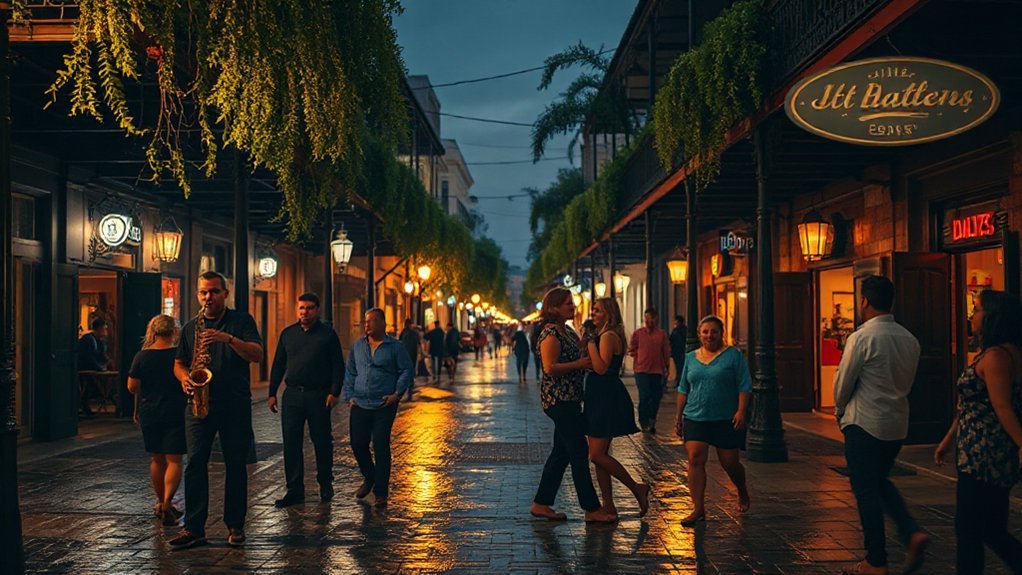
Cataloging the neighborhood’s stages and sidewalks, you read culture in paper and paint: playbills stacked in the 1923 Opera House folder at 214 Cedar, parish bulletins from St. Brigid’s basement file, mimeographed grant ledgers at the Arts Council desk. You trace artist collectives through sign-in sheets, studio keys tagged “Loft B,” and handbills for Thursday salons. Clipped minutes record cultural exchanges—Yurok songs taught beside Polish reels—while ticket stubs fix dates to faces.
Reading culture in playbills, bulletins, ledgers; tracing collectives by keys, sign-ins, handbills. Minutes braid Yurok songs with Polish reels; ticket stubs pin dates to faces.
- Coal-smudged marquee letters drying on a window ledge
- A brass bell marking curtain time, etched 1931
- Chalk arrows guiding you down to the rehearsal crypt
- Inked thumbs on petitions to save the mural wall
You close the ledger, then step into tonight’s reading; the archive keeps listening. In the cedar-brick hall again.
Parks, Waterfronts, and Outdoor Adventures
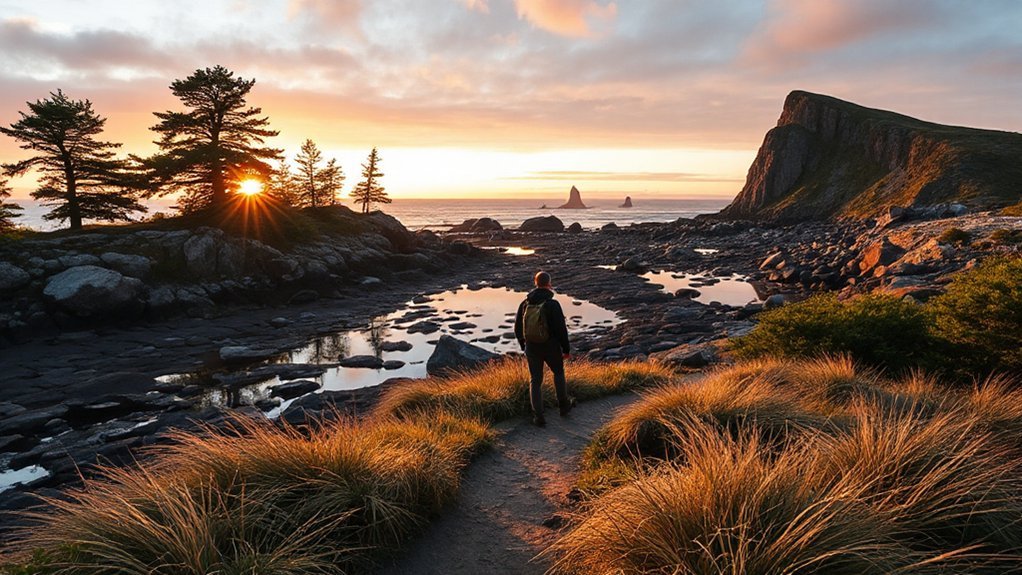
Though the river looks level at dusk, the files say otherwise: tide charts pinned in Map Case 7, Drawer C; ranger incident logs from Alder Bluff trailhead (mile 3.2) noting cougars and blowdowns; boathouse ledgers at 9 Wharf Lane tallying skiff No. 42’s rentals and oar repairs. You shoulder the daypack, sign the trail book, and move toward the cottonwoods. The mud keeps receipt—egret prints, boot treads, a dog’s looping story. For bird watching, you trust the 1989 banding notes and what your ears add. For water, you choose quiet: kayak rentals, a slack tide, a borrowed chart. You mark the ebb, and hush.
| Kept | Felt |
|---|---|
| Feather | Grease |
| Bark | Silence |
| Tideline | Wingbeat |
| Resin | Rain |
Getting Around and Local Know-How

Where do you begin? In Boston, you move best by reading the past and riding the present. The 1912 BERy timetable shows the same spine you’ll follow on the Green and Orange today; the 1947 Trackless Trolley map still explains hills and gaps. Use transit apps to time the T and commuter rail, but keep paper clues: station mosaics name vanished squares. Mind bike etiquette on narrow streets laid in 1630; yield on cobbles, ring early, line up at signals.
- Bronze letters at Park Street, slate cool beneath your shoes
- Salt air at Maverick as ferries nose the pier
- Bell clang at Lechmere, echoing car barns
- Brick dusk on Union Square, wheels whispering
Carry a CharlieCard; cash slows the queue.
What’s Next: Trends, Development, and the Future

You’ve read the mosaics and timed the headways; now look to the plans stamped in board minutes and environmental filings. In the 2027 capital plan, page 42, you’ll see phased station retrofits, battery-electric buses piloted on the Crosstown, and a faregate upgrade tied to open payments. The EIS scoping memo dated May 9, 2025 maps the rezoning around the riverfront piers, aligning height caps with floodplain elevations and district energy loops. Meeting audio, 3:14:22, records a vote to prioritize Tech Innovation labs in the former depot, conditioned on apprenticeship slots. Procurement docket 23-118 details recycled aggregate for curb rebuilds—part of Sustainable Growth benchmarks. Track the bond calendar; the August issuance funds seawall reinforcement and shade canopies. Expect pilot data releases quarterly via city archives.
Conclusion
You’ve traced the city’s past to its present, block by block. Now you stitch plans to fit the grain: measure twice, cut once. You’ll lean on Sanborn fire maps (1905), Works Progress photos, the 1978 zoning minutes, and church-basement tapes to guide reuse and transit tweaks. From cornice lines to microclimates at the river edge, you calibrate. Keep listening, documenting, and iterating so today’s choices read clearly in tomorrow’s ledgers—and the neighborhood recognizes itself again.