
Imagine this: you own a 2018 Leaf with the 6.6 kW onboard charger, and you’re planning a 240 V J1772 Level 2 install on a dedicated, GFCI-protected circuit. You’d select a 32 A EVSE so the pilot signal matches your car’s draw, avoiding overloads and slowdowns. But before you pick hardware or book an electrician, you’ll need to confirm a few specs that prevent nuisance trips—and costly rework.
Key Takeaways
- The Nissan Leaf uses a J1772 connector for Level 2 charging on 240 V AC via an EVSE.
- Onboard charger capacity: 2011–12 ~3.3 kW; 2013–17 SV/SL 6.6 kW (S 3.3 unless packaged); 2018+ generally 6.6 kW.
- A 32 A Level 2 EVSE (≈7.7 kW) suffices; 40 A adjustable units add flexibility if your panel supports it.
- Expect roughly 12–14 miles/hour at 3.3 kW, and 20–25 miles/hour at 6.6 kW in moderate conditions.
- Install on a dedicated 240 V circuit with correct breaker (125% rule), permitted and inspected by a licensed electrician; look for rebates.
How Level 2 Charging Works With the Nissan Leaf
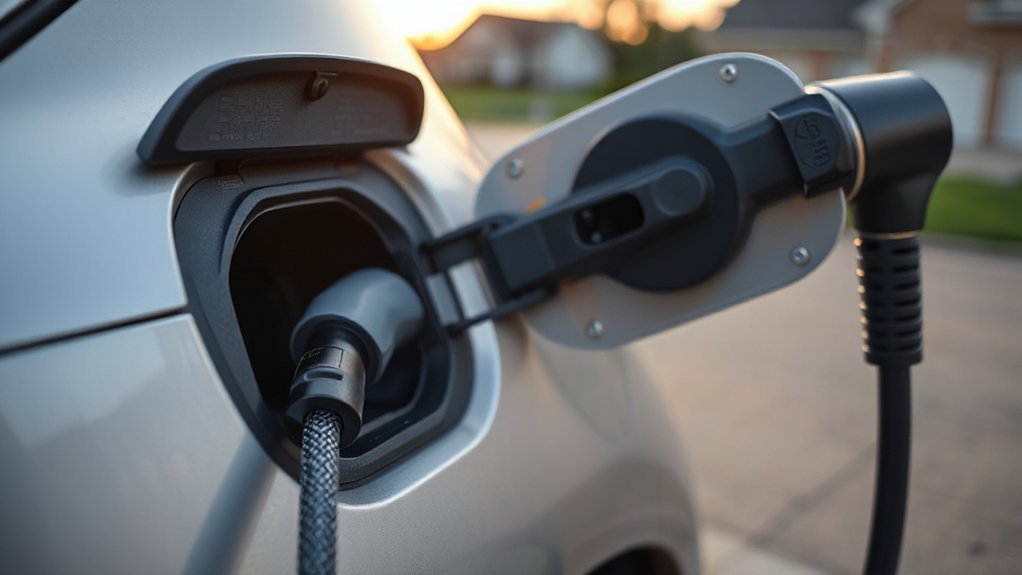
While Level 2 charging looks like a simple plug-in, your Leaf manages a controlled 240 V AC process through a J1772 EVSE: the station’s pilot signal negotiates a safe current limit, and the Leaf’s onboard charger converts AC to DC for the battery at up to the car’s rated capacity (typically 3.3 kW on early models and 6.6 kW on later ones). You initiate the EVSE handshake by inserting the connector fully, then waiting for charging confirmation before leaving the vehicle. Verify the cable is undamaged, ventilation isn’t required, and the breaker matches the circuit. During AC conversion, heat rises; keep vents clear to maintain efficiency. Monitor the dash for amperage, time-to-full, and faults. If charging stops, inspect latch, connector alignment, and power, then restart. Avoid extension cords, loose adapters, or wet contacts.
Compatibility by Model Year and Trim
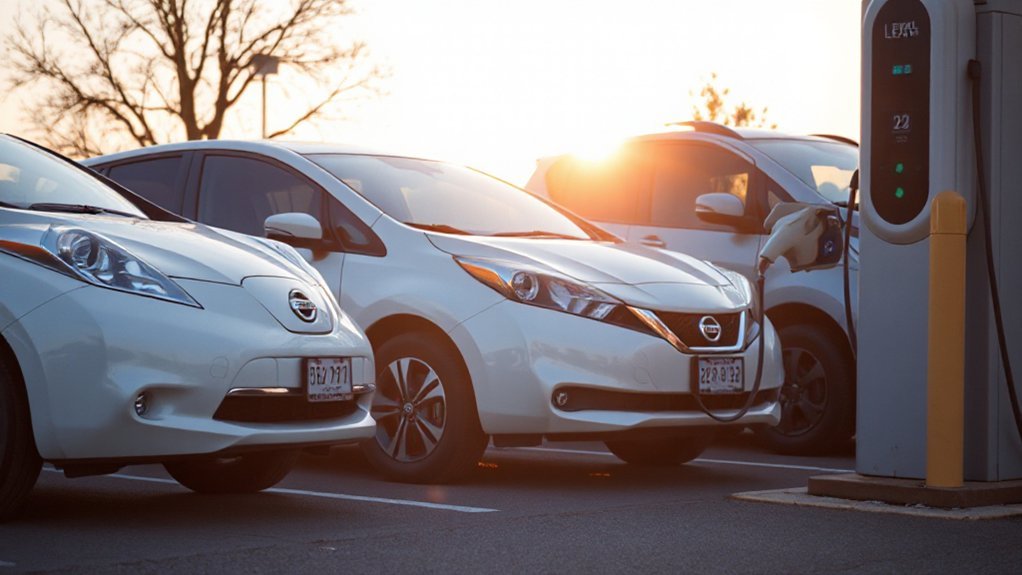
You should verify charger compatibility by Leaf model year and trim before purchasing or installing any equipment. For 2011–2017, confirm onboard charger rating (3.3 kW vs 6.6 kW), CHAdeMO presence, and any firmware or connector requirements. For 2018–2024, check trim-specific onboard charger power, DC fast-charge inclusion, and thermal management interactions that affect charging behavior and warranty compliance.
2011–2017 Compatibility Notes
Before selecting or installing a charger, confirm the Leaf’s model year and trim, because Nissan changed onboard AC charger power and DC fast‑charge equipment between 2011 and 2017. 2011–2012 cars ship with a 3.3 kW onboard charger (max ~16 A at 240 V) and an optional CHAdeMO port bundled with higher trims/packages. From 2013, SV/SL usually include a 6.6 kW charger (draws ~27–30 A), while S may have 3.3 kW unless the Charge Package is present.
- Verify the onboard charger rating on the dash label or build sheet.
- Match EVSE output: 16 A circuits for 3.3 kW; 32 A for 6.6 kW.
- Confirm J1772 plug fit; avoid third‑party adapters unless certified.
Use GFCI-protected circuits, check App compatibility, and plan Adapter compatibility.
2018–2024 Trim Differences
Although Nissan unified most charging hardware from 2018 onward, confirm year and trim before selecting equipment, because AC and DC capabilities vary in how they’re packaged. For 2024, both Leaf S (40 kWh) and SV Plus (60 kWh) use J1772 for Level 2 and CHAdeMO for DC fast charging; onboard AC charging is 6.6 kW. Select a 32‑amp Level 2 EVSE on a 40‑amp dedicated circuit; higher‑amp units provide no charging benefit. Verify UL listing, GFCI protection, and NEMA 3R or better enclosures if mounting outdoors. Inspect the front charge‑port area for cable clearance. Differences between S and SV Plus are mainly battery capacity, motors, cosmetic differences, and interior materials, not charging hardware. Always confirm connector type and EVSE plug standard before purchase. Decision.
Choosing the Right Amperage and Charger Features
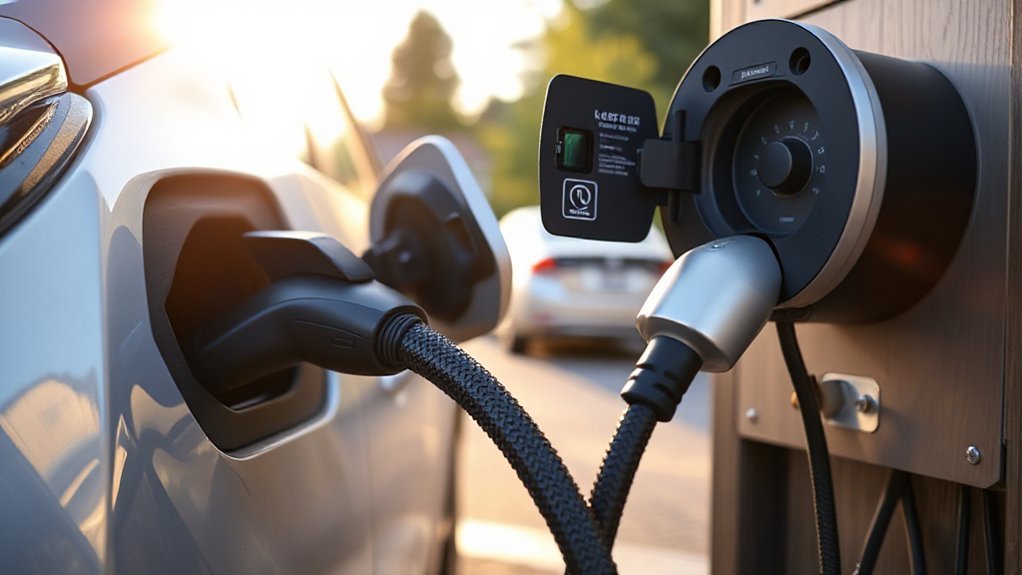
How do you pick an EVSE amperage that matches your Leaf and your electrical panel safely? Start by aligning the charger’s output with the Leaf’s onboard charger (6.6 kW). A 32‑amp EVSE (≈7.7 kW) fully serves the car and leaves modest headroom; a 40‑amp unit adds future flexibility if it offers adjustable current. Prioritize UL/ETL listing, integrated GFCI, and thermal protection. Evaluate the user interface—clear status LEDs, readable screens, and reliable apps—plus update cadence. Make warranty comparisons; three years is a solid baseline. Consider cable length and holster.
Match EVSE to the Leaf’s 6.6 kW; 32A suffices, 40A adjustable for future. Demand UL/ETL safety, solid UI, updates, three-year warranty, practical cable/holster.
- Choose adjustable 16/24/32/40 A settings to adapt safely across venues.
- Require certified safety features and temperature‑rated cabling for continuous duty.
- Favor robust connectivity, schedules, and lockouts; verify support, parts availability, and firmware policy.
Home Installation Requirements and Electrical Considerations
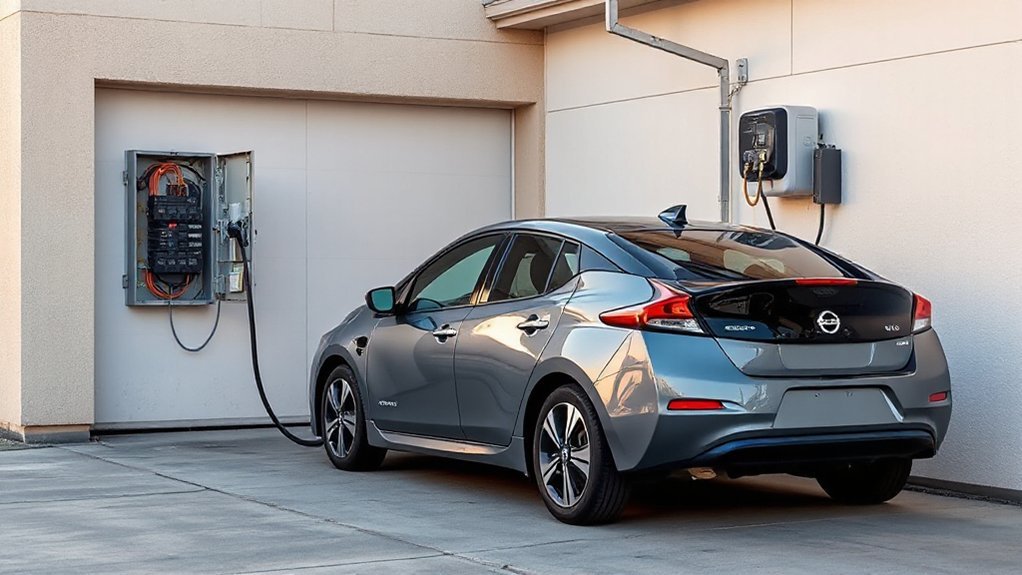
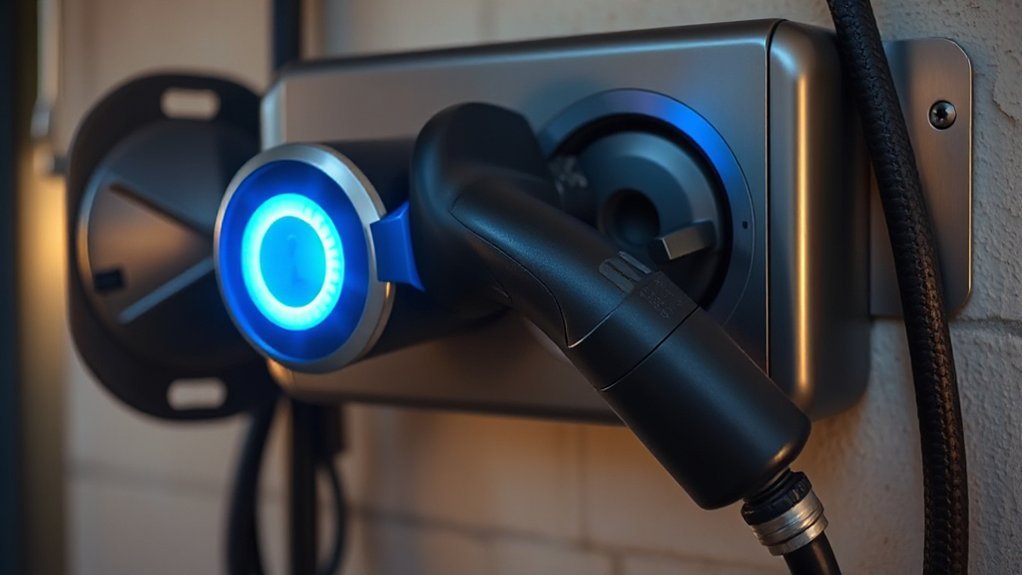


Once you’ve chosen an EVSE amperage, confirm your home can supply it safely. Verify service size, panel rating, and available breaker spaces. Perform a dwelling load calculation or have an electrician do it. Plan a dedicated 2‑pole breaker and continuous-load sizing (125% of EVSE rating). Select wire gauge per ampacity, temperature rating, and run length. Use GFCI where required. Plan Conduit routing that’s protected from damage and moisture. Confirm grounding, bonding, and surge protection. Choose NEMA 3R/4 for outdoors. Mount at code height with working space. Budget Permit timelines, early utility notifications, and inspection scheduling.
| Item | Spec | Note |
|---|---|---|
| Load calc | NEC 220 | Confirm spare capacity |
| Breaker/circuit | 125% rule | EVSE 40A to 50A |
| Wiring | Copper THHN/THWN | Size to ampacity |
| Conduit routing | EMT/PVC | Limit bends, support |
Charging Speeds, Range per Hour, and Real-World Factors
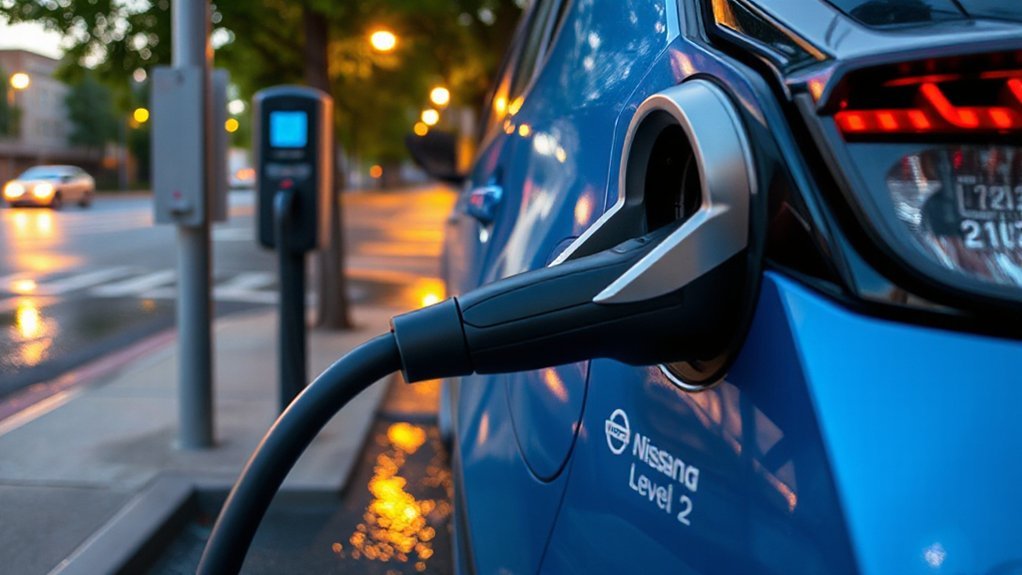
Because the Leaf’s onboard charger sets the ceiling, your AC charging speed equals the lowest of EVSE output, the branch-circuit’s continuous rating (80% of breaker), and the car’s charger capacity (≈3.3 kW on early trims, ≈6.6 kW on most later trims). On a 240 V circuit, that translates to roughly 12–14 miles of range per hour at 3.3 kW and 20–25 miles per hour at 6.6 kW, assuming moderate conditions.
- Verify amperage: 16 A continuous on a 20 A circuit; 24 A on a 30 A; 32 A on a 40 A.
- Monitor Weather impacts; cold packs limit acceptance and increase losses—precondition when plugged in.
- Adjust Driving styles; lower speeds, gentle acceleration, and tire pressure maintenance stabilize range per hour.
Safely.
Costs, Rebates, and Incentives
You’ll itemize charger hardware costs by model, power rating, and required accessories. Conduct a site assessment to estimate installation labor fees—verify panel capacity, breaker rating, conductor routing, permits, and NEC/local code compliance to maintain safety. Then apply federal and state incentives and utility rebates to the net cost, confirming eligibility, caps, prevailing-wage rules, and submission deadlines.
Charger Hardware Costs
Most Nissan Leaf owners will make a single key hardware choice: a Level 2 J1772 EVSE sized to your circuit. Hardware price ranges reflect amperage rating, enclosure durability, cord length, and smart features. You should compare UL listing, NEMA rating, and thermal protections. Manufacturing costs and supply chain volatility can shift pricing quarter to quarter, so verify current quotes and backorder risks.
- Prioritize a 32–48 A unit with proven heat derating and ground-fault detection.
- Choose a plug-in or hardwired form factor that matches your existing outlet and panel capacity.
- Confirm cable flexibility at low temperatures to reduce strain and trip hazards.
Check warranty terms, parts availability, and firmware support windows. Document return policies clearly. Avoid overbuying features you won’t use; target reliable, standards-compliant performance.
Installation Labor Fees
Budget for licensed electrician labor and permitting as a significant share of your Leaf Level 2 install. Labor typically covers load calculations, panel capacity verification, a dedicated 240V circuit, GFCI protection where required, conduit or cable routing, and final inspection coordination. Expect variance for wall distance, attic or trench work, and drywall repair responsibilities.
Request a written scope, line-item pricing, and invoice transparency. Specify permit fees, travel time, and after-hours rates. Require a licensed, insured contractor who follows NEC 625, local amendments, and utility interconnection rules. Confirm parts sourcing, workmanship warranty duration, and warranty transfer if you sell the home. Compare fixed-bid versus time-and-materials proposals. Ask for photos of terminations and torque logs. Verify labeling, breaker size, and EVSE commissioning results before final payment.
Federal and State Incentives
How much can incentives lower your installed cost? Start by verifying federal and state programs for Level 2 EVSE. The federal credit may cover 30% of equipment and installation, up to $1,000 for residential, but only in designated census tracts. States and utilities add rebates, demand-response bonuses, or permit-fee reductions. Confirm UL-listed hardware, licensed electrician work, and closed permits to avoid disqualification.
- Verify eligibility criteria: residence location, panel capacity upgrades, and UL/ENERGY STAR device specifications.
- Track application timelines: pre-approval windows, post-install submission deadlines, and required inspections.
- Prepare documentation: itemized invoices, installation photos, permit numbers, and electrician license.
Use procedural control: schedule inspection, capture meter readings if required, and enroll in utility programs. Maintain records for audits. File promptly to secure funds.
Tips for Battery Health, Safety, and Daily Use
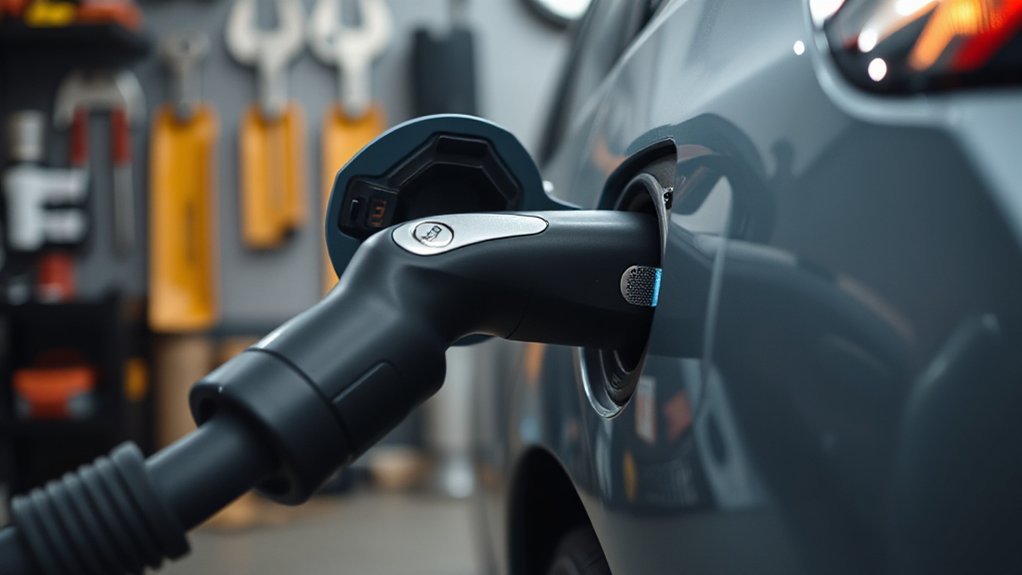
While maximizing range matters, prioritize battery longevity and safe charging by keeping daily state of charge near 20–80%, limiting DC fast charging, and using a dedicated, properly grounded circuit with GFCI protection. Schedule Level 2 charging to finish near departure. Verify EVSE amperage matches breaker. Keep cable storage dry; avoid connector strain.
| Task | Freq | Spec |
|---|---|---|
| – | – | – |
| SOC window | Daily | 20–80% |
| Circuit | Quarterly | Tight lugs, no heat |
| Connector | Monthly | Clean, dry |
| GFCI | Monthly | Trip/reset OK |
Precondition while plugged in. Avoid 100% before long parking. In heat, park shaded; in cold, charge to 60–70%. Update EVSE firmware. Test GFCI monthly. Establish an emergency protocol: stop charge, hit E‑stop, disconnect supply, call support. Keep a Class C extinguisher accessible. Inspect cables for cuts; replace damaged parts. Wear gloves and eye protection during troubleshooting.
Conclusion
You’ve mapped the route: match your Leaf’s onboard charger to a J1772 Level 2 EVSE, size amperage wisely, and install on a dedicated, GFCI-protected circuit by a licensed electrician. Follow NEC and permits, verify pilot current, and set charging windows to fit your routine. Do that, and each plug-in feels like refueling with a steady heartbeat—safe, fast, and repeatable. Treat the battery gently, and your daily miles will unspool like silk, predictable and resilient, enduring.