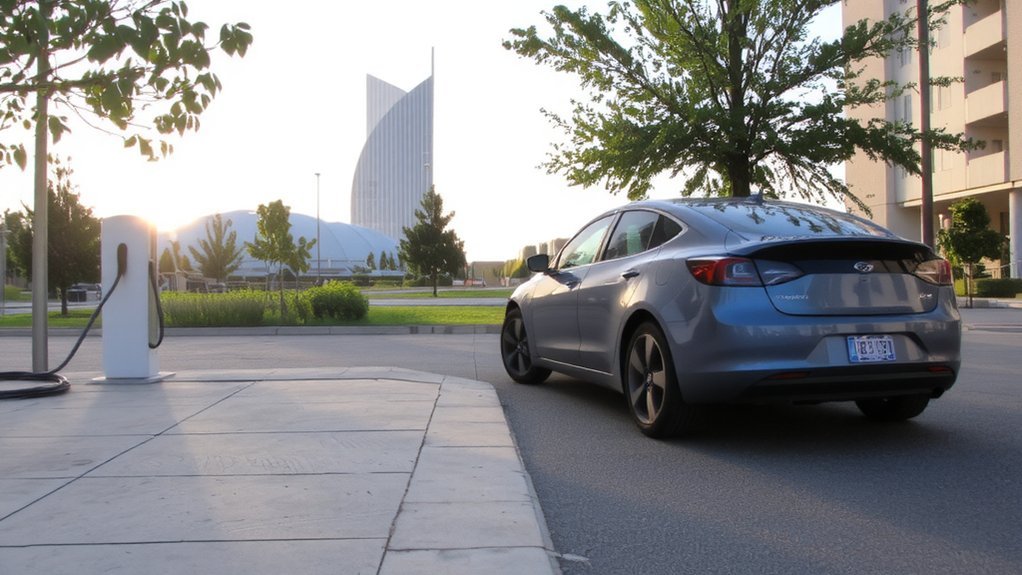
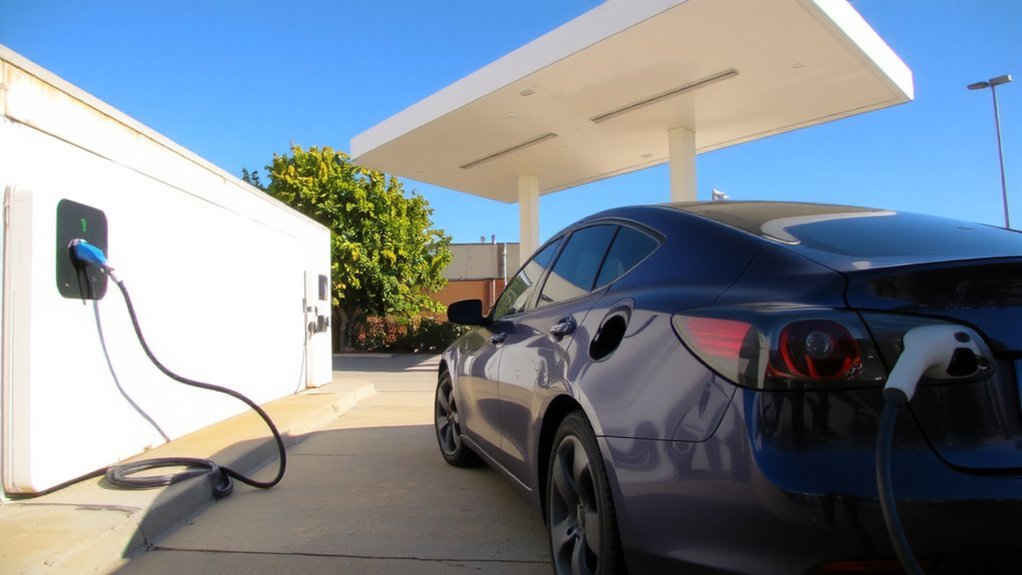
Most EV owners charge almost exclusively at home, but the charger you pick can change how you live with the car. You’ll weigh speed, cost, safety and portability. Portable units plug into existing outlets and travel with you, while wall-mounted units deliver faster, more reliable charging. I’ll outline the trade-offs so you can choose what fits your routine.
Key Takeaways
- Wall-mounted chargers deliver higher, more consistent power (7.4–11.5 kW), reducing full-charge time to about 6–8 hours.
- Portable chargers offer plug‑and‑play convenience (1.4–7.7 kW), ideal for renters, travelers, and emergency backup charging.
- Permanent wall units require a dedicated 240V circuit, licensed electrician, and possible panel upgrades for safe installation.
- Wall-mounted units provide superior safety, weather resistance, integrated protections, and remote monitoring compared with outlet‑dependent portable units.
- Portable units cost less upfront ($200–$600); wall chargers cost more but often qualify for bigger rebates and the federal tax credit.
Charging Speed and Performance

Anyone comparing chargers will see a clear gap in speed: wall-mounted units typically deliver 7.4–11.5 kW (about 35–40 miles of range per hour), while portable chargers usually run 1.4–7.7 kW (roughly 3–30 miles per hour).
You should expect wallboxes to charge faster and more consistently, often letting you refill most EVs overnight in 6–8 hours, while portables can take 12–24 hours for a full charge.
If you need daily dependable charging for high mileage, choose a wall-mounted unit; if you want flexibility or a backup, a portable can top up safely.
Watch outlet compatibility and avoid extension cords, since portable speed and efficiency drop with improper power sources.
Opt for compatible equipment and routine checks for safe, efficient charging. Replace damaged cables without delay.
Additionally, wall-mounted chargers are generally safer because they are hardwired into the electrical system and include built-in safety features.
Installation and Setup Requirements
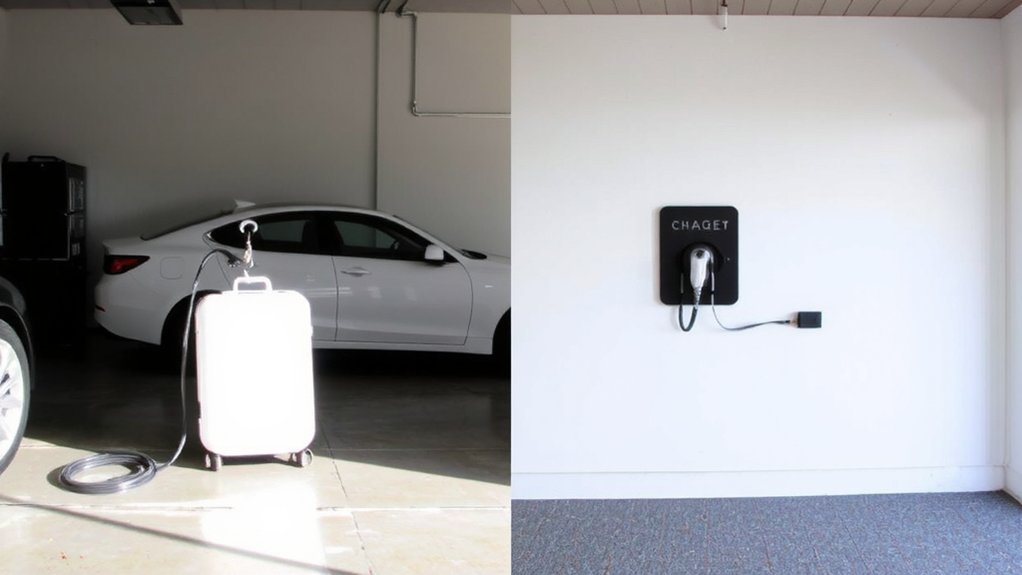
Expect very different setup demands depending on whether you choose a portable or wall-mounted charger. You’ll find portable chargers plug into existing 120V or 240V outlets with minimal changes and quick plug‑and‑play setup, though you should verify local rules and outlet compatibility.
Additionally, public and commercial installations often need to meet ADA Compliance and other accessibility requirements.
Wall‑mounted units usually require a dedicated 240V circuit, possible breaker or panel upgrades, conduit and professional installation, and coordination with your utility or local authorities for permits and load management. NEC and local codes increasingly mandate licensed electricians for permanent installations, and inspections keep installations compliant and insurance-valid.
Installation time ranges from under an hour for simple portable hookup to several hours or days when upgrades or long cable runs are needed. Carefully factor permits, labor, and available incentives into your decision.
Safety and Reliability Considerations
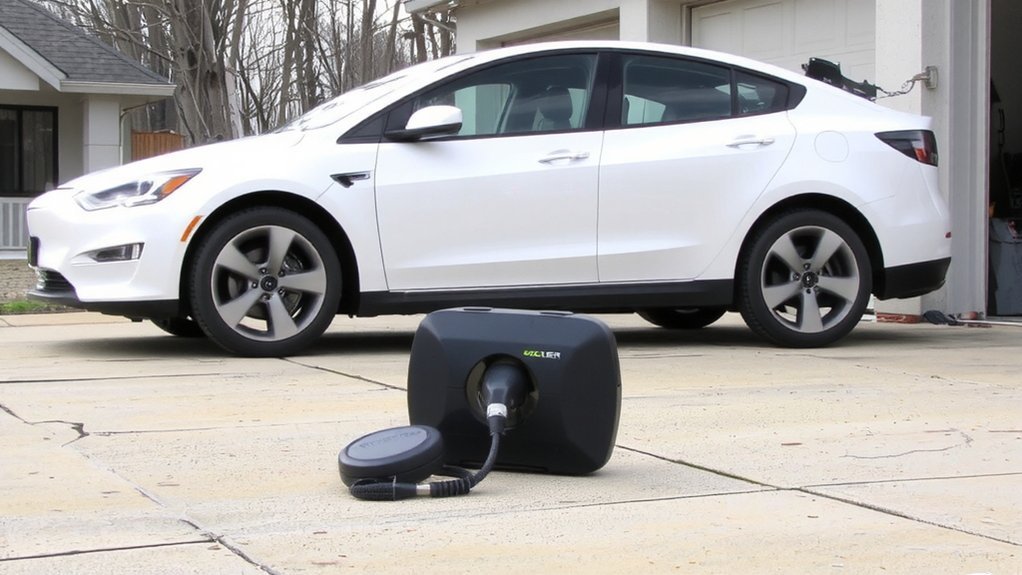
While both portable and wall‑mounted EV chargers meet strict 2025 safety standards (UL/ETL and government protocols), wall‑mounted units give you more consistent protection because they’re hardwired with dedicated circuits, GFCIs, surge suppression, and integrated sensors that shut down on overloads or temperature faults.
You’ll also get rugged, weather‑resistant enclosures, secure mounts, and remote monitoring that detect faults and alert you quickly. Portable chargers meet the same certifications but depend on outlet quality, cord wear, and storage, increasing variability in real‑world reliability.
For safety you should prioritize permanent installations when possible, inspect cables regularly, and guarantee outlets and breakers are rated for EV use. Choosing a certified unit and following maintenance prevents most equipment‑related incidents and keeps charging predictable and safe over the long term. Hardwired chargers also provide higher charging speeds — they can deliver up to 48 amps when properly installed.
Portability, Convenience and Use Cases
Because portability changes how and where you charge, choosing between a plug‑in unit and a wall box usually comes down to your lifestyle: you’ll prioritize mobility if you rent, travel, or need a backup, while a fixed wall charger suits long‑term home use and high daily mileage.
Portables are lighter, have handles, and plug into heavy‑duty outlets, but they require setup each session and depend on outlet quality. Wall units offer permanent cables, dedicated circuits, and often smarter controls for safe, consistent charging. Wall units typically deliver higher power for faster charging, often rated at 7.4–11.5 kW.
Consider these practical use cases and daily conveniences:
- Renters/travelers: portable, safe charging at outlets.
- Commuters: wall chargers for faster, reliable home charging.
- Occasional users: portable backup across residences.
- Homeowners: wall box for integrated, low‑clutter installation.
- Emergencies: portable units provide redundancy safely.
Cost, Incentives and Long-Term Value
You’ll compare upfront costs — portable units are far cheaper while wall-mounted chargers often add electrician and panel-upgrade fees. Portable chargers are plug-and-play devices that can be carried in a vehicle’s trunk and connect to standard household or higher-voltage outlets.
Check available rebates and tax credits, because many incentives require professional 240V installation and can substantially offset wall charger expenses.
Factor in warranty, durability, and charging efficiency to judge whether the higher initial investment delivers better ROI over time.
Upfront Costs & Installation
Although portable chargers give you the lowest up‑front cost — about $200–$600 and no professional installation — wall‑mounted units (typically $400–$2,000) usually require licensed electrician work that can add $700–$4,000+ depending on panel upgrades and wiring.
Also note that the average cost for installation and hardware typically falls between $1,200 and $4,000.
You’ll pay more for a hardwired Level 2 unit, especially if your panel needs upgrading to 150+ amps, and permits and inspections can increase time and cost. Portable Level 1 charging keeps initial risk low but limits power and some utility incentives.
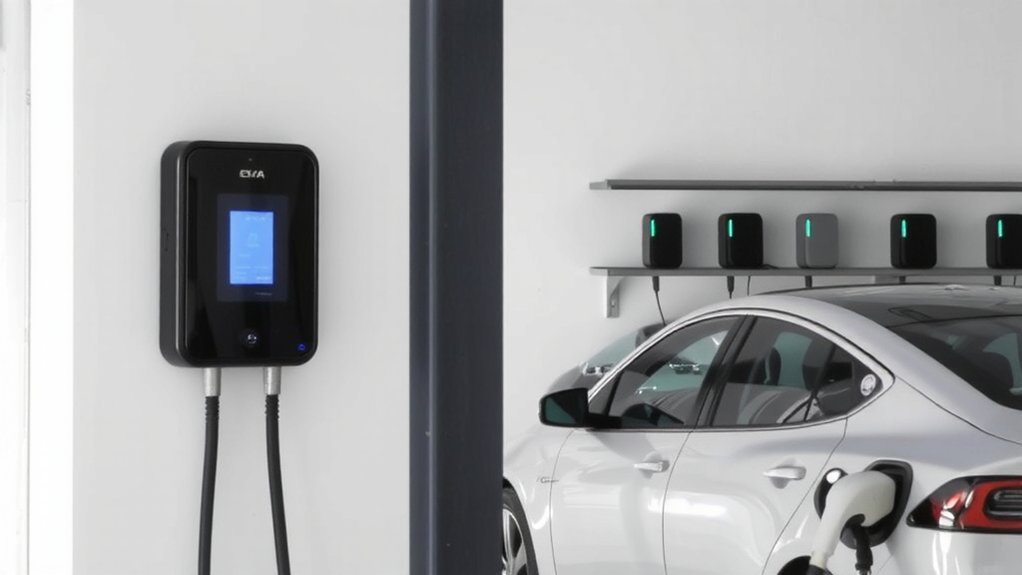
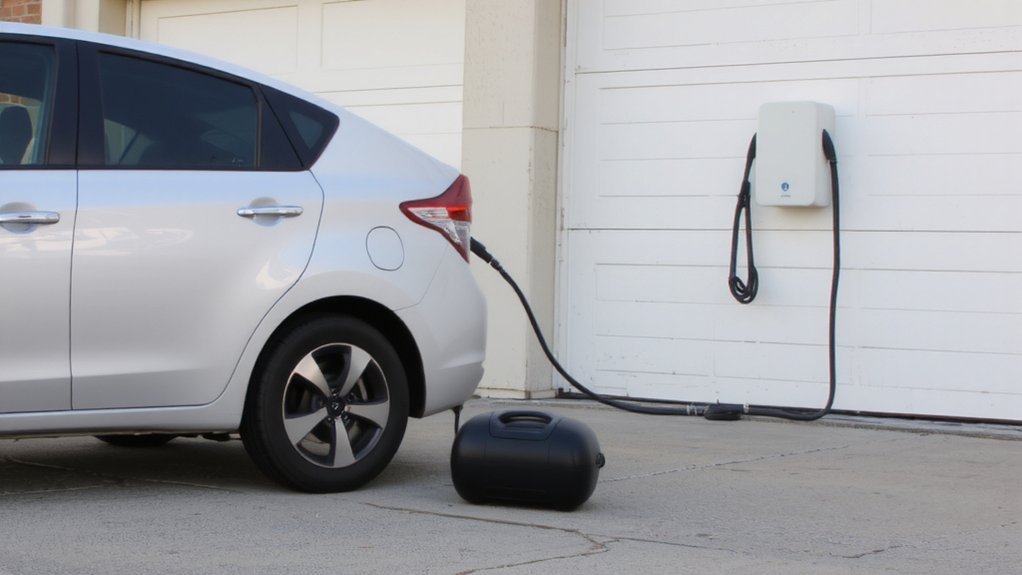
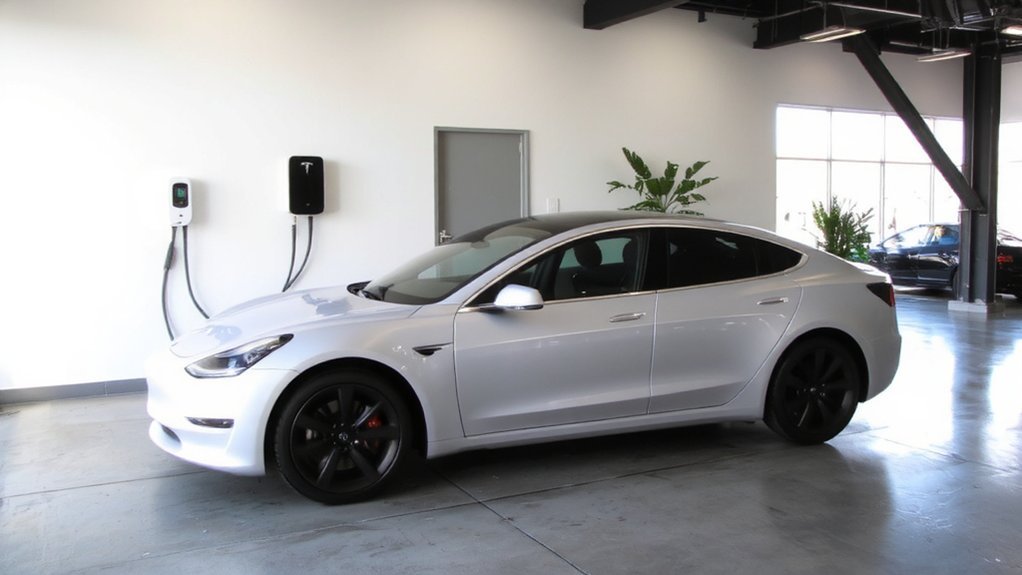
Choose based on safety, future needs, and budget; don’t skip professional assessments for complex installs.
- Portable: $200–$600, plugs into standard 120V
- Wall unit: $400–$2,000+ equipment cost
- Basic install: $700–$1,500 by licensed electrician
- Complex install: $1,200–$4,000+ with panel work
- Long‑term: wall units offer greater reliability
Consider professional guidance always.
Rebates, Credits & ROI
How much can you recoup by buying a charger? Federal 30C covers 30% of a new residential charger through June 30, 2026; you’ll claim it on IRS Form 8911. Many California utilities also offer EV charger rebates ranging from $150 to $6,000 utility rebates.
State and utility rebates—check the DOE database—can add hundreds to thousands. In California utilities often offer $150–$6,000+ for Level 2 units, sometimes covering electrical upgrades.
Commercial and multifamily programs pay more, improving ROI and enabling stacked incentives that dramatically cut upfront costs. Wall-mounted chargers usually qualify for larger rebates tied to home upgrades, while portable units get fewer incentives but avoid installation expenses.
Factor current expirations, stacking rules, and safe installation costs when calculating payback. Prioritize certified equipment and licensed electricians to protect safety and preserve incentives. Review program terms and deadlines before you claim.
Smart Features and Energy Integration
You can use wall-mounted chargers’ apps to schedule charging and control sessions remotely, while most portable units stick to basic manual controls.
Wall units commonly integrate with solar, home batteries, and energy-management systems so charging follows your household generation and time-of-use rates. You’ll also get load balancing and multi-vehicle sharing features with wall chargers that portable models rarely support. Most homes use Level 2 charging at 240 volts for overnight top-ups.
App Controls and Scheduling
Anyone with a smart EV charger can use its app to start, stop and schedule charging, monitor energy use, and get real‑time alerts—whether the unit’s portable or wall‑mounted. Many apps also let you use custom filters to find stations by charging speed and connector type. You’ll set off‑peak schedules, get reminders to plug in, and override plans when safety or urgency requires it.
Apps show session metrics, send fault warnings, and let you adjust LED brightness and charging speed. Make sure you migrate accounts if vendors change services.
- Schedule charging to avoid peak hours and reduce risk.
- Receive real‑time alerts for faults, connector issues, or overheating.
- Manually override schedules when safety or range demands it.
- Monitor energy, session duration, and estimated cost on the app.
- Use voice control carefully; confirm commands before charging.
Prioritize safety and verify updates regularly now.
Home Energy Integration
Integration of EV charging into your home energy system turns a charger from a standalone appliance into a coordinated energy asset: smart chargers can prioritize solar output, draw from or store energy in home batteries, respond to real-time price signals, and even feed power back to the house or grid with bidirectional (V2G) setups. They also pair well with a home battery to store excess solar energy for scheduled charging and backups.
You can link chargers to rooftop solar to use renewable energy, cutting grid reliance in daylight. Smart chargers ramp or pause charging as panels produce, buffer excess solar in home batteries for nighttime charging.
Battery compatibility offers backup power during outages and enables cost-saving arbitrage. Connect chargers to your smart-home hub for control and safety alerts.
V2G-capable systems can support grid stability but require proper hardware and local utility approval.
Load Management and Sharing
How can smart load management keep multiple EVs charging without costly electrical upgrades? You’ll rely on dynamic load management that senses real-time demand and reallocates power so circuits never trip. This approach uses load sharing to automatically redistribute power across active chargers so circuit limits are never exceeded. Intelligent systems let multiple chargers share a single breaker, redistribute amps as cars plug in, and avoid expensive rewiring.
They integrate with building energy monitors and cloud platforms for remote monitoring, scheduling, and prioritization to keep charging safe and predictable.
- Dynamic algorithms adjust charging rates in real time
- Multiple chargers can share one circuit safely
- Integration with building monitors prevents overloads
- Scheduling and prioritization improve safety and convenience
- Reporting and remote control let you audit usage
Choose dynamic, monitored setups for safer multi-vehicle charging and lower infrastructure costs today.
Choosing Based on Home and Lifestyle
Think through how you live and park before picking a charger: if you own a home with a dedicated parking spot and want faster, more efficient charging, a professionally installed wall unit with smart scheduling will usually serve you best. These wallboxes typically support faster charging, reducing overnight or daytime top-up times.
If you rent, travel often, or need charging at multiple locations, a portable charger gives flexibility despite slower speeds. Assess mileage, parking, and access to dedicated circuits.
Choose a wall unit if you need quick turnaround, energy efficiency, and integrated safety from a licensed electrician. Pick a portable unit if you require mobility, lower upfront cost, and backup charging for trips or rentals.
Always confirm NRTL certification, outlet compatibility, and safe installation or use practices to reduce fire and electrical risks while maximizing convenience.
Maintenance, Warranty and Lifespan
Once you’ve chosen a charger that fits your parking and lifestyle, check maintenance demands, warranty terms, and expected lifespan to avoid surprises down the road. Hardwired chargers tend to be permanent and robust and can support higher electrical currents than plug-in units. Wall-mounted units need minimal upkeep: clean, dry, and have a certified electrician inspect connections occasionally; they usually carry 3–5 year warranties and often last 8–10+ years.
Choose a charger that fits your parking and lifestyle, then check maintenance, warranty, and lifespan to avoid surprises
Portable chargers see more wear, need inspection before each use, stored dry and cool, and typically have 1–3 year warranties with a 3–5 year lifespan. Always follow manufacturer care instructions and avoid undersized cords or unapproved adapters to reduce risk.
- Inspect cables and connectors regularly.
- Store portables in cool, dry places.
- Schedule periodic professional checks.
- Review warranty exclusions and claim requirements.
- Replace damaged cords; don’t improvise repairs.
Prioritize safety over cost when deciding.
Conclusion
You can choose convenience or speed, and each option hides a payoff. If you rent or travel, a portable charger gives freedom now—but could slow you later. If you install a wall unit, you’ll gain faster, safer charging and bigger rebates, yet you commit to a spot. Think about mileage, budget and plans, then decide. When you open your garage tonight, which charger will be waiting for you? Decide tonight; don’t let doubt linger anymore.