
You want faster home or travel charging without a wallbox, but you need to match speed, cost, and safety. We’ll map kW = volts × amps, typical 6–9 kW (about 15–30 miles/hour), $300–$1,200 hardware plus any adapters/installation, and compatibility by receptacle (NEMA 14‑50, 6‑50, 6‑20), NEC 125% sizing, and your car’s onboard limits. Use UL/ETL‑listed EVSE with GFCI/ground monitoring; avoid adapters/extensions. Next, size the circuit and plug correctly—or risk nuisance trips.
Key Takeaways
- Portable Level 2 EVSE plugs into 240 V receptacles, uses J1772, and must be UL 2594/2231 listed with GFCI, ground, and temperature protections.
- Speed depends on volts × amps; 32 A gives ~7.7 kW at 240 V (~22–30 mph) vs ~6.7 kW at 208 V.
- Compatibility: match NEMA plug to a dedicated circuit; apply 125% breaker rule and set EVSE to 80% continuous current, respecting the car’s onboard limit.
- Costs: expect $200–$700 for basic EVSEs (portable often $300–$1,200), plus $20–$100 per adapter and $0–$1,500 for receptacle or electrical work.
- Safety and use: use UL/CSA-listed adapters, avoid extension cords, monitor plug temperature, and choose NEMA 4X/IP66 units for outdoor or travel durability.
What Is a Portable Level 2 Charger?
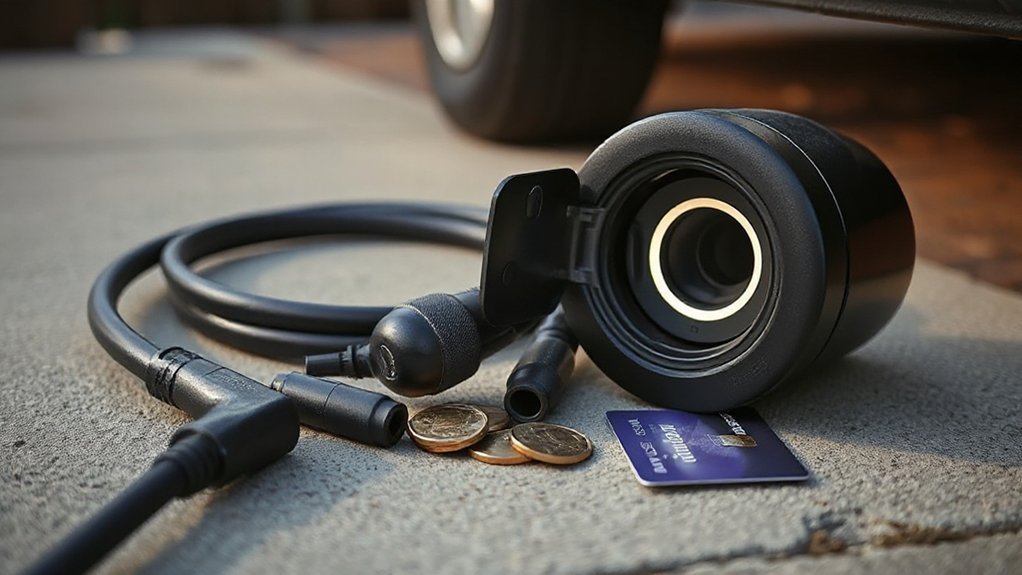
What exactly is a portable Level 2 charger? It’s an EVSE you can carry, with a control box, vehicle connector (typically SAE J1772), and a plug for a suitably rated receptacle. You use it where a permanent wall unit isn’t feasible, while still meeting code when installed on a dedicated circuit.
It enforces safety through ground monitoring, GFCI, pilot signaling, temperature sensing, and enclosure ingress protection. Look for UL/ETL listing, correct plug type, and manufacturer cord-length limits. Don’t use adapters or extension cords not expressly approved. Inspect for heat damage, secure strain relief, and store it dry.
Consider Environmental impact through durability, repairability, and efficient standby. A Lifecycle analysis should include materials, packaging, transport, duty cycle, and end‑of‑life recyclability, design for disassembly, take-back programs.
How Charging Speed Works: Kw, Amps, and Voltage
You measure charging speed in kilowatts (kW), calculated as volts × amps ÷ 1000; amperage is current, while kW is the actual power delivered. At a fixed amperage, higher supply voltage (e.g., 240 V vs 208 V) increases kW and shortens charge time; at a fixed voltage, higher amperage does the same within equipment and circuit limits. Set your portable Level 2 EVSE to an amp value that matches the branch circuit and breaker (NEC 80% continuous-load rule), use properly rated receptacles/cords, and confirm whether the vehicle’s onboard charger, not the outlet, is the limiting factor.
Kw Vs Amperage
How does a portable Level 2 charger translate amps and volts into actual charging speed? In terminology education and measurement semantics, amperage (A) is current flow, while kilowatts (kW) is power delivered to the battery. Power equals volts times amps; kW is simply (V × A) / 1000. Your EV’s onboard charger and the circuit limit the usable amperage, so selectable current settings matter for safety and code compliance.
- Choose a charger that advertises continuous current (not peak); verify 80% derating for continuous loads per NEC.
- Match the charger’s max amps to the circuit breaker and receptacle rating; never exceed the lowest component.
- Use the car’s display or app to confirm accepted kW versus set amps; adjust current to prevent nuisance trips.
Stay compliant.
Voltage Impact on Speed
Because charging power equals voltage times current, supply voltage directly determines charging speed at any given amp setting.
On Level 2, 240 V yields 15% more kW than 208 V at the same amps, so a 32 A EVSE makes ~7.7 kW at 240 V but ~6.7 kW at 208 V.
Confirm circuit rating and apply the 125% continuous-load rule; a 40 A breaker supports 32 A charging.
Measure voltage under load; excessive sag indicates undersized wiring or poor connections.
Avoid extension cords.
Uneven split‑phase voltage or voltage harmonics can heat conductors, reduce charger efficiency, and trip protection.
EVSEs monitor line conditions, derate current, and shut down if limits exceeded.
Stable voltage supports battery longevity and grid stability.

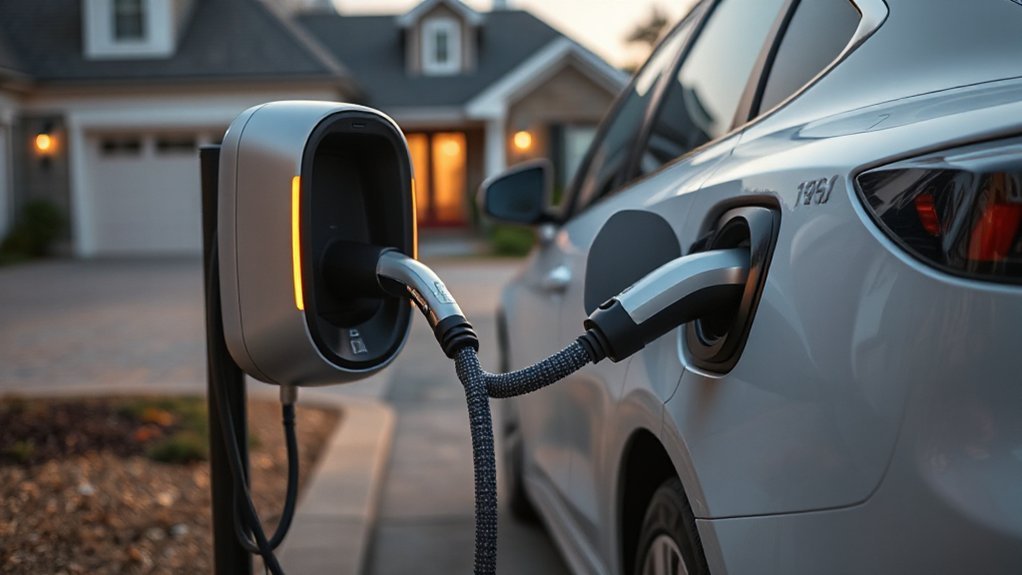
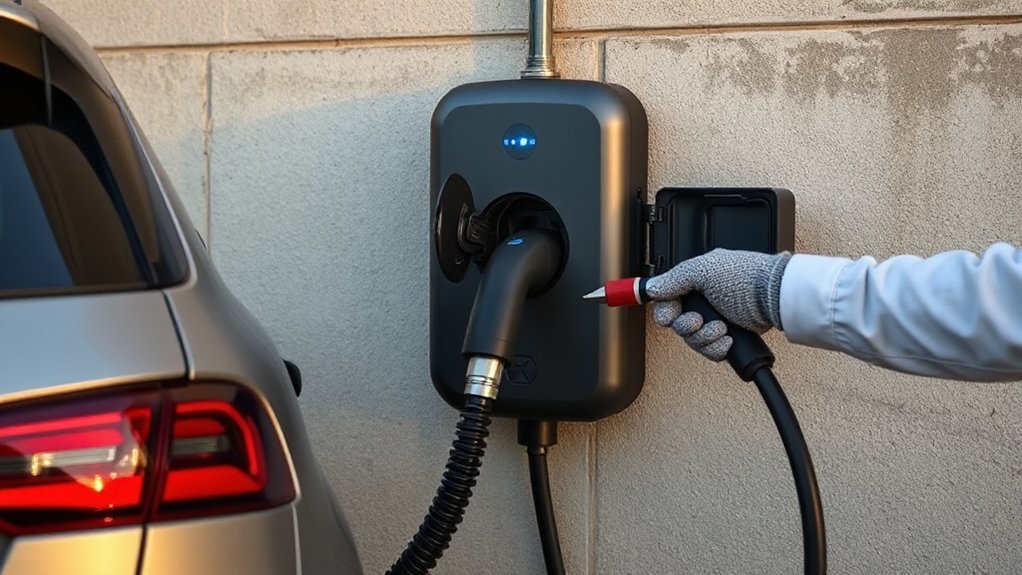
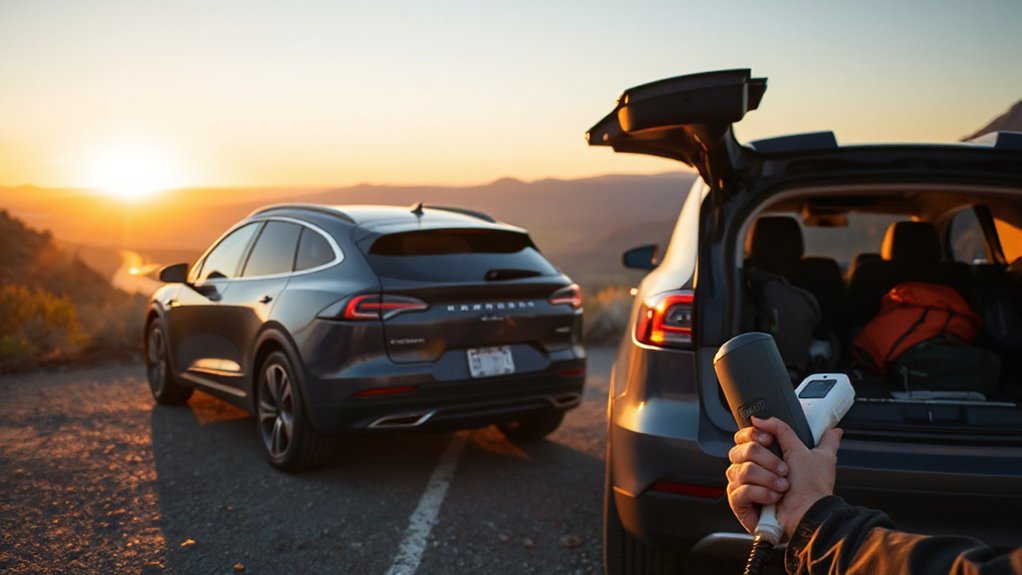
Use surge protection and GFCI required.
Real-World Miles per Hour by Circuit and Plug
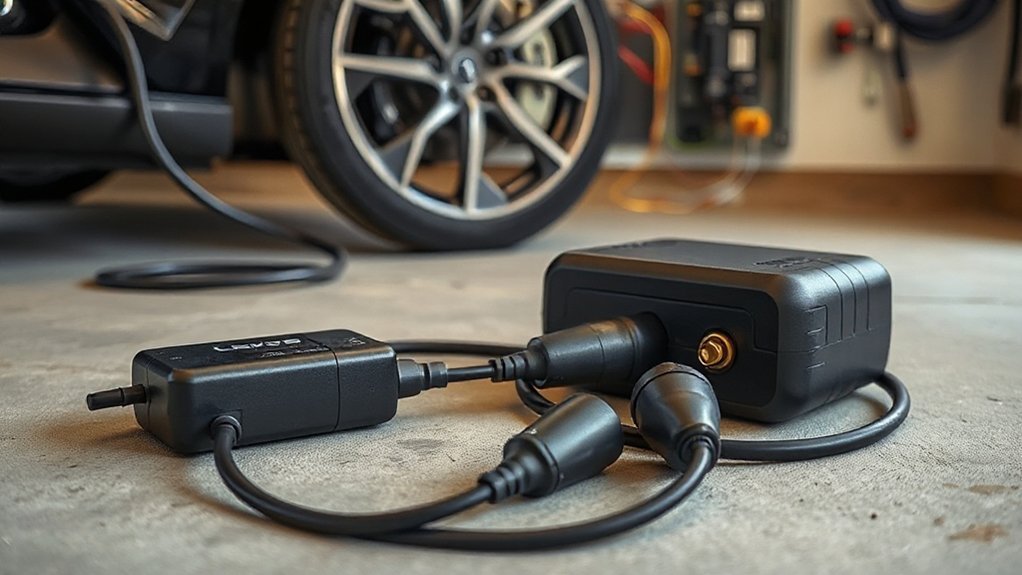
While lab specs quote kilowatts, real-world miles per hour depends on circuit amperage, plug type, and your EV’s onboard charger limit.
Higher-amperage, properly wired circuits yield faster charging, but your car caps intake. A 16A circuit might add ~10–12 mph; 24A delivers ~15–18; 32–40A can reach ~22–30, assuming 240 V and efficient conditions. Expect seasonal variability and minor charger degradation over time. Always match plug and cord ratings to breaker size, and verify GFCI and ground integrity.
Higher amps charge faster, but your car limits intake; expect 10–30 mph at 240 V.
- Confirm conductor gauge, breaker rating, and receptacle condition before first use.
- Set the EVSE current below the continuous-load limit (80% of breaker rating).
- Monitor cable and plug temperature; discontinue use if warming exceeds safe touch.
Measure actual mph via trip meters to validate assumptions with logged data.
NEMA Plug Types: 14-50, 6-20, and More
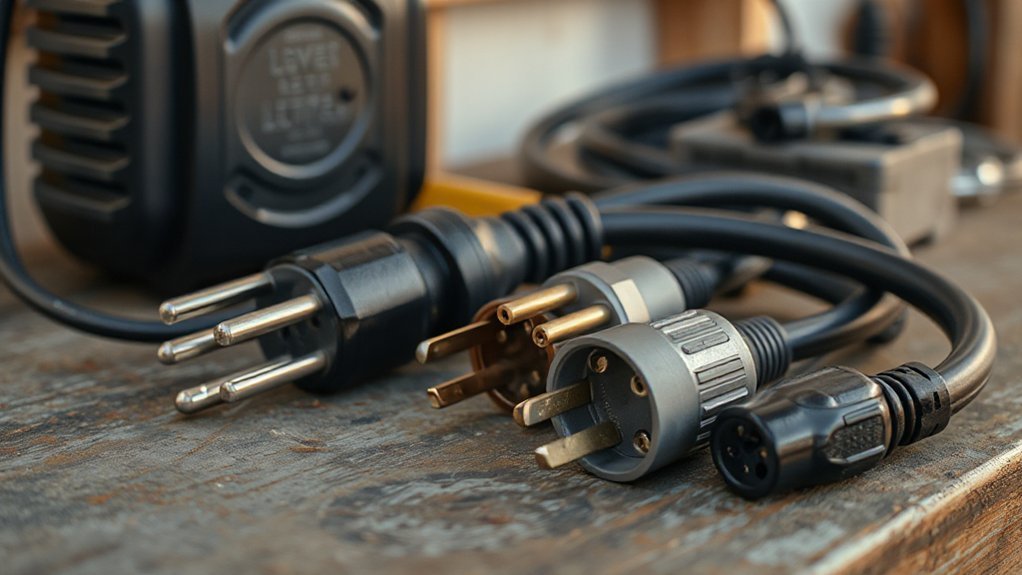
Before selecting a NEMA 14-50, 6-20, or other plug, you must match the branch-circuit and breaker rating to your EVSE’s max current—apply the 125% continuous-load rule (e.g., 40 A EVSE on a 50 A circuit). Confirm your portable Level 2 EVSE’s plug type and voltage (typically 240 V) to verify compatibility without modification. If you use adapters, choose UL-listed units that preserve equipment grounding, avoid any current up-rating, and never bypass GFCI or exceed the circuit’s 80% continuous rating.
Amperage and Circuit Requirements
As you size a portable Level 2 setup, match the EVSE’s amperage to a properly rated, dedicated branch circuit and the correct NEMA plug, observing the NEC 125% continuous-load rule.
Examples: a NEMA 14-50 needs a 50A circuit, limited to 40A continuous; a 6-30 uses 30A, limited to 24A; a 6-20 uses 20A, limited to 16A. Provide GFCI protection where required and size conductors per ampacity tables.
- Verify breaker rating, receptacle type, and conductor temperature ratings align with the EVSE draw.
- Keep runs short; confirm voltage drop stays under 3% at continuous load.
- Use an installation plan, electrical permits, and an inspection checklist before energizing.
Torque terminations to spec, label the circuit “EV Charging,” and test with a meter before use.
Compatibility With EVSES
How do you verify your portable EVSE actually matches the receptacle you’re plugging into? Confirm the NEMA configuration, voltage, and circuit ampacity on the label. Make sure your EVSE’s input rating and current align with the branch circuit’s continuous load (80% rule). Check J1772 compliance, GFCI, and UL/cETL listing. For “smart” units, confirm firmware supports Network Roaming and Billing Integration via standards-based OCPP. Inspect conductor gauge, grounding, and temperature rating for the environment.
| Receptacle | Key checks |
|---|---|
| NEMA 14-50 | 240 V, 50 A; EVSE draw ≤ 40 A continuous |
| NEMA 6-20 | 240 V, 20 A; set limit 16 A |
| NEMA 6-50 | 240 V, 50 A; verify ground, neutral absent |
| NEMA 10-30 | 240 V, 30 A; legacy dryer, neutral present |
| NEMA 5-15 | 120 V only; not Level 2 |
Adapter Options and Safety
While plug adapters can expand where you use a portable Level 2 charger, treat them as engineered components with defined limits, not generic jumpers. Match the adapter to the receptacle (NEMA 14-50, 6-20, 5-15) and set charger current to the circuit rating, not the plug’s maximum. Use UL-listed or CSA-certified adapters that meet labeling standards, include strain relief, and maintain ground continuity. Never bypass GFCI protection or use cheater plugs; you assume legal liabilities for any fire or shock.
- For NEMA 14-50: 50A circuit, set EVSE to 40A continuous; verify copper conductors and torque lugs.
- For NEMA 6-20: 20A/240V circuit; set EVSE to 16A; confirm two-pole breaker and wiring.
- For travel: carry adapters with temperature sensors, IP ratings, and locking collars; inspect for discoloration.
Cost Breakdown: Units, Adapters, and Installation
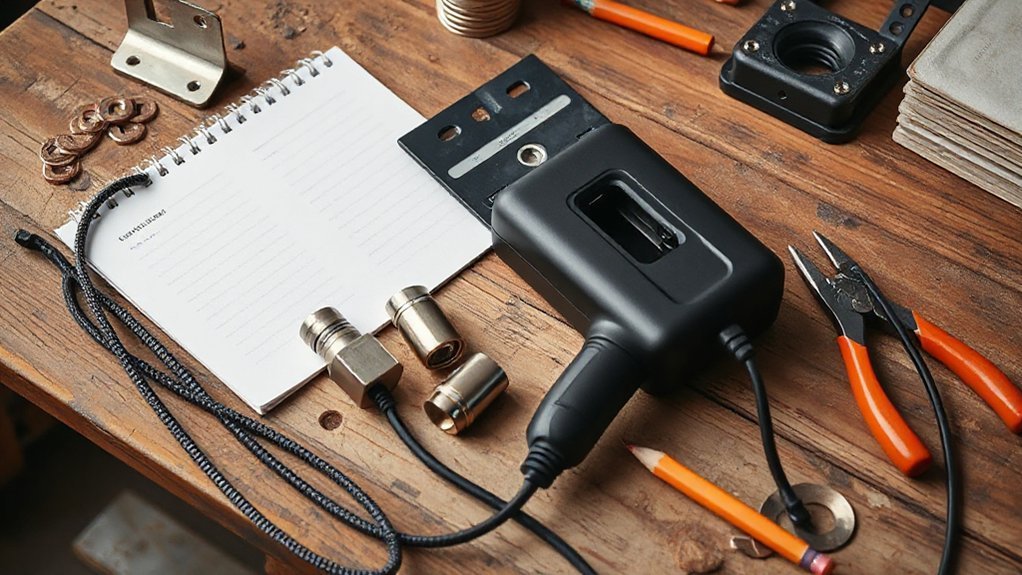
Three cost buckets define a portable Level 2 setup: the EVSE unit, plug/adapters, and any electrical work. Expect $200–$700 for a UL-listed 240 V EVSE with adjustable current, GFCI, and NEMA 14-50 or 6-20 input. Quality adapters and locking plugs add $20–$100 each; choose molded, UL-listed parts with proper gauge. For installation, budget $0–$1,500: $0 if you already have a properly wired 240 V receptacle; $300–$800 for a new circuit; $800–$1,500 if your panel needs upgrades or a subpanel. Use a licensed electrician, permits, and load calculations per NEC 625/210; require copper conductors, correct breaker size, and in-use covers outdoors. Reduce net cost with tax incentives, utility rebates, and employer programs. If needed, explore dealer or card-based financing options. Document warranties and keep receipts.
Compatibility: J1772, Tesla Adapters, and Vehicle Limits
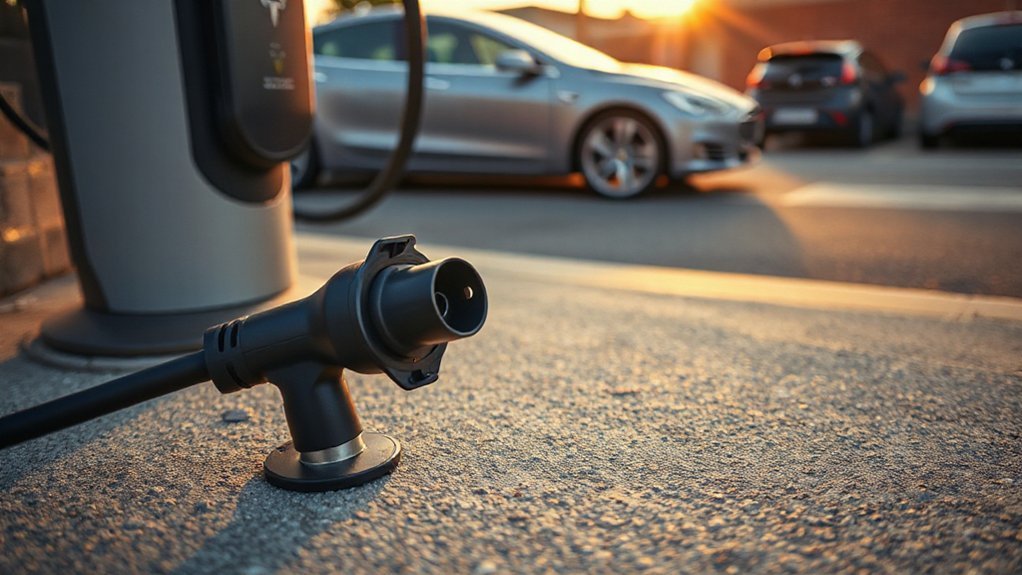
Because connector standards and onboard charger ratings vary, you need to match the plug, adapter, and current settings to your vehicle. Most North American EVs use J1772 for AC; Teslas require a J1772-to-Tesla adapter or a Tesla plug. Your EV’s onboard charger dictates maximum kW; a 7.2 kW car won’t benefit from a 9.6 kW portable. Respect Protocol differences: J1772 signaling negotiates current; adapters must pass pilot and proximity correctly. Verify Regulatory compliance (UL, CSA) for adapters and cords, and set current to the circuit rating.
Match plug, adapter, and current to your EV; protocol, compliance, and onboard charger set limits.
- Confirm inlet type, adapter pinout, and pilot current limits
- Match charger amperage to breaker and vehicle AC limit
- Prevent errors: avoid stacked adapters; inspect for heat or wear before and after each session for safety
Features to Look For: Safety, Smart Controls, and Weather Ratings
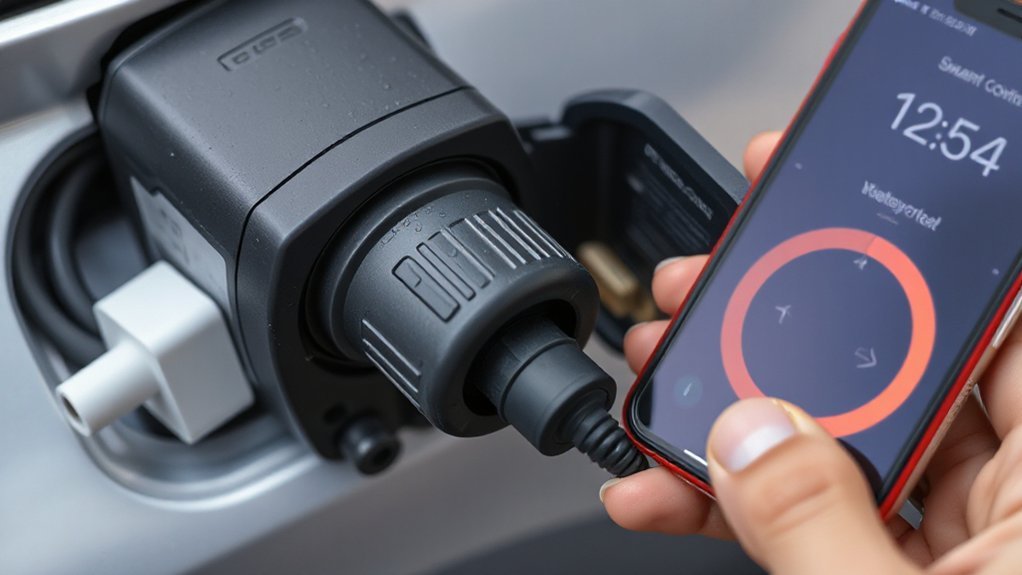
Although portable, a Level 2 EVSE must prioritize protection and compliance: look for UL 2594/2231 (or CSA) listing, integral 20 mA ground-fault protection (CCID), ground continuity and proximity/pilot monitoring, welded-contactor detection, over/under-voltage and over-temperature cutoffs, surge protection, and plug-temperature sensors with automatic derating. Choose a unit with a sealed contactor, conformal-coated electronics, and a NEMA 4X or IP66 enclosure for rain, dust, and washdown. Verify strain-relieved cables, UV-resistant jackets, and a 14-50 or 6-50 plug with proper retention.
For smart controls, confirm adjustable current, schedule support, and secure Wi‑Fi or Bluetooth. A clear user interface should show amperage, energy, temperature, and fault codes. Require signed firmware updates, OTA rollback, and log export. Provide temperature compensated charging and lockout on repeated faults after cooldown intervals.
Use Cases: Apartments, Travel, and Home Backup
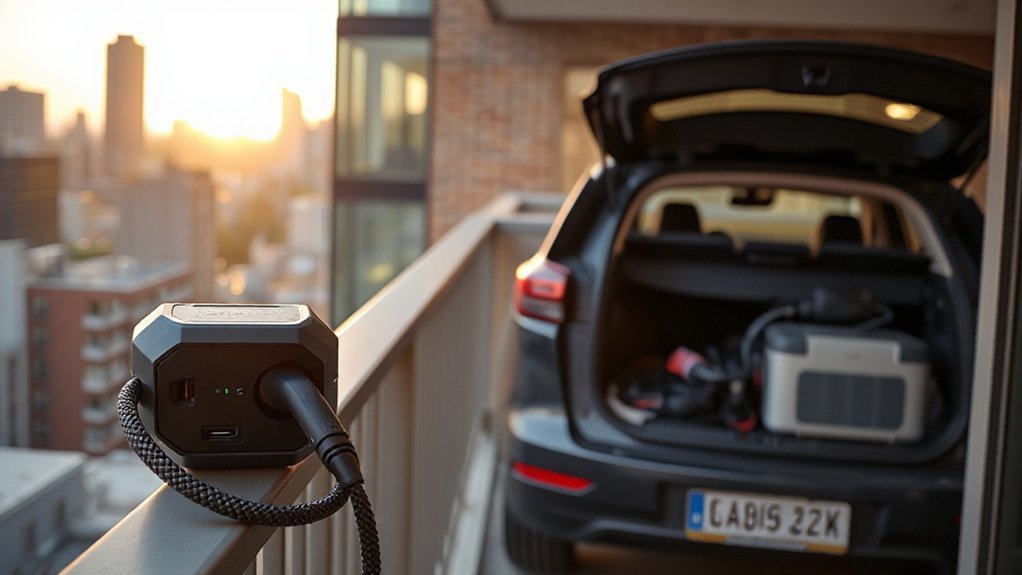
Where will a portable Level 2 charger actually work safely? In apartments, confirm a dedicated 240V circuit, receptacle type (NEMA 14‑50 or 6‑20), and breaker rating. Get written approval per Tenant Agreements, and never daisy‑chain through adapters or extension cords. Mount the EVSE off ground, keep the cord strain‑relieved, and verify GFCI protection.
On the road, pre‑plan outlets at RV parks or garages, and bring correct plug head. Use load‑limited settings to avoid tripping small panels.
For home backup, pair the charger with a transfer switch, inverter, or battery/solar system sized for EV load; include it in Emergency Planning and load‑shed rules.
- Apartment: dedicated circuit, landlord approval, labeled breaker
- Travel: site permission, plug compatibility, weather rating
- Backup: isolation, grounding, load management
Conclusion
Now you can choose a portable Level 2 EVSE with confidence. Prioritize UL/ETL listing, integral GFCI and ground monitoring, and size circuits per NEC’s 125% rule. Match plug type (NEMA 14-50, 6-20, etc.) to available voltage and amperage, and respect your car’s onboard-charger limit. Prefer no adapters or extensions; if required, use rated, compatible ones. Check J1772 or Tesla adapter fit. Faster home, travel, or backup charging—safe, compliant, predictable. Isn’t that the charge that matters?