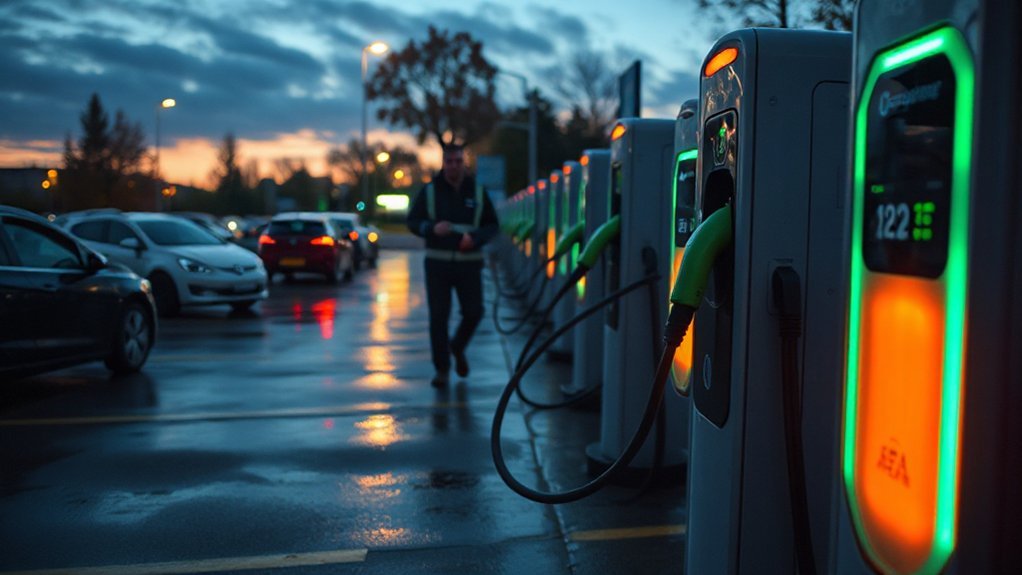
You’d think charging an EV costs as much as filling a mansion with gasoline. If you plug in at different public stations, prices swing wildly by charger type, network, and state. Level 2 often runs much cheaper than DC fast, memberships and per-session fees change the math, and some locations tack on minimums — here’s how networks compare and how to avoid getting surprised…
Key Takeaways
- Public charging typically costs $0.20–$0.60 per kWh, varying by charger type, network, and location.
- Level 2 public stations average about $0.20–$0.26 per kWh, suitable for routine overnight or workplace charging.
- DC fast chargers run roughly $0.35–$0.50 per kWh, offering 80% charge in 20–60 minutes at higher cost.
- Expect per-mile costs around $0.04–$0.06 (Level 2) and $0.10–$0.20 (DC fast), influenced by vehicle efficiency.
- Watch for session fees, time-based charges, membership discounts, and regional price differences (higher in CA and MA).
Public Charging Price Overview

You’ll typically pay between $0.20 and $0.60 per kWh for public charging in the U.S., with Level 2 stations usually around $0.20–$0.25 per kWh and DC fast chargers averaging $0.40–$0.60. You’ll find some free stations, but they’re often unreliable or crowded, so plan backups and monitor station status in apps.
Prices vary by state and city—expect higher rates in places like California and Massachusetts and lower rates in parts of the Midwest and South. Networks list per‑kWh rates, session fees, or time‑based charges; check app pricing and membership discounts before you plug in. Rates update frequently and dynamic pricing can apply, so confirm costs ahead for safer budgeting and route planning. Carry charging cables and avoid poorly lit stations when possible for added protection. For comparison, home electricity averages about $0.17/kWh, making home charging usually cheaper than public chargers.
Level 2 Vs DC Fast Charging Costs
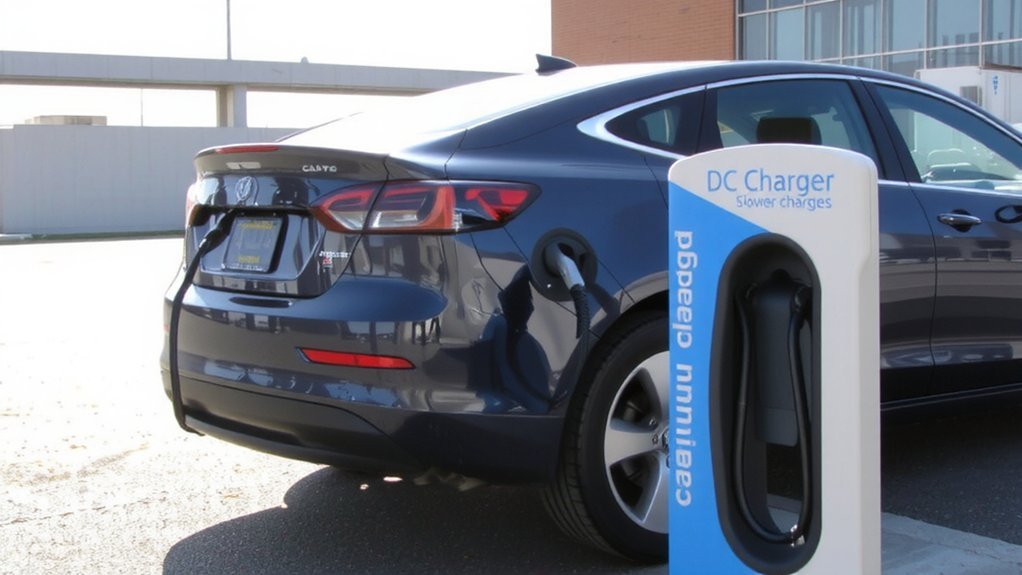
You’ll see Level 2 runs about $0.20–$0.25/kWh while DC fast chargers cost roughly $0.35–$0.50/kWh, often 2–3× higher.
That speed premium gets you 80% in 20–60 minutes versus 4–10 hours on Level 2, but it’s also tied to higher per‑kWh charges and efficiency losses.
Also, remember that batteries store DC.
Per-kWh Price Comparison
Two common public charging options — Level 2 and DC fast charging — differ considerably in per‑kWh cost: Level 2 runs about $0.26–$0.34 per kWh (roughly $0.26 on average), while DC fast charging typically sits around $0.45–$0.50 per kWh and can reach $0.60 or more. When you compare them, DCFC typically costs 1.7 to 2 times as much per kWh as Level 2, so you’ll pay a notable premium at many public stations.
Expect regional variance: some states and counties push DCFC higher, while Level 2 prices stay steadier. For safety and budgeting, monitor local network rates and prefer well‑rated stations that display transparent per‑kWh pricing before you plug in. Also check operator apps for real‑time fees and consider membership discounts where available, regularly. However, the majority of EV charging still happens at home, not at public stations.
Charging Speed Premiums
Per‑kWh differences tell part of the story, but when you factor in how fast chargers refill your battery the price gap looks different: Level 2 chargers give about 12–60 miles/hour and are common at home, work, and public spots, while DC fast chargers deliver 200–1,000+ miles/hour at highways and select sites.
DC fast hardware and installation cost far more, so networks charge higher per‑kWh and session fees; typical DC fast costs run $0.10–$0.20/mile versus $0.04–$0.06/mile for Level 2.
For safety, use Level 2 for routine overnight or workplace charging and reserve DC fast for needed rapid top‑ups, mindful that not all vehicles accept peak DC rates and frequent fast charging can affect battery longevity.
Check station capabilities and follow manufacturer charging guidance for safety.
For most daily use, a Level 2 home charger is recommended because it provides a good balance of speed and cost, typically 240V and 7–11 kW.
Time and Cost Tradeoffs
When you weigh time against cost, Level 2 charging usually makes more sense for routine, daily use while DC fast gets you back on the road quickly at a noticeably higher price. Level 2 operates at 208–240V, making it practical for residential and workplace charging. You’ll pay roughly $0.04–$0.06 per mile with Level 2 versus $0.10–$0.20 per mile for DC fast, and spikes mean DC can cost much more.
For safe, predictable charging at work or overnight, Level 2 matches residential rates and reduces battery stress. Reserve DC fast for long trips or urgent needs, knowing per‑mile costs and time fees can inflate ownership expenses substantially.
Use memberships, off‑peak windows, and proper cable handling to keep costs down and safety high when you charge publicly. Compare local station pricing before each stop to avoid surprises and delays.
Network-by-Network Pricing Snapshot
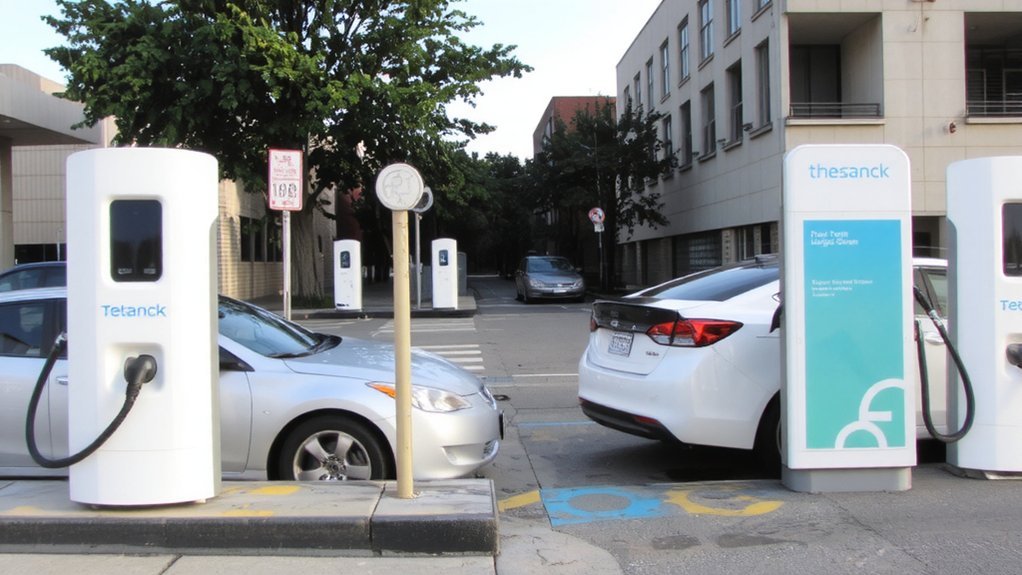
How much you’ll pay at a public charger depends on the network, charger speed, location, and your plan—networks like Electrify America use pay-as-you-go, subscription, or premium options and show real-time costs in their app, while some European providers (e.g., Eleport) stick to clear per‑kWh rates with no session fees, and UK pricing indexes (Zap‑Map) put rapid chargers at a higher average than slow/fast ones. Stable Auto has evaluated and sited over 16,000 stations in the U.S. You should check apps for site-specific rates: Electrify America can bill per-minute or per‑kWh and updates prices during sessions, while Eleport typically lists flat per‑kWh fees.
Expect US Level 2 public charging near $0.20–$0.25/kWh and DC fast charging around $0.40–$0.60/kWh; UK rapid averages ~76p/kWh. Prioritize transparent networks for predictable, safer charging costs. Also compare plans to reduce unexpected session fees.
Regional and State Variations
You’ll see wide state-to-state differences in public charging prices—Hawaii and parts of the Northeast often top the list while Washington and Idaho are much cheaper.
Within states, urban fast chargers are more common but often cost more per kWh than rural stations when they’re available. Local subsidies and incentives can boost charger availability and sometimes lower costs, but 2025 data show they don’t reliably cut per-kWh prices across regions. On average, fueling an EV is often 2-3x cheaper than fueling a gas car.
State Price Differences
Statewide public EV charging prices vary widely: the national average for DC fast charging sits near $0.49 per kWh, but you’ll find Nebraska as low as about $0.17 per kWh and Hawaii up around $0.60 per kWh. When you plan trips, expect Midwest and Plains states generally to offer lower DCFC costs—Mississippi and Iowa often near $0.22–$0.29 per kWh—while several East Coast states, West Virginia, Connecticut and island markets push above $0.50.
State electricity rates, demand, and network policies drive these gaps; higher residential rates usually mean pricier public charging. You should check local rates and network pricing rules (per‑kWh vs per‑minute) before charging, keep your vehicle safe during stops, and use memberships or incentives to reduce costs and monitor weather and traffic conditions. This is driven in part by Hawaii’s very high residential rate—about $0.44/kWh—making it the highest rate state.
Urban Vs Rural Rates
While urban chargers tend to cost more than rural ones, you’ll see the difference most clearly with fast charging: city DC fast charging often runs $0.35–$0.60 per kWh (and can exceed $0.70 in premium spots), roughly 20–40% above comparable rural rates, which commonly fall in the $0.25–$0.45 range. As of Q1 2025, only 45% rural counties had at least one fast EV charging port, reflecting the emerging charging divide.
You should expect urban networks to use more time‑based and dynamic pricing—Level 2 often charges $2–$5 per hour and costs rise at peak times—so check rates before you plug in. Rural sites usually offer flat, predictable fees or per‑session prices, making planning easier, though longer distances can mean higher per‑mile expense.
For safety, pick well‑lit, attended stations when available and monitor your charging session. Keep an EV-ready charger app handy and carry a charged emergency kit.
Local Subsidies and Incentives
Many states and utilities offer rebates, tax credits, and time‑of‑use incentives that can substantially lower the cost of installing chargers or charging off‑peak, but availability and amounts vary a lot by region. At the federal level, the Clean Vehicle Credit provides up to $7,500 for qualifying new electric vehicles, which can further lower ownership costs. You should check state and utility programs: California, Maryland, Michigan, and Minnesota offer $250–$1,500 installation rebates, and some utilities layer on credits like Duke Energy’s $200/year off‑peak credit or Consumers Energy’s $500 home charger rebate.
California’s CALeVIP can cover up to 100% of fast charger costs at qualified sites and prioritizes disadvantaged communities. Federal CFI grants funnel large sums to states, supporting local deployment.
If your state lacks incentives, like Kentucky, plan for higher upfront costs and prioritize safe, compliant installation and off‑peak charging to reduce expenses and follow installer safety guidelines.
Home Charging Comparison and Savings
One of the biggest savings with an EV comes from charging at home: you’ll typically pay $0.04–$0.17 per kWh (about $7–$18 for a full charge depending on battery size), roughly half or less than public chargers and 2–3× cheaper than DC fast charging. This is because it is used by 80% of EV drivers.
At home you control timing, equipment, and safety: off‑peak TOU rates can cut costs by about one‑third, and monthly charging runs $49–$63 for sedans. Install a Level 2 unit ($400–$700) with proper outdoor rating and correct amperage; follow manufacturer and electrician guidance to stay safe. Account for 10–15% charging losses when estimating energy use.
- Charge overnight during off‑peak hours.
- Choose a certified Level 2 charger.
- Verify circuit capacity and install safely.
- Track energy and costs via smart apps.
Memberships, Pricing Models, and Hidden Fees
How do memberships and pricing structures affect what you actually pay to charge? You’ll see big differences: Tesla access is effectively limited to Tesla owners and charges per‑kWh (~$0.25–0.45/kWh). Electrify America and EVgo offer memberships (about $4/month or tiered plans) that cut per‑kWh or per‑minute rates and often waive $1–$2 session start fees.
EVgo leans toward per‑minute billing with higher rates at faster speeds; Electrify America mixes per‑kWh and per‑minute. ChargePoint pricing varies by host—per‑kWh, per‑minute, or flat fees—so check each location. Blink’s smaller network has memberships that reduce session fees.
Watch for idle fees (typically $0.50–$1+/minute after a grace period), parking or access charges, taxes, and app convenience fees that can raise your total cost. Check receipts; report billing anomalies immediately to protect. California leads the U.S. with over 1.5 million EVs on the road as of 2025.
User Experience: Reliability, Wait Times, and Value
Reliability has improved — non‑Tesla fast‑charger dependability hit an 85.5 reliability index in Q2 2025 and first‑time plug success is up. You’ll notice fewer failed attempts (14% in 2025), boosting confidence but some older stations still fail and regional variance remains. Safety-conscious drivers should approach unknown sites cautiously and report malfunctions promptly. As of Q2 2025 the national fast charging network included 59,694 ports.
Non-Tesla fast-charger reliability rose to an 85.5 index; first-time plug failures fell to 14%—inspect and report issues.
Expect higher first‑time plug rates, but check real‑time status.
Plan for waits in dense cities; San Francisco and Denver show elevated queues.
Factor cost and payment friction into perceived value; satisfaction fell despite reliability gains.
Prefer well‑maintained stations in East South Central or verified network operators.
You can improve safety and outcomes by choosing maintained locations and carrying backup plans. Check apps, inspect connectors, and avoid visibly damaged equipment.
Conclusion
You’ll find public EV charging costs vary widely, so you should plan charging around cheapest options and use Level 2 for routine fills while saving DC fast charging for quick top-ups. Memberships and pricing models can hide fees, so read terms and compare networks. Regional differences mean prices in some states run higher, but charging at home usually saves money. Don’t put all your eggs in one basket—spread charging across options to keep costs down.