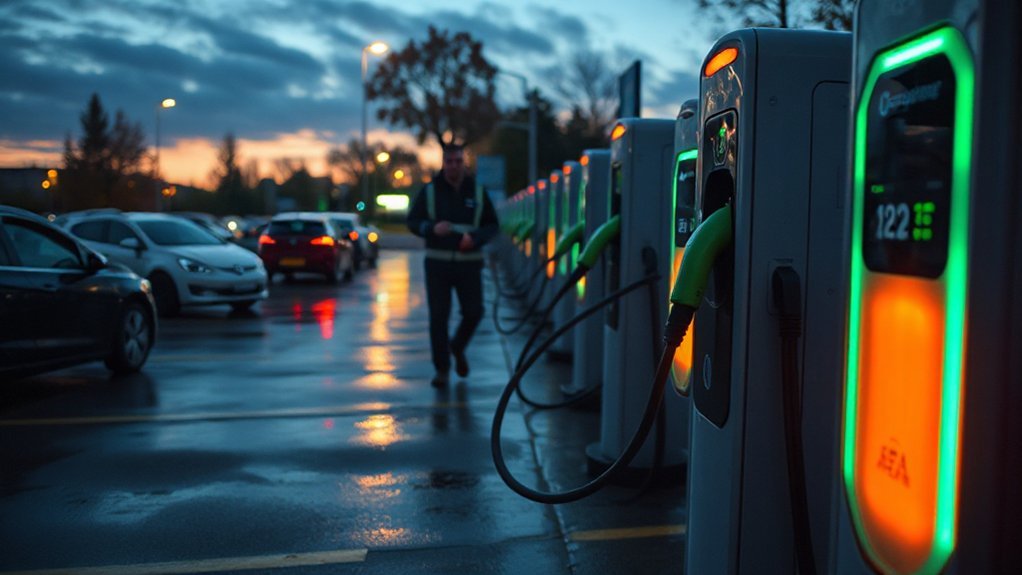
You deploy a 2024 Model Y fleet and watch a staged OTA rollout cut energy per mile ~3% and enable V4 Supercharging. You still supervise SAE Level‑2 Autopilot/FSD with camera‑based monitoring, while NACS plus Plug‑and‑Charge simplifies uptime. Daily, you manage 20–80% SOC, precondition before fast stops, and use the app for Sentry, diagnostics, and service. If you’re chasing lower TCO and fewer surprises, the next choices matter more than the badges.
Key Takeaways
- Tesla’s OTA platform enables rapid, secure feature updates with staged rollouts, signed binaries, differential downloads, and fail‑safe rollback.
- Autopilot/FSD are SAE Level 2; driver attention is monitored via steering torque and cabin camera, with performance varying by conditions.
- NACS and Supercharger network provide up to 250 kW (V3), with app/Plug & Charge authentication and growing V4 compatibility.
- Home charging: Wall Connector up to 11.5 kW on 60 A circuit; ensure permits, NEC compliance, load sharing, and cable management.
- Battery and range: daily 20–80% SOC, precondition before fast charging, maintain tire pressure, and plan trips with 8–12% arrival buffer.
Software-First Design and Over-the-Air Updates

Prioritizing software over hardware, Tesla built a vertically integrated stack—centralized compute, in-house firmware, and a unified vehicle OS—that enables rapid over-the-air (OTA) updates across a multi-million-vehicle fleet. You benefit from a Modular Architecture that decouples features from hardware lifecycles, cutting time-to-deploy from quarters to weeks. Staged rollouts, canary cohorts, and telemetry-driven A/B tests raise success rates while minimizing service disruption. Update Security relies on end-to-end encryption, hardware-anchored keys, signed binaries, and fail-safe rollback, reducing compromise risk and bricking. Differential downloads shrink payloads, lowering cellular costs and improving completion rates. You capture recurring value via subscription features, energy optimizations, and warranty-cost reductions as bugs are addressed remotely. Regulatory and regional compliance flags gate features by market without reflashing entire systems. This drives retention and margin.
Autopilot, FSD, and Driver Assist Realities
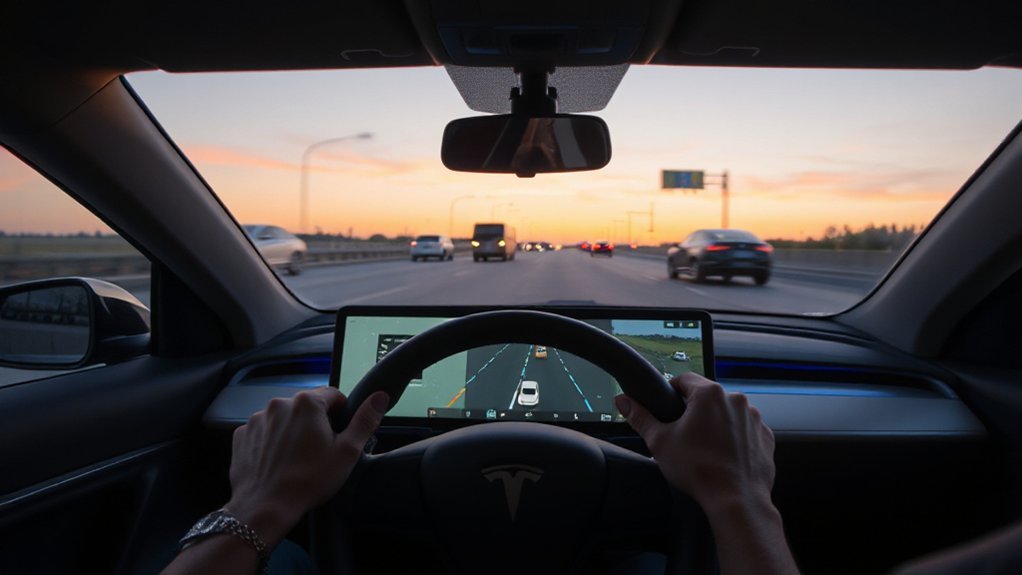

While branded aggressively, Autopilot and FSD are SAE Level 2, supervised driver-assistance systems—you must stay engaged and you retain liability. Tesla uses camera-centric perception, occupancy networks, and end-to-end planning to automate lane-keeping, speed control, and turns, but it’s assistance, not autonomy. You’re responsible for Human Monitoring; inattention triggers strikes, suspensions, and reduced features. Evaluate value via safety-rate deltas, route coverage, and update cadence, not hype. Expect regulatory scrutiny and ongoing Liability Questions as features expand.
- Hands-on steering, eyes-on-road; cabin camera validates attention in real time driver state.
- Performance varies by weather, lighting, lane quality, maps, construction, occlusions, and cut-ins.
- Interventions per 100 miles remain the decisive KPI for capability and safety.
- Subscription vs. upfront FSD materially affects TCO, cash flow, optionality, and resale value.
NACS, Supercharging, and Home Charging Basics
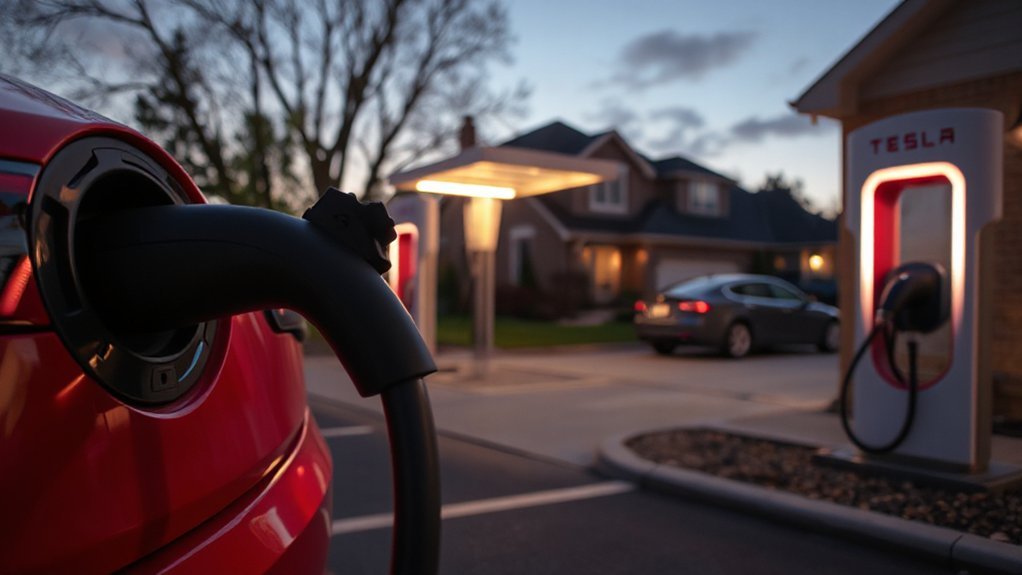
Most new EVs in North America are adopting Tesla’s NACS connector, making Tesla’s Supercharger network the de facto DC fast-charging standard for coverage, uptime, and ease of use. V3 sites deliver up to 250 kW; emerging V4 hardware increases cable length and current for broader vehicle fit. You’ll authenticate with Plug & Charge in Teslas or the Tesla app for others. Track peak/average kW and stall availability.
Adapter Options: Tesla’s CCS1 adapter enables legacy models to use third‑party DC fast chargers; non‑Teslas need NACS adapters from OEMs.
For home, install a Wall Connector (48 A on a 60 A circuit, ~11.5 kW) or a 32 A mobile connector (~7.7 kW). Prioritize Safety Practices: permits, NEC‑compliant wiring, GFCI protection, load sharing, and cable management.
Battery Care, Range Optimization, and Trip Planning
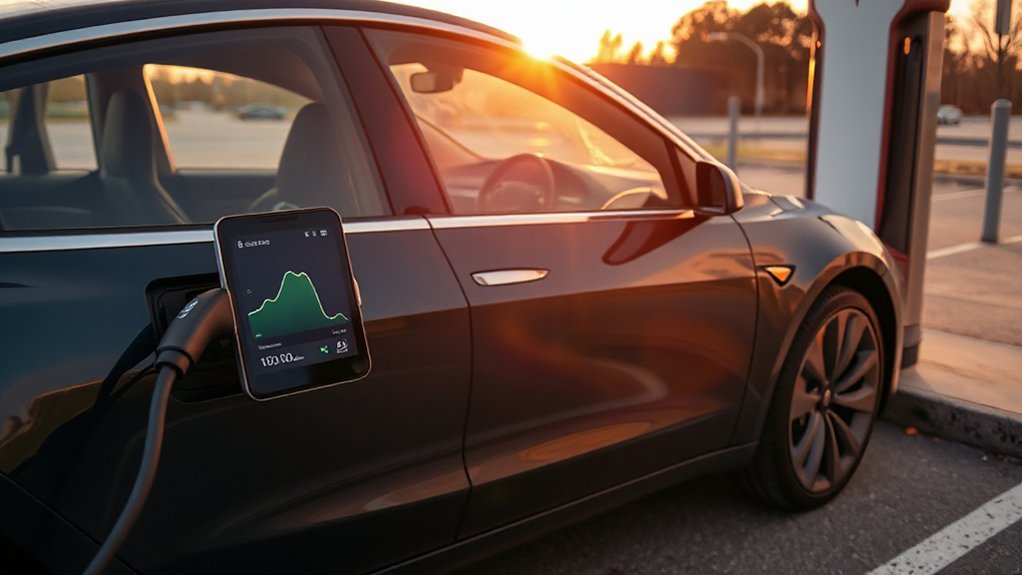
Now that charging hardware and networks are set, maximizing a Tesla’s value depends on how you charge, store, and drive. Target 20–80% daily SOC to minimize degradation; reserve 100% for trip departures. Precondition before fast charging to cut taper. Perform periodic battery calibration: charge to 100%, rest, and discharge to ~10% quarterly to align BMS. Use Chill Accel and anticipate traffic to reduce Wh/mi. Plan routes around wind, elevation, and temperature; speed discipline yields the biggest gains. Refine driving techniques via energy graph feedback.
- Maintain tires at placard +2 psi; rolling resistance drops ~1–2%.
- Roof racks remove 5–10% range; heavy wheels cost 3–5%.
- Cabin/pack preheat on shore power in cold; saves 10–20% en route.
- Use advanced ABRP-style energy modeling for buffer; arrive 8–12% SOC.
App Controls, Sentry Mode, Service, and Ownership Costs
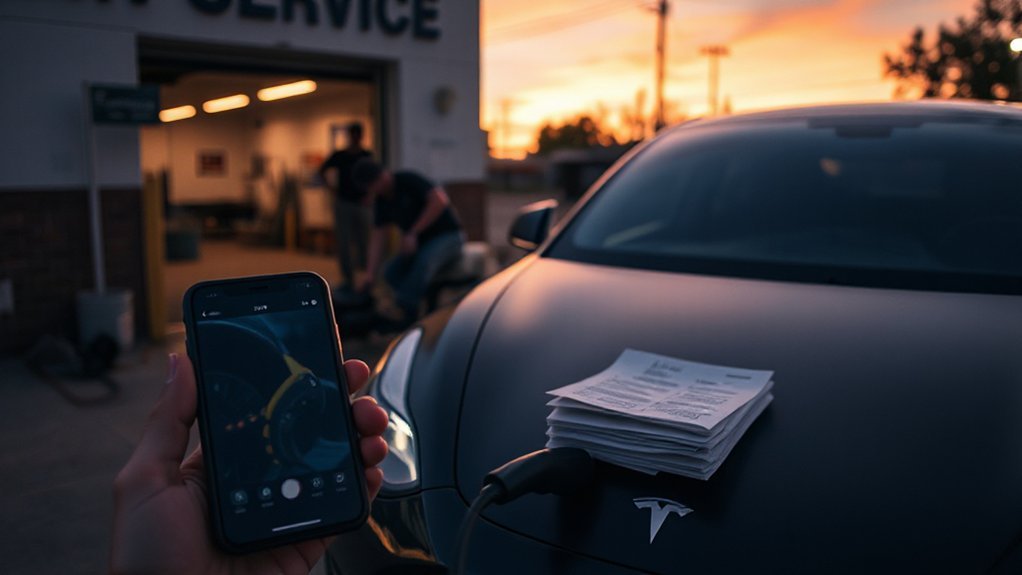
How do Tesla’s app‑centric controls, Sentry Mode, and lean service model translate into real ownership costs? You consolidate key functions—preconditioning, charging limits, Sentry Alerts, and service scheduling—into one app, trimming time and failure points. Over‑the‑air fixes and mobile technicians cut downtime, but you still budget for tires, brake fluid, and cabin filters. Sentry Mode deters incidents and supplies evidence, often lowering overall claims severity, though it increases 12V load and storage use. Monitor Service Pricing in the app; compare mobile vs. center rates. Quantify electricity at kWh x tariff, subtracting Supercharger credits. Track residual value impacts from feature updates, safety scores, and warranty status.
| Metric | Signal |
|---|---|
| App controls | Time saved |
| Sentry events | Lower claims |
| OTA fixes share | Shorter MTTR |
| Service Pricing | Mobile vs. center |
Conclusion
You navigate a software-first machine that updates weekly, logs terabytes, and protects keys in hardware. You’re supervising Level‑2 autonomy as cameras learn, mile by mile. You tap NACS, charge at V3/V4, and manage SOC 20–80% while preconditioning shaves minutes. You plan with real-time routing, then audit costs in the app. But the curve steepens: features ship faster, margins hinge on data, and the market consolidates. Will you adapt—or lead the next release? At scale now.