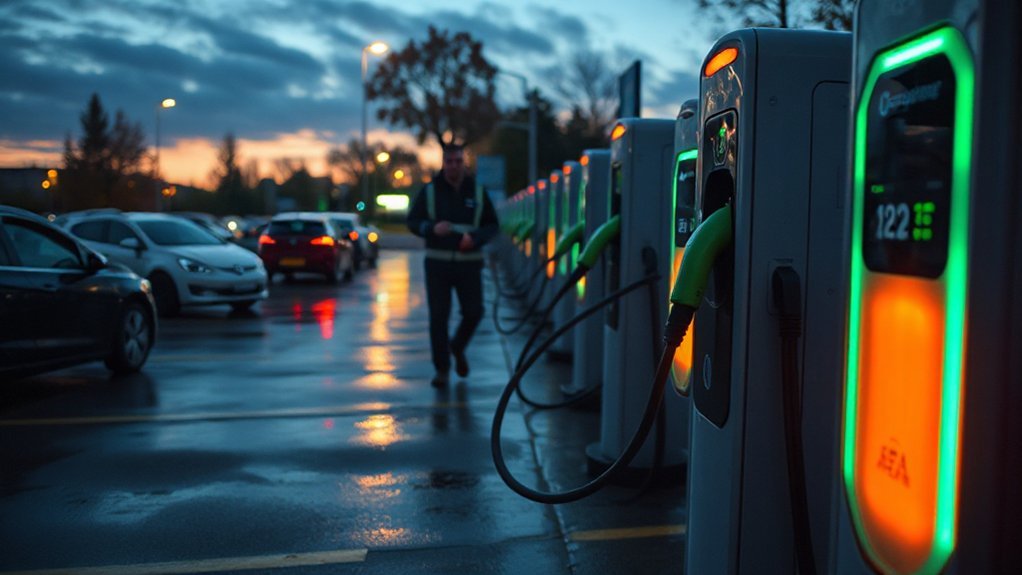
You’ve probably heard that electric cars suddenly shut down when the battery hits zero; is that really true? In most cases your EV will warn you, limit power to nonessential systems and enter a limp mode so you can reach a safe spot. But behavior varies by make, state of charge calibration and local rules, so you’ll want to know which applies to your car.
Key Takeaways
- The car will slow power delivery and enter limp mode, preserving 5–10% battery to protect cells and extend a few final miles.
- Nonessential systems (infotainment, climate, heated seats) shut off while lights, brake assist, steering, and safety electronics remain active.
- The BMS will trigger dashboard warnings, phone notifications, and navigation prompts directing you to nearby chargers.
- If immobilized, call for an EV-trained flatbed tow service to avoid drivetrain or battery damage from wheel-lift towing.
- Activate hazards, move to a safe spot if possible, turn off ignition, and check for high-voltage warnings or visible battery damage.
How EVs Warn You Before the Battery Dies
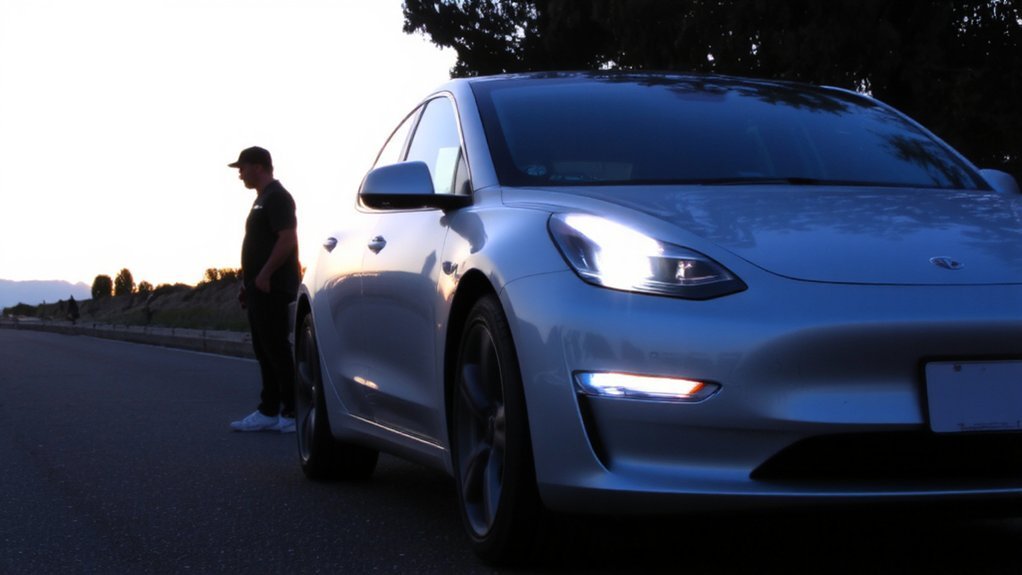
How do electric vehicles warn you before the battery dies? Industry data show charging safety is critical to EV development, as thermal runaway risks remain significant. Your EV uses a battery management system that continuously monitors voltage, current, temperature and state of charge. Temperature sensors and algorithms — including LSTM and TCN models — predict anomalies and detect abnormal heating early.
Threshold alerts trigger visual, audible and haptic warnings on the dashboard, and can push notifications to your phone. Charging stations and networked chargers share real-time data, slowing or interrupting charging if unsafe conditions appear.
Regulations now require early detection and five‑minute warnings ahead of potential thermal ignition and mandate cabin smoke monitoring and temperature limits. These layered systems aim to give you clear, timely alerts so you can take safe action before a critical battery event and avoid harm.
What Happens When the Main Battery Reaches Zero

If your main battery reaches zero, the car will lose propulsion and become immobilized, often after a limp‑mode period. The 12‑volt system and a few essential functions may still run briefly from a reserve, but they won’t provide drive power. You’ll usually need a portable charger, roadside recharge, or a tow to a station to restore charge and get moving again. EV batteries can last 20+ years on average.
Vehicle Immobilization
When your EV’s display hits zero, it doesn’t cut out instantly: you get gradual power reduction as the battery management system reserves roughly 5–10% capacity for protection. Before this, most EVs show an initial low battery warning around 20% battery. The car steps down nonessential systems, keeps hazard lights and core electronics on, and often enters a limp or turtle mode to extend final miles.
You’ll see escalating warnings and navigation will suggest nearby chargers; climate and entertainment may be limited automatically. Performance will be sharply reduced but steering and braking remain functional so you can safely pull over.
Eventually the vehicle will coast to a controlled stop rather than losing power abruptly. Repeated deep depletion can stress cells, so avoid making a habit of driving to displayed zero. Plan charging stops and address warnings without delay.
12V Systems Operate
After the display hits zero and the car slips into limp mode, the vehicle’s power management takes control to stretch remaining energy and keep you safe. Emerging solid-state packs can reach 600 Wh/kg energy density, potentially extending real-world range significantly. You’ll see nonessential systems like infotainment, climate control, and heated seats shut off while lighting, brake assist, steering, ABS, and stability control stay active.
The car may limit speed and power output and show warnings or navigation prompts to nearby chargers. A separate 12‑volt auxiliary battery continues running hazard lights, wipers, control electronics and emergency-call functions for a limited time. Thermal management may scale back but can maintain minimal protection to prevent cell damage.
The system follows a controlled shutdown sequence so you can find a safe place to stop before all propulsion and noncritical electronics power down.
Towing and Recovery
Anyone who’s run an EV flat knows towing gets trickier than for gas cars: flatbeds are the safest option because they lift all wheels and prevent motor or battery damage, while dollies or wheel‑lift rigs only work if they keep the drive wheels off the ground and the vehicle’s drivetrain is disengaged. Whenever possible, request a professional using flatbed tow trucks to avoid drivetrain and battery damage.
At zero charge you often can’t enable transport modes, so demand an EV‑trained tow service with insulated tools, self‑loading dollies, or tire skates. Never tow with wheels on the ground; spinning wheels can generate current, overheat motors, or damage battery and drivetrain.
Consult your owner’s manual and choose a full flatbed to protect safety and warranty.
- Heart-stopping: avoid wheel contact now.
- Panic-free: hire trained flatbed crew.
- Warranty-saving: proper tow prevents costly damage.
Safety Steps to Take If You Stop on the Road
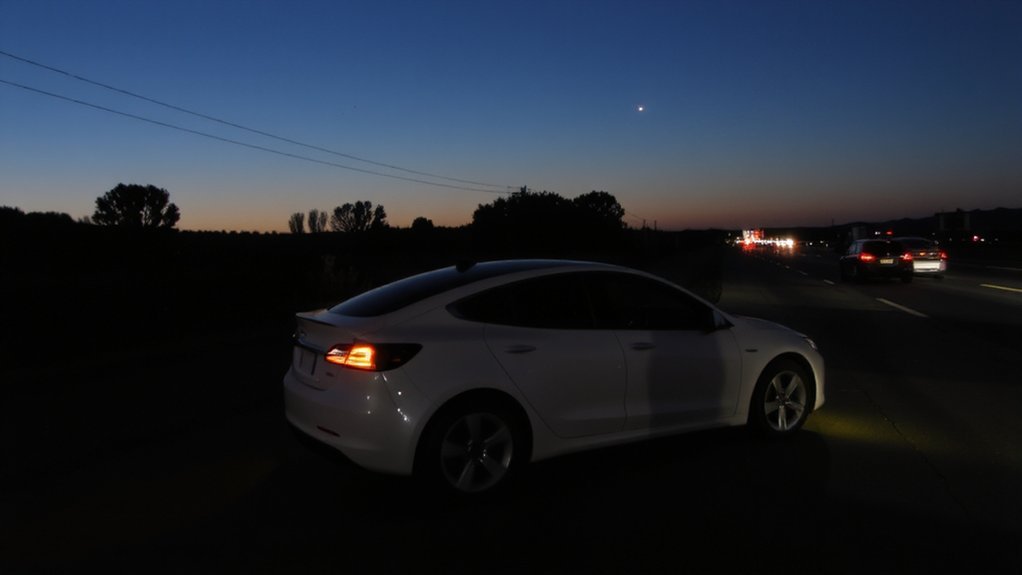
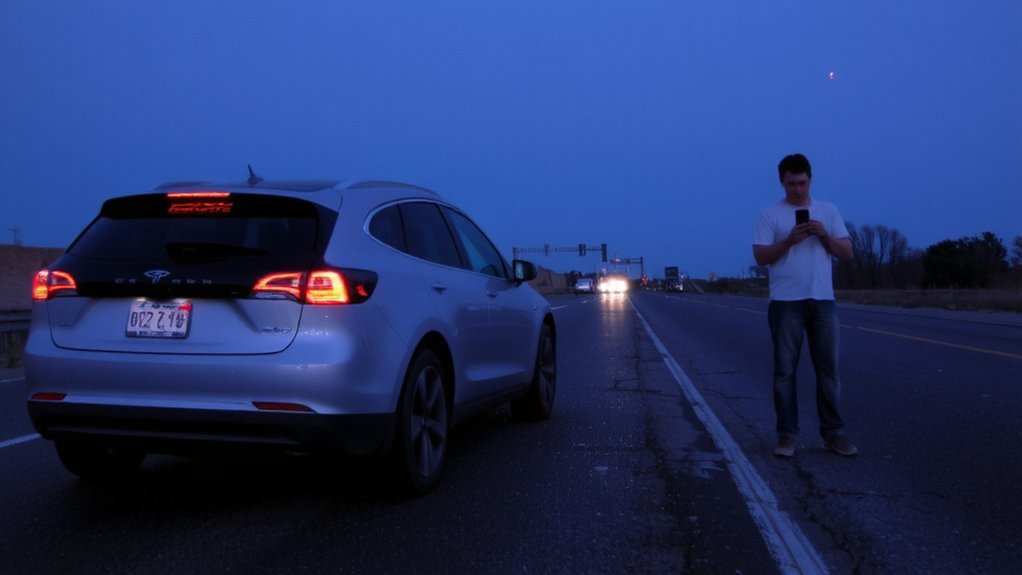
How should you react if your EV dies on the road? Activate your hazard lights immediately and, if you can, move the vehicle to a safe, flat area away from traffic—ideally behind a barrier. Turn the ignition off completely to deactivate high-voltage systems. Have everyone exit and move to a secure location clear of traffic flow. Place a warning triangle or visible markers behind the car if available.
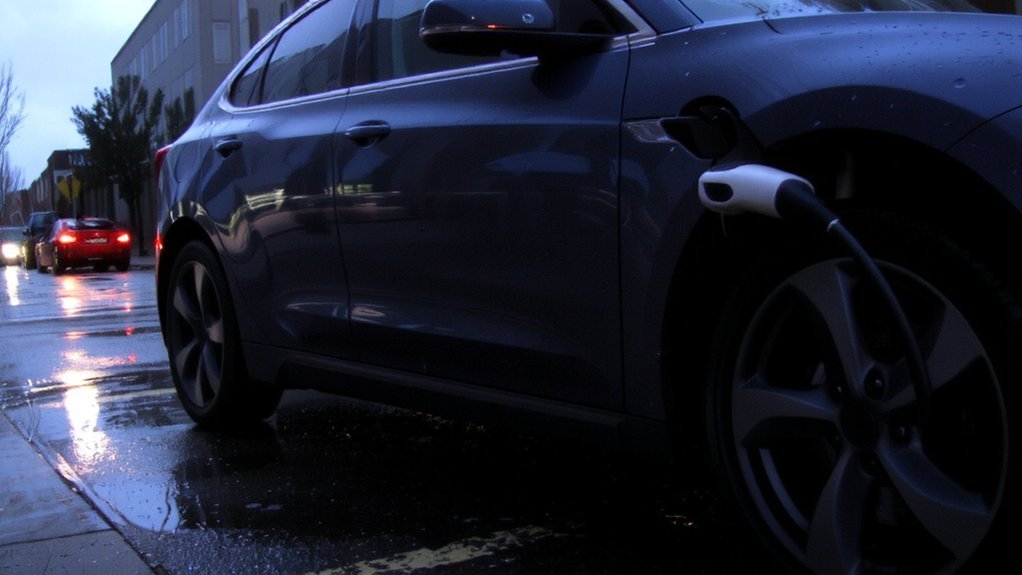
Check passengers for injuries and call EMS if needed; notify law enforcement if the scene is hazardous. If you smell odd odors, hear unusual sounds, or experience irritation, move upwind and uphill and keep bystanders away. Visually note any battery damage, leaks, or dashboard high-voltage warnings, but don’t touch exposed cables or damaged areas for safety. Modern EV batteries are engineered with safety systems to reduce the risk of fire and electrical hazards.
Towing, Recovery, and Transport Rules for EVs
You should insist on flatbed transport whenever an EV needs recovery, since lifting all wheels prevents drivetrain and electrical system damage.
Don’t allow wheel-on towing or flat towing with wheels rolling on the ground, because motors can generate current and harm the battery or transmission.
Check your owner’s manual and tell the tow operator to follow manufacturer instructions and use a flatbed.
Remember that many electric cars have specific towing guidelines that should also be considered during recovery.
Flatbed Transport Required
If your EV runs out of charge, you’ll often need a flatbed tow because wheel-on or dolly methods can let wheels rotate and damage the motor, transmission, or regenerative-braking systems. Flatbed towing eliminates road contact, protecting the vehicle’s drivetrain. You should request a flatbed and trained operator to protect the drivetrain, high‑voltage components, and battery undercarriage.
Follow manufacturer notes: engage transport mode if available, use designated chassis points, and avoid dragging or winching without power. Flatbed transport keeps the vehicle stationary and minimizes stress, vibration, and warranty risk.
- You’re safer knowing trained pros handle the battery.
- You’re relieved when the motor and systems stay intact.
- You’re confident the warranty and resale value are protected.
Ask roadside services beforehand to confirm EV-capable equipment and procedures. Keep your owner’s manual accessible always.
Avoid Wheel-On Towing
Because spinning the wheels can drive the motor and generate uncontrolled electricity, you should avoid wheel‑on towing for most EVs and insist on flatbed or manufacturer‑approved methods. If you tow with wheels on the ground you risk motor generation, overheating, unintended regenerative braking and battery overload that can cause system faults, fire or shock.
Most EVs lack a true neutral and have single‑speed drivetrains not designed to roll unpowered. Always follow the owner manual: only use tow dollies or wheel‑lift rigs if the manufacturer explicitly allows lifting the driven wheels. Improper towing can void warranties, cause costly drivetrain damage and create legal liability. Require trained operators and documentation; when in doubt, choose flatbed transport for safety.
Keep emergency responders informed about EV-specific hazards now. Many EVs also have no true neutral, so their drivetrains aren’t designed to be rolled while unpowered.
How to Recharge or Restart After Depletion
Many roadside and manufacturer services now offer mobile EV charging or towing to the nearest charger, so call your provider or use an app to request immediate assistance. Using smart charging—which manages when and how fast an EV charges—can optimize energy use and reduce strain on the grid.
Roadside and manufacturer services now offer mobile EV charging or towing—call your provider or use an app for immediate help.
If you run completely flat, use apps like PlugShare to find compatible DC fast chargers (CCS, NACS, CHAdeMO) or request manufacturer recovery with emergency mobile charging. Start charging only when you confirm connector compatibility and payment method.
Consider a taxi-to-charger service in cities or request a battery truck pilot where available. Stay with your vehicle in a safe location and follow provider instructions.
Battery health benefits from smart charging and avoiding repeated full charges.
- Relief: help arriving eases stress.
- Control: knowing compatibility prevents mistakes.
- Safety: remaining visible and following directions protects you.
What First Responders and Owners Should Know About Emergencies
First responders and EV owners must treat electric-vehicle incidents differently than gas-car crashes: you should shut off ignition and hazard lights immediately, then wait about five minutes for high-voltage capacitors to discharge. Avoid orange HV cables and labeled components; don’t cut into battery packs, hot coolant lines, or restraint systems. First responders can also carry the EV Rescue app for quick access to emergency response guides, keeping critical information All in one place. Use wheel chocks, put the vehicle in park if possible, and disconnect the 12‑volt battery cautiously—remember airbags can remain active for minutes. Prioritize rapid but safe extrication to reduce exposure to electrical shock, toxic fumes (hydrogen fluoride, CO) and battery fires; evacuate bystanders upwind and uphill.
Tell emergency operators the vehicle is an EV, document damage and location, and keep emergency supplies, evacuation plans and charging awareness ready as an owner and stay alert.
Conclusion
You’ll usually get plenty of warnings before an EV dies, but if the bars keep dropping you’ll feel the car gently pull back power and insist you find a charger — and that moment can feel unnerving. Don’t panic: follow prompts, steer to a safe spot, and call roadside assistance. If the battery truly goes flat, systems will shut down in a controlled way to keep you safe. Stay with the vehicle until help arrives.