
If you drive an EV, you’ll meet the Combined Charging System (CCS)—a single inlet that handles AC Mode 3 and high‑power DC using CCS1 or CCS2. It negotiates via ISO 15118 or DIN 70121, scales to ~1000 V and hundreds of amps, and coordinates with your BMS and thermal controls for safe, fast energy transfer. You’ll want to know how connectors, power limits, and network support affect real‑world charge times and costs.
Key Takeaways
- CCS is a combined AC/DC EV charging standard using Type 1/2 AC pins plus two DC pins with ISO 15118 communication.
- Two variants exist: CCS1 for J1772 Type 1 (North America/Korea) and CCS2 for Type 2 (Europe/others); both support up to 1000 V.
- AC charging routes power through the onboard charger (~7–22 kW), while DC fast charging bypasses it, delivering 150–350 kW directly to the battery.
- Real-world DC sessions peak between 10–40% state-of-charge, then taper; 10–80% typically takes 18–40 minutes depending on vehicle, power, and temperature.
- Check vehicle/network compatibility, max voltage/current, Plug&Charge support, and regional trends (NACS in North America, CCS2 in Europe); use certified adapters only.
How CCS Works: AC Vs DC, Connectors, and Power Flow
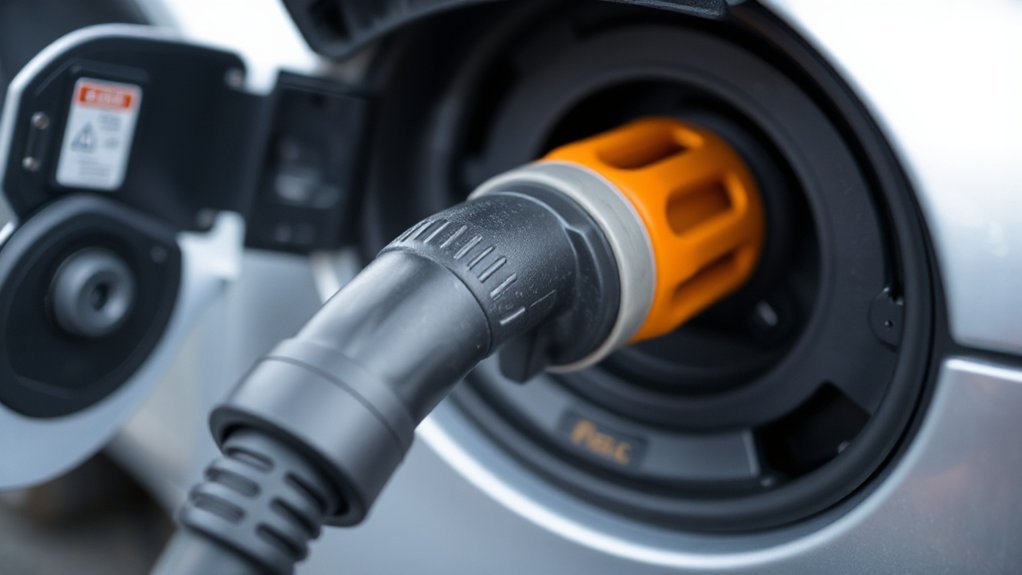
While CCS unifies AC and DC under one interface, it differentiates power paths and signaling to match use cases: AC Mode 3 charging uses the Type 1 (IEC 62196-2, North America) or Type 2 (IEC 62196-2, Europe) pins and routes power through the vehicle’s onboard charger (typically up to 7.2–19.2 kW single-phase in NA; up to 11–22 kW three-phase in EU), whereas DC uses the Combo extensions (Combo 1/CCS1 or Combo 2/CCS2 per IEC 62196-3) to deliver high current directly to the battery via contactors (commonly 150–350 kW in the field; up to 500 kW at 1000 V, 500 A per spec). You negotiate charging via ISO 15118; in AC, Onboard conversion limits rate. In DC, Thermal management and BMS requests govern current safely.
CCS1 Vs CCS2: Regional Differences, Pins, and Compatibility
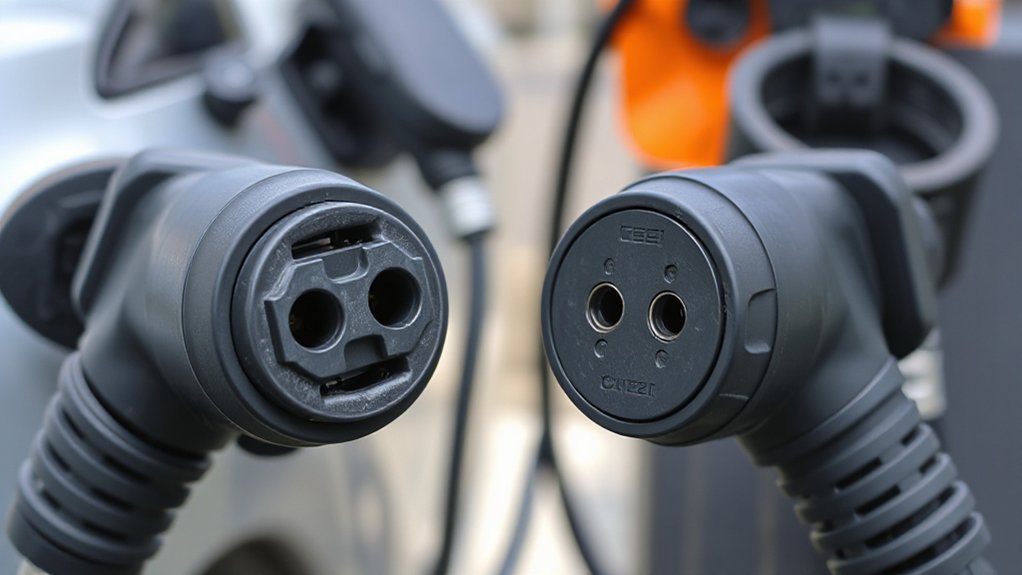
Building on the AC/DC split, CCS exists in two physical variants: CCS1 (Combo 1) and CCS2 (Combo 2), defined in IEC 62196-3 and tied to regional AC bases in IEC 62196-2. CCS1 mates with SAE J1772 Type 1 (North America, Korea); CCS2 mates with IEC Type 2 (Europe and other regions). Both add two high-current DC pins beneath the AC interface, support up to 1000 V, and use PLC (HomePlug Green PHY) with DIN 70121/ISO 15118 signaling.


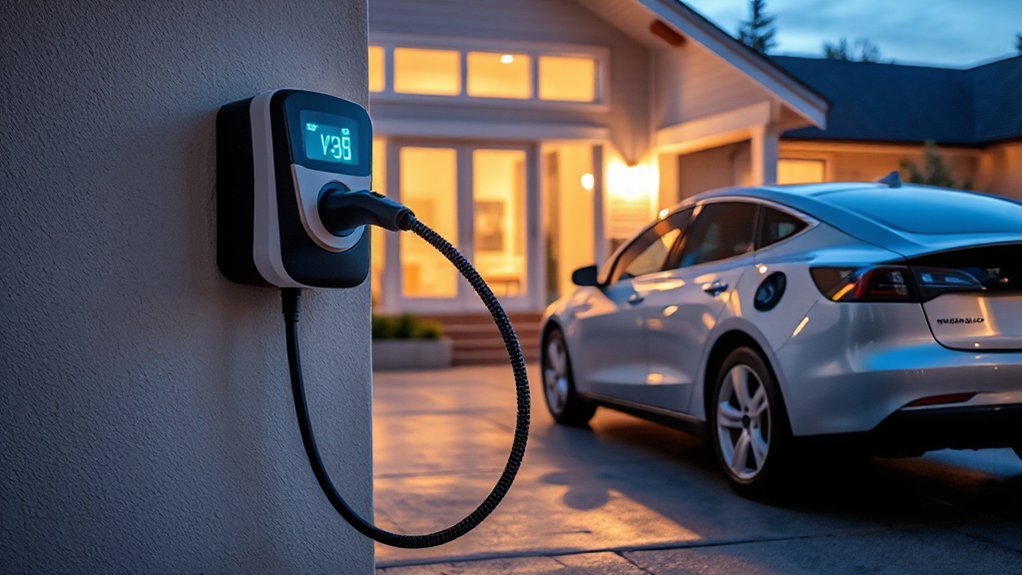
Pin geometry, latch mechanisms, and Type 2 shutters make your inlet non-interchangeable without approved adapters. AC differ: Type 1 is single-phase; Type 2 supports three-phase. Regulatory Divergence and codes drive RCD and labeling differences. Certification Processes vary (e.g., UL/CSA vs CE/EN/TÜV). Cross-compatibility depends on vehicle inlet design.
Charging Speeds, Real‑World Times, and Cost Factors

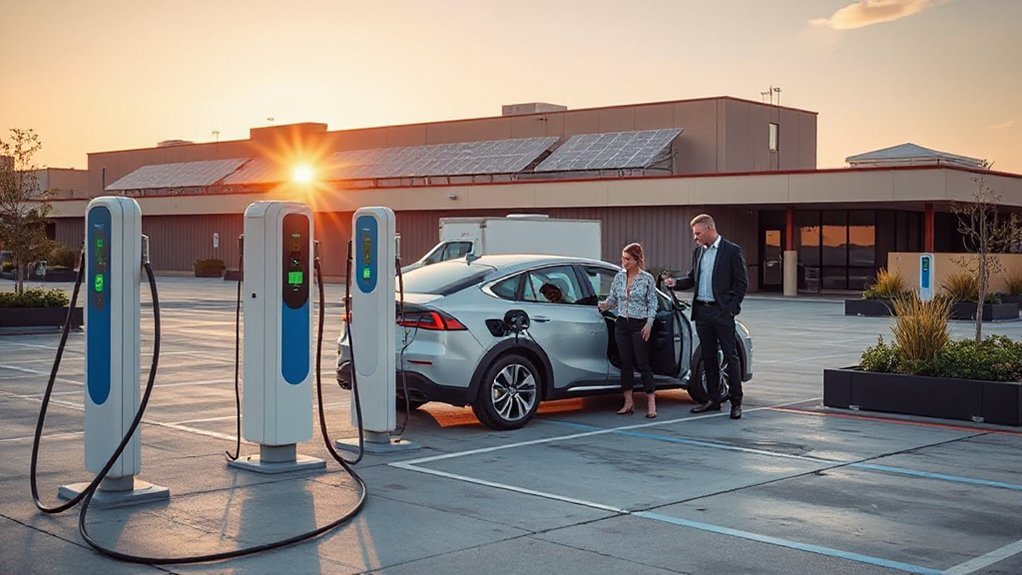
Because CCS charge power is negotiated in real time, your actual speed and cost depend on vehicle limits, charger capability, and operating conditions: ISO 15118/DIN 70121 signaling sets voltage/current targets within IEC 62196-3 hardware limits (up to 1000 V, typically 300–500 A; 350 kW with liquid‑cooled cables). Power follows a taper curve: you’ll see peak rates near 10–40% SOC, then declining to manage cell temperatures and battery degradation. Pack voltage (400 V vs 800 V), cable cooling, and ambient temperature govern sustained current. Practical benchmarks: 60–80 kWh packs add ~200–300 km (125–185 miles) in 15–30 minutes at 150–250 kW; 10–80% often takes 18–40 minutes. Pricing varies by kWh or minute; station utilization and utility demand charges shape tariffs; off‑peak rates reduce total cost overall.
Vehicle and Network Support, Adapters, and Trip‑Planning Tips
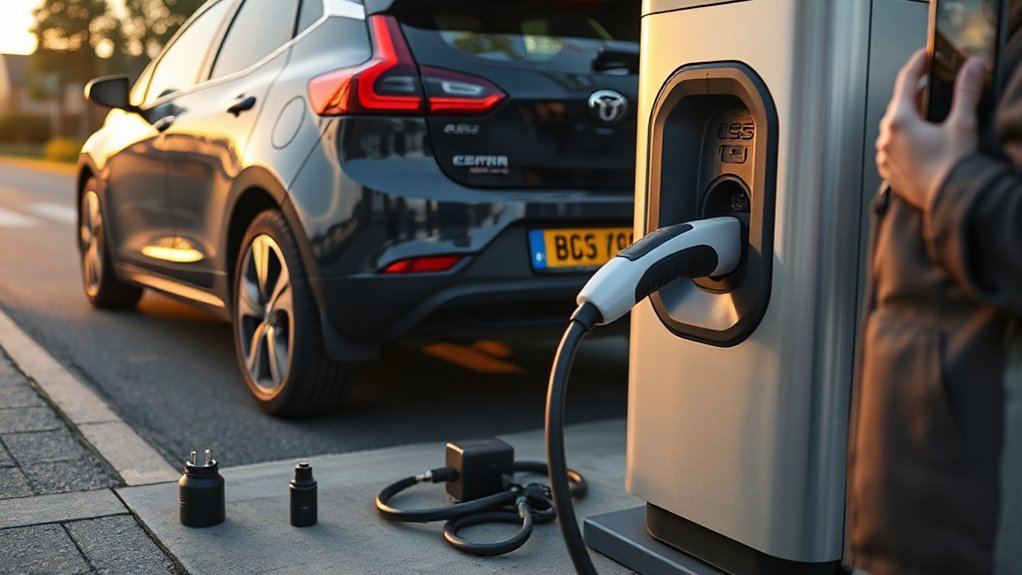
Even as CCS is a global DC fast‑charging standard, compatibility depends on your car’s connector variant, comms stack, and the network’s implementation. Confirm CCS Type 1 vs Type 2 inlet, max DC voltage/current (e.g., 400 V vs 800 V packs, 200–500 A), supported ISO 15118 features (PnC, digital certificates), and OCPP versions the site runs. In apps, filter by power class and cable length.
Carry certified adapters only; verify continuous current ratings, temperature derating, and ingress protection. Do Adapter Maintenance: inspect pins, clean contacts, and update adapter firmware when available.
Plan trips with buffer: target stations with redundant stalls, uptime >97%, and dynamic pricing shown. Follow Public Etiquette: don’t hog high‑power stalls, coil cables, and move when taper begins. Log sessions to track performance.
CCS Vs NACS, CHADEMO, and Others: Today’s Landscape and What’s Next
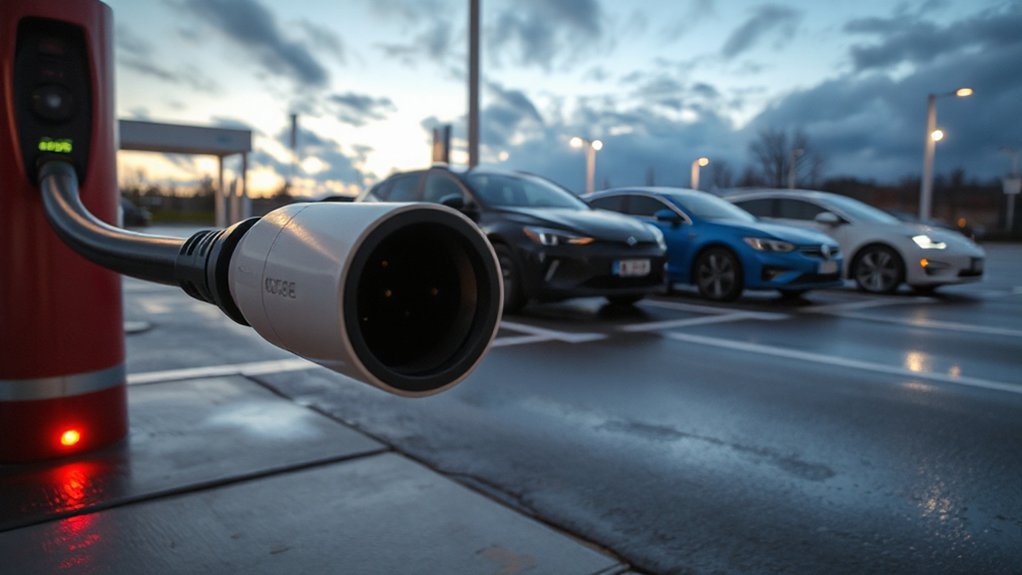
With your connector, comms, and power limits mapped, it’s time to place CCS alongside NACS, CHAdeMO, GB/T/ChaoJi, and the emerging MCS to see where each stands and where markets are heading. In North America, NACS plus CCS adapters dominate after 2023–2025 manufacturer alliances; SAE J3400 formalizes NACS, while CCS remains in J1772/Combo with ISO 15118-2/-20. In Europe, CCS2 with IEC 62196-3 and AFIR mandates holds. Japan’s CHAdeMO plateaus; ChaoJi (CHAdeMO 3.0/GB/T next-gen) targets 600–1000 V, 600 A. CCS High Power Charging reaches 350 kW; NACS publishes 1,000 V, 615 A. You should plan for ISO 15118 Plug&Charge, bidirectional via ISO 15118-20 or CHAdeMO. MCS (IEC 63379 draft) aims >1 MW for HDVs. Regulatory pressures and interoperability testing shape your rollout and user experience today.
Conclusion
You now know how CCS unifies AC Mode 3 and DC fast charging through one inlet, with CCS1/CCS2 connectors, ISO 15118/DIN 70121 comms, and up to 1000 V, high‑current power. You’ll plan trips by matching vehicle max kW, network capabilities, and pricing. You’ll assess adapters, interoperability, and future NACS/CCS convergence. You’ll monitor thermal limits, SoC curves, and station reliability to predict session times and costs. Ready to choose standards‑compliant hardware and charge smarter today confidently?