
You’re weighing Zappi’s PV‑surplus charging and built‑in CTs against rivals with stronger OCPP, broader power ranges, or lower upfront cost. You’ll consider dynamic tariffs, export‑limit compliance, load balancing, RCD type, cable management, and app stability, plus install complexity, firmware fees, and warranty SLAs. You want code‑compliant, low‑touch operation and predictable TCO over 7–10 years—but the best value hinges on a few site‑specific checks next.
Key Takeaways
- Zappi excels at PV-surplus charging with fast 1-second modulation, maximizing self-consumption versus timer-based competitors.
- Built-in PEN-fault monitoring, Type A RCD with 6 mA DC detection, and IP65/IK10 enclosure reduce extra hardware costs and improve durability.
- Integrated CTs enable export limiting and home load balancing, avoiding service upgrades and meeting DNO caps, boosting lifetime value.
- Smart features include OTA firmware and solar-aware scheduling; OCPP support varies, so verify tariff and app integrations versus rivals.
- Tethered or socketed Type 2 options, UV-stable cables, and accessories add convenience; weigh purchase price against these included features in competitors.
Quick Spec Comparison
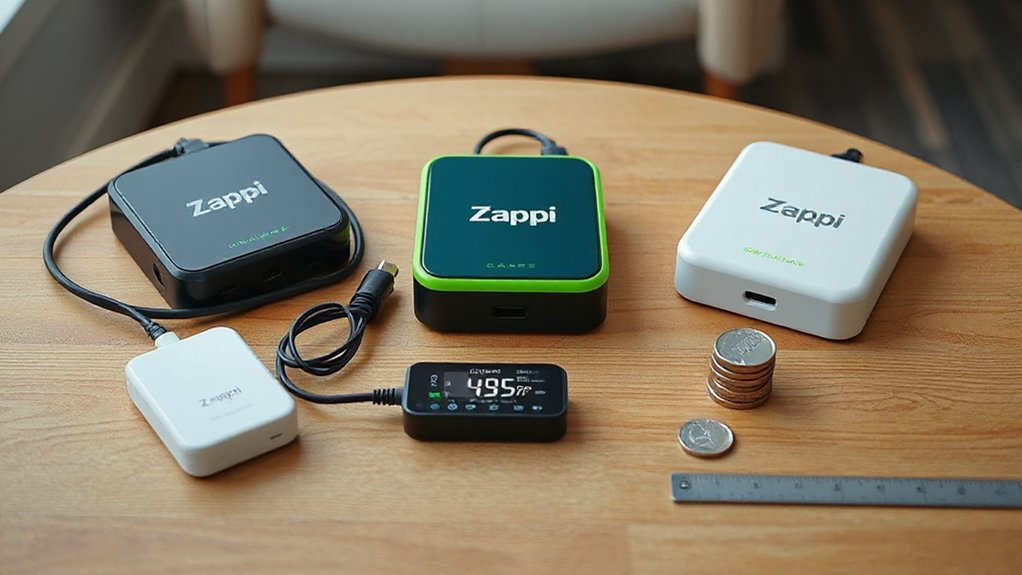
How do the core install specs stack up where it matters on-site? You’ll compare supply rating, protections, and load control first. Zappi supports 7.4 kW single-phase and 22 kW three-phase Peak Output, with built-in PEN-fault protection, Type A RCD + 6 mA DC, and integral load balancing via CTs. Many rivals match 7.4 kW but need external PEN or DC monitoring, adding cost and space. Zappi’s dynamic current limiting protects the main service, improving Energy Efficiency by minimizing nuisance trips and idle losses. IP65, IK10, and -25°C to +40°C operating range suit exposed installs; some units are IP54 or lower. OCPP isn’t universal; check site networking. Cable entry options (rear/bottom), PME compliance features, and firmware OTA support streamline commissioning and audits and recordkeeping.
Solar and PV Integration
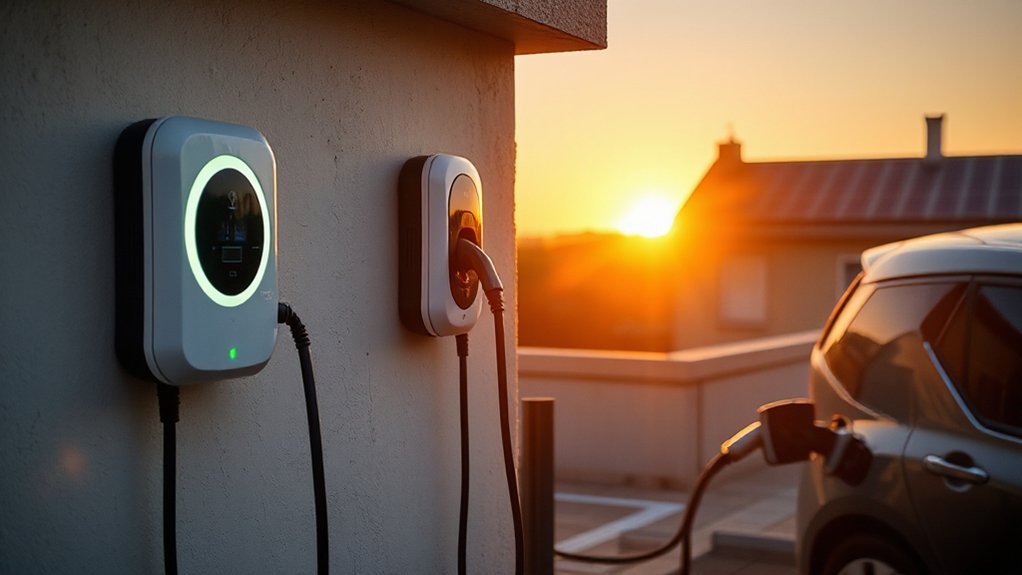
You configure PV surplus charging with calibrated CTs on the service conductors to measure net import/export and enable surplus-only modes. You enable dynamic solar matching so the EVSE modulates charge current in real time to track PV output while respecting IEC 61851/J1772 signaling and branch-circuit limits. You implement export limiting with utility-approved meters or inverter data to meet DNO/utility caps, prevent reverse power flow, and document settings for inspection.
PV Surplus Charging
When configured correctly, PV surplus charging diverts only exported generation into the EV, minimizing grid import while staying within DNO export limits and EVSE safety requirements. You’ll set CT clamps on grid and PV tails, program export threshold, minimum charge current, and phase mode. Verify compliance with safety standards and protect battery longevity by prioritizing house loads before EV charging. Configure DNO export cap, PEN-fault monitoring, and RCD type A/6 mA DC.
| Setting | Typical value | Notes |
|---|---|---|
| Export threshold | 50–200 W | Avoids relay chatter |
| Min charge current | 6–8 A | Within EVSE spec |
| Phase selection | 1φ or 3φ | Match supply |
Document settings and label CTs for future maintenance access.
Dynamic Solar Matching
Building on PV surplus charging, dynamic solar matching modulates EV charge current in real time so export stays near zero while honoring DNO caps and IEC 61851 limits. You size CTs correctly, place them on the grid incomer, and calibrate phase rotation so the charger tracks net flow at 1 s or faster. Using inverter telemetry, Irradiance Mapping, and temperature coefficients, you anticipate ramp rates and smooth the duty cycle. You also account for Panel Mismatch by biasing thresholds and validating per‑string IV curves. Configure minimum current at 6 A per IEC, step increments at 1 A, and respect breaker thermal limits and cable ampacity. Compared with basic timers, Zappi maintains tighter tracking under clouds and shade when paired with proper CTs and hardware.
Export Limiting Support
Although site PV can backfeed the grid, export limiting keeps aggregate export at or below the DNO‑approved cap and grid‑code limits (e.g., ENA EREC G100/G99, IEEE 1547, AS/NZS 4777.1). You’ll need CTs on grid incomers and a charger that modulates real‑time current. Zappi integrates an export‑limit setpoint, phase‑balanced control, and fast ramp rates, so you can cap EV draw when PV peaks or house load collapses. Competing chargers often require external controllers; verify closed‑loop response, sampling frequency, and fail‑safe behavior. Document Certification process, DNO approval, Liability exposure, and wiring schedules. Commission with witnessed tests: induce PV export, start a charge, and confirm export remains ≤ cap across imbalance and disturbances. If the limiter fails open, configure Zappi to derate or stop and log events.
Dynamic Tariffs and Smart Scheduling
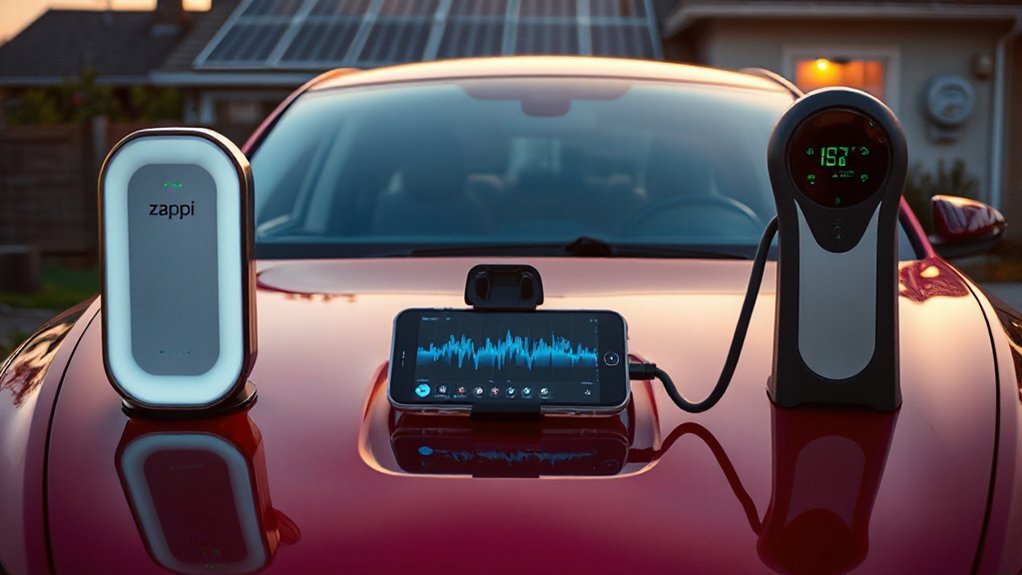
You configure Zappi or other EVSEs for time-of-use optimization by aligning charge windows with the utility schedule and verifying OCPP/OCPI settings and circuit ratings per local code. You enable automated off-peak charging with peak lockouts, demand limiting, and breaker/load calculations that satisfy NEC/IEC requirements. You integrate real-time tariffs via API or utility HAN so the charger adjusts start/stop and amperage dynamically without breaching service capacity.
Time-Of-Use Optimization
Under dynamic tariffs, Zappi and other smart chargers optimize charge windows to cut cost while staying within electrical code and grid constraints. You map utility TOU bands, then set current limits, RCD type, and load-balancing thresholds to protect the service head. The controller applies behavioral nudges via app prompts, guiding you to approve schedules that respect diversity factors and main breaker ratings. You also set seasonal adjustments so winter heating loads don’t trip upstream protection.
1) Configure CT clamps for import/export sensing and enable supply priority.
2) Calibrate min/max amperage per circuit, honoring cable CSA and breaker curves.
3) Validate earthing scheme, PEN fault protection, and grid-code country profile.
During commissioning, verify demand response flags, export limits, and phase rotation on three-phase boards. Documented.
Automated Off-Peak Charging
Building on TOU mapping and protective limits, automated off-peak charging uses tariff feeds and site constraints to queue charge sessions when costs and loading are lowest. You configure phase capacity, breaker rating, RCD type, CT clamp positions, and a max-demand threshold, then set departure times and minimum SOC. The controller staggers starts, caps amperage via EVSE or OCPP, and pauses when aggregate load approaches the service limit or DNO/utility constraints. It honors export/import priorities, PV surplus, and battery reserve. For code compliance, document schedules, demand calculations, and labeling per NEC/BS 7671. Provide consumer education on schedule overrides and fault indications. Compared with basic timers, this automation cuts bills, reduces peak kW, and improves Environmental impact by shifting load to cleaner, off-peak generation and stability.
Real-Time Tariff Integration


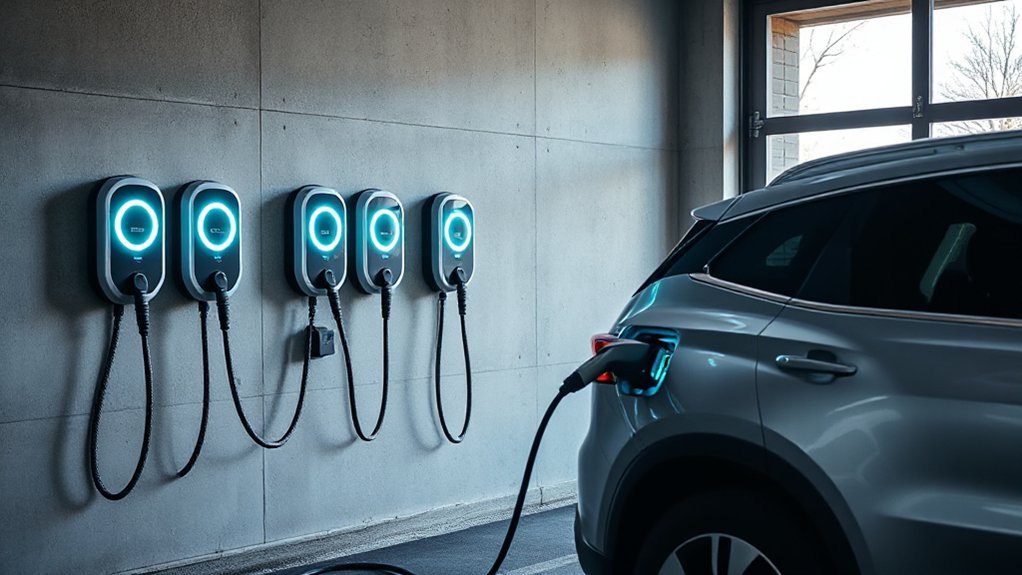

While tariffs can change every 30–60 minutes, real-time integration pulls authenticated price signals via OCPP 1.6/2.0.1 Smart Charging, OCPI, or utility/vendor APIs and computes per-interval current setpoints in UTC. You provision the charger with correct timezone via NTP, confirm OCPP WebSocket reachability, and map the meter/CT phases so export limits don’t conflict with demand response. Address Latency concerns by using wired Ethernet, QoS, and local edge caching; enforce TLS 1.2+, rotate OAuth tokens, and document Data privacy scopes. Validate scheduler math against supply rating and RCD type, then test with simulated intervals.
- Commissioning: register EVSE IDs, verify clock drift <1 s, enable smart profiles.
- Network hardening: VLAN, firewall egress allowlists.
- Fallback: stale-price timeout, safe 6 A hold.
Log events for audit.
Load Balancing and Home Energy Management

Although many smart chargers claim dynamic load balancing, Zappi implements it natively with CT clamps on grid, PV, and battery feeders, enforcing supply-limit settings to protect the service head and comply with BS 7671/IEC 60364 and IEC/EN 61851.
You set the import cap in amps; Zappi modulates EV charge current via PWM so the total measured current never exceeds the agreed capacity or main fuse rating. With CT orientation correct and tails segregated, you achieve accurate net metering for surplus PV diversion without backfeed risk. For multi-load sites, you can implement Circuit prioritization, shedding EV current before heat pumps or cookers based on Demand forecasting and contracted demand. Use appropriate MCB/RCBO type A or B as required, PEN-fault protection, and verify earth loop impedance.
App Experience and Features
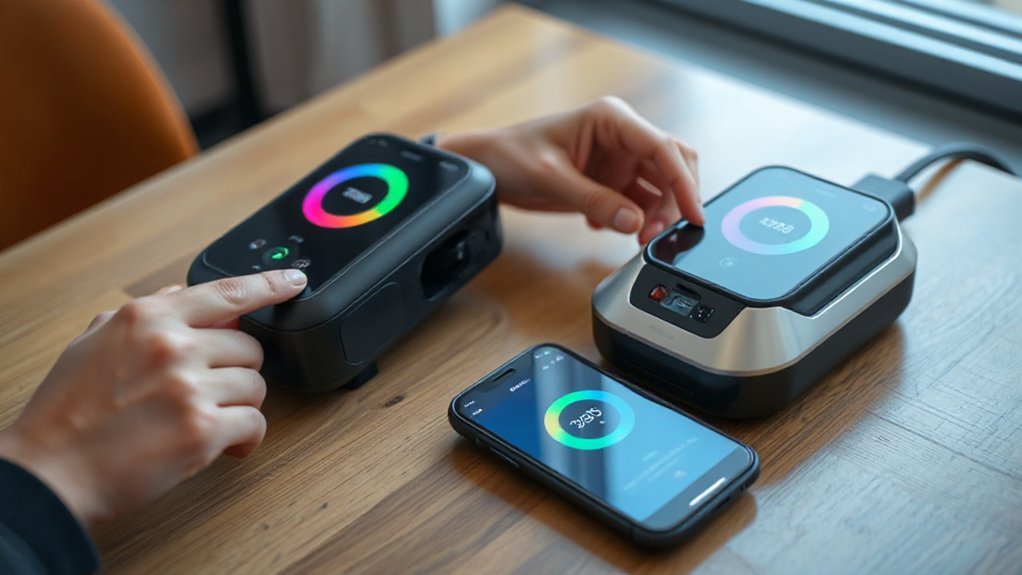
Once you’ve set CT orientation and the import cap on-site, the myenergi app mirrors those controls for ongoing operation and verification. You get a guided onboarding flow that pairs the hub, validates firmware, and confirms grid/solar sources before enabling modes. Scheduling uses 15‑minute blocks, lockouts, and per-phase limits, so you can enforce DNO conditions. Live dashboards display NET import/export, phase balance, and cable temperature, aiding sign-off. Accessibility options include high-contrast themes, larger tap targets, and haptic feedback for safer use with gloves.
- Verify supply type, CT mapping, and earthing selection.
- Set minimum SOC, boost limits, and start/stop thresholds.
- Configure notifications for grid limit hits, RCD trips, and charge faults.
Compared with many rivals, the app streamlines commissioning, reduces callbacks, and keeps compliance records auditable.
Openness, APIs, and OCPP Support
You should verify open protocols compatibility to guarantee the charger integrates with your site EMS, metering, and load management hardware. Check whether the vendor provides a documented public REST API for commissioning, telemetry, and remote firmware control, and confirm authentication (OAuth2/API keys), TLS, and rate limits. For networked sites, specify OCPP support—1.6J for baseline smart charging or 2.0.1 for advanced device management, security profiles, and ISO 15118 readiness.
Open Protocols Compatibility
While protocol support varies across brands, Zappi favors its proprietary myenergi ecosystem over open standards, which affects backend integration at commissioning. You should confirm whether the site requires OCPP 1.6J or 2.0.1 for CSMS connectivity; Zappi’s limited openness can introduce Vendor lock in and specific Security implications for audit trails, certificate handling, and firmware validation. For multi-vendor sites, select chargers advertising certified OCPP profiles (Core, Smart Charging, Firmware Management) and TLS 1.2+ with mutual auth.
- Verify supported OCPP versions and security profiles in the datasheet and on the charge point.
- Test boot/heartbeat, meterValue, and transactionStart flows against your CSMS before go-live.
- Document failover behavior: offline authorization, retry intervals, and log export.
During installation, provision unique certificates, lock down installer PINs, and segregate charger VLANs.
Public REST API Access
How open is Zappi when you need programmatic control? You can integrate over a HTTPS REST interface via the cloud, or use the local LAN API for low-latency control when the site has restricted outbound traffic. During commissioning, assign static DHCP, enable TLS, and store API tokens in a secrets vault. Use PATCH/POST to set charge modes, amps, and schedules, and GET to stream telemetry for billing and dashboards. Webhooks, MQTT, or OCPP bridges help decouple services.
For third‑party chargers, verify whether the vendor gates endpoints behind API monetization, rate limits, or paid tiers. Plan firewall rules to allow only required hosts, and enforce mTLS if supported. Address Privacy considerations: minimize PII in payloads, rotate keys, log securely, and comply with data retention policies.
OCPP 1.6 Vs 2.0.1
Although OCPP 1.6 is still the baseline in the field, 2.0.1 hardens openness and control with a standardized Device Model, richer SmartCharging, and mandatory JSON over WebSocket. When you deploy chargers, 2.0.1 gives you typed resource trees, firmware and certificate management, and event subscriptions, improving diagnostics and Security Improvements. You’ll still use TLS in 1.6, but 2.0.1 formalizes roles, ACLs, and attestation. For mixed fleets, require Backward Compatibility profiles or dual-stack firmware.
- Commissioning: auto-discovery, offline queueing, and IdToken types reduce field failures.
- Smart charging: profiles, constraints, and EVSE-level control prevent overloads.
- Operations: standardized logs, meter values, and notifications speed root-cause analysis.
If your CPO mandates open APIs, favor 2.0.1; if not, validate 1.6 feature parity and roadmap before phased site rollouts.
Hardware Design, Cables, and Accessories
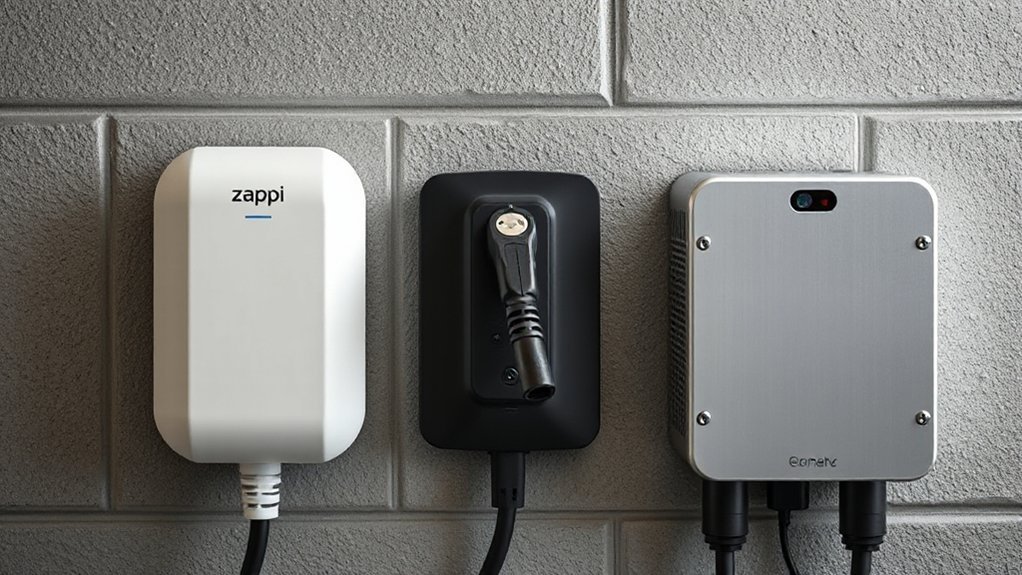
Why does hardware form factor matter at install time? You need a compact, sealed enclosure with an IP54–IP65 rating, IK08 impact class, and robust tamper protection. Look for housings proven by durability testing (UV, salt-mist, thermal cycling) and stainless fixings to prevent corrosion. With Zappi and peers, assess tethered vs socketed Type 2: tethered speeds plug-in time and needs a molded, weather-rated holster; socketed adds flexibility and lock control. Specify 32 A cables with low-temperature flexibility, UV-stable jackets, strain relief, and dust caps. Require an integral Type A RCD plus 6 mA DC detection, PEN-fault protection where applicable, and secure CT/meter connectors. Accessories should include cable hooks, gland kits, spare seals, and keyed covers to protect service ports. Verify labels are permanent and legible.
Installation Complexity and Site Considerations
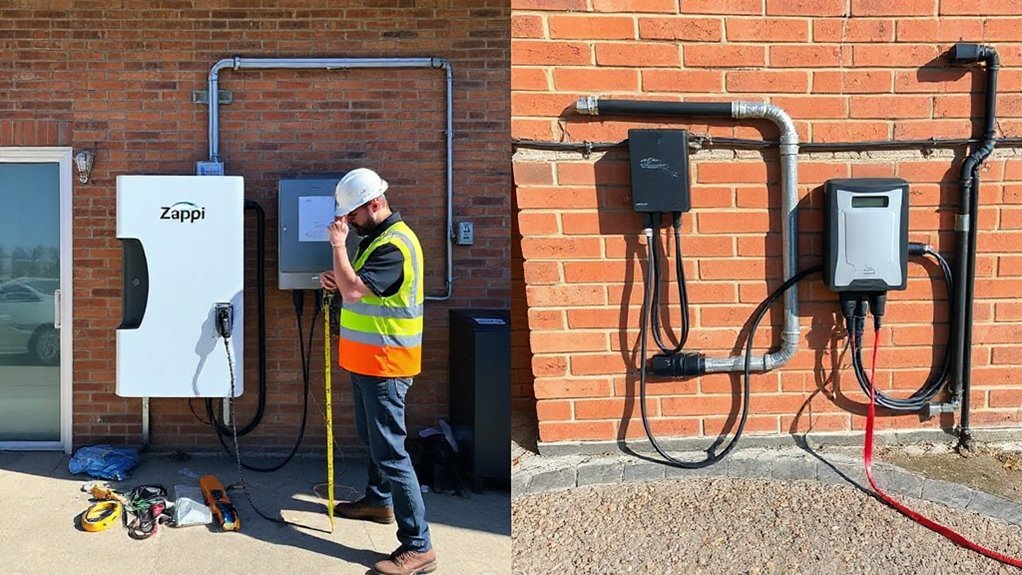
Because site constraints drive cost and compliance, start with a load assessment and earthing review, then match the charger’s protection features to the supply. Verify main service rating, fault current, and available spare capacity; plan for CT-based load management if margins are tight. Confirm PME/TT earthing rules and whether PEN fault protection is integrated or requires an external device. Complete a structural assessment for wall or pedestal mounting and define trenching routes with correct burial depths and segregation.
- Document permits required, utility notifications, and inspection steps to align with local code.
- Specify RCD/RCBO type, surge protection, and cable size based on fault levels and voltage drop.
- Validate Wi‑Fi or hardwired backhaul, conduit fill, and labeling; commission with insulation, loop, and RCD tests and verification.
Reliability, Support, and Warranty

When you compare Zappi with other smart chargers, evaluate reliability through enforceable, testable criteria: enclosure/IP and IK ratings, UV/salt-mist resistance, operating temperature/humidity range, MTBF, connector mating cycles, and cable strain relief. Verify third-party certifications (CE/UKCA, IEC 61851, 62196), surge immunity, and conformal coating on PCBs. Check sealing gaskets, drain paths, and torque specs for glands and terminations. Demand written warranty terms, RMA turnaround, Service Response SLAs, and Parts Availability windows.
| Check | Installer’s target |
|---|---|
| Enclosure/IP & IK | IP54+ outdoor, IK08, UV/ISO 4892, salt-mist IEC 60068-2-11 |
| Thermal/humidity | −25–50°C, 5–95% RH non-condensing; derating curve documented |
| Electrical durability | >10k connector cycles; MTBF ≥ 100k h; MOV/TVS surge staging |
| Support/Warranty | 5–3 year parts/labour, advance swap, 48 h triage, spares ≥ 7 years |
Prefer vendors with test reports; confirm firmware rollback, remote diagnostics capable.
Total Cost of Ownership and Grants

Although sticker price grabs attention, you should model total cost of ownership over 7–10 years: include CapEx (unit, civil works, cable runs, Type A RCBO with 6 mA DC protection or Type B, PEN-fault protection for PME, SPD per BS 7671:443/534, CTs for load limiting, network backhaul, commissioning) and OpEx (OCPP/cloud licences, SIM/data, periodic inspection and testing, firmware/remote diagnostics, callouts, cable/connector replacements, standby draw and conversion losses, downtime). Compare Zappi’s PEN protection and CTs with rivals needing add‑ons; verify standby draw and conversion efficiency from datasheets. Confirm firmware lifespan and OCPP roadmap to reduce obsolescence.
- Use OZEV grants: EV Chargepoint Grant, WCS, and EV Infrastructure Grant; verify scope, caps, VAT.
- Build a Depreciation Schedule; consider firmware features in Resale Value.
- Tariffs.
Conclusion
You’re choosing value by matching features to your site and code. If you’ve got PV, Zappi’s CT-driven surplus charging and export‑limit compliance can trim EV energy costs by up to 60%, while rivals may win on OCPP, higher kW, or lower CapEx. Verify service head rating, RCD Type A/6 mA DC, PME/earth solutions, and DNO notifications. Factor cable runs, Wi‑Fi/Ethernet, firmware fees, warranty SLAs, and 7–10‑year TCO. Pick unit that fits your installation, not brochures.