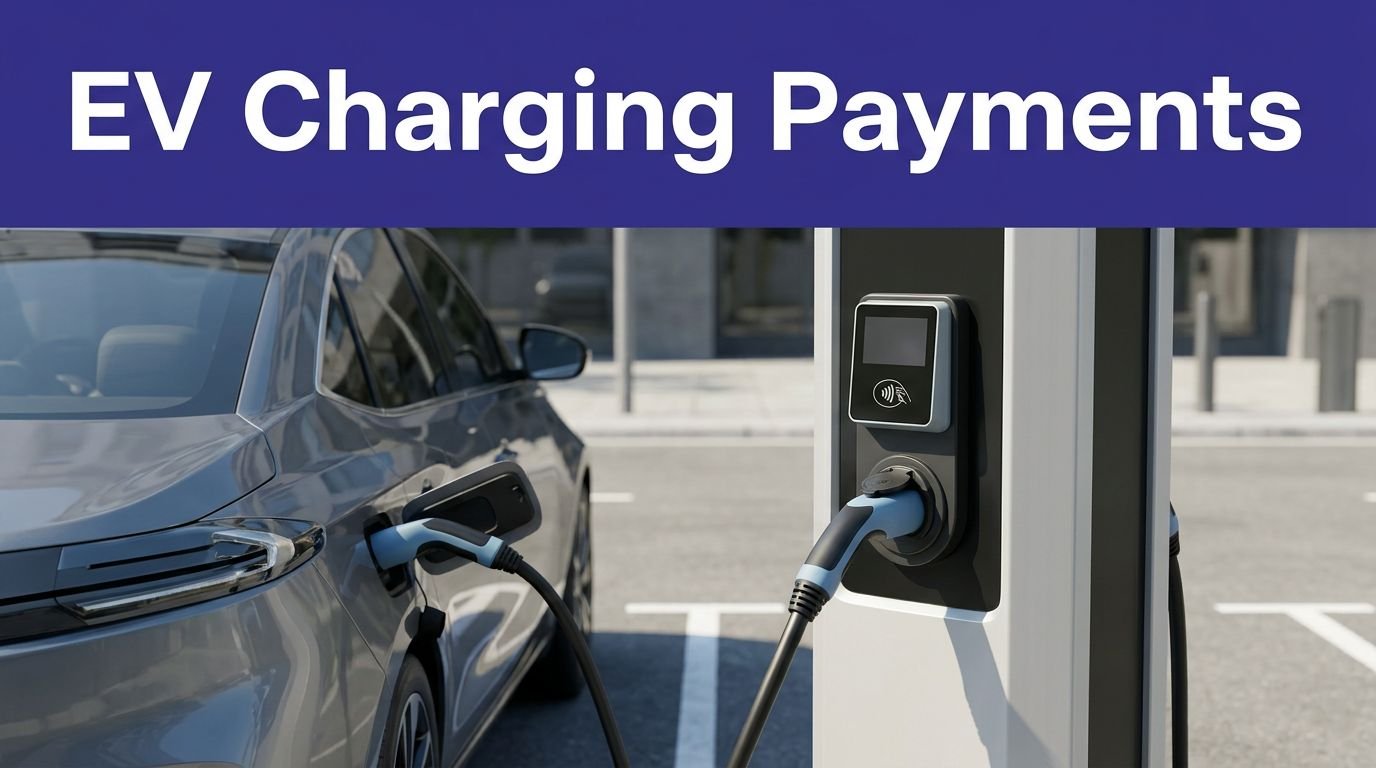
You need to understand how kW, volts, and amps work together to know how fast your EV will charge. It’s about more than charger labels — battery size, onboard limits, and state of charge matter too. Keep these factors straight and you’ll pick the right setup for your needs — starting with what actually sets the power.
Key Takeaways
- kW = (Volts × Amps) / 1000, so higher voltage or current increases charging power linearly.
- Level 1 (120V) ~1.2–1.9 kW, Level 2 (240V) typically 3–22 kW, DC fast chargers 15–350 kW.
- The vehicle’s onboard charger and battery peak acceptance set the maximum AC/DC charging rate.
- Battery state of charge, temperature, and preconditioning significantly affect real-world charging speed and tapering.
- Home supply, breaker, connector type, and safety/NEC/NEVI rules determine installable charger power and required protections.
How Kw, Volts, and Amps Relate to Charging Power
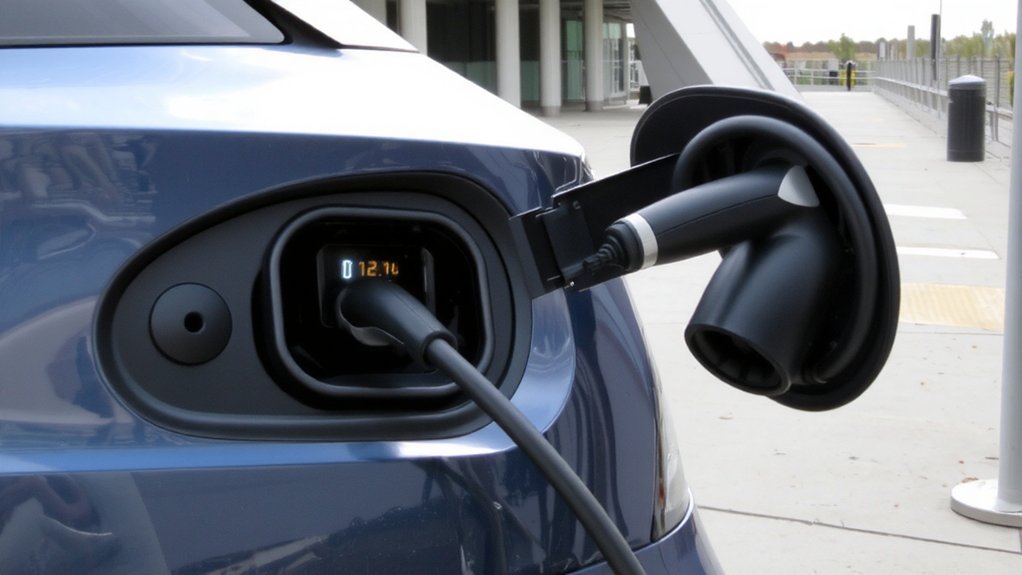
Think of voltage as the pressure that pushes electrons, amperage as the flow rate, and kilowatts (kW) as the resulting power: kW = (Volts × Amps) / 1000. You should know voltage sets the electrical potential and amps set how much current flows; together they determine instantaneous charging power, not total energy. Also, remember that amperage refers to the amount of electrical current flowing through a charging cable.
Increasing volts or amps raises kW and can shorten charging time if your vehicle’s able to accept it. Higher voltage lets you get more power without excessively high current, reducing heat and improving efficiency. Higher amps increase power linearly but raise thermal losses and require thicker cables and proper breakers.
Don’t exceed your EV’s onboard limits; guarantee wiring, breakers, and cooling are rated for intended volts and amps for safe, reliable charging.
Charging Levels Compared: Level 1, Level 2, and DC Fast Charging
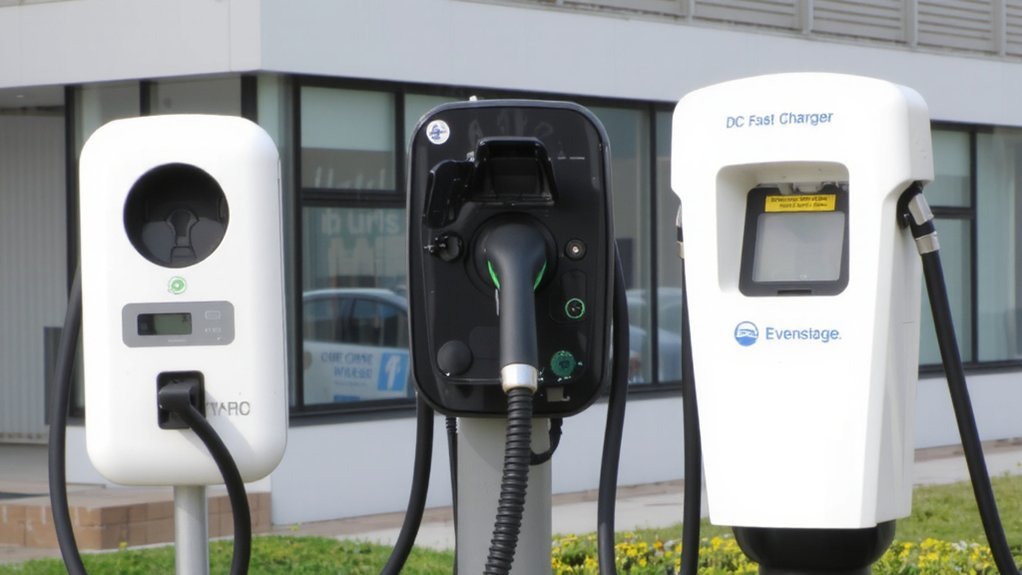
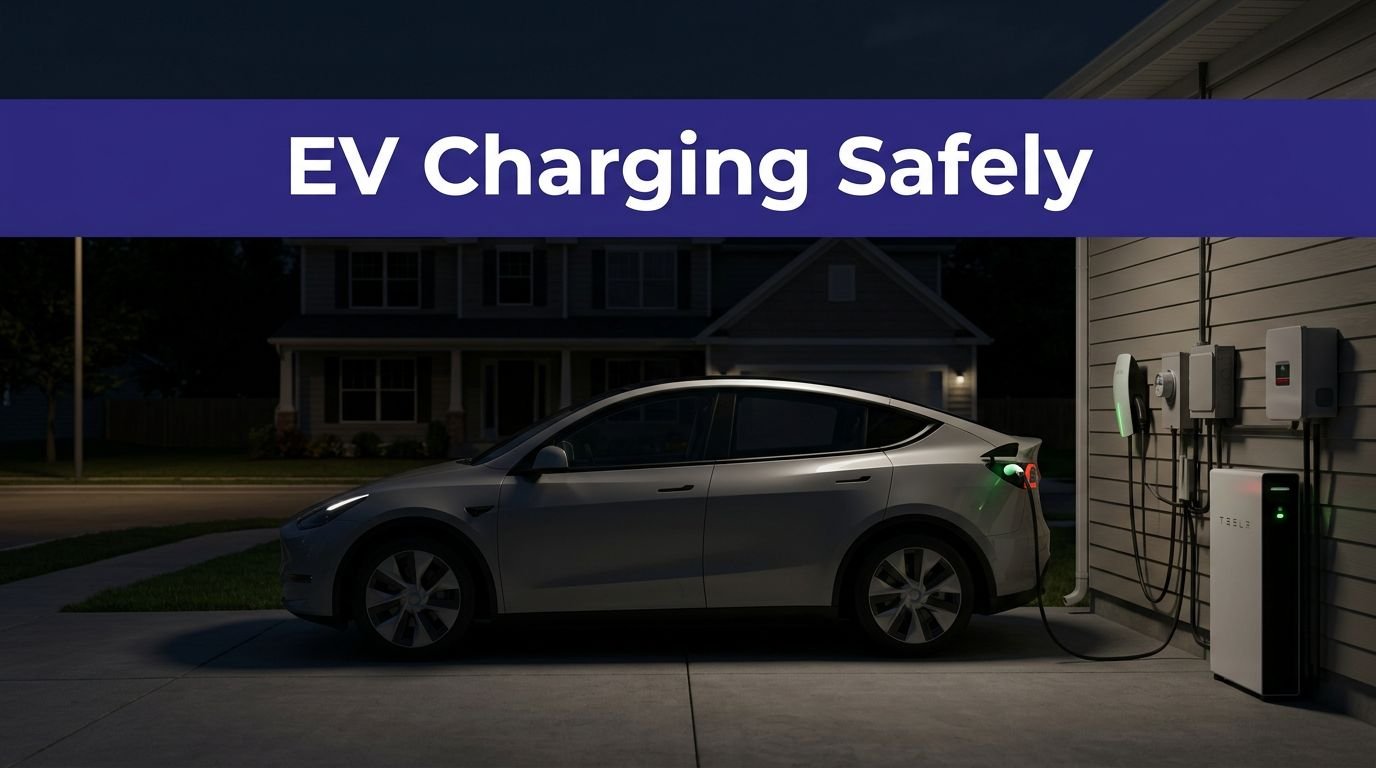
You can use Level 1 home charging with a standard 120V outlet for overnight or emergency top-ups.
Level 2 runs on 240V AC and charges far faster, fitting most daily driving needs.
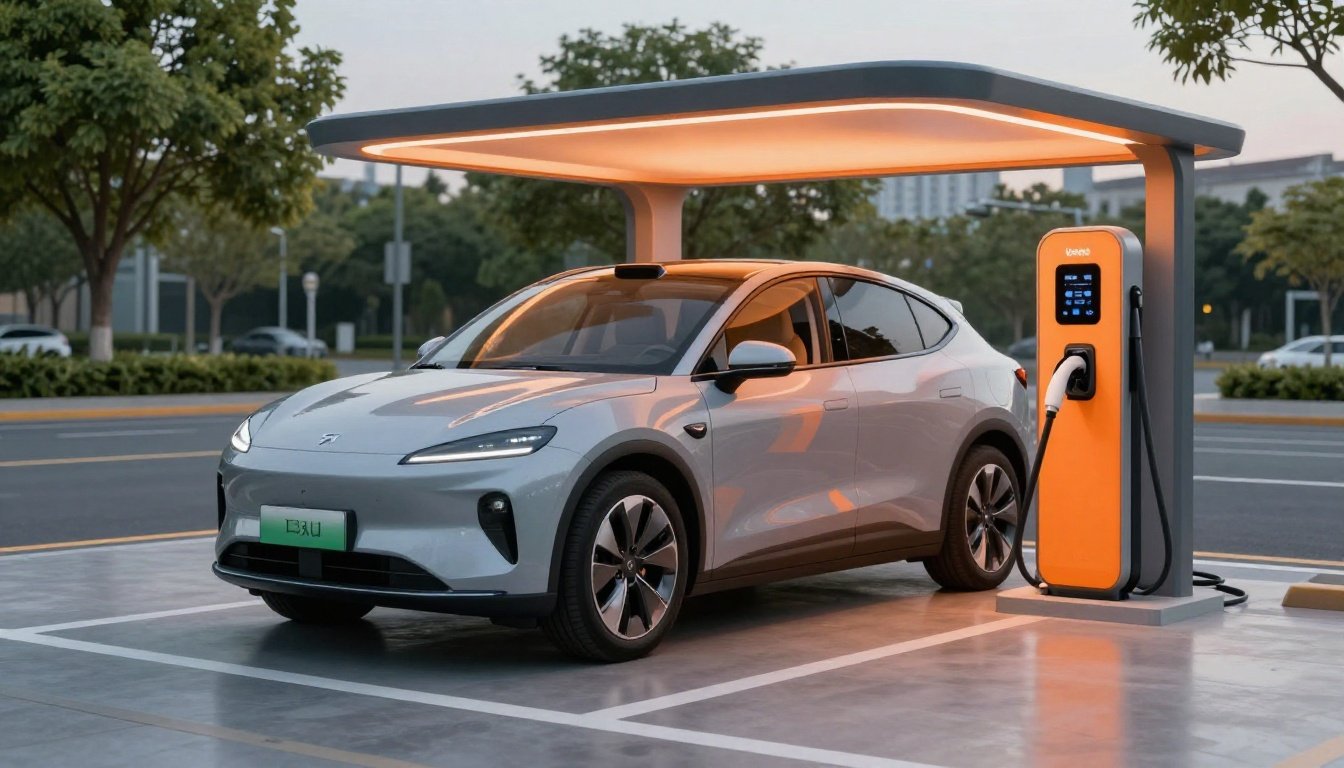
DC fast charging supplies high-power DC to the battery, so you’ll regain most range in 20–40 minutes for quick highway stops.
Understanding that kW measures power helps compare charger speeds.
Level 1: Home Charging
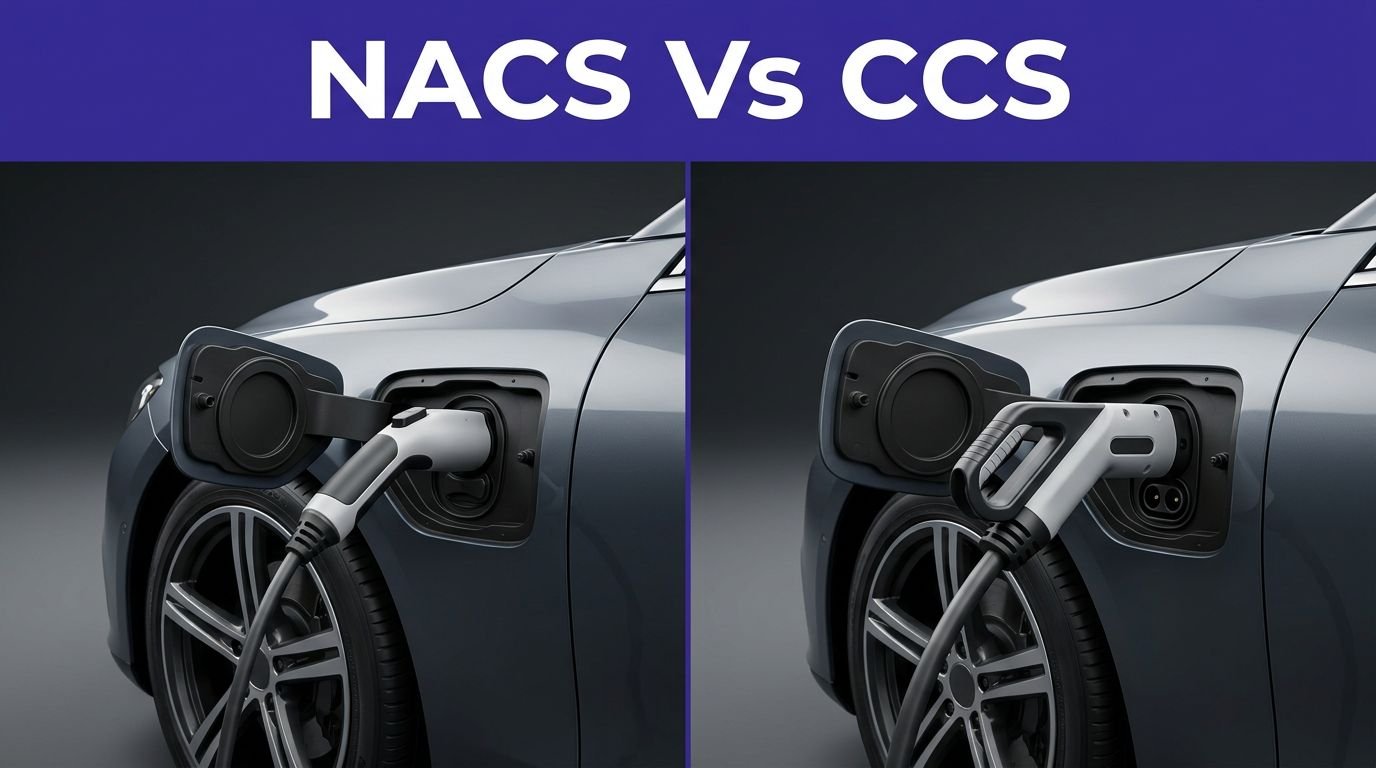
Level 1 home charging uses a standard 120‑volt (NEMA 5‑15) household outlet and delivers about 1.2–1.9 kW, adding roughly 3–5 miles of range per hour. Typical Level 1 chargers operate at 120V and 12–16A, producing about 1.2–1.9 kW. You can plug into a common NEMA 5‑15 outlet with no special installation; the J1772 or Tesla NACS connector fits most vehicles.
For full BEV batteries expect 40–50+ hours to reach 80%, while PHEVs often charge in about 5–6 hours. Overnight charging typically restores 15–40 miles depending on hours connected.
Keep safety foremost: guarantee the outlet, cords, and circuit are in good condition, avoid extension cords, and let components cool during charging. Level 1 is portable, inexpensive, and suitable if your daily mileage is low and time isn’t critical. If you’re unsure, consult a qualified electrician before extended use.
Level 2: Faster AC
Because most homes and workplaces can supply 240V service, Level 2 chargers give you a practical, much‑faster upgrade from overnight Level 1 charging: You’ll typically get 240V (residential) or 208V (commercial) AC at 3–22 kW, with common home units at 7–11 kW (30–50 A). Level 2 charging supplies AC power that the vehicle’s onboard charger converts to DC. Install requires a dedicated 240V circuit and a breaker sized at about 125% of the charger amperage for safety.
Consider:
- Range: adds ~10–60 miles (16–120 km)/hour depending on car and charger.
- Time: BEVs reach ~80% in 4–10 hours; PHEVs in 1–2 hours.
- Connectors: J1772 in North America, Type 2 in Europe, Tesla proprietary.
Have a licensed electrician do installation, permits, and any panel upgrades to confirm safe, reliable operation. Avoid using dryer outlets for routine charging; hire a licensed electrician each time.
DC Fast: Rapid Charging
1 of the quickest ways to recharge on the road is DC fast charging, which delivers high‑power DC directly to the battery and bypasses the onboard charger so you can add dozens to hundreds of miles in minutes; typical stations range 15–350 kW (some testing 1000 kW) and can charge to 80% in 20–60 minutes. Remember that batteries store DC. At 50/150/350 kW you might see roughly 200/500/800 miles per hour added, but your car’s charge‑acceptance kW limits real speed — newer EVs accept far more than early models. Charging power peaks early and falls as state of charge rises; stop at ~80% for safety and longevity.
Use approved cables, watch connector temperature, and follow manufacturer limits. Plan routes around reliable stations and avoid charging in extreme temperatures altogether.
Real-World Charging Speeds and Typical Time Estimates
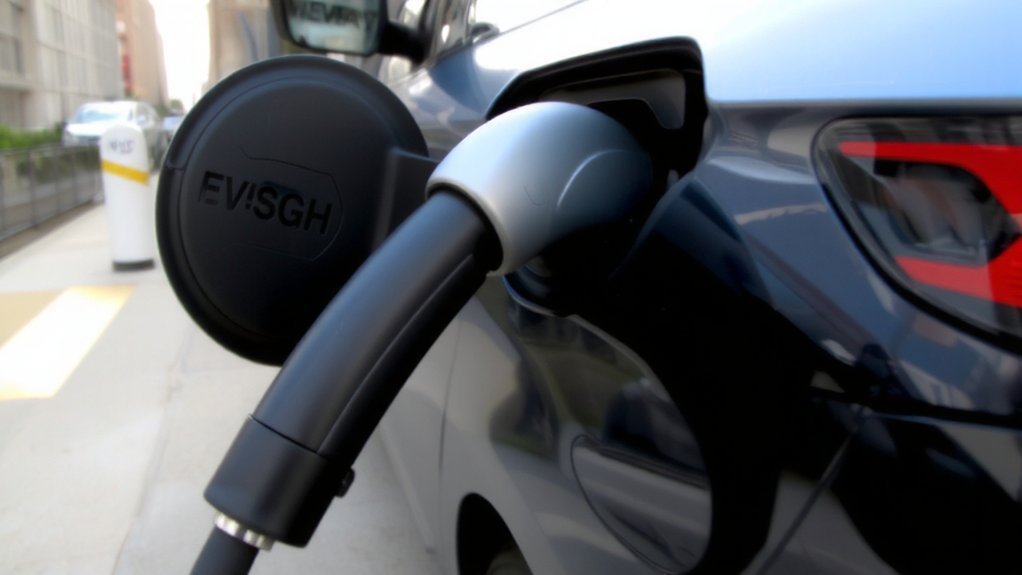
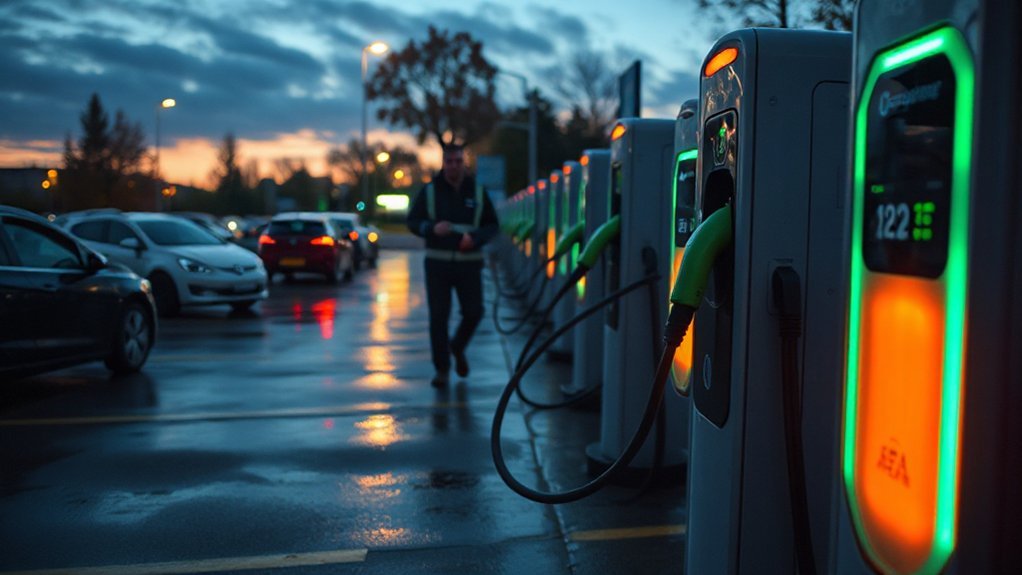


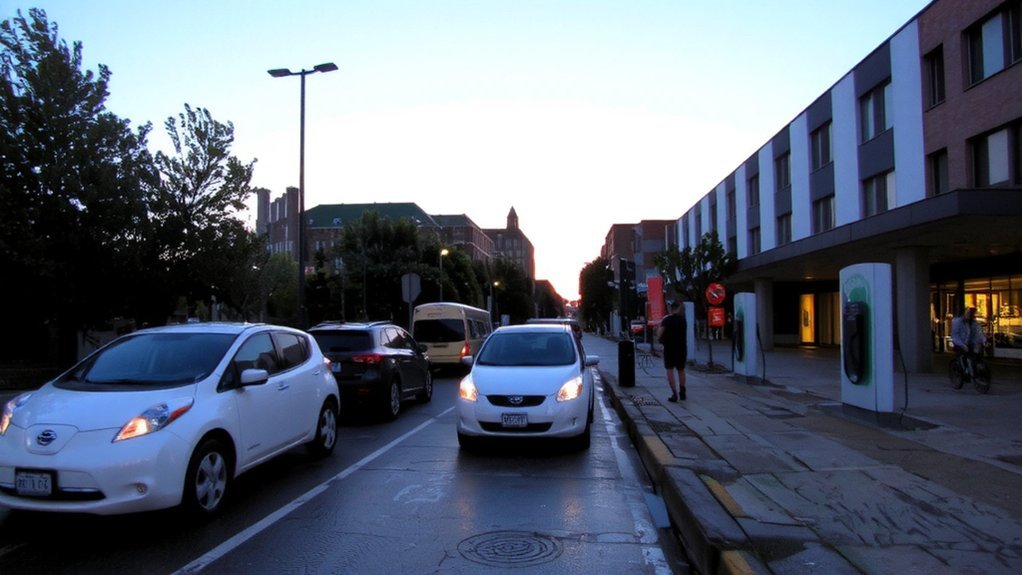
You’ll see big differences between Level 1 and Level 2 charging — Level 1 adds about 3–5 miles per hour while Level 2 adds roughly 20–60 miles per hour depending on power.
For longer trips you’ll rely on DC fast chargers, which commonly add about 100 miles in 15–30 minutes on modern 150 kW+ stations. Remember actual times vary with battery size, state of charge, temperature, and the car’s maximum charging rate. As of Q2 2025 the US fast charging network includes 11,687 stations and 59,694 ports, highlighting rapid deployment.
Level 1–2 Estimates
When you plug into a standard 120V outlet (Level 1), expect about 1.3–2.4 kW of power—roughly 2–5 miles of range per hour—so a full BEV can take 40–50+ hours to reach 80% from empty (PHEVs typically need about 5–6 hours). Level 1 is safe for overnight top-ups. Level 1 uses standard household outlets while Level 2 requires a 240V circuit, illustrating the voltage difference.
Level 2 on a dedicated 240V circuit delivers 3–22 kW, adding roughly 10–75 miles per hour and charging BEVs to 80% in 4–10 hours; PHEVs reach 80% in 1–2 hours. Consider installation cost and circuit capacity; professional setup to guarantee safe operation.
Choose Level 1 for backup or use, Level 2 for daily and reliable charging.
- Level 1 — slow, included.
- Level 2 — faster, needs 240V.
- Safety — pro install; no extension cords.
DC Fast Charge Times
Most DC fast chargers deliver 50–350 kW, letting you regain 20–80% of your range in about 20–40 minutes; actual time depends on battery size, state of charge, temperature, and vehicle acceptance rates. You’ll often see 60–100 miles added per 30 minutes at a fast charger.
Smaller batteries (40–66 kWh) can hit 80% in roughly 18–45 minutes on 150+kW or 50–100 kW stations; 75–81 kWh packs commonly reach 80% in about 27–30 minutes on 150+kW+ chargers. Charging power tapers above ~80% to protect the battery, so avoid relying on the final 20% during trips.
Cold batteries, shared station power, and frequent DCFC use affect speed and longevity, so monitor temps and use fast charging judiciously. Plan stops, check charger status, and follow manufacturer guidance closely. Remember that overall charging time is determined by the battery capacity.
Vehicle Limits: Onboard Chargers and Peak Power Capability
Because the onboard charger converts grid AC to the DC your battery needs, it directly sets your car’s maximum AC charging rate. Many manufacturers now ship OBCs designed as a scalable platform. You should check the OBC rating (common: 7, 11, 22 kW) and know whether your vehicle needs single- or three-phase power. Remember the inlet, connector rating, and circuit breaker must match the OBC to be safe.
Your onboard charger dictates AC charging power—check OBC rating, phase type, and matching inlet, connector, and breaker
Key points:
- OBC rating = AC ceiling; a 22 kW unit needs three-phase and compatible inlet.
- Home supply limits (120V ~1–1.4 kW; typical Level 2 7–11 kW) often constrain real-world charging.
- Hardware, firmware, and connector ampacity can further limit peaks; always follow manufacturer and installer guidance.
If you upgrade hardware or install three-phase, hire a qualified electrician and verify breaker and cable ratings safely.
Battery State of Charge, Temperature, and Preconditioning Effects
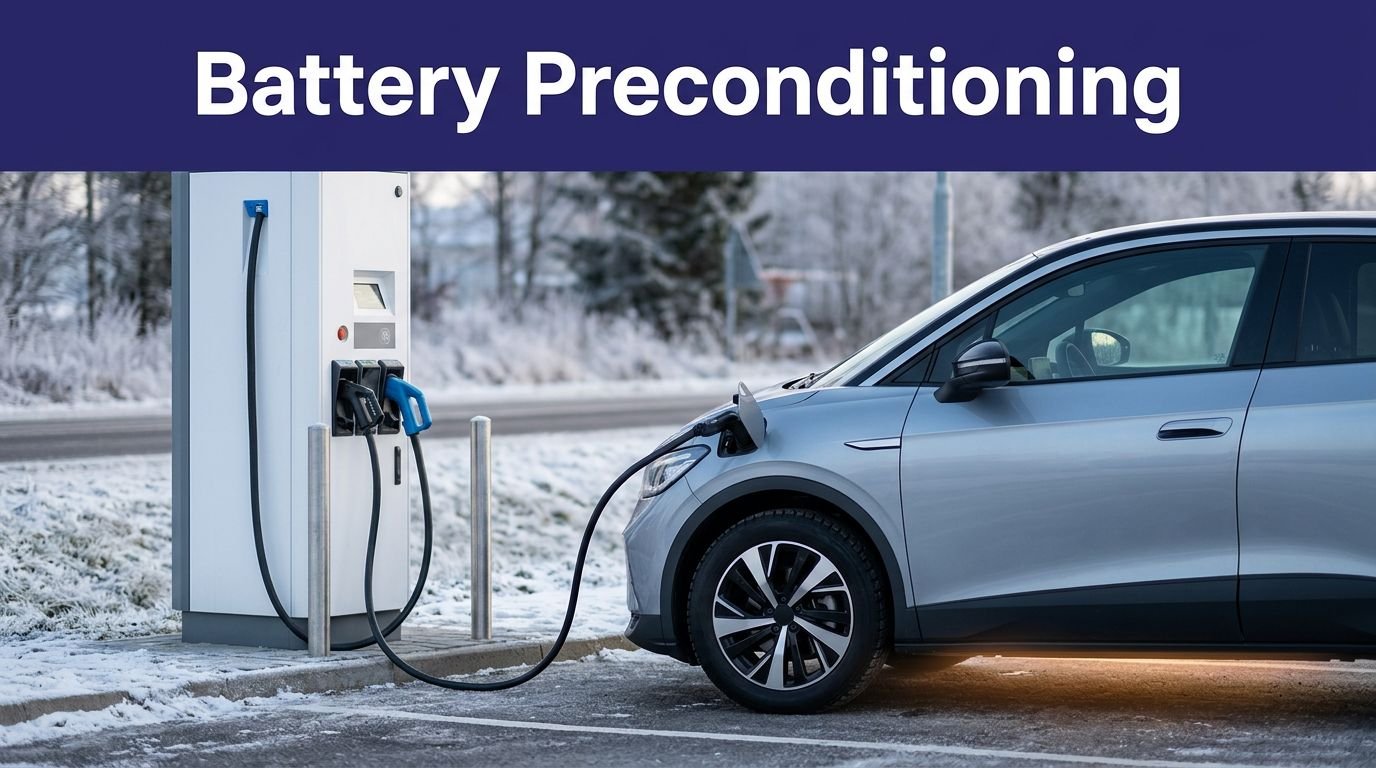
Although your EV’s advertised charging rate matters, the battery’s state of charge, its temperature, and whether the pack’s been preconditioned usually determine the power you actually see. You’ll notice charging power falls as SOC rises; most cars slow above ~80–90% and some reduce performance earlier to protect cells.
Cold packs accept less power until warmed, and hot packs risk accelerated degradation if charged hard. Use preconditioning—scheduled or navigation-triggered—to bring the pack into the suitable range for faster, safer charging. Your battery management system balances speed and longevity, favoring moderate SOC windows (roughly 20–80%) to minimize stress. Fleet data indicate these practices help preserve battery health, with many EVs lasting 20+ years on average.
Avoid repeated high-SOC fast charges and charging in extreme temperatures unless preconditioning and thermal controls are active. Follow guidance and prioritize safety over top-up speed and common sense.
Practical Metrics: Miles per Hour, Time to Add 100 Miles, and Efficiency
When you plan a charge stop, three practical metrics tell you how quickly you’ll get back on the road: miles per hour added at the charger, time to add 100 miles, and your car’s efficiency in miles per kWh. Use these to choose safe, efficient stops.
- Miles per hour: DC fast chargers can add up to 200–300 miles/hour peak, but taper and state of charge reduce real-world rates; Level 2 ≈25–40 mph; Level 1 ≈3–5 mph.
- Time to add 100 miles: Top models may add 100 miles in under 10 minutes; mid-range typically 15–25 minutes; entry-level often 30+ minutes—plan for slower charging as SoC rises. For example, the Hyundai Ioniq 6 can add 100 miles in about 9 minutes, illustrating how high-power vehicles shorten stop times.
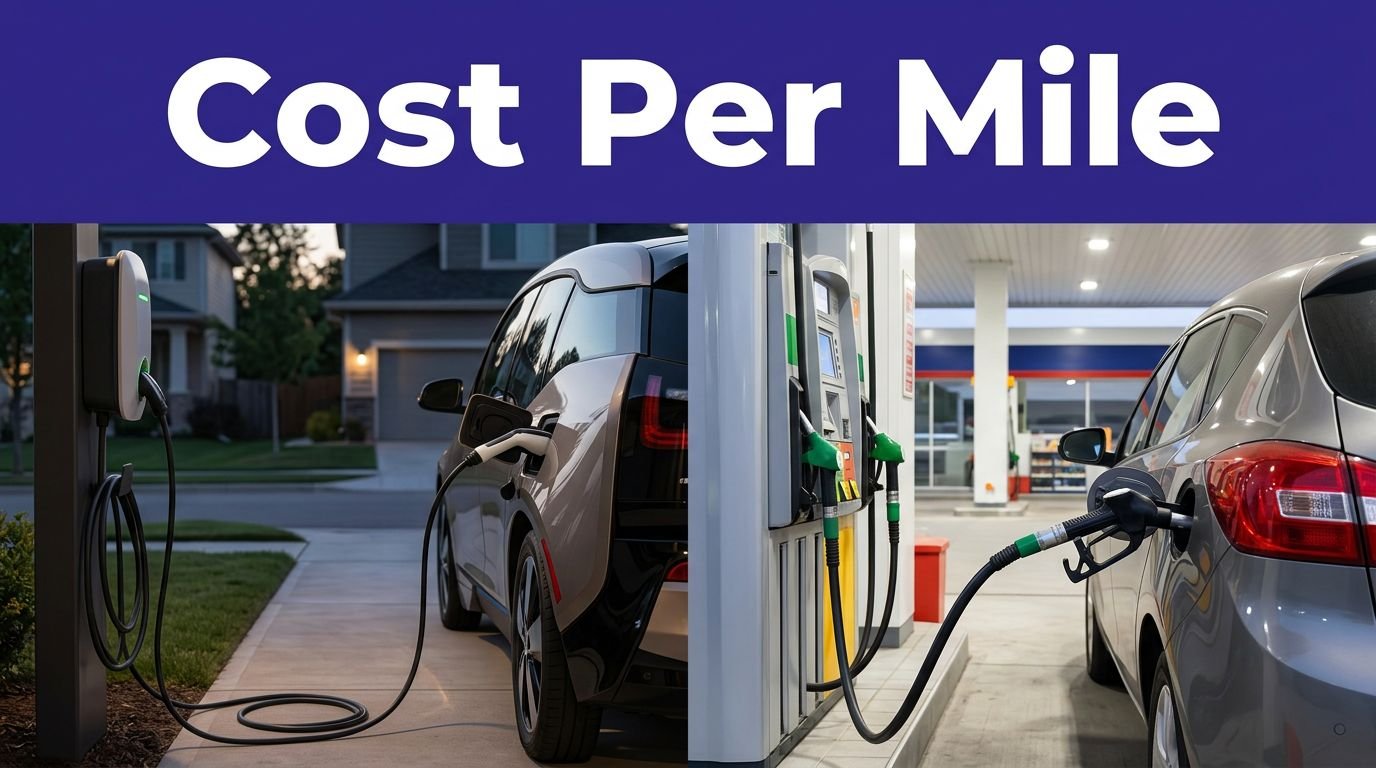
- Efficiency: Higher miles/kWh reduces time and cost per mile; cold weather, weight, and aggressive driving lower efficiency, so include safety margins. Always.
Infrastructure, Standards, and Trends in 2025–2026
Knowing how many miles per hour a charger adds makes you appreciate that charger performance is governed as much by infrastructure and standards as by vehicle limitations.
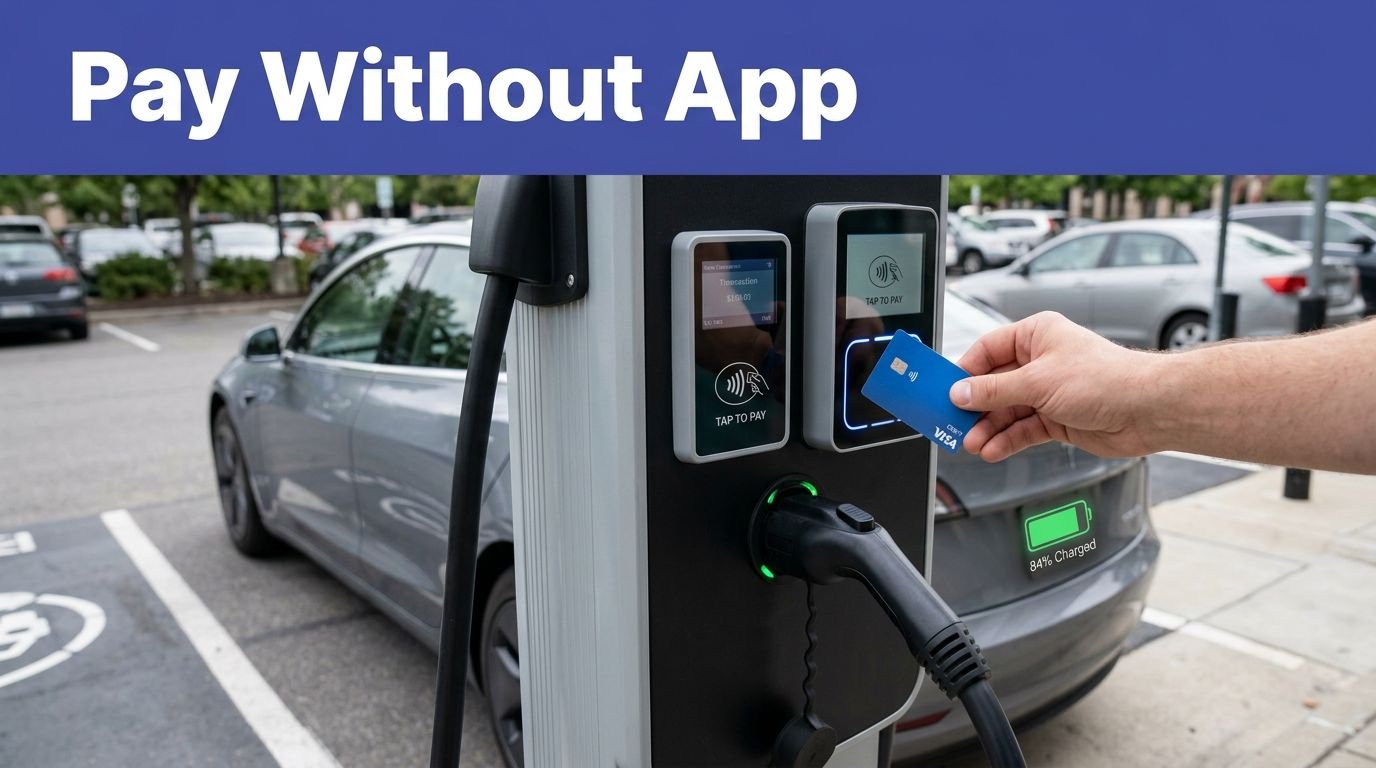
In 2025–2026, NEVI requires multiple ports per station, networked DC fast ports on AFCs, and spacing roughly every 50 miles (states now have more site discretion). Expect up to 150 kW per DC port and 6 kW minimum for Level 2, with power sharing. Stations must be non‑proprietary, support open payments, and be publicly accessible.
Safety protocols mandate insulation testing, overcurrent/GFCI/ground-fault protection, sensors, and automatic shutdowns; NEC 2026 tightens GFCI to 5 mA. CCS and NACS lead DC charging; J1772 stays for Level 2. UL 3141‑certified power control systems integrate DERs and protect the grid, ensuring safety. This change ends the era of DIY EV charger installs because of the qualified person requirement.
Conclusion
You now know how volts, amps and kilowatts shape EV charging, so you’ll choose the right setup for your needs. Remember that vehicle limits, battery state of charge and temperature change real-world speeds, so plan charging around them. Use Level 2 for daily topping and DC fast charging for long trips. Treat charging like watering a plant: steady, appropriate doses help batteries thrive and get you farther with less stress and save time daily, reliably.