If you own an EV or are shopping, you’ll want to know how long a Level 2 home charger actually takes for your model. Charging speed depends on your car’s onboard charger, battery size, and the charger’s power. Below I break down typical times by model and battery — but first, understand the key limits that set those numbers.
Key Takeaways
- Level 2 (240V) EVSE outputs range 3.3–22 kW; most homes use 7.2–11.5 kW, which sets typical charging speeds.
- Small batteries (20–40 kWh) charge in 2–5 hours on 7.2 kW, under 2 hours on 11+ kW if accepted by the car.
- Medium batteries (~60 kWh) take ~8–9 hours at 7.2 kW, and ~2–3 hours on 19–22 kW chargers when vehicle acceptance allows.
- Onboard charger acceptance (commonly 7.2, 11.5, or 19.2 kW) limits AC charging rate regardless of EVSE maximum power.
- To estimate model-specific times, use battery capacity, onboard AC acceptance, and charge 20–80% for fastest practical sessions.
What Is Level 2 Home Charging and How Fast Is It?
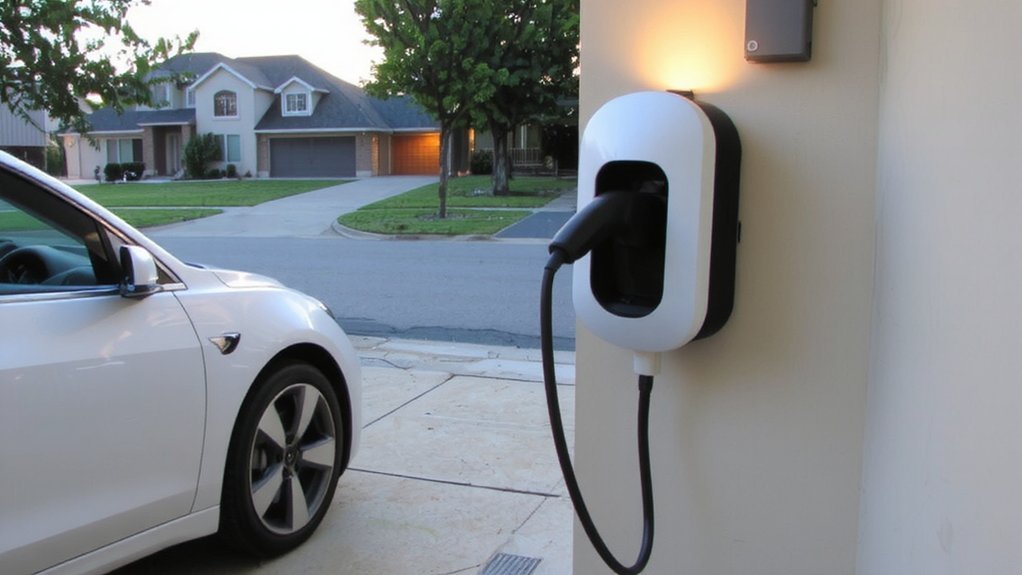
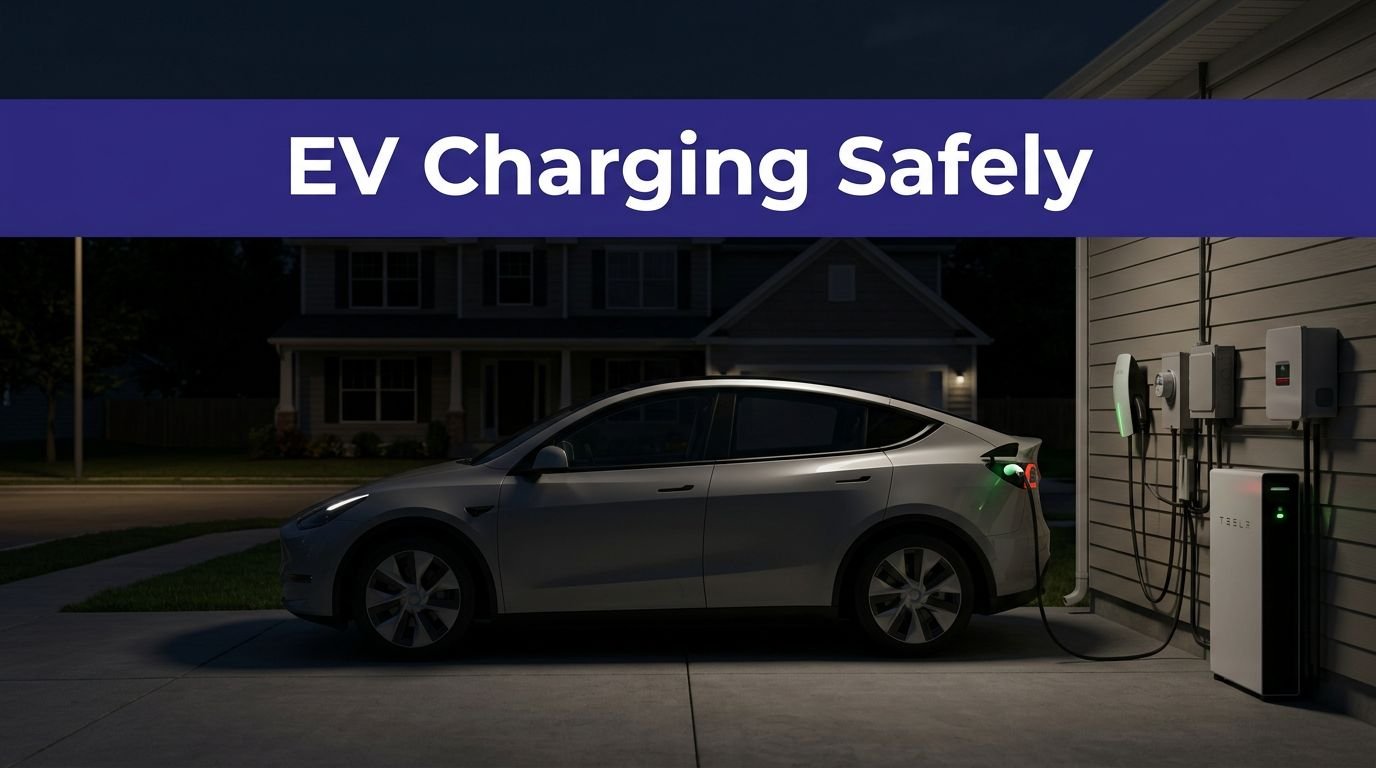
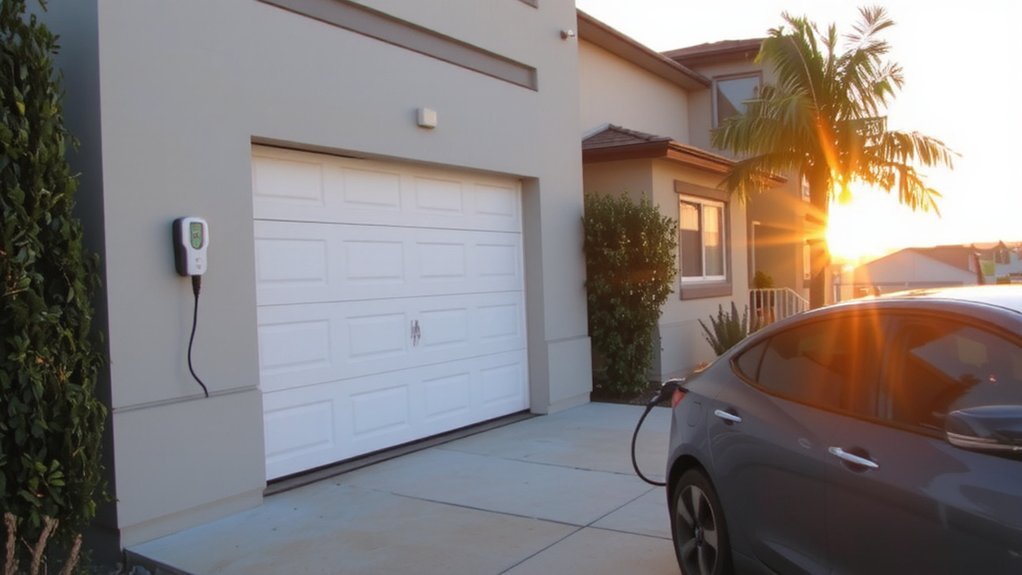
While you can technically charge an EV on a standard outlet, Level 2 home charging uses a 240‑volt circuit and a dedicated EVSE (installed by an electrician) to deliver much faster, cleaner charging—typically between 3.3 kW and 19 kW, with most residential units around 7.2–11.5 kW. You’ll get reliable home charging that balances speed and convenience for daily driving, and it’s what most homeowners install for safety and practicality. Level 2 commonly adds roughly 12–60 miles of range per hour, with many units providing about 20–40 miles per hour suitable for overnight top‑ups. Install a dedicated circuit, follow manufacturer and electrician guidance, and use a certified EVSE to keep the system safe and efficient. Check permits and schedule inspections before energizing your new charger. Typical residential Level 2 units and common 32A chargers deliver around 7.7 kW of power.
Key Factors That Determine Level 2 Charging Time

How fast your Level 2 charger fills the battery depends mainly on the charger’s power output and your car’s battery. Level 2 charging uses 240-volt AC that is converted to DC by the vehicle’s onboard charger. Higher-output units (3.3–22 kW) add range much faster, but only if your EV can accept that power.
Because larger packs and lower onboard acceptance rates mean longer sessions, you’ll see charge times vary widely.
Charger Power Output
Often the charger’s power output — measured in kilowatts and determined by the circuit voltage and available amperage — is the single biggest factor that controls how fast your EV fills up. Remember that kW measures power, while kWh measures total energy used. You’ll typically see Level 2 home units from 3.3–19.2 kW (up to 22 kW in Europe); most residential installs run 7–11 kW on 240V single‑phase. Higher outputs usually require three‑phase power and commercial wiring. Match amperage to your panel and use the 80% continuous load rule.
Lower power (3.3–7 kW): slower, common where electrical capacity is limited.
Mid power (7–11 kW): common residential sweet spot; needs 40–60A circuit.
High power (19.2–22 kW): fast but needs three‑phase and commercial setup.
Safety: use proper wiring, breakers, GFCI, and professional installation.
Check connections regularly, always.
Battery Size & Acceptance
Two core factors — battery capacity and the car’s onboard acceptance rate — set how long Level 2 charging takes. Across the market, higher-priced vehicles typically offer greater range and longer charging times. You’ll find larger batteries that give longer range need proportionally more time: mid-size packs of 50 to 75 kWh typically take about six to thirteen hours at Level 2, while smaller packs around 40 to 50 kWh often finish in under eight hours.
Charging time equals battery kWh divided by charger kW, but the onboard charger may cap that rate; many accept six point six to eleven kilowatts. Chemistry, thermal management and state of charge matter: charging is fastest between roughly twenty and eighty percent and slows past eighty to protect battery life.
For safety, follow manufacturer guidance and schedule regular charging checks weekly.
How Onboard Charger Limits Affect Charging Speed
Because your EV’s onboard charger defines the maximum AC power it can accept, a 19.2 kW Level 2 EVSE won’t charge a car that’s limited to 7.2 kW any faster than 7.2 kW. Your onboard charger—commonly 7.2 kW, often 11.5 kW, sometimes 19.2 kW—sets the cap for Level 2 AC charging.
That cap applies through the charge cycle, so speed stays predictable and safety-friendly. If you want faster AC charging, you must pair a higher-rated onboard charger with a compatible EVSE and follow manufacturer guidance.
- Check your model’s onboard rating (e.g., Audi Q4 e-tron 11.5 kW).
- Confirm EVSE supports that rating.
- Consider dealer upgrades where offered.
- Remember upgrades don’t affect DC fast charging.
Always follow installation and electrical safety instructions. Note that DC fast charging converts power at the station and charges the battery much faster than AC charging.
Typical Charge Times by Battery Size and Charger Power
You’ll see Level 2 charging times change a lot with battery size and charger power. Small batteries (~20–25 kWh) can top up in about 1–2 hours on an 11 kW charger, midsize packs (50–70 kWh) typically need 4–8 hours on 7–11 kW units, and large packs (80+ kWh) often take 8–14 hours depending on charger output and onboard acceptance. Use these ranges to choose a charger that fits your vehicle and daily needs. Remember that Level 2 chargers use 240-volt power, so installation may require a dedicated circuit.
Small Battery Charging
Several common small EV battery packs charge much faster on Level 2 than larger packs: a ~20 kWh pack typically takes about 2–3 hours on a 7.2 kW Level 2 charger, 30–40 kWh packs usually need 3–5 hours, and a 60 kWh pack stretches toward 8–9 hours at the same power. Level 2 chargers typically provide 10–60 miles of range per hour of charging. You should match charger power to your vehicle’s onboard acceptance for safe, efficient charging.
Lower 3.3 kW units can extend a 20 kWh pack to 5–6 hours; 11 kW+ chargers can cut times below two hours if the car allows. Temperature, state of charge, and battery health affect real-world times.
- Check onboard acceptance.
- Prefer 7.2 kW home chargers.
- Limit top-offs to preserve battery health.
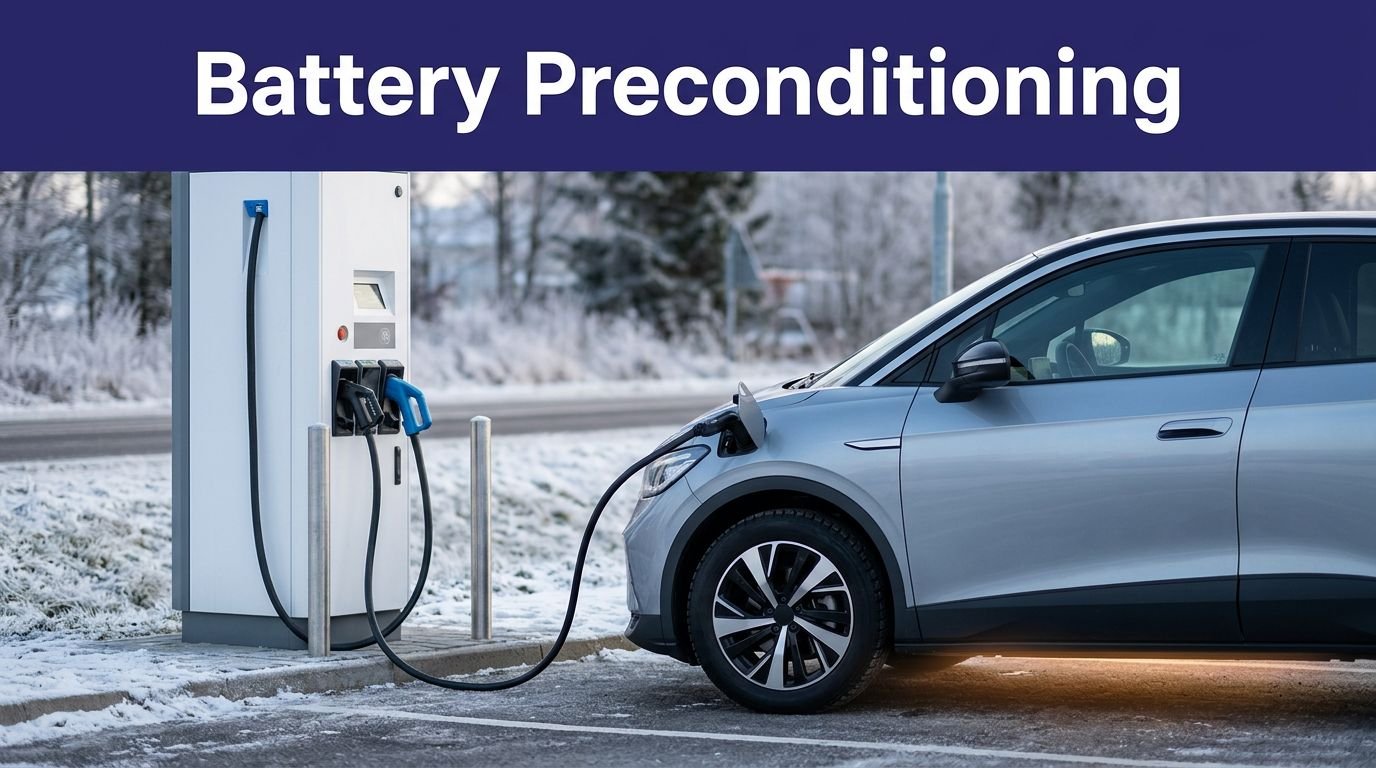
- Precondition battery in cold weather.
Medium Battery Charging
After covering small packs, it’s worth noting that medium batteries (roughly 40–70 kWh) behave differently on Level 2 chargers and usually suit overnight home charging. Expect a 60 kWh pack to take about 8–9 hours on a 7.2 kW charger; 40–50 kWh packs typically finish in 4–6 hours on 7–11 kW units.
Higher-power Level 2 chargers (≈19–22 kW) can cut that to 2–3 hours, while low 3 kW units may need 13+ hours. Level 2 adds roughly 20–60 miles per hour depending on charger and vehicle acceptance. Charge acceptance, temperature, and onboard limits affect real times.
For safety and battery life, charge mostly between 20–80%, use a dedicated 240 V circuit, and enable smart scheduling for overnight fills. If unsure, consult your vehicle manual or installer for safe charging limits. Level 2 chargers utilize 208/240 volts in the US or 230 volts single-phase/400 volts three-phase in Europe.
Large Battery Charging
Many large EVs (75 kWh and up) take far longer to fill on a Level 2 charger, because charging is limited by both the charger’s output (typically 3.3–19.2 kW) and your vehicle’s onboard acceptance. Level 2 chargers typically use 208–240-volt service. You should plan overnight charging and confirm your car’s maximum AC acceptance before relying on home charging for long trips.
Typical full-charge ranges vary:
- At 7.2 kW: expect 13–28 hours for 100–200+ kWh packs (unsafe to rely for same-day long trips).
- At 11.5 kW: expect 8–18 hours for 100–200+ kWh packs; better for daily top-ups.
- At 19.2 kW: expect 5–11 hours; fastest practical home option.
Safety tip: install a recommended circuit, keep ventilation, and avoid charging unattended for extended unusual behavior. Check manufacturer guidance regularly, always.
Tesla Model Charging Times (2025–2026)
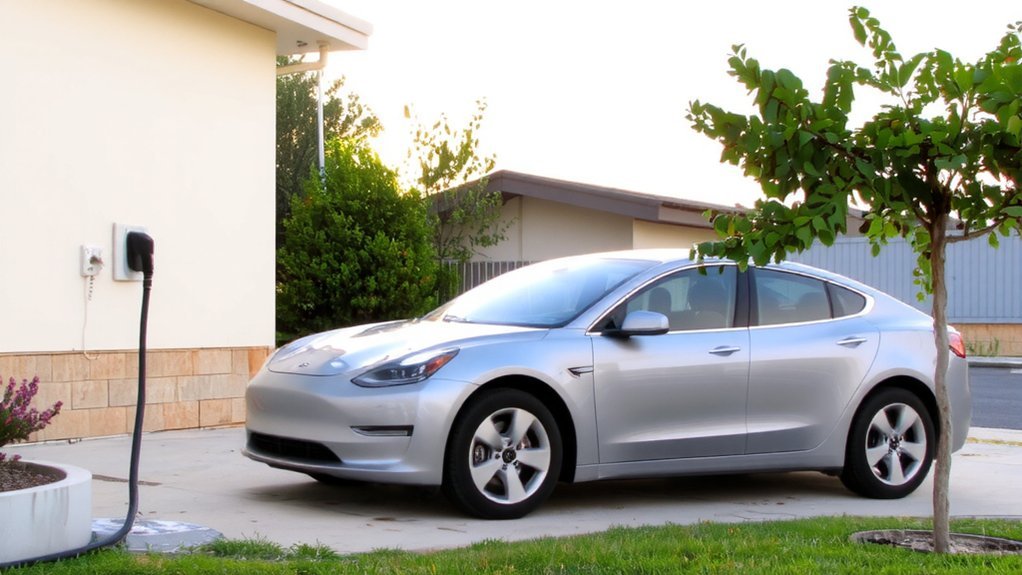
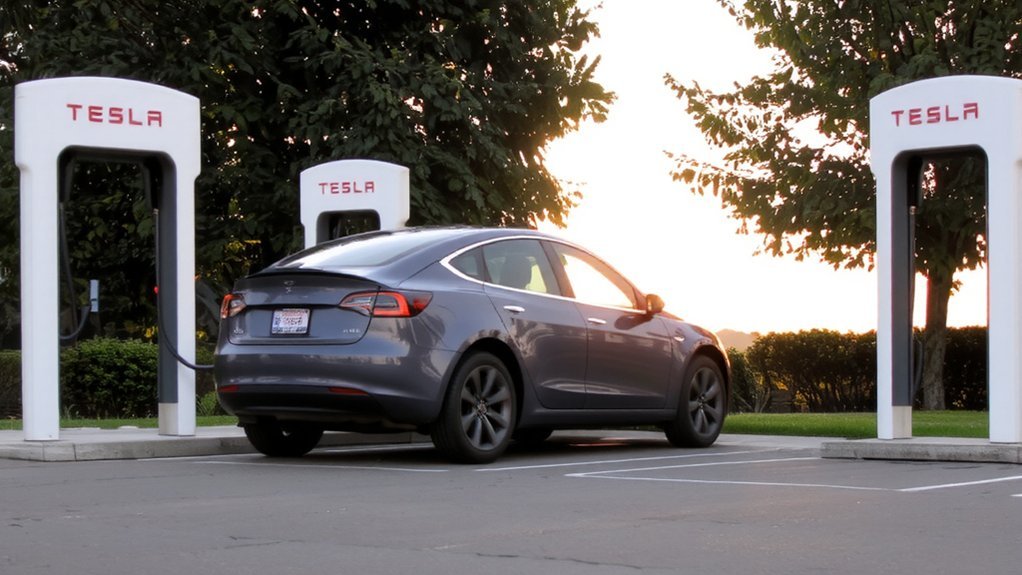
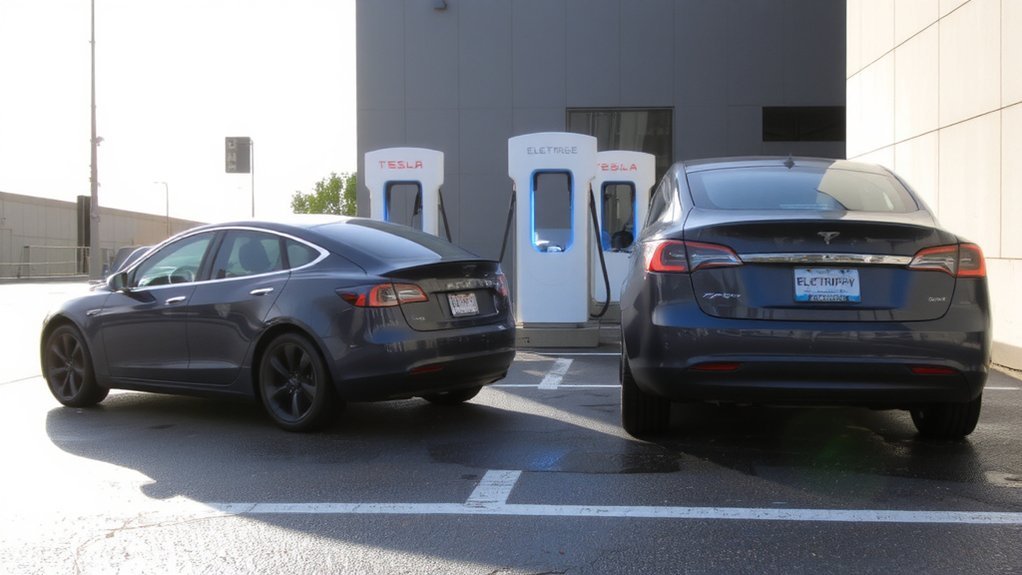
When you charge a 2025–2026 Tesla on a Level 2 Tesla Wall Connector (≈11 kW, 240 V), expect typical full-charge times of about 5.5–6 hours for a Model 3 RWD (57.5 kWh). Battery size affects charging time: larger batteries generally take longer to reach a full charge.
Charging a 2025–2026 Tesla Model 3 RWD on a Level 2 Wall Connector (≈11 kW) takes about 5.5–6 hours
Model 3 Long Range and Performance (75 kWh) take about 7–8 hours.
Model Y RWD (60 kWh) charges in roughly 6–7 hours; Y Long Range and Performance (80 kWh) need 7–8 hours.
Model X and Model S (100 kWh), including Plaid variants, typically require 8–10 hours.
On a standard 120 V outlet expect multi-day Level 1 charging (30–50+ hours).
For battery longevity, charge to 80% for daily use; times will be slightly less.
Ascertain your home circuit and charger match your Tesla’s onboard capacity, and account for temperature and battery age effects.
Non‑Tesla EV Charging Times: Nissan, Ford, Chevy, and More
Several non‑Tesla EVs charge on Level 2 at rates typically adding 10–44 miles of range per hour. The Nissan LEAF is available with a 40 kWh or 62 kWh battery option. You can expect Nissan Leafs and Ariya to take 6–14 hours depending on battery size and temp, while Ford Mach‑E and F‑150 Lightning range from about 7–10 hours with dual chargers. Chevy Bolt and Silverado EV usually need 7–14 hours.
Other models like the Hyundai Ioniq 5, Kia EV6, VW ID.4 and Audi Q4 e‑tron charge in roughly 6–10 hours. Follow safe installation and use: install a dedicated 240V circuit, use J1772-compatible cords, and schedule charging during off-peak TOU windows to reduce cost. Check manufacturer specs for exact times.
Numeric breakdown:
- Nissan: 6–14 hours.
- Ford: 7–10 hours.
- Chevy: 7–14 hours.
- Others: 6–10 hours.
Fastest Home Level 2 Chargers and Installation Requirements
A handful of high‑capacity Level 2 chargers now push home charging to 80A/19.2kW, adding roughly 60–75 miles of range per hour and cutting typical charging sessions to 3–5 hours for most EVs. These high-output units are also 14x faster than Level 1 chargers.
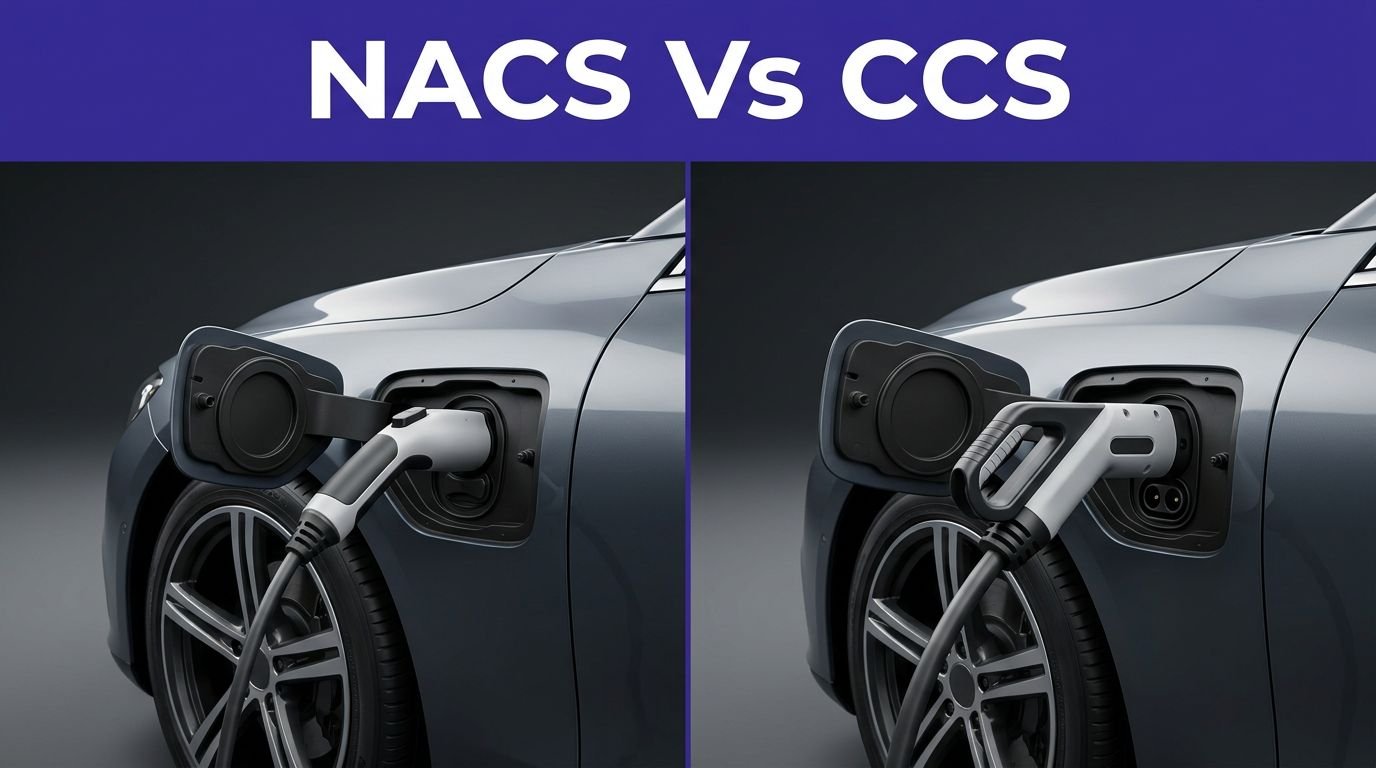
You can choose Grizzl‑E Ultimate for full 80A performance and broad NACS/J1772 compatibility, ChargePoint Home Flex or Tesla Universal Wall Connector for smart features at lower peaks, or other durable options like LENZ or Leviton.
Expect a 100A dedicated circuit and panel upgrade for true 80A output; most high‑output units must be hardwired. Use a licensed electrician to verify load calculations, grounding, permitting and code compliance.
Prioritize weatherproof installations, proper cord length, and secure mounting to protect equipment and people. Consider smart scheduling and energy monitoring to reduce peak demand and costs.
Real‑World Examples: Overnight and Partial Charging Scenarios
Overnight Level 2 charging typically delivers 20–60 miles of range per hour, so in an 8–10 hour session you’ll replenish roughly 160–600+ miles depending on charger power and vehicle efficiency; for example, a 60 kWh EV charging at about 7.2 kW usually needs 8–10 hours to go from empty to full, a 77–88 kWh car like the Ioniq 6 or Mustang Mach‑E can take 8–12+ hours, and a Nissan Leaf (62 kWh) finishes in about 7–9 hours.
If you drive 30–60 miles, 2–3 hours restores daily range safely.
PHEVs hit 80% in 1–2 hours; plug overnight if needed.
Charging slows near full; aim for 80–90% for efficiency.
Use a certified Level 2 unit and follow safety guidance and monitor temperature.
As a reference, the Hyundai Ioniq 6 can add 100 miles of range in about 9 minutes.
Costs and Electrical Upgrades That Impact Charging Performance
You’ll need to confirm your service panel can handle a 240V Level 2 charger and whether a panel upgrade—typically costing hundreds to over $1,000—is required.
You’ll also need a dedicated 240V circuit with an appropriately sized breaker (commonly 30–60A) and available breaker space. Factor those upgrades, plus labor and permit fees, into the typical $800–$2,500 installation range. The physical installation is relatively quick in many cases, often taking about 2–3 hours once preparatory work is complete.
Panel Upgrades and Costs
Upgrading to a higher‑amp panel typically runs $500 to over $3,000 (and can hit $1,000–$4,000 or more for 200A and complex jobs) and directly affects how fast and reliably your Level 2 charger will run. You’ll pay more if you need new breakers, rewiring, grounding, distance runs, permits, or an older panel replacement.
A proper upgrade prevents overloads, voltage drop, and unsafe conditions while enabling sustained 240V charging and the option to add loads later. Consider licensed electricians and permits to keep installation safe and code‑compliant. Expect upgrades to add several hours. Most Level 2 chargers operate on a 240V connection, which is why panel capacity matters.
- Assess amperage needs and existing panel condition.
- Factor wiring distance, conduit, and trenching costs.
- Include permits, inspection, and labor hourly rates.
- Plan for future loads and EV expansion.
Circuit and Breaker Needs
After you sort panel sizing and permits, the next electrical step is selecting the right circuit and breaker for your Level 2 charger, because the NEC treats EV charging as a continuous load and requires components rated at 125% of the charger’s output.
You’ll need a dedicated 240V double‑pole breaker sized to 125% of charger current (a 40A charger uses a 50A breaker; a 50A charger effectively needs ~62.5A, so installers use the next standard size). Match wire gauge to the breaker—typically 6 AWG for 40–50A, 4 AWG for higher amps—and run conduit for exposed or outdoor runs.
Require GFCI protection, proper grounding, surge protection where mandated, and a final inspection. Hire a licensed electrician for safety and code compliance and avoid DIY mistakes. Remember that breakers must be sized to 125% of load to meet NEC continuous-load rules.
Tips to Optimize Level 2 Charging for Daily Use
Start by confirming your home’s electrical panel can handle a 240V circuit and by choosing a charger location close to the panel and parking spot to reduce voltage drop and trip risks. Then hire a certified electrician to verify capacity, obtain permits, and recommend upgrades if your panel is near full load. Use a weather-protected spot that avoids cable trip hazards and allows future expansion. Schedule charging during off-peak rates via a smart charger or app, and monitor energy use to spot faults. A Level 2 charger uses a 240V circuit and typically charges most EVs in 4–8 hours.
- Place charger near panel to minimize voltage drop and installation complexity.
- Get permits and EVITP-certified electrician for safe, code-compliant work.
- Set timed charging for off-peak hours and utility pricing signals.
- Inspect cables, update firmware, document for rebates.
Conclusion
You’ll find Level 2 charging fast and practical for daily driving, but speed depends on your car, charger, and home electrical setup. Choose a charger that matches your onboard limit and schedule installs so you’ll get full overnight top‑ups. For example, Sarah’s 2025 EV with a 60 kWh battery went from 20% to 80% in 4 hours on a 7.2 kW wallbox, letting her commute worry‑free each morning. You’ll save time, money, and range anxiety.