You’ll find more free EV chargers than you might expect, but they’re not all the same. You’ll want to know which apps show real-time availability, which retailers actually offer complimentary access, and what connector types will fit your car. Keep going — the next sections show practical spots, speed expectations, and tips that’ll save you time and money.
Key Takeaways
- Use apps like PlugShare, ChargePoint, and EVgo to filter for free stations, see live availability, and read user reports.
- Check grocery stores, shopping malls, and plazas for conveniently sited complimentary Level 2 and occasional DC fast chargers.
- Look for free charging at hotels, universities, and public institutions offering guest or campus sustainability chargers.
- Confirm connector type, time limits, and reservation or registration requirements before arriving to avoid access issues.
- Plan routes with ABRP or automaker apps and monitor live status to reduce range anxiety and optimize stops.
Why Free EV Charging Matters in 2025–2026
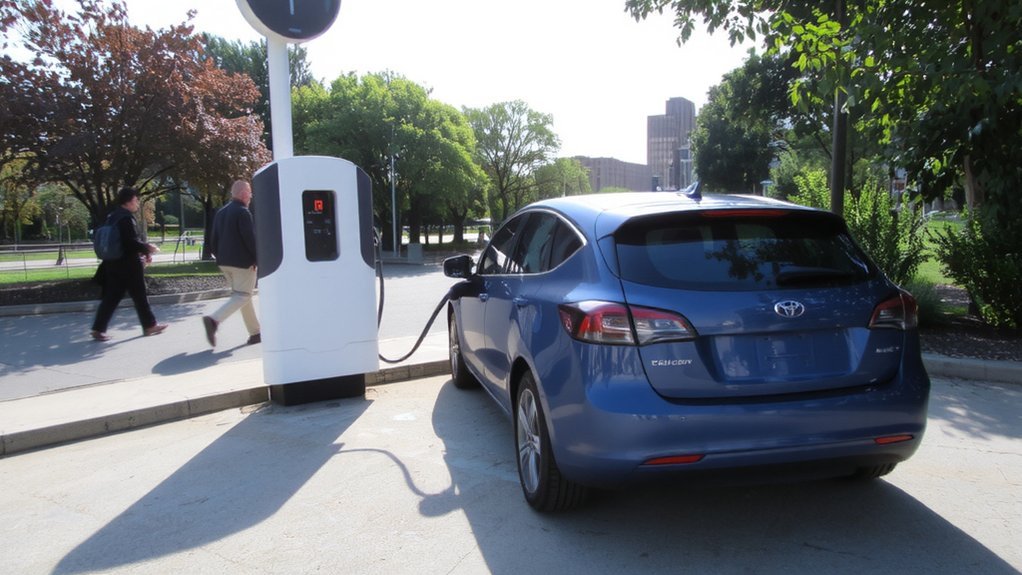
Because expanding free public charging cuts both emissions and barriers to EV ownership, it matters now more than ever: EVs running on low‑carbon electricity reduce transportation’s roughly 23% share of global emissions, and free stations—especially in underserved rural and low‑income areas—shrink range anxiety and accessibility gaps that slow adoption.
You’ll benefit from safer air, lower local pollution, and clearer progress toward community climate goals when free chargers grow. Free stations make charging predictable and reduce the stress of longer trips, so you can plan travel with confidence. They also spur local economic activity and support equitable access for renters and rural drivers.
As infrastructure expands, you’ll see more reliable, publicly supported options that prioritize safety and inclusion and preserve community well‑being and reliability today. Research shows that installing one public EV charging station can boost spending at nearby businesses by about 1.4% annually.
Best Apps and Websites to Locate Free Chargers
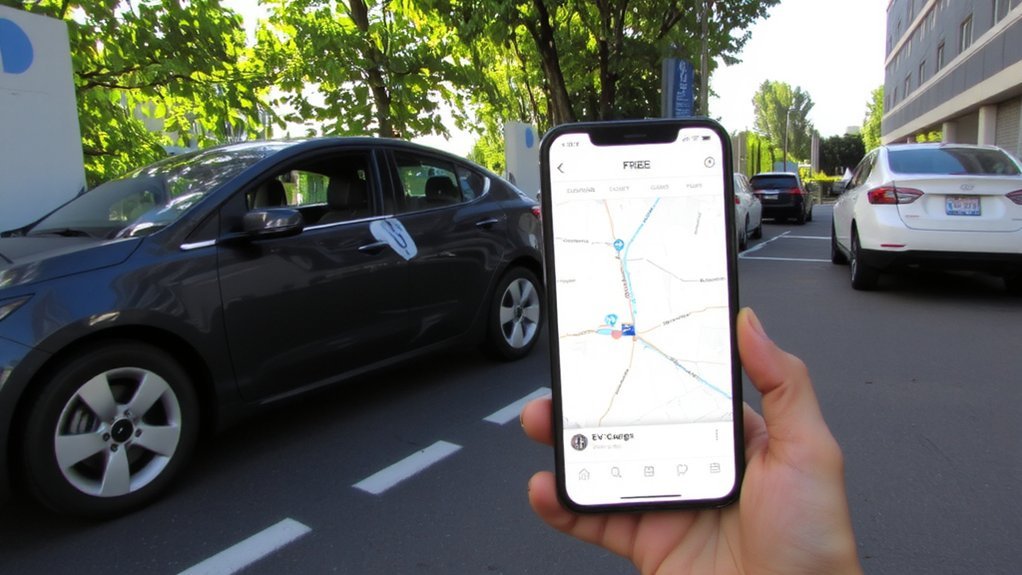
As free public chargers multiply, you’ll want reliable tools to find them quickly — apps and websites make that simple. Use PlugShare for the largest database, real‑time availability, and user reports to confirm free status safely.
As free public chargers multiply, rely on apps like PlugShare for real-time availability and user-verified status.
ChargePoint and EVgo show availability, let you reserve spots, and track sessions so you avoid unexpected wait times. Electrify America focuses on fast DC chargers and notifies you of nearby free installs. Pair network apps with ABRP or your automaker’s app for route planning and backup options.
For the largest database, use PlugShare which lists over 140,000 charging stations worldwide.
- PlugShare — crowdsourced free-filter, reviews
- ChargePoint — reservations, price comparisons
- Electrify America — fast-charger alerts
- ABRP — route planning with charger optimization
Always verify station notes and approach charging locations with situational awareness and follow signage.
Retailers, Grocers, and Shopping Centers Offering Complimentary Charging
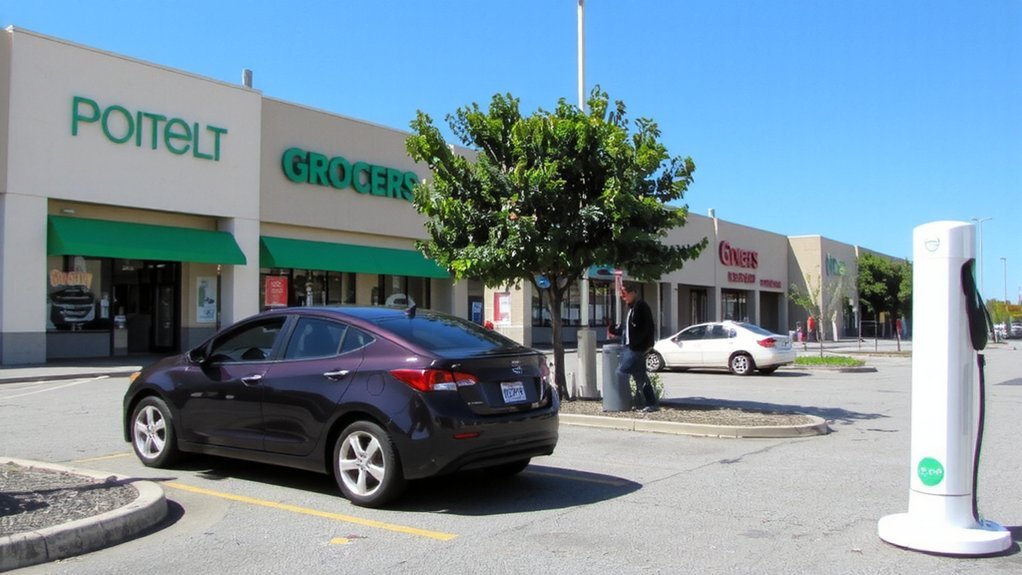
You’ll often find free chargers in supermarket lots that reward shoppers—sometimes just a loyalty card or proof of purchase is enough, but time limits can apply.
Malls and plazas also offer complimentary stations in main parking areas, though availability can be limited during peak hours.
Check retailer membership perks and partner apps to confirm access, speed, and any validation requirements before you go. Before heading out, use online directories or apps to find current free charging locations and availability.
Grocery Store Charging Perks
Check out the growing number of grocery stores and shopping centers that offer complimentary EV charging, from national retailers like Whole Foods, Kroger, Safeway, and Fred Meyer to regional chains such as Tops Markets in Buffalo. You can top up safely while you shop: stations are often well-lit, located near store entrances, and supported by utilities or charging networks. Use apps like PlugShare or ChargePoint to verify availability and avoid occupied or out-of-service stalls. Also consider using apps like PlugShare, ChargePoint, and ChargeHub to locate free EV charging stations and confirm real-time status.
Benefits include lower emissions, longer dwell time, and greater equity in access.
- Confirm station status and hours before arrival.
- Park correctly and follow charger instructions.
- Report hazards or faults to store staff.
- Lock your vehicle and monitor charging remotely.
Always keep emergency contact numbers handy, and follow local safety guidelines.
Mall and Plaza Chargers
Where else can you plug in while you shop? Many malls now host visible, conveniently sited chargers near entrances and main lots so you can park safely and keep an eye on your vehicle. EVgo operates over 1,100 locations across the U.S.
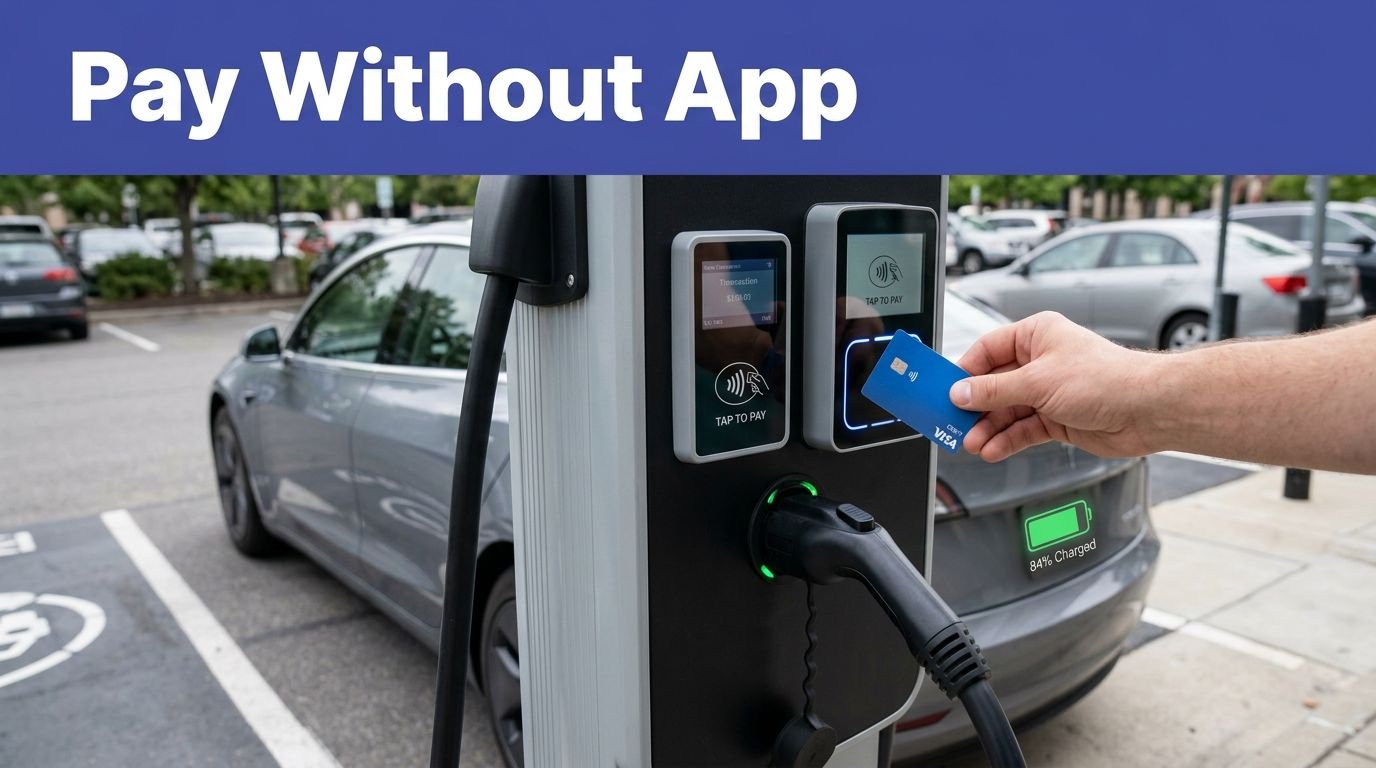
Sunrise Mall offers a 24‑hour EVgo array of twelve 350 kW fast chargers that let multiple cars top up quickly. MTR Malls is rolling out 300+ stations with China Resources by mid‑2026, and Velocicharge is expanding 24/7 ultra‑fast units up to 180 kW across Puerto Rico plazas. Chargers typically support CCS, CHAdeMO and adapter use, deliver 150–350 kW speeds, and use app‑based, contactless payments.
Free or complimentary options extend shopping time and build loyalty while installers prioritize visibility, accessibility and safe, well‑lit locations. Check status apps before you arrive today.
Retailer Membership Benefits
Often retailers tie complimentary EV charging to loyalty programs, so you’ll get free or discounted top‑ups, branded app access and targeted promotions when you shop. This includes the Giant Food partnership with Volta to install free EV charging stations at select stores. Check membership terms before plugging in: time limits, access control, and safety rules protect you and other drivers.
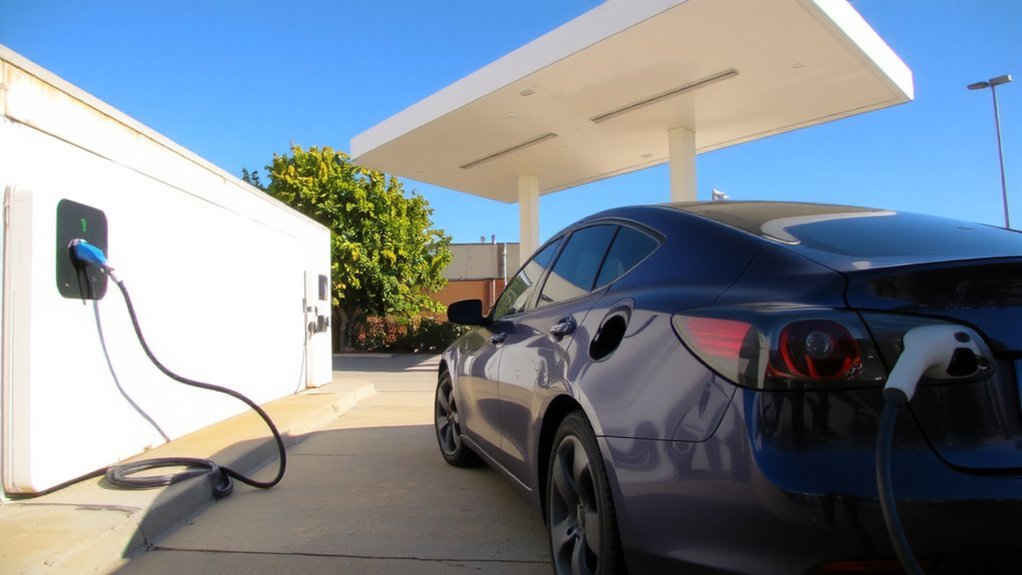
Grocery chains like Giant, Kroger and Safeway often require loyalty status; some chargers are Level 2, others faster. Retailers use displays for offers, so follow station instructions and stay aware while charging. If a station looks damaged or unattended, report it and choose another charger to maintain safety. Be cautious.
- Verify membership or card requirements.
- Note time limits to avoid overstay.
- Use retailer or network apps for real‑time status.
- Follow safety signage and don’t leave cables unsecured.
Hotels, Universities, and Public Institutions With Free EV Chargers
You’ll find many hotels now include free EV charging as a guest amenity, especially near airports, convention centers, and in urban luxury properties.
Universities also offer free chargers for students, staff, and visitors as part of sustainability programs, with research campuses often having higher station density.
Check hotel loyalty perks and campus maps or apps to locate free chargers and note any time limits or permit requirements. Public charging has expanded rapidly, with 195,874 chargers nationwide as of January 2025.
Hotels Offering Free Charging
When staying overnight, you’ll find many major hotel chains now include complimentary EV charging—Hyatt, Radisson, Holiday Inn, Marriott, and Hilton all offer free chargers at select properties, with some locations providing Level 2 and even Level 3 options or valet charging. You can rely on hotels for monitored, secure charging while you rest; policies vary, so confirm availability and parking rules before arrival.
Use apps like PlugShare or ChargePoint to filter free hotel chargers and verify status. Follow on-site instructions, lock your vehicle, and avoid obstructing other spaces to maintain safety.
- Check property charging type and cost.
- Reserve or notify front desk when possible.
- Inspect connector and follow signage.
- Report faults and unplug safely before driving.
Stay aware of cords. For example, Hilton announced a major rollout of 20,000 chargers across North America starting in 2024.
Universities With Free Chargers
Campus parking lots and garages host free EV chargers as part of many universities’ sustainability plans, giving students, faculty, staff—and sometimes visitors—cost-free access to Level 2 (and occasionally Level 3) charging. Some campuses have expanded their networks; one recently listed 39 charging ports.
If you use campus chargers, check each school’s policy: some restrict access to community members or specific hours.
Many programs run to meet carbon neutrality goals and may use solar or wind to supply clean power, reducing your indirect emissions. Expect temporary free periods to become paid later as infrastructure grows—universities often announce shifts and pricing through apps like ChargePoint or PlugShare.
For safety, follow posted instructions, park fully in designated stalls, and monitor real-time availability through campus maps or charging apps before arriving. Carry a charging cable and keep contact numbers handy.
National Parks, Tourist Sites, and Special-Event Free Charging
Because many national parks now host free EV chargers, you can plan visits around reliable Level 2 stations—and in some parks, DC fast chargers—located at visitor centers, lodges, and popular trailheads. In addition, many sites now offer dedicated charging infrastructure, with stations installed at over 100 parks. You should check park maps and reserve charging slots when offered, pack charging adapters, and allow extra charging time during peak seasons.
Solar-powered stations add resilience in remote areas. Follow posted rules, don’t block EV spots, and keep cables tidy for safety.
Useful tips:
- Verify charger locations on official park maps or NPS resources.
- Reserve or queue courteously during busy weekends and holidays.
- Use nearby gateway town chargers before entering remote parks.
- Keep emergency supplies and plan alternate charging stops.
You should monitor weather and road conditions before departure.
Free DC Fast Chargers Versus Level 1/2: What to Expect
One clear difference is speed: free DC fast chargers can add roughly 60–80 miles in about 20 minutes, while Level 2 units typically add 10–75 miles per hour and Level 1 only 3–7 miles per hour—so you’ll rely on DC fast for quick top‑ups on a trip and Level 1/2 for overnight charging or errands. This is because DC fast charging bypasses on-board charger, converting power at the station rather than relying on the vehicle’s AC-to-DC converter.
Free DC fast chargers are rare at select retailers, hotels, or pilot programs; they’re time‑limited, restricted, and can have long waits. Level 1/2 chargers are widely available at malls, workplaces, municipal lots and safer for routine daily charging. Expect DC fast to reach ~80% in 20–60 minutes but not be dependable for daily use. For safety, monitor battery temperature, follow posted limits, and prefer Level 1/2 for slower charging.
Tips for Finding, Reserving, and Using Free Charging Stations
When you look for free EV charging, use dedicated apps and map filters to find nearby stations, confirm connector compatibility and posted time limits, and book or register through the provider’s app or RFID system when available to cut wait times and guarantee access. Also remember many drivers rely on apps like Chargemap to find free stations.
Use apps and map filters to find free chargers, confirm connector type and time limits, and register ahead
You should check PlugShare, ChargePoint, ChargeHub, and Google Maps EV filters for real-time status, and prioritize Level 2 chargers when you need faster top-ups. Always confirm station rules, avoid peak shopping hours, and keep emergency charging options in mind. Maintain situational safety: park in bay, avoid cables across walkways, and don’t leave charging unattended longer than posted limits.
- Verify connector type and app access.
- Reserve or register ahead.
- Plan around errands to use time safely.
- Monitor live status before arriving.
Promotions, Manufacturer Incentives, and Rewards for Free Charging
Keep an eye out for manufacturer bundles, charging-network promos, and loyalty rewards that can score you free or heavily discounted sessions after purchase or via referrals. Automakers often include limited-time Supercharger or network credits with new EVs, and charging networks run seasonal promotions or branded-card offers that reduce your cost.
Join loyalty programs and referral schemes, but read terms: many offers expire or require data sharing for research. For homeowners, ask dealers whether bundled home-charger incentives or federal credits apply and follow installation safety standards.
Businesses and nonprofits may qualify for higher rebates through utilities or federal tax credits; guarantee projects meet prevailing-wage and apprenticeship rules to secure full benefits. Verify expiration dates and safety-compliant installers before claiming offers. Stay proactive and document approvals. Also, homeowners can often combine these offers with the federal Home Charging Station tax credit of up to $1,000 to lower installation costs.
Conclusion
As you hunt for free EV charging, you’ll find it matters more than ever — over 195,874 chargers nationwide in 2025 means you’re likely near one. Use apps, check retailer policies, and favor stations with faster connectors when you’re in a rush. You’ll save money, reduce range anxiety, and take advantage of promotions or hotel and campus offerings. With a little planning, free charging fits smoothly into your daily routes and trips and weekend journeys too.