You want a J1772 Level 2 charger that’s fast, safe, and compliant. At 240 V and typically 16–48 A, it uses control‑pilot and proximity signals to...
Your Complete Guide to Electric Vehicle Charging
You want a J1772 Level 2 charger that’s fast, safe, and compliant. At 240 V and typically 16–48 A, it uses control‑pilot and proximity signals to...
Over 80% of EV charging happens at home; a J1772 Level 2 EVSE delivers 208–240 V at 16–48 A (≈3.3–11.5 kW). You’ll size circuits per NEC 625’s 12...
You don’t need DC fast charging for daily use—Level 2 at 240 V supplies 3–19 kW via SAE J1772/IEC Type 2 to your onboard charger, with IEC 61851 ...
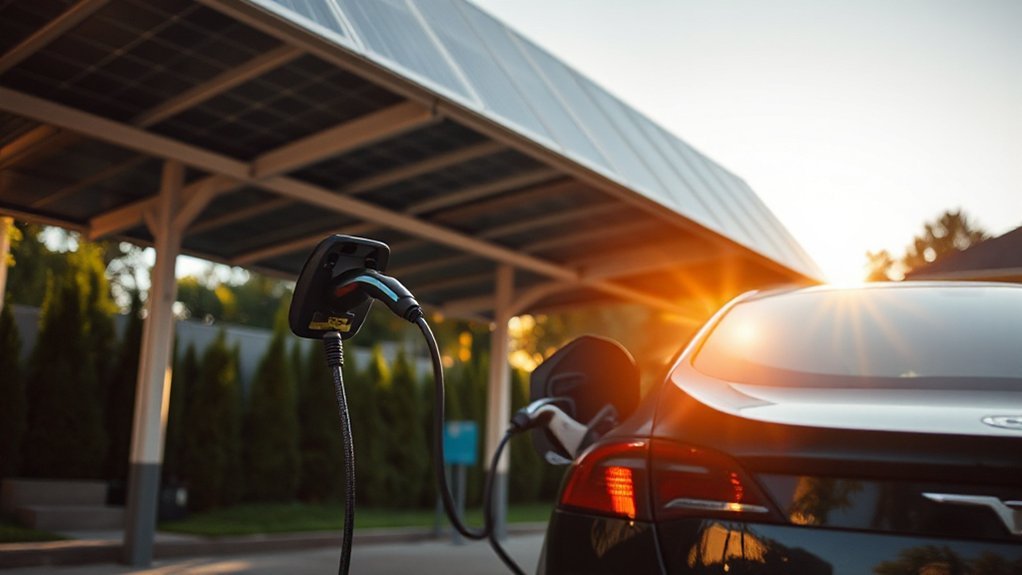
A calculator sits beside a sunlit parking lot: in 2025, you can stack a 30%+ ITC with NEVI/make‑ready funds, cut retail kWh and demand charges, a...
You’ll start by auditing your roof’s orientation, shade, and structure, then calculate daily kWh for your commute and align charge times with pea...
Measure twice, cut once: you plan a solar EV charging station with NEC-compliant wiring, proper load calculations, and utility interconnection fr...
You size a solar EV charger by your driving and local sun: convert miles to kWh (typical EV 250–350 Wh/mi plus ~10% charging losses), divide by p...
In California, a 6 kW rooftop PV array routinely offsets 25–30 EV miles per day when paired with a Level 2 EVSE. You’ll convert PV DC to AC throu...
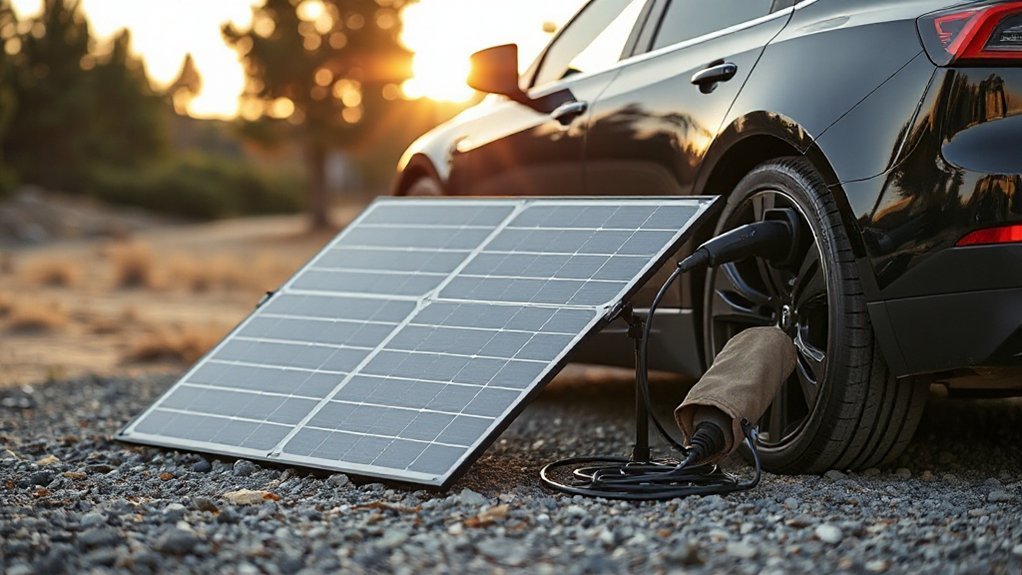
You can top up an EV with portable solar, but the numbers rule the outcome. Expect 200–800 W from foldable panels, 4–6 sun-hours, and 15–25% syst...
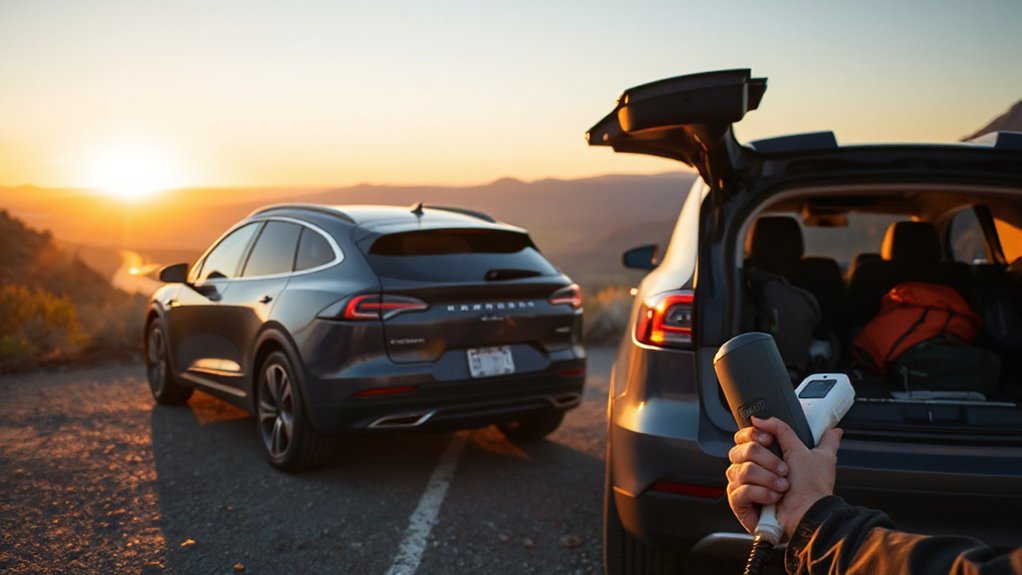
You need a portable Level 2 EVSE that matches your car’s onboard AC limit (kW/amps), supports adjustable 16–40 A to meet NEC 80% rules on mixed c...