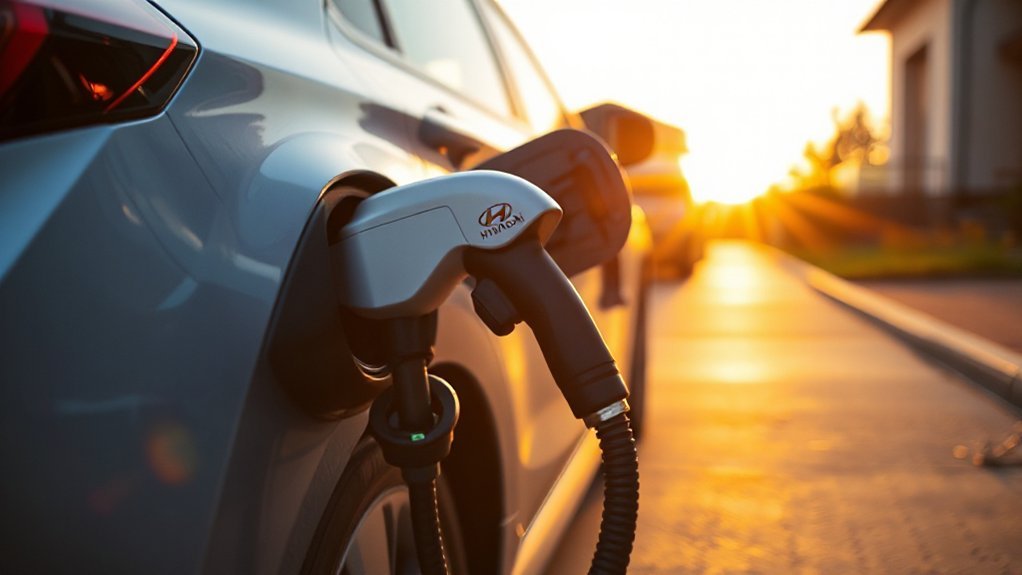
You’ll charge faster and safer with a 240‑V Level 2 EVSE for your Hyundai, using the SAE J1772 connector at 32–48 A (about 7–11 kW). You must mat...
Your Complete Guide to Electric Vehicle Charging
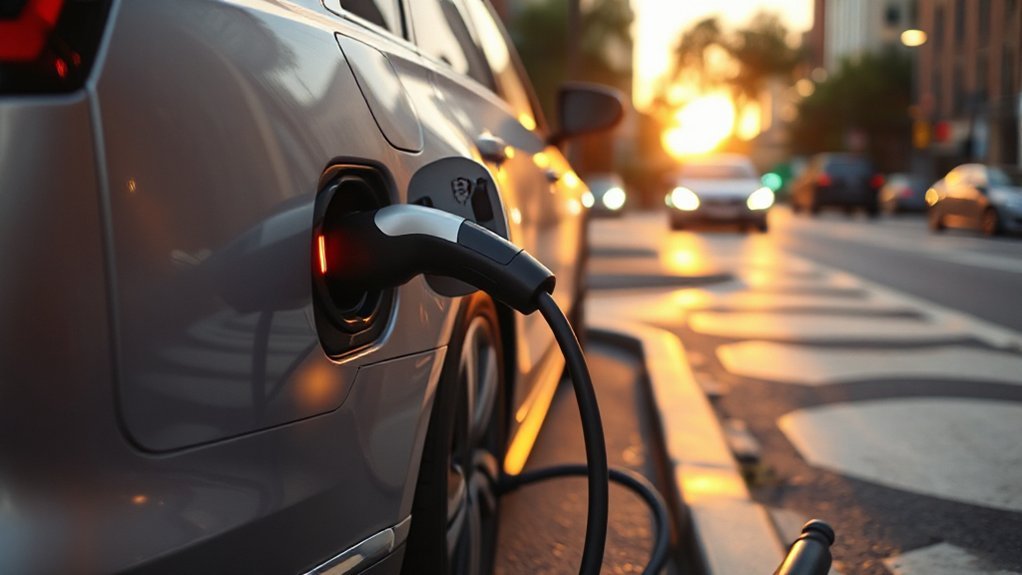
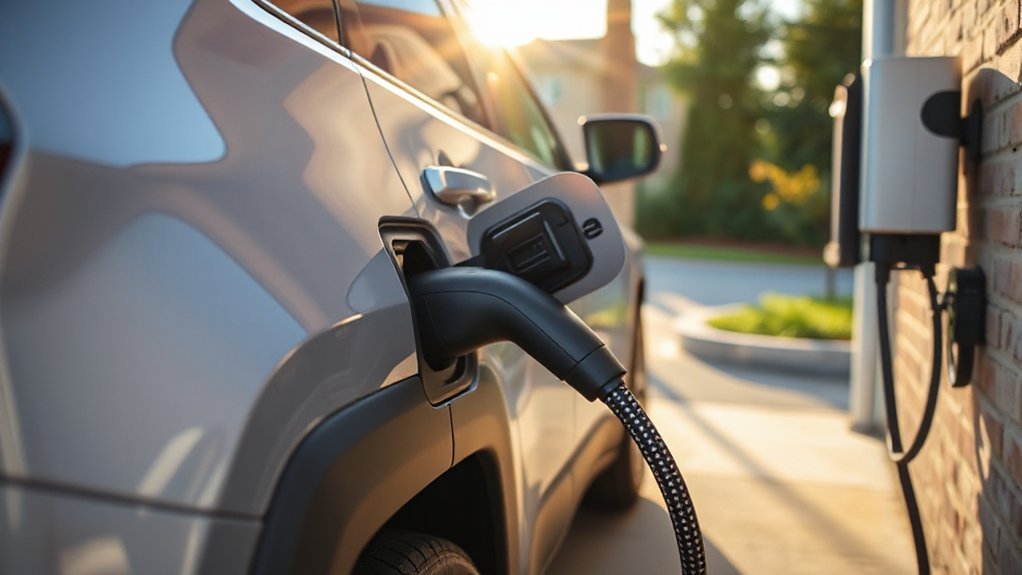
You’ll charge faster and safer with a 240‑V Level 2 EVSE for your Hyundai, using the SAE J1772 connector at 32–48 A (about 7–11 kW). You must mat...
Like a well‑tuned orchestra, your e‑tron’s charge rates hinge on timing, temperature, and the standard you plug into. Expect ~9.6–11 kW on Level‑...
A neighbor’s $1,800 install jumped to $3,200 after a panel upgrade—home EV charging is like remodeling: simple until wiring says otherwise. You’l...
You’ll charge an Audi EV fastest on DC CCS (up to ~170–270 kW depending on model), but most miles come from Level 2 at home (7–11 kW, matching th...
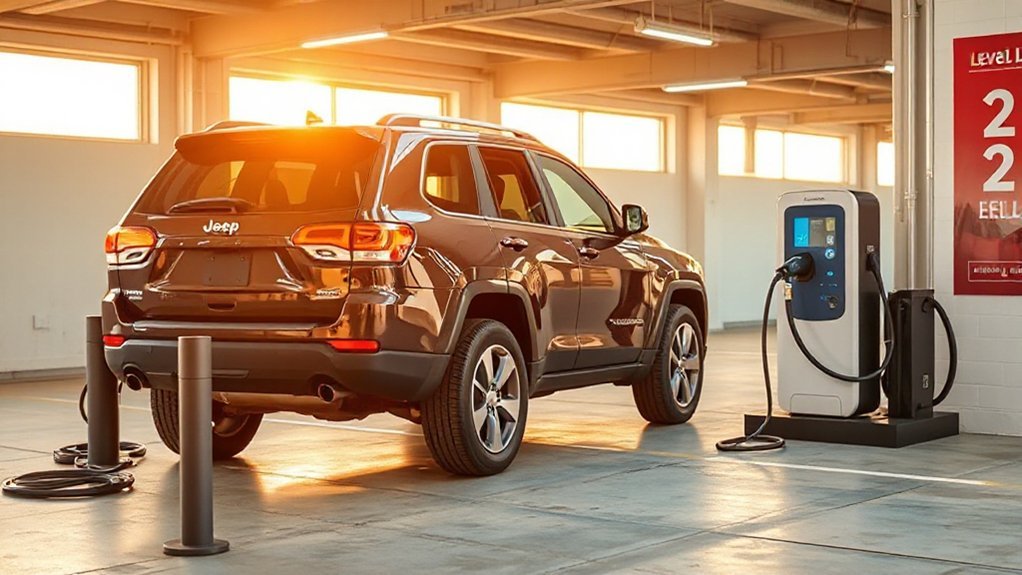
What’s a Level 2 charger but a purpose-built power tool for your Jeep 4xe? You’ll match the 7.2 kW (32 A) onboard limit, pick a UL-listed EVSE wi...
A Level 2 charger can refill a Jeep 4xe’s 15–17 kWh usable pack in roughly 2–3 hours. To match the 7.2 kW onboard charger, you’ll spec a 240 V, 3...
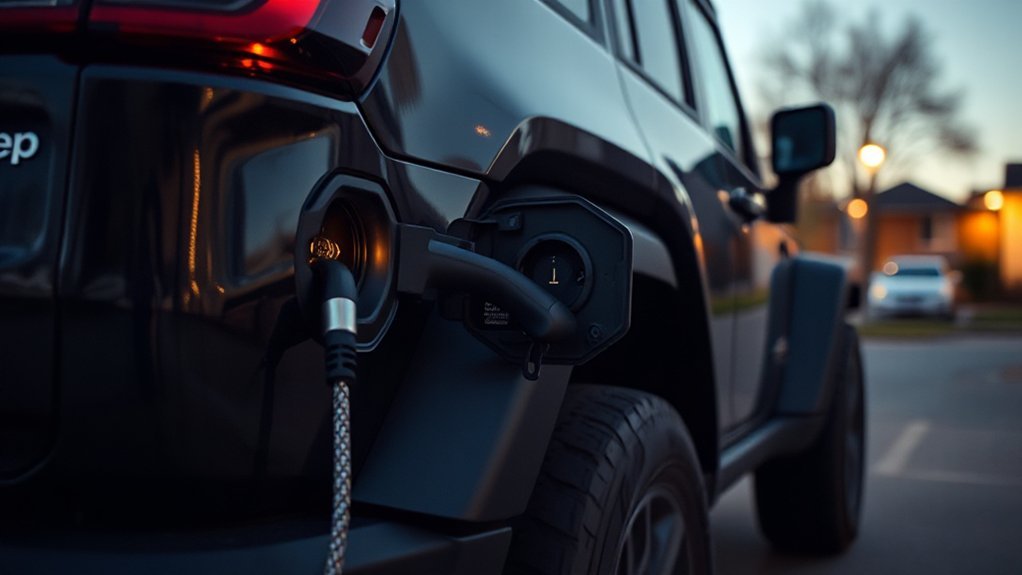
You probably don’t know your Jeep 4xe typically pulls about 32A, so many 48A chargers must be dialed down to stay NEC-compliant. You need adjusta...
You probably don’t know your Jeep 4xe’s onboard charger caps at ~7.2 kW, so a 32–40A J1772 Level 2 EVSE is the practical ceiling. To stay code‑co...
Over 80% of EV charging happens at home, so your Leaf’s Level 2 setup must be safe, code‑compliant, and sized right. You’ll match the EVSE ampera...
Fast at-home charging meets strict electrical codes. You’ll match your Leaf’s onboard charger (3.3 or 6.6 kW) to an EVSE and circuit: 20–32 A on ...