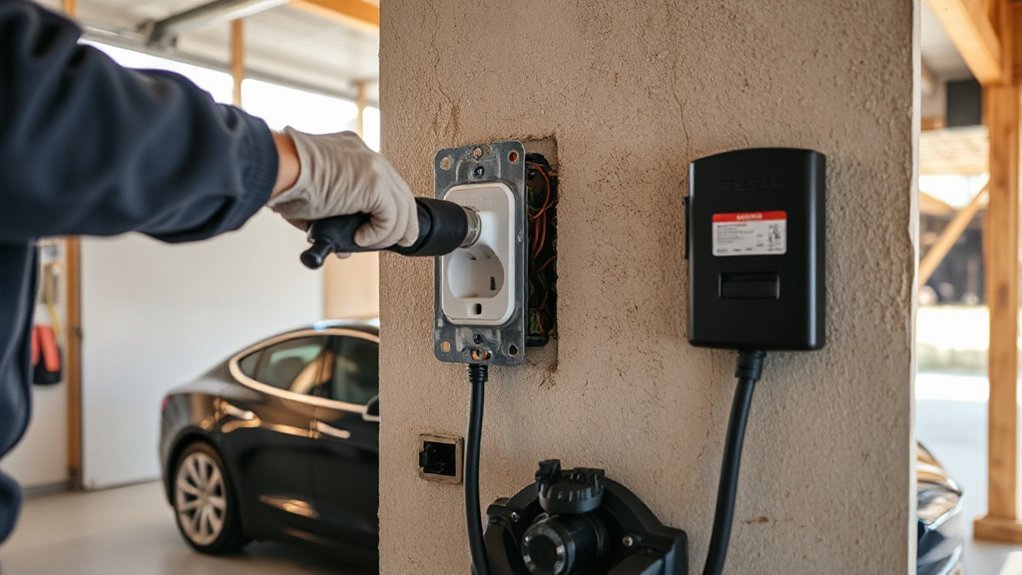
You’re planning a Tesla home charger and want a clear, code-compliant budget. Expect $400–$700 for a Wall Connector or $200–$300 for a Mobile Con...
Your Complete Guide to Electric Vehicle Charging
You’re planning a Tesla home charger and want a clear, code-compliant budget. Expect $400–$700 for a Wall Connector or $200–$300 for a Mobile Con...
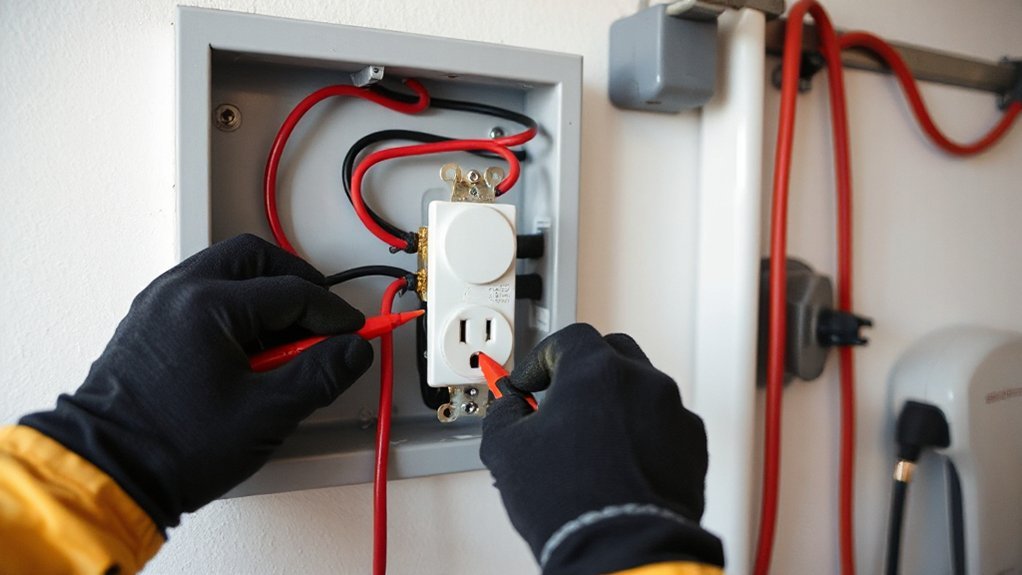
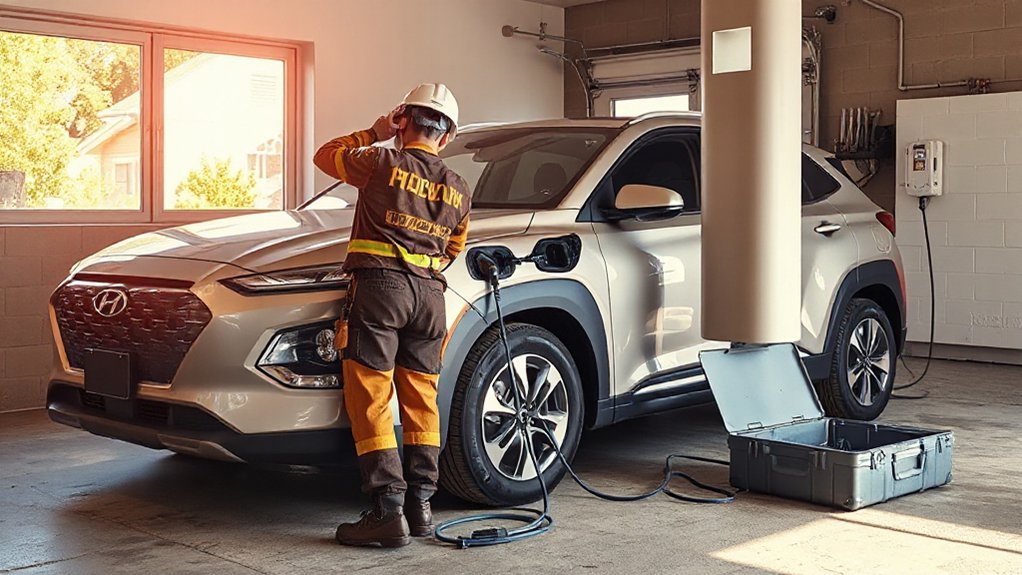
You can install a 240V Tesla circuit yourself—but only if you pull a permit, follow NEC continuous-load sizing at 125%, verify panel capacity wit...
You might not know 2025 code updates can add GFCI/AFCI and load‑calc requirements that change your 240V Tesla outlet price and scope. You’ll need...
By coincidence, your service panel sits near the garage where you want a Tesla outlet, but proximity alone won’t make it safe. You’ll verify serv...
Over 80% of EV charging happens at home, and a 240V circuit can cut charge time by 3–4x. You’ll choose NEMA 14-50 vs 6-50, verify panel capacity,...
You probably don’t know your Hyundai’s onboard AC charger, not the EVSE, caps your Level 2 charging speed. To choose right, match EVSE amps to th...
Here’s the twist: the fastest home charge for your IONIQ or Kona isn’t just about amperage—it’s about code. You’ll size a 240‑V dedicated circuit...
Like sizing a breaker to code, you’ll match your Hyundai Ioniq 5 or Kona to a 40–48 A Level 2 EVSE with J1772 (or NACS via a rated adapter). You’...
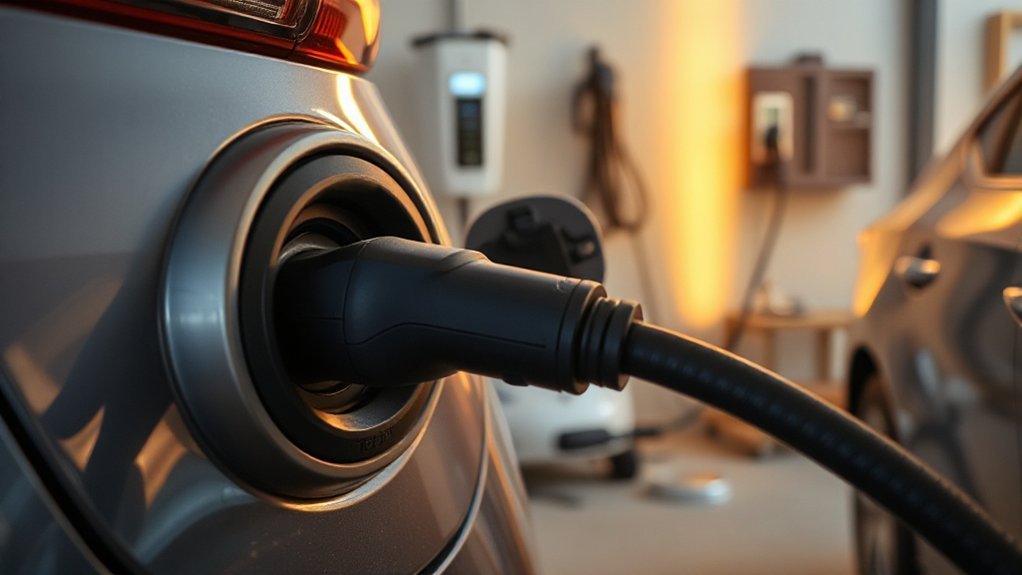
You’ll charge faster and safer with a 240‑V Level 2 EVSE for your Hyundai, using the SAE J1772 connector at 32–48 A (about 7–11 kW). You must mat...
Like a well‑tuned orchestra, your e‑tron’s charge rates hinge on timing, temperature, and the standard you plug into. Expect ~9.6–11 kW on Level‑...