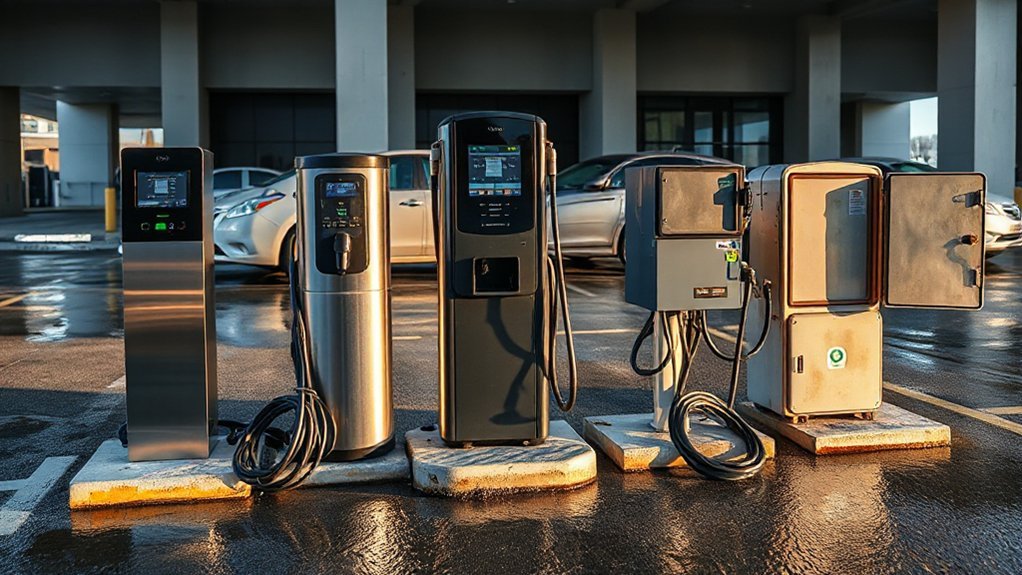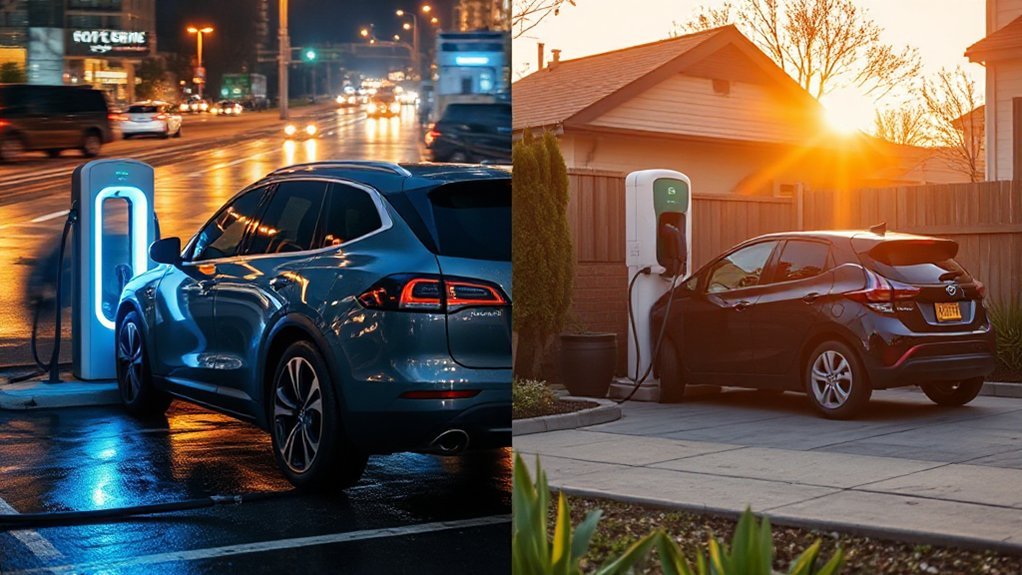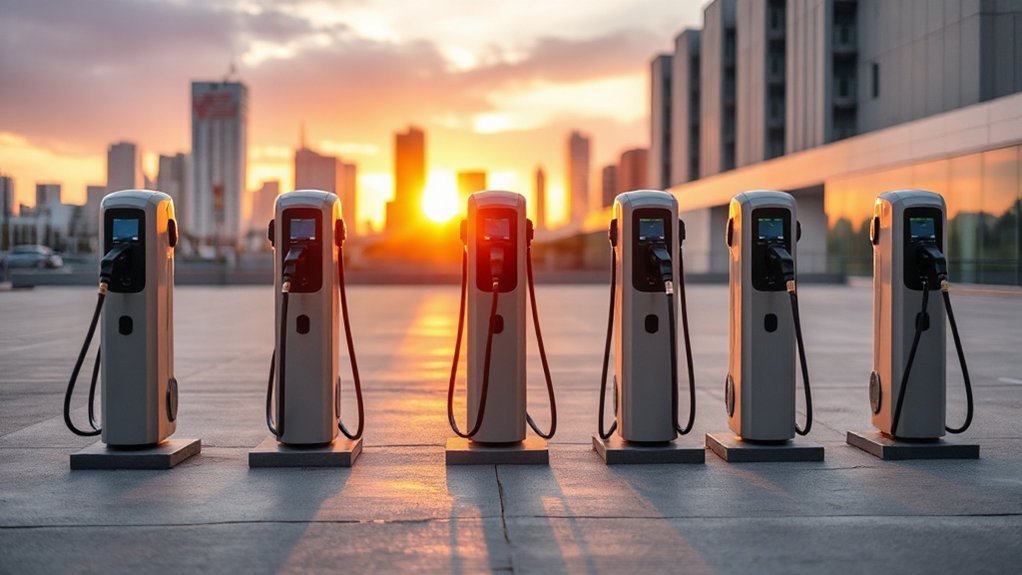
You’ll start by auditing your roof’s orientation, shade, and structure, then calculate daily kWh for your commute and align charge times with pea...
Your Complete Guide to Electric Vehicle Charging
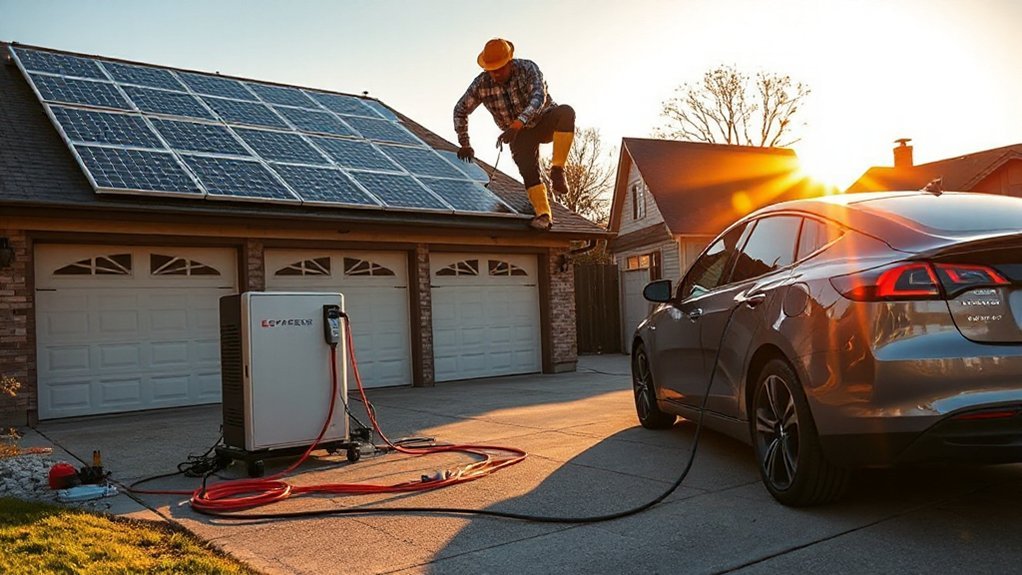
You’ll start by auditing your roof’s orientation, shade, and structure, then calculate daily kWh for your commute and align charge times with pea...
If you want reliable Level‑1 EV charging off‑grid, you’ll need portable panels that deliver 300–400 W nominal, retain ≥80% STC at 800 W/m², and p...
Over 80% of EV charging happens at home, so your portable Level 2 choice matters. The Blink unit delivers up to 32 A with a 25‑ft cable, integrat...
You’re weighing Level 3 options for fleet sites: ABB Terra 360, ChargePoint Express Plus, Tritium PKM150, Siemens SICHARGE D, and Kempower Power ...
Picture cars cycling through your site as liquid‑cooled cables push 150–350 kW straight into packs, cutting dwell to minutes. You’re buying DC fa...
Think of EV charging like plumbing: a 7.2 kW Level 2 tap versus a 150 kW Level 3 fire hose. You’ll weigh AC Level 2 (SAE J1772/IEC 61851, ~6–11 k...
At one fleet depot, a 50 kW unit consistently delivered 32–68 kW to 400 V cars—like a breaker sized just right. You’ll validate utility capacity ...
You’re choosing a 50 kW DC fast charger for fleets, so you’ll want hard numbers: 150–920 V DC ranges, up to ~125 A (some ~200 A at low V), 94–96%...
You’re considering a 50 kW DC fast charger for 2025, so quantify what it really delivers: roughly 10–40 miles in 15–30 minutes, dependent on vehi...
If you drive an EV regularly, you'll want to know whether a charging membership actually saves you money and hassle in 2025–2026. Plans can cut p...