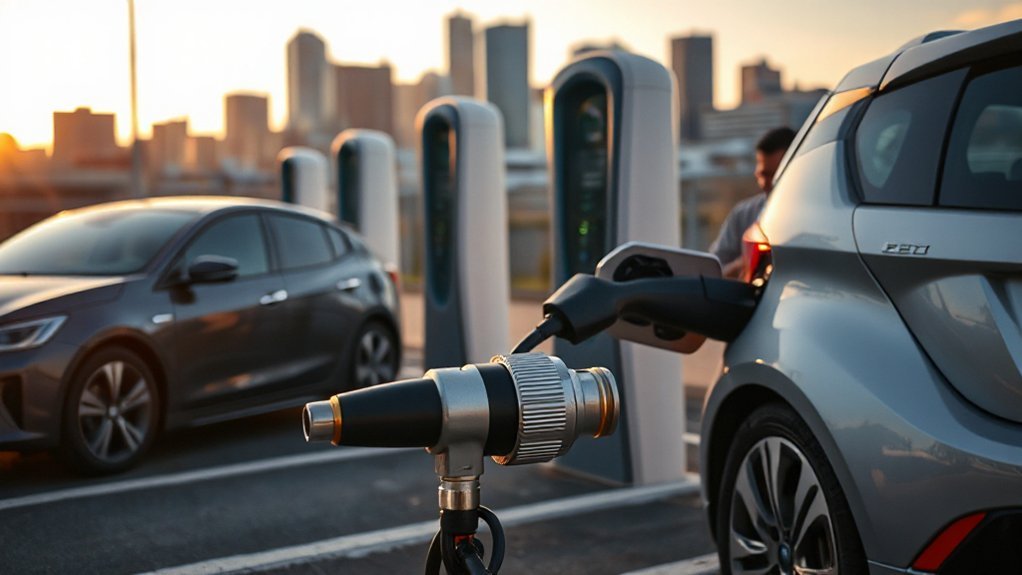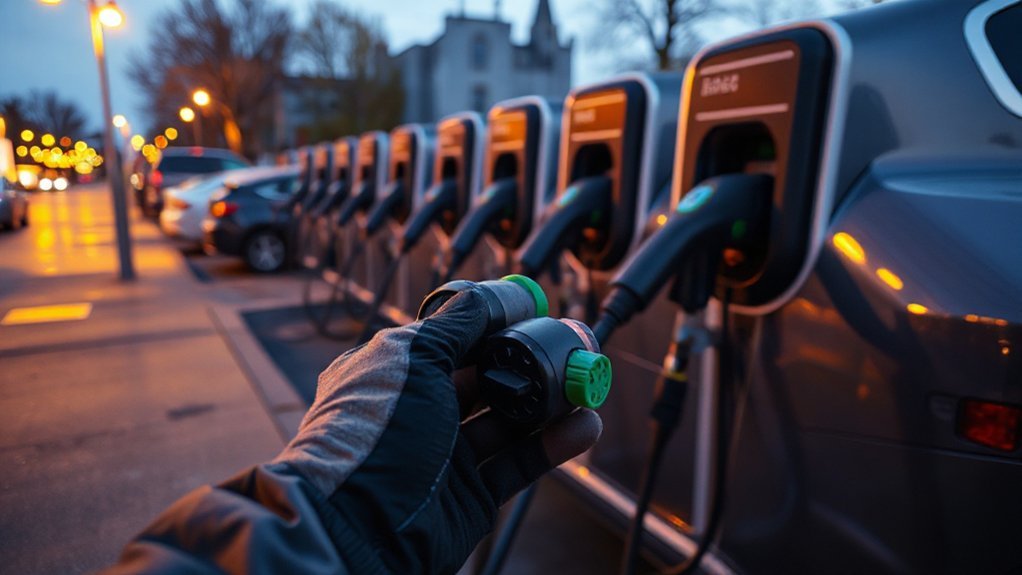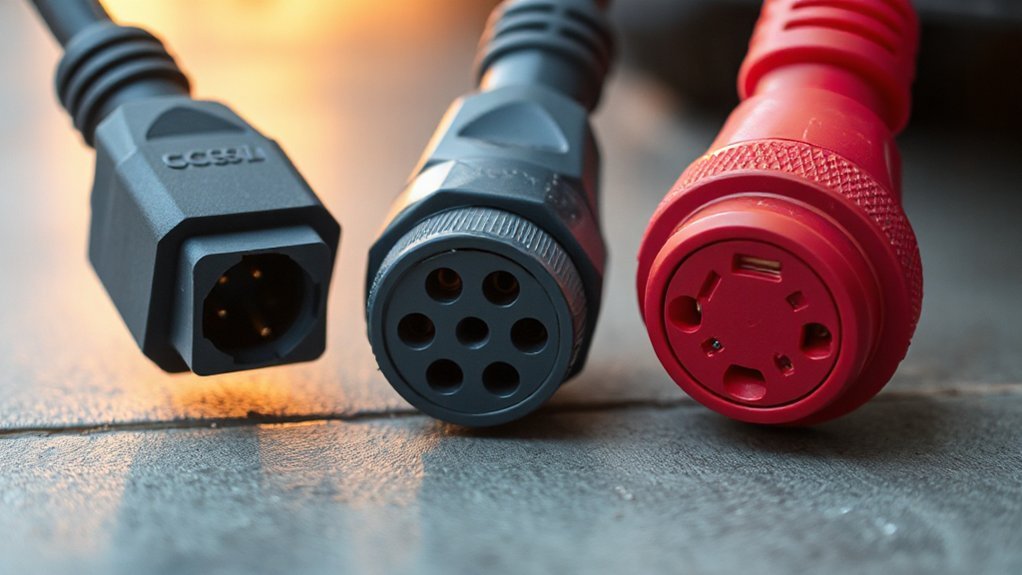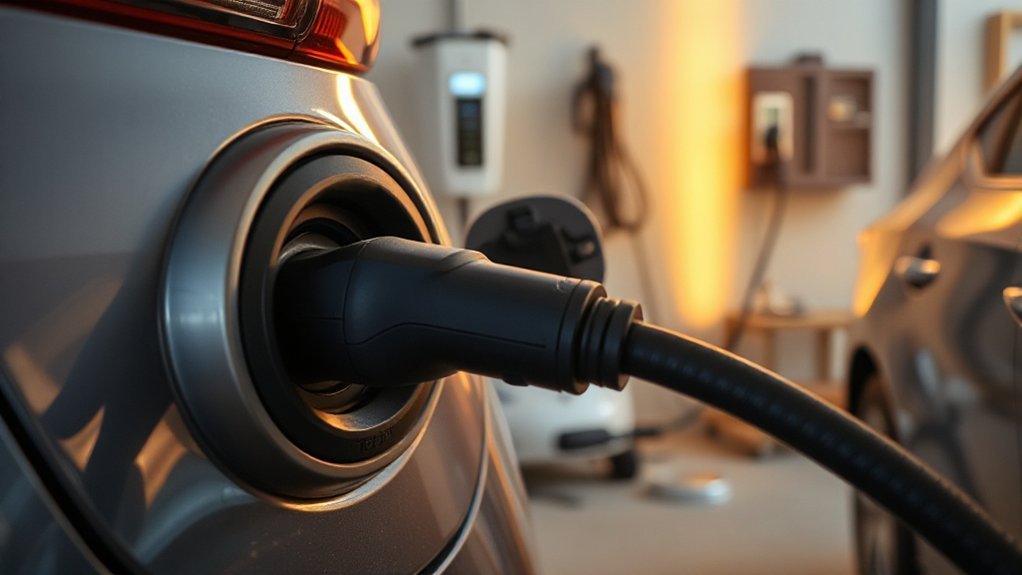
By coincidence, your car’s inlet and the charger you find tonight might not speak the same language. You must match plug standards (SAE J1772/Typ...
Your Complete Guide to Electric Vehicle Charging
By coincidence, your car’s inlet and the charger you find tonight might not speak the same language. You must match plug standards (SAE J1772/Typ...
Every charger fits every EV—until it doesn’t. In 2025, compatibility still hinges on connector types (NACS, CCS1/2, Type 2, legacy CHAdeMO), AC v...
You arrive in an Ioniq 5 at a Tesla Supercharger: can you plug in, negotiate ISO 15118, and pull 230 kW on an 800 V pack? Universality hinges on ...
North America’s CCS1 meets Europe’s CCS2 while Japan’s CHAdeMO stands apart. You face different plugs, protocols, and limits. CCS1/2 use IEC 6219...
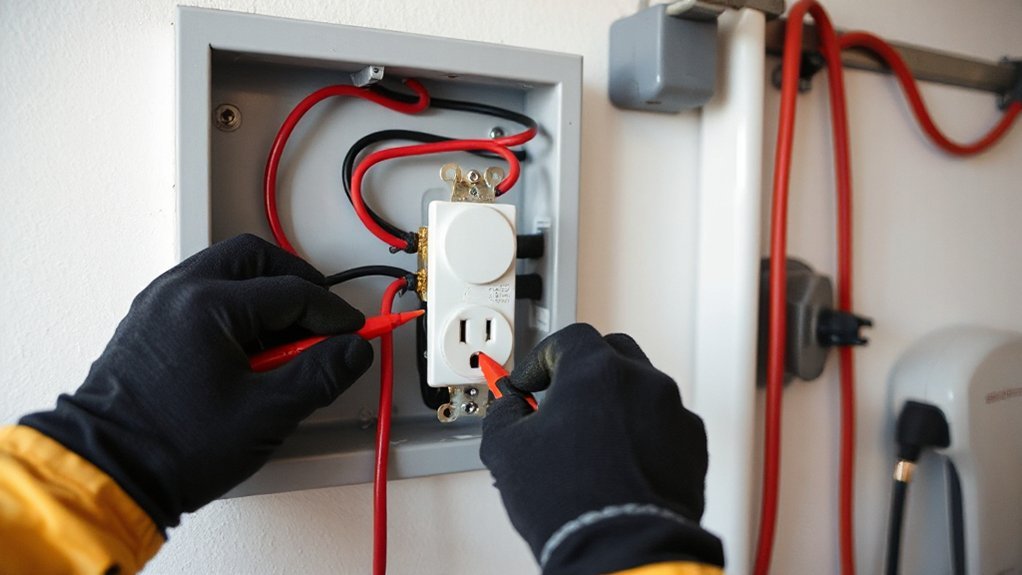
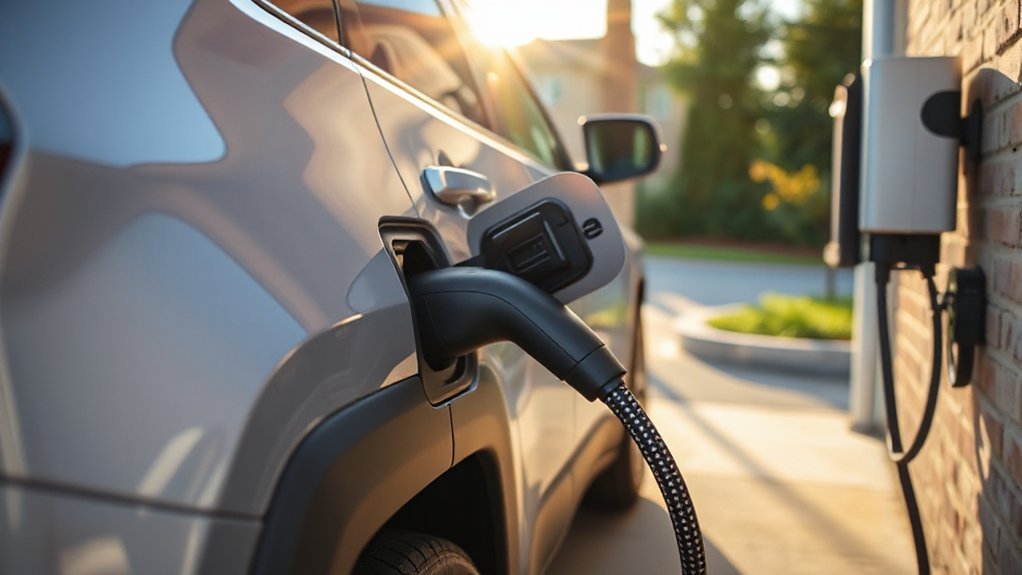
You can install a 240V Tesla circuit yourself—but only if you pull a permit, follow NEC continuous-load sizing at 125%, verify panel capacity wit...
By coincidence, your service panel sits near the garage where you want a Tesla outlet, but proximity alone won’t make it safe. You’ll verify serv...
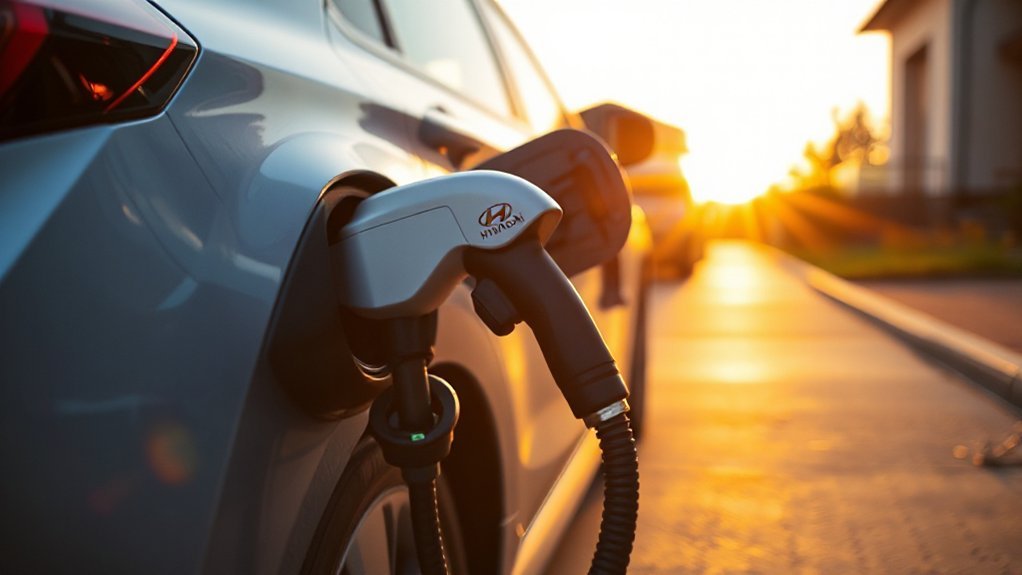
You probably don’t know your Hyundai’s onboard AC charger, not the EVSE, caps your Level 2 charging speed. To choose right, match EVSE amps to th...
You’ll charge faster and safer with a 240‑V Level 2 EVSE for your Hyundai, using the SAE J1772 connector at 32–48 A (about 7–11 kW). You must mat...
Like a well‑tuned orchestra, your e‑tron’s charge rates hinge on timing, temperature, and the standard you plug into. Expect ~9.6–11 kW on Level‑...
What’s a Level 2 charger but a purpose-built power tool for your Jeep 4xe? You’ll match the 7.2 kW (32 A) onboard limit, pick a UL-listed EVSE wi...