Installing an EV charger in your garage starts with safety and code compliance: assess your driving needs, choose Level 1 or Level 2, confirm ser...
Your Complete Guide to Electric Vehicle Charging
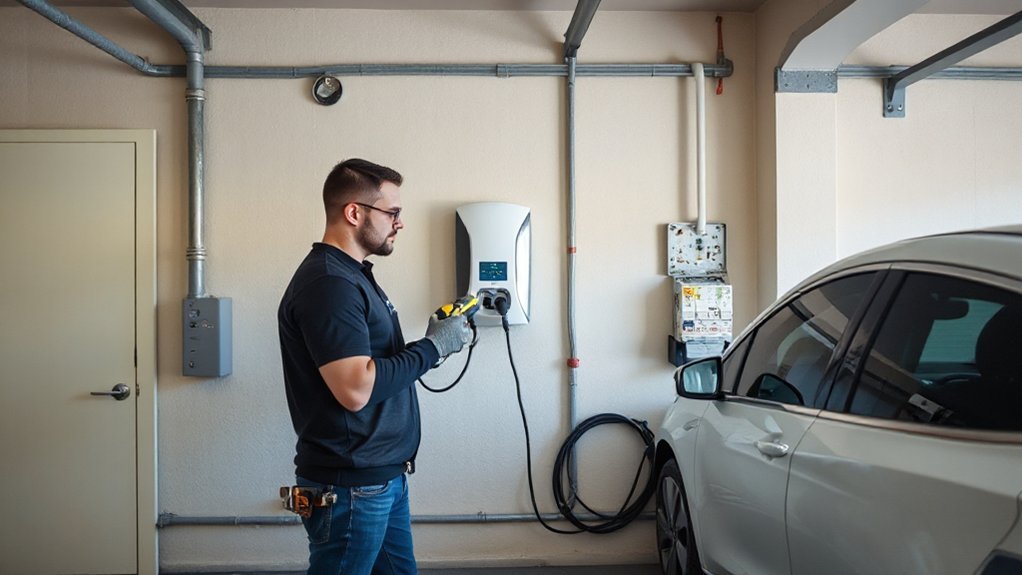
Installing an EV charger in your garage starts with safety and code compliance: assess your driving needs, choose Level 1 or Level 2, confirm ser...
You could wait an eternity—or just minutes—for a charge, depending on the math you use. You’ll estimate time by SOC change × usable kWh ÷ realist...
You can estimate charge time with a simple model: hours = usable kWh × (target SOC − start SOC) ÷ (charger kW × efficiency). Account for Level 1/...
Like pacing a marathon, your charge rate starts fast then tapers—e.g., a 150 kW session often averages ~90 kW to 80%. With this calculator, you i...
Picture the charge bar creeping from 20% to 80% as you compute t = E_add / (P·η), with E_add = C_bat·(SOC₂−SOC₁). You set C_bat (kWh), choose L1/...
You might test the theory that a “150 kW” charger always gives you the fastest session. You manage kW, but your pack accepts amps until the BMS t...
You can estimate EV charge time with precision by inputting battery capacity (kWh), current and target SoC (%), charger power (kW), and efficienc...
You want to know how long a charge will take, not the brochure estimate. An EV charging time calculator uses usable battery capacity, current and...
You want practical, standards‑based steps to pick chargers and size circuits: choose connector (J1772/CCS/NACS), decide single‑ or three‑phase, t...
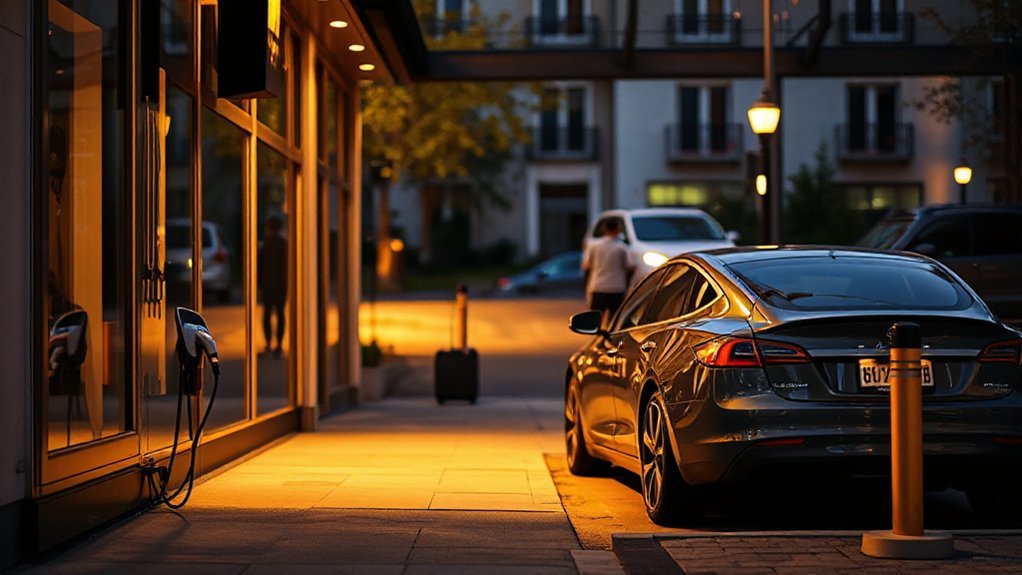
You probably don’t know that many hotel “EV‑friendly” listings are just 120‑V wall outlets or offline units. You need a method to filter for real...