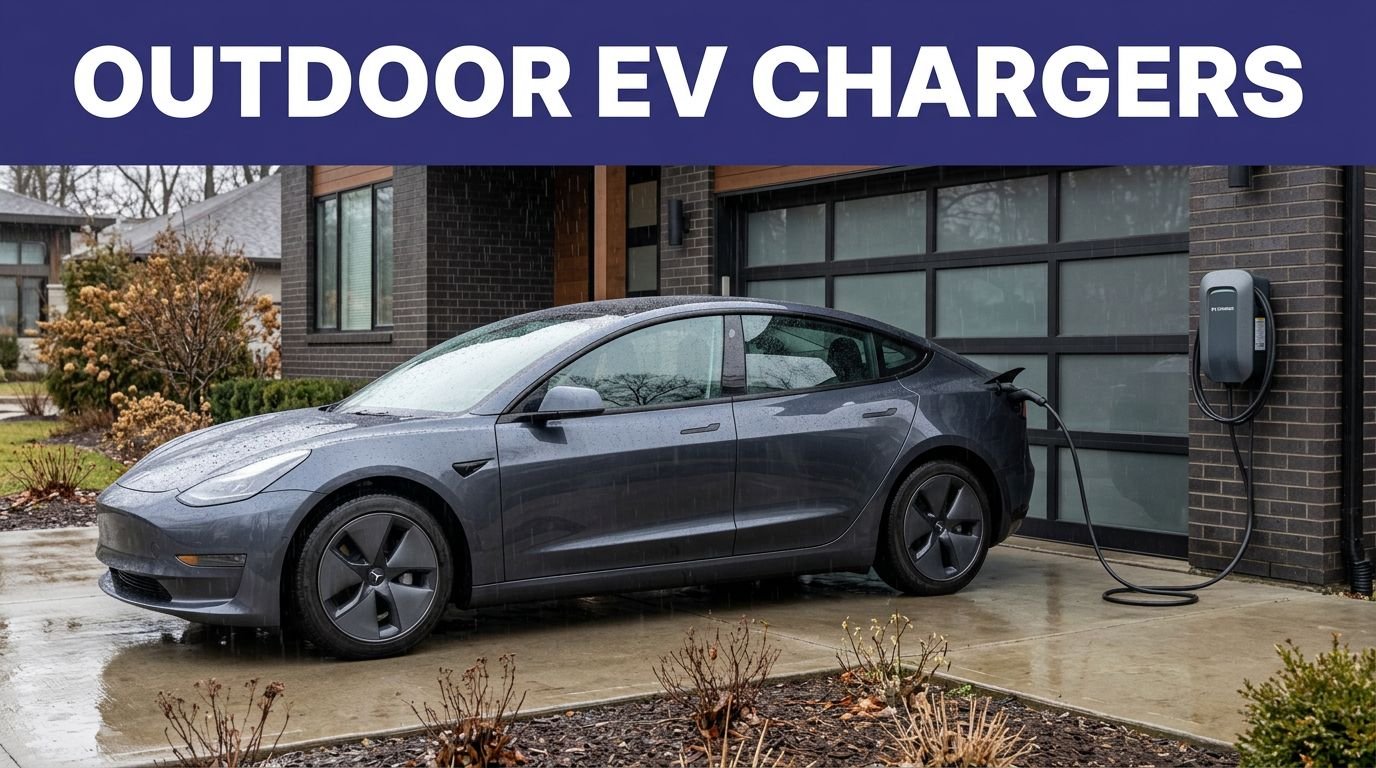
You probably don’t know that many “budget” 7 kW units already meet NEC 625 and IEC 61851, including 6 mA DC fault detection. You’ll install them on a 40 A circuit for 32 A continuous, with IP54–IP65 enclosures, Type A RCDs, and Type 2 surge protection. You’ll also weigh tethered vs. untethered, Wi‑Fi scheduling, and basic load limiting. Let’s sort which models truly deliver—and where corners get cut.
Key Takeaways
- Look for 240 V/32 A, UL 2594/2231 or IEC 61851 listed, SAE J1772/Type 2, Type A RCD with 6 mA DC leakage detection.
- Budget range and examples: basic tethered $299–$499; smart/OCPP $499–$699; prioritize NEMA 3R/IP54 enclosures and surge protection (UL 1449 Type 2).
- Verify build quality: UV‑resistant 32 A cable, IK08/IP54–IP65, over‑temperature sensors, contactor weld detection, conformal‑coated PCBs for longevity.
- Decide tethered vs socketed: tethered is convenient; untethered adds flexibility and lower cable replacement cost; ensure lockable shuttered socket where applicable.
- Factor installation: dedicated 40 A circuit, 8 AWG copper, 2‑pole 40 A breaker; typical installed total $900–$2,200 including permits and a Type 2 SPD.
What to Look For in a 7kW Home Charger
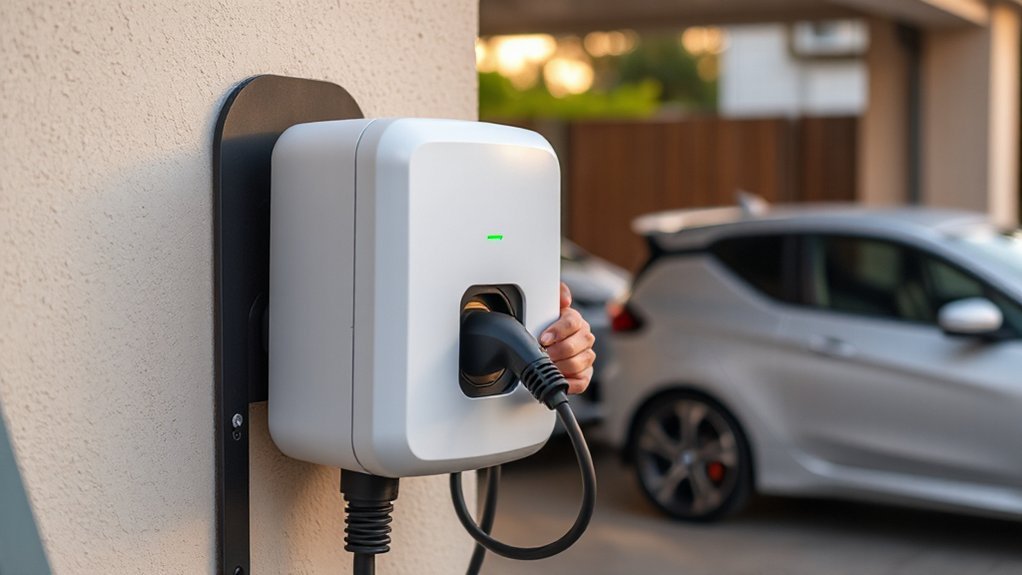
What matters most in a 7 kW home charger? You need a 240 V, 32 A unit listed to UL 2594/UL 2231 (or IEC 61851), using SAE J1772 and a dedicated 40 A breaker sized per NEC 625 and 210.20(A) (125% continuous load). Look for integrated 6 mA DC leakage detection with Type A RCD/GFCI, surge protection (UL 1449), and enclosure ratings of at least NEMA 3R or IP54. Verify temperature derating specs, strain relief, and UV‑resistant cable. Demand load management compliant with NEC 625.41 and permissions/permit provisions. Confirm Wi‑Fi security, firmware signing, and OCPP 1.6J optionality. Evaluate cord length and mounting that meet aesthetic considerations and minimize trip hazards. Plan maintenance needs: periodic torque checks, firmware updates, and inspection of connectors and seals.
Top Budget Models Compared: Features and Pricing
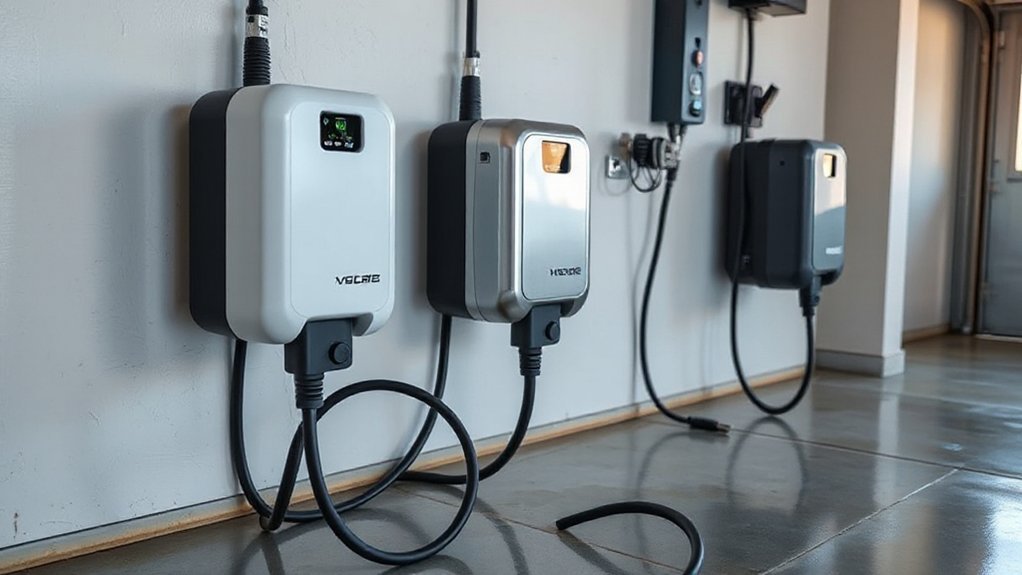
You’ll compare key features—OCPP 1.6J support, Wi‑Fi/Bluetooth, RFID access, load management, cable length, IP54–IP65 enclosures, and integrated RCD Type A + 6 mA DC detection. You’ll verify safety and compliance: UL 2594/2231 and NEC 625 (U.S.) or IEC 61851/62955 (EU/UK), plus PEN fault protection where required. Pricing at a glance: expect ~$299–$499 for basic tethered units and ~$499–$699 for smart/OCPP models, with installation/permit costs varying by local code.
Key Features Compared
While price matters, prioritize budget 7 kW EVSEs that meet core safety and interoperability standards, then compare features and total installed cost. Verify listings: UL 2594 or IEC 61851 compliance, IEC 62196-2 Type 2 connector, and NEC 625 installation. Demand 30 mA RCD Type A with 6 mA DC detection (or Type B), open-PEN protection where required, and Type 2 surge protection. Check IP54+ and IK08+ enclosures, UV-rated housings, and operating range −25°C to 50°C with thermal derating. Evaluate Aesthetic design, cable management, and Noise emissions (fanless is quieter). Prefer Wi‑Fi/Ethernet with OCPP 1.6J, robust apps, RFID, load scheduling, and dynamic load management via CT clamp. Look for automatic firmware updates, secure TLS, tamper alerts, and 3–5 year warranties, plus clear fault indicator LEDs.
Pricing at a Glance
Several budget 7 kW EVSEs land around $350–$700 (USD) for hardware, with typical installed totals of $800–$1,800 under NEC 625 (North America); expect roughly £250–£500 hardware and £700–£1,400 installed (UK, BS 7671), or €300–€650 hardware and €900–€1,700 installed (EU), VAT and permits dependent. You’ll see value models differ by enclosure rating (NEMA 3R/IP65), cable length, and smart features (Wi‑Fi/OCPP). Hardwired 32 A units often cost less than plug‑in variants and meet 7 kW demand. Installation shifts with feeder length, load calcs (NEC 220), RCD/RCBO Type A with 6 mA DC detection (BS 7671 722), and surge protection (NEC 242). Budget wisely: factor permits, inspection, utility rebates, tax credits, regional discounts, and seasonal promotions. Always use licensed installers and verify labeling and fault-current ratings conformance.
Reliability, Safety Certifications, and Build Quality
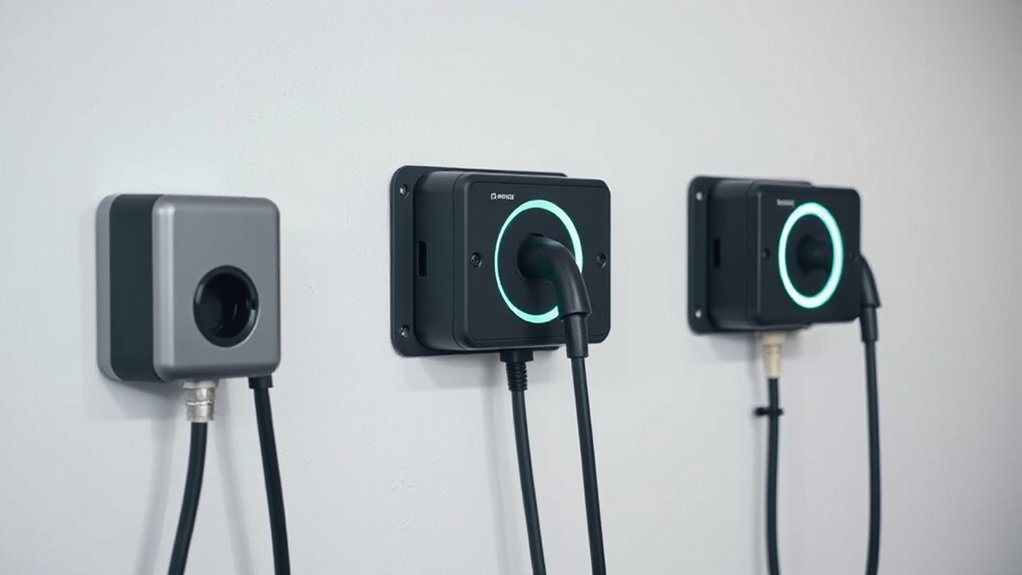
How do you know a 7 kW home EV charger will perform safely for years? Verify independent certifications: UL 2594/2231 or IEC 61851/62196, plus FCC/CE for EMC. Check NEC 625 and BS 7671 compliance, integrated Type A/B RCD, ground continuity monitoring, and 6 mA DC detection. Demand robust Material sourcing: UL94 V‑0 plastics, UV‑stable enclosures, tinned copper busbars, stainless fasteners. Review Environmental testing: IP54–IP65 ingress, IK08 impact, salt‑fog, -25°C–50°C thermal cycling, and conformal‑coated PCBs. Require surge protection (Type 2 SPD), over‑temperature sensors, thermal derating, and contactor weld detection. Prefer locked covers, tamper screws, and clear labeling. Check warranty length, published MTBF, and field replaceable parts. Reliable build quality reduces nuisance trips and costly service calls. Insist documented QA processes and traceability across production lots.
Tethered vs. Untethered: Cable Choices Explained
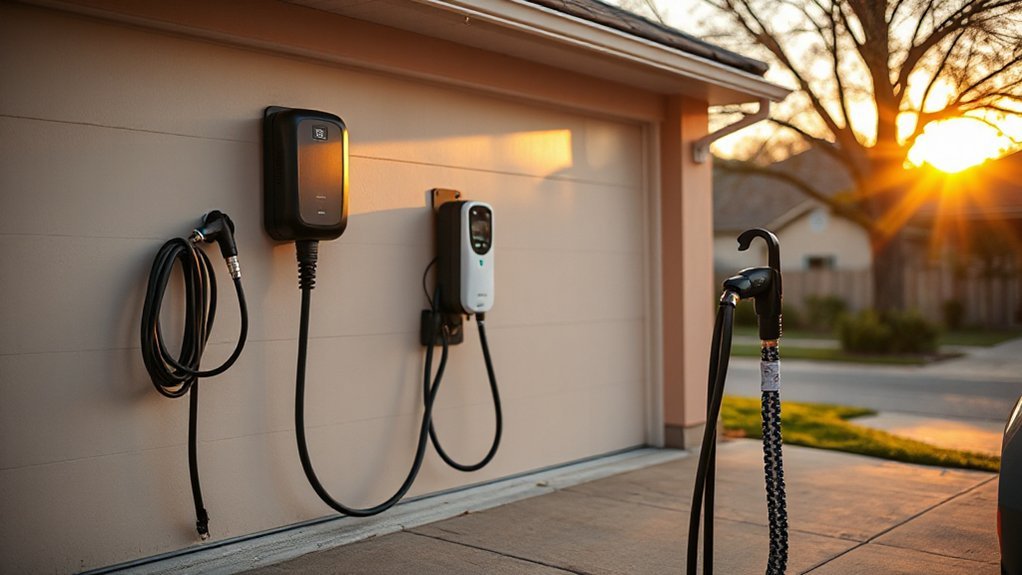
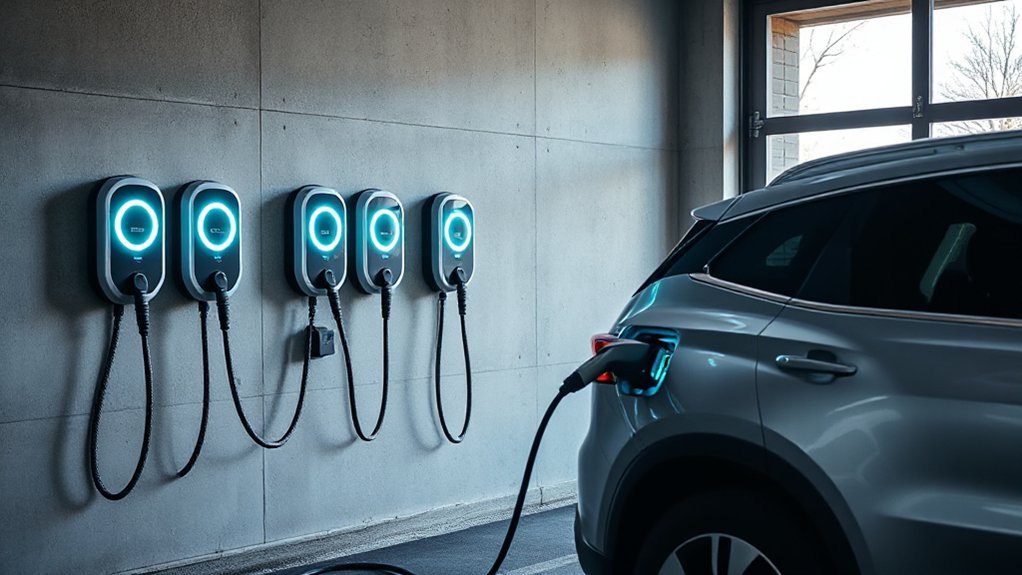
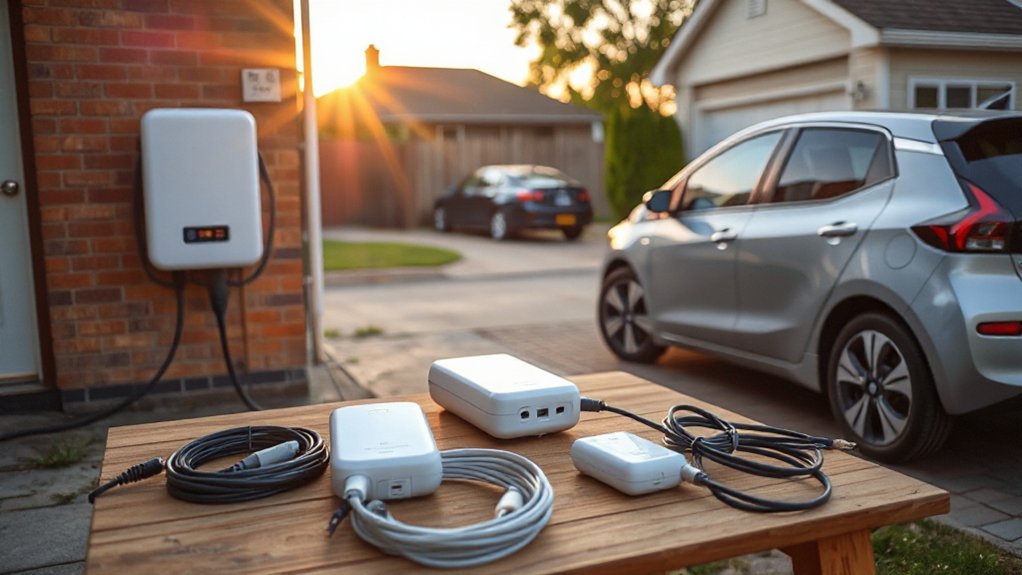
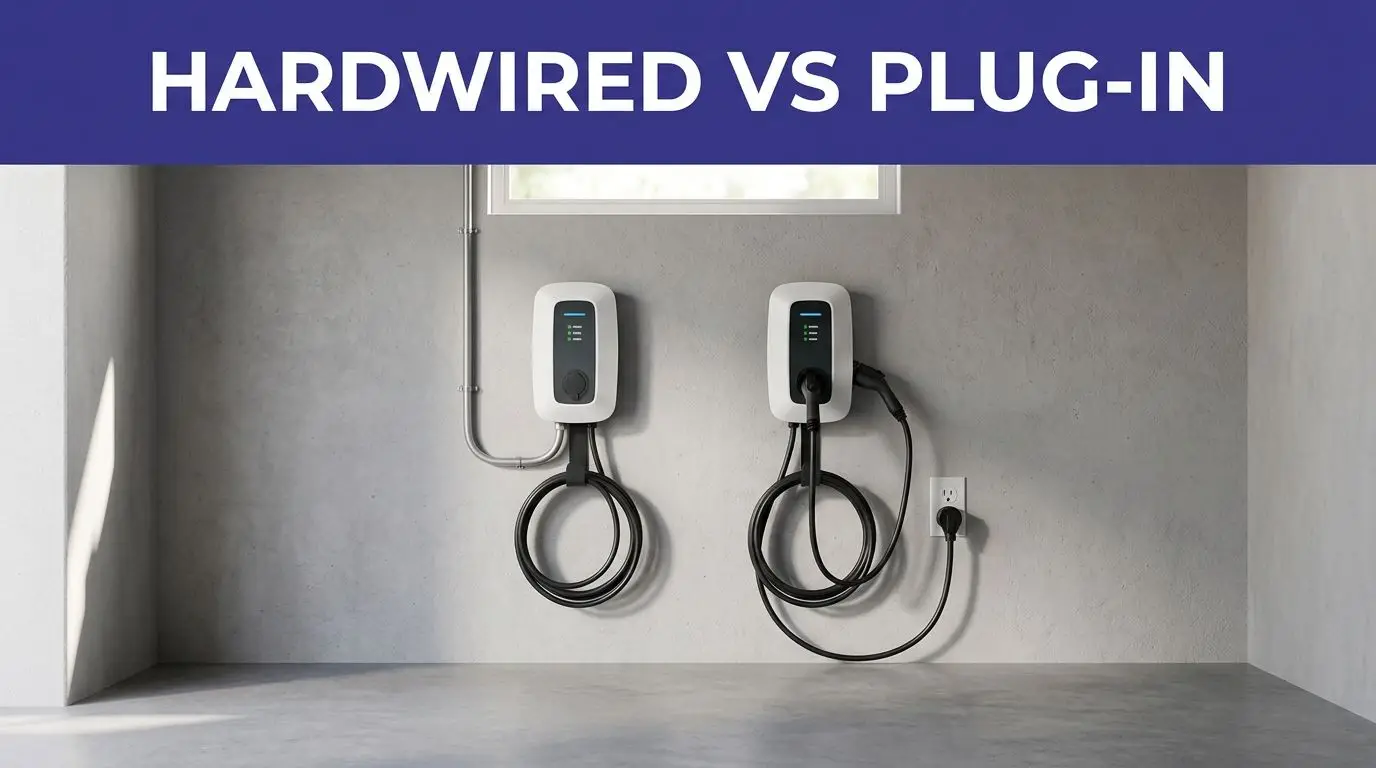
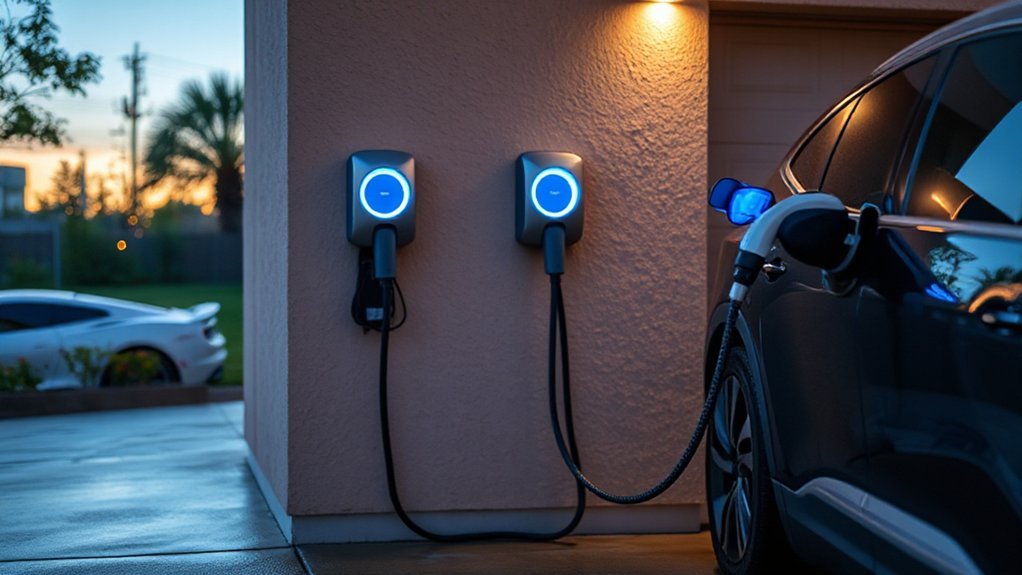
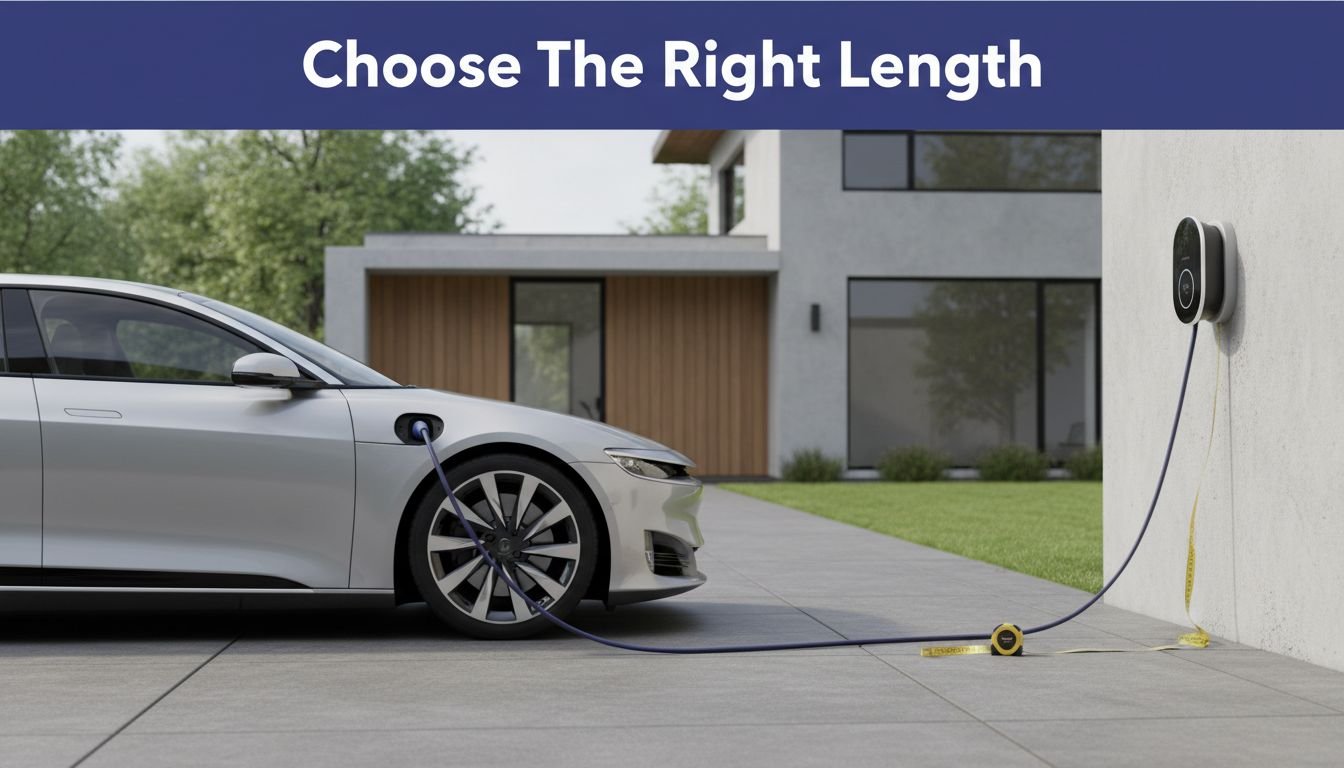
After confirming certifications and build quality, your next choice is cable format: tethered (fixed lead) or untethered (socketed). Tethered units keep a Type 2 lead on the enclosure, speeding plug-in and simplifying cable storage. Specify an IP54–IP65 charge gun holster and strain relief per IEC 61851 to protect terminations. Verify the cable rating: 32 A, 7.4 kW, -30°C sheath, UV-stable.
Untethered units use your lead. They reduce theft risk and clutter, and they’re flexible if you own multiple vehicles or swap connectors. Choose a lockable Type 2 shuttered socket (IEC 62196) and specify RCD protection and PEN fault detection per BS 7671/NEC 625. For either style, confirm drip loops, mounting height, and bend radius; stow cables off the ground to avoid insulation damage.
Smart Apps, Scheduling, and Load Management
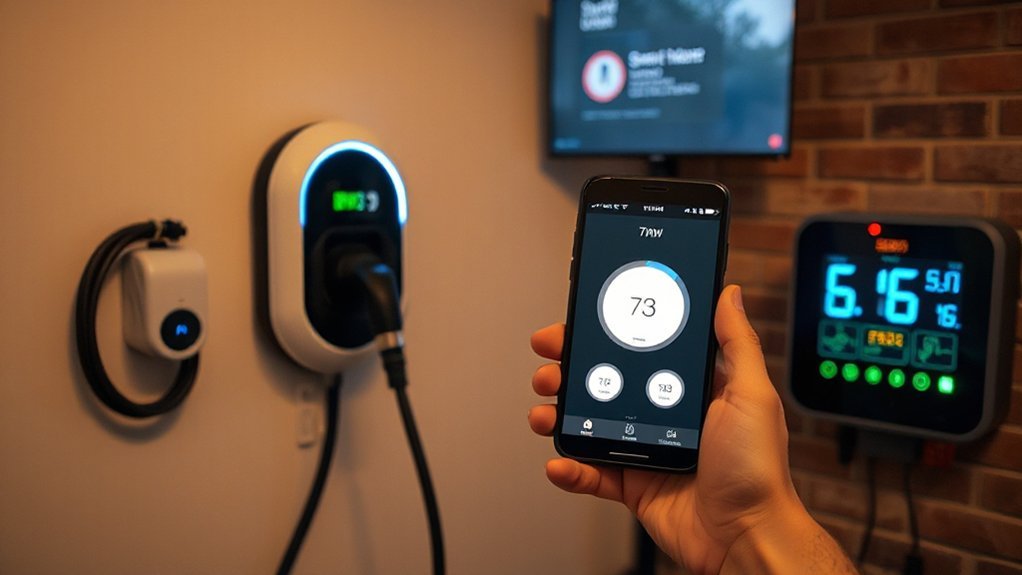
You’ll use the smart app to schedule off-peak charging, set current limits, and authenticate sessions, ideally via OCPP 1.6J/2.0.1 or ISO 15118 for secure control and metering. Dynamic load balancing employs CT sensors to monitor the service and modulates EVSE output so aggregate demand stays under the service rating, per NEC 220/625 or IEC 60364-7-722/61851. Always commission with a licensed electrician, verify ground-fault/RCD functionality, and keep firmware current to maintain code compliance and safety.
Smart App Control
Why leave charging to chance when a 7 kW EVSE can enforce safe, code-compliant schedules and load limits through its smart app? You set off-peak windows, verify continuous-load amperage per NEC 625 and 210.20(A), and lock out unknown vehicles. Voice integration helps hands-free checks, but you must harden Privacy settings and MFA to protect access. Set geofencing, export logs, and verify GFCI self-test intervals per manufacturer guidance specs.
- Schedule profiles: Separate weekday/weekend; honor utility TOU; failsafe stop at 80% to limit heat.
- Current limit: Set 32 A max on a 40 A breaker (125% rule); derate when ambient exceeds spec.
- Notifications: Ground-fault trip alerts (per 625.54), plug temperature warnings, missed-start reminders.
- Admin controls: RFID/user whitelists, audit logs, firmware signing, local-only mode if WAN drops.
Dynamic Load Balancing
Building on smart scheduling and current limits, dynamic load balancing uses the EVSE and home energy data to allocate amperage in real time so you stay within branch-circuit, feeder, and service ratings. It monitors service conductors via CTs and modulates the pilot signal (IEC 61851/SAE J1772) to cap charge current, honoring NEC 625.42 and the 125% continuous-load sizing in 210.19(A)(1) and 210.20(A). You can prioritize circuits, avoid nuisance trips, and keep L1/L2 leg loading even to minimize phase imbalance. In multi-charger homes, it time-slices or shares current across ports, coordinated by the app. Quality units implement harmonic mitigation through active PFC and PWM filtering, reducing THD that heats conductors. Verify OCPD ratings, GFCI/ground monitoring (NEC 625.22), and UL 2594/2231 listings before enabling these features.
Installation Costs, Extras, and Real-World Total Price
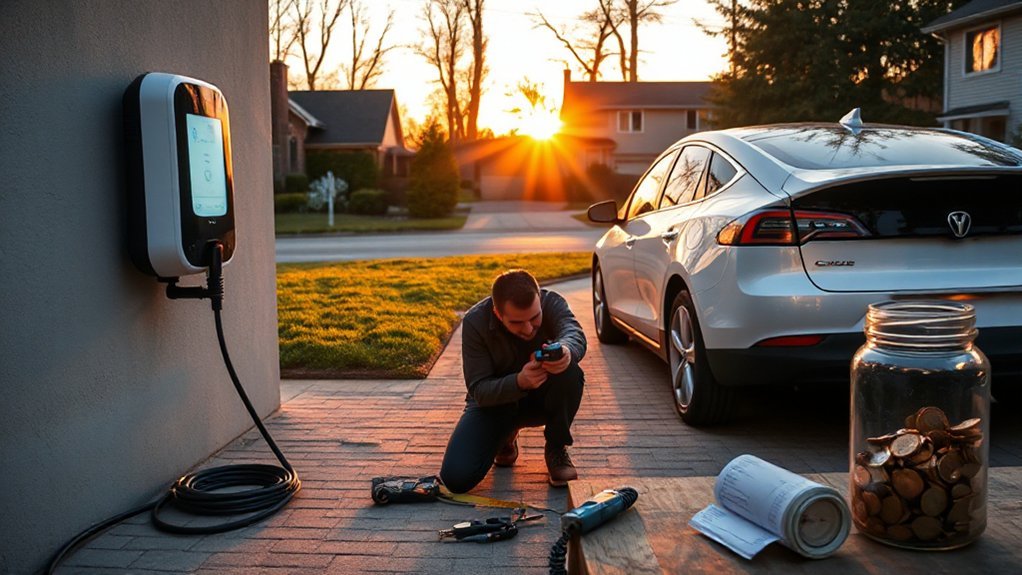
How much will a compliant 7 kW (≈32 A at 240 V) home EVSE actually cost to put in? For a typical 40 A dedicated branch circuit (NEC 625, 210.19(A)(1), 210.20(A)), expect $900–$2,200 installed. Permit costs and Labor variability drive most swings. You’ll need a 2‑pole 40 A breaker, 8 AWG Cu conductors in conduit, and labeling per 110.3(B) and 110.22. If outdoors, use NEMA 3R equipment, GEC/bonding per 250, and a local disconnect where required. Add a load calculation (NEC 220) to avoid panel overload.
- Panel work: space check, derate, or upgrade; $0–$1,800.
- Wiring run: surface EMT vs. trenching; $200–$1,200.
- Protection: GFCI where applicable (210.8), surge SPD (230.67); $150–$500.
- Extras: pedestal, cord management, permits, inspections; $100–$400.
Real‑world totals: $900–$3,800.
Compatibility, Warranty Support, and Incentives
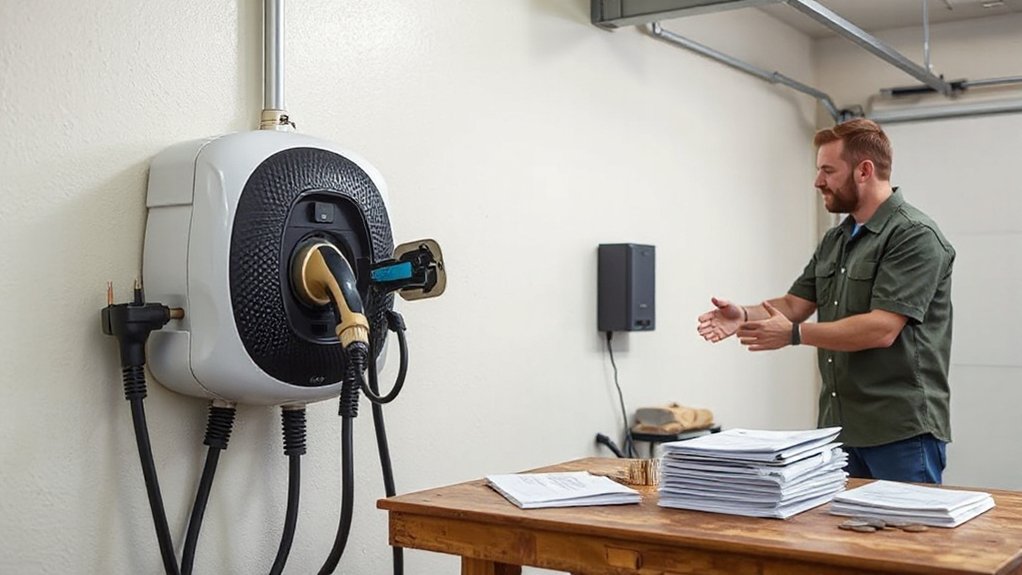
Where do compatibility pitfalls, warranty fine print, and incentives intersect with a 7 kW (Level 2) EVSE? Start with the plug: J1772 fits most cars; Tesla works via an adapter. Verify UL 2594 and UL 2231 listing, integral GFCI, and OCPP/Wi‑Fi support if you want load management. Size wiring and breaker per NEC 625 and 125% continuous load rules (32 A EVSE → 40 A breaker; NEC 210.19(A)(1), 210.20(A)). Check cord length limits (NEC 625.17).
Scrutinize warranties: parts-and-labor, on-site swap, and response times. Prefer brands with documented Service networks, spare parts, and remote diagnostics.
Stack incentives: the federal EVSE Tax credit (IRC §30C where eligible), state/utility rebates, and TOU rates. Keep itemized invoices and commissioning logs for proof. Maintain records for audits and claims.
Conclusion
You picture a quiet driveway, cable humming softly at 7 kW while you sleep. You choose a budget unit with IP54–IP65 housing, Type A + 6 mA DC protection, and surge suppression. You spec a dedicated 40 A circuit per NEC 625/210.20(A), and follow manufacturer torque and isolation clearances. You decide tethered or untethered, enable Wi‑Fi scheduling, and set load limits. You verify IEC 61851/EN 61008 compliance, register the 3–5‑year warranty, and charge confidently nightly.