A solar roof can power your EV, but the bill doesn’t disappear by magic. Home solar charging can reduce the energy cost of each mile, yet the equipment still needs panels, an inverter, a charger, safe wiring, permits, and sometimes a battery. The roof isn’t secretly running a tiny gas station. Sadly, no tiny attendant comes out at sunset.
The sensible budget is usually $10,000 to $40,000 before incentives for a full residential solar plus Level 2 setup. A charger installed on an existing electrical system costs much less, often $800 to $3,000. Let’s separate those numbers before a salesperson turns them into one enormous mystery invoice.
This post may contain affiliate links. If you make a purchase through these links, I may earn a small commission at no extra cost to you.
What Home Solar Charging Actually Means
In a normal grid-connected home, your solar panels don’t send electricity through a special solar-only cable straight into the car. The panels produce DC electricity, the inverter converts it to AC, and your home’s electrical panel distributes that power to the house and EVSE.
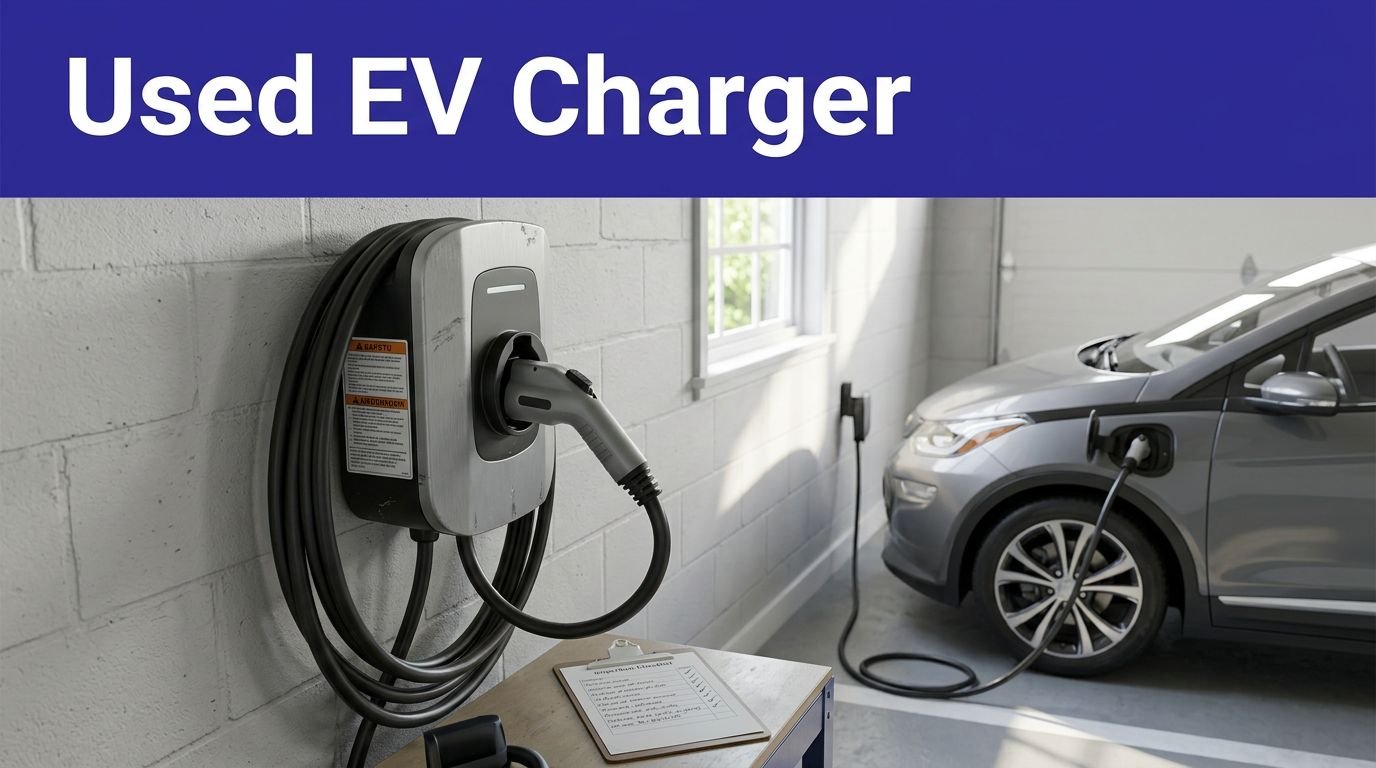
People call the wallbox a charger, and everybody knows what they mean. Technically, the charger is inside the vehicle. The wallbox is electric vehicle supply equipment, or EVSE. Its job is to safely deliver power, communicate with the car, and stop the flow when something goes wrong.
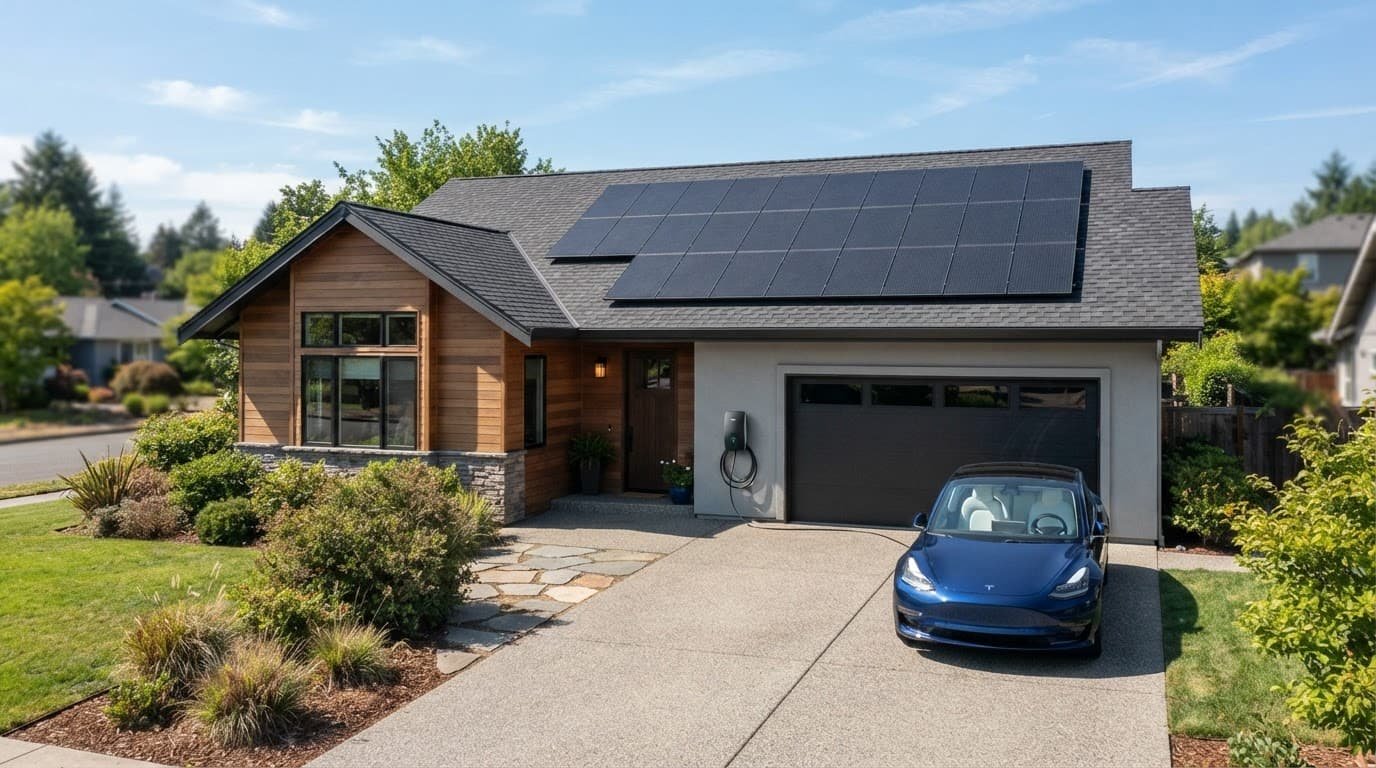
There are three common arrangements:
- Your solar array produces electricity during the day, while the EV charges whenever it’s plugged in. Excess solar reduces your grid consumption.
- A smart charger schedules charging when solar output is high or electricity rates are low.
- Solar, a charger, and a home battery work together when you want nighttime charging or backup power.
The first option is usually the most affordable. The third is the expensive one, because batteries are not decorative lunchboxes. They add thousands of dollars and require their own location, controls, and installation work.
The U.S. Department of Energy’s home charging cost example estimates that charging a 54-kWh battery at 10.7 cents per kilowatt-hour costs about $6. Your local electricity rate, vehicle efficiency, and solar production will decide whether your number looks better or worse.
Home Solar Charging Costs: What You Pay For
The charger is often not the largest cost. The solar array, inverter, electrical service, and distance between the panel and garage can change the quote fast.
These are practical U.S. planning ranges for 2025 and 2026. They aren’t a bid, and they don’t stack perfectly in every project.
| Setup item | Typical planning range before incentives |
|---|---|
| Level 2 charger and standard installation | $800-$3,000 |
| Full solar system with Level 2 charging, no battery | $10,000-$40,000 |
| Battery storage added to the system | $8,000-$20,000 |
| 200-amp panel upgrade | $1,500-$3,000 or more |
| Detached garage wiring and trenching | $2,500-$5,500 or more |
A current home charger cost guide from Sunrun’s installation breakdown places many 2026 installations between $800 and $2,500. That range includes roughly $400 to $800 for Level 2 equipment, standard electrical work, and permit costs. A long cable run or panel upgrade can push the total higher.
The complete solar portion depends on system size, roof condition, local labor rates, the inverter, permitting, and whether the home already has solar. A new array sized to cover household electricity plus EV charging can land in the $10,000 to $40,000 range before incentives.
The expensive part isn’t always the charger. It is often the distance between the charger and the electrical panel.
If your panels are already installed and produce enough annual energy, you may only need the EVSE and electrical work. That can turn a $20,000 solar project into a $1,000 to $3,000 charging project. Much better. Fewer invoices. Fewer people saying “service upgrade” with a straight face.
Incentives also vary by location. For example, NYSERDA’s charging station programs list New York incentives that can reach $5,000 or 50% of eligible costs, subject to the program rules. Don’t assume an old federal tax-credit figure still applies in August 2026. Section 30C rules changed for equipment placed in service after June 30, 2026, so verify eligibility for your installation date.
The Equipment in a Solar EV Charging Setup
A basic system has four main parts: solar modules, an inverter, a home EVSE, and the electrical protection equipment required by local code.
The solar modules produce energy. The inverter converts it for household use and may manage solar production, batteries, and grid interaction. Some systems use microinverters behind each panel. Others use one or more string inverters. Your installer should explain the choice in plain language, not point at a diagram and say, “It’s all about the architecture.”

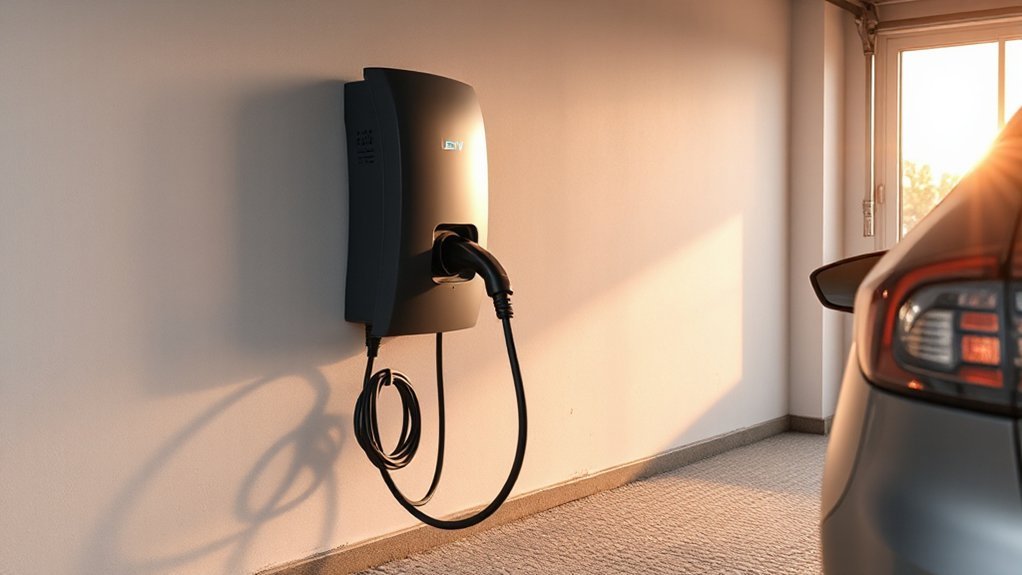
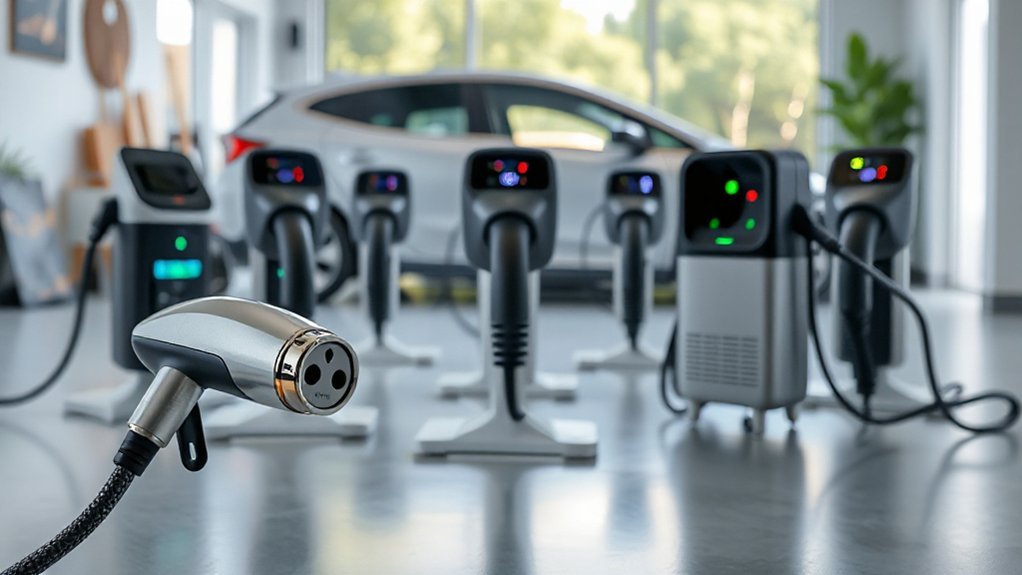
For most EV owners, Level 2 charging is the practical choice. It uses a 240-volt circuit and can deliver roughly 7.2 to 11.5 kilowatts, depending on the vehicle, charger, and circuit. That is far more useful overnight than Level 1 charging from a standard 120-volt outlet.
A plug-in Level 2 unit can be easier to replace and may cost less to install. A hardwired unit can look cleaner and is often preferred for permanent installations. Neither option magically increases the solar production. The charger controls delivery; the panels determine how much energy the roof makes.
Smart charging matters when solar output is the goal. A compatible EVSE can delay charging, reduce its power, or prioritize excess solar. Without that control, your car may start charging at 11 a.m., pull energy from the grid, and then sit there smugly while the sun produces electricity at noon.
A battery is optional. It helps shift solar energy into the evening and can provide backup power when the grid fails. It also adds cost, maintenance considerations, and another point for the installer to size correctly. If your only goal is cheaper EV miles, compare the battery’s price with your utility’s rates before adding one.
Electrical Requirements and Setup Realities
Before anyone drills into the wall, an electrician should check the home’s service capacity and perform a load calculation. A 200-amp panel is common, but the number alone doesn’t prove that the house can support a high-power EV circuit. Existing loads matter, including electric heating, water heating, an electric range, a pool, and other large equipment.
The charger may need a dedicated 240-volt circuit with a two-pole breaker, properly sized conductors, conduit, grounding, and required ground-fault protection. Local rules vary, so the final design belongs with a licensed electrician and the authority having jurisdiction.
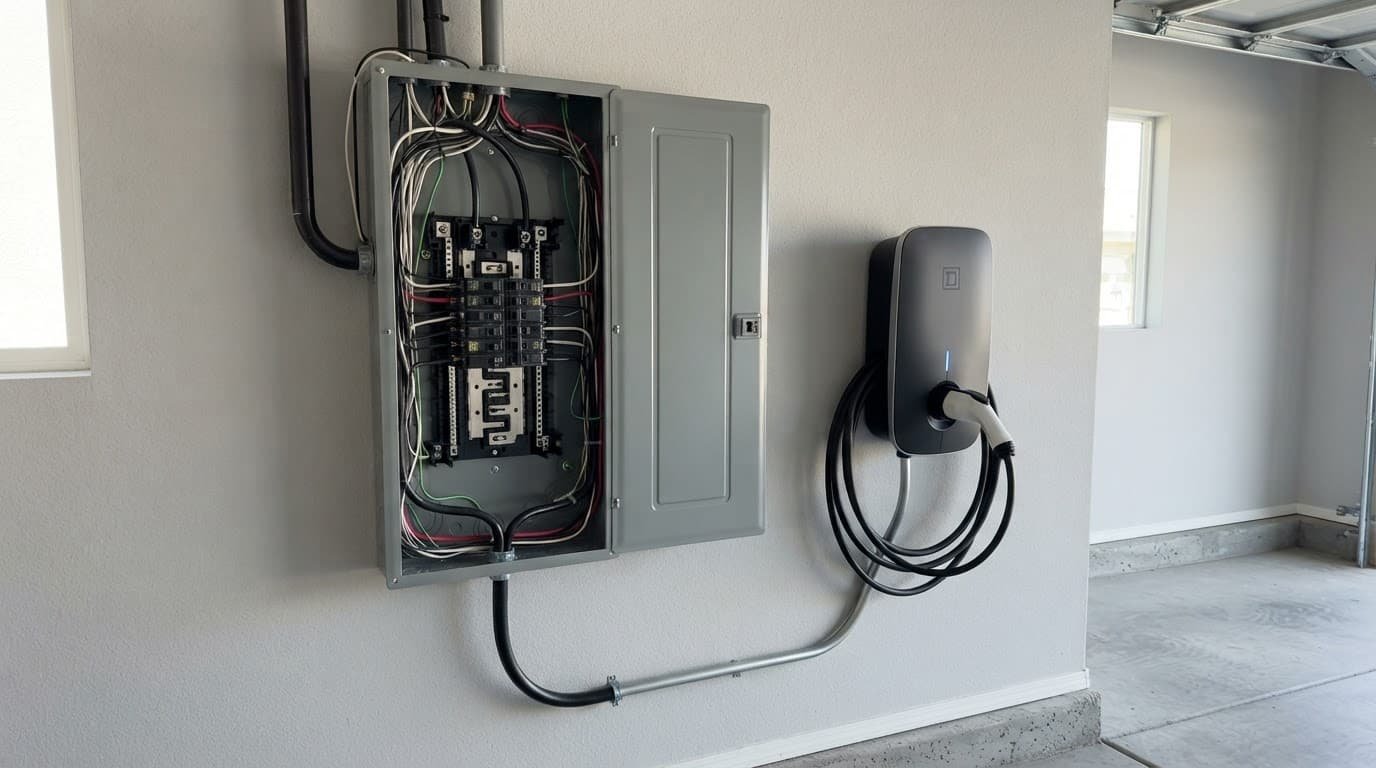
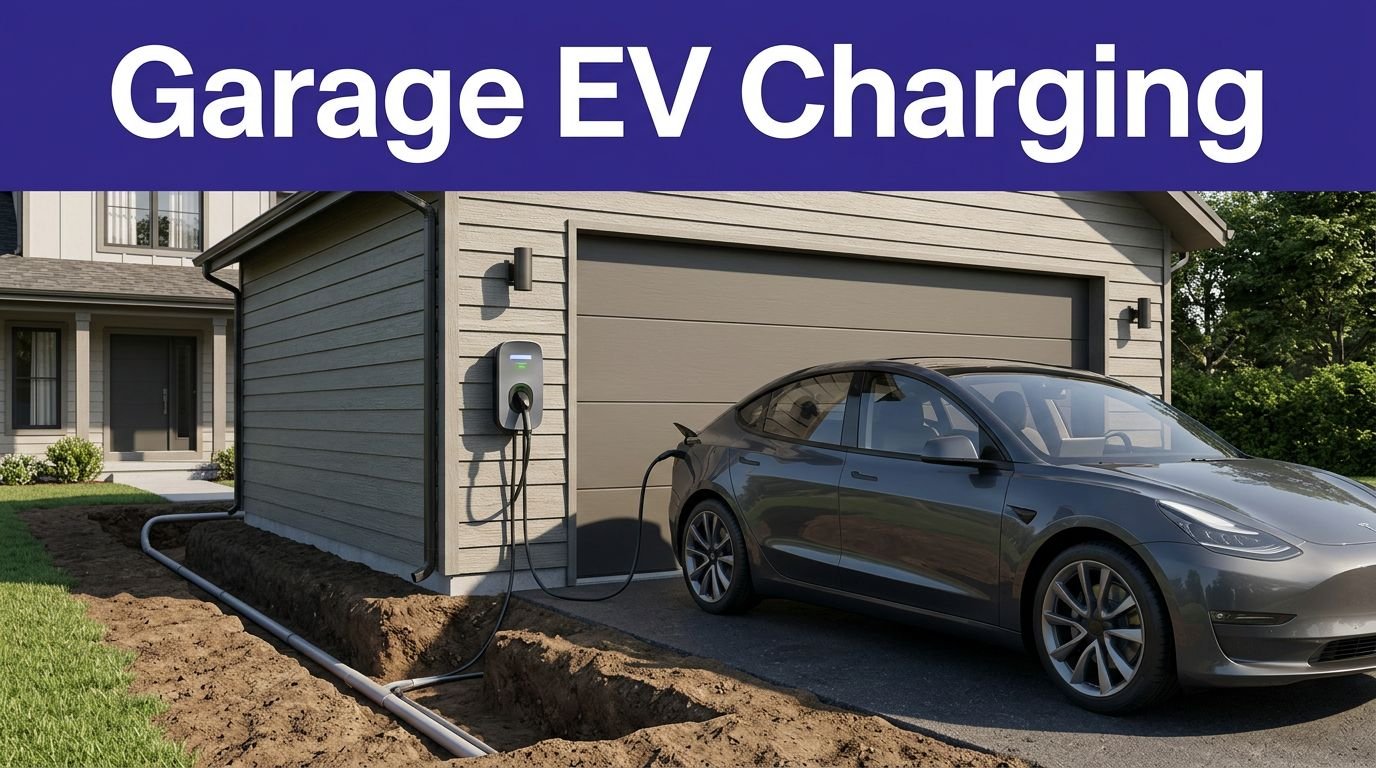
The physical route matters as much as the equipment. A charger beside the panel may need a short run of conduit. A detached garage may need trenching, weatherproof equipment, a subpanel, and a much longer cable path. That is how a neat $1,200 installation becomes a $5,000 conversation.
Solar adds another layer. The installer must coordinate the PV system, inverter, service panel, EVSE, utility interconnection, and inspection. If the solar contractor and electrician work independently, ask who owns the final system design. You don’t want two companies pointing at each other while your car sits unplugged.
The NYSERDA charging guidance is a useful reference for program requirements, installation guidance, and local considerations. Your city or utility may impose additional rules.
How Many Solar Panels Do You Need for an EV?
Start with the car, not the roof.
Take your expected annual miles and divide them by the vehicle’s real-world miles per kilowatt-hour. If you drive 12,000 miles per year and the EV averages 3 miles per kWh, the battery needs about 4,000 kWh annually. Charging losses add energy at the wall, so planning for roughly 4,400 kWh is more realistic.
Now compare that demand with local solar production. If a local system produces 1,300 kWh per year for every 1 kW of installed solar, covering 4,400 kWh would require about 3.4 kW of additional PV capacity. That might mean eight or nine modern panels, depending on the panel wattage.
The number changes with climate, roof direction, shade, snow, panel temperature, and system losses. EnergySage’s EV solar panel guide discusses the factors that affect the calculation.
A solar array also needs to cover the rest of the home. If your house already uses 8,000 kWh each year, the system must account for household demand plus the EV’s energy. Oversizing the array may be sensible, but it can also run into roof space, utility, or interconnection limits.
Then comes the schedule problem. Solar panels produce the most electricity during daylight. Many people plug in after work, when solar output is falling. A smart charger can move some charging into the daytime, but only if the vehicle is home. Otherwise, the grid fills the gap unless a battery is installed.
That is why “solar-powered EV charging” doesn’t always mean every electron came directly from the roof. It usually means the solar system produces enough annual energy to offset the electricity used for driving.
A Sensible Installation Process
A clean project usually follows this order:
- Review your utility bill, annual mileage, vehicle efficiency, and charging schedule.
- Ask a solar installer to model household demand, EV demand, roof production, and any battery option.
- Have a licensed electrician inspect the panel, calculate the load, and price the wiring route.
- Confirm permits, utility interconnection, charger compatibility, warranties, and who handles inspection.
- Compare the quote’s equipment sizes, labor, trenching, panel work, and incentive assumptions.
Request separate line items for the solar array, inverter, EVSE, installation, panel upgrade, trenching, permits, and battery. If everything appears as one giant number called “complete solution,” ask for the giant number to put on a diet.
Also check the charger’s maximum output against the EV’s onboard AC charging limit. A 12-kW wallbox cannot force a vehicle designed for 7.2 kW to accept more power. It can only sit there with confidence.
Conclusion
Home solar charging costs make sense when you separate energy production from charging hardware. A Level 2 installation may cost $800 to $3,000, while a new solar and charging system can reach $10,000 to $40,000 before incentives. Batteries, panel upgrades, and detached-garage wiring can move the number higher.
The strongest first step is a proper load calculation and an annual energy estimate based on your actual driving. Size the solar array for the house and the car, then choose the simplest charging setup that fits your schedule. The sun can cover a lot of miles, but the quote still needs to make sense on paper.