An electric vehicle can display 100% without reaching the pack’s absolute physical maximum, thanks to a hidden battery buffer. Confusing? Great, welcome to the charging menu. The right EV battery charging limit depends on battery chemistry, weather, and whether the car is parked or about to cross three states.
For most NMC or NCA EVs, 80% is a smart daily setting and 100% belongs before long trips. LFP packs are more comfortable at 100%, and some manufacturers ask for periodic full charges. The trick is identifying the right chemistry-specific setting, so range anxiety doesn’t make every percentage feel precious.
This post may contain affiliate links. If you make a purchase through these links, I may earn a small commission at no extra cost.
Key Takeaways
- For most NMC and NCA EVs, an 80% daily charging limit helps reduce time spent at high voltage; charge to 100% shortly before long trips.
- LFP batteries generally tolerate higher charge levels and may be used at 100% more often, but the owner’s manual should always guide the setting.
- EV charging slows after 80% because the vehicle tapers power to manage heat and voltage stress, making 70% to 80% a practical fast-charging stop.
- Avoid leaving a battery at 100% or 0% for long periods, especially in extreme heat, and use a middle state of charge for extended storage.
- A full charge can help recalibrate the battery management system’s range estimate, but it cannot restore lost battery capacity.
What an 80% Charge Actually Protects
The 80% rule isn’t a magic force field. Your battery won’t panic at 81%, call customer support, and begin writing its will.
The reason for the limit is state of charge, or SOC. A lithium-ion battery experiences more voltage stress near the top of its charge range. Heat makes that stress worse. Leaving a nickel-based battery at 100% for hours, especially in hot weather, can speed up battery degradation.
That doesn’t make a full charge dangerous. It makes a full charge something to use with a purpose.
For daily use, an 80% limit gives you enough range for commuting while reducing the time the pack spends at high voltage. A setting between 70% and 90% can also be reasonable, depending on your daily mileage. If you drive 25 miles a day, charging to 80% may be sensible. If you drive 150 miles, 90% might be the practical choice.
Charging every night isn’t automatically bad. If you use 30% of the battery and replace that 30%, you’ve completed only part of an equivalent full cycle. Small charging sessions aren’t the same as repeatedly draining the pack from 100% to zero.
The useful rule is not “never charge to 100%.” It’s “don’t keep a heat-soaked battery full when you don’t need the range.”
Research from Recurrent’s battery-life research points to heat, high voltage, and deep discharges as major sources of battery stress. You control some of those risks with charging habits, but temperature management and the car’s software do a lot of work too.
NMC Versus LFP: The Chemistry Changes the Answer
Two EVs can show the same 80% state of charge and respond very differently inside the battery pack.
NMC, or nickel manganese cobalt, and NCA, or nickel cobalt aluminum, are common lithium-ion batteries in long-range EVs. They offer strong energy density, which helps manufacturers deliver more miles without adding a giant, heavy pack. Their tradeoff is greater sensitivity to high SOC, heat, and long periods parked near full.
LFP, or lithium iron phosphate, batteries generally tolerate high SOC better. They often have lower energy density, but they offer strong cycle life, good thermal stability, and less reliance on nickel and cobalt. Some Tesla Model 3 and Model Y Standard Range variants use LFP packs. BYD Blade batteries are another well-known LFP example.
The owner’s manual remains the final authority because battery chemistry can vary by trim, model year, and market. The charging screen may also identify the recommended limit.
| Battery type | Daily charging target | When 100% makes sense | Main habit to avoid |
|---|---|---|---|
| NMC or NCA | Around 80%, sometimes 90% | Before a long trip | Sitting full in heat |
| LFP | 80% to 100%, according to the manual | Routine use or periodic calibration | Staying full for days without a reason |
| Unknown chemistry | Use the manufacturer’s recommendation | Road trips when needed | Guessing from another EV owner’s settings |
For an NMC or NCA vehicle, the simple version is 80% daily, 100% before trips. Charge to full shortly before departure, then use the range.
For an LFP vehicle, 100% can be acceptable for routine driving. Some manufacturers recommend a full charge weekly or every couple of weeks because the battery management system needs a clear top-of-charge reference for accurate range estimates and cell balancing.
That advice can sound contradictory. It isn’t. An LFP pack may tolerate 100% better than an NMC pack, while still benefiting from less time parked at 100% in hot conditions.
Why EV Charging Slows Down After 80%
The charging session starts like a motivated employee on Monday morning. Then 80% arrives, and suddenly everyone needs a meeting.
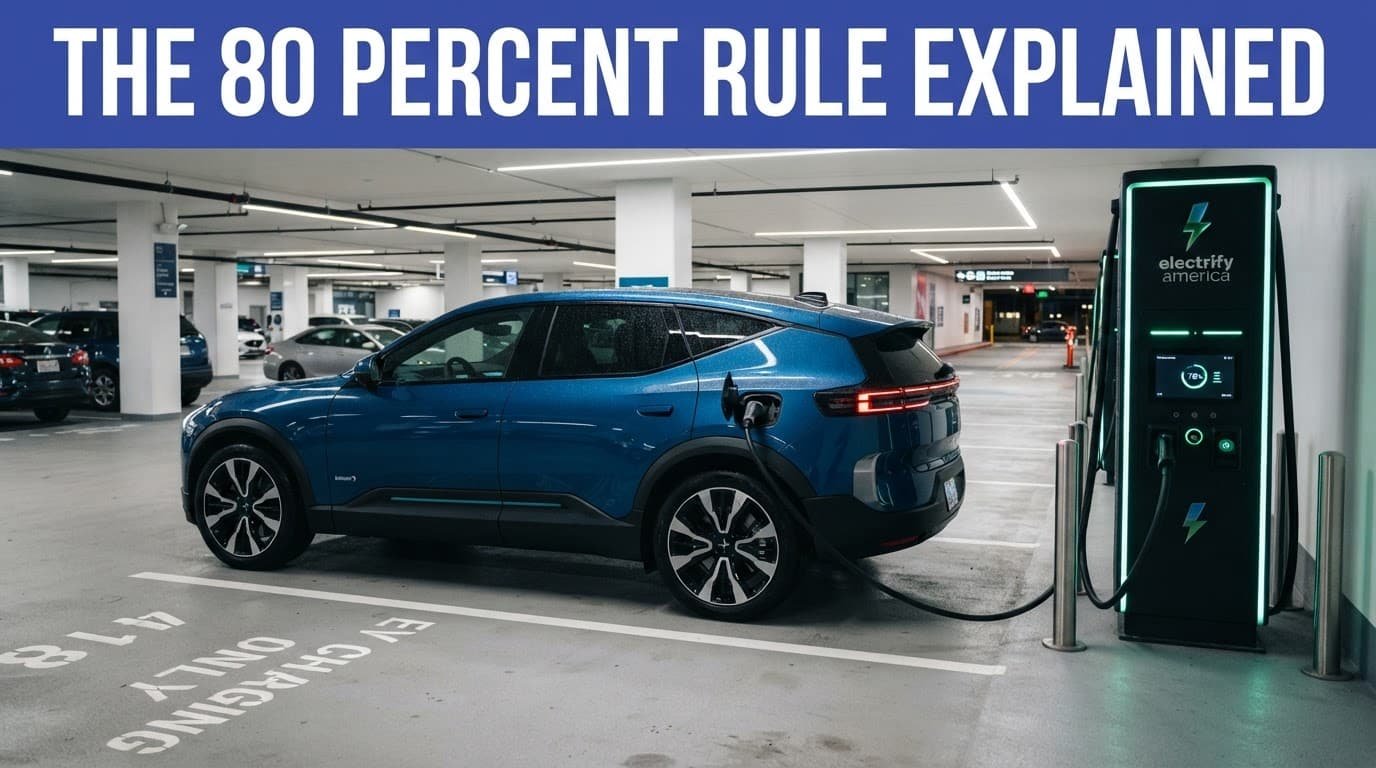
DC fast charging usually begins in a high-power, constant-current phase. As the cells approach their upper voltage range at a high state of charge, the vehicle reduces current. This is called tapering. It protects the cells from excess heat and voltage stress while allowing the battery to finish charging safely.
The result is a charging curve, not a straight line. Charging speed may be high during the first 20 minutes, then drop sharply for the final 20%. The exact point varies by vehicle, battery temperature, charger output, and current SOC.


Level 2 charging also slows near full, though the change is usually less dramatic because the power level is lower. On long trips, stopping at 70% or 80% and driving to the next charger is often faster than waiting for 100%.
This is why charging networks and carmakers often quote a fast charging time from 10% to 80%, not 10% to 100%. The final percentage is expensive in time, even when the electricity itself costs the same.
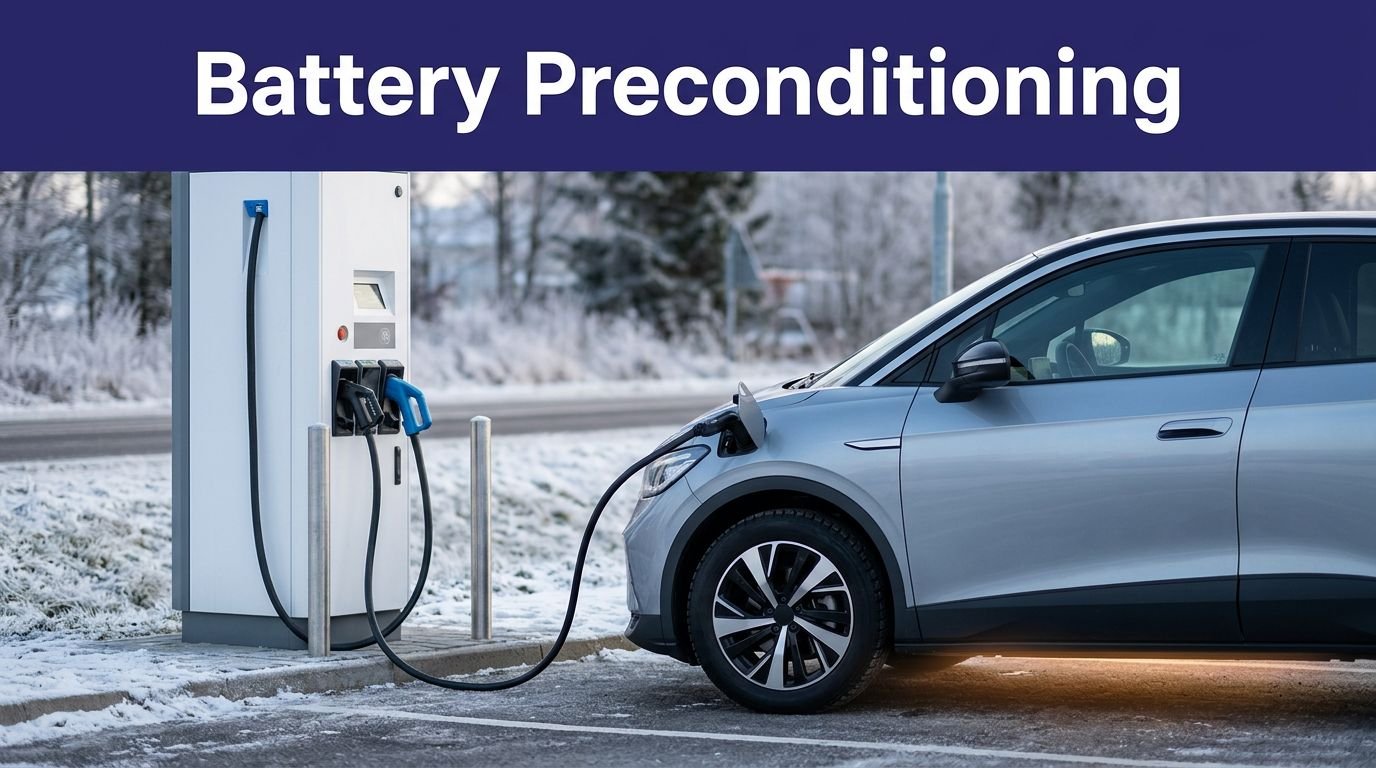
Cold weather adds another wrinkle. A cold battery accepts power slowly, so thermal management may warm the pack before charging. Use the vehicle’s battery preconditioning feature before a planned DC fast-charge stop. Don’t treat a cold-soaked battery like a phone you can bully into charging faster.
When Charging to 100% Is the Right Move
A full battery is useful when you need a full battery. Charging for a genuine trip can reduce range anxiety, yet charging advice sometimes turns this into a moral issue.
Charge to 100% before:
- Long trips where the extra range reduces charging stops.
- Towing, carrying heavy loads, or driving through severe winter weather.
- A day when public charging may be unreliable or widely spaced.
- Routine daily use in an LFP vehicle when the manufacturer permits or recommends it.
For an NMC or NCA EV, schedule the charge to finish close to departure. Charging overnight and leaving immediately is different from charging on Friday, parking at 100% all weekend, and then wondering why the range estimate looks grumpy.
During a trip, 80% is often the better stopping point at a fast charging station. Use the time saved to stretch, buy something overpriced, and question whether the charging station restroom has ever met a cleaning product.
Range can fall in cold weather because the battery operates less efficiently and the cabin heater uses energy. A full departure charge gives you more driving range, but it doesn’t make winter range loss disappear. Drive at a steady speed, precondition while plugged in, and leave room for a slower charging stop.
How to Recalibrate the Battery Management System
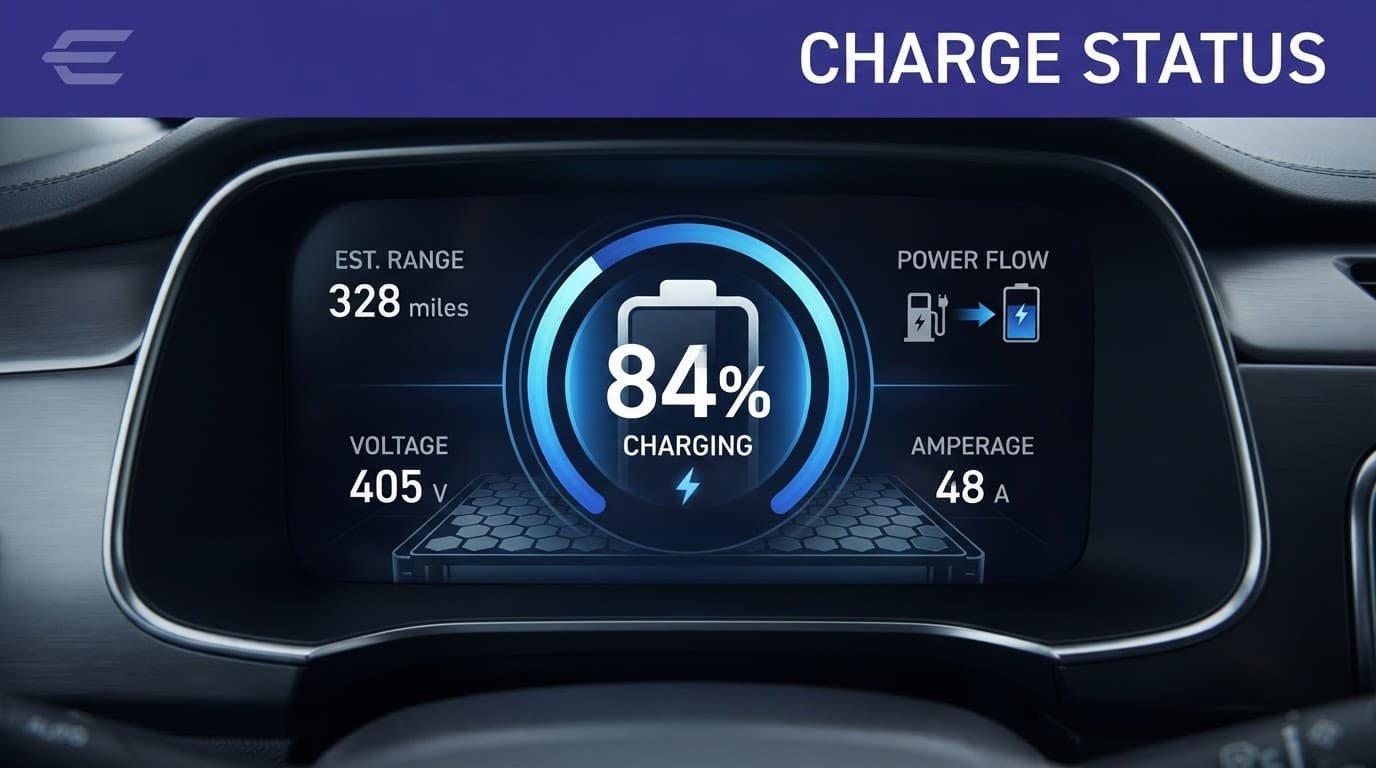
A battery management system, or BMS, estimates state of charge, usable capacity, available energy, power limits, and range. It reads multiple cell groups, temperature sensors, current flow, and voltage to manage cell balancing. The percentage on your dashboard is an estimate built from all that data.
If the range estimate becomes erratic, a full charge can help the BMS establish a clearer top-of-charge reference. A hidden battery buffer keeps some energy outside the displayed range, so the dashboard isn’t a direct readout of the pack’s limits. It doesn’t restore lost battery capacity. Calibration improves the measurement, not the chemistry.
Use this cautious process:
- Check the owner’s manual for battery-specific instructions, especially if the vehicle uses LFP.
- Use normal AC charging when possible, rather than DC fast charging, for the calibration session.
- Drive normally until the battery is low, but don’t force the car to zero.
- Charge uninterrupted to 100% and let the car finish its charging process.
- Drive soon afterward instead of leaving the vehicle parked at full for several days.
LFP owners may need to repeat a full charge weekly or every one to two weeks, depending on the manufacturer, to support cell balancing. NMC and NCA owners shouldn’t add unnecessary full charges only because an internet stranger demanded one.
If the displayed range remains inaccurate, the problem may be software, temperature, tire pressure, driving conditions, or an actual battery fault. A service center can read battery data that the dashboard doesn’t show.
Storage, Fast Charging, and the Habits That Matter
For storage lasting several weeks or months, avoid both extremes. A middle SOC, often around 40% to 60%, is a sensible starting point unless the owner’s manual gives different instructions. Park in a cool, dry place, reduce high-drain features, and check whether the vehicle requires a plugged-in storage procedure.
Don’t leave the battery at 100% for months. Don’t leave it at 0% either. The car still needs energy for thermal management, communications, and its low-voltage systems. A depleted high-voltage battery can create a much bigger problem than a missed charging session.
Frequent DC fast charging doesn’t automatically destroy an EV battery. It does create more heat and can increase aging when used heavily, especially in hot conditions. In an analysis of more than 22,700 electric vehicle battery records, Geotab’s battery health analysis found average battery degradation of about 2.3% per year. Its data also identified high-power DC charging as a leading risk factor.
That isn’t a countdown clock. Battery design, cooling systems, climate, charging power, software, and driving patterns all matter. These charging habits can support long-term battery life. Use home Level 1 or Level 2 charging for most charging sessions when practical. Use DC charging only when the trip requires it.
Frequently Asked Questions
Should I charge my EV to 80% or 100%?
For most NMC and NCA EVs, 80% is a sensible daily limit, while 100% is useful before a long trip. LFP vehicles can often be charged to 100% more regularly, depending on the manufacturer’s instructions.
Is charging an EV to 100% bad for the battery?
Charging to 100% is not inherently dangerous, especially when you need the range. The main concern is leaving a nickel-based battery at full charge for long periods, particularly in hot weather.
Why does EV charging slow down after 80%?
As the battery approaches its upper voltage range, the vehicle reduces charging power through a process called tapering. This limits heat and voltage stress, but it also makes the final 20% take disproportionately longer.
How much charge should an EV have during long-term storage?
A middle state of charge, often around 40% to 60%, is a reasonable starting point for storage lasting several weeks or months. Avoid leaving the vehicle at either 100% or 0%, and follow any storage instructions in the owner’s manual.
Conclusion
The best EV battery charging limit isn’t one number for every car. For NMC and NCA, about 80% suits daily driving, while 100% before a trip can help limit battery degradation. LFP owners can often use 100% more freely, but should still follow the vehicle’s manual and avoid unnecessary time parked full in the heat.
The battery isn’t fragile glass, and it isn’t immortal machinery either. These charging habits help protect battery health: give it the range you need, control extreme heat and long high-SOC parking, and let battery chemistry guide the percentage.
This post may contain affiliate links. If you make a purchase through these links, I may earn a small commission at no extra cost to you.