The plug on your electric vehicle can decide where you charge, how many adapters you carry, and whether your long-distance road trips end at a high-speed charger or a roadside diner. That little connector has become a surprisingly heated personality contest.
In the ongoing debate regarding NACS vs CCS charging, NACS is now the clear North American favorite for new vehicles and new fast-charging sites. CCS still works, still has a large installed base, and will not vanish simply because a different plug became the industry standard. Here is what these differences mean when you are buying, driving, or building around an EV in 2026.
Key Takeaways
- NACS, formally SAE J3400, is the dominant new connector in North America.
- The NACS connector uses one compact inlet for both AC charging and DC fast charging, whereas the CCS connector is larger and requires two extra pins for high-speed power delivery.
- The connector alone does not decide charging speed. The vehicle battery, charger, temperature, and software matter more.
- CCS owners can often use NACS stations with an approved adapter, but access depends on the vehicle, network, and station.
- CCS remains common in existing infrastructure and persists as the main standard in Europe and many Asia-Pacific markets, even as the North American market shifts away from it.
NACS and CCS Are Different Plugs, Not Different Types of Charging
Let’s clear up the first point before the terminology starts breeding in the garage.
NACS and CCS are connector standards. They do not describe separate charging levels. Both can support AC charging at home or work, plus DC fast charging on the road. The charger still draws power from the grid, the battery still stores it, and your vehicle still decides how much power it can accept.
NACS began as Tesla’s charging connector. Tesla opened the design in 2022, and SAE International later published it as the J3400 standard in June 2024. The name NACS remains common because people enjoy using three letters instead of saying that Tesla-shaped plug.
The North American Charging Standard background covers the connector’s development and technical layout.
CCS stands for the Combined Charging System. In North America, the common version is CCS1, which combines the J1772 connector with two large DC pins below it. The upper section handles AC charging. The lower pins join in during DC fast charging.
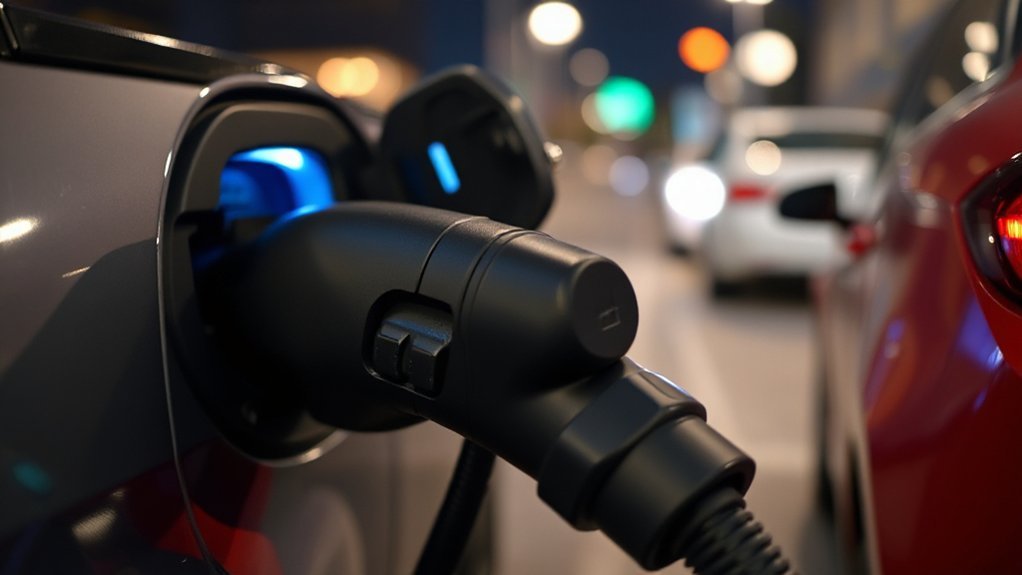
The NACS connector takes a different physical approach. The same two main pins handle AC and DC power, with communication handled through smaller contacts. That gives the inlet a smaller footprint and makes the plug easier to recognize at a glance.
A CCS connector inlet looks like a J1772 connector that got a second story added underneath. The NACS connector looks more compact, almost like the designers had to pay rent for every inch.
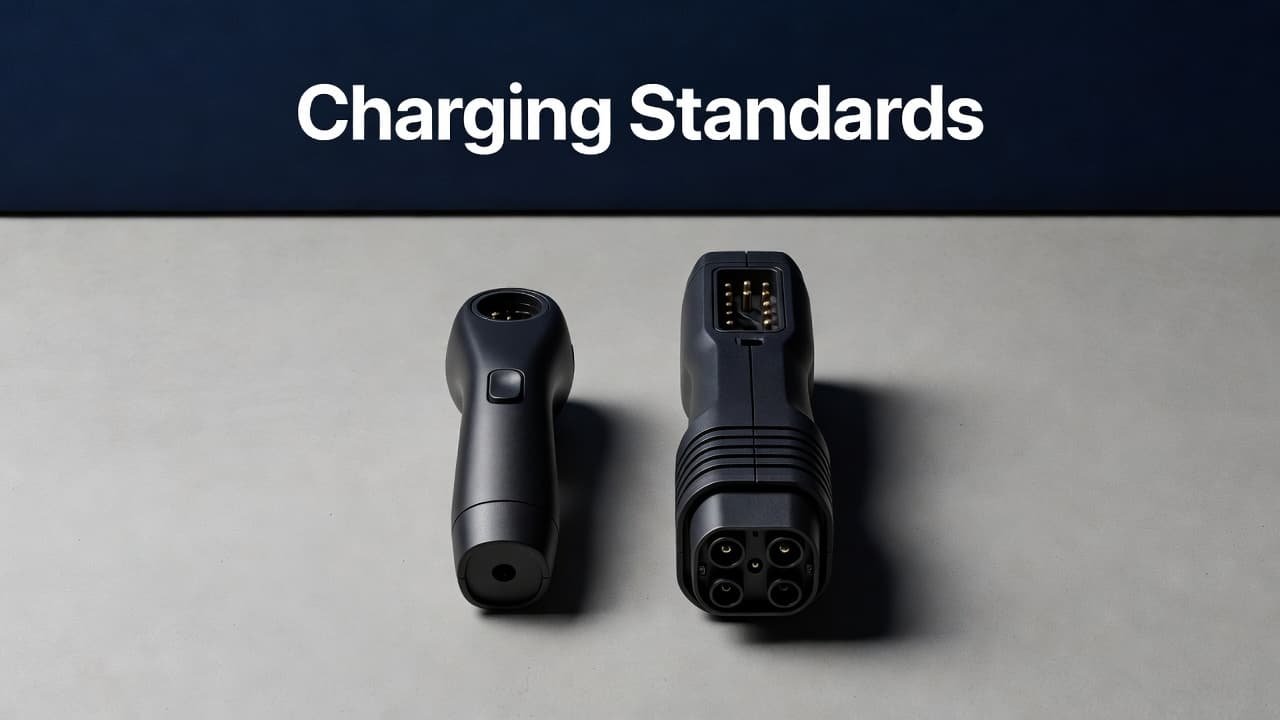
The important point is simple: NACS and CCS can perform the same basic charging jobs. Their shape, size, vehicle support, network access, and adapter requirements are different.
NACS vs CCS: Physical and Technical Differences
The physical design affects everyday use more than most buyers expect. A plug that looks small in a specification sheet feels even smaller when you are holding it in freezing rain beside a charging stall.
| Feature | NACS, SAE J3400 | CCS1 |
|---|---|---|
| AC charging | Supported through the main connector | Supported through the J1772 upper section |
| DC fast charging | Uses the same compact inlet | Uses two additional lower DC pins |
| Connector size | Smaller and lighter | Larger and often heavier |
| North American adoption | Dominant for new EVs in 2026 | Common in existing EVs and stations |
| Adapter needs | May need an adapter at CCS stations | Usually needs an adapter at NACS stations |
| Charging speed | Depends on vehicle and charger | Depends on vehicle and charger |
NACS has a practical advantage when cable handling matters. Its connector is smaller, and the charging handle is often easier to lift into position. That does not sound like a major engineering breakthrough until you have dragged a thick DC fast charging cable across wet pavement while trying not to step in a puddle.
CCS1 has more hardware at the vehicle inlet. The two lower DC pins allow high power charging without changing the familiar J1772 AC charging connection above. The design works, but the entire assembly takes up more space.
Neither connector automatically gives you a faster charge. A Hyundai Ioniq 5 with CCS can charge faster at a suitable station than a NACS vehicle with a smaller battery or lower charging limit. A plug is not a magic straw. It cannot pull power through a vehicle that is not built to accept it.
Both standards support robust communication between the vehicle and charger. Both are capable of modern features such as Plug and Charge and bidirectional charging, provided the vehicle, charger, software, and network all support those protocols. A connector standard creates the path, but it does not promise that every car will utilize every possible function.
The biggest technical difference for owners is compatibility. Your car inlet determines which cable connects directly, and the charging network determines whether that cable is available. When those two choices disagree, you will often find that using reliable adapters is the most effective way to bridge the gap.
Why NACS Became the North American Default
NACS did not win because CCS stopped working. It gained dominance because Tesla had a large installed network, a compact connector, and a growing list of automakers willing to switch.
By July 2026, NACS-native plugs account for about 48% of public DC fast-charging ports in the United States, with more than 40,000 ports. The Tesla Supercharger network alone features more than 34,000 ports. Those numbers give NACS a head start that a new connector would struggle to match.
Automakers also changed the buyer conversation. Tesla vehicles use NACS across their entire lineup. Rivian, Ford, Hyundai, Kia, BMW, Toyota, Nissan, Lucid, Subaru, and several General Motors and Mercedes-Benz models have moved toward native NACS vehicles in North America. More than 85% of new EV models introduced in the first quarter of 2026 reportedly used native NACS.
The 2026 NACS and CCS buyer comparison from U.S. News provides additional context on how the transition affects shoppers.
A primary benefit is the use of native NACS ports, which allow the cable to fit without an adapter. This simplifies the user experience; you open the charge door, pick up the handle, plug in, and let the vehicle authenticate. Fewer parts mean fewer chances to leave an adapter behind in your center console.

Federal charging infrastructure funding also pushed networks toward greater flexibility. New charging sites increasingly include both NACS and CCS cables, especially where operators want to serve mixed vehicle fleets. In early 2026, more than 60% of new charger deployments reportedly included dual-standard or NACS-native equipment.
There are still holdouts. Volkswagen Group, including Volkswagen, Audi, and Porsche, had not announced a North American NACS commitment in the supplied 2026 market data. Stellantis has also remained less consistent than the major adopters. That does not make a CCS vehicle a bad purchase. It means buyers need to check the exact model and model year instead of trusting a brand-wide headline.
What Charging Looks Like for NACS and CCS Drivers
The daily charging experience depends on where you plug in.
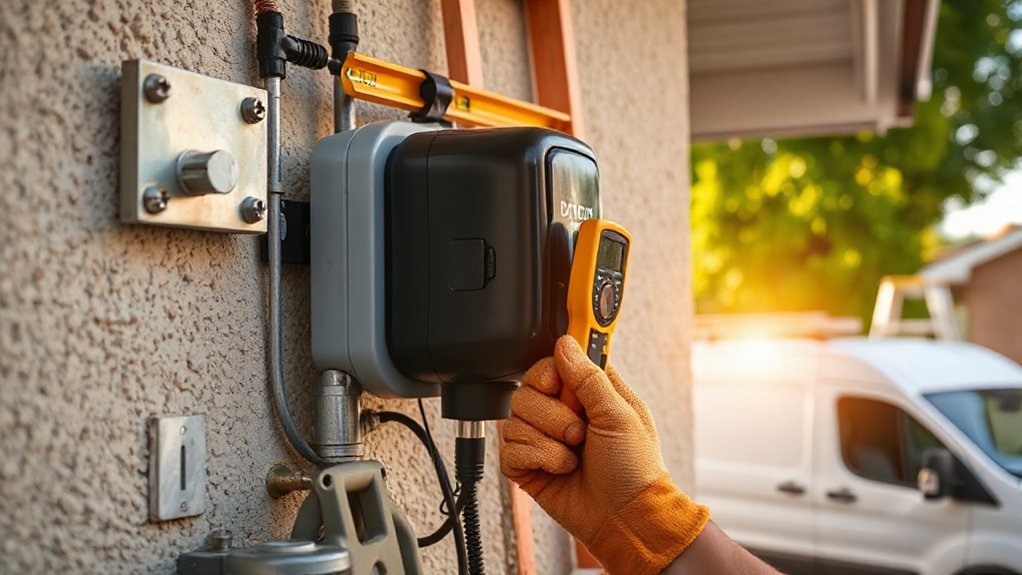
At home, the difference is usually manageable. A homeowner with a CCS vehicle can install J1772 Level 2 EV chargers, while a homeowner with a NACS vehicle can install an SAE J3400 charger. Regardless of the connector, home charging remains straightforward because the electrical work is similar when the hardware shares the same power rating and circuit requirements. The connector changes at the end of the cable, but the service panel, wiring, breaker, and local permit requirements remain the same. A 48-amp charger does not change its performance simply because its handle looks different.
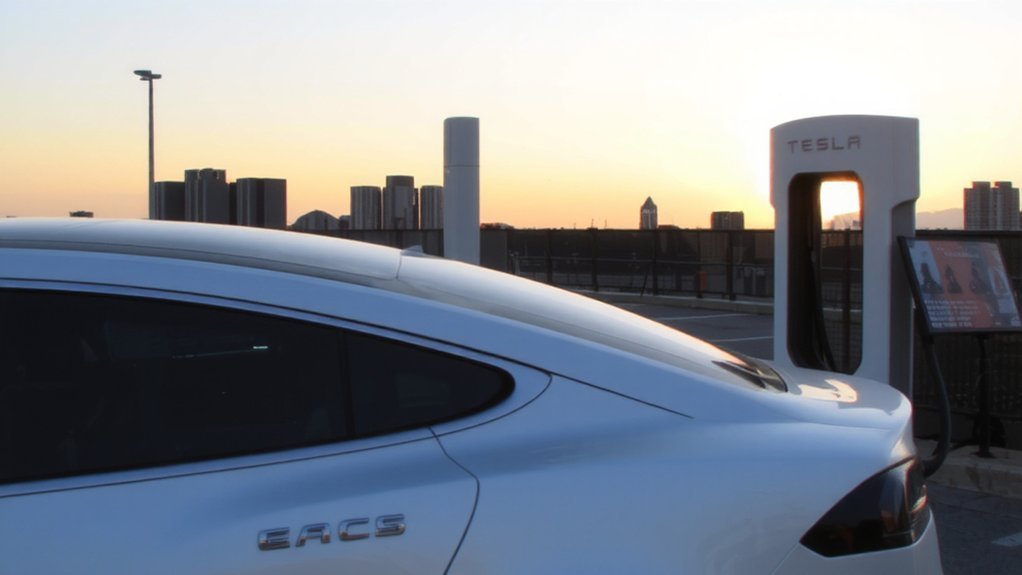
For public DC fast charging, the situation becomes more complex. A NACS vehicle can use a native NACS station directly. At a CCS station, the driver needs a compatible NACS to CCS adapter to bridge the hardware gap. Conversely, a CCS vehicle can access portions of the Tesla Supercharger network using an approved adapter, provided the automaker and Tesla have enabled access. In some cases, Tesla uses a Magic Dock at specific sites, which allows non-Tesla EVs to charge without needing their own adapter.
It is important to remember that having an adapter does not guarantee access to every station.
The vehicle may require a specific software update, or the network may demand a unique app or account. Furthermore, the adapter itself must be approved by the vehicle manufacturer. Some stations may remain unavailable due to legacy hardware, location, or payment restrictions. Always check the vehicle manufacturer’s charging page before planning a long trip.

Features like Plug and Charge simplify the process by allowing the vehicle and station to communicate directly through a supported account. With Plug and Charge, you can avoid the common public charging frustrations of downloading multiple apps, remembering forgotten passwords, or entering personal information on site.
Native NACS vehicles generally enjoy the cleanest experience at NACS stations because the port, cable, and vehicle software are designed to work together. While CCS vehicles can achieve a seamless experience with the right adapter and network support, the overall process is less universal.
Owner discussions about mixed connector access show why hardware compatibility remains a common concern for drivers, rather than just an abstract standards argument. Real-world EV owner conversations can be useful for spotting practical issues, but treat forum advice as a starting point. Always confirm important details with your automaker and the specific charging network.
Finally, remember that adapters add extra weight and a new contact point to your charging routine. They must be rated for the specific charging type and power levels involved. Do not use an unknown adapter bought from an unverified marketplace simply because the product photo looked convincing. Electricity has a strict returns policy, and using inferior hardware poses significant safety risks.
Does NACS Charge Faster Than CCS?
Not by itself.
Charging speed is determined by the complete system rather than the shape of the plug. Several technical variables dictate your total power delivery:
- The vehicle’s maximum DC input
- Battery size and chemistry
- Battery temperature
- State of charge
- The output capacity of the fast charging station
- Cable and connector thermal limits
- The vehicle’s specific charging curve
- Power sharing between charging stalls
A vehicle may reach its peak rate for only a few minutes during a session. Once the battery passes a certain state of charge, the vehicle’s management system reduces power to protect the pack and control heat. This is why a charger advertised at 350 kilowatts does not guarantee your car receives that amount for the entire duration of the charge.
NACS and CCS both support high-power DC fast charging, and the connector design does not override the underlying hardware. For instance, vehicles utilizing an 800-volt architecture often achieve faster speeds because they can move more energy efficiently, regardless of whether they use a NACS or CCS port. If your vehicle only accepts 150 kilowatts, the station will not negotiate 250 kilowatts simply because the handle has a different shape.
Charging curves matter more than peak numbers. A vehicle that maintains 180 kilowatts for 20 minutes may complete a road trip stop sooner than one that briefly hits 250 kilowatts before dropping off sharply.
The same rule applies to home charging. A NACS Level 2 charger is not inherently faster than a J1772 charger used for CCS vehicles when both deliver the same current to cars with similar onboard chargers. Ultimately, connector convenience and actual charging speed are separate considerations.
Which Connector Should You Choose in 2026?
If you are buying a new EV in North America, a vehicle with native NACS ports provides the most convenient access to the rapidly growing NACS charging network. This setup reduces the number of adapters you need to carry on long trips and streamlines the overall charging experience.
That does not mean CCS vehicles are automatically poor choices. A used CCS EV can offer strong range, fast charging, and a lower purchase price. Many CCS vehicles remain fully supported at established public networks. Several networks are still adding or upgrading CCS equipment, and dual-standard stations can serve both groups.
Your decision should follow your actual charging routine.
If you mostly charge at home
When focusing on home charging, the connector type matters less than the electrical installation and your vehicle’s onboard AC charger. Choose the car that fits your range, price, comfort, and ownership plans. A home charger can handle most daily miles without involving a public network at all.
Before installation, check the required circuit size, cable length, charger location, Wi-Fi requirements, and local electrical rules. Ask the installer to evaluate the existing panel. The phrase “we will probably be fine” is not an electrical plan.
If you road-trip often
Native NACS is the simpler choice for road trips in North America because it connects directly to the largest NACS network. CCS remains workable, but you will need to plan around station availability and carry the correct adapters when using NACS sites. If you choose a CCS vehicle, you must rely on those adapters to unlock access to the wider network.
Check more than the number of stations. Look at charger reliability, stall count, payment options, restroom access, weather protection, and whether the station sits on your route or behind a retail center that closes at 9 p.m. A charger in the database is not always a charger you want to visit at midnight.
If you operate a fleet or charging site
Dual-standard equipment is the safest choice for mixed fleets in 2026. A site with only one connector can exclude a large share of vehicles, especially in commercial settings where drivers do not get to choose which car arrives.
Operators should examine cable reach, stall layout, power sharing, payment systems, maintenance support, uptime reporting, and future replacement costs. Connector choice is one line in a much longer infrastructure budget.
Fleet managers should also track adapter policies by vehicle model. A company’s charging plan can fail because one model needs an adapter, another has delayed software support, and a third can use only selected stations. The plug is small. The spreadsheet is not.
What Happens to CCS After the NACS Shift?
CCS is not disappearing from the North American market in 2026. It is becoming the older standard, which is different from becoming useless.
Millions of CCS-equipped non-Tesla EVs remain on the road, and these vehicles will stay relevant for years to come. Existing charging networks like Electrify America, EVgo, and ChargePoint continue to support these drivers. While the industry transitions, new charging sites often include both standards, and adapters facilitate greater interoperability to ensure more vehicles can share the same infrastructure.
CCS also remains important outside North America. CCS2 is widely used in Europe and many Asia-Pacific markets. A buyer who imports an EV, travels internationally, or works across global regions should not assume that NACS has become a global plug.
The likely result is a long coexistence period. CCS equipment will continue operating while NACS becomes the default connector on new vehicles. Adapters will serve as a necessary bridge, ensuring that drivers of older models can still utilize the evolving charging landscape.
For buyers, the practical lesson is less dramatic than the online arguments. A CCS vehicle will not be stranded, and a NACS vehicle is not guaranteed perfect access. Ultimately, the charging experience for all drivers still depends on the reliability of networks, vehicle software, station uptime, and effective route planning.
Frequently Asked Questions
Do I need to worry about my car becoming obsolete because it uses a CCS connector?
Not at all. While NACS is becoming the new standard for new vehicles, millions of CCS-equipped cars remain on the road and will be supported by public charging networks for many years. You can continue to use your CCS vehicle with existing chargers and utilize adapters to access NACS-native stations.
Can I use a NACS charging station if my car has a CCS port?
Yes, but you will typically need an approved NACS-to-CCS adapter to make the connection. It is important to confirm that your specific vehicle manufacturer supports the network you are visiting, as some software integration or app-based authentication may be required for a successful charge.
Is it possible for a CCS vehicle to charge as fast as a NACS vehicle?
Absolutely, as charging speed is dictated by your vehicle’s onboard battery management system and the station’s power output rather than the connector shape. A CCS vehicle with a high-capacity architecture can charge just as quickly as a comparable NACS model at a station that matches its power requirements.
Will an adapter make my charging experience less reliable?
Using a high-quality, manufacturer-approved adapter should not significantly impact your reliability. However, you must avoid using unverified or cheap aftermarket adapters, as these can create safety risks and damage your vehicle’s charging inlet or the station’s cable.
Conclusion
NACS is the better fit for most new North American EV buyers in 2026 because it offers native access to the Tesla Supercharger network, which remains the benchmark for convenience and reliability. Its compact, lightweight design also makes the daily ritual of plugging in much simpler compared to the bulkier Combined Charging System.
CCS remains a capable standard with a massive installed base, a widespread footprint of public infrastructure, and a long service life ahead. It is important to remember that the connector type does not dictate charging speed on its own, and an approved adapter can often bridge the gap at any fast charging station. While the market is currently split between Tesla vehicles and those using the traditional CCS port, the industry is clearly converging toward a single standard.
The real answer in the NACS vs CCS charging debate is practical. You should choose a native NACS vehicle for the most seamless ownership experience, but judge any CCS vehicle by its overall range, charging curve, network access, and price. The plug matters, but it is ultimately just one part of the driving experience.
This post may contain affiliate links. If you make a purchase through these links, I may earn a small commission at no extra cost to you.