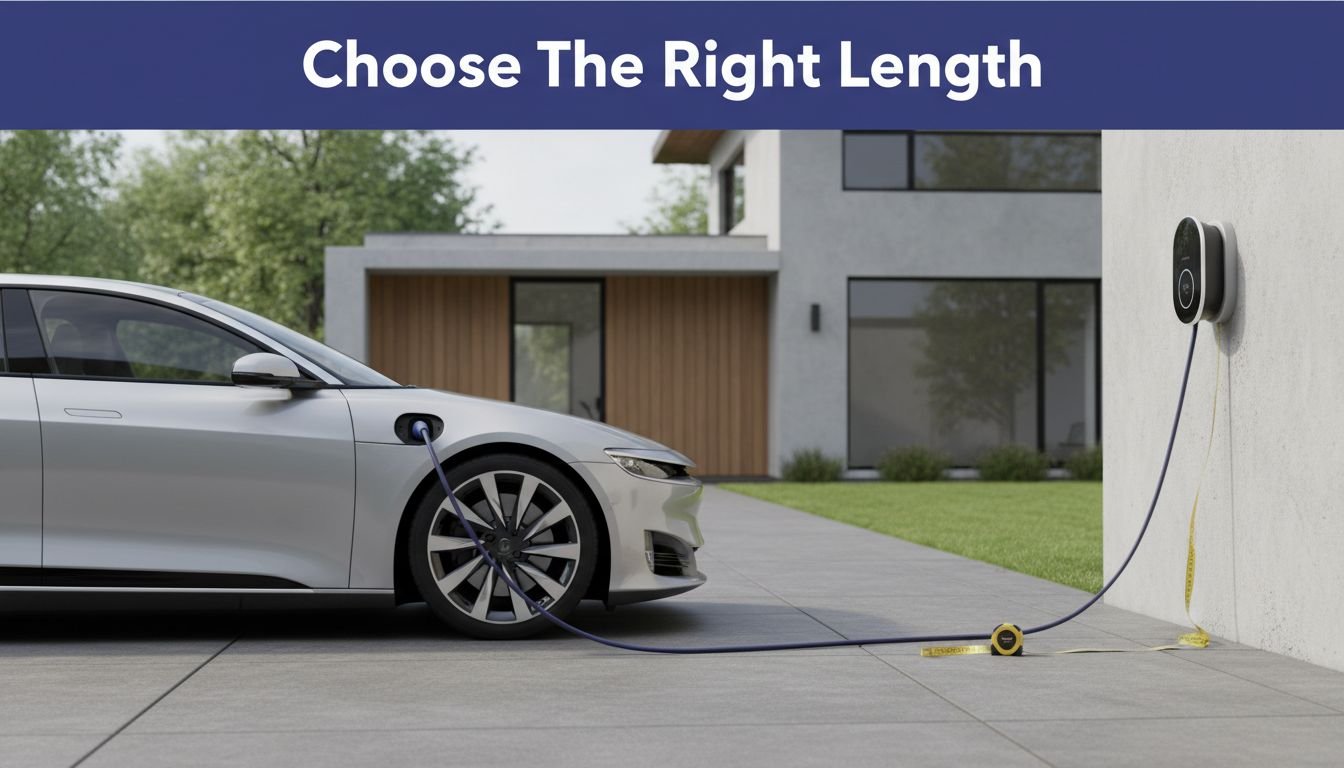
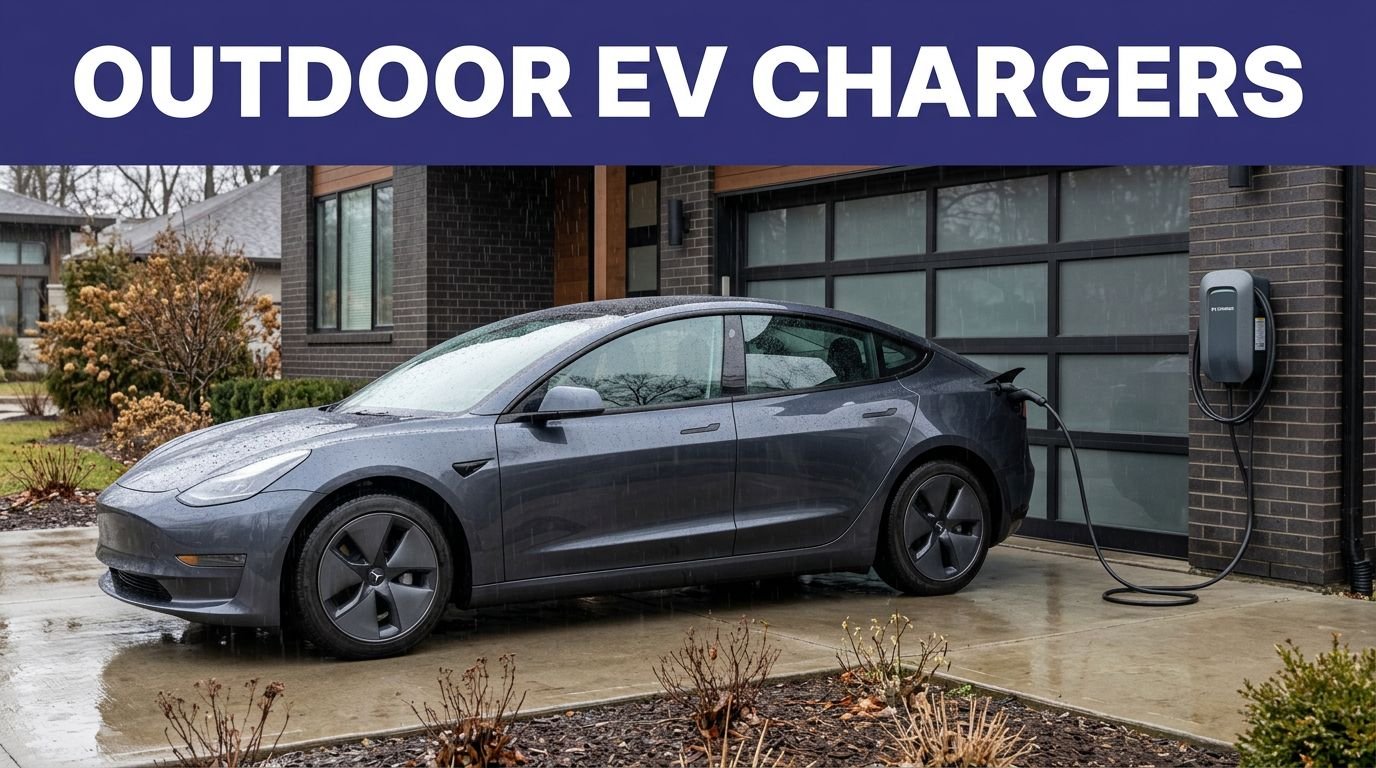
A charger installation can create two very different conversations: one with your electrician, and one with the IRS. The first asks whether your panel can handle the load. The second asks whether your EV charging tax credits survived the calendar.
The 30C tax credit was the EV charger tax credit, a federal tax credit for eligible electric vehicle property. Section 30C ended for new property placed in service after June 30 2026. State rebates, utility incentives, and local programs may still be available, but rules depend on your address, property type, charger, and installation date. Check those details before anyone starts digging trenches.
This post may contain affiliate links. If you make a purchase through these links, I may earn a small commission at no extra cost to you.
Key Takeaways
- The federal Section 30C EV charging tax credit ended for new property placed in service after June 30, 2026. Buying equipment or paying an installer before that date was not enough; the charger had to be operational and available for use.
- Eligible homeowners could claim 30% of qualifying charging-property costs, up to $1,000 per qualifying port, subject to the principal-residence, location, and tax-liability rules.
- Business and tax-exempt projects followed different percentage, labor, ownership, and filing rules, including a potential $100,000 limit per single item of property.
- State, utility, and local rebates may still be available, but requirements vary by address, equipment type, property type, funding status, and application timing.
- Keep exact-address eligibility results, invoices, proof of payment, rebate records, cost allocations, and commissioning evidence before claiming an incentive or filing Form 8911.
The federal 30C tax credit ended June 30, 2026
Section 30C is officially called the Alternative Fuel Vehicle Refueling Property Credit. The Inflation Reduction Act expanded it to cover eligible charging station property and charging equipment in qualifying locations. Location eligibility generally required an eligible low-income community or non-urban census tract.
The U.S. Department of Energy’s federal incentive summary now lists the credit as expired for new property placed in service after the June 2026 deadline.
The deadline is about service, not shopping
This is where people get caught. Ordering a charger on June 29 wasn’t enough. Paying an installer in June wasn’t enough. Having a garage that looked emotionally ready for a charger wasn’t enough either.
The property had to be placed in service by June 30 2026. For the 30C tax credit, the charger needed to be installed, connected, operational, and available for use by then.
A charger purchased before July 1 but first made operational on July 1 generally misses the federal 30C deadline. The invoice date doesn’t replace the placed-in-service date.
If your installation met the deadline, you claim the credit on the federal return for the tax year in which the property was installed and placed in service. If the charger wasn’t operational by the deadline, Section 30C isn’t available for that installation.
The separate commercial clean vehicle credit follows different rules. A time of sale report documents a vehicle credit, not proof that a charger was placed in service.
What Section 30C covered
The federal credit had separate rules for residential and business property:
| Property type | Credit rate | Maximum | Main conditions |
|---|---|---|---|
| Principal residence | 30% of eligible cost | $1,000 per charging port | Qualified location and placed in service by the deadline |
| Business property | 6% of eligible cost | $100,000 per single item of property | Qualified location and business-use requirements |
| Business property meeting applicable labor rules | 30% of eligible cost | $100,000 per item of property | Qualified location and business-use requirements |
| Tax-exempt property | 6% or 30% | $100,000 per item of property | Qualified location and entity eligibility |
Tax-exempt entities may use elective pay to claim the credit, subject to the applicable eligibility rules.
The rate applies to eligible costs under Section 30C. It isn’t a universal coupon for every electrical upgrade in the house. Documentation determines eligible installation costs, especially when an installation includes trenching, a pedestal, panel work, wiring, or networking equipment. Shared costs should be allocated consistently across charging ports, while battery storage must be identified separately and not assumed eligible automatically.
How much could homeowners claim?
For an individual, the 30C tax credit was an EV charger tax credit covering 30% of eligible charging property costs, with a maximum of $1,000 per qualifying port.
That could include the charger and qualifying installation costs connected to the property. Your primary residence had to be in an eligible census tract, and the property had to be placed in service during the allowed period.
The $1,000 limit is not a blank check
If eligible costs were $2,000, 30% would equal $600. If eligible costs were $4,000, 30% would equal $1,200, but the $1,000 ceiling applied separately to qualifying charging ports.
A two-port installation does not automatically become a $2,000 credit. The costs must be allocated properly between the qualifying items, and each of the two charging ports must satisfy the rules.
The property owner claimed the federal tax credit for a primary residence (tax rules use a principal-residence concept). It was a non-refundable credit, so its value depended on the taxpayer’s tax liability. A rental property, second home, or business installation may fall under different rules.
What changed after the deadline
The federal credit didn’t taper gradually after June 30. There wasn’t a smaller 20% version waiting in July like a tax-code consolation prize.
For property placed in service after June 30, 2026, homeowners need to look at state, utility, and local programs instead. Those programs can be valuable, but they aren’t interchangeable with Section 30C. One may require preapproval. Another may require a networked charger. A third may be limited to income-qualified households.
The location rule can wipe out the 30C tax credit
Section 30C wasn’t available everywhere. Eligible equipment had to be installed in a qualified location, based on federal census tract rules.
The location requirement applied to both residential and business property. A charging station across the street could qualify while yours didn’t. Tax law occasionally behaves like it has a measuring tape and a personal grudge.
Low-income and non-urban locations
A qualified location generally had to be in either:
- A low-income census tract under the New Markets Tax Credit rules, or
- A non-urban community under the applicable federal mapping definition.
The tract determination had to be valid when the property was placed in service. Eligibility depends on the exact address and placed-in-service date, not neighborhood appearance. A real estate listing saying “up-and-coming” is even less useful.
Use the Argonne National Laboratory refueling infrastructure map to check the exact address. Save a copy of the result or capture the address and eligibility result for your records.
Check the exact installation address
Don’t check only the city or ZIP code. Boundaries don’t follow casual neighborhood descriptions, and a ZIP code can cover multiple areas. The applicable census tract depends on the exact installation address.
Record:
- The complete street address
- The date you checked the location
- The tract result
- The placed-in-service date
- The equipment invoice
- The installation invoice
- Proof of payment
- Photos or commissioning records showing the charger was operational
For a commercial project, keep the site plan and the allocation of costs among ports. A single project can contain several separate Section 30C items, but the tax treatment depends on how the property is classified and allocated.
State EV charging rebates confirmed for 2026
State incentives usually arrive as rebates, grants, or utility credits rather than income-tax credits. They aren’t the federal EV charger tax credit. As program payments, rebates may have an application window, funding limit, approved equipment list, or contractor requirement.
The following programs have current 2026 information from state agencies or official government incentive listings.
| State | Program | 2026 benefit | Who it helps |
|---|---|---|---|
| Maryland | Residential EVSE Rebate Program | 50% of eligible costs, up to $700 | Maryland households installing eligible Level 2 equipment |
| New Jersey | Charge Up Residential Charger Program | $250 for an eligible Level 2 home charger | New Jersey residents |
| New Jersey | It Pay$ to Plug In | Up to $750 per Level 1 port or $4,000 per Level 2 port | Workplaces, governments, and eligible nonresidential sites |
| New York | Charge Ready NY 2.0 | $3,000 per Level 2 port, or $4,000 in disadvantaged communities | Multifamily buildings, workplaces, and hotels |
| California | Public DC fast-charging incentive funding | Up to 100% of eligible project expenses, capped at $100,000 per port in the announced window | Public fast-charging projects |
Maryland focuses on residential Level 2 charging
Maryland’s Residential Electric Vehicle Supply Equipment Rebate Program offers 50% of eligible costs, up to $700.
Only Level 2 charging equipment qualifies under the program. The household applies after the equipment has been acquired, installed, placed in operation, and paid in full. This isn’t a promise from the contractor that appears as an instant discount at checkout.
Keep the paid invoice and installation records. The program has its own documentation requirements, and funding can change during the program year.
New Jersey splits home and workplace incentives
New Jersey residents can find a $250 incentive for purchasing an eligible Level 2 home charger through the Charge Up Residential Charger Program. The state’s official New Jersey incentive listings are useful for checking the current program description.
For nonresidential sites, New Jersey’s It Pay$ to Plug In program lists grants of up to $750 per Level 1 port or $4,000 per Level 2 port. Workplace, government, and other eligible locations may qualify, subject to minimum numbers of charging ports, site rules, and available funds.
A home charger and a workplace charging project are not the same application wearing different shoes. Use the program that matches the property.
New York pays by charging port
NYSERDA’s Charge Ready NY 2.0 provides $3,000 per Level 2 port at eligible workplaces, multifamily buildings, and hotels. Projects in disadvantaged communities can qualify for up to $4,000 per port.
This program targets shared or public-facing charging, not a typical single-family garage. Property owners should confirm whether the project requires approved chargers, networks, installers, or an application path for its charging ports before ordering equipment.
California’s 2026 funding targets public fast charging
California’s program is aimed at public DC fast-charging infrastructure, not a standard home Level 2 rebate. It supports public charging station projects rather than ordinary home installations. The California Energy Commission announced more than $55 million for expanded public fast charging, with an announced incentive window offering up to 100% of eligible installation costs and a cap of $100,000 per charging port.
The California Energy Commission announcement lists a window running October 7, 2026, through January 14, 2027.
That window is important for developers and site hosts. It doesn’t create a home-charger tax credit for every California resident with a two-car garage and a dream.
What about Colorado, Illinois, Massachusetts, and other states?
No current statewide charger or installation rebate was confirmed in the official 2026 material reviewed for Colorado, Oregon, Washington, Connecticut, Massachusetts, Illinois, Vermont, or Georgia.
That sentence needs a belt and suspenders. It doesn’t mean no resident in those states can get help. It means the incentive may be utility-based, local, income-qualified, closed to new applications, or tied to a specific building type.
Your utility may be the real program administrator
A utility rebate can be more useful than a statewide program because it may cover wiring, panel upgrades, managed charging, or enrollment in a time-of-use rate.
Check the utility serving the address where the charging station will be installed. Search for terms such as:
- EV charger rebate
- EVSE installation incentive
- managed charging
- time-of-use EV rate
- panel upgrade rebate
- multifamily charging incentive
The Alternative Fuels Data Center incentive search covers federal and state programs. The DSIRE database is another practical starting point for state, local, and utility incentives.


Both databases are research tools, not permission slips. Confirm the current terms on the administrator’s program page before signing a contract.
Don’t rely on an old rebate list
Charging programs change fast. A page published in 2024 may still rank in search results while its funding disappeared in 2025. A contractor’s rebate sheet may also be out of date.
Before buying, verify:
- Whether the program is open
- Whether funds remain
- Whether preapproval is required
- Which charging equipment qualifies
- Whether installation must be completed by a certain date
- Whether the rebate goes to you, the contractor, or the property owner
The most expensive sentence in an installation project is often, “I thought that was covered.”
Can you stack a rebate with Section 30C?
Potentially, yes, but the 30C tax credit calculation requires careful cost-basis treatment.
A state rebate, utility incentive, and federal tax credit may apply to the same charging station under different rules. However, a rebate may affect the cost basis used to calculate that credit or depreciation. Battery storage may follow different rules, so separate it from charger hardware on invoices and applications.
Don’t calculate 30% of the original invoice after receiving a rebate and assume the IRS will applaud your ambition.
Ask when each incentive is applied
Some programs require an application before installation. Others require the charger to be installed first. Some utility programs issue a bill credit, while others pay the installer directly.
Write down the order:
- Confirm the address and equipment qualify.
- Apply for preapproval if required.
- Complete the installation.
- Submit paid invoices and commissioning records.
- Calculate any remaining credit from eligible expenses using the correct tax treatment.
For a business or nonprofit, ask a tax professional to review the federal credit and state incentive together. The accounting treatment can differ from the marketing language on the rebate page.
Separate charger rebates from electricity discounts
A utility may offer two different benefits:
- A one-time payment for buying or installing charger hardware
- An ongoing bill discount for charging during approved hours
The second benefit may require a networked charger, a utility-controlled schedule, or enrollment in a managed-charging program. It doesn’t necessarily reduce the charger’s purchase price.
Read the terms before choosing hardware. A cheap charger that can’t meet the utility’s communication requirements may be a very efficient way to miss the rebate.
Business charging station projects need port-by-port math
For business property used to charge an electric vehicle, Section 30C covered 6% of eligible costs. The rate rose to 30% when the project met prevailing wage and apprenticeship requirements.
The maximum was $100,000 for each defensible single item of property. That isn’t automatically $100,000 for the entire site. It also isn’t automatically $100,000 for every line on the contractor’s invoice.
“Per item” is the number to discuss
The IRS describes a single item of property as one piece of Section 30C property. Examples include charging ports, a fuel dispenser, or storage property.
Associated property, such as a pedestal, may be included when it’s directly attributable and traceable to that item. Separate battery storage should be allocated on its own when it qualifies as separate property.
Suppose an eligible charging item has $40,000 in allocated eligible costs. At 30%, the credit is $12,000. If a qualifying item has $400,000 in allocated eligible costs, 30% would be $120,000, but the $100,000 cap applies.
A project with ten charging ports needs a defensible allocation. Don’t divide the total by ten because the spreadsheet looks tidy. Ask the tax preparer and engineer to align the cost allocation with the charging equipment schedule, invoices, and site design.
PWA rules require records, not optimism
The 30% commercial rate depends on those labor standards. Those rules can affect the workers who build or install the project, not only the charger manufacturer.
Keep payroll records, wage determinations, and documentation showing compliance with prevailing wage and apprenticeship requirements. Also keep contractor certifications and other evidence of compliance. Get the requirements into the contract before construction begins.
A business shouldn’t wait until tax filing season to ask whether the electrician’s labor records exist. By then, the person who knows the answer may be on a different project, a different payroll system, or a beach.
Tax-exempt entities may use elective pay when they own qualifying charging property. A taxable business generally claims the credit under normal business-credit rules, so ownership and placed-in-service records matter.
Business accounting may also classify qualifying property as depreciable property. That treatment is separate from the credit calculation.
The commercial clean vehicle credit and a time of sale report concern vehicle transactions, not this charging-property credit.
The IRS business credit guidance covers the commercial percentage, $100,000 per-item limit, and Form 8911 filing.
How homeowners claim the credit for a qualifying 2026 installation
If your charger was placed in service by June 30, 2026, gather the paperwork before filing. You don’t need a dramatic binder with brass corners. You do need records matching the address, equipment, cost, and date.
1. Confirm the location
Check the exact address in the qualified-location mapping tool. Save the result and lookup date for the census tract.
The location must qualify when the charger was placed in service. If you checked it in January but the charger went live in July, that doesn’t fix the federal deadline or location question.
2. Confirm the service date
Use the date the charger became operational and available for charging. Keep the final invoice, inspection approval if applicable, commissioning record, and written completion date from the installer.
A purchase receipt only proves that money changed hands. It doesn’t prove the placed-in-service date or that the equipment was ready for use.
3. Complete the required form
Homeowners use Form 8911, the Alternative Fuel Vehicle Refueling Property Credit, with their federal income tax return for the year the property was installed and placed in service.
The IRS business credit page provides current guidance. Use the form and instructions for the filing year, not a random older PDF that appeared in a search result wearing a government-looking font.
4. Keep the cost calculation
Retain the equipment and labor invoices, proof of payment, rebate documentation, mapping result, and placed-in-service evidence.
If the project includes multiple charging ports, keep a clear cost allocation for the eligible property. Separate battery storage and other non-charger items on the invoice.
For an individual taxpayer, this non-refundable credit may be limited by your tax liability under the applicable rules. A tax professional can explain how it interacts with other credits.
How nonprofits and governments use elective pay
Tax-exempt entities and governments may be able to claim Section 30C through direct pay for a qualifying charging station project.
This matters because a nonprofit may owe little or no federal income tax. Instead of letting the credit sit unused, an eligible entity can seek an IRS payment when it meets the program requirements.
Pre-filing registration comes first
An entity planning to use elective pay generally must complete IRS pre-filing registration and receive a registration number before filing the return.
The organization should also notify the seller in writing that it intends to claim the credit through the election. For tax-exempt entities, that notice belongs in the project file, next to the contract and equipment specifications.
Direct pay isn’t an automatic reimbursement for every nonprofit charger. The project still needs an eligible location, qualifying property in the appropriate census tract, the correct placed-in-service date, and complete records. For multi-port projects, document the charging ports and review whether the limit applies to a single item of property. Battery storage and other energy storage may require separate treatment, so keep related costs and specifications distinct.
The filing package is larger
The entity’s filing can include:
- Form 8911, including Schedule A
- Form 3800
- Form 990-T or another applicable income tax return
- The IRS pre-filing registration number
For a public agency, school, church, housing authority, or nonprofit fleet operator, bring the finance team into the project before construction. Fleet operators should distinguish this charger-property process from the separate commercial clean vehicle credit. The charging team may know the amperage. For tax-exempt entities, the tax team needs to know who owns the equipment, who paid for it, and when it became operational.
A 2026 checklist before you install
Use this order if the project is still being planned:
- Identify the taxpayer. Decide whether the owner is an individual, business, nonprofit, government entity, landlord, or tenant. The separate commercial clean vehicle credit applies to vehicles, not charger property.
- Check the location. Verify the exact tract for any federal 30C claim.
- Check the deadline. Only property placed in service by June 30, 2026, could qualify for the federal credit.
- Check state and utility programs. Confirm whether applications, approved equipment, income limits, or preinstallation inspections apply.
- Get a cost breakdown. Separate charger hardware, ports, pedestals, wiring, trenching, panel work, labor, and unrelated electrical upgrades. For commercial projects, confirm whether the cap applies to a single item of property rather than the entire site.
- Confirm the charger requirements. A program may require Level 2, DC fast charging, network connectivity, or a specific certification.
- Save every date. Record the application date, approval date, purchase date, installation date, inspection date, and placed-in-service date.
- Ask about stacking. Confirm how rebates affect the federal credit calculation and tax basis.
- Use the right tax form. Form 8911 is the starting point for the Alternative Fuel Vehicle Refueling Property Credit.
- Get professional advice for complex projects. Multiple ports, depreciation, funding eligibility, PWA compliance, and shared ownership deserve a tax review.
Frequently Asked Questions
Is the federal EV charging tax credit still available in 2026?
Section 30C was available only for qualifying property placed in service by June 30, 2026. Property that became operational after that date generally does not qualify, even if it was purchased or paid for earlier.
How much could a homeowner claim for an eligible charger?
A qualifying homeowner could claim 30% of eligible charging-property costs, up to $1,000 per qualifying charging port. The principal residence had to be in an eligible low-income or non-urban census tract, and the non-refundable credit could be limited by the taxpayer’s federal tax liability.
Can I claim a state rebate after the federal credit ends?
Possibly. State, utility, and local programs operate under their own rules and may require preapproval, specific equipment, an approved installer, income eligibility, or completion by a certain date.
Can a rebate be combined with the 30C tax credit?
Potentially, but the rebate may affect the eligible cost basis used to calculate the federal credit or depreciation. Confirm how the incentives interact before filing, and keep the rebate documentation with the project records.
What form is used to claim the federal charging credit?
Homeowners generally use Form 8911 with the federal return for the tax year in which the qualifying property was installed and placed in service. Businesses and tax-exempt entities may have additional forms, registration steps, and documentation requirements.
Conclusion
The federal EV charger tax credit is unavailable for property placed in service after June 30, 2026. Qualifying homeowners may claim 30% of eligible costs up to $1,000 per charger, while businesses and tax-exempt organizations may face a 6% or 30% rate and a $100,000 cap per item.
State and utility programs remain the moving pieces. Rules vary, so confirm eligibility, application steps, and funding status before installation. The charger may be smart. Your paperwork needs to be smarter.