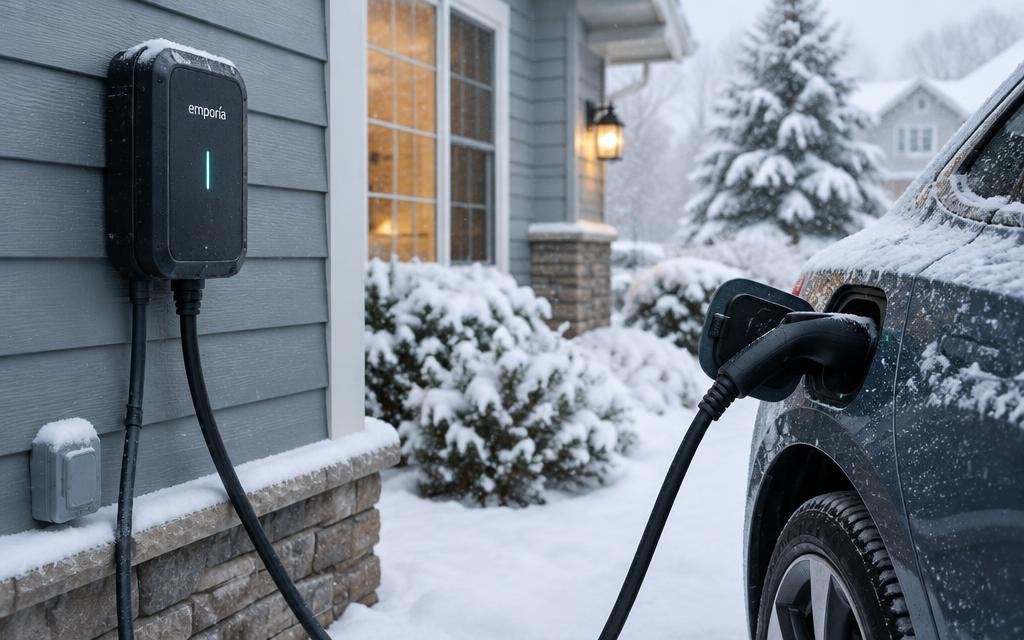
Best Level 2 EV Charger for Home in 2026: How to Choose the Right One
Amperage, plug type, cable length and safety certification matter more than brand names. Here's a buyer's checklist for picking a home Level 2 charger that fits your car and panel.
As an Amazon Associate, EV Charging may earn from qualifying purchases. This helps support our independent guides at no extra cost to you. Learn more.
Key takeaways
- Match charger amperage to your car's onboard charger and your panel capacity.
- Look for UL or ETL safety listing and, ideally, ENERGY STAR certification.
- A 40–48A unit covers almost every EV sold in the U.S. today.
Start with your car, not the charger
Every EV has an onboard charger that caps how fast it accepts AC power. Many current EVs accept 7.2–11.5 kW, which corresponds to roughly 32–48 amps on a 240V circuit. Buying a charger more powerful than your car can use won't charge any faster.
Check your owner's manual or the manufacturer's spec sheet for the maximum AC charging rate before you shop.
Shop this guide
Compare current options and prices
The features that actually matter
Safety certification (UL or ETL listing) should be non-negotiable — it means the unit was tested by a nationally recognized lab. ENERGY STAR certified chargers use less standby power.
After that, prioritize the right connector (J1772 or NACS), a cable long enough to reach your port with slack (18–25 ft is typical), an enclosure rated for your location, and adjustable amperage so an electrician can match it to your circuit.
Plug-in or hardwired?
Plug-in units on a NEMA 14-50 outlet are easy to replace or take with you when you move, but are usually limited to 40A. Hardwired installs can deliver 48A and are often preferred for outdoor locations. Either way, have a licensed electrician confirm your panel can handle the load.
Sources & further reading

Written by
LarryLeoLarryLeo started EV Charging while researching his own next car purchase. He digs into the pros, cons and real cost savings of going electric — using government, standards-body and manufacturer sources — and shares what he finds so other buyers can decide with confidence.
Why trust EV Charging Guide
Our guides are researched from government, standards-body and manufacturer sources, reviewed for accuracy, and updated when rules or products change. Brands cannot pay for placement. Read our editorial policy.
Related Posts
Best EV Charger for Tesla Model Y at Home: NACS vs J1772 Explained
Best Portable EV Charger for Road Trips and Camping