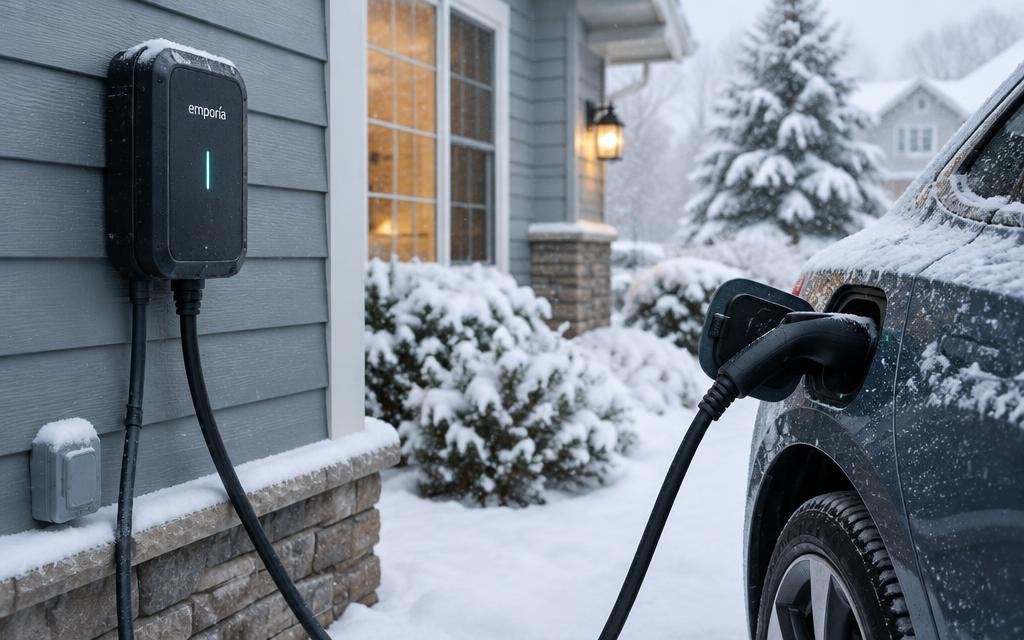
Best Portable EV Charger for Road Trips and Camping
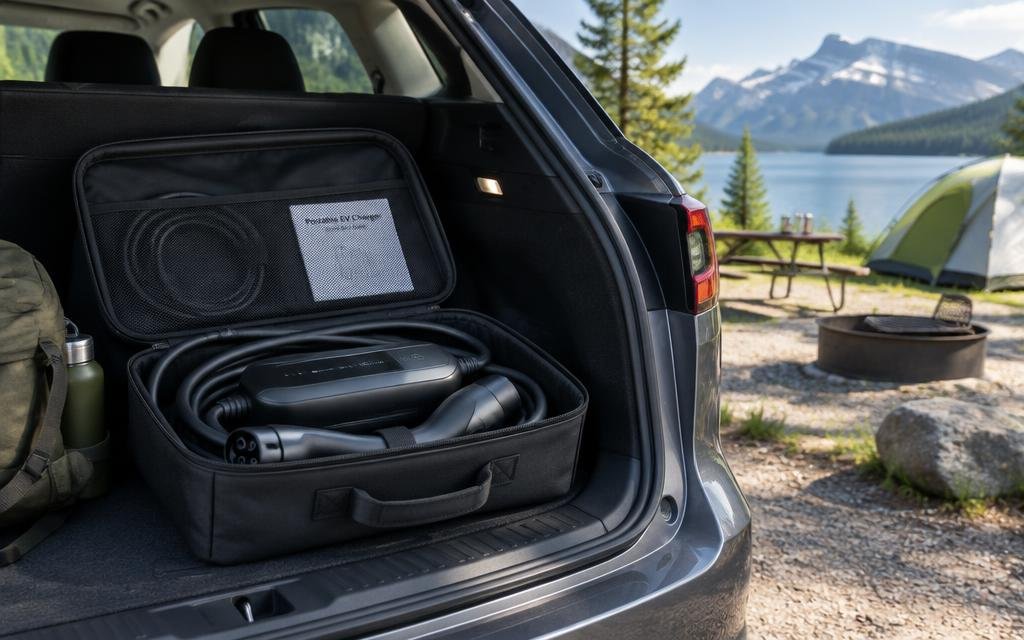
A portable Level 1/Level 2 charger turns RV parks, relatives' garages and campgrounds into charging stops. Here's what to look for before you pack one.
As an Amazon Associate, EV Charging may earn from qualifying purchases. This helps support our independent guides at no extra cost to you. Learn more.
Key takeaways
- Choose a unit with interchangeable plugs (NEMA 5-15 and 14-50).
- Look for adjustable current so you don't overload unfamiliar outlets.
- A hard or padded case protects the control box on the road.
Why carry a portable charger?
Public fast chargers are expanding, but many destinations — cabins, campgrounds, family homes — only have regular outlets. A portable charger lets you top up wherever there's power, and doubles as a backup if your home unit fails.
Shop this guide
Compare current options and prices
Features to prioritize
Interchangeable adapters let one unit charge from a standard 120V outlet (Level 1, a few miles of range per hour) or a 240V NEMA 14-50 RV outlet (Level 2, much faster). Adjustable amperage is essential when you don't know an outlet's condition.
Check for a weather-resistant control box, a cable of at least 20 ft and a UL or ETL safety listing.
Use outlets safely
Avoid extension cords unless the manufacturer explicitly allows a heavy-gauge, properly rated cord. If an outlet or plug feels hot, stop charging and lower the current.
Sources & further reading

Written by
LarryLeoLarryLeo started EV Charging while researching his own next car purchase. He digs into the pros, cons and real cost savings of going electric — using government, standards-body and manufacturer sources — and shares what he finds so other buyers can decide with confidence.
Why trust EV Charging Guide
Our guides are researched from government, standards-body and manufacturer sources, reviewed for accuracy, and updated when rules or products change. Brands cannot pay for placement. Read our editorial policy.
Related Posts
Best Level 2 EV Charger for Home in 2026: How to Choose the Right One
Best EV Charger for Tesla Model Y at Home: NACS vs J1772 Explained