How Much Does a Tesla Wall Connector Really Cost to Install?
Compare the full Tesla Wall Connector installation cost, including electrical work, commissioning, capacity and verified incentives.
As an Amazon Associate, EV Charging may earn from qualifying purchases. This helps support our independent guides at no extra cost to you. Learn more.
Key takeaways
- Hardware price is only one part of the finished project.
- Ask for an itemized quote with commissioning and account setup.
- A new installation after June 30, 2026 does not qualify for 30C under current rules.
The Wall Connector price is only one part of the project
A Tesla Wall Connector has a hardware price, but your installed cost includes the work needed to power it safely and make it usable where you park. That distinction explains why two owners can buy the same charger and receive very different quotes. One has a straightforward mounting location near suitable electrical capacity. The other needs a long cable route, building work or a different electrical design.
Start by asking for a complete installed scope rather than a single attractive headline price. This guide is about comparing those scopes and avoiding surprises. It is not a local contractor quote, a claim of firsthand installation experience or a promise that every house needs the same circuit.
Shop this guide
Compare current options and prices
Choose the correct Wall Connector first
Confirm the exact product and the vehicles you intend to charge. Tesla's standard Wall Connector and Universal Wall Connector serve different connector needs. If your household includes J1772 and NACS vehicles, compatibility deserves attention before the installer arrives. Buying twice is a remarkably effective way to make a project expensive.
Check Tesla's current store price, taxes and delivery terms when you are ready to purchase. Promotions and product pricing change, so a historical price in an article is not a reliable project budget. Ask whether the installer supplies the unit or expects you to provide it, and compare warranty and support arrangements for the proposed purchase route.
Also confirm whether the quote is for ordinary vehicle charging or a more complex system involving power management or home backup. Those are different scopes. A Wall Connector alone should not be treated as a complete backup-power installation simply because related Tesla products support that capability in approved combinations.
Decide how much charging power you need
The maximum rating does not have to be the installation target. At 240V, a 48A configuration provides approximately 11.5 kW before losses, but the car must accept that AC power. A lower-current configuration may comfortably replace your normal driving during the available overnight hours.
For example, an illustrative 20 kWh top-up at 7.7 kW has an ideal time of about 2.6 hours, with real time longer after losses and operating conditions. If the car stays home all night, paying substantially more to finish somewhat earlier may offer little practical value. A short off-peak window could change that calculation.
Give the electrician your vehicle, daily energy needs and parking schedule. Ask for a design that meets those needs, then price any additional capability separately. This makes it easier to distinguish a useful upgrade from an expensive assumption that maximum output is always necessary.
Distance matters, but the route matters too
A charger ten feet from the panel can still involve awkward work if walls, finishes or access complicate the route. A longer exposed route in an accessible garage may be simpler than a shorter concealed route through finished rooms. Ask the installer to describe where the wiring will run and what the finished installation will look like.
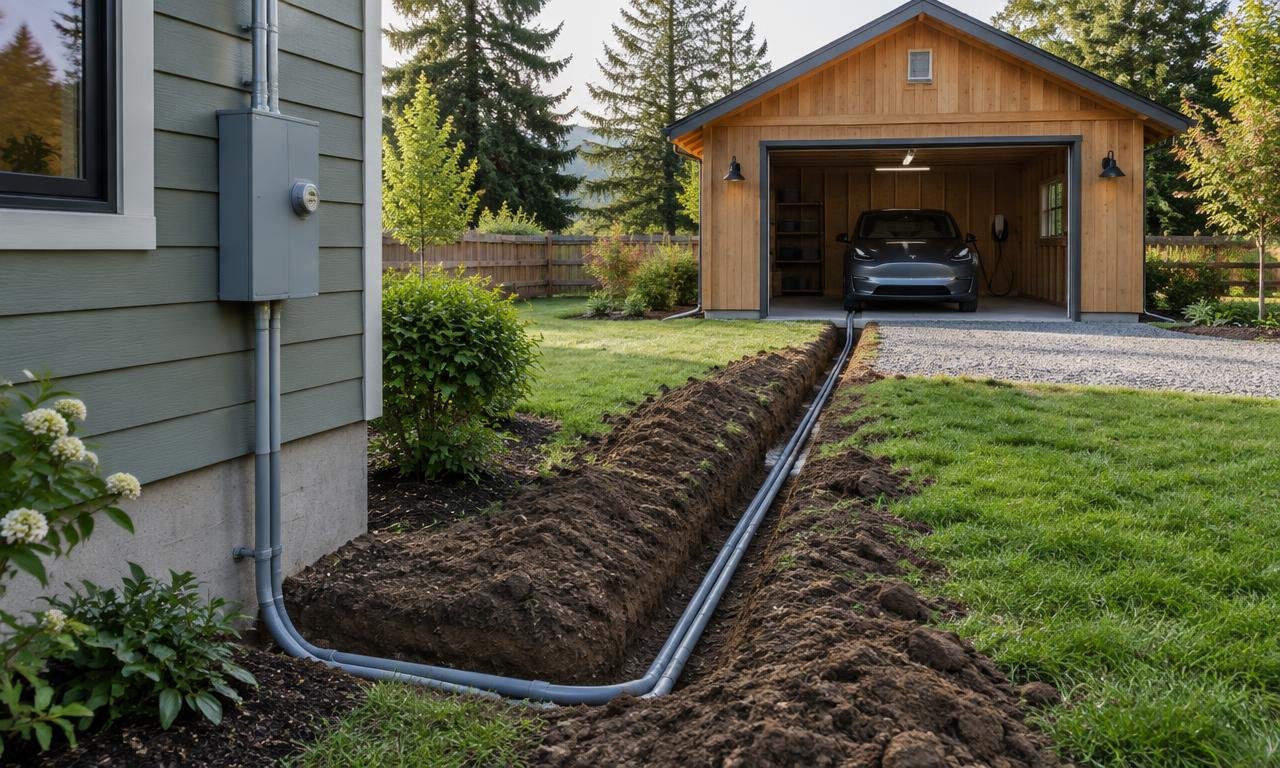
Outdoor locations and detached garages can introduce additional work, such as a suitable pathway, trenching or restoration. Those items may involve trades beyond the electrical installation. Check who coordinates them, what is included and what remains your responsibility.
Walk through the parking arrangement before deciding on the mounting point. The connector should reach the vehicle comfortably without creating a trip hazard or crossing a driving path. A tidy-looking position is less appealing if you must reverse the car precisely every night or stretch the cable around storage shelves.
Panel capacity is not a visual guess
An empty breaker position does not establish that the service can support the proposed load. The installer needs to assess the electrical system and apply the appropriate requirements. Likewise, a particular service amperage does not automatically mean an upgrade is necessary or unnecessary.
If capacity is constrained, ask about a lower charging current and supported load-management options. These may provide a practical alternative to a larger project, depending on the equipment and installation. Ask for the cost and behavior of each option rather than treating load management as a mysterious extra line item.
Do not attempt to create capacity by increasing a breaker or changing the charger setting yourself. The configured charging current must match the approved design. The useful homeowner task is to describe the desired charging routine and compare the installer's documented options.
Request an itemized quote
Ask for separate lines covering equipment, electrical materials, labor, permits, inspection, commissioning and any additional devices. Request a description of exclusions, such as drywall repair, painting, trench restoration or utility work. This is not being difficult; it is how you compare two prices that might otherwise describe different jobs.
Make sure every contractor is quoting the same mounting location, charging current and product. If one quote assumes a short exposed route and another includes concealed wiring, the totals are not directly comparable. Ask whether the quoted amount is fixed for the described scope and how unforeseen conditions would be handled.
Keep the written scope with photographs of the agreed location and route where useful. A simple shared understanding can prevent the classic moment when everyone discovers they meant a different wall. That moment is rarely the cheapest part of a project.
Commissioning belongs in the price
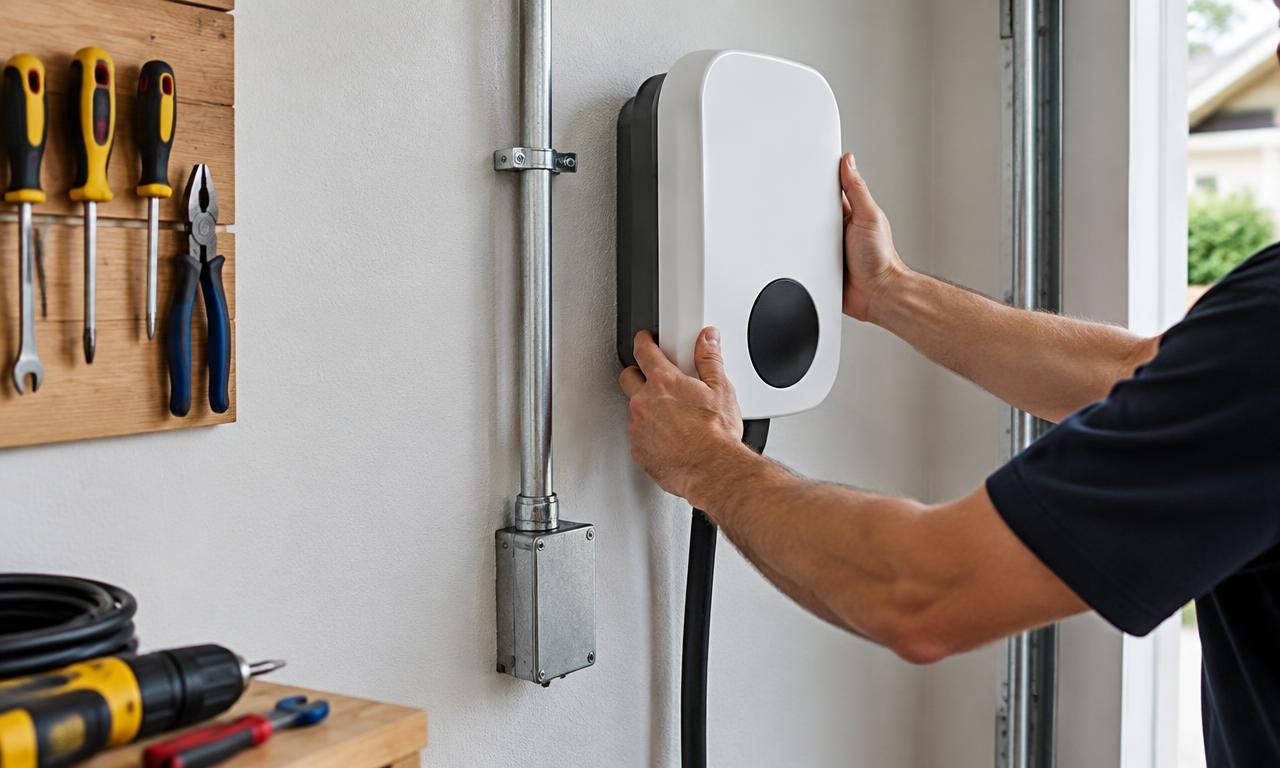
Tesla's installation guidance includes commissioning, connecting to the customer's Wi-Fi and registering the Wall Connector. These steps matter because the installed unit needs the correct configuration and customer access. A physically mounted box is not the same as a completed handover.
Ask the installer to confirm the configured breaker rating and output current, verify a charging session and show you the relevant controls. Confirm that the device is registered to the correct customer account. Keep the supplied documentation and identifiers somewhere you can find them later.
Check Wi-Fi coverage at the intended location before installation day. Tesla specifies a compatible 2.4 GHz password-protected network for the connection described in its guidance. If coverage is poor, discuss the remedy rather than discovering it when the electrician is ready to leave. Connectivity work should be visible in the project plan when it is needed.
Treat incentives as a separate calculation
Research utility and state programs before ordering equipment or starting work. A program may require advance approval, specific equipment, a participating contractor or enrollment in a charging plan. Do not assume that buying a popular brand automatically qualifies the installation.
For the federal Section 30C credit, current rules end eligibility for property placed in service after June 30, 2026. A new installation completed after that date should not be budgeted as receiving that credit under the current rule. Earlier qualifying installations involve additional requirements and tax limitations; use the IRS guidance for the relevant year.
Budget the gross installed price first, then subtract only incentives you have verified for your situation. A promised rebate is not the same as an approved payment. Keep receipts, installation dates and program paperwork together so a legitimate application is not delayed by missing documentation.
Compare value over the time you will use it
Consider how long you expect to remain at the property, whether another EV is likely and how important charging flexibility is to your household. These details can justify a thoughtful provision for future use. They do not automatically justify every optional upgrade offered on a quote.
Compare the installation with your real alternative: existing suitable charging, a lower-current design or regular public charging. Include convenience and time, not just electricity cost. A dependable home setup can be valuable even when it does not produce a dramatic spreadsheet payback.
Before signing off, confirm the final scope, inspection process, account registration and demonstration session. Your finished project should leave you with clear records and a charger that meets the agreed routine. That is the installed cost worth comparing: everything required to arrive home, plug in and know the car will be ready.
Safety note: This article is general information, not professional electrical advice. Working with 240V circuits can cause serious injury or fire. Hire a licensed electrician and follow local codes and permit requirements.
Sources & further reading

Written by
LarryLeoLarryLeo started EV Charging while researching his own next car purchase. He digs into the pros, cons and real cost savings of going electric — using government, standards-body and manufacturer sources — and shares what he finds so other buyers can decide with confidence.
Why trust EV Charging Guide
Our guides are researched from government, standards-body and manufacturer sources, reviewed for accuracy, and updated when rules or products change. Brands cannot pay for placement. Read our editorial policy.