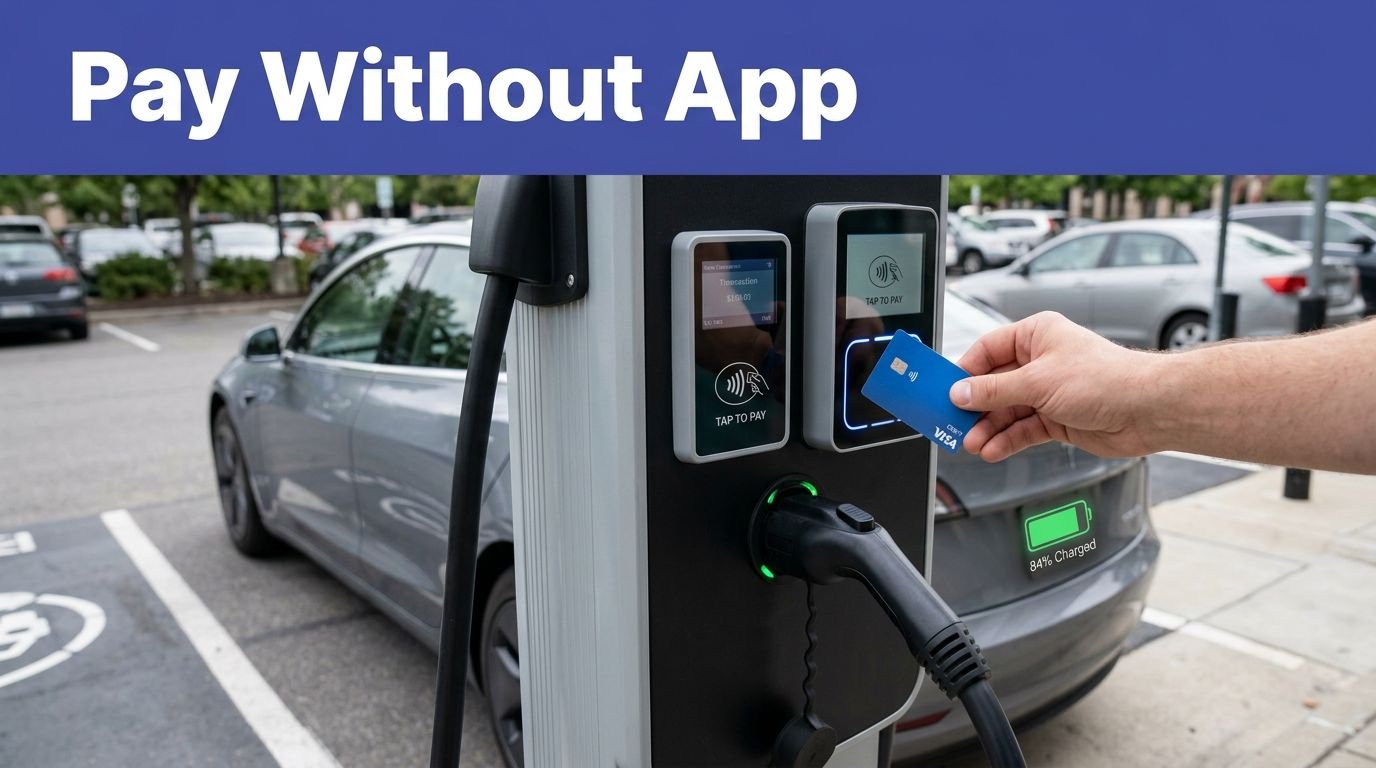
Plugging in an electric vehicle looks simple. You connect a cable, the car flashes a light, and electricity starts moving. Underneath that calm little ritual, though, several safety checks happen before your vehicle gets permission to drink.
If you’re asking what is an EVSE, the short answer is electric vehicle supply equipment. It connects your EV to a power source and authorizes power to flow. It manages the charging session and stops unsafe electricity flow. The name sounds like a password created by an electrical engineer, but the job is practical.
Key Takeaways
- EVSE, or electric vehicle supply equipment, connects an EV to a power source, verifies safety conditions, controls electricity flow, and ends the session when needed.
- During AC charging, the vehicle’s onboard charger converts the supplied AC power into DC for the battery. DC fast-charging stations perform that power conversion themselves and send DC directly to the battery.
- Level 1, Level 2, and DC charging differ in power and speed, but the vehicle’s battery, charging limits, temperature, and state of charge also affect the result.
- Connector compatibility, recognized safety certification, enclosure ratings, and proper installation are essential when choosing an EVSE.
- The best EVSE is matched to the vehicle, electrical service, driving routine, installation site, and any scheduling, load-sharing, or energy-monitoring needs.
What Is an EVSE, Exactly?
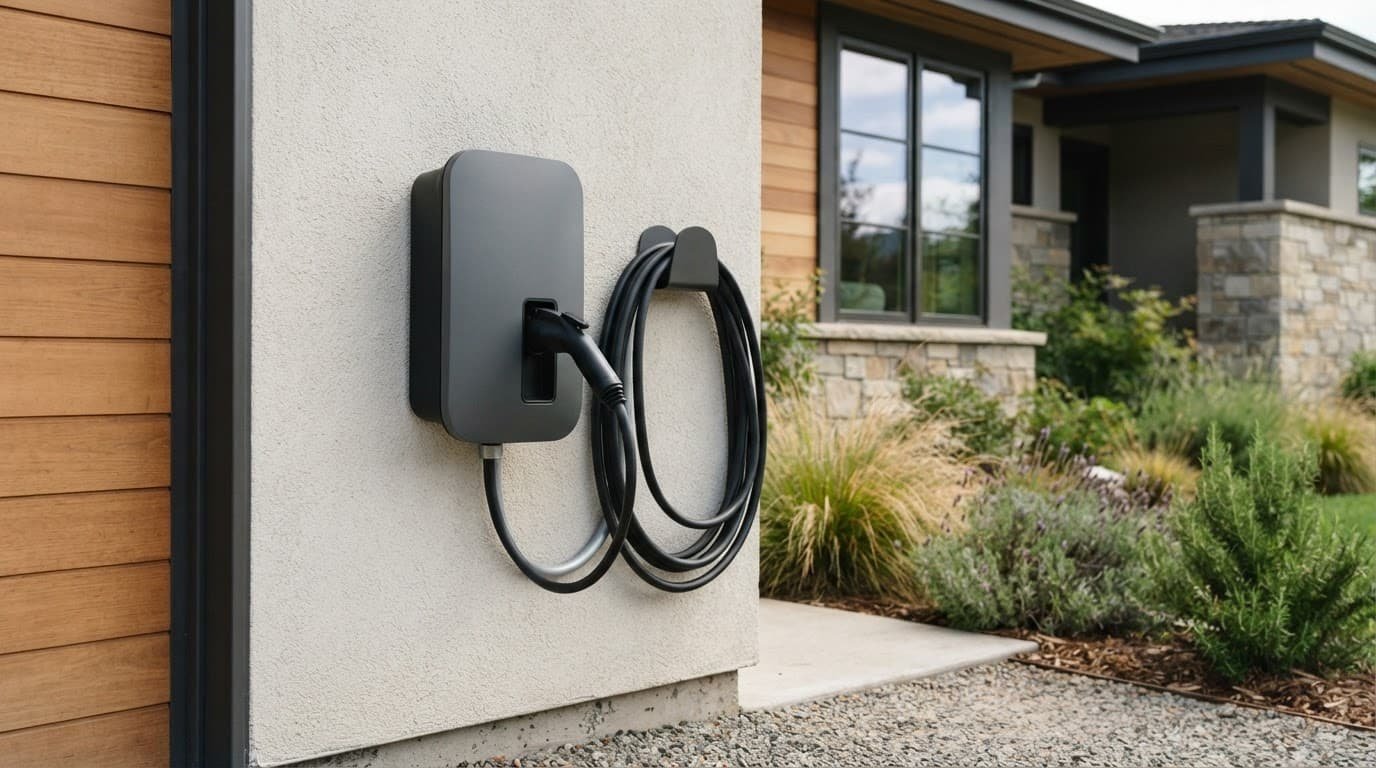
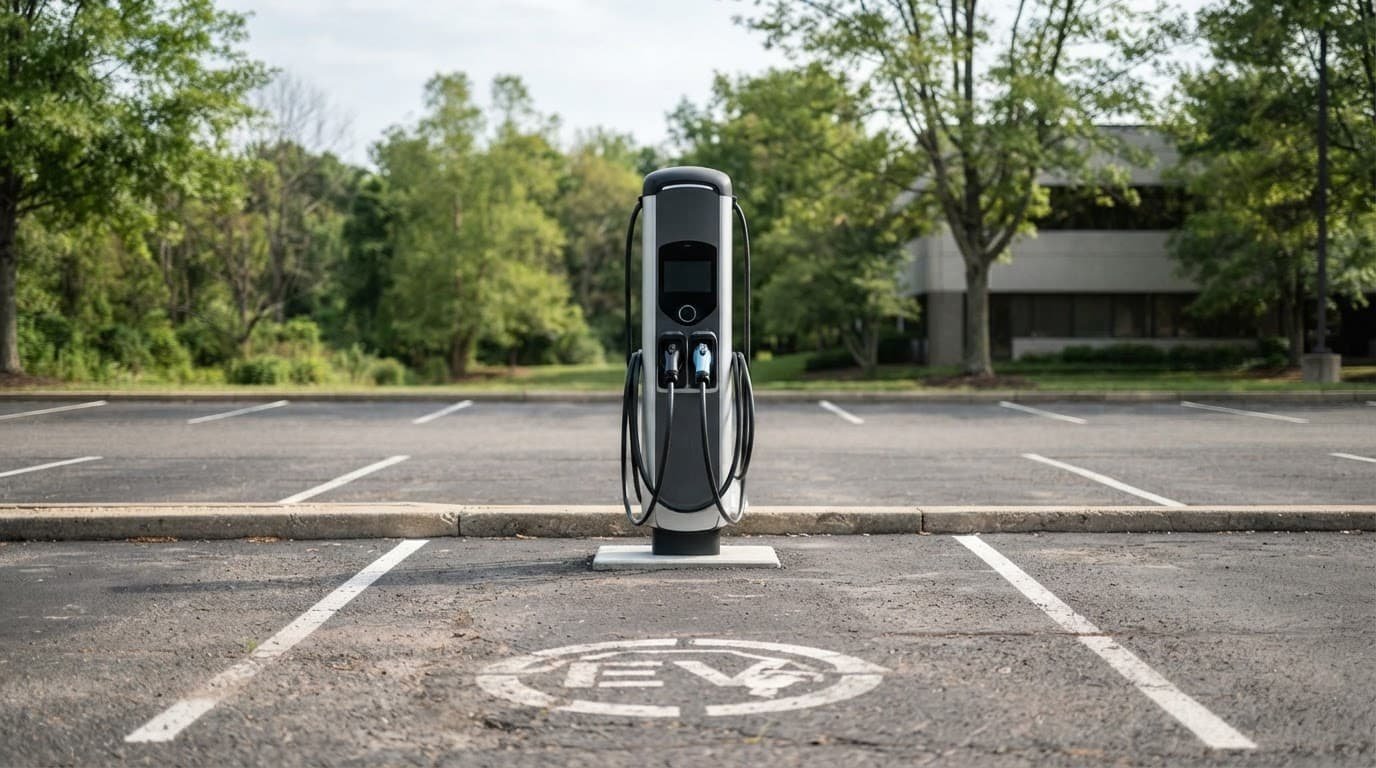
EVSE is the equipment between the power supply and the vehicle. The acronym stands for electric vehicle supply equipment. A home wallbox, public charging pedestal, and portable Level 1 unit can all qualify.
A typical unit includes an enclosure, electrical conductors, a charging cable, a connector, contactors or relays, a control module, and safety monitoring. Smart EV chargers may also include Wi-Fi, cellular service, a mobile app, payment processing, network connectivity, and communications protocols for fleet or commercial deployments.
Think of the unit as a very cautious traffic officer. It doesn’t fling electricity toward the car and hope for the best. It checks that the vehicle is connected, confirms that the ground connection is safe, communicates the available current, and opens the circuit when the session ends.
The unit controls access to electricity. The vehicle still controls how much energy its battery accepts.
People often call the wallbox a charger, and that’s perfectly normal. Technically, the distinction matters. During AC charging, the vehicle’s onboard charger converts AC, or alternating current, from the EVSE into DC electricity for the battery. The unit supplies and controls the AC power.
With DC fast charging, the station’s large power conversion equipment is inside the station. It converts grid power into direct current, or DC, before sending it to the battery. This equipment is larger, more expensive, and usually found at public sites rather than inside a garage.
How an EVSE Controls a Charging Session
When you plug in, the cable and connector do more than make physical contact. The EVSE’s control module begins a handshake with the vehicle through the control pilot circuit.
The equipment detects a proper connection and confirms that the cable suits the requested current. The vehicle then communicates its charging status and limits. Safety checks follow, including ground-fault protection and other required conditions. Once verification is complete, the EVSE closes its internal contactor and energizes the electrical conductors.
During charging, the equipment watches for problems such as ground faults, excessive current, abnormal temperature, or a connector that has been removed. If something looks wrong, the contactor opens. The process ends, and electricity stops. Nobody has to dramatically dive across the garage like an action-movie electrician.
The battery management system inside the vehicle controls battery temperature, voltage, and state of charge. It can reduce the charging rate when the battery gets warm or nearly full. The equipment advertises available capacity, while the vehicle decides what it will accept.
A networked unit adds another layer. Mobile apps may let you schedule charging for cheaper electricity rates, monitor energy use, or share access with other drivers. At an apartment building or fleet depot, software can divide available power among several vehicles instead of asking the electrical service to feed every car at full output.
EV charging standards define these communications protocols and safety requirements. Tektronix’s EV charging standards guide provides a useful technical reference for how the equipment, vehicle, and control-pilot exchange work together.
Level 1, Level 2, and DC Fast Charging
The charging level describes the type and speed of power the EVSE can provide, but it is only one factor. Your car’s battery size, vehicle limits, temperature, and current state of charge still determine the result.
| Charging type | Typical power source | Typical output | Best fit |
|---|---|---|---|
| Level 1 | 120-volt AC | About 1.4 to 1.9 kW | Overnight home charging |
| Level 2 | 208 to 240-volt AC | About 7.2 to 11.5 kW at home | Daily home, workplace, and public charging |
| DC charging | High-voltage DC | Roughly 50 to 350 kW at many public sites | Road trips and quick top-ups |
Level 1 uses a standard household outlet that supplies alternating current. It is slow, but it can be enough for a driver with a short commute and plenty of overnight parking. The setup cost is low because the outlet may already exist, although the circuit still needs to be safe and suitable.
Level 2 usually means installing a Level 2 charger, the usual home EVSE upgrade. It needs a dedicated 240-volt circuit, similar in basic electrical concept to circuits used for large appliances. A Level 2 unit can refill far more energy overnight, but the vehicle must support that power level. Installing a 19.2 kW unit won’t make a car with a 7.2 kW charging limit suddenly accept 19.2 kW. The car will politely ignore the extra capacity.
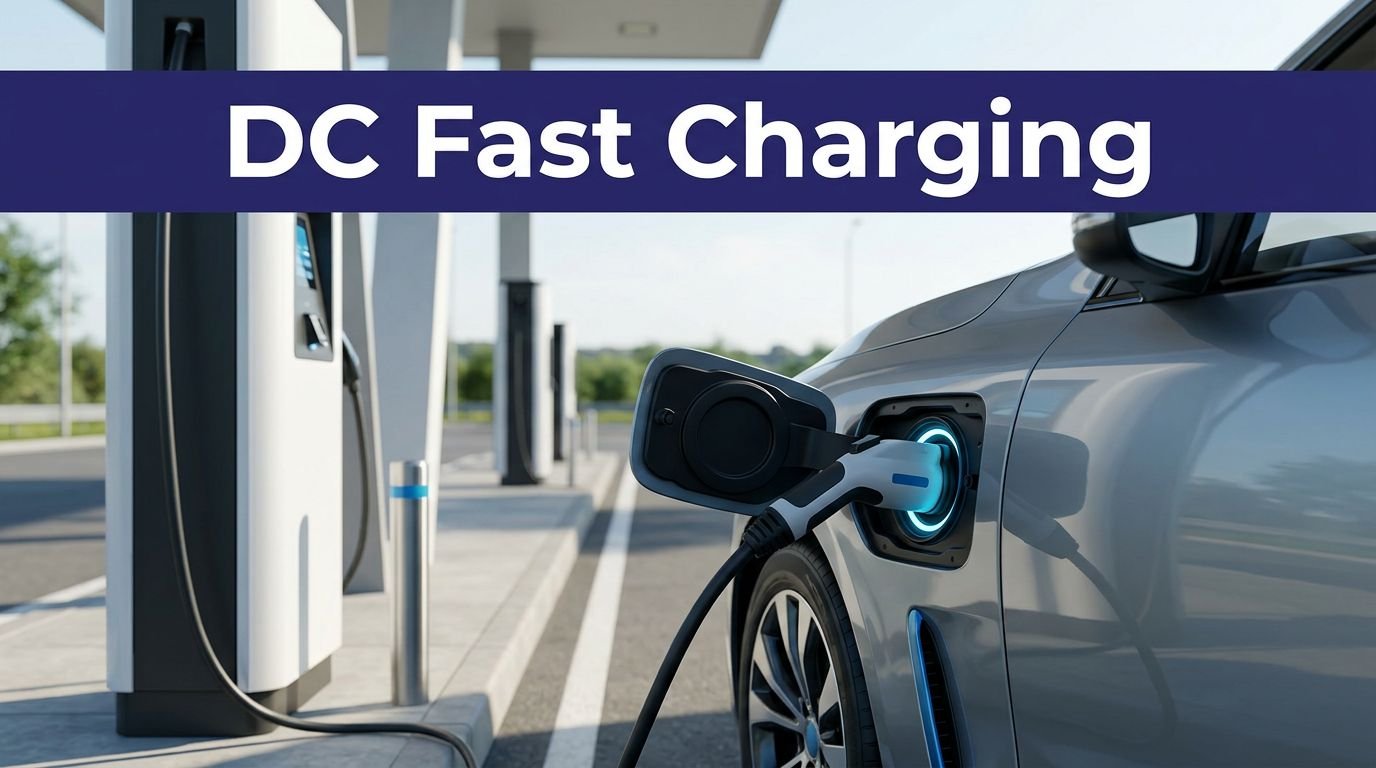
DC fast charging is common at a public electric vehicle charging station and skips the vehicle’s onboard charger. The station’s power electronics send direct current to the battery under the vehicle’s control, but charging usually slows as the battery fills. A station’s maximum rating may not match your car’s power throughout the charge.
Connectors, Safety Certifications, and Standards
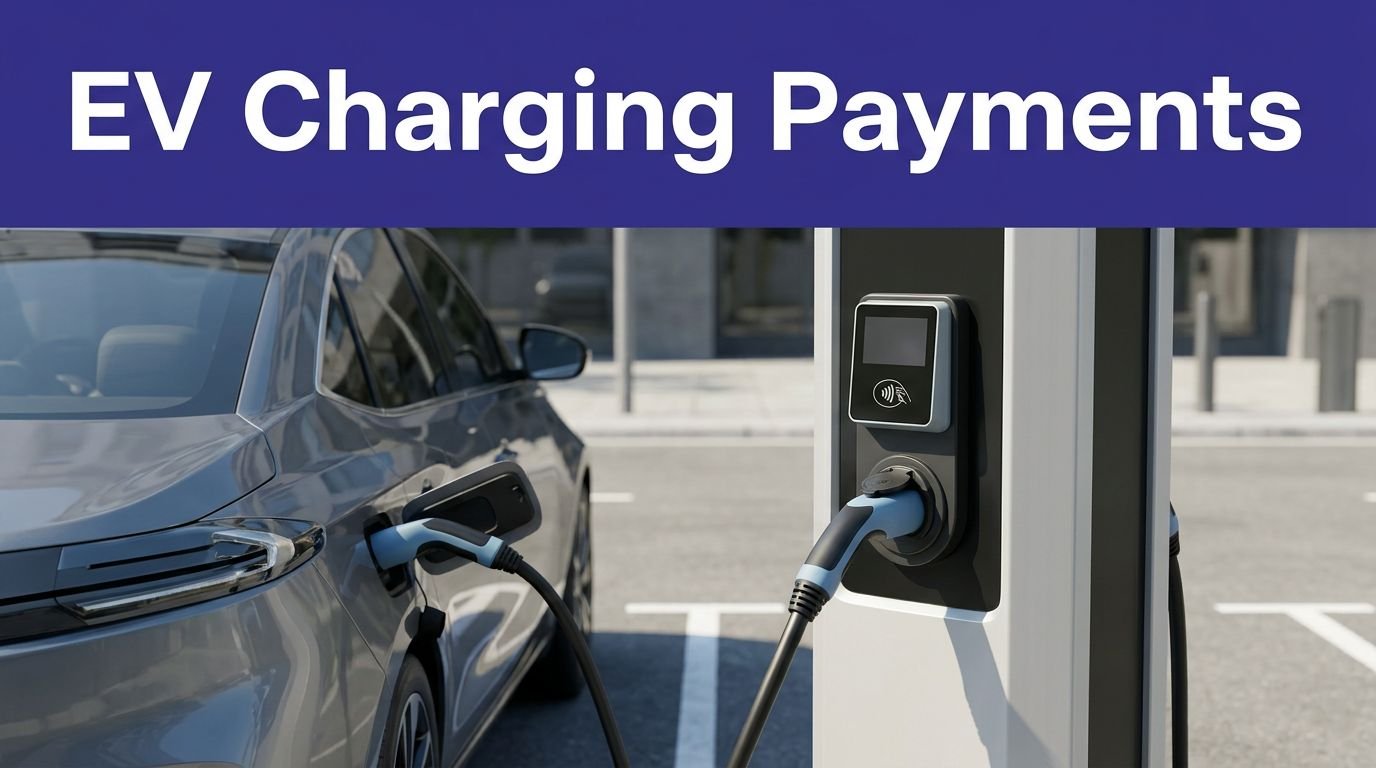
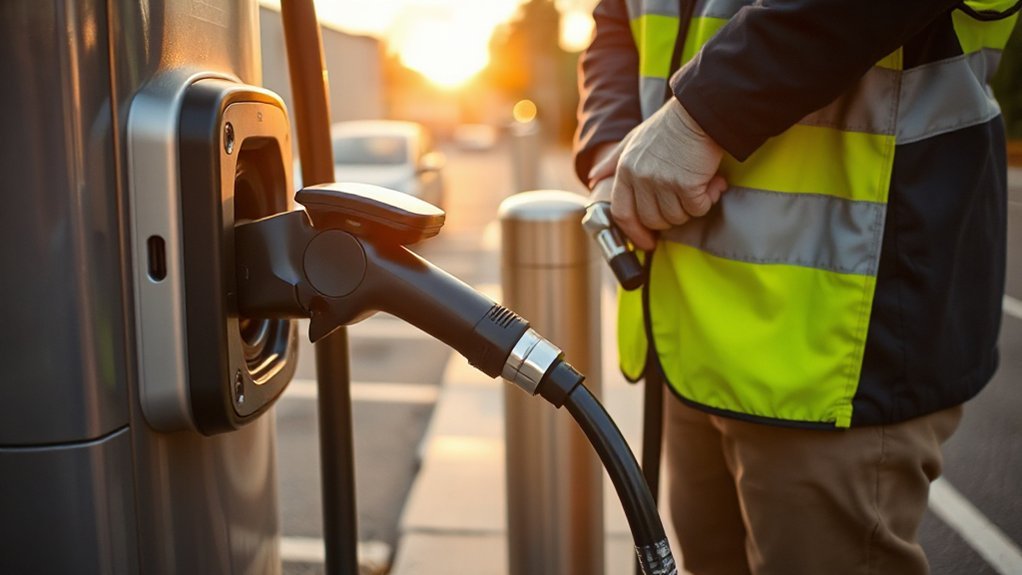
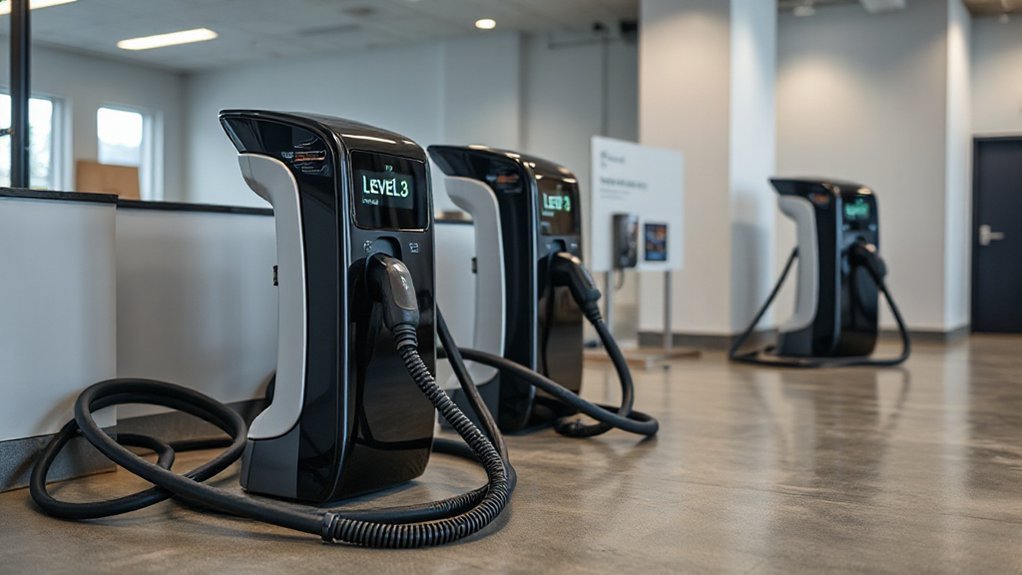
Connector compatibility is where a simple charging plan can become a small family argument. Check the port on your vehicle before buying EVSE.
In the United States, these are the main connector types you’ll encounter in 2026:
- J1772 is the long-standing AC connector for Level 1 and Level 2 charging. It isn’t used for fast charging.
- CCS, commonly called CCS1 in North America, adds two large DC pins below the AC section. Many older non-Tesla EVs use it for fast charging.
- NACS, now standardized as SAE J3400, is the compact Tesla-derived connector that supports both AC and DC charging through one plug.
- CHAdeMO is a legacy DC fast-charging connector that still appears on some older vehicles and stations.
A vehicle using CCS can usually use J1772 AC charging because its upper section follows that AC standard. A vehicle with NACS may need an approved AC adapter at older Level 2 stations. At a public electric vehicle charging station, compatibility depends on the vehicle, adapter approval, and charging network. Don’t treat every plug-shaped object as universally friendly.
Safety markings matter more than a slick app or a dramatic cable photo. Look for a recognized listing such as UL or ETL, then verify the exact model number. If a product is UL certified, confirm that its listing matches the model you plan to buy. UL 2594 covers EVSE, while the UL 2231 series addresses protection against electric shock in EV charging systems. A label that only says “UL compliant” is not the same as a verifiable certification.
NEMA ratings describe enclosure protection. For example, NEMA 3R is intended for certain outdoor conditions, while higher ratings offer more protection against water and dust. An enclosure rating doesn’t replace product safety certification.
The danger with bargain-basement equipment isn’t that every inexpensive unit is automatically unsafe. The problem is that some products make unclear certification claims, use undersized wiring, lack reliable ground-fault protection, or have poor thermal monitoring. High current running for hours is not a place to conduct a science experiment with mystery hardware.
For installation requirements, consult local rules and a qualified electrician. These EV charging station installation guidelines show the level of electrical, mounting, and permitting detail that residential and commercial projects can involve.
How to Choose and Install an EVSE
Start with the vehicle, not the product page, when selecting an EVSE. Identify the connector, maximum AC charging rate, and charging schedule you actually need. A commuter who drives 25 miles a day may not need the biggest Level 2 charger on the internet. That unit is waiting for someone, though. It has a very persuasive marketing department.
Before buying, work through these questions:
- Check whether your car uses J1772, CCS, or NACS/J3400, and confirm whether an adapter is approved.
- Ask an electrician to inspect the service panel, available capacity, wiring route, and breaker sizing. Have them assess the proposed receptacle or hardwired power connection.
- Choose an outdoor enclosure rating that matches the installation location, then confirm the cable length and connector storage.
- Verify safety certifications, such as UL or ETL, for the exact model, not a vague claim on a marketplace listing.
- Decide whether you need scheduled charging, energy monitoring, load sharing, solar coordination, or fleet billing.
- Compare plug-in and hardwired installation options. Then calculate total ownership costs, including installation, networking fees, warranty support, and possible panel or trenching work.
Can a homeowner install a Level 2 EVSE? Sometimes, but the answer depends on the electrical work and local rules. For residential use, mounting a unit is not the same as installing a new 240-volt circuit. A qualified electrician should assess panel capacity, breaker sizing, wiring, conduit, receptacle condition, and continuous-load requirements. Hardwired equipment, new breakers, panel changes, and outdoor wiring should be handled by a licensed electrician. A plug-in unit still needs a properly rated, dedicated circuit and a suitable receptacle.
Don’t assume an existing 14-50 outlet is automatically ready for continuous EV charging. Its wiring, breaker, connections, and condition need inspection. Loose terminations can heat up during long charging periods, which is a terrible way to discover your outlet has opinions.
For a multi-family property, an electric vehicle charging station is only one part of shared charging infrastructure. The project also needs parking rules, conduit routes, utility capacity, access control, local permitting, and a fair billing method. Planning guidance for EV charger deployment covers many of the site-planning questions that single-home checklists leave out.
Businesses and fleets planning commercial EV charging should look beyond maximum kilowatts. Their charging infrastructure must account for how many vehicles charge at once, when they leave, demand charges, and load management. Fleet charging solutions need uptime and software reporting, while a lower-powered system can charge every vehicle on schedule. That may beat a powerful system that overloads the site or creates a monthly utility surprise. California’s EV charging permitting best practices are also a helpful reference for planning public and commercial installations.
Frequently Asked Questions
What does EVSE stand for?
EVSE stands for electric vehicle supply equipment. It is the equipment that connects an electric vehicle to a power source, communicates with the vehicle, and controls the flow of electricity.
Is an EVSE the same thing as an EV charger?
People commonly use the terms interchangeably, but they are technically different. During AC charging, the EVSE supplies and controls AC power while the vehicle’s onboard charger converts it for the battery; a DC fast-charging station performs that conversion inside the station.
Can EVSE charge any electric vehicle?
No. Compatibility depends on the vehicle’s connector, charging standard, approved adapters, and the EVSE’s capabilities. Common connector types include J1772, CCS1, NACS/J3400, and CHAdeMO.
Can I install a Level 2 EVSE myself?
Some plug-in units may be mounted by a homeowner, but installing a 240-volt circuit, new breaker, hardwired connection, or outdoor wiring should be handled by a qualified electrician. The circuit, panel capacity, wiring, receptacle, and local requirements all need to be suitable for continuous EV charging.
What should I look for when buying an EVSE?
Start by checking your vehicle’s connector and maximum AC charging rate, then verify the EVSE’s safety certification for the exact model. You should also consider installation requirements, outdoor protection, cable length, warranty support, and features such as scheduled charging or load management.
Why EVSE Matters
At its core, electric vehicle supply equipment (EVSE) turns a live electrical connection into a controlled charging session. It protects people, the vehicle, and the building while managing how much power moves through the circuit.
The right unit isn’t necessarily the fastest or most expensive. It has the correct connector, verified safety certification, suitable installation, useful controls, and enough power for your driving routine.
That is the real answer to what this equipment does. It’s not merely a cable with a fancy case. It’s the safety equipment and communication layer that lets your EV charge without turning every overnight refill into a gamble.
This post may contain affiliate links. If you make a purchase through these links, I may earn a small commission at no extra cost to you.